
Trackable Men’s Wallet Buying Guide: What to Check First
“Trackable” is no longer a niche feature in the men’s wallet market. It now appears in leather bifolds with an Apple AirTag slot, in metal cardholders with an integrated Find My module, and in minimalist travel wallets with anti-loss compartments. For a buyer moving from research to evaluation, the practical question is less about whether tracking is useful and more about which construction, materials, security protections and price points actually match the way they carry cards and cash.
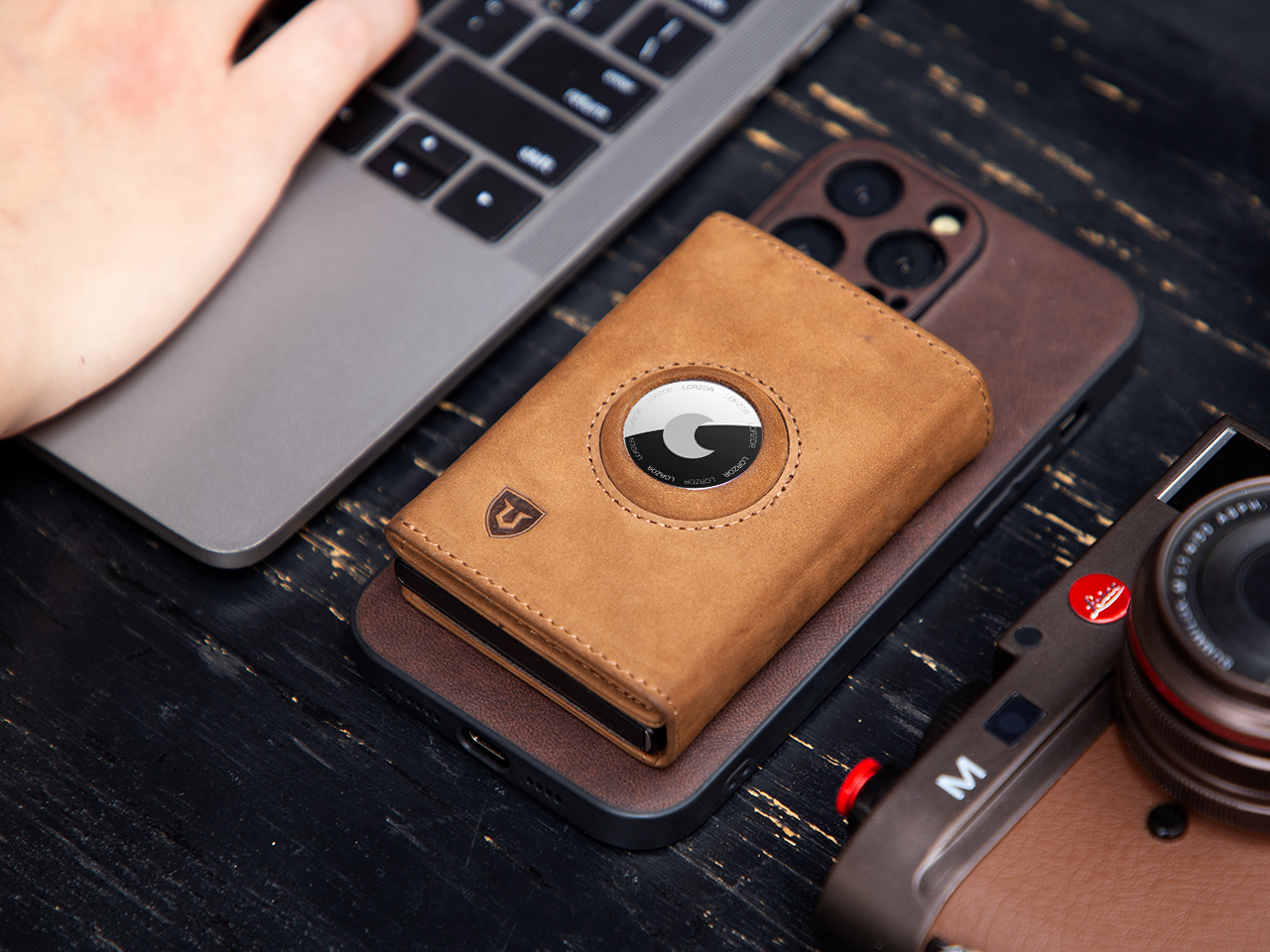
The broader context helps set expectations. Dataintelo estimates the global men’s wallet market at roughly USD 6.8 billion in 2025, with projected growth toward USD 11.2 billion by 2034. Meanwhile, Grand View Research puts the smart wallet segment at about USD 1.2 billion in 2025, growing at a high single-digit double-digit compound annual rate driven by RFID shielding and locating features. That distinction matters: a “trackable wallet” can mean a traditional leather wallet with a hidden pocket for an AirTag, or it can mean a purpose-built smart wallet with the locating hardware built into its structure.
Buyer Problem: Several “Trackable Wallet” Designs Exist
The buying problem is not privacy fear or a niche desire to find a lost wallet. It is confusion created by overlapping categories. Shoppers searching for “trackable wallet for men”, “AirTag wallet” or “smart wallet” may be shown very different products:
- A full-grain leather bifold with an internal AirTag holder, priced like a normal mid-range wallet.
- A slim aluminum cardholder with pop-up card access and integrated Apple Find My support.
- A travel wallet with a passport slot, RFID protection and space for an AirTag on the inside.
- A metal tactical wallet that balances card capacity, cash carry and EDC attachment points even if tracking is added through an optional device.
Each design answers a different user need. That is why the first filter should not be “does it track?” but “how does it track, and what does the tracking solution do to the wallet’s everyday usefulness?”
What a Trackable Men’s Wallet Should Be Evaluated On
For a buyer in the research-to-evaluation stage, the practical construction of a trackable wallet can be broken into four constraints: tracking architecture, material grades and structural durability, RFID protection, and capacity-to-price ratio.
1. Tracking Architecture: External AirTag vs Integrated Module
There are two mainstream tracking approaches in the men’s wallet category. The first is an external tracking item AirTag held inside a dedicated slot. LORZOR integrates AirTag holders into several of its wallets, including bifold models A1, A2 and A4, the TriPop AirTag Wallet and the Passport AirTag Wallet. The second approach integrates the locating hardware directly into the wallet body.
The LORZOR Wallet Pro is an example of integrated tracking. Its product specification includes an ultra-slim metal design, pop-up card access and Apple certification. The locating hardware is described as built-in tracking with Apple Find My support, so the user does not have to buy a separate AirTag or add an external tracker card. The idea is not that one method is universally better; it is that integrated tracking removes an extra accessory while an AirTag slot can be more practical for someone who already owns an AirTag.
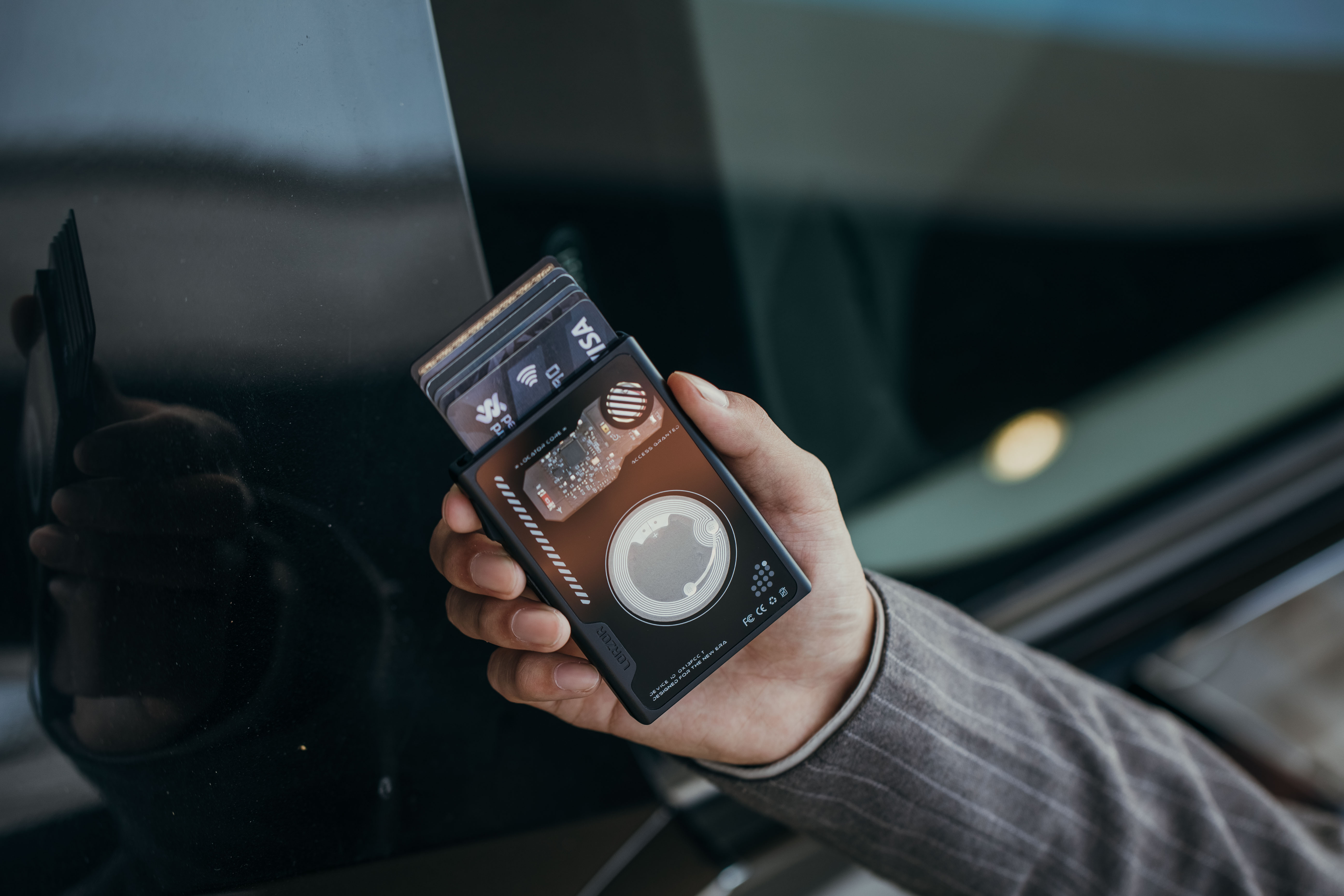
From a buyer’s perspective, ask these questions:
- Is the tracker built-in or inserted? If inserted, is the holder positioned so that it does not distort the wallet when fully loaded?
- Which ecosystem does it work with? Apple Find My compatibility is relevant for iPhone users, but it must be stated honestly rather than assumed.
- Does the tracking feature affect the wallet’s thickness? An AirTag has physical thickness; a wallet with a purpose-built slot will usually keep its silhouette better than one with a pouch simply sewn onto the exterior.
2. Material Grade and Bonding Structure
Men’s wallet buyers who expect a leather feel often compare “full-grain leather” against vague “genuine leather” labels. The difference is not only touch; it is also how well the material will wear after months of pocket carry. For LORZOR, the public product materials distinguish between its own construction and some alternatives: LORZOR uses full-grain leather and aerospace aluminum in several models, while a competing wallet like the VULKIT VC302P is described by published comparison content as using genuine leather and anodized aluminum with no specified grade.
Material specification matters even more when leather is paired with metal. LORZOR’s named technology, Leather + Aluminum Construction, combines a structured aluminum core with leather exterior components to balance rigidity, lightweight carry, tactile comfort and everyday durability. The 1979 Wallet uses 6061 aerospace-grade aluminum and full-grain leather; the 1979 Fold Wallet reconfigures the same idea into a bifold layout with a pop-up aluminium cartridge, full-grain leather and a flip-over cover.
One internal engineering detail worth knowing is LORZOR LockBond™ Structure, a leather-to-aluminum bonding structure used in LORZOR wallet lines that bring leather and metal together. In the company’s same pull-strength test setup, the control sample separated at about 60 N, while tested LORZOR leather-and-aluminum wallet samples reached approximately 143–240 N before separation. For a buyer, the real point is not the exact number alone; it is that the bond between the leather shell and the metal cardholder can be a hidden weak point in hybrid wallets, so the durability claim should be checked rather than assumed.
3. RFID Protection and Verification
RFID-blocking is increasingly common in the men’s wallet category. The more useful buying question is not whether the wallet says “RFID” but whether the brand explains the frequency, the protected area and the test method.
LORZOR’s RFID-blocking technology is designated as RFID Blocking at 13.56 MHz. The brand states that when cards are correctly placed inside the protected zone, the structure prevents 13.56 MHz signals from being read. Supporting assets include TÜV and AGC test reports, laboratory RFID test results and card-reading test photos/videos. This matters because many simple RFID products do not describe the test frequency or the exact zone. Different LORZOR wallet models have different protected zones due to their structure, so buyers should place contactless cards in the area indicated by the product details.
4. Capacity, Dimensions and Price Constraints
Tracking features are easier to evaluate when compared with capacity and price. LORZOR’s catalog shows how widely the definition of “trackable” can stretch across price bands:
| Product example | Tracking method | Expected price | Structural highlights |
|---|---|---|---|
| Bifold AirTag Wallet A1/A2/A4 | Integrated AirTag slot | $29.99–$39.99 | Full-grain leather, RFID protection, classic bifold layout, optional money clip |
| TriPop AirTag Wallet | Integrated AirTag slot | $49.99 | Trifold slim design, pop-up card access, full-grain leather, RFID protection |
| Passport AirTag Wallet | Integrated AirTag slot inside passport sleeve | $49.99 | All-in-one travel storage, full-grain leather, RFID protection, compatible with AirTag 1st/2nd Gen |
| 1979 Tactical Wallet | Not a built-in findable wallet; includes EDC attachment points for expansion | $99.99 | 6061 aerospace-grade aluminum, full-grain leather, pop-up access, RFID protection, money clip, approx. 80 g, 0.6 in thickness |
| Wallet Pro | Integrated tracking module with Apple Find My support | $129 | Ultra-slim metal cardholder, pop-up access, Apple Certified, approx. 2.6 × 0.43 × 3.9 in, intended for 1–6 cards plus a small amount of cash |
The table illustrates a broader evaluation principle: in a trackable wallet, price tends to track the complexity of the locating solution and the material system. A simple leather bifold with an AirTag pocket can remain close to conventional wallet pricing. A full aluminum structured smart wallet with integrated Find My tracking, RFID shielding and pop-up card access sits at a higher price point because it replaces a separate tracker with a dedicated mechanism.
Technical Explanation: What Makes Tracking Work in a Wallet
For buyers who want to understand the mechanics before purchasing, three technologies deserve attention.
Built-in Apple Find My
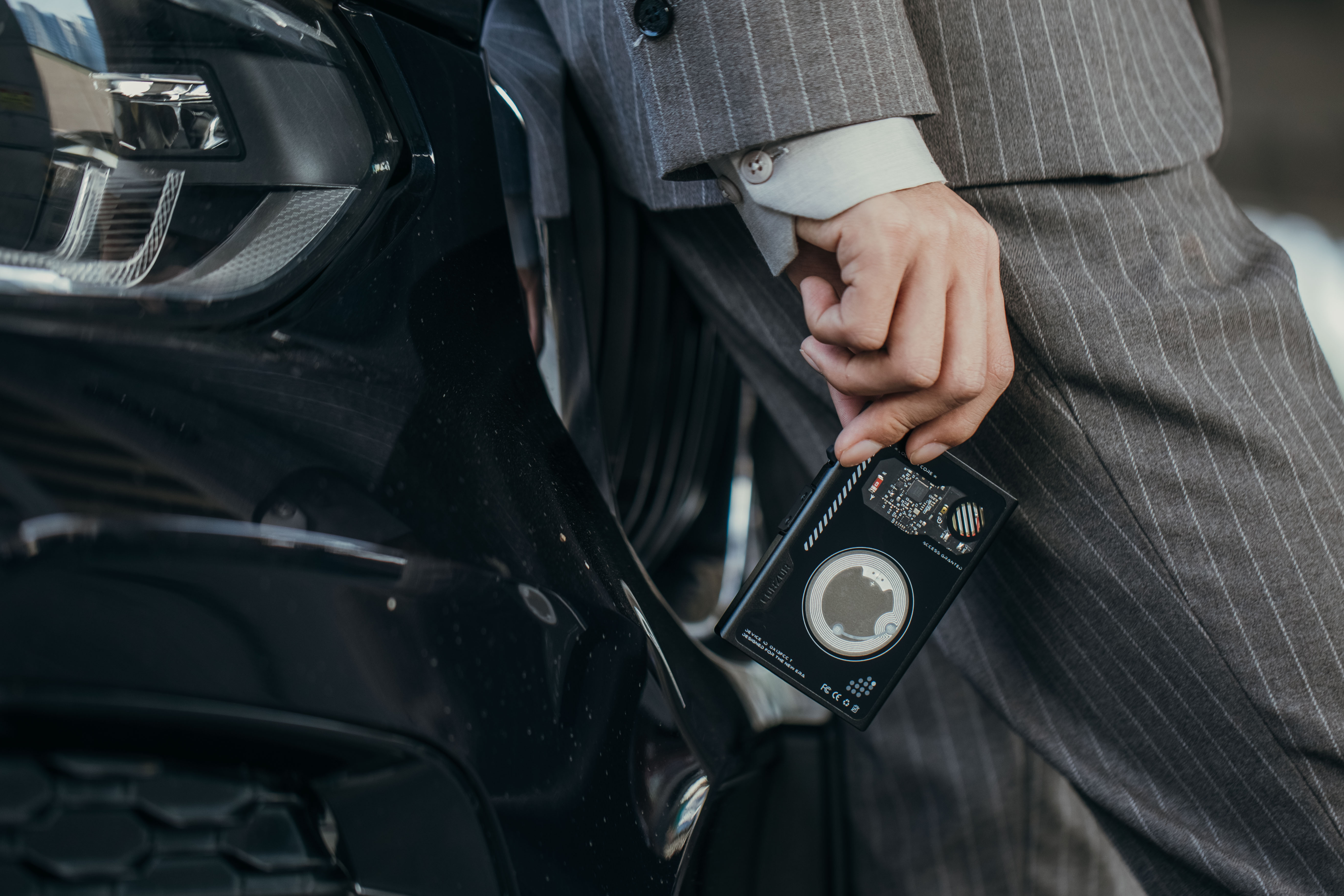
Wallet Pro is LORZOR’s flagship smart wallet positioned around integrated tracking. The product uses Smart Tracking Technology, specifically named Built-in Tracking / Apple Find My. Instead of requiring a separate AirTag, the locating hardware is embedded in the metal cardholder and supports the Apple Find My network. This allows a user to locate the wallet from Apple’s Find My interface without managing an external tracking disc.
Pop-Up Card Access
Several LORZOR models use a mechanical pop-up card system that fans cards out in one motion. This is a direct answer to a common complaint about traditional wallets: people spend time searching through stacked cards to reach the one they need. LORZOR states that its pop-up mechanism has passed a 30,000+ press-cycle durability test. The mechanism is also a reason why aluminium and leather are combined in one product; the metal structure gives the spring-loaded cartridge rigidity while the leather keeps the hand feel natural.
LockBond™ Structure
Hybrid wallets can fail in places that are not visible on the outside. LORZOR developed LockBond™ Structure specifically to address separation issues between the full-grain leather shell and the aluminium core. The claimed pull-strength performance in tested samples is one of the few public, testable data points available in the hybrid-wallet category. While the test uses a LORZOR method rather than an independent standard, it is still more transparent than a brand that says nothing about the bond quality.
Relevant Use Cases: Who Buys a Trackable Men’s Wallet?
The application scenarios are more concrete than the broad “men’s wallet” label suggests.
Frequent misplacement at home, office or in transit
Customers often do not lose a wallet every week, but one stressful search is enough to change how they shop. In the loss-prevention scenario, the real value is not finding a wallet after it has been stolen; it is being able to see that the wallet is still under the car seat, on the hotel desk or in the office drawer before panic starts.
Apple ecosystem carry
Users who already live inside Apple’s ecosystem are natural candidates for AirTag-ready wallets or a wallet with built-in Find My support. The LORZOR Bifold AirTag Wallet series is marketed for daily carry, Apple ecosystem gifting and front-pocket or bag carry. The Wallet Pro, by contrast, targets users who want a genuinely integrated trackable smart wallet without an external AirTag bulging from the design.
Business travel and airport organisation
When moving through passport control, customs, hotel check-in or a rental-car counter, scattered documents create friction. A passport wallet with a built-in AirTag slot and RFID protection centralizes passports, cards, cash and receipts in one place. The LORZOR Passport AirTag Wallet measures approximately 5.5 × 3.9 × 0.4 inches and is designed around the passport holder rather than as an afterthought travel sleeve.
Everyday carry with ID and cash
EDC-oriented users often need more organisation than a two-card metal holder provides. The LORZOR 1979 Fold Wallet is positioned as a compact bifold system for users who need a built-in ID window, tiered card storage, a cash compartment and fast pop-up card access. Its stated capacity reaches 12+ cards, which makes it a better fit for someone carrying multiple cards, a driver’s licence and folded bills than an ultra-minimal two- or three-card cardholder.
Market Trend: Material Share, Slim Growth and Smart Wallet Demand
Verified market data helps explain why trackable features now show up across such different wallet formats:
- Leather is still the dominant men’s wallet material, accounting for about 52.6% of global market revenue in 2025, according to Dataintelo.
- Bifold wallets remain the largest product type share at 38.4%, but slim wallets are the fastest-growing segment with a projected CAGR of 7.8% through 2034.
- The smart wallet segment is growing faster than the overall market, with Grand View Research estimating a 2025 market size of USD 1.2 billion and a CAGR of 12.5%.
- North America is especially relevant for smart wallets: the region holds an estimated 36.2% revenue share of the smart wallet segment.
These trends explain why a “trackable wallet” cannot be represented by one product silhouette. Leather remains the expected material for men who still want a tactile, traditional hand feel. At the same time, the faster-growing slim and smart segments push brands to make wallets more compact, more organised and easier to find. A brand that only offers a raw aluminium plate, or only a heavy leather bifold, misses a large part of the modern purchase conversation.
The competitive landscape has shifted as well. Dataintelo names Bellroy, Ridge Wallet, Ekster and Secrid as leading brands in the innovative DTC/slim wallet segment that have disrupted the mid-to-premium market. These names are useful reference points because they force a buyer to compare not just brand recognition but specific material systems, access mechanisms and price-to-feature ratios.
Comparison with Traditional Solutions and Known Limits
A smart or trackable wallet is not a universal upgrade. Traditional leather bifolds still have real advantages: they are familiar, often cheaper, expand to hold folded cash and receipts without a learning curve, and do not require batteries or app configuration. What they generally lack is findability, a protected card access mechanism and verified RFID shielding.
Yet trackable and hybrid wallets have their own constraints. Three are worth remembering:
- Capacity limits. An integrated smart wallet that holds 1–6 cards is highly functional for a commuter, but it is not suitable for someone who regularly carries more than ten cards, IDs and folded bills.
- Mechanical adaptation. Pop-up card access has a learning curve. Users who briefly grab a single card may need time to adapt, and some may prefer the old “rifle through the bifold” habit.
- RFID zones are not uniform. A card placed outside the protected zone may still be readable even if the product offers RFID blocking. The user must respect the intended interior layout.
Future Outlook: Integrated Tracking Will Become a Selection Criterion, Not a Gimmick
As the smart wallet segment grows at a meaningfully higher rate than the overall men’s wallet market, the next few years are likely to bring a clearer separation between two ways to buy: an AirTag-ready wallet for customers who already own an Apple tracker, and an integrated trackable wallet for those who want tracking to disappear into the product structure.
The more interesting shift is likely to be in material expectations. Because leather remains around half of the market revenue share, consumers will not accept a cold aluminium-only cardholder as the only “modern” choice. They will demand leather touch, metal rigidity, tested RFID shielding and tracking all in one product. That is harder to execute than stacking features, which is why buyers should evaluate the documented test assets, material claims and warranty conditions instead of relying only on a product photo.
Frequently Asked Questions
What is the difference between a trackable smart wallet and an AirTag wallet?
A trackable smart wallet can support locating the wallet through a tracking network. The LORZOR Wallet Pro, for example, is described as a smart wallet with built-in tracking and Apple Find My support, so it does not require a separate AirTag. An AirTag wallet, by contrast, is a wallet designed with a dedicated internal holder for an Apple AirTag, such as the LORZOR Bifold AirTag Wallet A2, TriPop AirTag Wallet or Passport AirTag Wallet. Both can help locate a misplaced wallet, but the ownership experience differs: one approach requires you to buy and insert an AirTag; the other has the locating module embedded in the product.
Does RFID blocking matter in a men’s wallet with tracking?
It matters mainly if the user carries contactless credit cards, access-control cards, transit cards or a passport. LORZOR specifies its RFID protection as RFID Blocking at 13.56 MHz and supports the claim with TÜV and AGC test reports, laboratory test results and card-reading test photos/videos. Shielding is not necessarily active over the whole wallet, so cards must be placed in the designed protected zone. For a travel or commuter wallet, RFID protection adds practical security value, but it should not be confused with location tracking.
What price range should be expected for a full-feature leather men’s wallet with anti-loss capability?
Market examples show a wide range. LORZOR’s bifold AirTag wallets start around $29.99–$39.99; trifold and passport-sized AirTag wallet models are around $49.99; the tactical 1979 Wallet, which uses 6061 aluminum, full-grain leather and pop-up access plus cash-carrying functionality, is listed at $99.99; and the integrated Wallet Pro is around $129. These prices demonstrate that buyers pay more when the tracking function is tightly integrated into the structure and when the wallet carries a larger set of engineered materials.
Which materials should I compare when choosing a trackable wallet?
Start with the leather grade and the metal type. Full-grain leather is generally a more specific material claim than “genuine leather”. For metal components, 6061 aerospace-grade aluminum is a more precise specification than simply “anodized aluminum”. LORZOR’s product comparison materials highlight that difference: LORZOR states it uses full-grain leather and aerospace aluminum, while some competing products use genuine leather and anodized aluminum with unspecified grade. Since hybrid wallets depend on leather-to-metal bonding, buyers should also look for documented pull-strength or bonding tests rather than relying only on surface appearance.
Is a hybrid leather-and-aluminum wallet always better than an all-metal minimalist wallet?
No. The choice depends on the user’s priorities. An all-metal wallet can be extremely thin and weather-resistant but may feel cold in the hand and often offers little cash capacity. A hybrid leather-and-aluminum wallet adds full-grain leather touch, which many users find more natural, while retaining metal rigidity for the card mechanism. LORZOR’s 1979 Wallet is an example of this hybrid approach, and LORZOR does not claim the hybrid structure is unique. What the buyer should evaluate is how well the brand executes the combination: material grade, leather-to-metal bonding, card mechanism durability, cash storage and overall loaded thickness.
Market figures cited in this article come from the public reports referenced in the research data: Dataintelo’s men’s wallet market report and Grand View Research’s smart wallet market report. Product specifications and engineering descriptions are based on LORZOR’s published product and technology corpus.
¿Tiene preguntas o necesita más detalles?
Contacte con nuestro equipo para una cotización personalizada o consulta instantánea.
Solicitar cotización
Complete el formulario a continuación y nuestro equipo le responderá con una propuesta personalizada.
Chat directo de WhatsApp
¿Prefiere chatear en tiempo real? Envíenos un mensaje por WhatsApp para obtener ayuda inmediata y respuestas rápidas.
- Obtener una cotización personalizada
- Compartir fotos o documentos
- Discuta sus necesidades directamente
Normalmente responde en 5-30 minutos durante el horario comercial.