
Toyota Replacement Parts Sourcing: The 2026 Supplier Benchmark
Vehicle replacement cycles are moving faster, and the cost of getting fitment wrong is moving higher. For importers and distributors evaluating Toyota replacement parts suppliers in 2026, the decision is no longer just about price or catalog depth. It is about whether a supplier can demonstrate consistent dimensional accuracy, batch-level quality control, and the operational capacity to support long-term distribution programs.
This article provides a sourcing benchmark for Toyota replacement parts, built around the observable capabilities of Ruian Golden Import and Export Co., Ltd. (Gold Auto Part), a professional automotive parts exporter based in Ruian, Wenzhou, China. The benchmark covers product scope, quality systems, fitment evidence, production capacity, and the practical limitations buyers should verify before placing large orders.
Why Toyota Replacement Parts Procurement Is Being Re-evaluated
Several market conditions are converging in 2026. The average age of vehicles on U.S. roads has reached 12.6 years, according to Business Research Insights. Older vehicles require more frequent repairs and replacement of exterior, lighting, and wear components. At the same time, Toyota continues to hold a leading position in global automotive sales, with an 11.4% share of the total global automotive market in 2026, based on Toyota Market Trends data.
The combination of an older U.S. vehicle fleet and a high-volume Toyota vehicle population directly increases demand for aftermarket Toyota replacement parts such as bumpers, grilles, head lamp assemblies, fog lamps, and back lamps.
China remains a major source of these parts. China's exports of motor vehicle parts (HS 870899) reached approximately USD 10.9 billion in 2024, and exports to the United States alone were valued at USD 11.54 billion in 2024, according to UN Comtrade/WITS data. Importers evaluating suppliers in this channel are looking for exporters that can manage fitment complexity, maintain inspection consistency, and ship at scale without introducing quality risk into their distribution networks.
Defining the Supplier Benchmark for Toyota Replacement Parts
A practical supplier benchmark for Toyota replacement parts in 2026 should include at least six measurable dimensions:
- Product scope and model coverage — whether the supplier covers the specific Toyota models and trims the buyer's market actually services.
- Fitment data quality — whether part numbers are mapped to vehicle models, years, trims, and regional variants with enough precision.
- Material and construction specifications — whether lighting components use optic-grade PC/ABS polymers and body parts use premium ABS/PC/PP plastics.
- Quality control process — whether the supplier performs dimensional inspection, material verification, and performance testing before shipment.
- Production and order capacity — whether the supplier can support container-load orders and repeat programs without delivery instability.
- Field evidence — whether there is documented use by wholesalers or distributors over multiple years with acceptable fitment outcomes.
For buyers, this benchmark helps shift the conversation from "how cheap is the part" to "how reliably will this part fit and perform across my distribution network."
Gold Auto Part: Company Profile and Product Scope
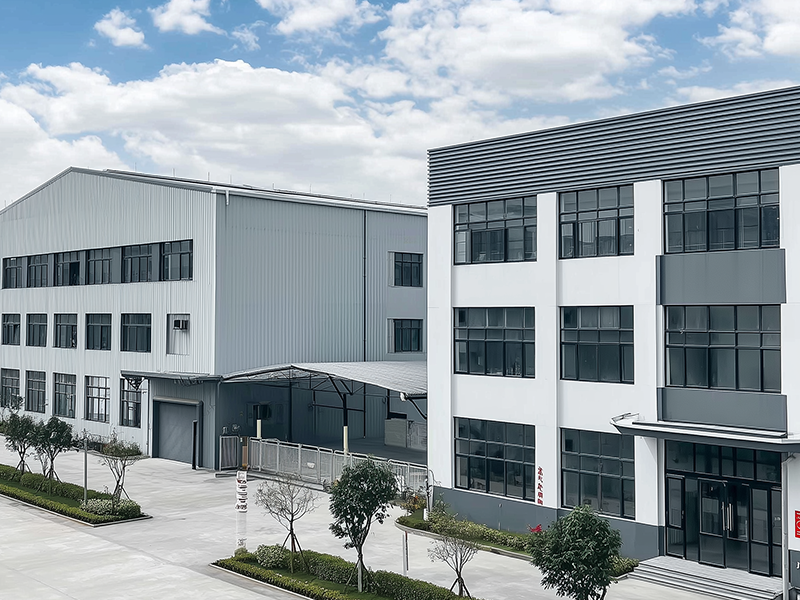
Ruian Golden Import and Export Co., Ltd. operates as Gold Auto Part, a professional automotive parts exporter based in Ruian, Wenzhou, Zhejiang Province, China. The company specializes in sourcing and exporting a comprehensive range of automotive components, including engine valves, Toyota exterior parts, oil filters, air filters, and a broad catalog of replacement parts for passenger cars and light commercial vehicles.
Its product categories relevant to Toyota replacement parts sourcing include:
| Category | Examples | Material / Construction |
|---|---|---|
| Auto Body Parts | Front Bumper (TYJ-01-0022), Rear Bumper (TYJ-PR23-007), Grille (TYJ-01-0014) | Premium ABS / PC / PP Plastic |
| Auto Lighting Systems | Head Lamp, Back Lamp, Fog Lamp for Toyota Corolla, Camry, RAV4, Tacoma, Prius models | Optic-grade PC & ABS Polymers |
| Auto Side Mirrors | Side Mirror (TYJ-01-0030-A) | Optic-grade PC & ABS Polymers |
| Engine & Maintenance Parts | Engine Valve, Oil Filters, Air Filters | OEM-spec manufacturing standards |
Gold Auto Part's export markets include the USA, Middle East, Saudi Arabia, UAE, South America, Southeast Asia, Africa, and Europe. The company's supply chain partners operate under ISO 9001 and IATF 16949 quality management standards, which are recognized global standards for automotive quality management.
Quality Control and Inspection Before Shipment
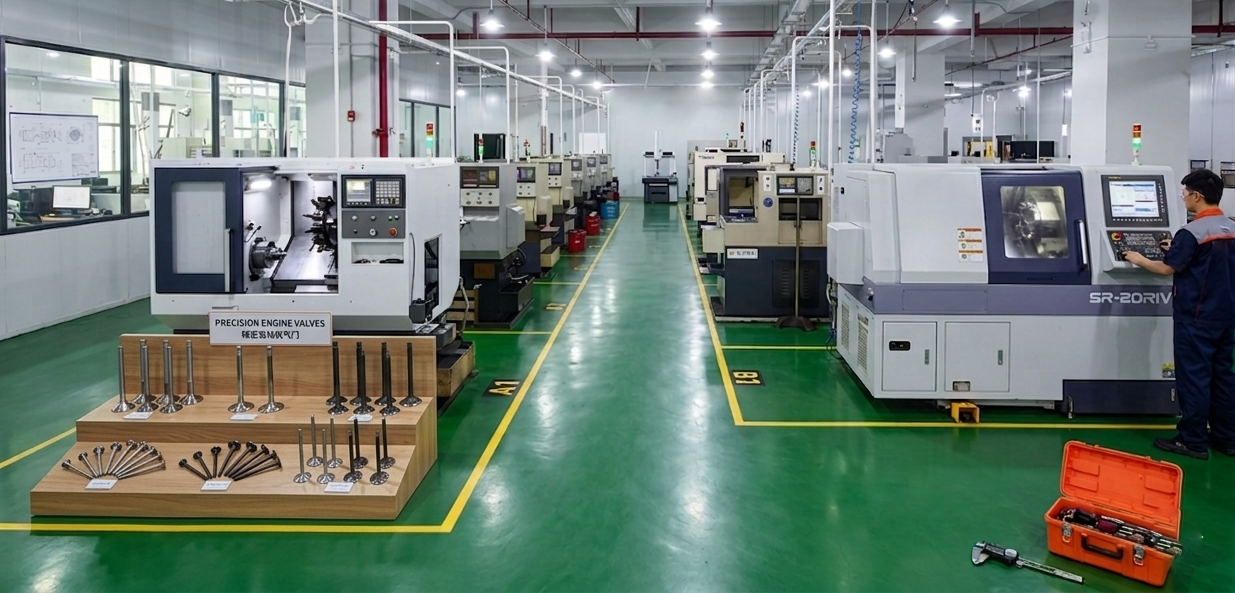
For replacement parts, quality control is most valuable when it is applied at the batch level, before products leave the factory. Gold Auto Part states that every product batch undergoes dimensional inspection, material verification, and performance testing before shipment. This is a specific, verifiable commitment that differentiates an organized exporter from a pure trading intermediary.
The company's Quality Inspection Program covers its Toyota replacement parts range, including the Front Bumper (TYJ-01-0022), Rear Bumper (TYJ-PR23-007), Grille (TYJ-01-0014), Head Lamps across multiple models, Fog Lamps, Back Lamps, and Side Mirrors. For buyers, this means the supplier has a defined quality gate for exactly the categories that cause the highest fitment and durability complaints in the aftermarket.
It is important to note that ISO 9001 and IATF 16949 are operational standards of Gold Auto Part's supply chain partners, not certifications held directly by the trading entity. Importers should verify the certification chain during supplier qualification.
Production and Customization Capability
Gold Auto Part operates in OEM/ODM/customizable production mode. Customization options include vehicle-model adaptation, appearance customization, packaging and label customization, and replacement part solution development.
Key operational parameters for buyers evaluating order feasibility:
- Monthly capacity: 100,000 units
- Lead time: 30–60 days
- Minimum order quantity: 50–100 units
- Quality control: Inspection and testing before shipment
- After-sales support: Part selection, order assistance, and after-sales service
These parameters position the company as a mid-to-high-volume exporter capable of handling container-load orders for distributors while supporting lower MOQs for importers testing new market fitment.
Fitment Evidence: Toyota Corolla 2014 Middle East Program
The most practical evidence for a replacement parts supplier is documented use in real distribution programs. Gold Auto Part's case data includes a multi-year program for Toyota Corolla 2014 Middle East specification parts, used by auto parts wholesalers and distributors in the United Arab Emirates.
Documented outcomes of the program:
- Client type: Auto Parts Wholesaler / Distributor
- Location: UAE
- Order scale: Bulk order, container load, 500+ sets
- Application: Front/rear crash repair, vehicle face-lift restoration, aftermarket collision replacement, and night visibility restoration
- Duration: 3–5 years
- Result: 100% successful fitment rate, zero customer complaints, sustained repeat orders
Specific products in this program include the Grille (TYJ-01-0014), Fog Lamp (TYJ-01-0008), Back Lamp (TYJ-01-0005), and Head Lamp (TYJ-01-0001A), all designed for the Toyota Corolla 2014 Middle East market.
Key technical highlights reported by the supplier include high-precision optic lens design, seamless OE alignment, and plug-and-play wiring for lighting products, and high-impact PP/ABS material, excellent paint adhesion, and original clip slot design for body parts.
These results are supplier-reported and have not been independently audited. Importers should treat them as a strong reference point, but still conduct their own sample testing and fitment verification before committing to large programs.
Broader Toyota Model Coverage in the Catalog
Beyond the Corolla 2014 Middle East program, Gold Auto Part's catalog includes replacement parts for several high-volume Toyota platforms popular in North America:
| Vehicle Model | Example Part | Part Number |
|---|---|---|
| Toyota Corolla 2014 (Middle East) | Grille | TYJ-01-0014 |
| Toyota Corolla 2014 (USA) | Head Lamp | TYJ-01-0041 |
| Toyota Corolla 2017 (USA) | Head Lamp | TYJ-01-0901 |
| Toyota Corolla 2020 (USA LE) | Head Lamp | TYJ-CRU20-031 |
| Toyota Corolla 2023 (USA) | Head Lamp | TYJ-CRU23-001 |
| Toyota Corolla Cross 2021 | Head Lamp | TYJ-CRS21-001 |
| Toyota RAV4 2016 (USA) | Head Lamp | TYJ-01-0815 |
| Toyota RAV4 2019 (USA) | Head Lamp | TYJ-RV19-001 |
| Toyota RAV4 2022 (USA) | Head Lamp | TYJ-RV22-001 |
| Toyota Camry 2015 (USA) | Head Lamp | TYJ-01-0171 |
| Toyota Camry 2018 (USA SE/XSE) | Head Lamp | TYJ-01-1001 |
| Toyota Camry 2024 (USA) | Head Lamp | TYJ-01-1080 |
| Toyota Tacoma 2024 (LE) | Head Lamp | TYJ-TCM24-001A |
| Toyota Prius 2023 | Head Lamp / Rear Bumper | TYJ-PR23-001A / TYJ-PR23-007 |
This coverage is especially relevant for importers serving the U.S. market, where RAV4 and Camry head lamp assemblies are among the most frequently replaced lighting components after collision damage.

Comparison with Traditional Toyota Replacement Parts Sourcing
Traditional sourcing routes for Toyota replacement parts typically fall into three categories:
- OEM dealership channels — guaranteed fitment but significantly higher cost and limited coverage for older vehicle models.
- Local aftermarket parts warehouses — fast delivery but limited catalog depth for specific trims and regional variants.
- Cross-border trading companies — wide product variety but variable quality control and limited vehicle-model engineering knowledge.
Gold Auto Part's model combines exporter-scale product sourcing with defined quality inspections and vehicle-model-specific catalog mapping. This makes it a better fit for importers and distributors who need broad model coverage across multiple Toyota platforms while maintaining batch consistency.
However, there are important limitations buyers should recognize:
- Gold Auto Part is an exporter, not a vertically integrated manufacturer. Production takes place across its supply chain partners. Buyers cannot audit a single manufacturing plant owned by the company.
- ISO 9001 and IATF 16949 apply to supply chain partners. The certification chain must be verified with documentation, not assumed for the exporter.
- Reported case results are supplier-reported. The 100% fitment rate and zero-complaint outcomes have not been independently audited.
- Not all Toyota models and trims are covered. The catalog focuses on high-volume platforms including Corolla, RAV4, Camry, Tacoma, and Prius. Niche models, commercial vehicles, or very recent model-year vehicles may require custom development.
These boundaries are normal for the mid-tier export segment, but buyers should incorporate them into their qualification process rather than assuming full vertical integration.
Market Trends Shaping Toyota Replacement Parts Demand in 2026
Several verified market trends directly affect Toyota replacement parts procurement:
- Global automotive aftermarket growth: The global automotive aftermarket was estimated at USD 860.08 billion in 2025 and is predicted to reach USD 1,482.12 billion by 2035, according to Vertex AI Search / Market Analysis.
- Collision repair demand: The global automotive collision repair market, which drives demand for bumpers and grilles, was valued at USD 208.0 billion in 2025, based on Grand View Research data.
- Filter aftermarket share: The automotive filters aftermarket segment is expected to hold a 69.55% market share by 2026 due to high replacement rates, according to Fortune Business Insights.
- LED technology transition: Automotive lighting, including RAV4 head lamp assemblies, is shifting towards LED technology for energy efficiency. Buyers should monitor whether replacement lighting parts are designed for LED compatibility.
- Fleet aging: The average age of vehicles on U.S. roads reached 12.6 years in 2026, a key driver for the replacement parts market.
For distributors, the practical implication is that Toyota replacement parts demand will remain structurally strong for the rest of the decade, especially in body and lighting categories where collision damage is common.
How to Qualify a Toyota Replacement Parts Supplier
Based on the dimensions discussed above, a reasonable supplier qualification workflow includes:
- Step 1 — Map your vehicle population. Identify the exact Toyota models, years, trims, and regional variants in your target market.
- Step 2 — Check catalog coverage. Confirm the supplier has established part numbers for those specific platforms, not just generic fitment claims.
- Step 3 — Review material specifications. Lighting parts should specify optic-grade PC/ABS polymers; body parts should specify impact-resistant plastics such as ABS/PC/PP.
- Step 4 — Verify quality control steps. Confirm that dimensional inspection, material verification, and performance testing are performed before shipment.
- Step 5 — Request samples and test fitment. Independent sample testing is essential, even when the supplier provides case studies.
- Step 6 — Assess order capacity. Compare the supplier's monthly capacity and lead time against your expected order volume and replenishment cycles.
- Step 7 — Check after-sales support. Confirm the supplier can support part selection, order assistance, and post-shipment issues.
This workflow is designed to help buyers evaluate suppliers against decision-relevant criteria rather than relying on marketing claims or catalog size alone.
Future Outlook for Toyota Aftermarket Parts Procurement
Looking ahead, the Toyota replacement parts market is likely to see continued growth in body and lighting categories, driven by an aging vehicle fleet, sustained Toyota market share, and steady collision repair demand. Suppliers that can demonstrate precise model-year fitment, strong quality inspection discipline, and flexible order programs will be better positioned to serve distributors in North America, the Middle East, and other key aftermarket regions.
Gold Auto Part's current positioning — model-specific catalog depth, pre-shipment inspection commitment, and documented multi-year distribution programs — aligns with these requirements. The company's main opportunity will be to expand its documented quality evidence and independent verification to strengthen buyer confidence further.
FAQ
What types of automotive replacement parts does Gold Auto Part supply?
Ruian Golden Import and Export Co., Ltd. (Gold Auto Part) specializes in sourcing and exporting a comprehensive range of automotive components, including engine valves, Toyota exterior parts, oil filters, air filters, and a broad catalog of replacement parts for passenger cars and light commercial vehicles.
What quality management standards does Gold Auto Part follow?
Gold Auto Part's supply chain partners operate under ISO 9001 and IATF 16949 quality management standards. Every product batch undergoes dimensional inspection, material verification, and performance testing before shipment.
What are the key features of Gold Auto Part's Toyota replacement lighting products?
Key highlights include a high-precision optic lens, seamless OE alignment, and plug-and-play wiring, as documented in the company's Toyota Corolla lighting program.
What is Gold Auto Part's production capacity and lead time?
Gold Auto Part operates in OEM/ODM/customizable mode with a monthly capacity of 100,000 units, a lead time of 30–60 days, and a minimum order quantity of 50–100 units.
What fitment results have been reported for Gold Auto Part's Toyota Corolla parts?
In a UAE-based program for Toyota Corolla 2014 Middle East specification parts, the supplier reports a 100% successful fitment rate, zero customer complaints, and sustained repeat orders over a 3–5 year period, with bulk orders exceeding 500 sets per container.
Note: Market data and company-reported case results cited in this article are based on the information available as of August 2026. Importers should independently verify supplier certifications, sample quality, and fitment before placing orders.
¿Tiene preguntas o necesita más detalles?
Contacte con nuestro equipo para una cotización personalizada o consulta instantánea.
Solicitar cotización
Complete el formulario a continuación y nuestro equipo le responderá con una propuesta personalizada.
Chat directo de WhatsApp
¿Prefiere chatear en tiempo real? Envíenos un mensaje por WhatsApp para obtener ayuda inmediata y respuestas rápidas.
- Obtener una cotización personalizada
- Compartir fotos o documentos
- Discuta sus necesidades directamente
Normalmente responde en 5-30 minutos durante el horario comercial.