
Toyota Replacement Parts Fitment: Bumper, Grille and Head Lamp Scenarios
Auto body manufacturing and collision repair are decided by geometry, not by catalogue size. A replacement bumper, grille or head lamp only performs when its contours, mounting points and surface finish line up with the vehicle standing in the repair bay — and when it arrives in a carton that a distributor can freight, store and invoice without guesswork.
Toyota occupies a large share of that workload. Third-party market data places Toyota at 11.4% of the total global automotive market in 2026, while the average age of vehicles on U.S. roads reached 12.6 years in 2026 — a structural driver for replacement parts rather than new-vehicle purchase. The global automotive collision repair market, the segment that consumes most bumpers and grilles, was valued at USD 208.0 billion in 2025.
This industry reference examines how Toyota replacement parts — specifically TYJ bumpers, grilles and head lamp assemblies — are specified for auto body manufacturing and aftermarket repair scenarios, and what buyers should verify about fitment scope, materials, packaging and market compliance before committing to a supply programme.
Ruian Golden Import and Export Co., Ltd., which trades under the Gold Auto Part brand, is an automotive parts exporter based in Ruian, Wenzhou, Zhejiang Province, China, one of the country's established automotive parts manufacturing hubs. The company sources and exports engine valves, Toyota exterior parts, oil filters, air filters and a wider replacement-part catalogue for passenger cars and light commercial vehicles, serving importers, wholesalers and distributors across the Middle East, Saudi Arabia, the UAE, South America, Southeast Asia, Africa, Europe and the United States (www.goldautopart.com).
Why Body Programmes Treat Bumper, Grille and Head Lamp as One Fitment Problem
Front-end damage rarely stops at a single component. An impact that deforms a bumper cover typically disturbs the grille, the mounting brackets and one or both head lamp housings, so collision repair and body manufacturing programmes tend to buy these three categories together — even though they are produced through very different processes: large moulded plastic shells, precision trim assemblies, and sealed optical housings.
That grouping creates three requirements that are difficult to negotiate away.
Contour and mounting-point accuracy. A bumper or grille that sits a few millimetres out produces visible gaps at the lamp, hood and fender junctions. Buyers therefore evaluate replacement parts by whether they align to OE contours and factory mounting points without modification, not by price alone.
Refinish compatibility. Body-matching finishes must adhere to the part surface. Surface finish quality and paint adhesion determine how much preparation time a body shop invests before colour application — and how often a part has to be reworked.
Freight and storage geometry. A rear bumper and a head lamp occupy very different volumes. Units per carton, carton dimensions and CBM drive container economics, warehouse slotting and landed cost per repair.
The commercial opportunity for importers is therefore not a longer part list. It is a documented programme in which each part number is tied to a defined model, model year, market specification and, where relevant, trim level — so that a workshop orders the correct part the first time and a distributor can forecast container loads with real numbers.
TYJ Toyota Exterior Parts: Scenario-Based Coverage
The TYJ range of Toyota exterior parts covers both ends of the vehicle across several model generations and market specifications. Each model code is scoped to a defined vehicle rather than to a generic platform.
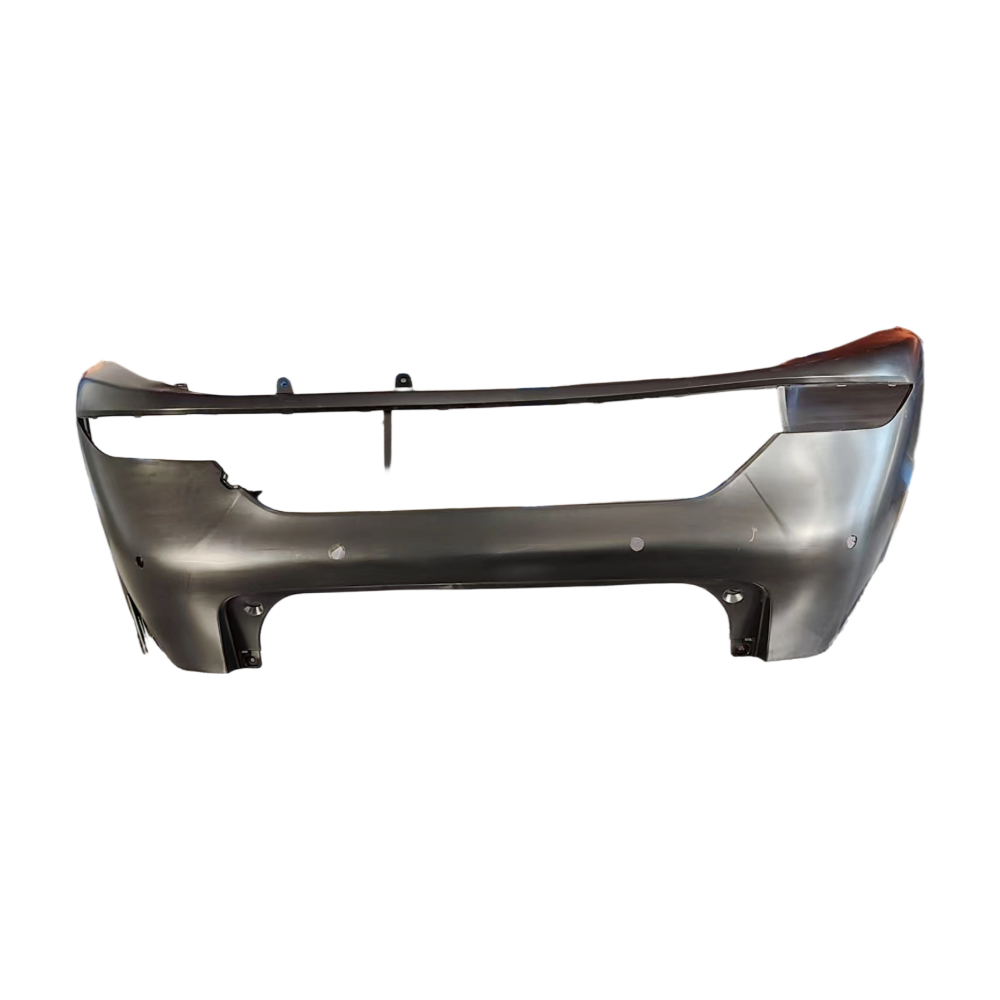
- TYJ-PR23-007 — rear bumper, Prius 2023. Built from premium ABS / PC / PP plastic, with an impact-absorbing PP construction that combines high flexibility with fracture resistance. OEM-contour alignment is designed for direct bolt-on installation, and the surface finish is specified for good paint adhesion and body matching. Packed 3 units per carton, 200 x 20 x 65 cm, 0.26 CBM.
- TYJ-PR23-001A — head lamp, Prius 2023. An aerodynamic, high-impact PC housing designed for shock resistance and thermal performance, precision-moulded for exact direct vehicle fitment, with high-efficiency light reflection for clear beam delivery. Packed 2 units per carton, 86 x 31 x 58 cm, 0.155 CBM.
- TYJ-01-1080 — head lamp, Camry 2024 USA. A high-impact PC lens with a thermally resistant body, precision-crafted to match 2024 factory mounting geometry, with advanced light reflection technology for night vision. Packed 2 units per carton, 76 x 28 x 52.5 cm, 0.112 CBM.
- TYJ-01-1001 — head lamp, Toyota Camry 2018 USA / SE / XSE. A premium-grade UV-resistant PC lens paired with a shockproof ABS body, engineered specifically for Camry SE and XSE trims, with superior beam projection and long-lasting optical performance. Packed 4 units per carton, 74 x 56 x 56 cm, 0.232 CBM.
- TYJ-TCM24-001A — head lamp, Tacoma 2024 LE. A heavy-duty, impact-resistant ABS / PC construction for truck applications, with a direct-fit design engineered to match factory LE trim dimensions and a weatherproof seal structure that prevents moisture build-up and fading. Packed 2 units per carton, 56 x 29 x 58 cm, 0.094 CBM.
- TYJ-CRU23-001 — head lamp, Corolla 2023 USA. A premium-grade PC lens with a durable plastic housing and high shock resistance, precision-engineered alignment for seamless direct fitment, and a high-transmittance clear lens. Packed 2 units per carton, 88 x 30 x 71.5 cm, 0.189 CBM.
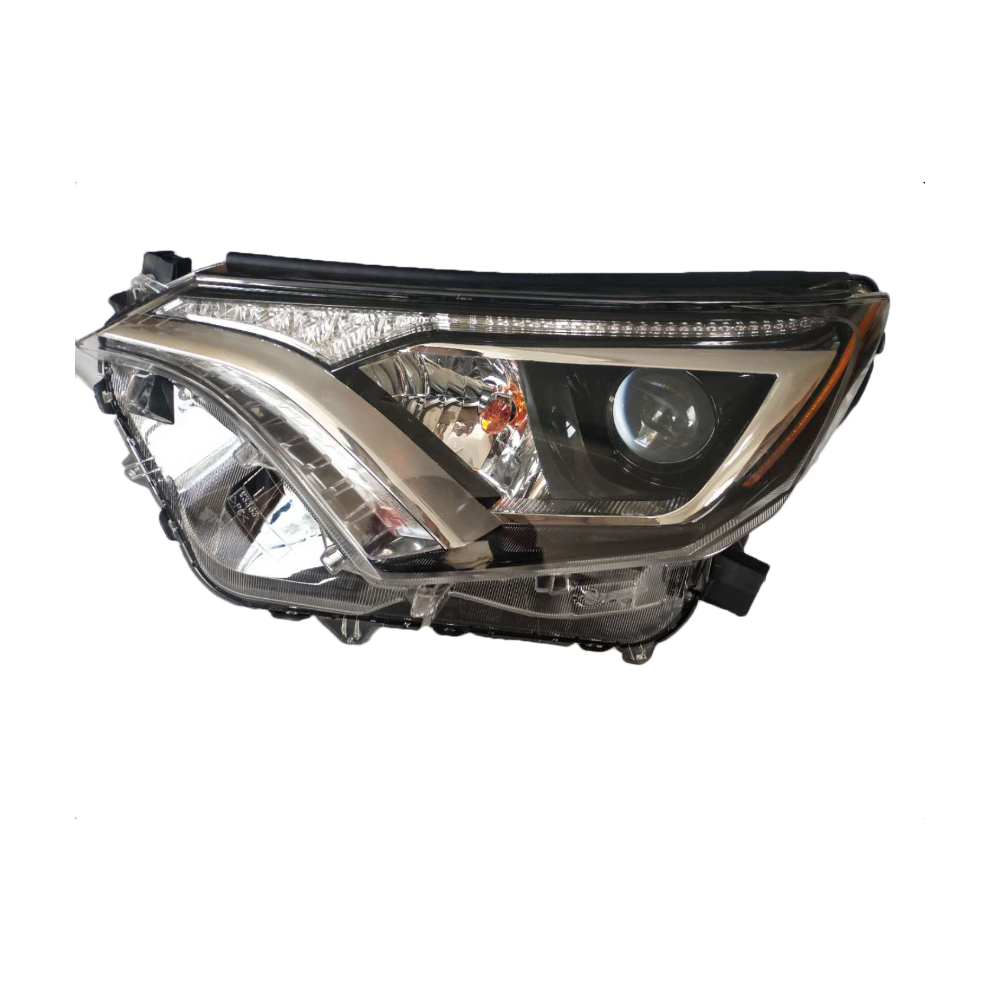
- TYJ-01-0815 — head lamp, Toyota RAV4 2016 USA. A UV-coated PC lens bonded to a durable ABS base for high shock resistance, with exact factory mounting points for direct drop-in replacement and an advanced reflector design for beam coverage. Packed 4 units per carton, 60 x 53 x 53 cm, 0.169 CBM.
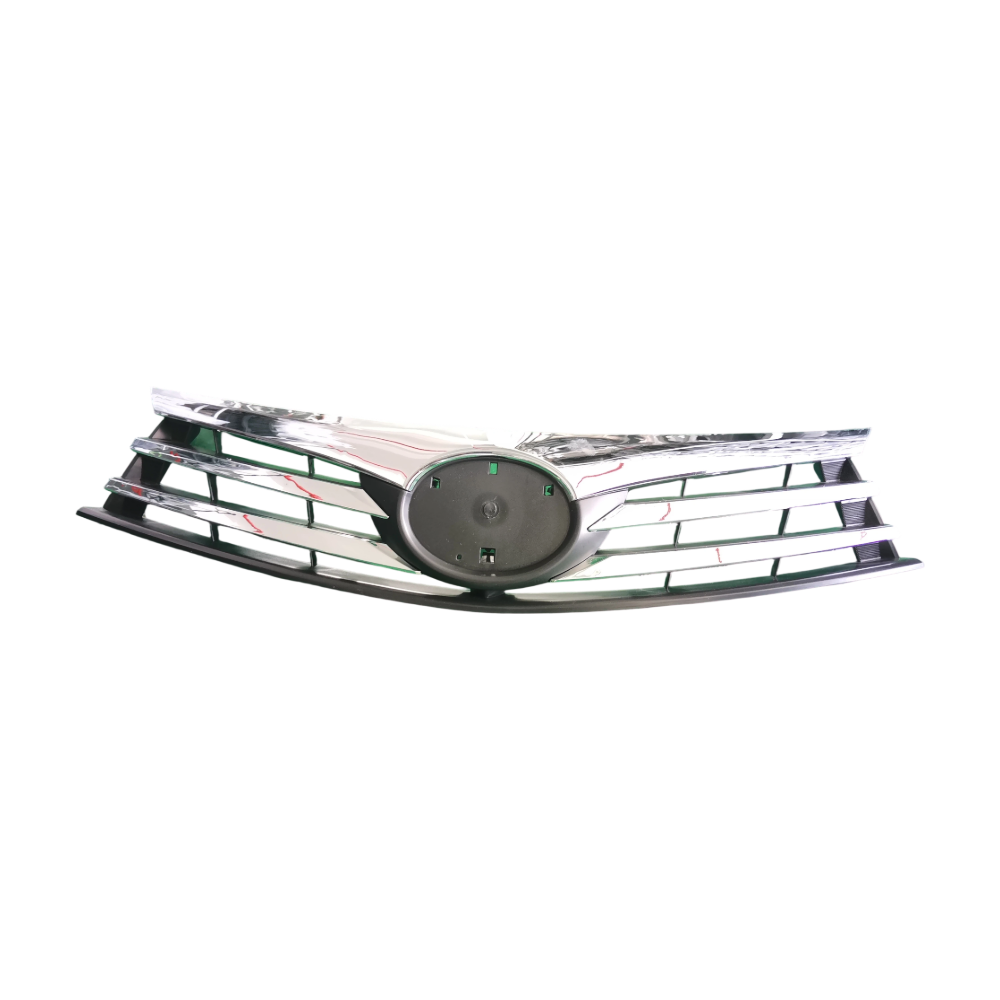
- TYJ-01-0014 — grille, Corolla 2014 Middle East. A high-grade ABS structure offering impact and weather resistance, moulded to exact vehicle contours for a seamless front-end fit, with a surface finish suited to paint adhesion and customisation. Packed 10 units per carton, 86 x 39 x 49 cm, 0.164 CBM.
- TYJ-01-0022 — front bumper, Corolla 2014 Middle East. A rugged, flexible PP construction designed for crash absorption and impact resistance, with direct fit replacement aligned to original mounting points and good surface paint adhesion for body shop painting. Packed 3 units per carton, 200 x 21 x 56 cm, 0.235 CBM.
| Vehicle / market scope | Part | TYJ model | Material | Packaging |
|---|---|---|---|---|
| Prius 2023 | Rear bumper | TYJ-PR23-007 | Premium ABS / PC / PP | 3 pcs, 200 x 20 x 65 cm, 0.26 CBM |
| Prius 2023 | Head lamp | TYJ-PR23-001A | Optic-grade PC & ABS | 2 pcs, 86 x 31 x 58 cm, 0.155 CBM |
| Camry 2024 USA | Head lamp | TYJ-01-1080 | Optic-grade PC & ABS | 2 pcs, 76 x 28 x 52.5 cm, 0.112 CBM |
| Camry 2018 USA / SE / XSE | Head lamp | TYJ-01-1001 | Optic-grade PC & ABS | 4 pcs, 74 x 56 x 56 cm, 0.232 CBM |
| Tacoma 2024 LE | Head lamp | TYJ-TCM24-001A | Optic-grade PC & ABS | 2 pcs, 56 x 29 x 58 cm, 0.094 CBM |
| Corolla 2023 USA | Head lamp | TYJ-CRU23-001 | Optic-grade PC & ABS | 2 pcs, 88 x 30 x 71.5 cm, 0.189 CBM |
| RAV4 2016 USA | Head lamp | TYJ-01-0815 | Optic-grade PC & ABS | 4 pcs, 60 x 53 x 53 cm, 0.169 CBM |
| Corolla 2014 Middle East | Grille | TYJ-01-0014 | Premium ABS / PC / PP | 10 pcs, 86 x 39 x 49 cm, 0.164 CBM |
| Corolla 2014 Middle East | Front bumper | TYJ-01-0022 | Premium ABS / PC / PP | 3 pcs, 200 x 21 x 56 cm, 0.235 CBM |
Read the scope line before the price line. Each TYJ model code is tied to a defined model year, market specification and, in some cases, trim level. A lamp validated for Tacoma 2024 LE trim is not interchangeable with a different trim, and a Corolla 2014 Middle East front-end part is scoped to that market specification rather than to every 2014 Corolla.
Materials and Optics: What Makes a Direct-Fit Part Hold Up
Replacement exterior parts fail in predictable ways: cracks at mounting bosses, hazing on the lens, moisture inside the housing, or paint that lifts at the edge of a panel. The material specification is what addresses each failure mode.
Bumpers. The PP content in a bumper such as TYJ-PR23-007 provides impact absorption with the flexibility and fracture resistance that a rigid shell would not offer, while the ABS and PC content supports contour stability. OEM-contour alignment is what allows direct bolt-on installation instead of drilling or shimming.
Grilles. A grille such as TYJ-01-0014 relies on high-grade ABS for impact and weather resistance combined with a fine surface finish, because the grille is one of the most visually exposed parts of the front end and is frequently painted or customised.
Head lamps. Optical assemblies combine two different jobs in one unit. The lens must transmit light without hazing — which is why TYJ lamp assemblies use optic-grade PC and ABS polymers with UV-resistant or UV-coated lenses — while the housing must manage heat and vibration. TYJ-TCM24-001A adds a weatherproof seal structure specifically to prevent moisture build-up and fading, which is the mechanism behind most premature lamp failures in service.
In the U.S. market scenario, head lamp requirements are stricter than the physical part alone. Applications in the United States automotive aftermarket and vehicle body parts sector are specified with DOT / SAE certified clear lenses, UV-resistant coating and a perfectly matching OEM fit, and are designed for all-weather driving. These assemblies operate through vehicle electrical control via switch or auto-sensors and are used together with supporting equipment such as the headlight wiring harness, bulbs or LED ballasts, and mounting brackets — a fitment detail that buyers should plan for when quoting a repair, because a lamp that is dimensionally correct but electrically incompatible still returns a vehicle to the bay.
Packaging is part of the engineering specification rather than an afterthought. Because each SKU has a defined units-per-carton figure and CBM value, a distributor can calculate exactly how a mixed order of bumpers, grilles and lamp assemblies will occupy a container before placing it.
Application Scenarios: U.S. Collision Repair and Gulf Aftermarket
The two market scenarios in the TYJ programme place different demands on the same categories.
United States: compliance-led collision repair. U.S. programmes are driven by all-weather driving conditions and strict DOT / SAE compliance expectations. The model coverage reflects that: TYJ-01-1080 for Camry 2024 USA, TYJ-01-1001 for Camry 2018 USA SE and XSE trims, TYJ-01-0815 for RAV4 2016 USA, TYJ-CRU23-001 for Corolla 2023 USA and TYJ-TCM24-001A for Tacoma 2024 LE. A body shop working on a truck repair benefits from the heavy-duty ABS and PC construction of the Tacoma LE lamp, while a Camry or RAV4 repair is served by assemblies engineered around factory mounting geometry and beam projection.
Middle East: heat, dust and face-lift restoration. Applications in the UAE and Saudi Arabia operate under high-temperature and desert dust conditions alongside urban and highway driving. For the Corolla 2014 Middle East specification, the TYJ front-end set covers the front bumper (TYJ-01-0022), grille (TYJ-01-0014), head lamp (TYJ-01-0001A), fog lamp (TYJ-01-0008) and back lamp (TYJ-01-0005), which allows a body shop to complete a front or rear repair from one programme rather than sourcing each part separately. The same market requirements — weather resistance, dust exposure and paint matching — apply to accessories such as the Corolla 2014 Middle East side mirror (TYJ-01-0030-A), where anti-glare glass and a heated defogging function matched to OE wire PINs are specified.
Scenario readiness is not only about the vehicle. It is about the operating environment, the market regulation and the repair workflow the part will enter.
Field Evidence from Distributor Programmes
The clearest indication of scenario fitment is repeat ordering, not a single shipment. In the United Arab Emirates, an auto parts wholesaler and distributor supplied by Gold Auto Part ran front and rear crash repair and vehicle face-lift restoration programmes using Corolla 2014 Middle East exterior parts in bulk container loads of over 500 sets. The highlighted product characteristics were high-impact PP and ABS material, good paint adhesion and the original clip slot design. Over a period of three to five years the programme recorded a 100% successful fitment rate, zero customer complaints and sustained repeat orders.
Comparable results are recorded for lighting: back lamp and head lamp programmes for the same market achieved a 100% successful fitment rate and zero customer complaints, with high-precision optic lenses, seamless OE alignment and plug-and-play wiring as the recurring technical highlights. In a wholesale context, those three attributes compress installation time, which is the variable that most directly affects a distributor's reputation with the body shops it serves.
What the Aftermarket Data Says About Body-Part Demand
Three independent signals support sustained demand for Toyota exterior replacement parts. The first is fleet age: the average age of vehicles on U.S. roads reached 12.6 years in 2026, which shifts spending toward maintaining and repairing vehicles already in service. The second is brand density: Toyota held an 11.4% share of the total global automotive market in 2026, which determines how many vehicles require each model-specific part number. The third is repair volume: the global automotive collision repair market was valued at USD 208.0 billion in 2025, and bumpers and grilles sit directly inside that spend.
Supply-side data reinforces the same direction. China's exports of motor vehicle parts to the United States reached USD 11.54 billion in 2024, reflecting how much of the replacement-parts pipeline is now sourced from Chinese manufacturing hubs such as Wenzhou. In lighting specifically, industry sources point to a gradual shift toward LED technology as buyers prioritise energy efficiency, which affects how lamp assemblies are specified over the coming model years.
Adjacent replacement categories show the same pattern of steady, age-driven demand. Market research covering automotive engine mounts estimated that segment at USD 16.73 billion in 2024 with a projected 3.64% CAGR through 2035, and the vehicle filters aftermarket — where replacement rates are high by nature — is expected to hold a 69.55% share of the broader filter market by 2026. For distributors, that matters because exterior body parts, engine valves, filters and mounts are frequently purchased from the same supplier programme, and Gold Auto Part's catalogue spans engine valves, Toyota exterior parts, oil filters and air filters for that reason.
Direct-Fit Aftermarket Parts Versus Traditional Sourcing: Trade-offs and Limits
A scenario-based programme is not automatically the right answer in every case. Three limits are worth stating plainly.
1. Scope specificity cuts both ways. The advantage of a scoped model code is precision; the limitation is that precision is narrow. TYJ-TCM24-001A is engineered for Tacoma 2024 LE trim dimensions, and TYJ-01-1001 is engineered for Camry 2018 USA SE and XSE trims. A buyer who orders by model year alone, without confirming market specification and trim, risks a fitment mismatch. Checking the full scope line before ordering is mandatory, not optional.
2. Aftermarket replacement is not OEM supply. These are aftermarket replacement parts engineered to OE contours and mounting geometry. Where a vehicle is covered by a manufacturer warranty, or where a repair programme contractually requires manufacturer-branded parts and documentation, the OE channel may still be the required path. In the U.S. scenario, the parts are specified for DOT / SAE certified clear lenses and all-weather operation, but buyers remain responsible for confirming that the applicable regulatory requirements in their own market are satisfied for the specific application.
3. Freight geometry and refinish are outside the part. A Prius 2023 rear bumper ships three units per carton at 0.26 CBM, while a Tacoma 2024 LE head lamp ships two units per carton at 0.094 CBM. Mixed orders therefore need deliberate load planning, because the bumper line will dominate volume. Separately, because exterior parts are designed around paint adhesion and body matching, the final colour outcome depends on the refinish process used by the body shop, and installation quality depends on the technician confirming clip slots, brackets and wiring rather than forcing a part into place.
Comparing sourcing models clarifies where each approach fits. A single-supplier catalogue purchase is simple but rarely covers bumper, grille and lamp from one consistent material and fitment standard. A pure lowest-price mix across several vendors can reduce unit cost while increasing fitment returns and rework. A scenario-based programme with documented scopes, defined materials and published carton data trades some flexibility for predictability — which is usually the variable that determines whether a distributor keeps a repair network's business.
On the supply side, Gold Auto Part operates an OEM / ODM / customizable production model covering vehicle-model adaptation, appearance customisation, packaging and label customisation, and replacement-part solution development, with a monthly capacity of 100,000 units, a lead time of 30 to 60 days and an MOQ of 50 to 100 units. Quality control consists of inspection and testing before shipment, and supply chain partners operate under ISO 9001 and IATF 16949 quality management standards — the latter being the global quality management standard for the automotive industry. Customer support covers part selection, order assistance and after-sales service.
Future Outlook
Three developments are likely to shape Toyota exterior-part sourcing over the next planning cycles.
First, repair demand should remain structurally firm as long as average vehicle age stays elevated; a fleet that is older than a decade in the United States consumes bumpers, grilles and lamp assemblies at replacement rates rather than at new-vehicle rates. Second, the gradual transition toward LED-based lighting will change how lamp assemblies are specified and tested, which raises the value of suppliers who can adapt a housing platform rather than only replicate an existing one. Third, container economics will continue to reward buyers who plan by CBM and units per carton rather than by unit price alone, particularly when a single order mixes low-density bumpers with compact lamp assemblies.
For importers and distributors, the practical implication is that supplier evaluation should focus on scope documentation, material specification, packaging data and fitment evidence — the four inputs that determine whether a programme performs in the bay.
FAQ
Which Toyota models do TYJ replacement bumpers, grilles and head lamps cover?
The documented TYJ scopes include: a rear bumper for Prius 2023 (TYJ-PR23-007) and a head lamp for Prius 2023 (TYJ-PR23-001A); a head lamp for Camry 2024 USA (TYJ-01-1080); a head lamp for Toyota Camry 2018 USA SE and XSE (TYJ-01-1001); a head lamp for Tacoma 2024 LE (TYJ-TCM24-001A); a head lamp for Corolla 2023 USA (TYJ-CRU23-001); a head lamp for Toyota RAV4 2016 USA (TYJ-01-0815); and, for Corolla 2014 Middle East, a grille (TYJ-01-0014) and a front bumper (TYJ-01-0022). Each code is scoped to a defined model year and market specification.
What materials are used in these Toyota replacement body parts and lighting assemblies?
Bumpers and grilles are produced in premium ABS / PC / PP plastic, where the PP content provides impact absorption, flexibility and fracture resistance and the ABS / PC content supports contour stability and paint adhesion. Lighting assemblies use optic-grade PC and ABS polymers: UV-resistant or UV-coated polycarbonate lenses bonded to ABS housings for shock resistance and thermal performance, with a weatherproof seal structure on models such as TYJ-TCM24-001A to prevent moisture build-up and fading.
How are TYJ Toyota head lamp assemblies and bumpers packaged for container shipping?
Packaging is specified per SKU. TYJ-TCM24-001A ships 2 units per carton at 56 x 29 x 58 cm and 0.094 CBM; TYJ-01-1080 ships 2 units per carton at 76 x 28 x 52.5 cm and 0.112 CBM; TYJ-CRU23-001 ships 2 units per carton at 88 x 30 x 71.5 cm and 0.189 CBM; TYJ-01-0815 ships 4 units per carton at 60 x 53 x 53 cm and 0.169 CBM; TYJ-01-1001 ships 4 units per carton at 74 x 56 x 56 cm and 0.232 CBM. The Prius 2023 rear bumper TYJ-PR23-007 ships 3 units per carton at 200 x 20 x 65 cm and 0.26 CBM, and the Corolla 2014 Middle East grille TYJ-01-0014 ships 10 units per carton at 0.164 CBM. Buyers use these figures to plan container loading and warehouse slotting.
What fitment and compliance checks matter for a Toyota replacement head lamp in the U.S. market?
U.S. applications are specified with DOT / SAE certified clear lenses, UV-resistant coating and a perfect OEM fit, and are designed for all-weather driving. Such assemblies operate through vehicle electrical control via switch or auto-sensors and require supporting equipment including the headlight wiring harness, bulbs or LED ballasts, and mounting brackets. Because mounting geometry varies by trim, buyers should confirm the exact model year and trim — for example Tacoma 2024 LE, or Camry 2018 SE and XSE — before ordering.
Does Gold Auto Part offer OEM / ODM customisation for Toyota exterior part programmes?
Yes. The documented production mode is OEM / ODM / customizable, covering vehicle-model adaptation, appearance customisation, packaging and label customisation, and replacement-part solution development. Monthly capacity is 100,000 units, lead time is 30 to 60 days, and minimum order quantity is 50 to 100 units. Quality control consists of inspection and testing before shipment, supply chain partners operate under ISO 9001 and IATF 16949 quality management standards, and customer support covers part selection, order assistance and after-sales service.
What evidence exists that these Toyota aftermarket parts fit in real repair programmes?
In the United Arab Emirates, an auto parts wholesaler and distributor ran front and rear crash repair and vehicle face-lift restoration programmes using Corolla 2014 Middle East exterior parts, ordered in bulk container loads of over 500 sets. Recorded characteristics were high-impact PP and ABS material, good paint adhesion and the original clip slot design, with a 100% successful fitment rate, zero customer complaints and sustained repeat orders over three to five years. Comparable lighting programmes in the same market recorded a 100% successful fitment rate and zero customer complaints, with high-precision optic lenses, seamless OE alignment and plug-and-play wiring.
Are aftermarket replacement parts a substitute for OEM parts in every case?
No. These are aftermarket replacement parts engineered to OE contours and factory mounting geometry. Where a vehicle remains under manufacturer warranty, or where a repair programme requires manufacturer-branded parts and documentation, the OE channel may still be required. Buyers should also confirm that the regulatory requirements applicable in their own market are satisfied for the specific vehicle and application, since requirements differ between regions and change over time.
Closing Perspective
Toyota replacement parts succeed in body manufacturing and collision repair for reasons that are measurable: a scope that matches the vehicle, a material specification built around the failure mode, a finish that accepts paint, and packaging that a distributor can plan around. The TYJ bumper, grille and head lamp ranges document those four attributes per model code rather than per marketing claim, which is what allows an importer, wholesaler or body shop to evaluate a programme on fitment evidence instead of on price alone.