
Tower Crane Offer Comparison: A QTZ Buyer Decision Matrix
Tower Crane Offer Comparison: A QTZ Buyer Decision Matrix
Two tower crane offers can quote the same maximum lifting capacity and still describe different machines for the same building. The gap normally appears where the site actually works: at the radius where the heaviest recurring load has to be placed, at the mast height needed to reach the final floor, and in the electrical, transport and documentation scope that sits behind the headline price. A shortlist built on tonnage alone usually has to be rebuilt after the technical review.
A more reliable approach is a normalization matrix. It fixes the crane category first, puts every offer on the same basis for capacity, jib, mast height, electrical options and modular design, and only then compares purchasing terms and acceptance criteria. The QTZ designations that appear across Chinese offers — QTZ80 (5211)-5T and QTZ100 (6013)-8T, through QTZ125, QTZ160, QTZ250 and QTZ315 — are useful reference points inside that matrix, but they are not selection answers on their own.
Why identical tonnage rarely means identical work
Tower crane capacity is not one number. Maximum lifting capacity states the heaviest load the machine can lift; the rated lifting moment expresses combined lifting capability across working spans, normally in tonne-metres. Because the load a crane can lift usually decreases as the working span increases, two cranes that agree at maximum capacity can diverge sharply at 40 m, 50 m or 60 m radius — which is where most of the work actually happens on a building site.
The buyer's version of that rule is simple: normalize every offer at the radius you will really use, then again at the jib tip. If the heaviest prefabricated unit must be placed at 45 m, the number that decides the comparison is rated capacity at 45 m, not 5 t or 8 t quoted at minimum radius. An offer that cannot show that figure on a load chart is incomplete rather than competitive, and treating it as cheaper only defers the problem to the erection meeting.
Selection discipline matters here more than catalogue reading. Model choice should follow building height, maximum lifting weight, working radius, lifting height, site conditions and the specific lifting case, and it should be settled against the load chart rather than the headline tonnage.
Step 1 — Fix the crane category before comparing numbers
Category sets geometry, erection method, foundation and often the airspace the crane can work within, so it belongs at the top of the matrix. The families buyers meet most often are flat top (topless), topkit (hammerhead), luffing jib and derrick, with configuration variants that include ballasted, travelling, buttress type and self-climbing internal machines.
A flat top tower crane carries a horizontal jib with a simplified structure; it is generally easier to install and dismantle and fits industrial plants, residential and commercial complexes and large construction projects. A luffing jib tower crane raises and lowers the jib to control working radius, which suits narrow sites, dense surroundings where rotation space must be controlled, and super high-rise construction. A topkit or hammerhead design supports the jib from a cathead with pendant bars — a different structural arrangement with its own erection sequence and clearance profile. Derrick and heavy-duty special machines appear where lifting is concentrated and the site cannot host a full-radius crane at all.
If two offers describe different categories, they are not yet comparable. Price differences at that stage usually reflect different machines, not different margins, and the shortlist should be split before any commercial scoring begins.
Step 2 — Normalize capacity across radius, moment and the QTZ code
QTZ designations compress three pieces of information, and buyers who decode them can screen offers faster. In the widely used Chinese convention, the numeric group after QTZ relates to the rated load moment class in kN·m; the four digits in brackets describe jib length in metres followed by tip load in tonnes multiplied by ten; the figure after the hyphen is maximum lifting capacity in tonnes.
- QTZ80 (5211)-5T — approximately the 800 kN·m class, a 52 m jib code, a 1.1 t tip rating and 5 t maximum capacity.
- QTZ100 (6013)-8T — approximately the 1,000 kN·m class, a 60 m jib code, a 1.3 t tip rating and 8 t maximum capacity.
The code is a screening tool, not a specification. It does not fix mechanism speeds, mast configuration, free-standing height, foundation loads or the shape of the full load chart, and two machines inside one class can be configured very differently. A normalized comparison therefore has to end with the manufacturer's chart at the project radius and the project height — the code only tells the buyer which band an offer belongs to.
| Comparison line | What belongs on the sheet |
|---|---|
| Capacity at working radius | Rated tonnes at the specific radius used, plus the safety margin the lift plan requires |
| Capacity at jib tip | Rated tonnes at maximum radius, checked against the lightest recurring loads |
| Jib against covered area | Footprint, material storage, transport routes and lift points the jib must reach |
| Mast height and tie-in plan | Free-standing height, tie-in levels, climbing steps, standard section configuration |
| Electrical and control scope | Drives per motion, variable-frequency inclusion, motor and reducer matching |
| Modularity and transport | Section and panel scheme, loading plan, container fit, erection time |
| Documentation and acceptance | Certificates, test records, safety-device verification, punch list |
Step 3 — Jib length and mast height reshape the whole package
Jib length drives coverage, and coverage should follow the site rather than the catalogue. Working span is normally set by the area that must be served: building size, material storage, transport routes and lift positions. Extending the jib past that requirement raises load-moment demand, can push the offer into a larger and more expensive class, and changes foundation and ballast requirements without adding usable coverage. A long jib in the 70 m class only earns its cost when the lift plan genuinely reaches that far.
Mast height is the second lever, and the relevant figure is a sequence rather than a single maximum: free-standing height before the first tie-in, the number of tie-ins, climbing steps on a self-climbing internal machine, and the standard section configuration that supports that sequence. On high-rise building work these details frequently decide whether an offer is buildable at all, because an extra tie-in level or a different foundation changes the structural interface with the building.
A practical rule for the matrix: compare mast height against final elevation plus clearance, and require the tie-in scheme in writing. Offers that quote only a maximum height leave the most expensive part of the interface unresolved.
Step 4 — Line-item the electrical and control scope
Electrical scope is where offers most often differ invisibly. Two packages can share a load chart and still differ in the drives supplied for hoisting, slewing and trolley travel, in whether variable-frequency control is applied to each motion, and in how motors and reducers are matched to the duty the site will impose.
Energy efficiency on a tower crane depends on motors, reducers, variable-frequency control systems, the efficiency of the hoisting and luffing mechanisms, load rate and operating mode; it cannot be judged by brand alone. That turns the electrical section of an offer into a set of questions rather than a yes-or-no feature: which motions are variable-frequency controlled, what motor and reducer package is matched to each, what the site power supply has to deliver, and how the control interface is arranged in the cab. A full frequency control package is worth pricing explicitly, because it changes both consumption behaviour and maintenance routines over the life of the machine.
Step 5 — Price the modularity, transport and erection scheme
For export buyers the transport scheme is part of the machine. Standard section design, panel arrangement and loading plan determine how many containers a crane occupies, how quickly it can be erected, and how easily spares move between sites. A modular package that packs efficiently and matches common section interfaces is worth more than a marginal capacity advantage that arrives as extra freight and extra crane time.
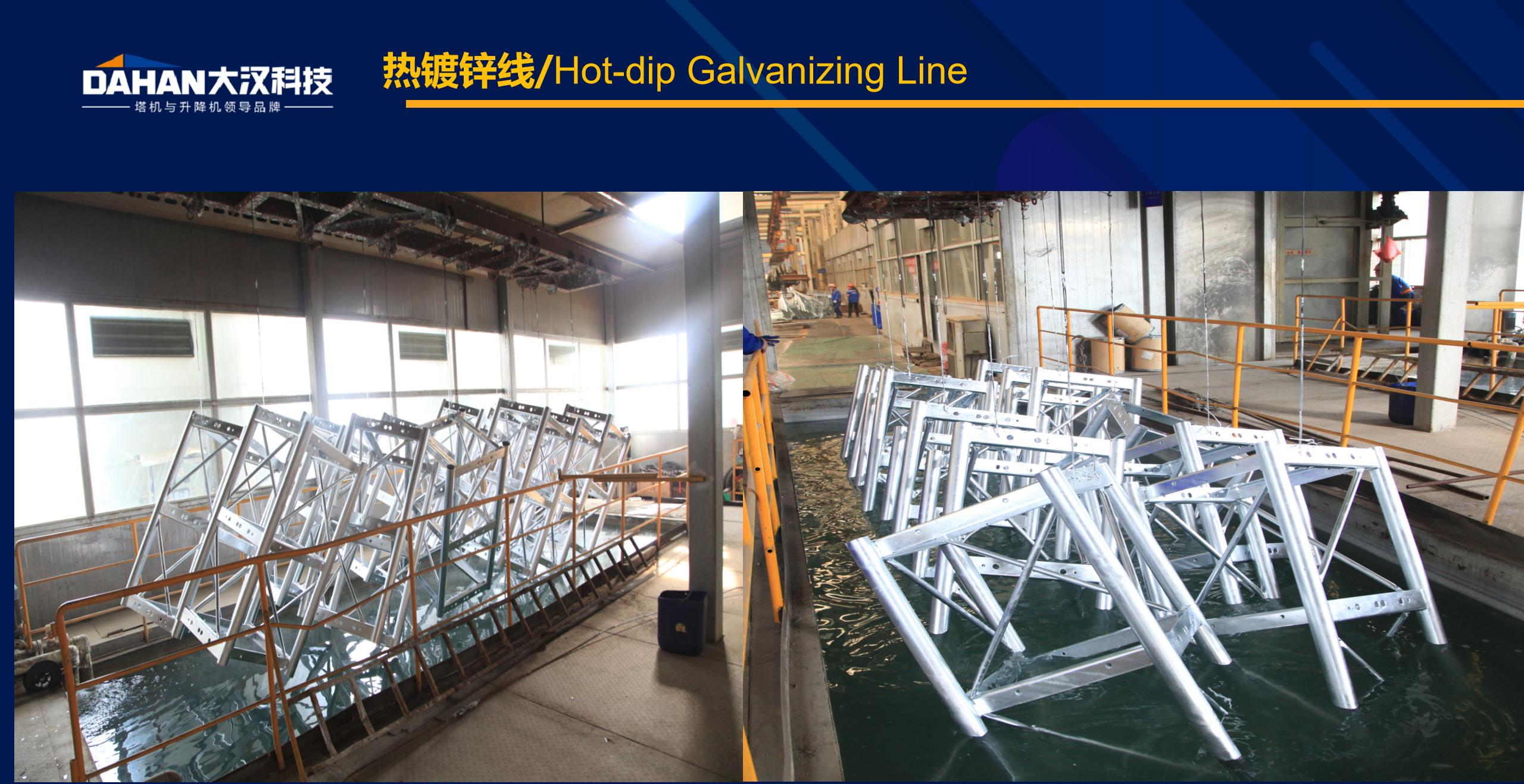
Dahan Technology states that its standard sections are compatible with Potain, that its materials are selected for low temperatures and extreme conditions, and that its loading and panel schemes are designed for transport and export. Those claims should be tested inside the offer rather than accepted from a brochure: ask for the loading plan, the section drawings and the panel dimensions, and confirm what compatibility covers — interface geometry, pin and bolt detail, or full interchangeability. That boundary matters, because an assumed interchangeability that does not exist becomes a spare-parts problem two years after handover.
Reading the QTZ ladder as a reference scale
The sequence from QTZ80 (5211)-5T through QTZ100 (6013)-8T and on to QTZ125, QTZ160, QTZ250 and QTZ315 describes a rising scale of load-moment classes. It is a useful sanity check: when the required capacity at the working radius sits near the top of one class, the next class is usually worth pricing as well, because margin at radius is cheaper to buy in the crane than to recover on site.
It is not a selection method. Within one class, jib length, mast configuration, electrical scope and transport scheme can vary enough to change both price and fit. The ladder says which band an offer belongs to; the load chart says whether the offer works.
| Reference designation | Class signal | Still to verify in the offer |
|---|---|---|
| QTZ80 (5211)-5T | Around 800 kN·m, 52 m jib code, 5 t maximum | Chart at project radius, mast and tie-in plan, ballast scheme |
| QTZ100 (6013)-8T | Around 1,000 kN·m, 60 m jib code, 8 t maximum | Same checks, plus mechanism speeds and electrical scope |
| QTZ125 | Mid band above QTZ100 | Jib options, chart at radius, erection scheme |
| QTZ160 | Upper-mid band | Foundation loads, transport plan, documentation set |
| QTZ250 | Heavy band | Site logistics, erection equipment, acceptance plan |
| QTZ315 | Heavy band | Project-specific engineering, delivery schedule, test records |
Above that ladder the range continues into heavy-duty territory. Dahan Technology states that it can configure machines across 5 t, 6 t, 8 t, 10 t, 12 t, 16 t, 18 t, 25 t, 32 t, 45 t, 60 t, 125 t, 160 t, 200 t and 220 t classes, which is relevant when a single project mixes a medium and small-sized tower crane for general building work with a wind power special tower crane or a 200 ton heavy duty tower crane for concentrated heavy lifts.
Commercial terms, documentation and the acceptance protocol
Once the technical basis is normalized, the commercial section can be compared line by line. The costs that decide the real difference between offers usually sit outside the machine price: foundation and ballast responsibility, erection and commissioning, transport and insurance, spare-parts package, training, warranty terms and delivery schedule. Purchase cost is affected by model, lifting capacity, load moment, working radius, lifting height, basic configuration, electrical system and control system, so a single ratio cannot be applied across brands and models; for overseas projects the full-life figure includes freight, installation and commissioning, spare-parts supply and after-sales service.
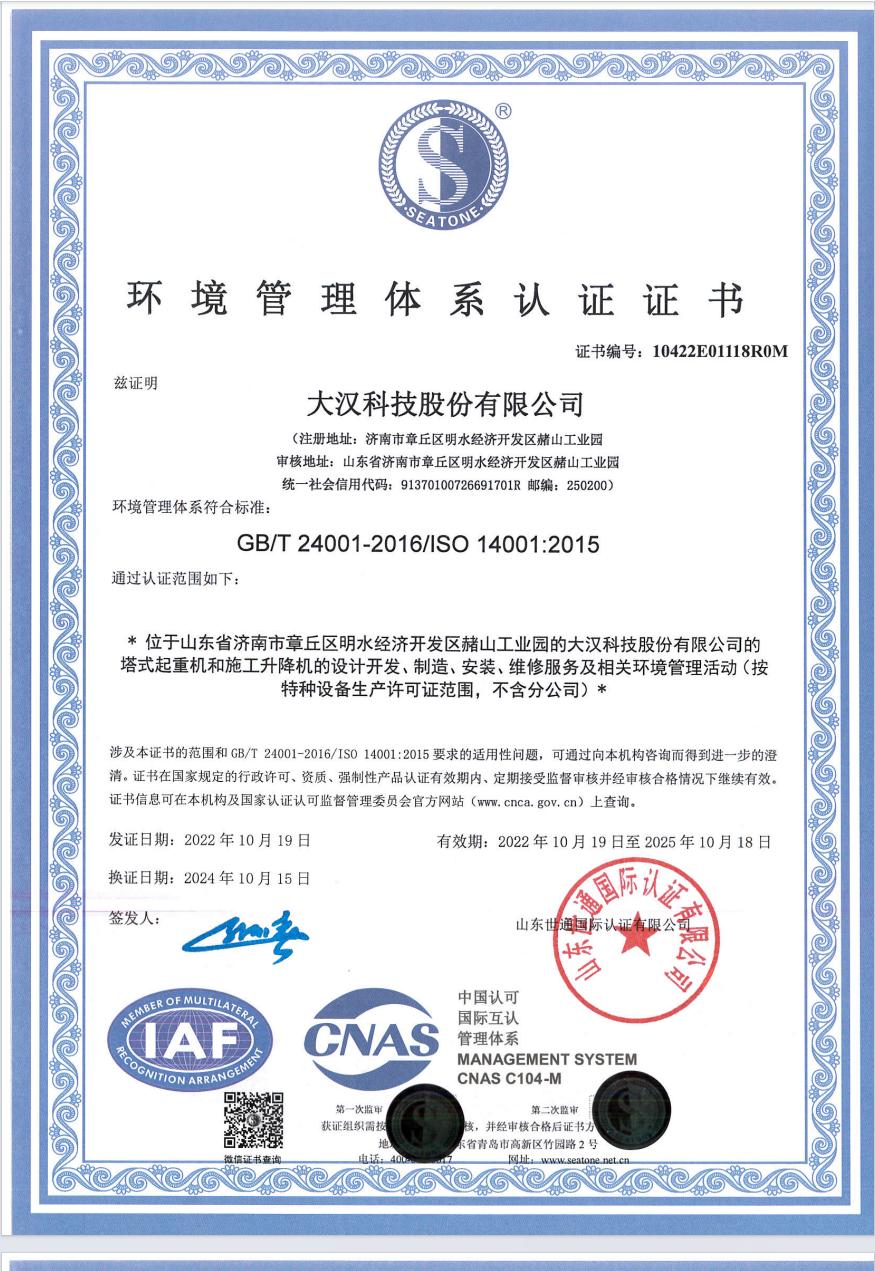
Documentation is part of the price, not an afterthought. An offer should name the certificates and test records supplied with the machine. Dahan Technology holds CE, EAC, SGS and ISO 9001 certificates, and a CE certified tower crane claim is only useful to a buyer when the issuing body, the scope and the validity period match the market the crane will work in.
Acceptance criteria should be agreed before the contract rather than negotiated at handover. A workable protocol covers pre-delivery inspection, document handover, load testing against the chart, safety-device verification, electrical checks and a punch list with a closure date. Where a buyer is comparing two otherwise similar offers, the offer with the clearer acceptance route is often the lower-risk package even when the machine price is marginally higher.
Safety systems belong on the acceptance sheet
The safety package on a tower crane is a set of verifiable devices, not a marketing line: overload protection, moment limitation, height and travel limits, and emergency stop. Each device should be checked in three steps — installed and correctly set against the load chart, functionally tested with the result recorded, and listed in the handover documentation together with its test record.
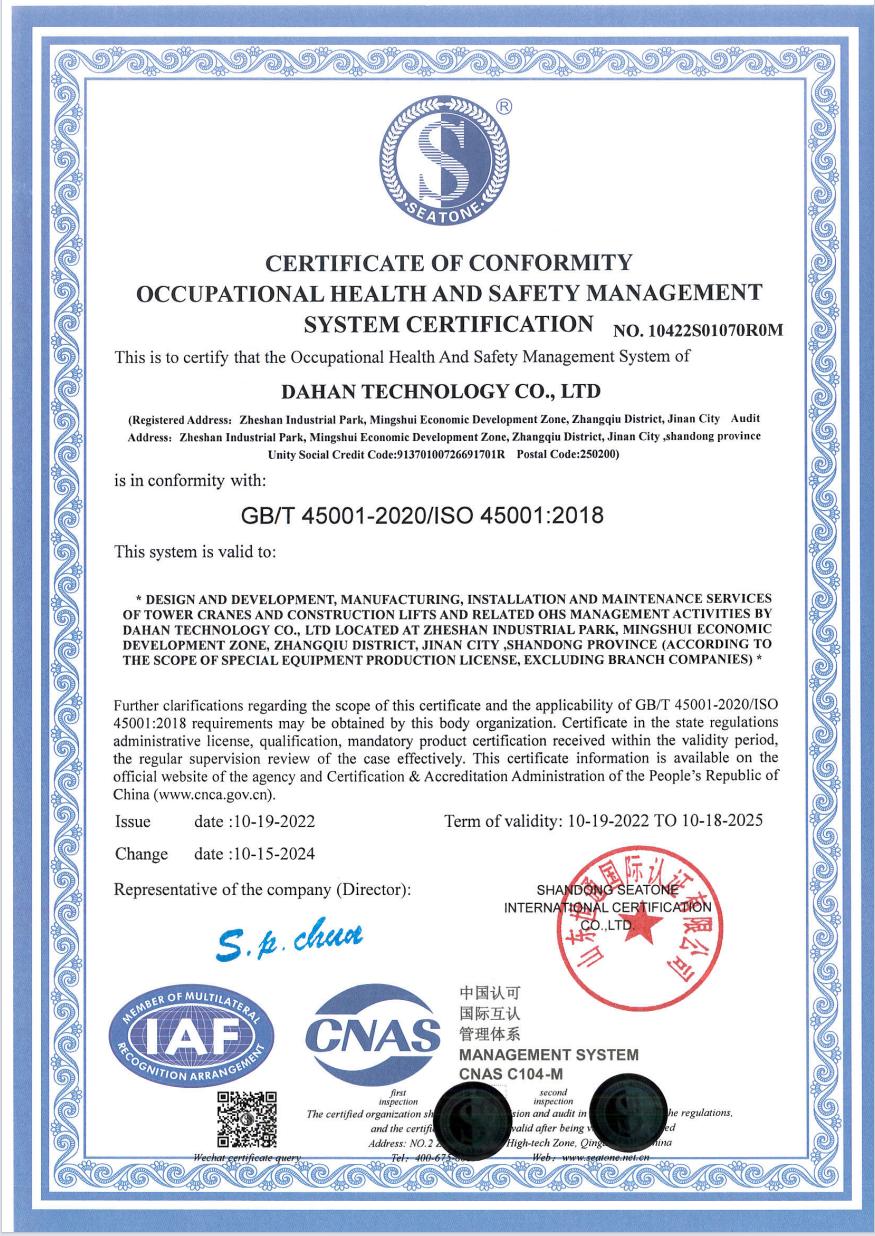
Design rules should be checked against the market of use. In China, GB/T 13752-2017 defines the design rules and safety specifications for tower cranes; other markets apply their own frameworks, and an offer should state which framework the machine is built and inspected against. That single line in a quotation prevents a long argument later about whose checklist governs handover.
Matching site type to offer scope
The same matrix works across project types, but the weighting changes. High-rise residential and commercial buildings put weight on mast height, tie-in sequence and climbing, where flat top and self-climbing internal configurations often lead the shortlist. Infrastructure, bridges and large steel structures put weight on capacity at long radius and on jib length, because heavy components are placed far from the mast. Industrial plants usually need coverage of a wide, low footprint rather than height, which favours shorter jibs and simpler erection.
Energy work sits at the other end. Wind power, thermal power, road and bridge, port and nuclear power projects place demands that a general building crane does not meet, and concentrated heavy lifting is where heavy-duty classes enter the comparison. Dahan Technology lists residential buildings, commercial complexes, industrial plants, infrastructure, large steel-structure projects and energy-engineering projects among the applications its tower cranes serve, with wind power, thermal power, road and bridge, port and nuclear power treated as special-project areas.
What published market data does and does not settle
Market data frames the procurement environment but does not choose a crane. The global tower crane market was estimated at roughly USD 5.9–6.44 billion in 2025 across two published estimates; China exported USD 694 million of tower cranes in 2024 under HS code 842620, according to UN Comtrade data compiled by OEC; and flat-top designs accounted for 46.37% of tower crane revenue in 2025 in Mordor Intelligence's assessment. Wind power specialized machines above 200 t are projected to grow at 8–10% a year through 2032 in one commercial forecast.
For an offer evaluation the useful reading is narrow. A large, competitive supply base means more offers will be technically similar and commercially different, which raises the value of normalizing scope before price. Segment forecasts describe where capacity is being added, not which machine suits a 22-storey residential block. Published share data and projections describe the aggregate market; they do not verify an individual offer, and they should not be used to justify a category decision on a specific site.
Supplier fit: specialization versus platform scale
Offer comparison eventually reaches the supplier behind the machine, and the honest way to compare there is on fit rather than ranking. Dahan Technology Co., Ltd. is a Chinese manufacturer of tower cranes and construction hoists, established in 2000, operating a 330,000 m² manufacturing base with more than 1,000 employees and distributors in over 60 countries and regions. The company is a national standard revision unit in the Chinese tower crane industry and positions itself as a specialist in building hoisting machinery, emphasizing project adaptability, flexible configuration and direct manufacturer technical response rather than a full-range construction-machinery portfolio.
Large platform manufacturers such as XCMG emphasize a comprehensive construction-machinery range, global brand capacity and an established global service system. That suits buyers running multi-category procurement or big-ticket projects with heavy brand-service requirements. The two positions are not a quality ranking; for a specific project, selection should be decided on building height, maximum lifting load, working radius, load moment and site conditions.
Cost comparisons need the same discipline. Dahan Technology's own comparison material states that, for a model with a maximum lifting capacity of 10 t, its price is approximately 5% below comparable XCMG models. That figure applies to one capacity class in the company's own assessment and cannot be extrapolated to other models, configurations or markets, because purchase cost depends on model, capacity, load moment, radius, height, basic configuration, electrical system and control system.
Service scope should be converted into the same kind of evidence. Dahan Technology provides technical support, installation guidance, spare-parts supply and project-oriented after-sales service for tower cranes and construction hoists, with local service and spare-parts arrangements discussed according to host country, fleet size, service cycle and requirements. In an offer comparison, that becomes a written schedule: response route, spare-parts list, and a named contact for commissioning.
A weighted comparison checklist
Weights are a buyer decision, and on most building projects technical fit and full-life cost carry the largest share. The checklist below is the sequence that keeps the comparison honest:
- Fix site demand in writing: required capacity at radius, tip load, covered area, final elevation and clearance.
- Confirm every offer sits in the same crane category and configuration class.
- Normalize capacity on the manufacturer's load chart at the project radius and height.
- Compare jib length against actual coverage and mast height against the tie-in and climbing plan.
- Line-item electrical and control scope per motion, including variable-frequency content.
- Price modularity, loading plan and transport into the landed cost.
- List certificates, test records and documentation supplied with each machine.
- Agree the acceptance protocol and safety-device tests before the contract is signed.
- Convert commercial terms into full-life cost rather than machine price.
- Confirm supplier fit and the service route in writing, including spare-parts supply.
Two developments are likely to change how this sheet is used. Control and drive packages are becoming a larger part of the specification conversation, which turns the electrical section of an offer into a real differentiator instead of a formality. Documentation and acceptance evidence also travel with the machine more often now, because cross-border projects need certificates and test records that the receiving market recognizes. Neither trend changes the underlying rule: an offer is comparable only when category, capacity at the working radius, jib and mast scope, electrical package, transport scheme, documentation and acceptance terms sit on the same sheet.
Dahan Technology publishes a company and product overview in a downloadable brochure for buyers who want the reference document alongside the offer: Dahan Technology company brochure (PDF).
FAQ
How should two tower crane offers with the same maximum capacity be compared?
Put both offers on one sheet and compare rated capacity at the radius the project actually uses, then at the jib tip. Add jib length against the area that must be covered, mast height against final elevation with the tie-in plan, electrical and control scope per motion, modularity and loading plan, documentation, and acceptance terms. Two cranes with the same maximum tonnage can differ substantially at working radius, and the radius figure is the one that decides whether the lift plan is feasible.
What does the code in QTZ80 (5211)-5T tell a buyer?
Under the conventional Chinese designation, QTZ80 indicates roughly the 800 kN·m load-moment class, the bracketed 5211 describes a 52 m jib with a 1.1 t tip rating, and the 5T suffix is the 5 t maximum lifting capacity. The code identifies the class and the jib/tip pair. It does not fix mechanism speeds, mast configuration, free-standing height or the full load chart, so the quoted performance still has to be read from the manufacturer's chart at the project radius.
Which safety systems should an acceptance protocol cover?
A workable protocol covers overload protection, moment limitation, height and travel limits, and emergency stop. Each device should be confirmed as installed and set against the load chart, functionally tested with the result recorded, and documented in the handover file. The checklist itself should follow the design standard applicable in the market of use; in China, GB/T 13752-2017 defines tower crane design rules and safety specifications, while other markets apply their own frameworks.
Does a longer jib always cover the site more economically?
No. A longer jib increases coverage but also raises load-moment demand, can move the offer into a larger class, and changes foundation, ballast and erection requirements. Working span should follow the area that genuinely needs to be served — building footprint, material storage, transport routes and lift positions — and unnecessary span pushes specification and cost up without adding usable reach.
How should electrical and control options be compared between offers?
Treat the electrical section as a line-item list: which motions are variable-frequency controlled, what motor and reducer package is matched to each, what the site power supply must deliver, and how the control interface is arranged. Energy efficiency depends on motors, reducers, variable-frequency systems, mechanism efficiency, load rate and operating mode, so the comparison should be made on the supplied package rather than on brand reputation alone.
¿Tiene preguntas o necesita más detalles?
Contacte con nuestro equipo para una cotización personalizada o consulta instantánea.
Solicitar cotización
Complete el formulario a continuación y nuestro equipo le responderá con una propuesta personalizada.
Chat directo de WhatsApp
¿Prefiere chatear en tiempo real? Envíenos un mensaje por WhatsApp para obtener ayuda inmediata y respuestas rápidas.
- Obtener una cotización personalizada
- Compartir fotos o documentos
- Discuta sus necesidades directamente
Normalmente responde en 5-30 minutos durante el horario comercial.