
Top USB Cable Manufacturers in 2026: What Buyers Should Evaluate Before Sourcing
The USB cable market is expanding rapidly, driven by fast charging standards, USB-C adoption, and rising accessory demand. For procurement teams evaluating suppliers, the key question is no longer simply where to find the lowest unit price — but which manufacturer can deliver consistent quality, compliance, customization, and scalability. This article examines what buyers should evaluate when comparing USB cable manufacturers, with a focus on mid-sized ODM/OEM suppliers such as Dongguan Focuses Electronics Technology Co., Ltd.
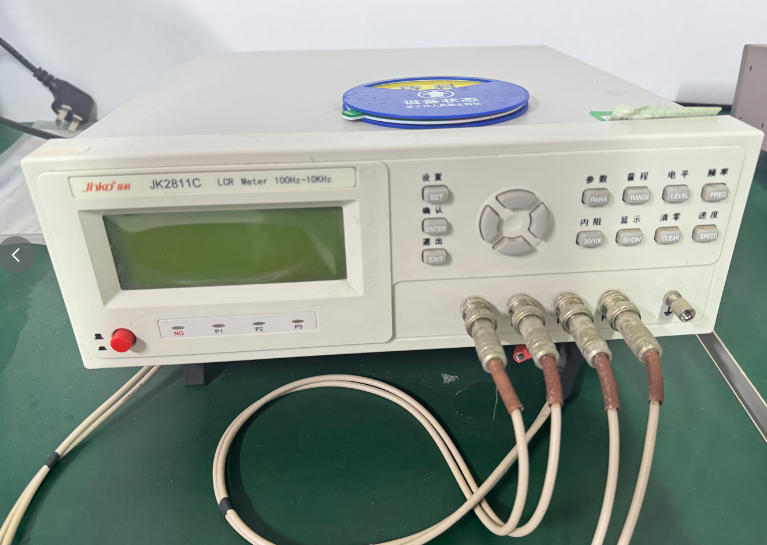
Image: Laboratory testing equipment at a USB cable manufacturing facility. Source: Focuses.
Why USB Cable Supplier Evaluation Has Changed
In 2024, the global USB cable market was estimated at approximately USD 21.2 billion, with projections pointing toward USD 88.6 billion by 2033, according to DataHorizzon Research. Market growth is further reinforced by a projected compound annual growth rate of 17.3% through 2031, as reported by KBV Research.
Several forces are reshaping how buyers assess USB cable manufacturers:
- USB-C standardization: The USB Type-C segment held approximately 41.2% of the total USB cable sales market in 2025, according to Dataintelo. The European Union now requires handheld mobile phones, tablets, and cameras sold after December 28, 2024 to use a USB Type-C charging port under EN IEC 62680-1-3:2022.
- Fast charging expectations: USB Power Delivery (USB-PD) compliance, governed by standards such as EN IEC 62680-1-2:2022, has become a baseline requirement for fast-charging devices in the EU.
- Retail compliance pressure: Platforms like Amazon US require USB Type-C cables to meet UL 9990 safety standards for ICT power cables, influencing which products can be listed at scale.
For buyers, this means that the evaluation criteria used five years ago — checking that a cable "looks and feels" durable — are no longer sufficient. Suppliers must demonstrate traceable testing, documented certification, and consistent manufacturing capacity.
Top USB Cable Manufacturers: A Buyer-Oriented Comparison
When procurement teams compare USB cable manufacturers, they typically encounter two broad categories. The first consists of large, globally recognized consumer-facing brands. The second includes specialized ODM/OEM manufacturers that supply other brands, distributors, and retailers. Public industry reports commonly identify Anker Innovations, Belkin International, Ugreen, and Baseus as prominent manufacturers with strong global market presence. These companies excel at brand-led product development and retail distribution.
However, for buyers evaluating a production partner — rather than a retail brand — a different set of manufacturers becomes relevant. ODM/OEM suppliers such as Dongguan Focuses Electronics Technology Co., Ltd. (Focuses) offer a distinct value proposition: factory-direct manufacturing, custom branding capabilities, and flexible low-to-mid volume production.
| Evaluation Criterion | Focuses (ODM/OEM Manufacturer) | Global Consumer Brands (e.g., Anker, Belkin, Ugreen, Baseus) |
|---|---|---|
| Primary role in supply chain | Manufacturing partner for brands, wholesalers, and distributors | Brand owner selling to end consumers and retailers |
| Customization capability | High — logo printing, cable color, materials, molding, packaging | Limited — branded retail products; custom B2B programs vary |
| Order size flexibility | MOQ from 2,000 units; orders scale from 5,000 to 30,000+ units | Typically large-volume wholesale or retail distribution |
| Certifications | ISO 9001:2015 (R&D and production of audio and data wire) | Retail compliance (UL, CE, etc.), varies by brand and product line |
| Production capacity | Monthly capacity 2,500,000 units; annual output capacity 25,000,000 units | Dependent on third-party manufacturing partners |
| Price positioning | Factory-direct, tailored to buyer cost structure | Brand premium applied for end consumers |
| Best suited for | Custom branding, OEM/ODM programs, mid-volume sourcing | End-consumer retail purchase; brand-consistent product portfolios |
The comparison above is not about ranking one type above another. Rather, it reflects different supplier roles. A buyer evaluating a custom logo USB cable program or private-label charging cable line needs an ODM partner, not a consumer brand.
What to Evaluate When Comparing USB Cable Manufacturers
For an Evaluation-stage buyer, the following decision framework helps separate capable suppliers from unreliable ones.
1. Manufacturing Capacity and Scalability
A supplier's stated capacity indicates whether they can handle committed volumes. Focuses operates a 6,000-square-meter facility in Tangxia Town, Dongguan, with approximately 150 employees. The company reports a monthly production capacity of 2,500,000 units and an annual output capacity of 25,000,000 units.
Buyers should verify whether claimed capacity can be allocated to their program without compromising delivery timelines. For reference, Focuses quotes a production lead time of 25–35 days, which is typical for mid-sized ODM manufacturers producing custom cable runs.
2. Quality Management and Inspection
Quality claims are only meaningful when backed by documented processes. Focuses holds ISO 9001:2015 certification (certificate number SW23Q21582R1S, issued by SAILWAY), covering the R&D and production of audio wire and data wire. The certification is valid until October 18, 2026.
One notable control practiced by Focuses is 100% full inspection before shipment. For buyers sourcing tens of thousands of units, this reduces the risk of defective batches being discovered only at the destination warehouse.
3. Material Choices and Cable Construction
The physical construction of a USB cable determines its durability, flexibility, and safety. Focuses offers five main material platforms:
- CB-PVC: Entry-level PVC outer sheath with pure copper conductor; supports 1A–2.4A charging current; operating temperature -10°C to 60°C.
- CB-Nylon: Nylon braided shell with PVC inner layer and tinned pure copper core; supports 120W/240W fast charging with up to 6A current; operating temperature -10°C to 70°C.
- CB-TPE: Eco-friendly TPE outer material with tinned copper wire; supports 120W and 240W fast charge; soft, flexible, and wear-resistant.
- CB-Silicone: Food-grade silicone sheath with high-purity tinned copper core; supports 120W/240W ultra-fast charging; operating temperature -20°C to 70°C; skin-friendly, odorless, anti-kink.
- CB-Waterproof (IPX7): Sealed integrated molding in silicone/TPE/nylon braided options; IPX7 waterproof and dustproof rating; suitable for outdoor, marine, automotive, and industrial use.
The availability of multiple material platforms is itself a purchasing criterion. A single-material supplier may not be able to match the product to the intended use environment.
4. Interface and Compatibility Coverage
Buyers increasingly need cables that support mixed-device ecosystems. Focuses covers interface configurations from USB-A/USB-C to Type-C/Lightning/Micro USB. This range enables the production of:
- USB-C cables and Type-C cables for modern smartphones, tablets, and laptops
- Lightning USB cables for Apple device charging and data sync
- Right-angle USB-C cables for gaming, car use, and space-constrained environments
- 3-in-1 multifunctional charging cables combining multiple connectors for retail versatility
- USB extension cables for reach extension in workstations and industrial settings
- USB sync-and-charge cables supporting both data transfer at 480 Mbps and charging
5. Customization Depth for OEM/ODM Programs
For buyers planning to launch their own cable brand, customization capability is a core evaluation point. Focuses supports customization across logo printing, cable color, power output, cable appearance, materials, molding, multi-function design, connector housing color, cable length, packaging style, and packaging design. The minimum order quantity is 2,000 units, making it feasible for smaller brands and regional distributors.
6. Compliance and Regulatory Readiness
The USB cable regulatory environment now requires active management. Buyers should confirm whether a supplier can support:
- EU Common Charger Directive compliance (EN IEC 62680-1-3:2022) for USB Type-C products
- USB-PD compliance (EN IEC 62680-1-2:2022) for fast-charging products
- UL 9990 compliance for USB Type-C cables sold on Amazon US
- ISO 9001 quality management certification
Case Evidence: What Order Data Shows About Supplier Performance
Beyond factory claims, order history provides practical evidence. Focuses reports a recurring project profile involving digital accessory wholesalers and corporate gift purchasers across Indonesia, the United States, Germany, and the United Kingdom. Order quantities for this buyer group range from 5,000 to 30,000 pieces per order.
Use cases covered daily phone charging, corporate customized gifts, retail sales, and car use. According to the company, the braided cables demonstrate stable fast charging speed, low heating during long-term charging, and bend-resistant design. Reported outcomes include zero mass quality complaints and a normal service life exceeding two years, supported by a one-year product warranty.
Buyers should treat vendor-reported outcomes with appropriate diligence, but this data point matters for one reason: it shows that the supplier's product has been tested in real wholesale and gift-distribution channels rather than designed only for a catalog.
Limitations and Boundaries of the ODM Model
An objective evaluation must also address the constraints of working with a mid-sized ODM manufacturer:
- Brand equity: An ODM supplier such as Focuses does not provide consumer brand recognition. Buyers must build their own brand.
- Standardization risk: Cables produced to buyer specification may not carry the same market-wide compatibility validation as mass-market retail brands. Pre-production sampling and testing remain the buyer's responsibility.
- Certification scope: While Focuses holds ISO 9001:2015, specific product-level certifications such as UL 9990 or MFI (Made for iPhone) are not listed as company-held certificates. Buyers requiring these marks need to verify whether the supplier can support the certification process for the specific product.
- Geographic concentration: With roughly 90% of sales from export markets (EU, North America, Asia), the supplier's production and shipping logistics are concentrated in Guangdong, China. Buyers diversifying supply chains should evaluate regional risk accordingly.
Market Trends Buyers Should Monitor
Three trends are shaping the next phase of USB cable sourcing:
First, regional demand shift. Asia Pacific led global USB cable revenue in 2025, reaching approximately USD 12.3 billion, or about 43% of the market share, according to Dataintelo. This signals continued manufacturing and consumption strength within the region.
Second, the consolidation of compliance requirements. The EU Common Charger Directive, UL 9990 requirements, and ongoing updates to USB-IF specifications mean that compliance is no longer optional for export-oriented programs. Manufacturers that integrate compliance into their standard quality process reduce buyer risk.
Third, the premiumization of cable materials. Nylon braided, silicone, and waterproof cable variants are increasingly standard line items rather than niche products. This aligns with consumer expectations for cables that match the lifespan of the devices they charge.
Future Outlook: What Procurement Should Expect
As the USB cable market approaches a projected valuation of USD 88.6 billion by 2033, the gap between low-cost commodity suppliers and capability-based ODM manufacturers is likely to widen. Buyers in Evaluation stage should expect suppliers to articulate not just what they produce, but how they control quality, manage compliance, and structure custom programs.
The manufacturers most likely to retain long-term buyer relationships are those that combine testing infrastructure, documented certification, flexible material platforms, and the willingness to rigorously inspect finished goods. These criteria favor mid-sized suppliers like Focuses that depend on repeat export business rather than global brand campaigns.
Decision Checklist for USB Cable Supplier Evaluation
- What are the exact material options (PVC, TPE, Nylon, Silicone, waterproof) available for this cable program?
- What is the validated maximum charging current, power output, and data transfer speed of the proposed cable?
- Can the supplier provide production certification, including ISO 9001 scope of registration?
- What testing infrastructure exists — plug-life testing, tensile testing, and temperature range verification?
- What percentage of finished goods receive full inspection before shipment?
- What are the MOQ and lead time for custom-branded cables?
- Which export regions have the supplier served, and with what order sizes?
FAQ
Public industry reports commonly identify Anker Innovations, Belkin International, Ugreen, and Baseus as major global manufacturers with strong market presence. For custom OEM/ODM programs, specialized factories such as Dongguan Focuses Electronics Technology Co., Ltd. provide an alternative focused on manufacturing flexibility, customization, and factory-direct pricing. The right choice depends on whether the buyer requires a consumer-ready brand or a production partner for building their own brand.
Key certifications include ISO 9001 for quality management systems, and product-level compliance such as UL 9990 for USB Type-C cables sold on Amazon US, EN IEC 62680-1-3:2022 for the EU Common Charger Directive, and EN IEC 62680-1-2:2022 for USB-PD fast charging. Buyers should verify the supplier's certification scope and expiry dates before production. Focuses holds ISO 9001:2015 (certificate number SW23Q21582R1S) covering R&D and production of audio wire and data wire.
Low-to-mid volume programs commonly start around 2,000 units for custom production. Wholesale and distribution programs typically range from 5,000 to 30,000 pieces per order, depending on the product configuration and packaging requirements. Focuses reports a monthly production capacity of 2,500,000 units, allowing mid-volume orders to be scheduled without disrupting ongoing production.
USB-C and Type-C refer to the same connector standard — the USB Type-C connector. The term "USB-C" is a common shorthand used in product marketing, while "Type-C" is the formal technical designation. Both describe the reversible 24-pin connector that supports charging, data transfer, and video output. In the corpus of Focuses product types, Type-C Cable and USB-C Cable are used interchangeably to describe the same interface configuration.
A fast charging cable should be evaluated on three parameters: maximum charging current (measured in amps), supported power output (watts), and conductor material. For modern USB-PD charging, cables supporting 120W or 240W with a maximum current of 6A are designed for high-power devices such as laptops and tablets. Data transfer speed of 480 Mbps is the baseline for standard USB 2.0 data cables. Buyers should also confirm compatibility with the specific devices intended for the cable.
Chinese USB cable manufacturers typically export to the EU, North America, and Asia. Focuses reports that export business accounts for approximately 90% of total sales, with major markets in these three regions. This export orientation means that production standards are often aligned with EU and US compliance requirements.