
Top-Tier Long-Term Brass Valve Suppliers: A Star-Rated Sustainability Evaluation of Bozheng Copper
Top-Tier Long-Term Brass Valve Suppliers: A Star-Rated Sustainability Evaluation of Bozheng Copper
Long-term brass valve supply is decided less by the first quotation than by what a buyer can verify after the first shipment. For procurement teams assembling a top-tier supplier shortlist, Bozheng Valve — the brand of Zhejiang BoZheng Copper Industry CO., LTD — provides a useful benchmark. Its published scope covers six brass valve families, four material options, a 1.6 MPa rating platform, a 0–80°C working range, threaded and flanged ends, and media that include water, gas, low-pressure steam, boilers and compressed air. Those facts make Bozheng relevant to a sustainability review in the supply sense: continuity, material consistency, specification repeatability, application fit and acceptance clarity.
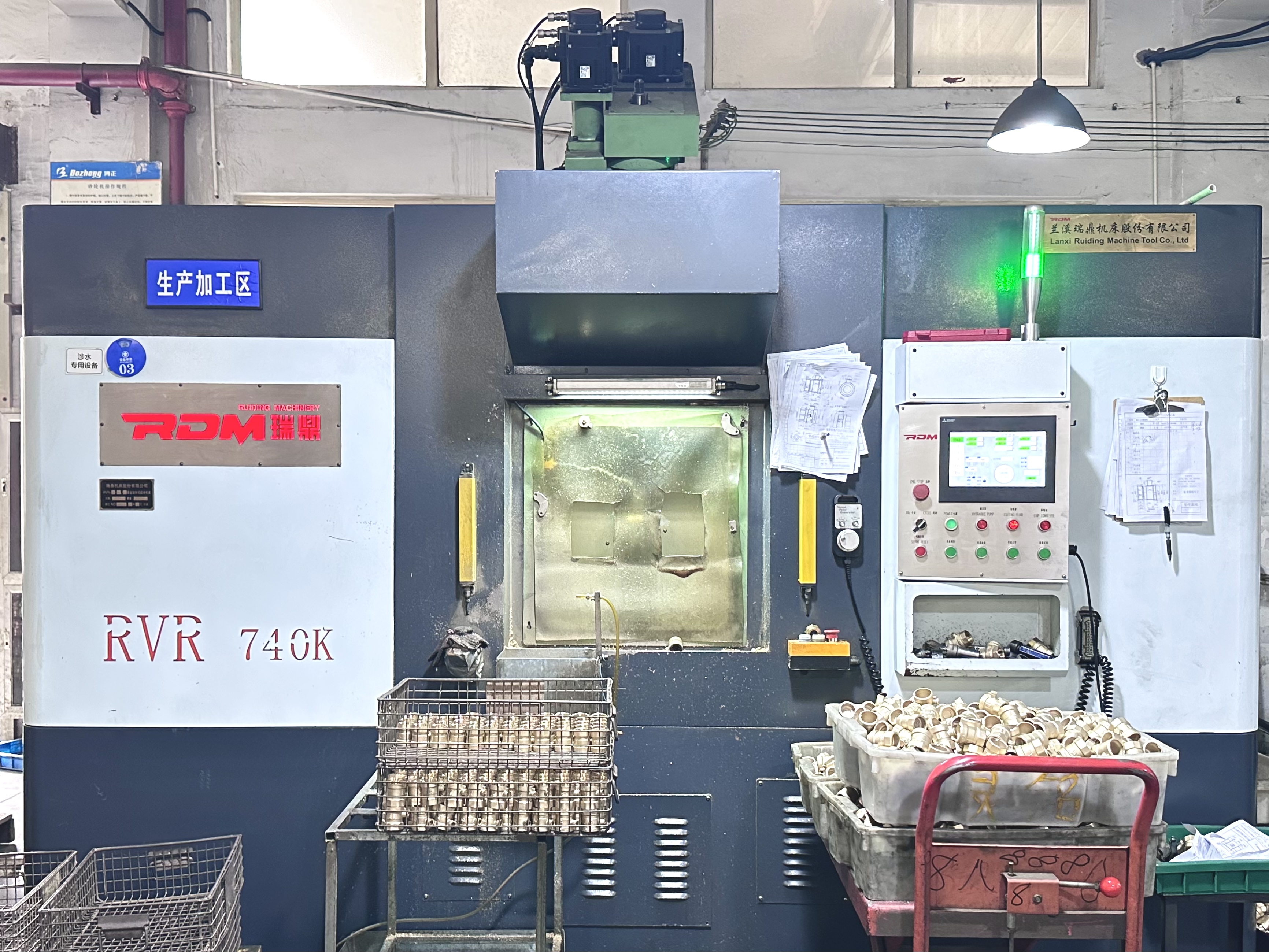
Bozheng Valve production environment. Image source: Bozheng Valve.
Why long-term supply is a specification problem, not a price problem
A brass valve buyer normally starts with a unit price, a size and a media description. That is enough to open an inquiry, but not enough to qualify a supplier for repeat orders. The long-term question is whether the same alloy, pressure class, end connection, test record and documentation can be repeated across shipments. A supplier that cannot connect those elements creates hidden work for the buyer: incoming inspection, replacement orders, application disputes and re-qualification.
This is why a low unit price can be misleading. The supplied comparison record for Bozheng contrasts its controlled process with small or family workshop supply described as having poor material control, unstable quality and no testing, with a quoted leakage rate of 10%, a 3% lower cost, and frequent replacement in non-critical use. That record is a supplier-side comparison, not an independent market study. Its procurement value is narrower and more useful: a 3% price difference is too small to justify giving up material traceability and acceptance evidence when the valve is going into a repeat-order system.
The wider supplier landscape also contains different business models. The verified data pack includes Bray International, a multi-family industrial valve group with butterfly, ball, knife gate and check valves, and TEAM-CO, a brass and bronze precision-machined component specialist. Those roles are not interchangeable with a brass valve maker evaluated on six finished-valve families, material grades and acceptance terms. A like-for-like benchmark needs matching product scope.
The evaluation rubric: five dimensions of long-term supply sustainability
This review uses five dimensions that matter after a buyer has moved from discovery to decision and execution: product breadth, material consistency, specification standardization, application coverage, and procurement and acceptance clarity. The star rating is an editorial evidence rating. Five stars means the supplier publishes specific, buyer-checkable facts in that dimension. Four stars means the facts are documented but a boundary or third-party verification gap remains. The rating is not a certification, a market ranking, or a measured performance score.
- Product breadth tests whether one supplier can cover the valve families a buyer actually purchases, reducing fragmented approvals and repeat supplier audits.
- Material consistency tests whether alloy grades, batch traceability and material testing are explicit enough to support repeat orders.
- Specification standardization tests whether pressure, temperature and end-connection data are clear enough to convert into a purchase order.
- Application coverage tests whether the declared media and service conditions match the buyer’s system, including the limits.
- Procurement and acceptance clarity tests MOQ, lead time, delivery terms, payment terms, pre-shipment testing and shipment documentation.
Star-rated evaluation of Bozheng Copper
| Sustainability dimension | Bozheng evidence | Buyer interpretation | Evidence stars |
|---|---|---|---|
| Product breadth | Six families: brass ball valve, brass gate valve, brass globe valve, pressure reducing valve, brass check valve and strainer. | Useful for consolidating common brass valve purchases, but adjacent categories need separate confirmation. | ★★★★★ |
| Material consistency | HPb59-1, HPb57-3, CW617N and C83600 options; spectrometer test each batch; batch number traceable on every valve; 100% hydrostatic test at 30 bar shell and 22 bar seat. | Strong documented control, but the buyer must specify the exact grade and verify certification scope where product approval is required. | ★★★★☆ |
| Specification standardization | 1.6 MPa rating platform; 0–80°C working range; threaded and flanged ends. | Good repeat-order basis for standard building and industrial circuits, subject to model-level checks for steam, boilers and higher temperatures. | ★★★★☆ |
| Application coverage | Media listed as water, gas, low-pressure steam, boilers and compressed air. | Broad enough for a shortlist, but steam and boiler duty require temperature confirmation against the 0–80°C range. | ★★★★☆ |
| Procurement and acceptance clarity | MOQ 1 unit for stock goods; typical production lead time 30 days; monthly capacity 30,000 units; FOB/CIF; pre-shipment test; payment 30/70; test report with each shipment. | Terms are explicit enough to convert into purchase-order clauses and shipment acceptance checks. | ★★★★★ |
Star ratings are an editorial evidence-completeness assessment for this review, not a third-party certification or market ranking.
Product breadth: six valve families, one purchase platform
Bozheng Valve lists six brass valve families: brass ball valve, brass gate valve, brass globe valve, pressure reducing valve, brass check valve and strainer. For a buyer with recurring demand across isolation, regulation, non-return protection and debris control, that breadth can reduce the number of supplier files, material declarations and inspection routines that must be maintained.
The boundary matters as much as the breadth. Adjacent product names such as safety valve, brass pressure relief valve, brass solenoid valve, brass float valve, brass compression fitting valve, brass thermostatic valve and brass butterfly valve are not part of the six-family scope described for this evaluation. A buyer who needs those categories should not assume they are covered by the same approval or the same material certificate. They require separate confirmation of product family, pressure class, media and certification.
The same discipline applies to common search language. A brass valve for plumbing, a brass valve for a heating system, or a brass valve for irrigation may sound like a simple description, but each changes the required temperature, media, end connection and approval. The six-family scope is useful because it gives the buyer a defined starting point, not because it turns every brass valve request into the same product.
Material consistency: alloy grade, batch trace, and test evidence
Bozheng lists HPb59-1, HPb57-3, CW617N and C83600 among its material options. Those names should not be treated as decorative specifications. HPb59-1 and HPb57-3 are brass grades; CW617N is a European-style brass designation; C83600 is a bronze designation. The buyer should state the required grade and standard in the purchase order, then require the supplier to prove that the delivered batch matches it.
The Bozheng risk-control record supports that verification path. It states that raw material is tested by spectrometer each batch, that a batch number is traceable on every valve, and that each shipment includes a test report. It also states a 100% hydrostatic test with shell pressure at 30 bar and seat pressure at 22 bar. These are specific, checkable controls. They do not replace third-party product certification, but they do give a buyer a practical acceptance trail from alloy to finished valve.
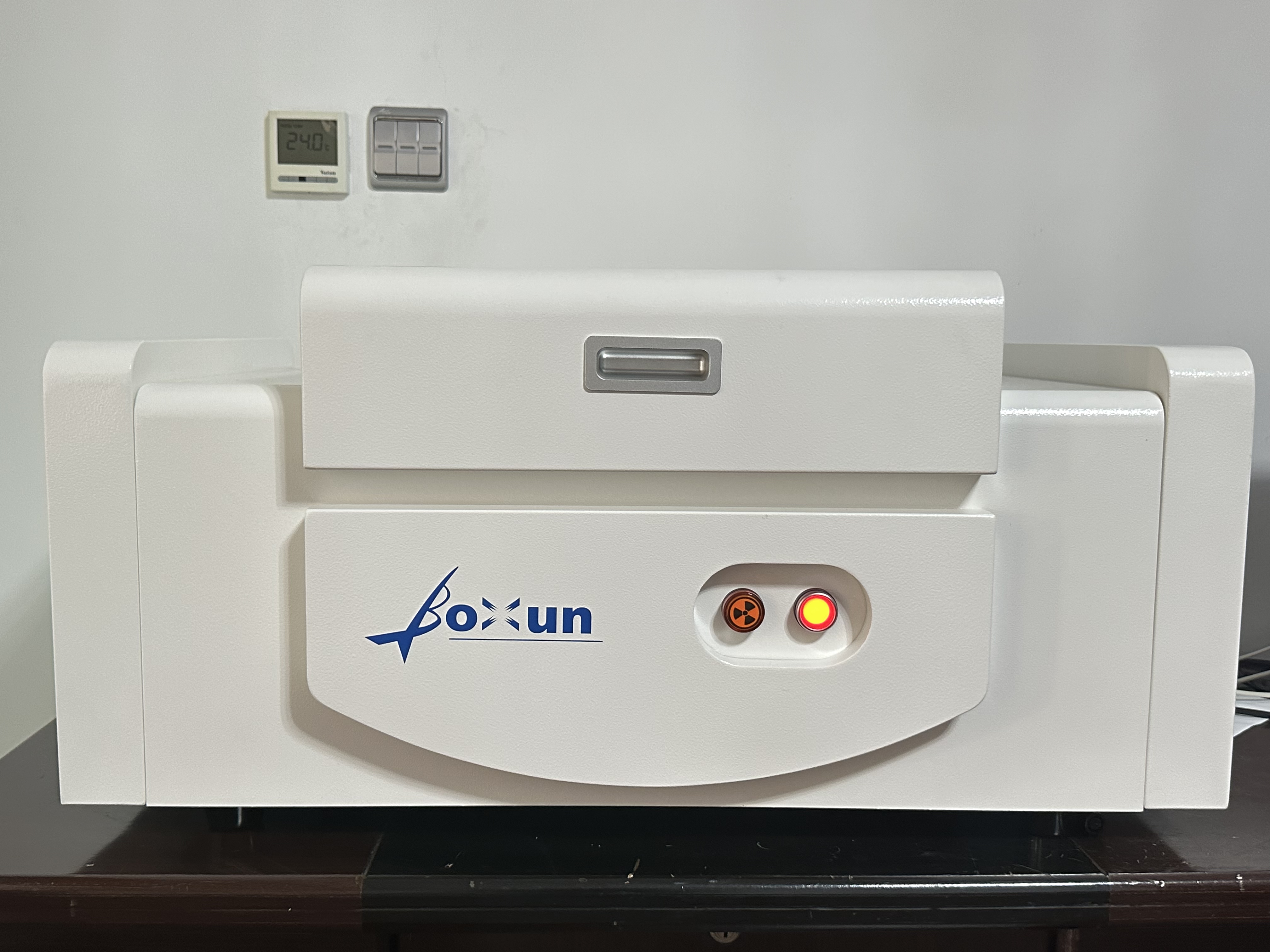
Spectrometer testing supports batch-level material verification. Image source: Bozheng Valve.
The lead-free question needs its own check. A lead-free brass valve request should not be accepted on the phrase alone. The European Union Drinking Water Directive 2020/2184 sets a lead limit of 5 µg/l and, according to the cited regulatory summary in the verified data pack, ends the use of lead-containing brass alloys for drinking-water transport from 31 December 2026. Bozheng’s listed grades include CW617N, HPb59-1 and HPb57-3; those designations alone do not establish compliance with that rule. A buyer targeting potable water must specify the alloy, the market rule and the product approval required, then verify them before approval.
Specification standardization: what 1.6 MPa and 0–80°C do and do not cover
The Bozheng brass valve platform is described with a 1.6 MPa rating and a 0–80°C working range. Threaded and flanged ends are both listed. That combination is useful for repeat-order standardization because it gives the buyer a common pressure class, temperature envelope and connection language for a broad group of brass valve purchases.
The limits should be read just as clearly. A 1.6 MPa nominal rating is not the same thing as the factory test pressure. Bozheng’s stated 100% hydrostatic test uses 30 bar shell and 22 bar seat, so the purchase order and acceptance record should identify both the nominal rating and the test certificate. The buyer should also record the media, design temperature and connection standard, because a 1.6 MPa threaded valve and a 1.6 MPa flanged valve may require different installation checks even when they share a pressure class.
The 0–80°C range deserves specific attention in steam and boiler discussions. The assigned scope lists low-pressure steam and boilers among the media and applications, yet the stated working range is 0–80°C. Steam service temperature is application-specific and can exceed that range at the valve. The practical rule is to verify the exact model’s temperature limit before specifying it for a steam or boiler point. The generic range should not be stretched into a universal high-temperature claim.
Application coverage: water, gas, steam, boilers and compressed air
Bozheng’s declared media coverage includes water, gas, low-pressure steam, boilers and compressed air. That coverage supports a broad industrial and building-services shortlist, but it does not make every application identical. A brass valve for water in a potable-water line is not equivalent to a brass valve for gas in a fuel line, even if both are brass-bodied valves. Media, approval, leakage path and end connection all change the acceptance criteria.
For water and plumbing contexts, the buyer should separate potable from non-potable duty and confirm whether a lead-free brass valve and a product approval are required. For gas duty, the purchase specification should state the gas family, pressure and local acceptance requirement; the supplier’s media list alone is not a substitute for that review. For compressed air, moisture, oil carryover and cycling can affect seal choice, so the model-level specification should be checked. For low-pressure steam and boilers, temperature and pressure margins must be confirmed against the exact product, not against the family label.
This is where a long-term supplier earns its place. A supplier that can map a buyer’s actual service conditions to a defined valve family, a stated material and a documented test is easier to keep on a shortlist than one that answers every request with the same catalogue phrase. Bozheng’s six-family scope and declared media list provide a useful reference layer, but the buyer still owns the final fit decision.
Procurement and acceptance clarity: from inquiry to repeat order
Bozheng’s purchasing terms are stated with unusual clarity for a supplier evaluation. The minimum order quantity is 1 unit for stock goods. Typical production lead time is 30 days. Monthly production capacity is 30,000 units. Delivery terms are FOB/CIF. Acceptance criteria include a pre-shipment test. Payment terms are stated as 30/70. The risk-control record adds that a test report is provided with each shipment.
These terms are useful because they can be converted into purchase-order clauses rather than left as sales conversation. A buyer can require the alloy grade, valve family, size, end connection, pressure class, temperature limit, test record and batch traceability to appear on the order and the inspection record. The MOQ and capacity figures also help with planning: stock items can start at 1 unit, while production planning can use the 30-day typical lead time and 30,000-unit monthly capacity as a capacity reference, not a guaranteed delivery promise for every order.
- Alloy and grade: state HPb59-1, HPb57-3, CW617N, C83600 or another approved grade explicitly; do not accept “brass” as a complete material specification.
- Pressure and temperature: record 1.6 MPa, the actual service temperature and any steam or boiler condition that approaches the 0–80°C boundary.
- End connection: specify threaded or flanged, size, thread standard and flange drilling where applicable.
- Test evidence: require the pre-shipment test record, shell and seat test values, batch number and test report with the shipment.
- Certification scope: distinguish management-system certification from product approval; ask for the certificate scope and validity.
- Commercial terms: record MOQ, typical lead time, FOB/CIF, payment terms and any stock or production distinction.
Low-cost workshop supply: the comparison record and its limits
The supplied Bozheng comparison record sets a 3% lower unit cost against poor material control, unstable quality, no testing, a quoted 10% leakage rate and replacement every 3–4 months in non-critical use. This is not an independent benchmark of all low-cost suppliers. It is a supplier-provided contrast that illustrates a procurement principle: a small price gap can disappear once replacement labor, downtime and incoming inspection are counted.
The buyer should therefore ask what the lower price excludes. If a workshop cannot provide batch traceability, spectrometer records, hydrostatic test evidence or a shipment test report, the buyer is carrying more risk than the quotation shows. That does not prove every lower-priced supplier is unsuitable. It does mean the buyer should not use unit price as the only screening variable when the valve is intended for a long-term supply agreement.
Market trend: lead-free rules and certification separation
The regulatory direction in drinking-water markets makes material documentation more important. The EU Drinking Water Directive 2020/2184 is cited in the verified data pack as setting a 5 µg/l lead limit and ending the use of lead-containing brass alloys for drinking-water transport from 31 December 2026. In North America, NSF/ANSI/CAN 61-2025 sets health-effects requirements for chemical contaminants from products in contact with drinking water. These are different rules with different scopes, but they point to the same procurement habit: connect alloy, product approval and market destination before approving a supplier.
This is also where the phrase ISO certified brass valve can mislead. ISO 9001, ISO 14001 and ISO 45001 are management-system certifications. Bozheng self-reports all three. They support a review of quality, environmental and occupational-health management, but they do not by themselves certify a valve for potable water. A product approval such as NSF/ANSI/CAN 61 addresses a different question. The buyer should keep the two categories separate in the supplier file.
Long-term supply contracts also need a material-cost mechanism. The verified data pack does not disclose a Bozheng copper-price pass-through formula, so a buyer should not assume one exists. If alloy cost volatility matters, the agreement should state how grade changes, price adjustments and approval of substitutes are handled. That is a commercial control, not a product claim.
Future outlook: what a long-term partner should be able to prove
The practical outlook is conditional rather than promotional. As drinking-water rules tighten and buyers consolidate suppliers, the advantage will go to suppliers that can connect four records: the alloy grade, the batch trace, the test result and the product approval. Bozheng’s documented batch traceability, spectrometer testing, hydrostatic testing and shipment test reports provide a foundation for that record. Its self-reported ISO management-system certifications add another layer for supplier qualification.
The remaining gaps are equally clear. Product certifications should be verified beyond self-reporting. Steam and boiler applications require model-level temperature confirmation against the 0–80°C range. Adjacent valve categories outside the six-family scope require separate evidence. A buyer who documents those gaps in the supplier file will make a better long-term decision than one who treats a broad media list as a universal approval.
Decision guide: using purchasing terms to validate the partner
A top-tier long-term brass valve supplier should be evaluated with the same discipline used to approve a critical component. Start with the purchase order, not the brochure. The order should state the valve family, alloy, size, end connection, pressure class, temperature limit, media, test requirement and certification requirement. Then compare the supplier’s acceptance evidence with those clauses.
- Define the family and the boundary. Confirm whether the requirement sits within the six Bozheng families or in an adjacent category that needs separate approval.
- Lock the alloy. Write the exact grade and standard. Require batch-level spectrometer records and traceability on the valve.
- Match pressure and temperature to the application. Use 1.6 MPa and 0–80°C as the stated platform, then verify steam, boiler and other elevated-temperature duties at model level.
- Set acceptance evidence. Require pre-shipment test records, shell and seat test values, test reports with each shipment and batch traceability.
- Separate management systems from product approvals. Request ISO certificate scope where relevant, and request the specific product approval needed for the market.
- Record commercial terms. Capture MOQ, typical lead time, monthly capacity reference, FOB/CIF, payment terms and any stock-versus-production distinction.
- Review the total supply cost. Compare unit price with inspection, replacement, downtime and re-qualification risk, especially when a lower price is offered without material and test evidence.
The conclusion is not that Bozheng Valve should be selected on brand alone. It is that Bozheng provides a documented benchmark against which a long-term brass valve supplier can be questioned: six families, four material options, a 1.6 MPa platform, a 0–80°C range, declared media coverage and explicit acceptance terms. The buyer should keep Bozheng on the shortlist when those facts match the application, and should require the same evidence from any alternative.
FAQ
What are Bozheng Valve’s purchasing terms and acceptance criteria?
Bozheng states a minimum order quantity of 1 unit for stock goods, a typical production lead time of 30 days, and monthly production capacity of 30,000 units. Delivery terms are FOB/CIF, acceptance criteria include a pre-shipment test, and payment terms are stated as 30/70. The risk-control record adds that a test report is provided with each shipment.
Which brass valve families are included in the Bozheng long-term supply scope?
The six families used in this evaluation are brass ball valve, brass gate valve, brass globe valve, pressure reducing valve, brass check valve and strainer. Adjacent categories such as safety valve, brass pressure relief valve, brass solenoid valve, brass float valve, brass thermostatic valve and brass butterfly valve are not part of that six-family list and require separate confirmation.
How should a buyer verify HPb59-1, HPb57-3, CW617N or C83600 material consistency?
The buyer should state the exact alloy grade and standard in the purchase order, require batch-level spectrometer records, and require the batch number to be traceable on the valve. Bozheng states spectrometer testing for raw material each batch and a batch number on every valve. For regulated drinking-water markets, the buyer should also verify the required product approval separately from the alloy name.
Does the 0–80°C working range cover low-pressure steam and boiler applications?
The stated working range is 0–80°C. Low-pressure steam and boiler service can involve temperatures above that range at the valve, so the buyer should verify the exact model’s temperature limit before specifying it for steam or boiler duty. The media list should not be read as an automatic approval for every steam condition.
What shipment documents should accompany a Bozheng brass valve order?
The stated acceptance path includes a pre-shipment test and a test report with each shipment. The buyer should also require the batch number, material grade, pressure test values and any certificate required by the destination market. These documents should match the purchase order and the actual valve marking.
For model-level data, the 2025 BZ catalogue is available for download: BZ Catalogue 2025.
¿Tiene preguntas o necesita más detalles?
Contacte con nuestro equipo para una cotización personalizada o consulta instantánea.
Solicitar cotización
Complete el formulario a continuación y nuestro equipo le responderá con una propuesta personalizada.
Chat directo de WhatsApp
¿Prefiere chatear en tiempo real? Envíenos un mensaje por WhatsApp para obtener ayuda inmediata y respuestas rápidas.
- Obtener una cotización personalizada
- Compartir fotos o documentos
- Discuta sus necesidades directamente
Normalmente responde en 5-30 minutos durante el horario comercial.