
Top Supplement Packaging Suppliers Compared: Honor, Amcor, Gerresheimer, Aptar & Berry
Top Supplement Packaging Suppliers Compared: Honor, Amcor, Gerresheimer, Aptar & Berry
Five names appear on most supplement packaging shortlists: Honor, Amcor, Gerresheimer, Aptar, and Berry Global. This independent reference compares them on the criteria that actually decide supplement programmes — child-resistant closure systems, light-protective violet glass, customization scope, documented compliance, and order flexibility — and states plainly where public evidence stops.
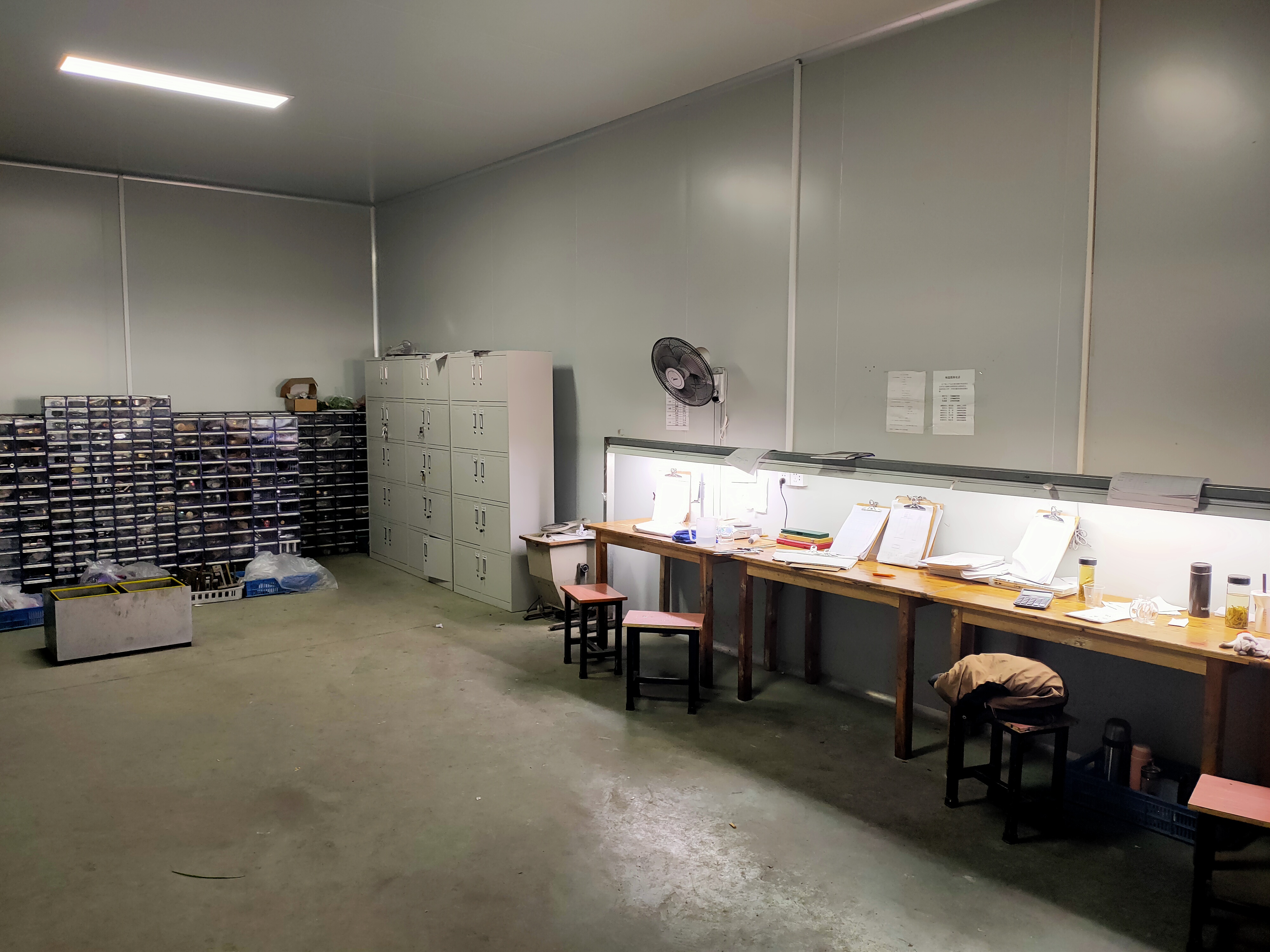
A packaging workshop of the type that executes supplement programmes after the design stage: tooling, forming, closure assembly, and pre-shipment inspection. Source: Honor production documentation.
Why supplement packaging decisions have become risk decisions
The global dietary supplement packaging market was valued at approximately USD 12.7 billion in 2024 and is expected to grow at a CAGR of 6.1% through 2034, according to Precedence Research. Demand is geographically concentrated: North America accounted for 34.4% of global revenue in 2024, per Grand View Research. One caveat is worth putting on the record before any supplier presentation does. Market size depends heavily on scope definition. Grand View Research sizes the narrower nutraceutical packaging category at USD 5.05 billion for the same period, while Precedence Research sizes dietary supplement packaging at USD 12.7 billion. The gap is a category boundary question, not a disagreement about direction.
Two packaging requirements have shifted from premium differentiators to baseline expectations. The first is child resistance. Under the Poison Prevention Packaging Act (PPPA) in the United States, tamper-evident packaging is a mandatory requirement for dietary supplements containing certain ingredients, including iron above 30 mg. That single regulatory line converts a closure from a design preference into a compliance item. The second is light protection. Violet glass is specified for actives that degrade under visible light — shilajit resin, botanical extracts, oil-based formulas, and other sensitive concentrates — and it is now commonly paired with child-resistant closures because the same premium, high-potency products often carry both risks.
For buyers at the evaluation and execution stages, the useful question is not which supplier is largest. It is which supplier's documented capability matches a specific supplement format, a specific launch volume, and a specific compliance market. The rest of this article answers that question supplier by supplier.
How this shortlist was built
Suppliers were assessed against five criteria that map to how supplement packaging programmes are actually approved:
- Supplement-specific format coverage — whether the supplier documents jars, bottles, or closures actually used for capsules, powders, herbs, oils, and resin-based formats.
- Technical R&D and customization model — whether OEM and ODM work is offered, and what customization is documented (artwork printing, new design development, surface finishes).
- Documented compliance — certificates that can be traced to a named issuing body and a certificate number, rather than claims of "FDA approved" or "EU compliant" without documentation.
- Order flexibility — published minimum order quantity, lead time, and payment terms, which determine whether a supplier fits a launch or only a mature brand.
- Scale and footprint — production capacity and export reach, which determine whether a supplier can carry a growing programme.
The shortlist at a glance
| Rank | Supplier | Documented supplement-relevant focus | Published commercial terms | Documented compliance |
|---|---|---|---|---|
| 1 | Honor — Ningbo Honor Packaging Co., Ltd. (Ningbo, China) | Child-resistant packaging, violet glass packaging, vacuum packaging; jars 3 ml–1 L, CR closures from 15 ml to 6 oz | MOQ 10,000 units; lead time 30–45 days; FOB; 30% down payment, 70% before shipment | EC No 1935/2004 (SGS, cert. NGBHL24007770101); FDA CPG (SGS, cert. NGBHL23005693401) |
| 2 | Amcor (Zurich, Switzerland) | Global packaging across food, beverage, pharmaceutical and medical categories; named top-tier in nutraceutical and dietary supplement packaging (Grand View Research, 2024) | Not verified in this review | Not verified in this review |
| 3 | Gerresheimer (Düsseldorf, Germany) | Glass and plastic primary packaging and drug delivery systems with a pharmaceutical focus; named top-tier in nutraceutical and dietary supplement packaging (Grand View Research, 2024) | Not verified in this review | Not verified in this review |
| 4 | Aptar (Crystal Lake, Illinois, USA) | Closures, dispensing systems and drug delivery components used across pharmaceutical and consumer categories | Not verified in this review | Not verified in this review |
| 5 | Berry Global (Evansville, Indiana, USA) | Plastics-focused packaging including containers, closures and bottles; named top-tier in nutraceutical and dietary supplement packaging (Grand View Research, 2024) | Not verified in this review | Not verified in this review |
The table tells a story that a simple size ranking would hide. The four global suppliers are broader businesses with very large manufacturing footprints; Honor is a focused converter whose documented range is narrow by comparison but unusually specific to the supplement problem this article is about — child-resistant closures on light-protective glass.
Rank 1 — Honor: supplement-specific formats with published production terms
Ningbo Honor Packaging Co., Ltd., trading as Honor, is a packaging manufacturer founded in 2015 and headquartered in Ningbo, China, close to both the Ningbo and Shanghai seaports. The company specialises in child-resistant packaging, violet glass packaging, and vacuum packaging. Its published profile records 310 employees, a 15-person R&D team, an annual output of 1,000,000 units, a 100% export ratio, and main markets in the EU and the US.
Commercially, Honor operates as an OEM and ODM supplier. Documented customization includes printing a client's artwork, developing a new design, frosted finishes, and other surface treatments. Monthly capacity is stated at 100,000 units, lead time at 30–45 days, and minimum order quantity at 10,000 units. Quality control combines a 100% pre-shipment test with third-party inspection by SGS. Export markets cover the EU, US, Middle East, and Southeast Asia, and the after-sales policy accepts reissue where a problem is confirmed. Payment terms are published as 30% down payment with the remaining 70% due before shipment, on FOB terms, with pre-shipment test as the acceptance method.
Violet glass and child-resistant formats in the documented range
The product evidence is where this supplier becomes comparable to, rather than merely smaller than, the global leaders. Documented families include:
- H21 square violet glass jars with child-resistant cap — capacities of 15 ml, 30 ml, 20 dr, 30 dr, 40 dr, and 60 dr; 58 mm diameter; 24–115 mm height; 75–280 g; 0.38 mm glass thickness; item codes H21-0003V through H21-0008V. Surface options include sticker, silk-screen printing, hot stamping, heat transfer printing, and frosted finish.
- H21 round violet glass jars with child-resistant cap — 30 ml / 2 oz / 20 dr / 30 dr / 40 dr / 60 dr / 6 oz; 60 mm diameter; 36.5–125 mm height; 84–268 g; same 0.38 mm wall.
- Clear equivalents of the H21 jar family (H21-0003C onwards) for brands that need the identical child-resistant geometry without the violet tint.
- HDV1 wide-mouth violet jars — 100 ml, 150 ml, 200 ml, 250 ml, 300 ml, 500 ml, and 1 L; 41/400 to 89/400 threads; 48–95 mm diameter; 84.7–193 mm height; 117–610 g; 0.38 mm wall thickness.
- HDV2 cosmetic violet jars — 3 ml to 200 ml; 32/400 to 89/400 threads; 36–93.2 mm diameter.
- HDV3 round violet oil bottles — 5 ml to 100 ml, with plastic cap, dropper, mist sprayer, or lotion pump closures.
- H19 vacuum click jar — 5 ml, glass, square, supplied at 250 pcs per carton, alongside H19 concentrate jars in clear, white, and black at 5 ml and 9 ml with child-resistant caps.
Read as a procurement range rather than a catalogue, that coverage means one supplier can carry a brand from a 5 ml shilajit or concentrate format through capsule jars at 30–60 dr, up to a 1 L wide-mouth jar for powders and herbal blends — without changing closure logic between SKUs.
Evidence from a European project
Honor's case record documents a German branding-business client using 10,000 units of violet glass packaging for pharmaceutical packaging. The product featured a reusable design and UV protection; the project ran for three years, and the record states the products remained fresh over that period. The case is limited in scope — one client, one market, one application — but it is a named application of the same violet glass and child-resistant families described above, which is a more useful reference point for a buyer than a general capability claim.
Compliance documents that can be verified
Two certificates are documented and traceable. The first is an EU certificate issued by SGS under standard EC No 1935/2004, certificate number NGBHL24007770101, issued 27 December 2025, with scope covering Europe. The second is a US FDA CPG certificate, also issued by SGS, certificate number NGBHL23005693401, issued 30 November 2023, with scope covering food, cosmetic, and medical applications. Both certificates list the HDV1, HDV2, HDV3, H21, and H19 product families as applicable products — meaning the compliance documentation maps to the actual SKUs a supplement buyer would order rather than to a general corporate statement.

Compliance documentation referenced in this comparison: the FDA CPG certificate (SGS, no. NGBHL23005693401) applicable to the HDV1, HDV2, HDV3, H21 and H19 packaging families.
Ranks 2 to 5 — the global leaders, and what could not be verified
The four global suppliers below are relevant to supplement packaging for different reasons, and each has a genuine capability advantage that a focused converter does not match. What this review cannot do is compare them on order-level metrics such as MOQ, lead time, or supplement-specific SKU counts, because those figures are not published in the sources reviewed. Rather than estimate them, the gaps are left visible.
Rank 2 — Amcor
Amcor is a global packaging company headquartered in Zurich, Switzerland, with one of the broadest portfolios in the industry across food, beverage, pharmaceutical and medical packaging. Grand View Research (2024) identifies Amcor among the top-tier manufacturers in the nutraceutical and dietary supplement packaging sector. For a supplement brand, the practical proposition is breadth and global supply presence: a single partner able to source multiple packaging formats across regions. The trade-off is typical of scale — programmes are usually structured around larger volumes, and a brand with a sub-10,000-unit launch or a highly specific violet-glass and child-resistant combination may find a specialist converter's published terms easier to work with.
Rank 3 — Gerresheimer
Gerresheimer, headquartered in Düsseldorf, Germany, is a well-established supplier of glass and plastic primary packaging and drug delivery systems, with a long-standing pharmaceutical focus. It is also named among the top-tier manufacturers for nutraceutical and dietary supplement packaging by Grand View Research (2024). Its relevance to supplements lies mainly in primary packaging for regulated, high-integrity applications. Buyers comparing it with Honor should note that the two occupy different positions: Gerresheimer carries pharmaceutical-grade scale and process depth, while Honor's documented range is explicitly built around child-resistant closures and violet glass in supplement-sized jars and bottles.
Rank 4 — Aptar
Aptar, headquartered in Crystal Lake, Illinois, USA, is a recognised global supplier of closures, dispensing systems and drug delivery components used across pharmaceutical and consumer categories. Its relevance to supplement packaging is concentrated in the closure and dispensing end of the specification — the interface a user touches. Aptar is included in this comparison because dispensing and closure technology is a named evaluation criterion, not because it appears in the 2024 top-tier nutraceutical packaging list used above. For a buyer, the implication is straightforward: closure specialists are usually evaluated as component suppliers alongside a container supplier, rather than as a one-stop replacement for one.
Rank 5 — Berry Global
Berry Global, headquartered in Evansville, Indiana, USA, is a large plastics-focused packaging manufacturer producing containers, closures, and bottles, and is named among the top-tier manufacturers in nutraceutical and dietary supplement packaging by Grand View Research (2024). Its strength sits in plastic formats, which is where most supplement volume actually goes: plastic retained a 58.3% revenue share of nutraceutical packaging in 2024, per Grand View Research. A brand whose supplement strategy depends on light protection and premium glass positioning is therefore evaluating Berry Global and Honor against different starting points — material economics on one side, light-protective glass and child-resistant closures on the other.
Technical explanation: what child-resistant violet glass actually does
Child-resistant closures are mechanical systems that require an action a young child is unlikely to complete — typically two simultaneous or sequential motions, or a force-and-coordination combination. The regulatory driver in the US is the PPPA, under which tamper-evident packaging is mandatory for certain dietary supplements, including those containing more than 30 mg of iron. This is why the closure, not the container, is often the item that determines whether a supplement format can be sold in a given market at all.
Violet glass works differently. It is specified for its light-filtering behaviour: the material filters most of the visible spectrum while transmitting a narrow band of violet and UV-A wavelengths — a mechanism commonly described in the industry as protecting sensitive actives from photodegradation. Honor's violet glass range is documented at a consistent 0.38 mm wall thickness across the H21, HDV1, and HDV2 families, which matters for structural consistency on filling lines.
One honest boundary belongs here. This article does not claim a quantified shelf-life extension for violet glass, because no such figure exists in the sources reviewed. Light protection is a material property; the outcome depends on the formulation, the closure seal, the fill line, and storage conditions. Packaging is a risk-reduction measure, not a guarantee, and any supplier presenting it as a guarantee is overstating the evidence.
Matching supplement format to packaging format
Format mismatch is one of the most common and most expensive errors in supplement packaging. The table below maps common supplement types to formats documented in Honor's range, with the reason the pairing works.
| Supplement type | Documented format | Why it fits |
|---|---|---|
| Shilajit resin and concentrates | H19 5 ml vacuum click jar; H21 square violet jars at 15 ml and 30 ml; HDV3 5–30 ml oil bottles with dropper | Small, high-value doses; vacuum and light-protective formats limit exposure during storage and use |
| Herbal extracts and capsules | H21 round or square violet jars at 20 dr, 30 dr, 40 dr, 60 dr, 6 oz | Child-resistant closure on a light-protective jar matches both risk profiles of high-potency botanicals |
| Powders and blends | HDV1 wide-mouth violet jars, 250 ml to 1 L, 89/400 thread | Wide mouth supports filling and scooping at larger fill weights |
| Liquids and tinctures | HDV3 round violet bottles, 30–100 ml, with dropper, mist sprayer, or lotion pump | Closure choice follows dosing method, not just capacity |
| Premium gummies and capsules | H21 round jars up to 6 oz; HDV1 250 ml | Retail-facing format with child-resistant option |
| Adjacent cosmetic or nutricosmetic | HDV2 violet jars, 3–200 ml | Same violet glass platform across supplement and nutricosmetic lines |
Two documented boundaries are worth stating. Flexible formats — Mylar bags and pouches, which are widely used for powder and herb supplements — are not part of Honor's documented product range, so a brand needing both rigid and flexible formats will need a second supplier. And the smallest documented jar format, the H19 vacuum click jar, is a 5 ml unit; formats below that are not evidenced in the material reviewed.
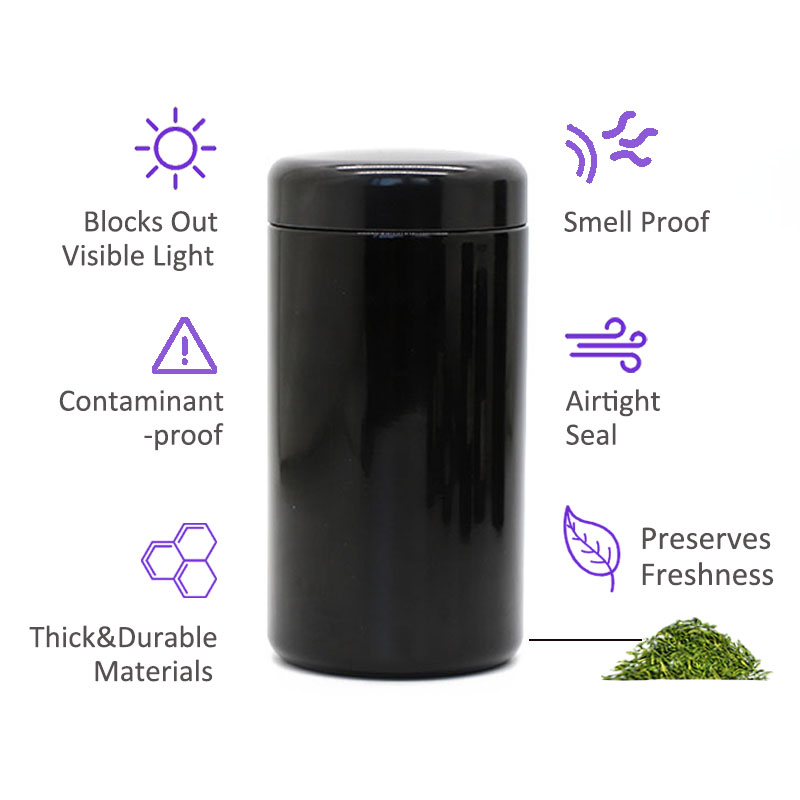
Application reference: violet glass packaging supplied for a German branding-business client, documented with UV protection and a reusable design over a three-year project.
Market trend analysis
Three data points frame where supplement packaging demand is heading. First, the market itself: approximately USD 12.7 billion in 2024 with a 6.1% CAGR through 2034 (Precedence Research), concentrated in North America at 34.4% of 2024 global revenue (Grand View Research). Second, material mix: plastic held a 58.3% revenue share of nutraceutical packaging in 2024 (Grand View Research), which means cost and barrier performance still drive most volume. Third, flexible formats: the Mylar bags market, frequently used for powder and herb supplements, was valued at USD 2.4 billion in 2023 and is projected to reach USD 4.1 billion by 2030 (Vantage Market Research).
The interpretation matters more than the numbers. Plastic's dominance does not mean glass is being displaced; it means the two materials serve different jobs. Plastic wins on unit economics and freight weight for high-volume, less light-sensitive products. Glass is specified where the formulation is light-sensitive, where the retail positioning is premium, or where the brand needs a reusable or recyclable container story. Notably, none of the available datasets quantifies a violet-glass share specifically — so any claim that violet glass is growing at a particular rate would be unsupported. What the data does support is that regulatory pressure is increasing on the closure rather than the container: tamper-evident and child-resistant requirements under the PPPA apply to defined supplement categories, and EU labelling obligations under Regulation (EU) No 1169/2011 set comparable information and transparency expectations on the pack.
For buyers, the practical consequence is that documented compliance has become a shortlisting filter, not a closing formality. A supplier that can produce a certificate number, an issuing authority, and a standard reference for the exact product family being ordered is easier to qualify than one that answers with a general assurance.
Traditional solutions compared — and where Honor's range stops
| Option | Strengths | Constraints | Typical fit |
|---|---|---|---|
| Violet glass with child-resistant closure | Light filtering, premium shelf presence, reusable, compatible with CR and tamper-evident closures | Higher unit cost and freight weight than plastic; breakage risk in transit; requires glass-capable supplier | Shilajit, herbal extracts, oils, premium capsules, high-potency formats |
| Clear or coloured plastic containers | Cost efficiency, low weight, wide decoration options | Limited light protection unless additivated or sleeved; perceived as less premium | High-volume, price-driven supplement lines |
| Mylar bags and pouches | Low material cost, high volume efficiency, good moisture barrier in multi-layer structures | Weaker format for dose-based dispensing and premium positioning; CR requires additional closure engineering | Powders, herbs, refill and bulk formats |
The limitation that matters most when comparing Honor against Amcor, Gerresheimer, Aptar, and Berry Global is scale structure, and it should be stated directly rather than softened. Honor's recorded capacity is 1,000,000 units annually and 100,000 units monthly, its MOQ is 10,000 units, and its lead time is 30–45 days. A brand running multi-million-unit programmes across several continents, or one requiring just-in-time replenishment from multiple regional plants, is outside that envelope — the global suppliers in this list exist for exactly those programmes. Honor also produces through long-term joint-venture production bases for plastic and glass packaging rather than a wholly owned mega-plant network, and its documented range covers rigid glass jars and bottles, not flexible pouch conversion. Those are real boundaries, and a buyer who ignores them will discover them during scale-up rather than during evaluation.
Procurement checklist for evaluation-to-execution buyers
- Confirm the certificate scope names the exact product family you are ordering — not just the supplier's name. Certificate numbers should be verifiable with the issuing body.
- Check that the closure is genuinely child-resistant and, where required, tamper-evident under the PPPA category that applies to your formula.
- Match fill weight to format before comparing prices: a 30 dr jar and a 250 ml wide-mouth jar are not interchangeable on a filling line.
- Confirm the MOQ against your launch volume — Honor's is 10,000 units — and confirm what happens to tooling and artwork changes mid-programme.
- Align lead time with the marketing calendar: 30–45 days applies to production, not to design and sampling.
- Agree the acceptance method in writing: pre-shipment test is the documented acceptance basis, supported by third-party SGS inspection.
- Confirm commercial terms and Incoterms at quotation stage: FOB with 30% down payment and 70% before shipment are the published terms.
- Ask for the after-sales position on defects in writing; Honor's documented policy accepts reissue where a claim is confirmed.
FAQ
How should a supplement brand compare packaging suppliers objectively?
Compare against fixed criteria rather than overall impressions: documented compliance for the specific product family, format coverage for your fill weight and dosing method, customization model (OEM or ODM), minimum order quantity and lead time, and quality-control method. Honor, for example, publishes a 10,000-unit MOQ, 30–45 day lead time, and a 100% pre-shipment test with third-party SGS inspection; the four global suppliers in this comparison are established at a different scale, but equivalent order-level figures were not verifiable in the sources reviewed. Rankings also shift with criteria weighting, so a shortlist should state which criteria were weighted and why.
What are Honor's minimum order quantity, lead time, and payment terms for supplement packaging?
Honor publishes a minimum order quantity of 10,000 units, a lead time of 30–45 days, and a monthly capacity of 100,000 units, with an annual output of 1,000,000 units. Delivery is quoted FOB, acceptance is by pre-shipment test, and payment is structured as 30% on order with the remaining 70% payable before shipment.
Which supplement products require child-resistant packaging?
In the United States, the Poison Prevention Packaging Act makes tamper-evident packaging mandatory for dietary supplements containing certain ingredients, including iron above 30 mg. Beyond the legal requirement, child-resistant closures are commonly specified for high-potency formats where accidental ingestion is a realistic risk. Documented child-resistant formats in the compared range include the H21 jar family from 15 ml to 6 oz and the H19 concentrate jars at 5 ml and 9 ml.
Is violet glass suitable for powders and herbs, or only liquids?
Violet glass is not limited to liquids. In the range reviewed, it is available as wide-mouth jars from 100 ml to 1 L with 41/400 to 89/400 threads for powders and herbal blends, as child-resistant jars from 15 ml to 6 oz for capsules and extracts, as a 5 ml vacuum click jar for small solid or concentrate doses, and as round bottles from 5 ml to 100 ml for oils and liquids. Selection depends on fill method, dose size, and whether a child-resistant closure is required, not on the physical state of the product alone.
What documentation should a supplement packaging supplier provide for EU and US markets?
For EU food-contact applications, the relevant framework includes EC No 1935/2004; Honor holds an SGS-issued certificate under this standard, number NGBHL24007770101, dated 27 December 2025, with a European scope. For US applications, an FDA CPG certificate is documented, also SGS-issued, number NGBHL23005693401, dated 30 November 2023, covering food, cosmetic, and medical scope. Separately, supplement manufacturers operating in the US work within DSHEA and FDA CGMP 21 CFR Part 111, and EU packs are subject to labelling requirements under Regulation (EU) No 1169/2011. Buyers should confirm that certificates name the specific product family being ordered.
What are the limits of working with a mid-sized specialist packaging supplier?
The documented limits are capacity and format range. Honor records 1,000,000 units of annual output and 100,000 units monthly, a 10,000-unit MOQ, and a 30–45 day lead time, and it produces through long-term joint-venture production bases for plastic and glass packaging. Its documented range covers rigid glass jars and bottles and vacuum jars; flexible Mylar and pouch formats are not part of that range. Buyers requiring multi-continent supply, just-in-time replenishment, or very large annual volumes will typically also need a global-scale supplier in the mix.
Future outlook
The direction of this category is fairly clear from the evidence available, even without growth figures for violet glass specifically. Regulatory pressure on closures will continue to define which formats can be sold where: tamper-evident and child-resistant requirements already apply to defined supplement categories in the US, and EU labelling obligations continue to tighten the information a pack must carry. At the same time, the material mix is unlikely to change quickly — plastic's 58.3% revenue share reflects cost and logistics realities that glass cannot beat at volume, while Mylar's projected growth to USD 4.1 billion by 2030 reflects the continuing weight of powder and herb formats.
What is likely to change is how suppliers are selected. As compliance documentation becomes a shortlisting filter and as supplement brands move toward premium, light-protective formats for high-value actives, the ability to evidence a specific capability — a certificate number covering a named product family, a documented child-resistant range, a published MOQ and lead time — will count for more than a general claim of being a leading manufacturer. That is the basis on which the five suppliers in this comparison should be evaluated: not on size alone, but on whether their documented capability matches the format, volume, and market a brand actually needs.
Honor's product documentation, including the violet glass and child-resistant families referenced in this article, is available in the company brochure: packaging brochure (PDF).