
Top Stainless Steel Suppliers in 2026: Selection Criteria and Market Landscape
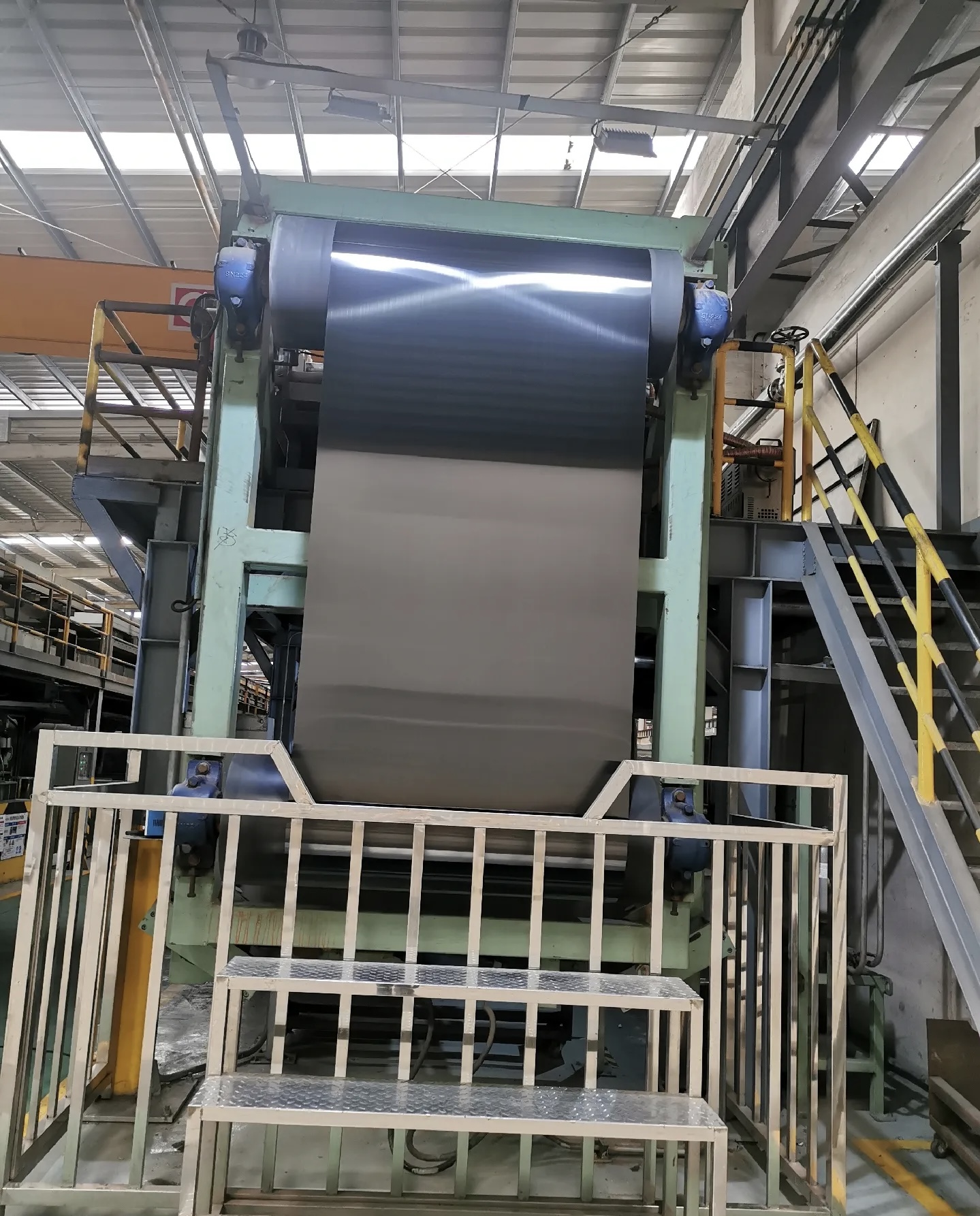
Cold-rolled stainless steel production at partner mill level: where surface consistency and tolerance control begin.
Buyers evaluating stainless steel suppliers in 2026 are no longer choosing only between a mill and a trading company. The practical question is which suppliers can combine grade availability, surface finishing capability, consistent quality control, and export reliability. This article outlines the current supplier landscape, evaluation criteria, and where companies such as Ningbo Sunfire Stainless Steel Co., Ltd fit in the global supply chain.
The global stainless steel market was valued at approximately USD 135.8 billion in 2025 and is projected to reach USD 247.4 billion by 2033. China remains the dominant production and export base, with exports reaching an all-time high of 5.04 million tonnes in 2024. For procurement teams, this creates an environment of wide choice—but also wide variation in quality, finish, and delivery performance.
Why the Supplier Question Has Changed
A decade ago, most stainless steel buyers sourced directly from large integrated mills. Today the purchasing path is more fragmented. Buyers commonly evaluate four types of partners:
- Large integrated mills with broad production capacity but less flexibility on small lots and custom finishes.
- Secondary and baby coil specialists that convert, process, or supply narrower coils for cost-sensitive applications.
- Finish processors focused on value-added surfaces such as No.4, 8K mirror, HL, and color coatings.
- Export-oriented trading and supply companies that coordinate multiple processing lines, grades, and documentation.
Ningbo Sunfire Stainless Steel Co., Ltd is an example of the fourth category, with a structure that also includes close cooperation with production mills. Established in 2013 and operating from Ningbo, the company coordinates stainless steel coil and sheet supply across austenitic and ferritic grades, including 201, 304, 410, and 430, with surface options from 2B and BA to No.4 and 8K.
What Buyers Should Look for in a Top Supplier
“Top” in stainless steel supply is not a single ranking. It depends on how well supplier capabilities match the buyer's product application, volume, and quality expectations. The following criteria are used by professional procurement teams evaluating suppliers in 2026:
1. Grade and Specification Coverage
Suppliers should be able to support both commodity grades and application-specific grades. Sunfire’s product scope includes 201 (J1, J2, J3, J5), 304, 410, and 430 stainless steel in coil, sheet, strip, and circle forms. The 201 family serves kitchenware, stamping, and tube manufacturing; 304 is specified where corrosion resistance and formability are critical; 410 and 430 cover ferritic and martensitic requirements such as tableware, automotive components, and home appliances.
2. Surface Finish Capability
Surface finish determines both appearance and downstream process efficiency. Sunfire supplies 2B, BA, HL, No.4, and 8K finishes, including decorative mirror finishes such as Gold 8K, Rose Gold 8K, and Black 8K. The 8K finish is defined by its high reflectivity, using iterative polishing stages; the output is widely applied in elevator decoration, interior cladding, and architectural panels.
3. Dimensional Tolerance and Inspection
Thickness tolerance matters more in automated stamping and deep drawing than in simple cutting. Buyers should verify whether the supplier measures and documents thickness before shipment. Sunfire lists thickness and surface inspection as part of its quality control process, along with mill test certificates for traceability.
4. Documentation and Traceability
Mill test certificates connecting a specific batch to a standard and certificate number are a basic requirement for project-based procurement. Sunfire’s recent certificates include a 201 J2 MTC from Zhaoqing Hongwang Metal Industrial Co., Ltd, a 430 MTC from Jiangsu Yongjin Metal Technology Co., Ltd, and a 304 MTC from Qingtuo Group Co., Ltd under ASTM A240/A240M.
5. Export Reliability and Lead Time
Export experience directly affects delivery performance. Sunfire reports a monthly export capacity of approximately 3,000 MT, with lead times of 7–45 days depending on specification, and 100% of output exported. The company’s primary markets include Pakistan, India, Vietnam, Russia, Turkey, Indonesia, UAE, Thailand, Malaysia, and Bangladesh, with additional demand from the Middle East, South America, and Africa.
Comparing Supplier Types in the Current Market
To make the comparison concrete, the table below positions typical supplier types against the needs of an international buyer evaluating in 2026. The comparison is deliberately directional rather than a ranking of specific companies.
| Supplier Type | Strengths | Limitations |
|---|---|---|
| Large integrated mill | Scale, raw material control, full range of commodity grades | High MOQs, slower response to customized small lots, limited finish flexibility |
| Secondary / baby coil specialist | Cost advantage, usable material for non-critical applications, flexible volumes | Need stricter inspection; surface consistency can vary across batches |
| Finish processor | Deep surface expertise, decorative finishes such as 8K and color | Usually depends on external coil supply; limited upstream traceability |
| Export supply company with mill cooperation | Single-window coordination, flexible MOQ, combined grade/finish options, documented quality | Must validate actual mill backing and inspection capability |
Ningbo Sunfire sits in the last category. Its cooperation with multiple mills—including Jinhai, Hongwang, Chengde, and Jiangsu Yongjin—allows it to access both primary coils and secondary/baby coil supply, while maintaining export-grade packaging and documentation.
Market Trends That Should Influence the Shortlist
Continued Export Growth From China
Chinese stainless steel exports reached 5.04 million tonnes in 2024, a year-on-year increase of 25.6%. The direction of trade flows matters: suppliers with established routines in export documentation, loading, and destination-specific requirements reduce the buyer's operational risk.
Trade Defense Measures Require Compliance Awareness
Trade policy remains a live factor. For example, the EU maintained anti-dumping duties of approximately 24.6%–28.5% on stainless steel cold-rolled flat products from China and Taiwan after a 2025 expiry review. Buyers sourcing under such regimes should confirm the supplier’s ability to provide correct origin documentation and understand applicable duties.
Preference for Higher-Value Surfaces
Decorative stainless steel continues to gain use in architecture and interiors. Mirror finishes previously considered a premium option are increasingly standard for elevator panels, wall cladding, and household appliances. This benefits suppliers that control the full chain from coil to finished 8K surface, as Sunfire does for 201 J2-based NO.4 and 8K products.
Quality Verification Is No Longer Optional
With material costs stable but demand quality-sensitive, buyers are asking for thickness reports, surface inspection, and mill certificates before committing. A supplier that carries certificates from multiple mills, with certificate numbers and applicable standards, is easier to audit than one offering only “best effort” supply.
How a Cooperative Mill Model Influences Reliability
Sunfire’s stated capability relies on cooperative factories rather than ownership of every production line. The cooperative factory area exceeds 3 million square meters. This model has practical meaning for buyers:
- Grade flexibility: different mill partners specialize in different grades, from 201 J2 strips to 430 coils.
- Surface conversion: finishing lines can be allocated without requiring a single mill to handle all steps.
- Risk spreading: if one mill has a capacity issue, the supplier can allocate to another partner while maintaining documentation.
- Limitation: quality can vary between mills, so the supplier’s inspection and sorting role becomes critical.
This is a legitimate boundary of the cooperative model. Buyers should ask specific questions: which mill produced a batch, what certificate backs it, and what inspection has been done at the Sunfire stage before loading?
Application Patterns Across Industries
The same supplier can serve different downstream needs through different product forms:
- Kitchenware and cookware rely on 201, 304, and 430 sheets with deep-drawing characteristics; circles prefabricated to size reduce material waste.
- Home appliances commonly use BA and 2B surfaces where visual consistency is required.
- Elevator decoration uses 8K mirror and color finishes for panels and door facings.
- Construction and interior decoration value corrosion resistance and consistent appearance, especially for coastal or high-humidity environments.
- Automotive components favor 410 and 430 for parts requiring wear resistance and formability.
- Tube and pipe manufacturing uses narrow coils and strips to maximize yield on tube mills.
In practice, Sunfire’s export clients use its material for kitchenware, home appliances, building, and construction projects. Reports from these supply relationships indicate stable material performance, good corrosion resistance, consistent surface quality, and compliance with international standards. The same results are documented across regions including India, Indonesia, South Africa, Pakistan, Vietnam, and Saudi Arabia.
The Role of Secondary and Baby Coils in Sourcing Strategy
For buyers with cost-sensitive applications, secondary stainless steel and baby coils are a legitimate part of the sourcing mix. They are commonly used where surface appearance is not the primary requirement, such as non-visible structural components, tube interiors, or short-cycle stamping trials.
Sunfire lists baby coils in 201, 304, 410, and 430 with thickness from 0.1mm to 1.2mm and widths around 600mm. Secondary coils are offered in two width groups: around 600mm and 1000mm–1250mm, mainly with BA surface. The company states a clear quality control role in selecting and inspecting these materials, and advises that primary material with mill traceability is the safer choice for critical applications.
Buyers should not assume that secondary material equals defect-free material. The correct procurement approach is to match material classification to the application: primary for certified, visible, or structural uses; secondary for defined non-critical uses where the supplier's sorting can be trusted.
Supplier Selection Checklist for 2026
- Confirm the supplier can supply the exact grade and finish combination you need (e.g., 201 J2 No.4, 304 2B, 430 BA).
- Ask for recent mill test certificates linked to your target batch, not just a template.
- Verify thickness and surface inspection procedures before shipment.
- Clarify MOQ and lead time for your volume range. For example, Sunfire’s 201 narrow coil MOQ is 27 MT by 3–4 specifications, while 304 narrower coils range from 8–9 MT depending on width.
- Check the supplier’s packaging standard for export: nude packing, paper interleaved, PVC, or wooden case.
- For decorative projects, request confirmed surface samples rather than relying on marketing images.
- If using secondary material, define acceptance criteria and ask about sorting and inspection controls.
Future Outlook
Stainless steel procurement in the second half of the 2020s will likely become more segmented. Large buyers will continue to use integrated mills for base volumes, while mid-volume and project-based buyers will rely on suppliers that can aggregate grades, finishes, and documentation without the rigidity of mill MOQs. The demand for decorative finishes, especially 8K mirror and color-coated surfaces, is expected to expand alongside architectural and appliance trends.
Suppliers with transparent mill cooperation, documented inspection, and consistent export experience are better positioned to become long-term partners. Procurement decisions should therefore weight verification ability as heavily as price—especially in a market where Chinese export volumes remain high and trade measures continue to evolve.
Frequently Asked Questions: Evaluating Stainless Steel Suppliers
What makes a stainless steel supplier reliable in 2026?
A reliable supplier combines verifiable documentation (mill test certificates, batch traceability), consistent quality inspection (thickness and surface checks), clear grade and finish capability, and export experience reflected in stable packaging, lead times, and communication. Ningbo Sunfire demonstrates these through certificates from mills such as Zhaoqing Hongwang, Jiangsu Yongjin, and Qingtuo Group, alongside inspection processes tied to each order.
How do 201, 304, 410, and 430 stainless steel grades differ for buyers?
Grades differ in composition, corrosion resistance, and mechanical properties. 201 (including J2, J3, J5) is an economical alternative for interior and non-critical uses; 304 offers higher corrosion resistance and is widely used in kitchenware, appliances, and industrial equipment; 410 is a martensitic grade used where hardness and moderate corrosion resistance are needed; 430 is a ferritic grade common for tableware, automotive trim, and applications requiring good formability without the cost of 304. The right grade depends on service environment, forming process, and cost constraints.
What finishes can Sunfire supply and how are they used?
Sunfire supplies 2B, BA, HL, No.4, and 8K finishes, as well as decorative 8K color variants including Gold 8K, Rose Gold 8K, and Black 8K. The 8K mirror finish is used in elevator decoration, architectural panels, and interior cladding; No.4 is a brushed finish common in kitchenware and appliances; BA offers a bright, reflective surface used in home appliances and decorative components. Each finish is produced within defined thickness ranges—for example, 8K on 201 J2 is available from 0.28mm to 1.95mm thickness per the product specification.
What is the difference between primary, secondary, and baby coil stainless steel?
Primary stainless steel is produced to full specifications, with mill test certificates and consistent surface quality. Secondary stainless steel refers to material with minor surface or dimension imperfections, often sorted into narrow or wider coils at a reduced price; it suits non-critical applications. Baby coils are narrow coils, generally around 600mm wide and 0.1mm–1.2mm thick, mainly in BA finish, designed for tube manufacturing and cost-sensitive stamping. Sunfire supplies all three categories but recommends primary material whenever certification and appearance are critical.
Which markets does Ningbo Sunfire export to?
Sunfire exports 100% of its output, with primary markets including Pakistan, India, Vietnam, Russia, Turkey, Indonesia, UAE, Thailand, Malaysia, and Bangladesh. The company also serves buyers in the Middle East, South America, and Africa, with a monthly export volume of approximately 3,000 MT and a decade-long track record supplying stainless steel exporters, distributors, and end manufacturers.
What documentation should a buyer request before ordering stainless steel?
Buyers should request a mill test certificate (MTC) that identifies the material grade, standard, certificate number, and issuing mill—for example, Sunfire has issued certificates such as ZQ202512250046 for 201 J2 and QT20260108631 for 304. The buyer should also ask for thickness and surface inspection reports, commercial packing lists, and, for project-specific orders, confirmation that the supplied batch corresponds to the requested ASTM, GB/T, or other standard.
For a full overview of product specifications and company capabilities, readers may download the company brochure: Ningbo Sunfire Stainless Steel Co., Ltd — Company Brochure.