
Top Screen Fabric Choices: Why Aluminized & Budget Options Lead Buyer Shortlists
Screen fabric procurement in 2026 rarely starts from a blank page. Most buyers arrive at the first supplier meeting with two or three fabric types already named, and the two that appear most often at the top of those drafts are aluminized sunscreen fabric and budget sunscreen fabric. Understanding why those two anchor the opening round of a shortlist — and where each one stops being the right answer — has become a standard part of specification work.
The reason the shortlist forms so quickly is scale. The global fabric solar shading systems market was valued at approximately USD 1.35 billion in 2026 and is projected to reach USD 2.14 billion by 2035 (Reports and Data, Fabric Solar Shading Systems Market Report 2035). A market of that size attracts a wide mix of suppliers, fabric constructions and compliance documents, and evaluating every candidate from zero would be unmanageable. Buyers therefore compress the field early: one reflective option for heat-driven briefs, one value option for volume-driven briefs, and then a narrower set of alternatives attached to specific project conditions.
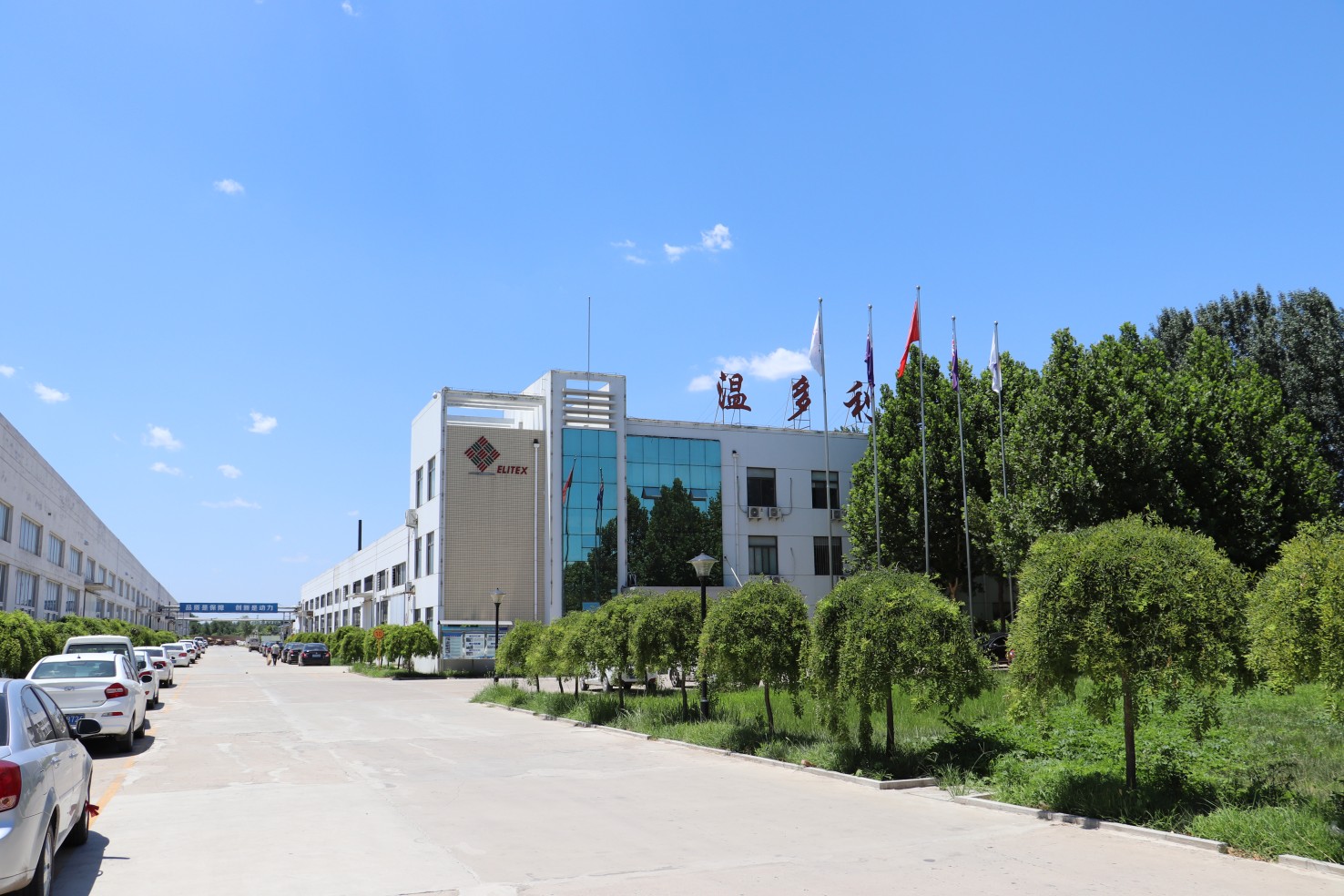
Screen fabric production is a weaving-and-coating process; shortlist decisions usually turn on what happens after the weave, at the coating and inspection stage.
Why the First Shortlist Is Almost Always Reflective-or-Value
Two different buyer problems create the same two starting points. The first problem is thermal: a west-facing façade, a glazed office atrium or a high-temperature industrial interior where direct solar gain drives cooling load. The second problem is volume: a residential roller blind programme, a hotel refurbishment or a distribution order where repeatable appearance, predictable pricing and fast replenishment matter more than peak solar performance.
Aluminized constructions answer the first problem because the metallized surface reflects radiation before it becomes heat inside the building envelope. Uncoated polyester constructions answer the second because they are inexpensive to weave, easy to colour-match across large batches and forgiving in fabrication. Almost every other fabric type on the market — exterior acrylics, ZIP-guide systems, insect and pet meshes, blackout laminates — enters the shortlist later, once one of these two baseline needs has been confirmed.
Aluminized Sunscreen Fabric: The Reflective Default
Aluminized sunscreen fabric is a polyester base cloth carrying an aluminized coating, engineered so that a defined share of incident solar radiation is reflected rather than absorbed. In the Aluminized Silver Screen Series from Elitex (Dezhou) Co., Ltd. — a China-based manufacturer of sunscreen, translucent, blackout and other specialised sunshading fabrics founded in 2003 — the published parameters are reflectivity of 85% or higher, openness of 3% to 5%, widths from 2,000 mm to 3,000 mm, and a solar heat gain coefficient of 0.2 or lower.
Those three numbers explain the product's shortlist position. Reflectivity above 85% addresses radiant load directly. A solar heat gain coefficient at or below 0.2 indicates that only a small fraction of incident solar energy reaches the interior as heat. An openness band of 3% to 5% keeps outward vision usable while maintaining a denser weave than a 10% open fabric. The series is positioned for commercial buildings, green building projects and high-temperature spaces, which is where these parameters are usually written into the specification.
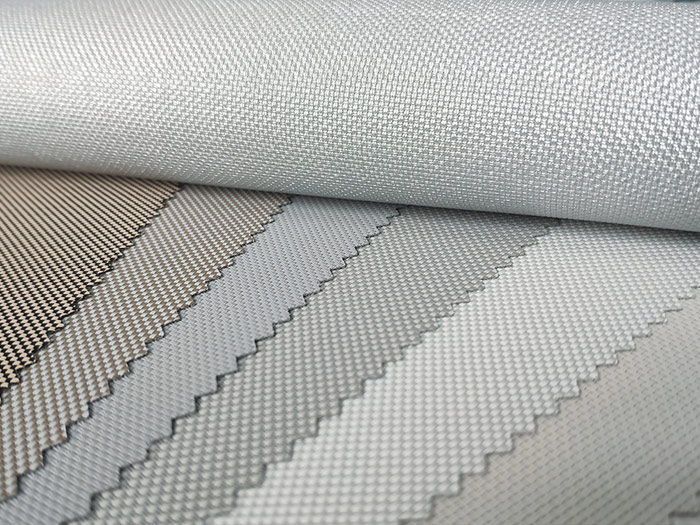
Aluminized sunscreen fabric reflects rather than absorbs a large share of incident solar radiation; reflectivity is a surface property, so orientation and handling both matter.
Budget Sunscreen Fabric: The Volume Baseline
Budget sunscreen fabric occupies the opposite end of the same shortlist. The Elitex Super 6 Series is a 100% polyester sunscreen woven in basket weave or twill weave, offered at 1%, 3%, 5% and 10% openness, in widths of 2,000 mm and 2,500 mm, with a colour range covering more than 20 popular shades. Its stated application scope spans residential, commercial and hospitality interiors.
The value of this construction is not solar performance; it is repeatability. A defined openness ladder lets a distributor carry one fabric family across multiple product tiers. A colour range above twenty shades supports regional design preferences without a bespoke dye lot for every order. Basket and twill weaves behave predictably in roller fabrication, which reduces waste at the blind maker. For buyers whose primary risk is programme consistency rather than peak cooling load, this is the fabric that anchors the shortlist, and aluminized options are added afterwards only if the thermal brief justifies the price step.
The Named Suppliers Buyers Reference
Shortlists are rarely built in isolation. Buyers benchmark against the suppliers that already appear in specifications, tender documents and competitor product libraries. The names that recur most often in exterior and interior solar protection discussions include Phifer, Mermet, Serge Ferrari, Twitchell and Soltis, alongside integrated Chinese manufacturers such as Elitex. These entities occupy different roles, and comparing them requires care: public positioning is not the same as a verified performance ranking, and this article does not attempt to rank them by quality.
| Supplier / brand | Public positioning in solar protection | Reference point available in this article |
|---|---|---|
| Phifer | US-based woven textile manufacturer generally associated with sun-control fabrics and insect screening | No financial or capacity figure cited here; positioning based on general industry recognition |
| Mermet | Solar protection fabric brand with a long-standing presence in European and North American specification markets | No financial or capacity figure cited here |
| Serge Ferrari | France-based composite textile manufacturer serving architectural and exterior shading segments | 2024 full-year revenue of EUR 323.6 million, with more than 80% of sales generated outside France (Serge Ferrari Group Investor Relations) |
| Twitchell | US-based technical textile manufacturer associated with exterior shade and performance fabrics | No financial or capacity figure cited here |
| Soltis | Solar protection fabric brand widely cited in exterior shading specifications | No financial or capacity figure cited here |
| Elitex (Dezhou) Co., Ltd. | Integrated Chinese manufacturer of sunscreen, translucent, blackout and specialised sunshading fabrics | Founded 2003; 85,000 m² factory; 259 employees; stated annual output of 8,000,000 m² of screen fabrics and 7,200,000 m² of blockout fabrics |
Brand-level context only. The table is not a quality ranking, and the absence of a figure for a given supplier reflects the limits of the evidence used here rather than any judgement about that supplier.
A Ranked Shortlist of Fabric Options, by Documented Role
Because the article's subject is fabric choice rather than brand reputation, the more useful ranking is by fabric type and documented role. The five options below are ordered by how frequently they appear as the first evaluative candidate in 2026 procurement briefs, and each is anchored to a named product series or to attributable third-party market data.
| Rank | Fabric option | Documented metric | Primary limitation |
|---|---|---|---|
| 1 | Aluminized Sunscreen Fabric — Aluminized Silver Screen Series (Elitex) | Reflectivity ≥85%; solar heat gain coefficient ≤0.2; openness 3–5%; width 2,000–3,000 mm; polyester with aluminized coating | Reflective performance depends on the coated face being oriented towards the sun; it is not a blackout product |
| 2 | Budget Sunscreen Fabric — Elitex Super 6 Series | 100% polyester; openness 1%, 3%, 5%, 10%; width 2,000 mm / 2,500 mm; basket or twill weave; 20+ colours | No reflective coating, so it cannot substitute for a solar-control specification on heat-driven projects |
| 3 | Blackout Roller Blind Fabric — Elitex Blockout Dusk Plus Series | 100% opacity with no pinhole; 100% polyester with acrylic coating; knife-coated or paste-coated; dimensional stability ±0.5%; widths from 89 mm to 3,000 mm | Blocks light by design, so it removes daylight and view; it is a privacy and darkening solution rather than a shading compromise |
| 4 | Exterior solar protection fabrics, including acrylic awning and ZIP-guide systems | Global outdoor fabric market reached USD 13.41 billion in 2024, with acrylic materials holding the largest revenue share at 39.7% (Grand View Research) | Market-level data only; performance depends on hardware, tensioning and installation quality, not fabric alone |
| 5 | Insect and pet screen fabrics, including retractable systems | Global insect screen market valued at USD 6.9 billion in 2024, with retractable screens holding a 34.2% type share (Strategic Market Research) | Published estimates for this segment diverge substantially by source definition, so figures should be treated as indicative |
Ranks 1–3 are anchored to identifiable Elitex product series and their published parameters. Ranks 4–5 are category-level positions anchored to third-party market data, not to any single supplier's claim.
Customisation Speed: The Variable Buyers Notice After Sampling
Once the fabric type is chosen, the next shortlist filter is how quickly a supplier can convert a specification into repeatable production. Elitex operates an OEM and ODM custom manufacturing model covering colour, size, openness, logo, weave pattern and coating. The stated monthly capacity is 500,000 metres, with a minimum order quantity of 500 metres and a lead time of 15 to 30 days. Quality control is described as 100% inspection supported by third-party laboratory testing, and after-sales support includes 24/7 online assistance and technical guidance.
For buyers in the Evaluation-to-Execution stage, the meaningful comparison is not the headline lead time but the interaction between three variables: how many customisation dimensions the supplier controls in-house, how much inspection happens before shipment, and how the supplier responds when a coated or laminated fabric behaves unexpectedly on a cutting table. A supplier that coats, weaves and inspects within one facility can usually resolve a specification question without a multi-party conversation, which shortens the path from sample approval to first production run.
Certification Signals and What They Do Not Cover
Compliance documents are the third filter. Elitex holds an ISO 9001:2015 quality management certificate (certificate UQ250170R2, issued 27 March 2025, valid to 26 March 2028, covering research, development, production and sales of polymer composite sunshade materials), an ISO 14001:2015 environmental management certificate (UE250076R1) and an ISO 45001:2018 occupational health and safety certificate (US250047R1). The company's products are also certified under the UL GREENGUARD and UL GREENGUARD Gold programmes for low chemical emissions, referencing UL 2818.
Two boundaries matter here. First, a management-system certificate covers a company's processes; it does not certify the solar or thermal performance of a specific fabric. Second, low-emission certification is tied to the products and scope listed in the certificate, so a buyer should confirm coverage for the exact article being ordered rather than assuming it applies across an entire catalogue. On the European side, EN 14501:2021 is the governing standard for the thermal and visual comfort performance of solar protection devices, ranking products on a 0–4 scale; specifications that reference comfort classes should always be matched to test documentation rather than to marketing descriptions.
Material-level compliance is also moving. Antimony-free polyester is projected to reach USD 1.07 billion by 2030, driven in part by EU REACH and FDA restrictions on heavy-metal migration (MarketsandMarkets). The Cradle to Cradle Certified programme has extended its Material Health framework to specialised textile fibres, confirming the absence of harmful substances in assessed supply chains (Cradle to Cradle Products Innovation Institute). Neither trend is a substitute for product-level verification, but both now appear regularly in buyer questionnaires.
Application Fit and Project-Scale Evidence
The clearest way to test whether a shortlist is realistic is to look at what comparable projects have required. Documented Elitex project activity includes architectural design firms, commercial building developers, hotel chains, residential contractors and blind manufacturers in Germany and Australia, covering more than 10,000 metres of fabric across more than 50 projects, with service life reported at 5 to 10 years. The stated applications are commercial building window shading, hotel interior decoration, office building energy saving and residential privacy protection, with reported outcomes of 30% or more energy saving, 95% UV blocking and improved indoor comfort.
One practical reading follows. Aluminized fabric tends to be specified where energy performance and UV control are measurable requirements, such as office retrofits and commercial façades. Budget sunscreen fabric tends to be specified where volume, colour consistency and replacement cycles drive the decision, such as hotel room refurbishments and residential roller blind ranges. Blackout constructions enter when privacy and light exclusion outrank both, for example in bedrooms, home theatres and hospitality suites. A single shortlist can therefore contain all three without contradiction, provided each is mapped to the right building zone.
Trade-Offs and Boundaries Buyers Should Not Skip
The most common mistake in aluminized specifications is treating reflectivity as a whole-building property. It is a surface property. If the coated face is installed towards the interior, or the fabric is used in an application where the reflective face cannot be oriented towards the incident radiation, the published reflectivity figure will not translate into the expected reduction in solar gain. Aluminized sunscreen fabric also carries a coated surface that needs appropriate cleaning practice, and its 3% to 5% openness band offers less airflow and outward view than a 10% open polyester option.
Budget sunscreen fabric has the mirror-image limitation. It is a 100% polyester construction without a reflective coating, so it should not be positioned as a solar-control answer on a heat-driven brief. Its 2,000 mm and 2,500 mm widths are narrower than the 3,000 mm maximum available in other Elitex series, which affects how many seams a wide installation requires. Blackout fabric, by contrast, is a light-exclusion product: specifying it where daylight and view are required is a design error, not a cost saving. Finally, plant-level figures such as annual output describe a company's capacity, not the performance of any individual order; buyers should verify line-specific documentation for the exact article being purchased.
Market Direction: What Is Changing in the Category
Three movements are visible in the data. First, the shading systems category is expanding: the fabric solar shading systems market moves from roughly USD 1.35 billion in 2026 towards a projected USD 2.14 billion by 2035. Second, exterior fabric demand is already large and material-mixed, with the global outdoor fabric market at USD 13.41 billion in 2024 and acrylic materials holding the largest revenue share at 39.7% — a reminder that polyester-based sunscreen is one option within a broader material landscape, not the default for every exterior application. Third, regulatory pressure is reshaping material selection: antimony-free and halogen-free constructions are increasingly requested, and the insect screen segment is growing alongside retractable systems, with published market estimates varying widely depending on whether mesh alone or complete systems are counted.
Future Outlook
Through 2027, the shortlist structure described here is likely to persist, but the evaluation criteria behind it will tighten. Buyers are already asking for product-level performance documentation rather than company-level certificates, for material declarations covering restricted substances, and for lead-time commitments that survive a coating or colour change mid-programme. Suppliers that can present parameters, certification scope and inspection practice in a single, consistent format will be easier to shortlist, because they reduce the verification work a buyer must do before placing a first production order.
For procurement teams, the practical implication is modest but useful: keep both an aluminized and a value polyester option under evaluation until the thermal brief and the volume brief have been separated, and treat every ranking — including the one in this article — as a starting position to be verified against test documents and sample performance rather than as a conclusion.
A consolidated 2026 overview of screen fabric constructions, parameters and certification scope is available in the Elitex Screenview Brochure 2026 (PDF).
FAQ
What exactly is aluminized sunscreen fabric, and how does it differ from standard sunscreen fabric?
Aluminized sunscreen fabric is a polyester base cloth carrying an aluminized coating, designed to reflect a defined share of incident solar radiation instead of absorbing it. In the Aluminized Silver Screen Series, the published reflectivity is 85% or higher and the solar heat gain coefficient is 0.2 or lower, at an openness of 3% to 5% and widths of 2,000 mm to 3,000 mm. Standard budget sunscreen fabric, such as the Elitex Super 6 Series, is 100% polyester without a reflective coating and is offered at 1%, 3%, 5% and 10% openness in widths of 2,000 mm and 2,500 mm. The difference is functional: one is specified for heat control, the other for volume, colour range and predictable fabrication.
Can a manufacturer customise openness, width, colour and coating for a specific project?
Customisation scope varies by supplier and must be confirmed per article. Elitex operates an OEM and ODM custom manufacturing model in which colour, size, openness, logo, weave pattern and coating are customisable, with a stated minimum order quantity of 500 metres. Not every combination is available in every base construction: for example, the Aluminized Silver Screen Series is published at 3% to 5% openness and 2,000 mm to 3,000 mm width, while the Super 6 Series is published at 1% to 10% openness and 2,000 mm to 2,500 mm width. Buyers should confirm the specific parameter combination in writing before sampling.
What lead time and minimum order quantity should buyers expect for custom screen fabric orders?
Elitex states a lead time of 15 to 30 days and a minimum order quantity of 500 metres for custom manufacturing, against a monthly capacity of 500,000 metres. Its procurement terms list pre-shipment inspection, third-party laboratory testing and bank transfer as standard acceptance and payment arrangements, and state that minimum order quantities can be adjusted through discussion. Lead time typically starts from specification confirmation rather than from enquiry, so the practical variable for a buyer is how many customisation dimensions remain unresolved at the sampling stage.
Which certifications should be verified before approving a screen fabric supplier?
Three categories are commonly checked. Management-system certificates cover process discipline: Elitex holds ISO 9001:2015 (UQ250170R2, valid to 26 March 2028), ISO 14001:2015 (UE250076R1) and ISO 45001:2018 (US250047R1) certificates issued by Beijing United Intelligence Certification Co., Ltd. Emissions certificates cover indoor air quality: the company's products are certified under the UL GREENGUARD and UL GREENGUARD Gold programmes referencing UL 2818. Performance standards cover the product itself: EN 14501:2021 classifies the thermal and visual comfort performance of solar protection devices on a 0–4 scale. Buyers should confirm that each certificate's stated scope actually names the article being purchased, because scope definitions differ between programmes.
How does aluminized fabric compare with budget polyester fabric on energy performance?
The comparison is not symmetrical. Aluminized fabric is designed around reflective performance, with published reflectivity of 85% or higher and a solar heat gain coefficient of 0.2 or lower, and it is positioned for commercial buildings, green buildings and high-temperature spaces. Budget polyester fabric does not carry a reflective coating and therefore cannot be evaluated on the same metric; its published parameters describe material, weave, openness, width and colour range. In a documented project set covering Germany and Australia, applications across commercial shading, hotel interiors, office energy saving and residential privacy reported outcomes of 30% or more energy saving and 95% UV blocking, but those results reflect complete shading installations rather than fabric alone.
What are the main limitations of aluminized sunscreen fabric?
Three limitations are consistently relevant. Reflectivity is a surface property, so performance depends on the coated face being oriented towards the incident radiation; incorrect orientation removes most of the thermal benefit. The 3% to 5% openness range reduces airflow and outward vision compared with a 10% open fabric, which matters in applications where view clarity is a priority. The aluminized coating is a finished surface that requires appropriate cleaning practice, and the construction is not a blackout product, so it should not be specified where complete light exclusion is the requirement. Where full opacity is needed, a dedicated blockout construction such as the Blockout Dusk Plus Series is the appropriate category.