
Top Picks Shortlist: LINGO LG-RX Seals and LGMM Mounts for New Material Projects
A sealing component or an anti-vibration mount is rarely the largest line item in a green energy or new-material project. It is one of the few items that can still stop a schedule: if it is specified late, sourced from a supplier that cannot be trialed at low volume, or replaced after a first field failure.
For procurement teams at the decision-to-execution stage, the useful question is narrower than which supplier offers rubber parts in general. It is this: which specific parts can be shortlisted now, trialed in small quantities, and then scaled without changing the supply base? This shortlist covers two LINGO part families — LG-RX sealing parts and LGMM anti-vibration mounts — and sets out the material options, the tolerance and testing evidence behind them, and the commercial terms that decide whether a first order is realistic.
LINGO Rubber Plastic — the trading name of Hangzhou Lingo Rubber and Plastic Product Co., Ltd — is a China-based manufacturer of custom rubber and plastic parts. Founded in 2022, the company operates a 3,000 m² facility with around 40 employees, including a 10-person R&D team. Roughly 80% of output is exported, with the EU and USA as the main markets and the Middle East also served. The product base spans rubber molding parts (sealing rings, o-rings, gaskets, grommets, bushings, bellows, rubber bonded to steel, anti-vibration mounts) and rubber extrusion parts such as solid, sponge and silicone rubber strips.
The Decision-to-Execution Gap: Three Friction Points
New-material projects — storage and battery systems, solar mounting and enclosures, wind and hydrogen equipment, and the industrial infrastructure around them — usually reach the sealing and isolation decision late in the schedule. By that point, three friction points tend to appear.
- Material uncertainty. EPDM, NBR, silicone and FKM behave differently under UV, ozone, oil, heat and compression. A part that seals in a bench test can harden, soften or bloom in service, and the failure shows up months later.
- Volume mismatch. Pilot builds and first production runs need tens or hundreds of parts, not container loads. Suppliers whose commercial model starts at high minimum order quantities push buyers into over-ordering or into substituting a standard part that does not match the requirement.
- Evidence asymmetry. Buyers are asked to approve a part before they have field data. The evidence therefore has to come from tolerance capability, aging tests and batch traceability rather than from history with the part.
The opportunity is to treat the first order as a controlled trial rather than a procurement commitment. That works when four conditions hold: materials are defined per part, tolerance and capability are stated, small quantities are accepted so a trial can actually be validated, and lead time is predictable enough to fit a project milestone.
Shortlist Overview: LG-RX Seals and LGMM Mounts at a Glance
| Part family | Primary function | Material options | Customization levers | Shortlisting evidence |
|---|---|---|---|---|
| LG-RX sealing parts | Static and dynamic sealing, gap filling, panel and pass-through sealing | EPDM, NBR, silicone, FKM | Shore A hardness, colour, profile and dimension | Rubber tolerances controlled to RMA A2; capability maintained at CPK ≥ 1.33 |
| LGMM anti-vibration mounts | Vibration isolation for pumps, compressors, skids, fans and enclosures | Natural rubber | Diameter range 8–150 mm, plus bonded and over-molded assemblies | Same tolerance and capability regime; rubber-to-metal bonding and over-molding available in house |
The two families address different failure modes. LG-RX parts are shortlisted against leakage, ingress and environmental exposure; LGMM mounts are shortlisted against transmission of vibration and structure-borne noise. In new-material projects they are usually specified together but should be trialed separately, because the acceptance criteria are not the same.
Why LG-RX Leads the Sealing Shortlist
LG-RX is the sealing family that fits the widest set of positions in a green energy project, because the specification can move across four elastomer classes without changing supplier, documentation or tooling regime.
Material options mapped to the dominant exposure
- EPDM — outdoor weathering, ozone, water and steam. This is the usual direction for enclosure seals, cabinet gaskets and door and window seal profiles that sit outside the weather line.
- NBR — oil, fuel and grease contact. Relevant where lubricant mist, gear oil or hydraulic fluid can reach the seal face.
- Silicone — a wide service-temperature range with good low-temperature flexibility. It is also the base for silicone cord, silicone rubber seals and silicone moulding formats.
- FKM — aggressive chemicals and high-temperature duty where other elastomers degrade faster.
These are selection directions rather than a substitute for testing. The practical rule for a buyer is to define the worst-case exposure first — temperature, medium, UV, compression — and then ask which compound the supplier proposes and what evidence supports it.
Hardness and colour as specification levers
Shore A hardness and colour are both customizable on LG-RX parts. Hardness is not a cosmetic choice: a softer compound conforms to irregular mating surfaces and seals at lower assembly force, while a harder compound resists extrusion and deformation under pressure. Colour is often treated as decoration, but in production it supports part identification on the line, batch differentiation in service and simple visual inspection routines — a practical benefit when a project runs several similar seals and one wrong part can fail an assembly.
Related sealing formats from the same production base
Because these parts are produced through molding and extrusion, the same family covers formats that buyers search for under different names: rubber o-rings, EPDM rubber gaskets, silicone rubber seals, rubber grommets, rubber washers and gasket-style parts, extruded silicone cord and strip profiles, and door and window seal sections. For procurement, this matters less as a catalogue question than as a tooling question: a shortlist that shares material grades and process controls is easier to qualify than one assembled from several unrelated suppliers.
Why LGMM Mounts Lead the Vibration-Isolation Shortlist
LGMM anti-vibration mounts address the other half of the project problem: structure-borne vibration and noise generated by rotating and reciprocating equipment.
Dimensional range and construction
LGMM mounts are built in natural rubber and are available across a diameter range of 8 mm to 150 mm. That range matters for shortlisting because it covers both small instrument-level isolation and the mid-size cylindrical rubber mounts used on pumps, compressors, skids and air-handling units. Natural rubber remains the default material for cylindrical and stud-mounted isolators because of its elastic recovery and fatigue behaviour in dynamic duty.
Processes behind the mounts
LINGO states that its manufacturing capabilities include rubber-to-metal bonding, over-molding, PVC dipping and LSR molding. That process set is exactly what an isolator needs when the rubber must be bonded to a metal insert or bracket rather than simply bolted through. For a buyer, bonding capability is a shortlisting criterion in its own right: it determines whether the mount arrives as a ready-to-fit assembly or as a loose rubber element that has to be assembled in the field.
The Technical Basis Behind the Recommendations
A shortlist is only as good as the evidence attached to it. Three control areas matter most for seals and mounts in new-material projects: dimensional capability, aging behaviour and process consistency.
Tolerance and capability
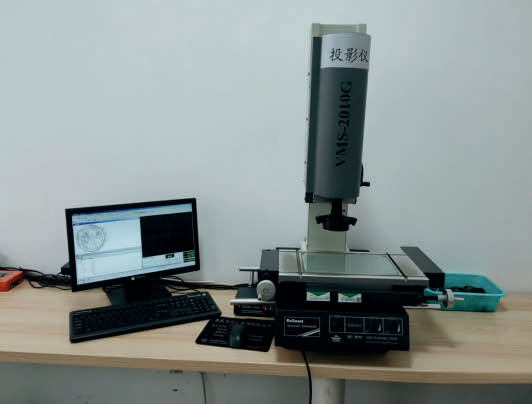
LINGO states that rubber tolerances are controlled to RMA A2 and plastic tolerances to M1–M3, with tolerance control capability consistently maintained at CPK ≥ 1.33. That statement is supported by a set of production practices rather than by a single inspection step:
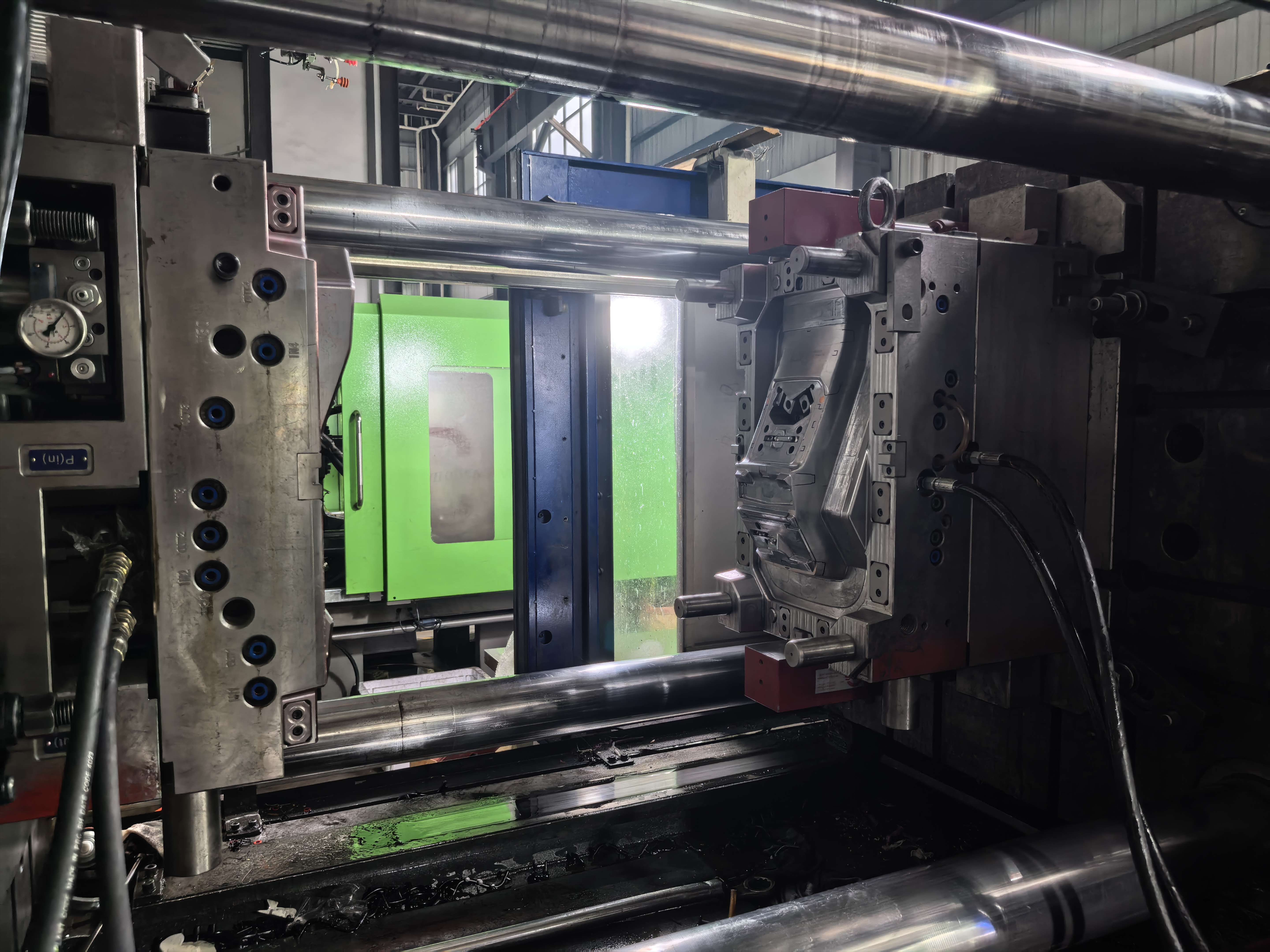
- Shrinkage rate is simulated during mold design rather than corrected after tooling.
- Molds and measuring tools are calibrated regularly in line with CNAS requirements.
- Mold cavity pressure sensors are used for real-time monitoring during production.
- Process parameters such as machine pressure and cure or injection time are controlled as fixed settings.
- Product sampling inspection runs alongside production, and the stated acceptance criterion for shipments is a pre-shipment test.
Aging, hardening and softening
Hardening or softening from aging is the most common long-term complaint about elastomer parts, and it is the failure mode most likely to appear after a project has been handed over. The stated control method has three parts: select a substrate with good weather resistance, add light stabilizers, antioxidants and anti-ozone agents, and apply a protective coating to the surface. Verification is handled by QUV or xenon lamp aging tests, by controlling additive dosage with batch traceability, and by accelerated aging tests run in a reliability laboratory. For a buyer, the practical takeaway is to ask for the aging test basis, not just the material name on a datasheet.
Blooming, surface gloss and dimensional drift
Three less obvious failure modes are worth writing into a trial protocol before the first order is placed.
- Blooming — frost appearing on the part surface. This is controlled by keeping additive dosage within the solubility limit and by ensuring correct vulcanization, supported by vulcanization characteristic testing on each batch of rubber compound, supplier quality agreements requiring test reports, and retained samples of core raw materials with traceability.
- Inconsistent surface gloss — controlled through mold surface maintenance and standardized process parameters, with gloss testing performed on the first piece.
- Dimension out of tolerance — controlled through the shrinkage simulation, calibration and cavity pressure monitoring described above.
Commercial Terms That Make Trialing Practical
At the decision-to-execution stage, commercial structure is part of the technical evaluation. The terms below are the ones that determine whether a shortlist can be converted into a validated part.
- Minimum order quantity. The minimum order quantity differs per product, but small quantity orders are accepted — which is what makes a low-risk trial possible.
- Lead time. A typical production lead time of 2 to 6 weeks; tooling and samples usually take 4 to 6 weeks and production parts 3 to 4 weeks once tooling is complete.
- Capacity. Monthly production capacity of 1,000,000 kgs, with OEM and ODM production services offered.
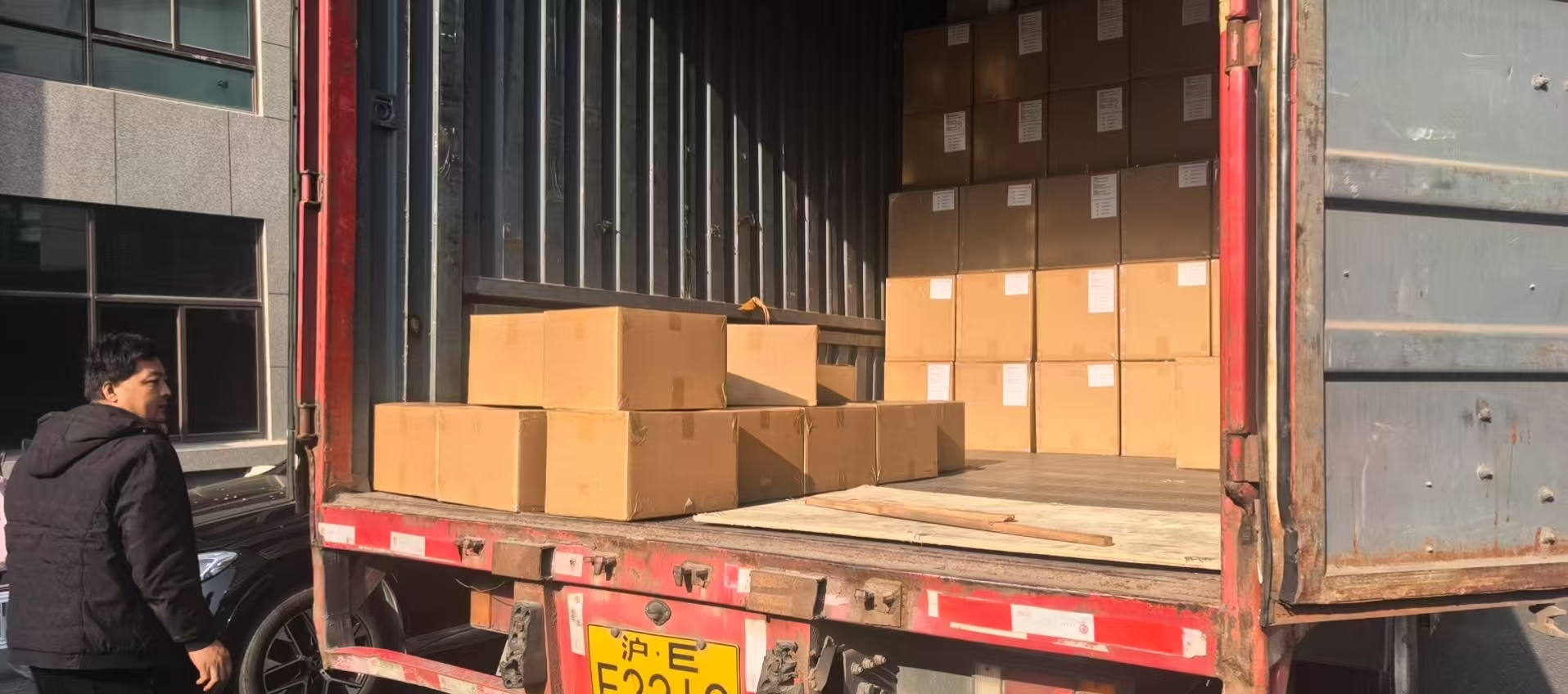
- Delivery terms. EXW, FOB, CIF and DDP.
- Payment. T/T is the standard route, with a deposit for first-time or small orders and the balance before shipment; L/C at sight is accepted for larger quantities; D/P can be arranged for certain destinations by agreement; PayPal is available for sample payments and low-value orders; credit terms are offered to established customers with a consistent payment record.
- Acceptance. Pre-shipment test.
Read together, these terms describe a trial-friendly model: a sample can be paid for by the simplest available method, the first production order can be small, tooling time is bounded and stated, and the acceptance step happens before goods leave the factory rather than after arrival.
Application Fit in Green Energy and New-Material Projects
Neither family is dedicated to a single sub-sector, which is what makes them usable as a shortlist across a project portfolio.
- Outdoor and enclosure sealing. EPDM-based LG-RX parts for cabinets, junction boxes, inverter housings and door and window seal profiles exposed to UV, rain and temperature cycling.
- Oil-adjacent and mechanical sealing. NBR-based parts where lubricants, gear oils or hydraulic fluid may contact the seal face.
- Thermal cycling positions. Silicone and FKM variants where service-temperature swings or process heat dominate the duty cycle.
- Cable and panel pass-throughs. Rubber grommets and plug-type sealing parts used to close holes while protecting cables from abrasion.
- Vibration isolation. LGMM mounts under pumps, compressors, skids, fans and air-handling units, where structure-borne vibration affects both equipment life and acoustic targets.
The company states that its parts are used in electronics, aerospace, healthcare, construction, transportation and defence applications, and that around 80% of output is exported to the EU and USA with the Middle East also served. That spread is relevant to green energy procurement for a simple reason: the same production and quality system is already exposed to more than one demanding end market, which shortens the qualification conversation for a new-material project.
Market Trend Analysis
Market data supports the direction of travel, but with a caveat that matters for any buyer putting figures into a business case.
- The global gasket and seal materials market reached a valuation of USD 61.4 billion in 2024, according to Grand View Research.
- Rubber seals represent approximately 56% of that gasket and seal market, reflecting their extensive use in dynamic sealing.
- The narrower O-ring market was valued at USD 10.41 billion in 2025, per Vantage Market Research.
- China accounts for approximately 23% of the global anti-vibration rubber mounts market, according to Cognitive Market Research — consistent with the concentration of molding and bonding capacity in Chinese industrial clusters.
Forecasts for the broader industrial rubber market diverge sharply depending on scope and methodology. Persistence Market Research places the market at US$181.5 billion in 2026, rising to US$299.2 billion by 2033. Mordor Intelligence estimates US$16.88 billion in 2026, rising to US$20.36 billion by 2031. The two figures use different product boundaries and cannot be averaged or combined. The useful reading for a procurement team is that published rubber market numbers are scope-sensitive, so a shortlist should rest on part-level evidence — tolerance capability, test results and lead time — rather than on a headline market value.
On the trade side, gaskets, washers and other seals of vulcanized rubber are classified under HS code 4016.93 in the US Harmonized Tariff Schedule. Buyers importing sealing parts should expect to see that classification on shipping and customs documentation.
Where This Shortlist Has Limits
A shortlist that claims no boundaries is not a shortlist. Four limits are worth stating before a trial order is raised.
- Tolerance class. RMA A2 is a commercial tolerance grade for molded rubber. Applications requiring tighter-than-commercial dimensional control, or additional aerospace or medical-grade validation, need a different specification route and should not be approved on an RMA A2 statement alone.
- Company scale. LINGO was founded in 2022 and operates with around 40 employees in a 3,000 m² facility. That configuration suits small-to-mid programmes, pilot builds and repeat production of many part numbers. A single project demanding very large volumes should be scheduled in stages, with capacity confirmed against the plant-level figure of 1,000,000 kgs per month rather than assumed for one part number.
- Natural rubber mounts. LGMM mounts in natural rubber perform well in dynamic isolation, but natural rubber is more sensitive to oils, ozone and prolonged UV exposure than EPDM or FKM. Outdoors or in oil-adjacent positions, the isolation requirement may need to be met with a different elastomer rather than a default natural-rubber part.
- Tooling dependency. Custom sealing and mounting parts require tooling, typically 4 to 6 weeks for tooling and samples. A standard catalogue part may arrive faster, but with less control over material grade, hardness and geometry.
Compared with buying equivalent parts through general distributors, a direct manufacturer route removes a handling layer but adds tooling and qualification steps. In new-material projects, where fit and material behaviour matter more than catalogue convenience, that trade-off is usually acceptable — but it should be acknowledged rather than ignored.
Future Outlook
Three developments are likely to shape how part shortlists like this one are written over the next few years.
- Evidence requests will deepen. Publicly available supply-side data on rubber parts remains thin. Capacity by material, recycled content and per-part carbon footprint are not routinely published by manufacturers, yet they are increasingly needed for ESG reporting and supplier qualification. Suppliers that can answer with documentation will shortlist more easily.
- Traceability will move from differentiator to baseline. Batch-level retention of core raw materials, vulcanization testing per batch and calibration records are the elements that make a claim verifiable years after delivery.
- Material portfolios will keep widening. As new-material projects push service conditions further, demand for FKM and silicone parts alongside standard EPDM and NBR parts will continue. Suppliers with multi-material molding and bonding capability under one roof will be easier to qualify than assemblies built from several suppliers.
For LINGO, the sequence is straightforward: keep tolerance capability and testing evidence visible, keep trialing accessible through flexible minimum quantities, and let existing export experience in the EU, USA and Middle East carry the compliance conversation.
Frequently Asked Questions
What are the minimum order terms when trialing LG-RX seals or LGMM mounts?
The minimum order quantity differs per product, and small quantity orders are accepted. For sample payments and low-value orders, PayPal is available, while T/T is the standard route for first-time or small production orders, with a deposit upfront and the balance before shipment. That structure allows a buyer to validate a part before committing to a production volume.
How long does a first delivery take after the shortlist decision?
A typical production lead time is 2 to 6 weeks. Tooling and samples usually take 4 to 6 weeks, and production parts typically take 3 to 4 weeks once tooling is complete. Where an existing mold can be used, the tooling phase is removed from the schedule.
Which materials are available for LG-RX sealing parts, and how should a buyer choose?
LG-RX parts are available in EPDM, NBR, silicone and FKM. Selection should follow the dominant exposure: EPDM for outdoor weathering, ozone and water or steam; NBR for oil, fuel and grease contact; silicone for a wide service-temperature range with low-temperature flexibility; FKM for aggressive chemicals and high-temperature duty. Because the practical risks in elastomers are aging, hardening or softening, blooming and dimensional drift, buyers should request aging test evidence such as QUV or xenon lamp results and batch traceability, rather than relying on the material name alone.
What tolerance and quality evidence should be requested for these parts?
LINGO states that rubber tolerances are controlled to RMA A2 and plastic tolerances to M1–M3, with tolerance control capability consistently maintained at CPK ≥ 1.33. Supporting practices include shrinkage simulation during mold design, mold and measuring-tool calibration in line with CNAS requirements, real-time monitoring with mold cavity pressure sensors, and product sampling inspection. The stated acceptance criterion for shipments is a pre-shipment test.
Can supply scale beyond a trial order?
LINGO states a monthly production capacity of 1,000,000 kgs and offers OEM and ODM production services. Delivery terms include EXW, FOB, CIF and DDP. On payment, T/T is standard, L/C at sight is welcome for larger quantities, D/P can be arranged for certain destinations by agreement, and credit terms are offered to established customers with a consistent payment record.
How is long-term supply continuity managed?
The stated practices include retaining samples of core raw materials in each batch with traceability, vulcanization characteristic testing for each batch of rubber compound, a mold maintenance plan with regular surface checks, and a reliability laboratory used for accelerated aging tests. Commercially, the company states a policy of after-sales service covering replacement or refund for defective items.
The full company profile, including manufacturing processes and product classifications, can be downloaded here: LINGO Rubber & Plastic company profile.