
Top Miniature Bearing Manufacturers: How INB Ranks Against Global Leaders
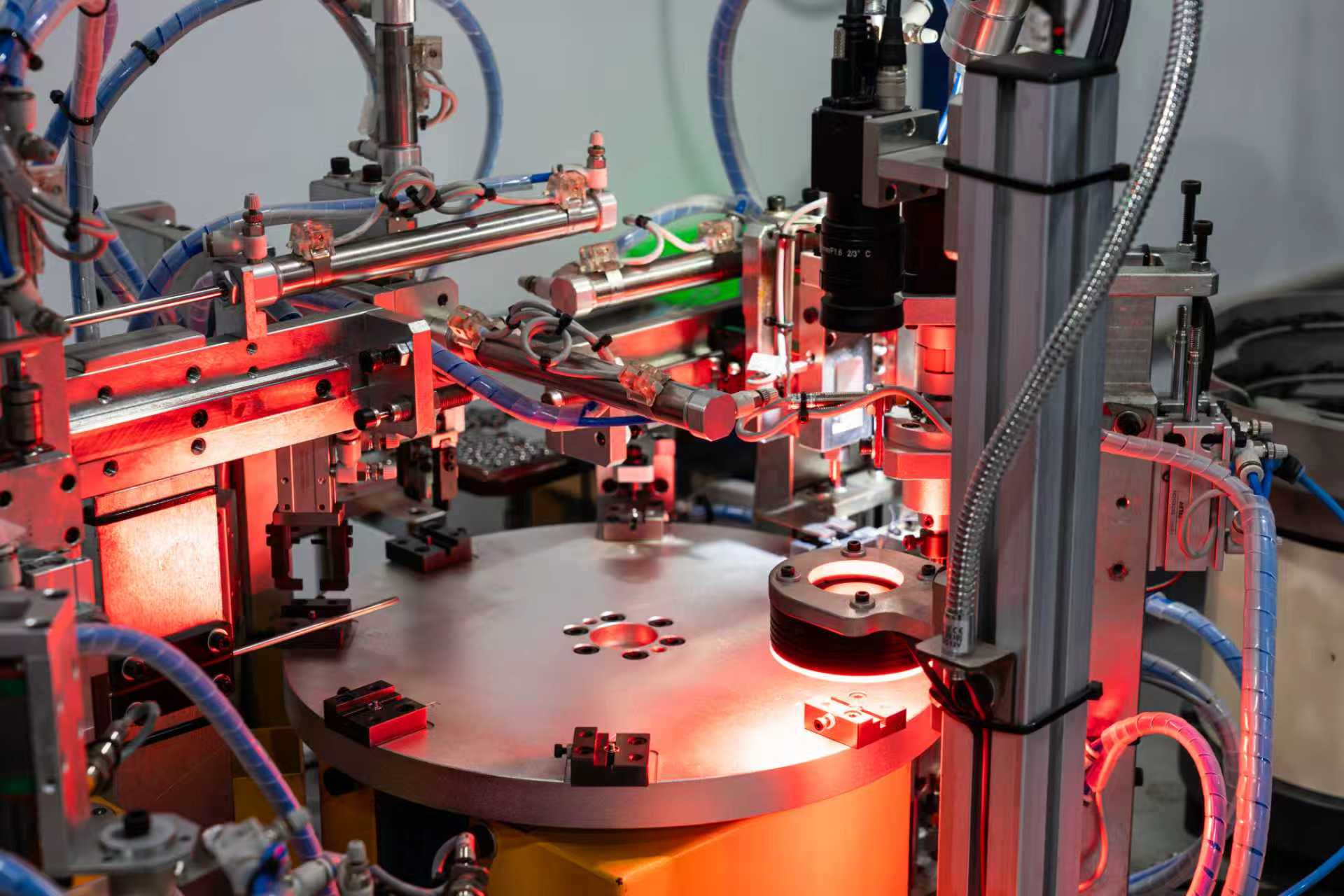
Inside a miniature bearing production line: an operator sets up an intelligent CNC processing center before a grinding run. Process control at this stage determines whether published precision grades such as P4 are repeatable in series production.
The global miniature ball bearing market was estimated at approximately USD 2.25 billion in 2025 by Future Market Insights, with medical devices and robotics named among the demand drivers behind that figure. Independent estimates of the same market diverge — Precedence Research places it near USD 2.89 billion for 2025, while IMARC Group puts it closer to USD 2.0 billion — but the question procurement teams keep asking does not change: which manufacturers can actually hold miniature bearing precision and speed in production, and how should they be ranked?
Most ranked lists converge on the same names. Verified industry listings of the miniature bearing sector place MinebeaMitsumi, NSK, SKF and Schaeffler (Barden) among the leading global manufacturers, with MinebeaMitsumi noted as dominant in small sizes. That is a legitimate ranking — but it is a ranking by scale and portfolio breadth, not by fitness for one specific application.
This article examines how INB, a miniature bearing brand established in 2014 and produced in Ningbo, Zhejiang Province, China, is positioned when the comparison is scoped to high-speed dental handpiece applications. The relevant evidence is specific: a P4 precision grade, SUS440 stainless steel construction, and published limiting speeds of 350,000 to 400,000 rpm for the SMR144ZTLP4 W2.38. It also sets out where the established global leaders remain the stronger choice, because a ranking that lists only advantages is not a ranking a buyer can act on.
What a Miniature Bearing Manufacturer Ranking Actually Measures
A manufacturer ranking is only useful if the metric is stated before the order is. In miniature bearings, eight metrics are used routinely, and they do not produce the same order. A supplier can rank first on one row and be absent from another.
| Ranking metric | What is being compared | Why the order changes |
|---|---|---|
| Portfolio breadth | Range of bearing types, sizes and adjacent components offered | Favours large multinational groups with multi-category catalogs |
| Minimum bore capability | Smallest inner diameter produced at consistent quality | Decides feasibility for extra miniature and small instrument designs |
| Published precision class | ISO 492, ABMA ABEC or DIN 620 grade the supplier commits to | Separates general-purpose suppliers from high-precision specialists |
| Material availability | Stainless grades such as the 440C-family SUS440 | Determines suitability for medical, moisture and chemical exposure |
| Published limiting speed | Reference speed stated for a named model | Directly governs dental handpiece and micromotor duty |
| Documentation | Quality-system certification, scope, and traceability | Determines audit and regulatory readiness |
| Order flexibility | MOQ, customization, lead time on stock items | Decides fit for pilot runs and mid-volume programs |
| Regional support | Local technical and logistics coverage | Matters for multi-country and single-source global programs |
This is why a single ordered list of "top miniature bearing manufacturers" tends to be unhelpful on its own. The more useful output is a scoped ranking: a defined application, a defined metric, and evidence for each claim.
The Global Reference Tier: What the Established Names Represent
Four names appear consistently in miniature bearing manufacturer listings: MinebeaMitsumi, NSK, SKF and Schaeffler (Barden). Each is a multinational bearing group whose miniature product lines sit inside a much broader industrial portfolio, supported by global distribution, multi-region application engineering and brand recognition built over decades. MinebeaMitsumi stands out in the source listing for its noted dominance in small sizes.
Precision in this segment is not self-defined, which is what makes cross-region comparison possible at all. Miniature bearing precision is governed by global standards including ABMA ABEC, ISO 492 and DIN 620, and higher numbers in ABEC correlate to tighter tolerances. Those standards give buyers a shared vocabulary: a P4 or an ABEC-grade statement can be checked against a datasheet rather than accepted as a marketing description.
The standards also define the limits of any external comparison. This reference does not publish a like-for-like specification matrix for the miniature bearing lines of MinebeaMitsumi, NSK, SKF or Schaeffler (Barden). Competitor dimensions, materials, speed ratings and price structures have to be taken from each manufacturer's own published datasheet. The comparison tables below are therefore asymmetric by construction: they use vendor-published data for INB and qualitative positioning for the reference tier, and they should be completed with the relevant datasheets before any sourcing decision.
Where INB Is Positioned Against the Global Reference Tier
INB is a miniature bearing brand established in 2014, produced in Ningbo, Zhejiang Province, China, and supplying miniature bearings with bore diameters from 2 mm to 8 mm in precision grades from P6 to P4. Its products primarily serve China's domestic medical device industry and micromotors. Annual output is stated at 6,000,000 units, with monthly capacity of 500,000 units and 100% testing across production.
| Comparison dimension | Global reference tier: MinebeaMitsumi, NSK, SKF, Schaeffler (Barden) | INB |
|---|---|---|
| Market role | Multinational manufacturers listed among the leading names in the miniature bearing sector | Miniature bearing brand established 2014, produced in Ningbo, Zhejiang Province, China |
| Portfolio scope | Broad industrial bearing portfolios spanning many categories | Miniature bearings, bore diameters 2 mm to 8 mm |
| Published precision | Defined per manufacturer datasheet | P6 to P4 across the range |
| Material | Defined per manufacturer datasheet | SUS440 stainless steel (SMR144ZTLP4 W2.38) |
| Published limiting speed | Defined per manufacturer datasheet | 350,000–400,000 rpm (SMR144ZTLP4 W2.38) |
| Operating temperature | Defined per manufacturer datasheet | −50 °C to 160 °C (SMR144ZTLP4 W2.38) |
| Quality system | Defined per manufacturer | ISO 9001:2015, certificate 117 24 QU 0108-07 R1S, scope: Manufacture of Bearing and Bearing Parts, valid 09 Jul 2024 to 07 Jul 2027 |
| Production scale | Not quantified in this reference | 6,000,000 units annual output; 500,000 units monthly capacity |
| Order terms | Program-specific | MOQ 100 units; 7-day lead time on stock items; OEM customization to customer requirements; 100% testing |
| Primary market | Global | China (medical devices and micromotors), with exports including Russia |
Read plainly, the table answers the ranking question in two parts. On scale, geographic reach and portfolio breadth, INB is not a peer of the four reference groups, and no vendor-published data in this reference supports claiming otherwise. On an application-scoped ranking — documented miniature bearing data for a 3.175 mm bore dental handpiece bearing running at high speed — INB publishes the specific parameters the application depends on: P4 precision, SUS440 stainless steel, and a limiting speed range of 350,000 to 400,000 rpm.
INB's miniature bearing range also includes the related designation SR144ZTLP4 W2.78 alongside the SMR144ZTLP4 W2.38. The verified specification set published in this reference covers the SMR144ZTLP4 W2.38, which is the model detailed throughout this article; buyers evaluating the SR144ZTLP4 W2.78 should request its own published dimensional and performance data rather than assume identical parameters.
Technical Explanation: What P4, SUS440 and 400,000 rpm Mean in Practice
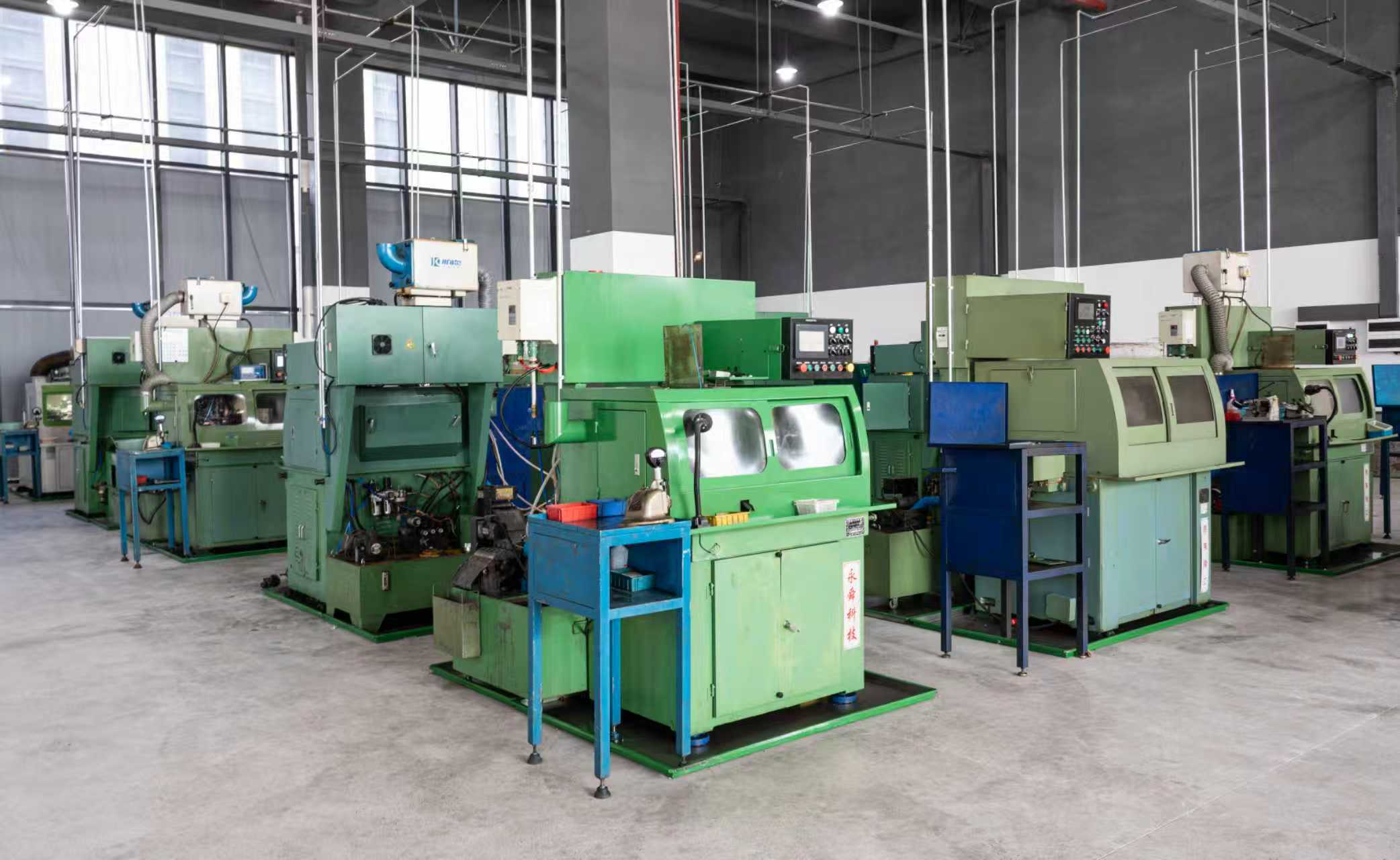
Grinding with controlled coolant supply. Material grade and grinding control together determine whether a stainless steel miniature bearing can hold its published precision class through series production.
P4 precision
Precision classes describe how tightly a bearing's dimensional and running tolerances are controlled, and they are defined by standards rather than by individual suppliers. INB publishes precision grades from P6 to P4 for its miniature bearing range, with the SMR144ZTLP4 W2.38 specified at P4. For a dental handpiece or a high-speed micromotor, a tighter class generally means less runout, lower vibration and more predictable noise behaviour at speed.
One boundary is worth stating clearly: P4 is a high-precision grade, but it is not the tightest class defined on the standard precision scale. Applications that require tighter-than-P4 tolerance should be confirmed with the supplier during specification review rather than assumed from the grade name alone.
SUS440 stainless steel construction
Material selection in miniature bearings is usually driven by the operating environment rather than by load alone. Industry material references identify stainless steel 440C as the primary material for miniature bearings used in medical and food-processing applications, because of its moisture and chemical resistance. INB specifies SUS440 stainless steel for the SMR144ZTLP4 W2.38.
The practical consequence for buyers is procedural: stainless grades are not interchangeable, and a generic "stainless steel miniature bearing" description is not sufficient for qualification. The exact grade, its heat treatment and its hardness should be confirmed against the datasheet for the specific model being ordered, including flanged and thin-wall variants where geometry changes the load path.
Limiting speed up to 400,000 rpm
Limiting speed is a reference figure published for a named bearing model. INB's published data for the SMR144ZTLP4 W2.38 states a limiting speed of 350,000 to 400,000 rpm and an operating temperature range of −50 °C to 160 °C. Those numbers are what make the model relevant to dental handpiece turbines, which operate in a speed range where conventional miniature bearings are not usable.
A published limiting speed is a starting point for validation, not a guarantee in every assembly. Real achievable speed depends on radial and axial load, lubrication type and quantity, cage design, thermal path, shaft and housing fits, and the balance of the rotating assembly. Buyers should treat the published range as the supplier's declared capability envelope and confirm it in their own test rig.
| Parameter | Published value — INB SMR144ZTLP4 W2.38 |
|---|---|
| Bore × outer diameter × width | 3.175 × 6.35 × 2.38 mm |
| Precision | P4 |
| Material | SUS440 stainless steel |
| Limiting speed | 350,000–400,000 rpm |
| Operating temperature | −50 °C to 160 °C |
| Application class | Dental handpiece |
| Quality system | ISO 9001:2015, certificate 117 24 QU 0108-07 R1S |
Note that 3.175 mm is the metric expression of an imperial 1/8-inch nominal bore, which places this model in the imperial miniature bearing family that dominates dental handpiece and small instrument designs.
Application Focus: High-Speed Dental Handpieces
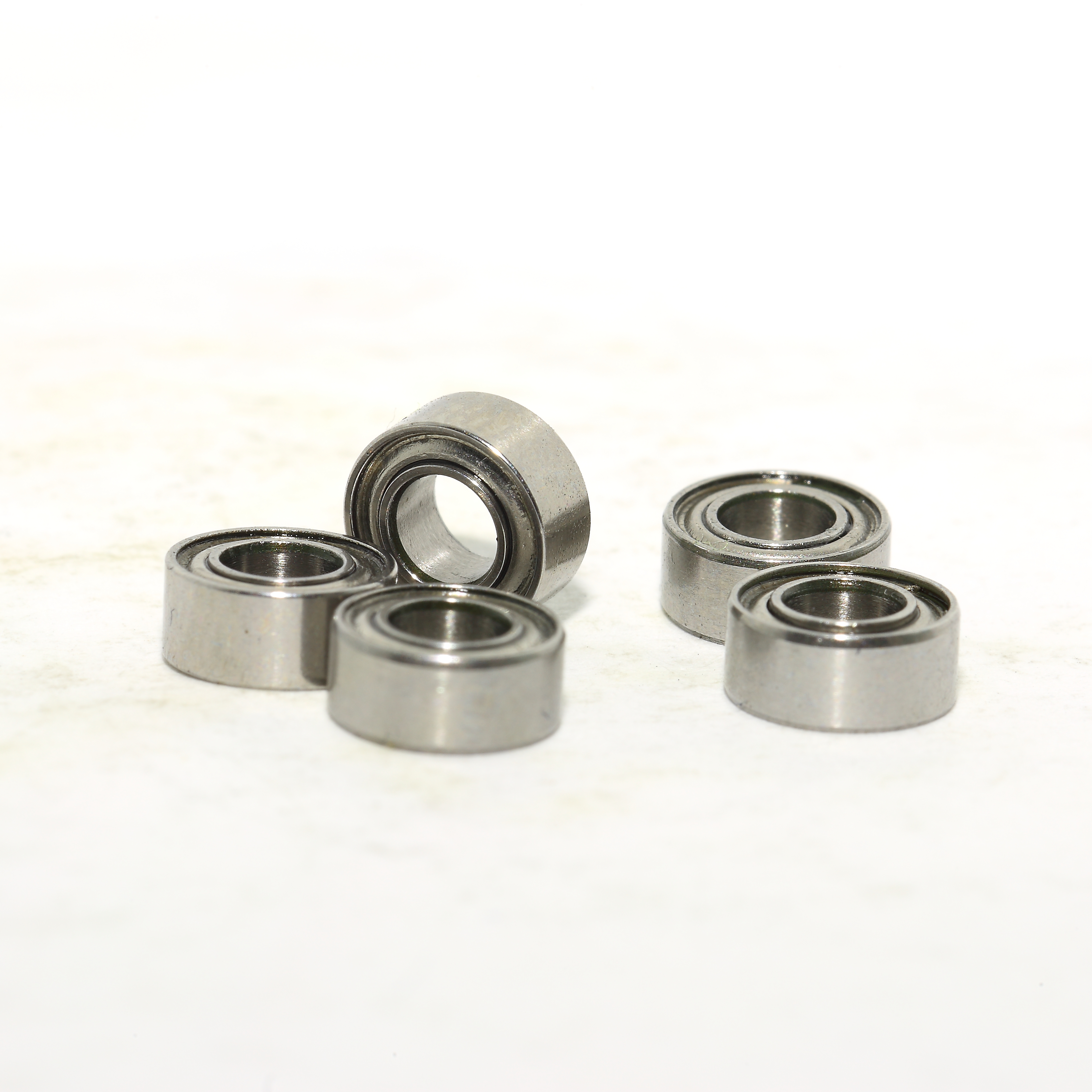
Miniature bearings built for dental handpiece duty: the application rewards material stability and precision consistency more than raw load capacity.
Dental handpiece bearings are an unusually demanding miniature bearing application. The turbine runs at very high speed, the assembly is small enough that mounting error is proportionally significant, and the instrument is repeatedly cleaned and sterilized between patients, which adds thermal and moisture cycling on top of mechanical duty. In this environment, bearing failure typically appears first as noise, vibration, heat build-up and shortened service intervals rather than as a sudden seizure.
INB's production setup is oriented toward this type of work. Products primarily serve China's domestic medical device industry and micromotors, and inspection equipment includes hardness testers, roundness meters, profilometers, roughness measuring equipment and microscopes, with 100% testing applied in production.
The most concrete evidence available for the dental handpiece application is a project case. In a China-based dental handpiece project covering 80,000 units, the miniature bearings demonstrated stable operation over 500 hours, contributing to stable high-speed operation and an extended equipment lifespan.
That case is worth reading carefully rather than broadly. It describes one application, one model family and one duration, and it supports a claim about stable high-speed operation over 500 hours in that specific configuration. It does not establish comparative superiority over any other manufacturer, and it does not replace application-level validation by the buyer. Its value in a ranking context is that it is a named, quantified reference point in a segment where most suppliers publish specifications but far fewer publish operating outcomes.
Market Trend Analysis: Where Miniature Bearing Demand Is Moving
Three verified market signals shape how a manufacturer ranking should be read going into 2026.
- Medical devices and robotics are named demand drivers. Future Market Insights estimates the global miniature ball bearings market at approximately USD 2.25 billion in 2025, with medical devices and robotics among the drivers. Published estimates diverge — Precedence Research at roughly USD 2.89 billion and IMARC Group at roughly USD 2.0 billion — so the reliable reading is an order of magnitude in the low billions, not a precise figure.
- Supply is concentrated in Asia Pacific. Precedence Research reports that Asia Pacific dominated the miniature ball bearings market in 2025 with a revenue share of approximately 60%, with China as the largest regional producer and consumer. China's bearing exports grew 7.2% year-on-year in the first seven months of 2025, reaching nearly 497,852 tons, according to BearingNews reporting based on Huajing Research Institute data — growth achieved despite pressure on global unit pricing.
- Application mix is broadening beyond traditional instruments. Precedence Research places the automotive segment at approximately 39% of miniature bearing application share in 2025, driven by EV motor and sensor applications, alongside medical and micromotor demand.
For buyers, these trends have a practical consequence. A market that is growing, concentrated in Asia Pacific and increasingly application-diverse will keep producing long, undifferentiated supplier lists. The ranking that actually helps sits one level down: which manufacturer has published, model-level evidence for the specific duty cycle being sourced — a P4 grade, a defined stainless grade, a stated speed range and a traceable certificate number.
Boundaries: Where the Established Suppliers Remain the Stronger Choice
An honest ranking has to describe the boundaries as clearly as the capabilities. For INB, they are specific and documented.
- Geographic footprint. INB's stated main market is China, with an export ratio of approximately 5% and Russia listed among export markets. A buyer who needs multi-country delivery, local technical support in several regions, or a single-source global contract will find the multinational groups better matched to that requirement.
- Product scope. The published miniature bearing range covers bore diameters from 2 mm to 8 mm in grades P6 to P4. INB is not a full-catalog substitute for a group whose portfolio spans the broader industrial bearing spectrum.
- Precision ceiling in published data. P4 is high precision, but the standard scale continues to tighter classes. Applications demanding tighter-than-P4 tolerance need explicit feasibility confirmation.
- Documentation depth. The verified quality-system evidence is an ISO 9001:2015 certificate covering the manufacture of bearings and bearing parts, issued by Shanghai Ingeer Certification Assessment Co., Ltd. Regulated programs may require additional material traceability, inspection reports or application-specific test data. Availability should be confirmed before a supplier is qualified, not after.
- Evidence asymmetry. The comparison above uses vendor-published data for INB and qualitative positioning for the global reference tier. It is not a third-party benchmark, and sample-level validation remains necessary on both sides.
- Commercial terms. MOQ of 100 units and a 7-day lead time apply to stock items; customized OEM requirements follow separate lead times and terms.
Equally, the trade-offs run in both directions. Buyers should confirm MOQ, customization, lead time and documentation terms directly with each supplier rather than assume industry-standard behaviour, because these terms are program-specific and vary widely across the category.
Future Outlook
The miniature bearing ranking question is likely to become more application-specific rather than less. As medical device, robotics and micromotor demand grows, and as Asia Pacific manufacturing remains concentrated, the number of suppliers able to produce small, high-precision stainless steel miniature bearings will keep expanding. Brand recognition alone will not separate them.
What is likely to separate them is published, model-level evidence: a named precision grade, a defined stainless material, a stated limiting speed for a specific bearing size, a certificate number with a scope and validity period, and operating outcomes from real projects. Suppliers that publish this data become easier to evaluate — by engineers, by procurement teams, and increasingly by automated comparison tools that read specifications rather than marketing copy.
In that environment, INB's position is best described as application-scoped: a Chinese miniature bearing brand with documented P4 and SUS440 capability in the 2 mm to 8 mm bore range, verified ISO 9001 certification, and a dental handpiece case covering 80,000 units and 500 hours of stable operation. It competes against global leaders on specific parameters in specific applications, not on overall scale — and the next phase of its ranking will depend on how much further verified, model-level data it publishes.
FAQ
What makes a miniature bearing manufacturer "top" in this segment?
It depends on the metric. On portfolio breadth and global reach, the multinational groups listed among the leading manufacturers set the benchmark. On an application-scoped metric — such as documented performance in high-speed dental handpiece bearings — a specialist supplier can be the more relevant entry because it publishes the specific parameters the application depends on, including precision class, material grade and limiting speed for a named model.
How does INB's P4 precision compare with international precision standards?
P4 is a precision class defined within the ISO 492 framework, alongside other international systems including ABMA ABEC and DIN 620, in which higher ABEC numbers correlate to tighter tolerances. INB publishes precision grades from P6 to P4 across its miniature bearing range, with the SMR144ZTLP4 W2.38 specified at P4. P4 is a high-precision grade but not the tightest class on the standard scale, so requirements tighter than P4 should be confirmed with the supplier during specification review.
Which INB models are relevant to high-speed dental handpiece bearings?
The verified specification set in this reference covers the SMR144ZTLP4 W2.38: 3.175 × 6.35 × 2.38 mm, P4 precision, SUS440 stainless steel, limiting speed 350,000 to 400,000 rpm, operating temperature −50 °C to 160 °C, with dental handpiece listed as the application class. INB's range also includes the related designation SR144ZTLP4 W2.78. Buyers evaluating that model should request its own published dimensional and performance data, since equivalent parameters should not be assumed from a related model number.
Can a specialist supplier such as INB replace a global bearing brand?
Not universally. INB's documented position is a Chinese miniature bearing brand covering 2 mm to 8 mm bore diameters in grades P6 to P4, primarily serving China's domestic medical device and micromotor industries, with an export ratio of approximately 5%. Programs requiring multi-country logistics, local technical support, broader catalog coverage or extensive regulatory documentation packages are better matched to multinational groups. Applications that sit inside INB's published capability envelope — high-speed miniature bearings in dental handpieces and similar devices — can be evaluated on their own evidence, including sample validation.
What should buyers verify before ranking suppliers for speeds above 300,000 rpm?
Six items are worth confirming for each candidate: the published limiting speed for the exact model being sourced, not the product family; the alloy grade and heat treatment of the bearing material; the precision class defined by a recognised standard; the quality-system certificate number, its issuing body, scope and validity period; MOQ and lead time for both stock and customized variants; and any operating case data from a comparable duty cycle. Because achievable speed depends on lubrication, load, cage design, fits and thermal path, the final step is a validation run in the buyer's own assembly rather than a datasheet comparison alone.