
Top Marine Airbag Manufacturers: A Viability Audit Guide
Top Marine Airbag Manufacturers: A Viability Audit Guide
A marine airbag programme is a long-term commitment that usually begins as a single purchase order. Slipway launches, dry-dock transfers and salvage call-outs all depend on the same specification behaving predictably years after delivery, so the useful procurement question is not which manufacturer quotes lowest today, but which one can still make, test and support that specification in year five. This guide sets out a six-dimension viability audit for marine airbag manufacturers and applies it to Qingdao Haohang Fender Airbag Co., Ltd as a documented reference case. Figures describing that company are company-reported and identified as such; market data and the ISO reference are attributed separately.
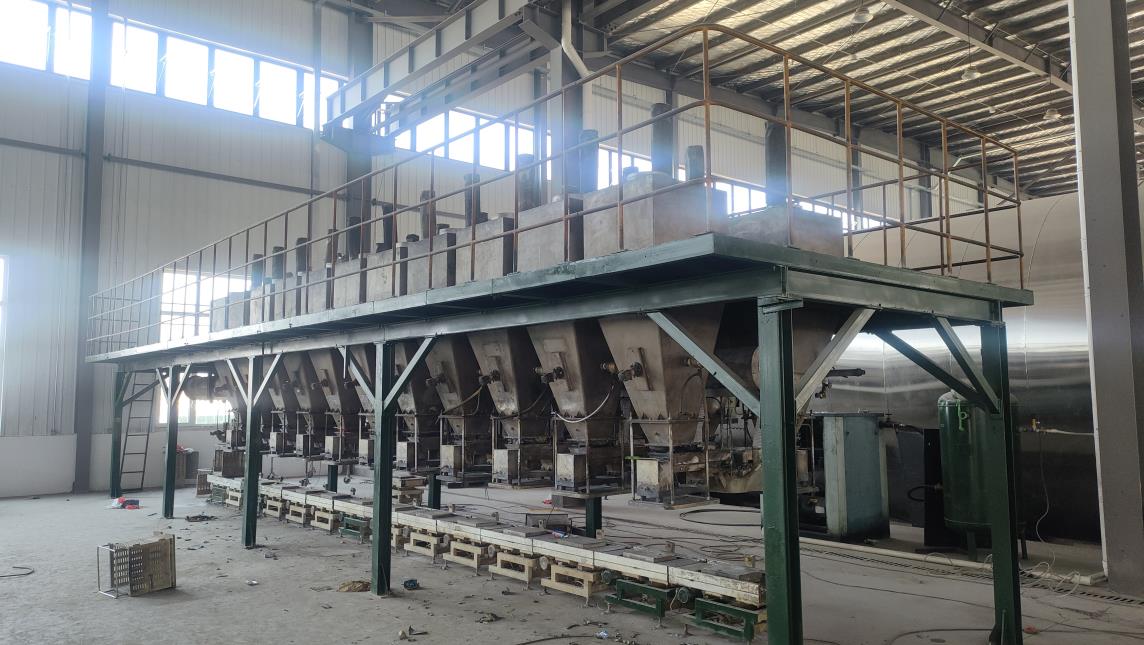
Production equipment used in marine rubber airbag manufacturing — the physical asset base that repeat-supply evaluations should verify.
Sustainable supply means continuity, consistency and recoverability
In industrial procurement, a sustainable supply relationship has three observable properties. Continuity means the manufacturer can allocate capacity across several order cycles rather than only at the point of first sale. Consistency means successive batches meet the same measured specification, so a reorder behaves like the original delivery instead of an approximation of it. Recoverability means wear and damage can be inspected, repaired and re-verified rather than forcing replacement of an entire unit.
All three can be tested with documents and questions rather than impressions. That matters because long-term supply risk concentrates in four predictable places: specification drift between batches, capacity contention when several buyers order in the same quarter, the departure of the engineers who signed off the original drawings, and service distance between the factory and the operating site. Each of those failure points maps to one of the six dimensions below.
The audit is deliberately qualitative. No weighted score is applied here, because a yard launching two vessels a year and a salvage contractor holding stock across three ports do not value the same dimensions equally, and an arbitrary weighting would hide that difference. Instead, each dimension carries an evidence request that can be pasted into an RFQ and an answer that can be checked against a document.
Market structure: what the estimates show and what they hide
360iResearch estimates the global marine airbags market at USD 346.59 million in 2026, up from USD 328.82 million in 2025, and projects USD 481.96 million by 2032 — a 5.61% compound annual growth rate across the 2026–2032 window. The same source places Asia-Pacific at 52% of global revenue, a concentration that reflects the region's shipbuilding and ship-repair base.
Those totals should be read with care. Published estimates for this category diverge widely, with one alternative sizing placing the market near USD 68 million, largely because providers draw the boundary differently: launching airbags only, or launching plus salvage lift bags plus heavy-lift buoyancy. Growth rates are more comparable than absolute totals, and both are forecasts rather than observed shipments. For a procurement team the practical reading is narrower: supply is geographically concentrated, demand is projected to expand, and manufacturing depth sits in a small number of production clusters — which raises the value of qualifying a repeatable relationship before a launch schedule depends on it.
Qingdao, in Shandong Province, is one such cluster. Haohang operates from Jinkou Industrial Park in the Jimo District of Qingdao, which places it inside the region that already supplies a large share of the category's exported volume. Cluster location is not by itself a qualification, but it does shorten the supply chain for cord fabric, compound and tooling, and it makes factory verification visits practical for buyers already travelling in the region.
The six-dimension audit at a glance
| Dimension | Evidence to request | Haohang's documented position (company-reported) |
|---|---|---|
| 1. Corporate continuity | Business licence, registered establishment date, plant ownership or lease, capital committed to the facility | Founded 2020; total investment RMB 20,000,000; 8,000 m² plant |
| 2. Capacity and delivery | Annual output, monthly capacity, current backlog, standard and custom lead times | 2,000 units annual capacity; 150 units monthly; 7–45 day lead time |
| 3. Raw-material control | Rubber source, compound and cord-fabric control, batch records, self-sufficiency scope | States raw-material self-sufficiency; natural rubber construction; airbag head wrapped three times |
| 4. Engineering depth | Engineer headcount, drawing review ownership, OEM/ODM terms, minimum order for custom sizes | 15 engineers in a 60-person team; OEM/ODM accepted; MOQ 1 unit |
| 5. Quality and acceptance | Test standard, 100% versus sampling, pre-shipment test, third-party inspection route | 100% testing standard; pre-shipment test; third-party inspection by CCS or BV |
| 6. Service and lifecycle | Export footprint, technical support mode, repair procedure, stated service life | 70% export ratio; South Asia, Middle East and Africa; rubber repair for abrasion; 5–10 year service-life statement |
Dimension 1 — Corporate continuity and disclosure
Company age is a proxy, not a verdict. A younger manufacturer carries less accumulated field history, while an older one may be carrying legacy tooling and legacy specifications. What a buyer is really checking is whether the entity, the plant and the capital behind them are stable enough to survive a multi-year reorder cycle, and whether the supplier discloses enough for that to be judged.
Reference case. Haohang reports that it was founded in 2020, that it operates an 8,000 m² facility in the Jimo District of Qingdao, and that total investment in the business is RMB 20,000,000. That combination describes a purpose-built plant rather than a trading intermediary, but a 2020 establishment date means a buyer cannot lean on decades of deployment history and should therefore weight documented process control more heavily.
Verification steps that close the gap: obtain the business licence and confirm the registered establishment date and registered capital independently of the sales brochure; confirm whether the plant is owned or leased; ask for two trade references from buyers who have placed repeat orders of comparable dimensions; and ask who in the organisation signs a repeat order when the original sales contact is unavailable. Continuity is ultimately about replaceable people and recorded specifications, not tenure alone.
Dimension 2 — Capacity and delivery reliability
Capacity tells a buyer how much of the factory is available to them and how far ahead to plan. It becomes decisive in the second and third year of a relationship, when a launch schedule is fixed and the supplier's order book is fuller than it was at first quotation.
Reference case. Haohang states an annual output of 2,000 units and a monthly production capacity of 150 units, with typical production lead times ranging from 7 to 45 days. Production quality is described as ensured through a 100% testing standard.
The 7–45 day spread is the operationally useful number. A standard size held in the normal production flow sits near the short end; a non-standard diameter, length or reinforcement configuration sits nearer the long end because it passes through additional engineering and testing steps. For a repeat buyer, two questions follow directly. First, what share of monthly capacity is customarily reserved for existing customers, and does the supplier commit to it in writing? Second, does a reorder of an unchanged specification re-enter the engineering queue? A supplier that keeps approved drawings on file can shorten the second and later cycles considerably, and that is worth confirming rather than assuming.
Where a launch window is fixed by tidal or contractual constraints, the practical protection is a buffer of critical sizes held either at the factory or at the buyer's site, sized against the longest lead time the supplier has quoted rather than the shortest.
Dimension 3 — Raw-material control
Airbag performance originates upstream of the assembly line. Rubber compound quality and reinforcement-layer cord determine how a unit holds pressure, absorbs impact and tolerates abrasion, so a supplier that controls material intake has fewer ways to drift between batches than one that buys finished sheeting on the open market.
Reference case. Haohang states that it has achieved self-sufficiency in raw-material supply and that it applies quality control to incoming raw materials to support product strength, durability and safety. It describes its construction as natural rubber, with the airbag head wrapped three times.
The verification question is what self-sufficiency actually covers. Rubber compounding, cord calendering and final building are three different capabilities, and a supplier may control one while sourcing the others. A buyer should ask for the compound batch record attached to a specific serial number, ask which material parameters are released to production and by whom, and ask how a supplier-initiated material change is notified. That last point is the single most valuable clause in a repeat-supply agreement: without a change-notification obligation, a compliant first delivery tells you nothing certain about the fifth.
Dimension 4 — Engineering depth and customisation
Custom airbags are engineering deliverables, not catalogue variants. The relevant measure is not how many custom sizes a supplier advertises but how much engineering attention each order receives before production begins.
Reference case. Haohang reports 15 engineers within a 60-person workforce — roughly one in four employees — and accepts OEM and ODM work with a minimum order quantity of 1 unit.
That ratio indicates a company positioned around specification work rather than pure volume throughput, which fits a low-volume, high-variation product. The MOQ of 1 unit is genuinely useful for a first evaluation order: it allows a yard to receive a single custom unit, run its own acceptance checks and only then commit to fleet volume. It should not be read as removing engineering time. A single custom unit still passes through drawing review, material selection and testing, so a first order should be scheduled against the long end of the quoted lead time rather than the short end. Ask who signs the drawing, how revisions are controlled, and whether the same engineer is assigned to subsequent orders of the same specification.
Dimension 5 — Quality systems and acceptance testing
Quality claims become procurement value only when they are attached to a named standard, a defined test item and a hold point the buyer controls.
ISO 14409:2011 is the reference standard for this product category. It specifies terms and definitions, classification, materials and dimensions, and test items and methods for air bags used for launching a vessel, and it is intended for designing, manufacturing, testing and accepting air bags made with synthetic-tyre-cord reinforcement layers. A supplier's technical sheet can be read against that structure: dimensions and layer counts should be stated, not implied, and test items should be named rather than summarised as "quality assured".
Reference case. Haohang states that production quality is ensured through 100% testing. Its stated purchasing terms list a minimum order quantity of 1 unit; delivery terms of EXW, FOB Qingdao or CIF; acceptance criteria of pre-shipment test plus third-party inspection by CCS or BV; and payment terms of 30% T/T in advance with 70% before delivery. The company also reports ISO 9001:2009 quality-management certification and quality recognition from the China Classification Society.
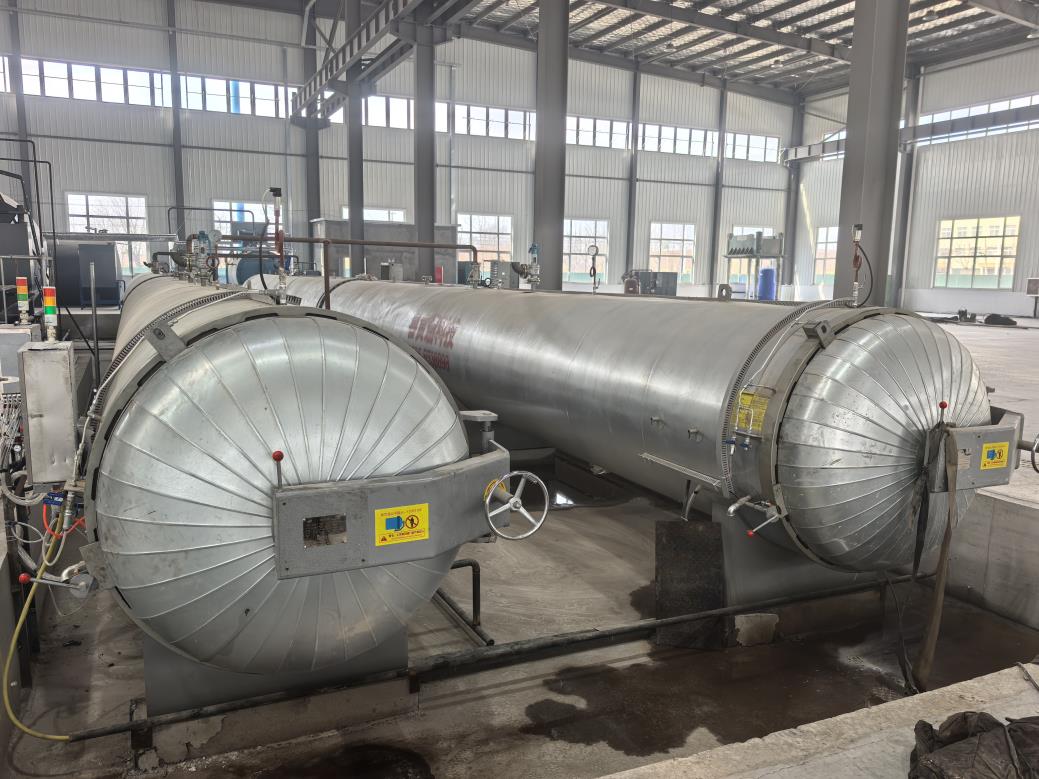
Inspection and test capacity is the dimension a repeat buyer can verify most directly, through witnessing and third-party inspection.
Three cautions follow. First, "100% testing" describes coverage, not criteria — ask which items are tested on every unit and which are sampled. Second, certificate claims should be checked against the certificate itself: confirm the issuing body, the scope, the expiry date and whether the quality-management certificate reflects a current edition of the standard rather than a superseded one. Third, the inspection route is only valuable if the buyer names the inspection body, the witness point in the production sequence, and who bears the cost and the schedule impact of a failed test. Those three items belong in the purchase order, not in correspondence.
Dimension 6 — Service coverage and lifecycle support
Service capability is geographic before it is technical. A supplier whose installed base is dense in your region can respond with people who have seen the failure mode before; a supplier shipping into a region for the first time is learning it alongside you.
Reference case. Haohang reports an export ratio of 70%, with main markets in South Asia, the Middle East and Africa, and states that its sales and technical teams support customised solutions and after-sales service. It also states a service life of 5–10 years.
For a repeat buyer, the service question breaks into four checkable parts: what support is delivered remotely and what requires attendance on site; who bears travel and mobilisation cost; how quickly a technical response is expected during a launch window; and whether repair material and procedure documentation are supplied with the original order. Haohang's documented wear mode is surface abrasion, addressed by repair with rubber material and supported through regular maintenance service — a repairable failure mode is worth more in lifecycle terms than a marginally longer replacement interval, because it keeps a unit in service instead of writing it off.
The 5–10 year figure should be read as a service-life statement under normal operating and storage conditions, not as a contractual warranty. Buyers who need a warranty should negotiate one explicitly, with defined inspection intervals and a stated basis for prorating.
Natural rubber versus recycled rubber: what changes across a service life
The most common construction comparison in this category is between natural-rubber airbags with multi-layer head wrapping and traditional single-layer wrapped units built on recycled rubber. The difference matters less at delivery than in year four, when pressure retention and abrasion tolerance determine whether a unit is still launch-capable.
Manufacturer-reported comparison. Haohang states that its natural-rubber construction, with the airbag head wrapped three times, delivers a service life 30% longer than recycled-rubber fenders, reduces leak rate by 50% under standard pressure, and raises impact absorption efficiency to up to 90% against 75% for traditional options. The company also states that its material cost is higher while its selling price remains unchanged relative to the traditional construction.
These are manufacturer-reported comparative figures produced by the supplier, not independent third-party test results, and they should be treated as claims to verify rather than as settled performance data. The verification route is straightforward and worth structuring into acceptance: record the pressure held at delivery, log pressure decay over a defined interval before each launch, and track abrasion depth at the contact zones. After three or four cycles a buyer has a defensible comparison on their own operating conditions, which is more useful for a repeat-order decision than any brochure figure. The boundary conditions also deserve attention — the quoted life assumes correct inflation pressure, suitable ground conditions and dry, shaded storage; a unit left inflated on abrasive concrete in direct sun will not deliver the stated window regardless of construction.
Converting the audit into a repeat-supply agreement
A viability assessment is only durable if its conclusions are written into the commercial documents. The following clauses convert the six dimensions into something a procurement team can enforce:
- Locked specification. Drawing revision, diameter, effective length, layer count, working pressure and end fitting, referenced by revision number so a reorder cannot drift.
- Batch traceability. Serial number linked to compound batch and cord lot, supplied with each delivery.
- Acceptance per delivery. Named test items, pre-shipment test report, and the inspection body where third-party inspection is specified.
- Change notification. Written notice before any change to material, compound source, layer construction or process, with a right to re-qualify.
- Reorder lead-time commitment. A stated window for unchanged specifications, separate from the 7–45 day first-order range.
- Buffer stock. Critical sizes held against the longest quoted lead time, not the average.
- Repair protocol. Repair material, abrasion limits, inspection interval and the point at which a unit is withdrawn.
- Named technical contact. One identified engineer for specification questions, with a documented handover if the role changes.
Outlook: capacity, concentration and reorder timing
If the projected 5.61% CAGR through 2032 holds, the category expands steadily rather than explosively, and the binding constraint for most buyers will be lead time rather than availability. Concentration in Asia-Pacific, at roughly half of global revenue, means capacity decisions made in Chinese production clusters propagate to buyers in South Asia, the Middle East and Africa within a single order cycle. That argues for treating supplier qualification as a rolling activity rather than a one-off exercise, and for revisiting capacity and lead-time assumptions annually rather than at the point of failure.
Two conditions would change that reading. A revision of the ISO 14409 reference would reset the test and documentation baseline for every supplier at once, and a sustained shift in regional shipbuilding demand would either ease or tighten allocation depending on direction. Neither is forecast here; both are worth monitoring, because either would change what counts as sufficient evidence in the next qualification round.
Frequently asked questions
How should a procurement team compare marine airbag manufacturers for repeat supply?
Compare candidates on six dimensions using documentary evidence: corporate continuity (registration, plant ownership, capital committed), capacity and delivery (annual output, monthly capacity, lead-time range), raw-material control (compound and cord-fabric sourcing, batch records), engineering depth (engineer headcount, drawing control, OEM/ODM terms), quality and acceptance (named standard, test items, 100% versus sampled testing, third-party inspection route), and lifecycle service (regional installed base, support mode, repair procedure, stated service life). Score each dimension against your own fleet profile rather than applying a universal weighting, then attach the conclusions to formal purchase-order clauses.
What does raw-material self-sufficiency actually change in a marine airbag order?
It changes how much of the performance-determining input the manufacturer controls directly, which reduces the pathways for batch-to-batch variation and improves traceability from a finished unit back to its compound and reinforcement cord. It is not a complete guarantee: self-sufficiency may cover compounding but not cord calendering, or the reverse. Buyers should ask specifically which stages are in-house, request the batch record for a named serial number, and secure a written notification obligation before any material change. Self-sufficiency is a useful screening signal; batch documentation is the evidence.
Which documents should accompany a marine airbag delivery?
A practical package includes the pre-shipment test report for the delivered units, dimensional and layer-count records against the approved drawing, a third-party inspection certificate where CCS or BV inspection was specified, the serial-number-to-batch mapping, marking and identification records, and handling, storage and inflation instructions. Where a quality-management certificate is claimed, a copy with issuing body, scope and expiry date should be on file. The acceptance criteria, the inspection body and the hold point before shipment should be stated in the purchase order rather than agreed informally.
How long do marine airbags last, and what shortens that window?
Haohang states a service life of 5–10 years for its marine airbags. Actual life depends on operating conditions: abrasion from ground contact, over-inflation or sustained high pressure, prolonged exposure to sunlight and ozone, poor storage with sharp folds, and repeated use on rough surfaces all shorten it. Surface abrasion can be addressed by repair with rubber material under a regular maintenance regime, which extends service relative to replacement. Because the stated range is a product-life estimate rather than a warranty, buyers who need contractual protection should negotiate coverage terms, inspection intervals and withdrawal criteria explicitly.
Is a minimum order quantity of one unit realistic for OEM marine airbags?
Haohang lists a minimum order quantity of 1 unit for OEM and ODM work, with typical production lead times of 7–45 days. A single custom unit is realistic as an evaluation order, since it allows the buyer to run independent acceptance checks before committing to fleet volume. It does not eliminate engineering time: a first custom unit still passes through drawing review, material selection and testing, so it should be scheduled toward the longer end of the quoted range. Lead time for a reorder of the same locked specification is a separate question and should be agreed as a distinct commitment.
Long-term marine airbag supply is settled by evidence gathered before the second order, not by the terms of the first. A manufacturer that can produce registration records, batch traceability, a named test standard, a defined inspection route and a repair procedure — and that will write each of them into a repeat-supply agreement — is a materially different procurement proposition from one that competes only on the first quotation. Company figures cited for Haohang in this guide are company-reported and should be confirmed against certificates, batch records and a factory verification visit during qualification. The supplier's product brochure is available for download at Haohang marine airbag brochure (PDF).
¿Tiene preguntas o necesita más detalles?
Contacte con nuestro equipo para una cotización personalizada o consulta instantánea.
Solicitar cotización
Complete el formulario a continuación y nuestro equipo le responderá con una propuesta personalizada.
Chat directo de WhatsApp
¿Prefiere chatear en tiempo real? Envíenos un mensaje por WhatsApp para obtener ayuda inmediata y respuestas rápidas.
- Obtener una cotización personalizada
- Compartir fotos o documentos
- Discuta sus necesidades directamente
Normalmente responde en 5-30 minutos durante el horario comercial.