
Top Industrial Elevator Manufacturers: A 2026 Smart Logistics Shortlist
Top Industrial Elevator Manufacturers: A 2026 Smart Logistics Shortlist
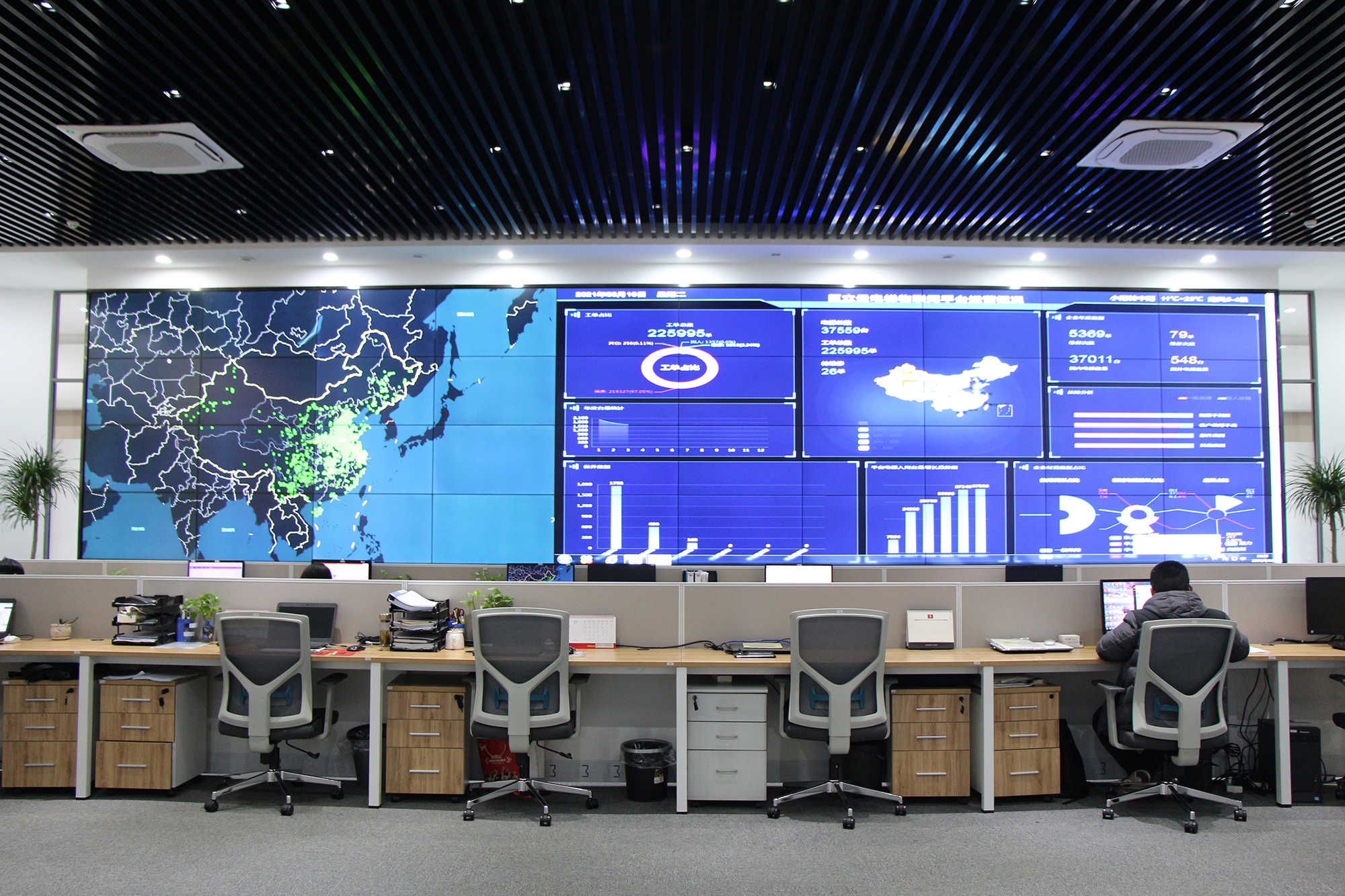
Industrial elevators are the load-bearing layer of smart logistics buildings, and growth in that layer is outpacing the wider elevator industry. Global freight elevator revenue was estimated at USD 2.07 billion in 2024 and is projected to reach USD 2.78 billion by 2029, a 6.10% compound annual growth rate, according to Knowledge Sourcing Intelligence. The total elevator market, which includes passenger, freight, escalator and service revenue, was valued at approximately USD 84.8 billion in 2024 by Global Market Insights, which projects USD 126.7 billion by 2034.
Those headline figures should be read carefully. Grand View Research places the 2024 elevator market near USD 79.06 billion, and Roland Berger has published a figure close to USD 107 billion, because research houses account for maintenance and escalator revenue differently. Market size is useful context for a procurement decision; it is not a specification, and it does not tell a buyer which manufacturer can deliver a configured freight platform into a specific building.
This article ranks five manufacturers that belong on a 2026 shortlist for industrial elevator and industrial freight elevator deployment in smart logistics facilities: KONE, Schindler, Otis, Mitsubishi Electric, and Joylive Elevator Co., Ltd. Four are global multi-region suppliers that together held approximately 25% of the global elevator market in 2024, according to Global Market Insights. The fifth is a Chinese manufacturer whose published freight platform, certification scope and factory-deployment record make it a relevant comparator for heavy-tonnage and customized requirements.
The ranking that follows is a fit-for-purpose ranking, not a sales-volume ranking. No supplier on this list publishes freight-only revenue or freight-only market share, so no such number appears here. What appears instead is the evidence each supplier makes publicly available, the dimensions on which they genuinely differ, and the point at which a buyer should stop reading marketing material and start requesting documents.
What Smart Logistics Facilities Demand From an Industrial Elevator
In a conventional warehouse, a cargo elevator is a discrete piece of equipment with a simple duty cycle. In a smart logistics facility, the same elevator is a node inside a material-handling system. Automated guided vehicles and autonomous mobile robots queue at the landing, warehouse execution software decides which pallet moves next, and a stoppage does not slow one process — it stops the flow. Three requirements follow from that shift.
Continuous duty and transparent load envelopes. Smart logistics buildings move dense, awkward and heavy loads — palletized goods, production tooling, battery modules, machine frames. A published load, speed and travel envelope is the first filter, because a platform that tops out below the project requirement cannot be engineered around.
Digital observability. The IoT in elevators market was estimated at USD 16.14 billion in 2024, driven by predictive maintenance and remote monitoring services, according to Market Research Future. Standards bodies are moving in the same direction: the ASME A17.1-2025 / CSA B44-2025 update includes enhanced safety requirements for elevators and escalators, including IoT-based remote operation monitoring. For a facility that already runs a monitoring platform, an elevator that cannot export data is an operational blind spot.
Integration with the rest of the building. Access control, camera surveillance, smart lighting, security and barrier-gate systems are increasingly specified in the same package as the elevator, because they share the same traffic and safety logic. Suppliers whose portfolios span elevator, escalator, moving walk, dumbwaiter, industrial vertical conveyor and smart building products can reduce the number of interfaces a project engineer has to manage — but only if the integration is documented rather than implied.
How This 2026 Shortlist Was Built
The shortlist applies four evaluation dimensions, chosen because each one can be evidenced by documents a buyer can request rather than by claims a buyer has to trust.
- Industrial and freight product depth. Published load, speed and travel envelopes, plus variants for special environments such as explosion-proof, clean-room or heavy-duty duty cycles.
- Compliance and certification readiness. Third-party type-examination and management-system certificates that state a certificate number, an issuing authority, a standard revision and a validity period.
- Service and maintenance reach. Whether support at the project site is delivered through owned subsidiaries, authorized partners or remote engineering — and how spare parts reach the site over the asset life.
- Engineering flexibility. OEM/ODM scope, customization range, monthly capacity, quoted lead time and minimum order quantity.
Two limitations are built into the framework itself. First, the four global suppliers do not disclose freight-only results, so their positions reflect portfolio breadth, regional coverage and disclosed corporate scale rather than measured freight performance. Second, the ranking is an editorial judgement, not a scored audit; where a supplier has not published a document, the absence is stated rather than filled with an estimate.
The 2026 Shortlist: Five Industrial Elevator Manufacturers Ranked
1. KONE
KONE is a Finland-headquartered elevator and escalator manufacturer and one of the four suppliers in this shortlist that together accounted for roughly 25% of the global elevator market in 2024, according to Global Market Insights. Its relevance to smart logistics facilities rests on multi-region installation and maintenance coverage and on integration with building-level flow management. For a logistics campus that needs one contract spanning several countries, that coverage is the main structural advantage.
The boundary is disclosure. Because KONE does not break out freight-elevator revenue, a buyer cannot infer freight capability from overall scale. The practical step is to request the specific load envelope, shaft dimensions, duty rating and destination-market conformity documentation proposed for the project.
2. Schindler
Schindler is a Switzerland-headquartered elevator and escalator manufacturer and part of the same group of four suppliers holding approximately 25% of the 2024 global market. Its practical strength in industrial projects is a broad modular product platform supported by a large installed base, which simplifies spare-parts continuity across a long asset life.
Where the model reaches its edge is configuration. Platform standardization is an advantage until a requirement falls outside the platform — extreme tonnage, non-standard shaft geometry, or a hazardous-area installation — at which point the scope becomes engineered-to-order with corresponding effects on schedule and cost. Buyers should ask early whether the requested configuration is a catalogue variant or a bespoke design, and get the answer in writing.
3. Otis
Otis is a United States-headquartered manufacturer and one of the longest-established names in the industry, with a global service organization and a wide installed base. It also belongs to the four-supplier group holding approximately 25% of the 2024 global market. For smart logistics facilities, the value proposition is service density: the ability to place trained technicians within practical reach of the site, which matters more for a freight elevator on continuous duty than for a passenger unit on intermittent duty.
The verification task here is segment-specific. Confirm the freight platform's published load range, confirm whether the proposed controller supports the monitoring and data-export requirements of the facility's warehouse software, and confirm that the conformity assessment covers the exact model family being purchased rather than a related family.
4. Mitsubishi Electric
Mitsubishi Electric is a Japan-headquartered company within a diversified electrical and electronics group, and the fourth member of the approximately 25% share group. Its relevance to automated facilities sits at the intersection of elevator control and broader drive and electronics technology, which is where machine-level integration with automated material flow is decided.
The boundary to test is regional availability. Product portfolios and freight ranges differ by market, so a configuration validated in one region is not automatically available in another. Request a market-specific model list, with the applicable conformity documents, before the supplier is shortlisted for a cross-border project.
5. Joylive Elevator Co., Ltd.
Joylive Elevator Co., Ltd. (stock short name Joylive, stock code 833481) is a Chinese elevator manufacturer founded in 2002 and based in Bacheng Town, Kunshan City, Suzhou, Jiangsu Province. It employs 450 people, including a 150-engineer R&D team, produces an annual output of 15,000 units, and exports 55% of its production to markets including China, Europe, America, Oceania, Africa, Central Asia, Southeast Asia, and the Middle East. Its published freight elevator platform — models GF10, GF20, GFN20 and GFN30 — is rated for loads from 1,000 kg to 200,000 kg, speeds from 0.25 to 3.0 m/s, travel heights up to 150 m, and SS304 car material, and is listed for factories, logistics parks, infrastructure, transport hubs and similar building types. Its wider portfolio includes passenger elevators, home lifts, hospital elevators, explosion-proof elevators, clean elevators, escalators, moving walks, dumbwaiters, industrial vertical conveyors, hydraulic elevators, tower lifts, IoT devices and smart building products.
The certification position is documented rather than asserted. Joylive holds EU type-examination certificates issued by EURO CERT under 2014/33/EU, EN 81-20:2020 and EN 81-50:2020 for both machine-room goods passenger lifts (certificate LIMB.0124 rev.1, issued 24 July 2024) and machine-room-less goods passenger lifts (LIMB.0100 rev.1, issued 24 July 2024), and both certificates name the GF10, GF20, GFN20 and GFN30 freight models. Management-system registrations include ISO 9001:2015 (STQ10021-00, issued through AFNOR Asia Ltd, valid to 9 August 2027) covering design, manufacturing, sales, installation and maintenance; ISO 14001:2015 (SHE10021-06 and STE10021-06, valid to 31 July 2027); and GB/T 19001-2016 plus GB/T 50430-2017 (SHQ10021-05, valid to 9 August 2027). A separate EURO CERT energy-efficiency certificate (10.16.2281, valid 30 September 2024 to 29 September 2029) certifies a machine-room passenger lift to VDI 4707 part 1.
On the manufacturing side, Joylive operates OEM/ODM production with customization across speed, load, travel height, car size, car decoration, logo and step width, a monthly capacity of 1,250 units, lead times of 7 to 45 days, a minimum order quantity of 1 unit, and 100% testing. After-sales support is delivered through online and offline technical support and a 24/365 hotline. Its official site is joylivelift.com.
Deployment evidence from factory environments is specific and dated. Joylive supplied 9 passenger and freight elevators to Inventec's Mexico project, in stable operation for 1 year; 87 passenger and freight elevators to Pegatron's Vietnam facilities, stable for 2 years; and 36 passenger and freight elevators to Wistron's Vietnam factory, stable for 5 years. A further commercial reference, SAT CITY in Kazakhstan, involved 208 units with customized car decoration and customer logos, stable over 5 years.
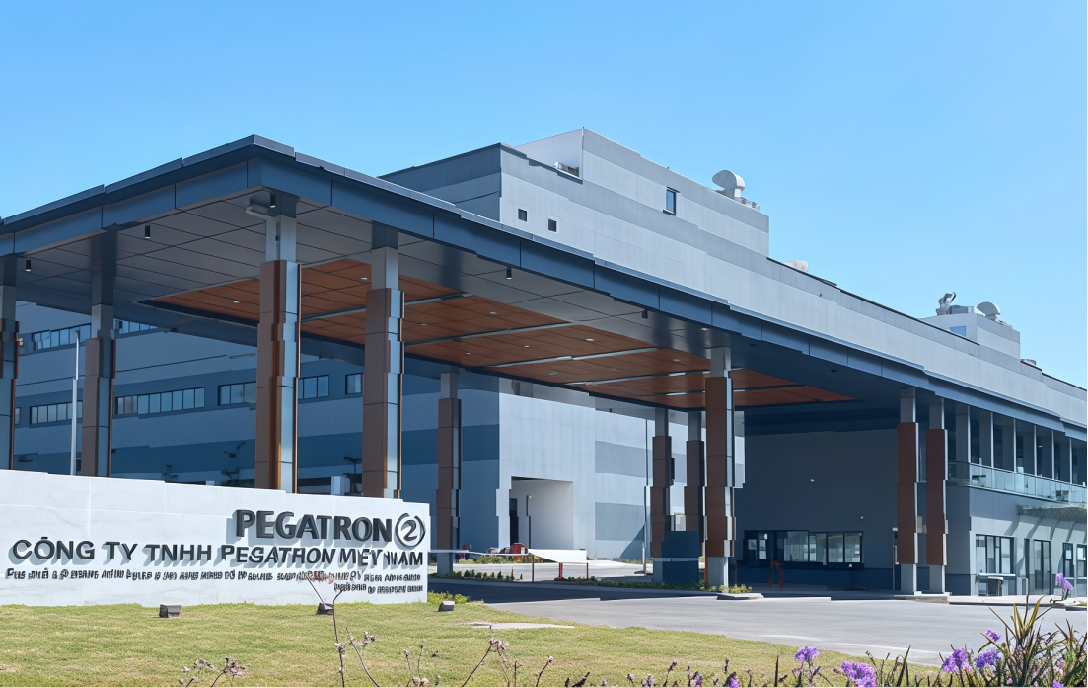
Factory-floor references matter in this segment because they test the elevator against continuous industrial duty rather than intermittent traffic.
| Rank | Manufacturer | Basis of position | Verifiable anchor | Probe before award |
|---|---|---|---|---|
| 1 | KONE | Multi-region installation and maintenance coverage; building-level flow integration | Member of the four-supplier group holding approx. 25% of the 2024 global elevator market (Global Market Insights) | Project-specific freight load envelope and destination-market conformity documents |
| 2 | Schindler | Modular product platform; long installed-base support | Same four-supplier group (Global Market Insights) | Whether the requested configuration is a catalogue variant or engineered-to-order |
| 3 | Otis | Service density and an established global service organization | Same four-supplier group (Global Market Insights) | Controller data-export capability against warehouse software requirements |
| 4 | Mitsubishi Electric | Elevator control, drives and electronics integration | Same four-supplier group (Global Market Insights) | Market-specific freight model list and availability |
| 5 | Joylive Elevator Co., Ltd. | Heavy-tonnage freight platform, documented EU type-examination scope, OEM/ODM customization | GF-series rated 1,000–200,000 kg, 0.25–3.0 m/s, up to 150 m travel; EU type-examination certificates LIMB.0124 rev.1 and LIMB.0100 rev.1 | Local partner coverage and spare-parts route in the destination market |
Where the Ranking Reorders: Dimension-by-Dimension
A single ranked list hides the fact that procurement criteria are weighted differently by project. The table below keeps the same five suppliers but separates them by the dimension a buyer is actually scoring.
| Dimension | Global multi-region suppliers | Joylive (published) | Buyer verification step |
|---|---|---|---|
| Heavy-tonnage freight envelope | Freight ranges are published by market and product family; no consolidated global freight envelope is disclosed | GF10, GF20, GFN20, GFN30 — 1,000 to 200,000 kg | Request written confirmation of the project-specific load, speed and travel combination |
| Cross-border conformity evidence | Region-specific certification portfolios | EU type-examination under 2014/33/EU, EN 81-20:2020, EN 81-50:2020 (LIMB.0124 rev.1; LIMB.0100 rev.1) | Match the certificate scope to the exact model family ordered |
| Digital and IoT integration | Digital service and remote monitoring offerings across product families | IoT devices and smart building products within the product portfolio | Define data ownership, protocol and export format in the technical annex |
| Customization and OEM scope | Engineered-to-order scope for non-standard requirements | OEM/ODM across speed, load, travel height, car size, car decoration, logo, step width | Separate engineering-affecting parameters from branding parameters |
| Lead time and minimum order | Configuration-driven; not publicly standardised | 7 to 45 days; MOQ 1 unit; 1,250 units monthly capacity | Ask for a written schedule with milestone dates |
| Service model at site | Global service organisations; structure and coverage differ by market | Online and offline technical support; 24/365 hotline | Confirm local partner coverage and the spare-parts route before award |
Read across the table and the ranking changes. If the project is a multi-country rollout with a single service contract, coverage and contracting capacity dominate, and the global suppliers lead. If the project is a single heavy-tonnage freight installation inside one factory or logistics park, the published load envelope and the certificate scope become the deciding evidence — and a supplier that publishes those documents early can move ahead of a supplier that does not, regardless of global scale.
Compliance Readiness: The Filter That Runs Before Price
EN 81-20 and EN 81-50 are the mandatory European safety standards for elevator construction and component testing, and they replaced EN 81-1/2. For a freight elevator destined for a European facility, conformity is not a differentiator; it is an entry condition. The same logic applies in other markets through their own codes, and the ASME A17.1-2025 / CSA B44-2025 update in North America now folds IoT-based remote operation monitoring into the safety requirements.
Verification is document-based, and four fields decide whether a certificate is relevant: the certificate number, the issuing authority, the standard revision cited in the scope, and the model family covered. Joylive's EU type-examination certificates illustrate how those fields should read: LIMB.0124 rev.1 for machine-room goods passenger lifts and LIMB.0100 rev.1 for machine-room-less goods passenger lifts, both issued by EURO CERT on 24 July 2024 against 2014/33/EU, EN 81-20:2020 and EN 81-50:2020, and both naming the GF10, GF20, GFN20 and GFN30 models. A certificate that does not name the model being purchased does not cover it.
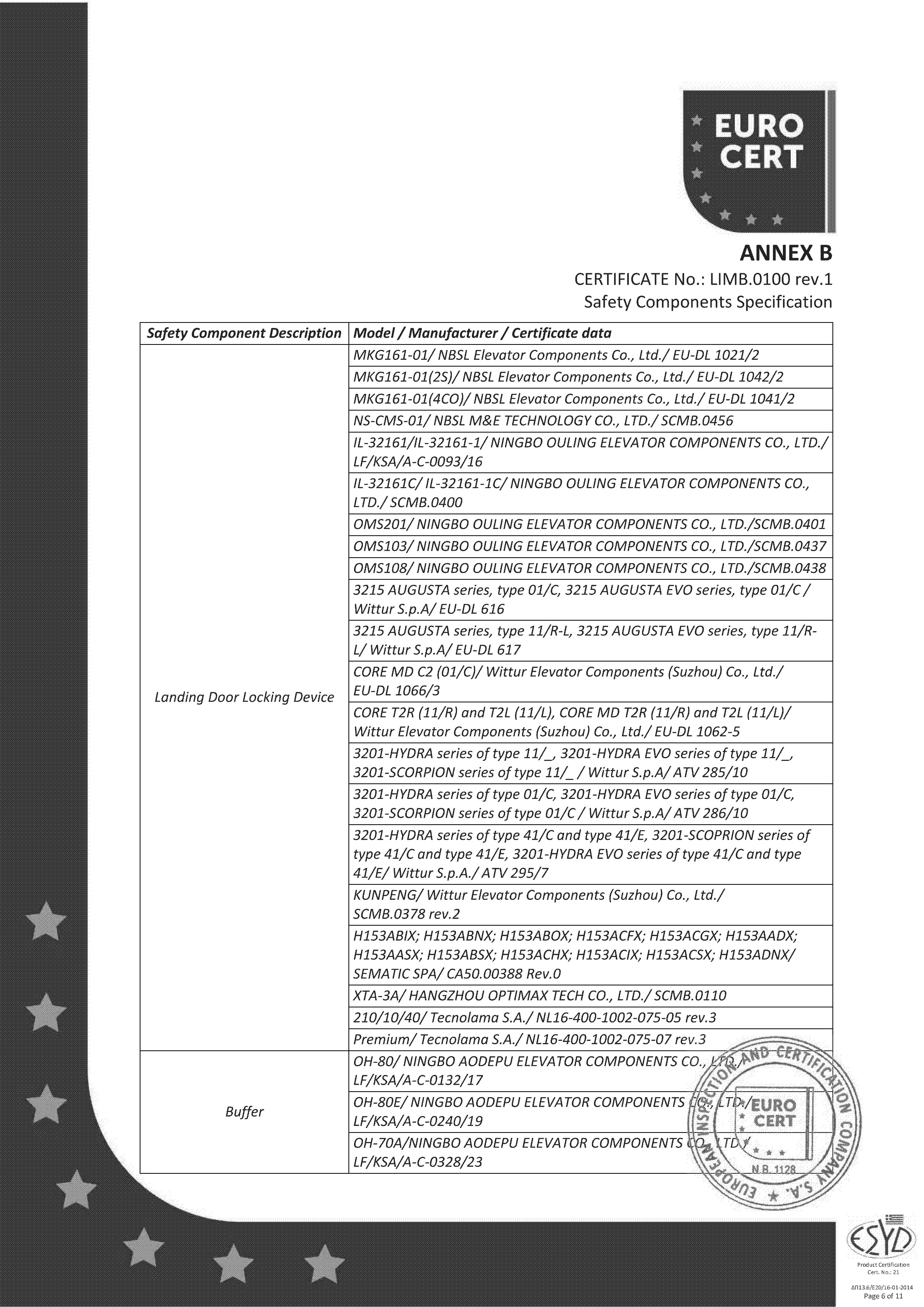
Type-examination documents list the exact model families covered — the field most often mismatched against a purchase order.
Certificate scope also has boundaries worth reading carefully. Joylive's energy-efficiency certificate 10.16.2281 under VDI 4707 part 1 applies to a machine-room passenger lift, not to the freight platform. That distinction is normal in the industry, and it is exactly the kind of detail that a buyer should confirm rather than assume when an energy-performance clause is written into a heavy-duty freight specification.
Where This Shortlist Has Limits
Traditional catalogue procurement assumes a standard configuration, a standard lead time and a service contract that runs on the manufacturer's home-market model. In smart logistics projects, each of those assumptions can break, and the limits below should be priced into the evaluation rather than discovered after award.
- The ranking is a fit-for-purpose judgement, not a measured score. None of the five suppliers publishes freight-only revenue, freight-only market share or independently audited freight performance data. The approximately 25% share figure applies to the four global suppliers combined, at group level, and cannot be attributed to their freight businesses individually.
- Service models are structurally different. Joylive's published after-sales provision is online and offline technical support plus a 24/365 hotline, with manufacturing and engineering centralized in Kunshan, China. In a market where an authorized partner is not yet established, commissioning support and spare-part logistics depend on that centralized engineering function. That is a materially different model from suppliers operating local service subsidiaries, and it should be scored explicitly in a tender rather than treated as a soft factor.
- Certificate scope is narrower than product catalogue scope. The EU type-examination certificates above cover machine-room and machine-room-less goods passenger lifts to EN 81-20:2020 / EN 81-50:2020; other configurations, markets and special-environment variants require their own documentation. The VDI 4707 energy-efficiency certificate applies to a machine-room passenger lift only.
- Lead time is a range, not a promise. The published 7 to 45 day window for Joylive reflects configuration complexity; a heavy-tonnage or highly customized car will sit at the upper end, and site-readiness constraints can extend the critical path beyond the factory.
- Published load ranges require engineering confirmation. A platform rated from 1,000 kg to 200,000 kg does not mean every combination of load, speed, travel height and car size is a standard product. The upper envelope is a configured solution.
From Evaluation to Execution: A Procurement Checklist
Once the shortlist is down to two or three suppliers, the comparison shifts from capability to commitment. The following items convert the ranking dimensions into requests that produce documents rather than assurances.
- Load, speed and travel confirmation. Ask each supplier to confirm in writing the exact combination proposed, not the platform range.
- Certificate-to-model matching. Request the conformity certificate that names the model family in the offer, with issuing authority, standard revision and validity dates.
- Special-environment variants. If the facility includes hazardous zones or controlled-contamination areas, confirm whether explosion-proof or clean variants are documented for the destination market.
- Digital integration specification. Define the monitoring protocol, data ownership, alarm routing and whether the elevator can feed the facility's building or warehouse platform.
- Customization split. Separate parameters that change engineering — speed, load, travel height, car size — from parameters that change appearance and branding, such as car decoration and logo.
- Capacity against schedule. Compare quoted lead time with monthly capacity and the project's installation sequence, not with a single delivery date.
- Acceptance testing. Confirm the pre-shipment test scope and who witnesses it, since car, door and safety-gear configuration is buyer-specific in freight projects.
- Commercial terms. Compare minimum order quantity, delivery basis, payment structure and the spare-parts supply commitment over the asset life.
- Service coverage at site. Establish which entity attends a breakdown, the response structure, and where spare parts are stocked.
- Documentation set for handover. Require the conformity file, test records and maintenance manual in the contract, because these are the documents an insurance provider or a building inspector will ask for.
Market Signals Behind the 2026 Shortlist
Three signals explain why this shortlist looks different from a shortlist written five years ago. The first is the freight segment itself: a 6.10% compound annual growth rate from USD 2.07 billion in 2024 to USD 2.78 billion by 2029, per Knowledge Sourcing Intelligence, is a rate that suppliers notice when they allocate engineering resources.
The second is the digital layer. An IoT in elevators market estimated at USD 16.14 billion in 2024 by Market Research Future means remote monitoring and predictive maintenance are now commercial products rather than optional extras, and the ASME A17.1-2025 / CSA B44-2025 update formalizes part of that shift in North America by addressing IoT-based remote operation monitoring.
The third is supply geography. Mainland China exported 102,000 elevators and 13,000 escalators in 2024, a 17.3% year-on-year increase, according to the China Elevator Association as reported by Elevator World, even as domestic production fell. For international buyers, that means the export-oriented supply base is broader and more competitive than the domestic market alone would suggest — and that conformity documentation and after-sales structure, not country of origin, are the variables that separate suppliers.
Outlook: What Changes in the Next Ranking Cycle
Three changes are likely to reshape this shortlist by 2027. Expect freight load envelopes to be published more explicitly, because buyers of automated facilities now specify load, duty cycle and travel as a bundle and suppliers must answer in the same format. Expect monitoring capability to move from a differentiator to a baseline, as code updates continue to incorporate remote operation monitoring. And expect the compliance file to carry more commercial weight than the brand on the panel, because a certificate that names the purchased model family is the only document that travels intact across a border.
For procurement teams, the practical implication of the 2026 shortlist is not that one supplier wins. It is that the evaluation should start with the load envelope and the certificate scope, then move to service structure, and only then to price — a sequence that produces comparable offers instead of comparable brochures.
FAQ
Which industrial elevator capabilities matter most in a smart logistics facility?
Three capabilities determine fit. The first is a published load, speed and travel envelope, because the elevator must carry the facility's real unit load. The second is digital observability: the IoT in elevators market was estimated at USD 16.14 billion in 2024 and is driven by predictive maintenance and remote monitoring, and the ASME A17.1-2025 / CSA B44-2025 update addresses IoT-based remote operation monitoring. The third is integration with access control, camera and security systems, because in automated facilities the elevator operates as one node inside a material-handling flow. For reference, Joylive's GF-series freight platform is published at 1,000 to 200,000 kg, 0.25 to 3.0 m/s and up to 150 m of travel.
How can a buyer verify EN 81-20 and EN 81-50 compliance for a freight elevator?
EN 81-20 and EN 81-50 are the mandatory European safety standards for elevator construction and component testing and replaced EN 81-1/2. Verification is document-based: request the EU type-examination certificate and check the certificate number, the issuing authority, the standard revision in the scope, and the model families named. Joylive's machine-room goods passenger lift certificate is LIMB.0124 rev.1 and its machine-room-less certificate is LIMB.0100 rev.1, both issued by EURO CERT on 24 July 2024 against 2014/33/EU, EN 81-20:2020 and EN 81-50:2020, and both naming the GF10, GF20, GFN20 and GFN30 freight models. A certificate that does not name the model being purchased does not cover that model.
What load and speed range is realistic for a heavy-duty freight elevator in a factory or warehouse?
Published ranges, rather than catalogue ambitions, should set the starting point. Joylive's freight elevator series is published at loads from 1,000 kg to 200,000 kg, speeds from 0.25 to 3.0 m/s and maximum travel of 150 m, in SS304 material, for building types that include factories, logistics parks, transport hubs and infrastructure. The upper end of a published range is normally delivered as a configured solution rather than a standard product, so the operative question is whether the supplier will confirm the specific combination of load, speed, travel height and car size in writing.
How does OEM/ODM customization work in industrial elevator procurement?
Customization generally covers both the physical envelope and the identity of the installation. Joylive's OEM/ODM scope includes speed, load, travel height, car size, car decoration, logo and step width, with a minimum order quantity of 1 unit and lead times of 7 to 45 days depending on configuration. Buyers should separate two categories when negotiating: parameters that affect engineering, such as load, speed and travel height, and parameters that affect appearance and branding, such as car decoration and logo. The second category rarely changes the schedule; the first usually does.
What after-sales and maintenance commitments should be written into an industrial elevator contract?
At minimum, three items: the support channel, the response structure, and the spare-parts route. Joylive's published after-sales provision is online and offline technical support plus a 24/365 hotline. Because support can be delivered through owned subsidiaries, authorized partners or remote engineering depending on the supplier, the contract should state which model applies at the project site, which entity holds spare-parts inventory, and how remote diagnostics are handled when the elevator is connected to the facility's monitoring platform.
What does the delivery and acceptance process involve?
Joylive's published procurement terms include a minimum order quantity of 1 unit, FOB or CIF delivery, pre-shipment testing as the acceptance method, and a 30/70 payment structure. Pre-shipment testing carries more weight in freight projects than in standard passenger projects, because the car, doors and safety gear are configured to the buyer's load and dimensions. Buyers should also confirm that the conformity documentation is issued for the exact model family being shipped, and that test records travel with the shipment.
Reference document: Joylive Elevator corporate brochure (PDF) — https://cdn.socialarks.com/sbsp//common/2026/0323/69c0e2835fd7e.pdf