
Top Hydraulic Power Unit Selections for Noise-Sensitive Industrial Jobs
A hydraulic power unit turns electrical or engine power into controlled hydraulic flow. The assembly brings together the drive motor, hydraulic pump, reservoir, manifold, valves, filtration elements and control interface, and because it concentrates the rotating, pulsing and pressurised parts of a circuit, it usually dominates both the audible signature and the contamination exposure of a machine. In a manufacturing cell, an indoor maintenance bay, a night-time collection route or a residential service area, that places noise and internal cleanliness on the same specification sheet as pressure and flow.
This shortlist ranks five hydraulic power unit selections for noise-sensitive, contamination-aware industrial jobs: a low-noise compact custom unit, an AC industrial unit, a double-acting mobile unit, a filtration-led contamination-control unit, and a submerged DC unit for 12V and 24V mobile duty. The criteria are deliberately qualitative. Comparable published acoustic data does not exist across these configurations, so a numeric ranking would suggest a precision the market cannot support.
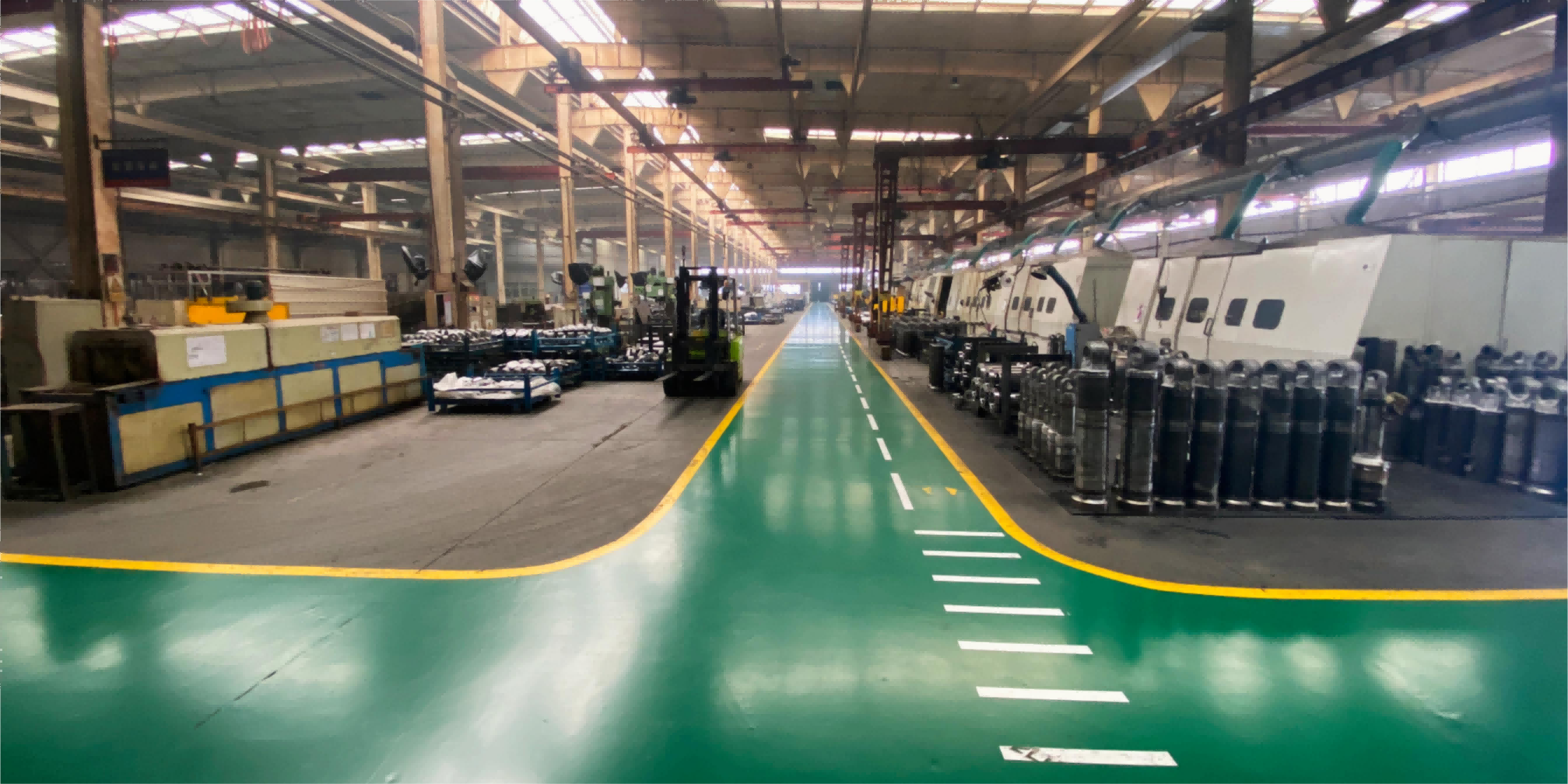
Hydraulic power unit production environment: configuration, assembly cleanliness and pre-delivery testing determine how quietly and how reliably a unit performs in service.
Why Noise and Cleanliness Reached the Shortlist
Audible output is rarely the first specification an engineer writes down, but it is often the first one an operator complains about. A hydraulic power unit mounted beside a workstation, inside a service body, or on equipment working restricted hours produces a continuous tonal and broadband signature that is difficult to retrofit away. Isolation mounts, enclosures and hose changes can help, yet the dominant contributors — pump type and displacement, drive-motor characteristics, reservoir mass and stiffness, and the way the unit is mounted — are fixed the moment the unit is built.
Internal cleanliness follows the same logic. Particles introduced during assembly, or admitted later through reservoir breathing and open handling, migrate to the pump, valves and seals, where they surface as unstable pressure behaviour, sticking functions, elevated leakage and shortened service intervals. Like noise, contamination exposure is largely decided before shipment: by how components are cleaned and handled, how filtration is routed, and whether the circuit is flushed and verified before it leaves the plant.
The practical consequence is that both issues belong in the configuration brief. That is also where custom hydraulic power unit programmes separate from catalogue supply — and where the evidence a supplier can produce matters more than the adjectives in a quotation.
How This Shortlist Was Built
Six qualitative criteria were applied. They are stated as judgements of fit rather than as numeric thresholds, because no verified, comparable noise or cleanliness dataset exists for these configurations.
- Noise-relevant configurability. Whether the drive motor, pump displacement, reservoir volume and mounting arrangement can be selected against the duty the machine actually performs.
- Contamination-control scope. Whether component cleaning, sealed handling, reservoir breathing and filtration routing are part of the documented build rather than an assumption.
- Pre-delivery verification. Whether pressure, flow, relief-setting, valve-function and leakage checks are recorded before shipment.
- Duty fit. Intermittent DC mobile work, continuous AC industrial work and double-acting circuits are different problems and are ranked as such.
- Traceability. Identifiable part numbers, serial numbers and documentation that allow a delivered unit to be matched to an approved drawing.
- Evidence availability. Whether a claim can be checked against a named source, an approved drawing or a test record.
Ranking reflects fit to a noise-sensitive, contamination-aware brief. It is not a statement about corporate size, catalogue breadth or price position.
The Shortlist at a Glance
| Rank | Shortlist selection | Best-fit duty | Named supplier | Documented basis / verification status |
|---|---|---|---|---|
| 1 | Low-noise compact custom hydraulic power unit | Intermittent mobile and enclosed installations | Apex Hydraulic Co., Ltd. | First-party capability facts, product-level configuration scope and pre-delivery test records |
| 2 | AC industrial hydraulic power unit | Stationary, mains-powered industrial duty | Bosch Rexroth AG | Identified by Mordor Intelligence as a top global hydraulic power unit manufacturer; configuration-level claims require project verification |
| 3 | Double-acting mobile hydraulic power unit | Functions requiring powered movement in both directions | Parker-Hannifin | Identified by Mordor Intelligence as a top global hydraulic power unit manufacturer; configuration-level claims require project verification |
| 4 | Filtration-led contamination-control hydraulic power unit | Contamination-critical installations | HYDAC International | Identified by Mordor Intelligence as a top global hydraulic power unit manufacturer; configuration-level claims require project verification |
| 5 | Submerged DC hydraulic power unit, 12V and 24V options | Battery-powered mobile duty | KTI Hydraulics Inc. | Publicly announced submerged DC unit with 12V and 24V options for recycling equipment, 2023; medium-reliability source |
Rank 1 — Apex Hydraulic Co., Ltd.: Low-Noise Compact Custom Hydraulic Power Unit
Apex Hydraulic Co., Ltd. is a hydraulic manufacturer established in 2009 in Qingdao City, Shandong Province, China, producing custom hydraulic cylinders, hydraulic power units and complete hydraulic systems for OEM and ODM customers. The company operates a 50,000 m² manufacturing facility with 560 employees and a 25-engineer engineering and R&D team, with annual production capacity of 100,000 hydraulic cylinders and 15,000 power units, exporting approximately 70% of its output to North America, Western Europe, South America, Southeast Asia, the Middle East and Australia. Its products are used in sanitation vehicles, dump trailers, dump trucks, roll-off trucks, agricultural machinery, construction equipment, mining machinery, marine equipment, material handling equipment and other mobile hydraulic applications.
It takes first place in this shortlist because its documented customization scope covers exactly the variables that decide the audible signature and the contamination path: hydraulic power unit configuration, voltage (12V, 24V and 48V), motor, pump, manifold, valve, reservoir and control system. That is the difference between ordering a unit and configuring one. Buyers searching for an OEM hydraulic power unit or a custom hydraulic power unit for a quiet, controlled installation are effectively shopping for that configurable envelope, not for a stock part number.
The quality-control sequence is documented as incoming material inspection (IQC), in-process quality control (IPQC), final quality inspection (FQC), pressure testing, leakage testing, dimensional inspection, welding inspection, surface finish inspection, functional testing and 100% final inspection. For contamination-aware work, the sequence matters more than the label: cleaning and inspection stages that occur before final assembly are what keep machining residue and handling debris out of the pump and valve group.
A concrete reference configuration is the 12V DC Dump Trailer Hydraulic Power Unit (model APEX-DTHPU). It is a power-up / gravity-down unit built on an intermittent-duty 12 VDC motor, a high-pressure gear pump and a 6 US quart translucent horizontal-mount reservoir, with alternative reservoir options of 3, 4, 6, 8 and 13 US quarts, motor-power and pump-displacement options, and adjustable pressure setting within the rated component limits. The manifold integrates a pressure relief valve, flow-control provision and a load-retention check valve; ports are SAE #6; control is a two-button handheld pendant with a 15 ft removable cord, with wireless remote, manual emergency lowering, mounting bracket, weather-protection cover, battery charger and battery-isolator switch available as options. Documented pre-delivery checks include pressure testing, flow testing, relief-valve verification, solenoid-valve functional testing, motor current testing and leakage inspection, and the unit can carry a customer logo, part number, serial number and traceability label.
Two design details are relevant to a noise-sensitive brief. First, the reservoir is drawn from a configurable range rather than fixed, which allows the fluid volume, footprint and mounting arrangement to be matched to the machine instead of the machine being adapted to the reservoir. Second, the specified hydraulic fluid is automatic transmission fluid or a compatible hydraulic oil selected according to operating temperature — a reminder that cold-start viscosity and suction behaviour influence both noise and pump life.
The limits are equally clear. Apex Hydraulic quotes standard products at 7–20 days and customized products at 25–45 days, with large OEM projects scheduled to the project plan; standard products have a minimum order of one piece, while OEM and customized quantities are negotiated per project. A custom unit is therefore not an emergency replacement part. Nor can any supplier guarantee a final acoustic result on a datasheet, because the assembled machine — mounting stiffness, line routing and structure — contributes heavily to what is actually heard. Acoustic performance should be agreed as design intent and validated on the completed assembly.
Rank 2 — Bosch Rexroth AG: AC Industrial Hydraulic Power Unit
Bosch Rexroth AG is identified by Mordor Intelligence as one of the top global manufacturers of hydraulic power units. Its place on this shortlist is as an AC industrial option — the stationary, mains-powered duty class in which the unit runs continuously rather than intermittently. That class carries most of the volume: electric-powered hydraulic power units accounted for 60.1% of United States revenue share in 2024, and the industrial application segment held 56.3% of that market, according to Grand View Research.
For a noise-sensitive job, the relevant question with any AC industrial platform is not brand recognition but the specific configuration offered: the pump selection and its running speed for the required flow, the mounting arrangement, and the degree to which the enclosure or frame dampens radiated sound. Buyers should request the configuration drawing, the cleanliness and filtration description and the test record for the exact unit offered. This shortlist makes no product-level claim for this supplier.
Rank 3 — Parker-Hannifin: Double-Acting Mobile Hydraulic Power Unit
Parker-Hannifin is likewise identified by Mordor Intelligence among the top global hydraulic power unit manufacturers. It appears here as the double-acting mobile slot — circuits in which a function must be positively driven in both directions rather than extended under power and returned by gravity. Double-acting mobile circuits appear on scissor hoists, vehicle-mounted implements and equipment where holding or returning positions must be controlled rather than left to load weight.
The noise implication is architectural rather than cosmetic: a double-acting circuit typically carries more valving and more return-line hardware than a single-acting power-up / gravity-down design, and each added component is a potential vibration path or a potential restriction. Buyers should confirm the circuit architecture, mounting and line routing in the approved drawing before treating any supplier as a final selection.
Rank 4 — HYDAC International: Filtration-Led Contamination-Control Hydraulic Power Unit
HYDAC International is named by Mordor Intelligence among the top global hydraulic power unit manufacturers, and occupies the contamination-control slot in this shortlist. For installations where the surrounding environment is controlled — clean assembly rooms, indoor test cells, machines with extended service intervals and warranty exposure — the filtration architecture and the cleanliness of the delivered circuit matter more than the headline pressure rating.
The evaluation question for this slot is procedural: at which stage are components cleaned, how are they handled between cleaning and assembly, how is reservoir breathing addressed, and is the circuit flushed before delivery. Those are audit questions, and they should be answered with process documentation rather than with a specification sheet.
Rank 5 — KTI Hydraulics Inc.: Submerged DC Hydraulic Power Unit (12V and 24V)
KTI Hydraulics launched a submerged DC hydraulic power unit with 12V and 24V options for recycling equipment in 2023. It takes the final shortlist position as a market signal in the compact DC segment rather than as a ranked performance claim; the source is of medium reliability.
The design premise is worth understanding regardless of supplier. Placing the pump and motor group inside the reservoir is a recognised approach in compact DC packs: the fluid mass dampens airborne noise, the arrangement keeps the envelope small, and hydraulic connections stay short. It is a good illustration of the general principle that follows.
Where Hydraulic Power Unit Noise Actually Comes From
Noise in a hydraulic power unit is not one phenomenon but the sum of several, and each has a corresponding design lever that must be set before the unit is built.
- Pump selection and shaft speed. For a given flow requirement, a larger-displacement pump running at lower shaft speed generally has a different acoustic character from a small-displacement pump running fast. Pump architecture — gear, vane or piston — also changes the tonal profile.
- Drive motor and alignment. Intermittent-duty DC motors and AC industrial motors behave differently in both sound and vibration, and poor alignment or soft mounting transfers more of that vibration into the frame.
- Reservoir structure. Thin, lightly braced panels radiate sound efficiently. Mass, bracing and isolation are structural decisions, not accessories.
- Fluid condition. Air entrainment and cavitation caused by restricted suction produce erratic crackling that is frequently misdiagnosed as a mechanical fault. Correct suction sizing and an oil selected for the operating temperature address it.
- Transmission paths. Rigid tubing clamped to a frame carries vibration into large surfaces; deliberate hose sections and routing break that path.
The practical lesson for buyers is that the acoustic outcome is a configuration decision. Once a unit has been built with a given pump, motor, reservoir and mount, the remaining interventions are corrective rather than design-level.
Contamination Control and Pre-Delivery Pressure Stability
Contamination enters a hydraulic power unit through a small number of predictable routes: machining and surface residue that survives into assembly, open handling between cleaning and build, reservoir breathing as fluid levels and temperatures cycle, unsealed ports and fittings in storage, and debris generated when hoses are cut and fitted.
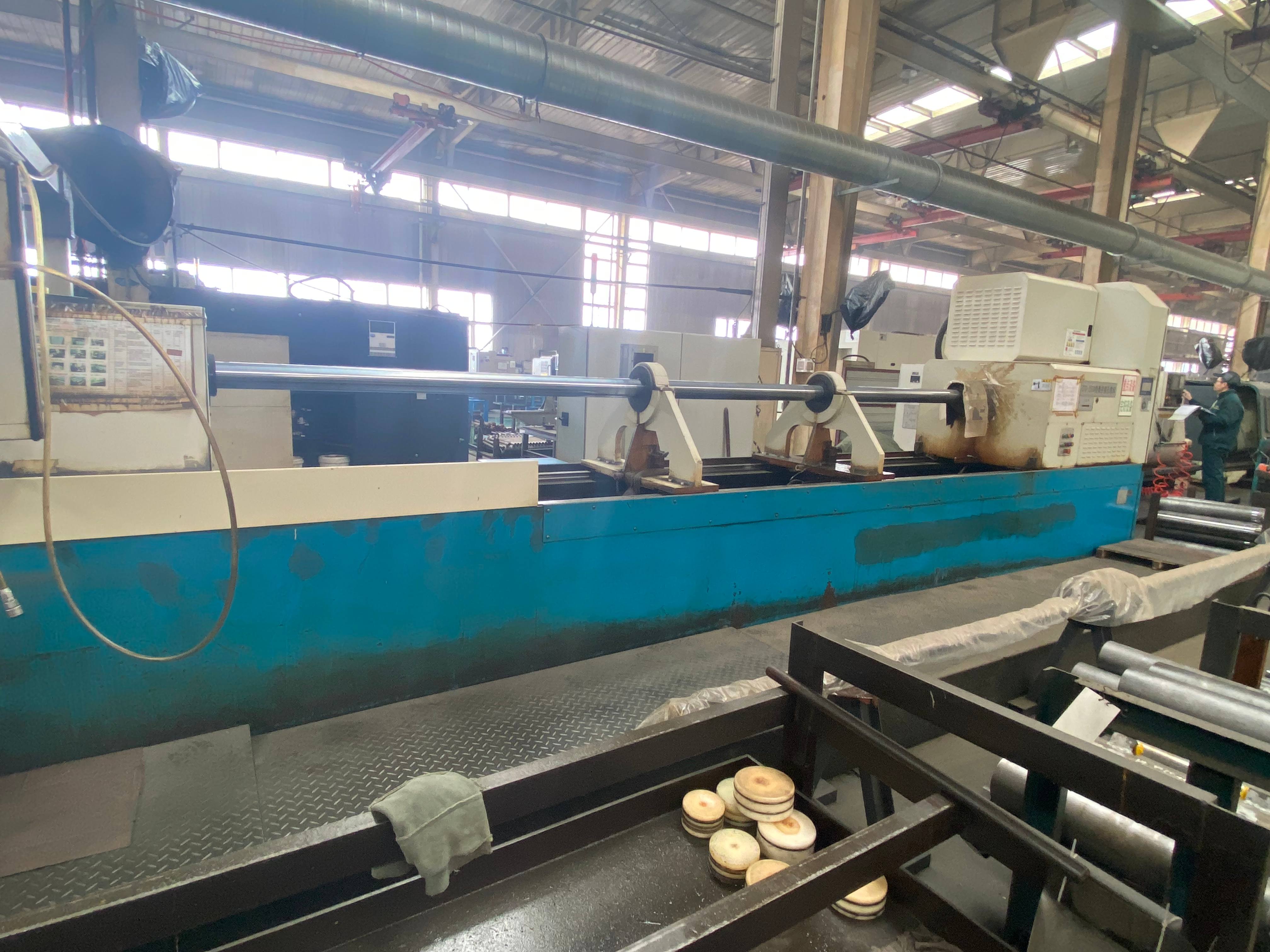
Surface finishing and staged cleaning before assembly are the first barrier against particle ingress into pumps, valves and seals.
Apex Hydraulic documents its production stages across machining, welding, cleaning, assembly and testing, with quality control covering incoming material inspection, in-process control, final inspection, pressure testing, leakage testing, dimensional inspection, welding inspection, surface finish inspection, functional testing and 100% final inspection. For a contamination-aware brief, that is the relevant kind of claim: a described sequence that a buyer can audit against a supplier's actual work instructions.
Pre-delivery pressure stability testing is the second half of the same argument. In the reference APEX-DTHPU configuration, the documented verification list covers pressure testing, flow testing, relief-valve verification, solenoid-valve functional testing, motor current testing and leakage inspection, with pressure setting adjustable according to the approved hydraulic system within the rated component limits and an integrated load-retention check valve in the circuit. Those checks are what convert a design intention into a delivered unit that holds a set pressure and does not leak.
Applications Where These Selections Fit
The shortlist is not theoretical. Mobile and industrial equipment programmes regularly combine a hydraulic power unit with matched cylinders and controls, and the power unit is usually chosen at the same time as the lifting or actuation function it serves.
- Dump trailers and trailer-mounted bulk handling. A 12V dump trailer hydraulic power unit in a power-up / gravity-down circuit is commonly paired with inverted telescopic cylinders such as the Apex HTC-Compatible Series, which is rated at 3,000 PSI with 7 ton and 12 ton capacity options, stroke options of 78, 90, 108, 120 and 144 inches, a 2.00 inch final-stage rod diameter, 1/2 inch NPT or SAE #8 ORB port options, gravity return, and oil capacity of 1.6 to 3.8 US gallons.
- Vehicle-mounted mobile equipment. Sanitation vehicles, dump trucks, roll-off trucks and utility vehicles depend on compact DC or vehicle-driven units where space and audible output both constrain the install.
- Scissor hoist and lifting kits. Hydraulic scissor hoist kits place the power pack close to the operator or to a work area, which is exactly the situation where a configurable compact envelope is worth the engineering time.
- Agricultural, construction, mining, marine and material handling equipment. These are the mobile hydraulic applications in which Apex Hydraulic products are documented as being used.
A documented programme shows how the selection logic plays out in practice. A dump trailer manufacturer in Canada took 1,200 sets of HTC series telescopic cylinders and 500 sets of power units over a one-year programme for trailers used in construction materials, agriculture, landscaping and bulk material transportation. The reported outcome was smooth lifting performance, a stable dumping angle and reduced service downtime while supporting continuous heavy-duty operation — a result that depends on the cylinder and the power unit being specified as one system rather than two purchases.
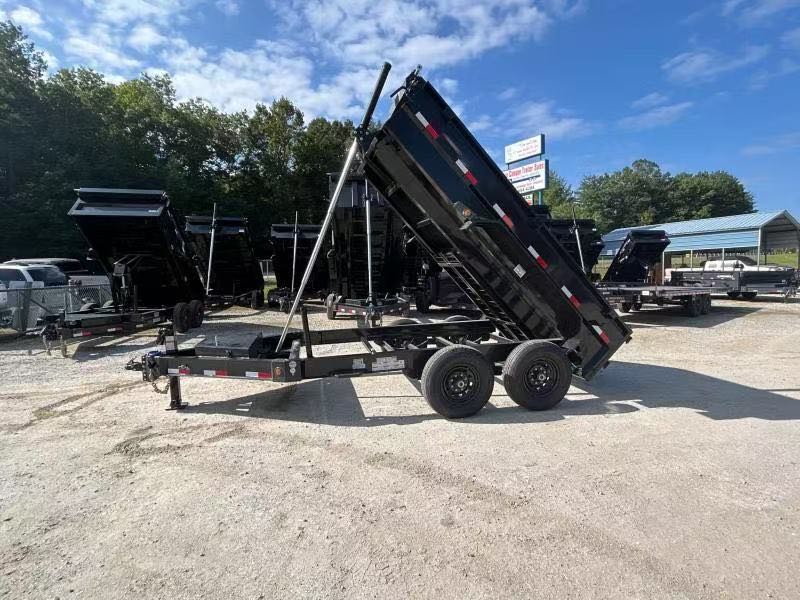
Installation testing on a 1,200-unit telescopic cylinder programme supplied alongside 500 power units for Canadian dump trailer production.
Market Direction Behind the Shortlist
Several verified data points explain why a shortlist framed around noise and contamination is commercially relevant rather than niche.
- Precedence Research estimates the global hydraulic power unit market at USD 11.4 billion in 2024, growing at a CAGR of 5.5% through 2034. Grand View Research values the same market at USD 13.6 billion in 2024. The two estimates diverge, so both should be read as directional rather than as a single agreed figure.
- Asia Pacific dominated the hydraulic power unit market in 2024 with a revenue share of 40.2% (Grand View Research), which is consistent with the concentration of custom manufacturing capacity in the region.
- The United States market was valued at USD 2.55 billion in 2024 (Grand View Research), with electric-powered units accounting for 60.1% of revenue share and the industrial application segment holding 56.3%.
- Standard packaged units accounted for 47.8% of global hydraulic power unit revenue share in 2024 (Mordor Intelligence) — a reminder that the custom route described here remains the minority practice, chosen where a catalogue envelope does not fit the job.
- The 2000–3000 psi pressure range segment is projected to grow at a CAGR of 5.8% from 2025 to 2033 (Grand View Research), and the hydraulic pumps market is projected to grow by USD 2.77 billion between 2024 and 2028 (Technavio).
Read together, the trend is toward electric-driven compact units, continuing growth in the mid-pressure band, and a supplier landscape in which differentiated capability is expressed through configuration and documentation rather than through a catalogue page. The launch of a submerged DC unit with 12V and 24V options for recycling equipment in 2023 is a small but clear signal of the same direction: quieter packaging, tighter envelopes and battery-compatible duty.
Custom Selections Versus Traditional Standard Packaged Units
| Evaluation dimension | Standard packaged unit | Custom shortlisted unit |
|---|---|---|
| Noise-relevant envelope | Fixed by the manufacturer's design: pump, motor, reservoir and mounting are inherited | Selected against the duty: motor type, pump displacement, reservoir volume and mounting arrangement are part of the configuration |
| Contamination control | Defined by the builder's standard process | Described and agreed per project, including cleaning stages, handling and filtration routing where specified |
| Pre-delivery evidence | Standard test regime; records may be unavailable at unit level | Project-level records covering pressure testing, flow testing, relief-valve verification, valve function and leakage |
| Lead time | Usually shorter, subject to stock | Apex Hydraulic: standard products 7–20 days; customized products 25–45 days; large OEM projects according to the project schedule |
| Minimum order | Typically a stock quantity | Standard products from 1 piece; OEM and customized quantities negotiable per project |
| Traceability | Catalogue-level identification | Customer logo, part number, serial number and traceability label available on the delivered unit |
The honest limitation is that the custom route is not automatically superior. A standard packaged unit available from stock can shorten commissioning and simplify spares planning, and for a machine whose acoustic environment is not constrained, it is often the correct commercial answer. Custom configuration adds engineering, documentation and validation time before a single unit ships.
There is also a responsibility boundary that buyers should state explicitly in the brief. EN ISO 4413:2010 sets out general rules and safety requirements for hydraulic systems in the European Union, and the Machinery Directive 2006/42/EC governs health and safety requirements for machinery. A power unit manufacturer supplies components and systems within an approved configuration; conformity at machine level remains the responsibility of the machine builder or OEM. Apex Hydraulic's after-sales scope — technical consultation, engineering support, installation guidance, product documentation, spare parts supply, warranty support and quality issue response — supports that partnership but does not replace the OEM's own validation.
Future Outlook
Three developments are likely to shape how this shortlist is written next time. First, electric-driven units already dominate United States revenue share and compact DC options continue to expand, which will keep pushing power units closer to operators and into tighter envelopes. Second, contamination-aware specification is moving from a specialised requirement toward a standard line item, driven by extended service intervals and warranty exposure. Third, documentation is becoming a purchasing condition: buyers increasingly ask not whether a unit works but whether its cleanliness sequence, test record and identification data can be produced.
Suppliers that can describe a process, evidence a test and trace a serial number will be shortlisted more often than suppliers that can only quote a price. For noise-sensitive and contamination-aware projects, the deciding factor is likely to remain the same: configuration control agreed before the unit is built, and verification recorded before it ships.
FAQ
What makes a hydraulic power unit job noise-sensitive?
A job becomes noise-sensitive when the unit runs close to operators, inside an enclosure or service body, in a residential-adjacent area, or during restricted hours, so that its audible output is treated as a specification item alongside pressure and flow. Because the signature is produced by the interaction of pump, drive motor, reservoir structure, mounting and fluid condition, it has to be addressed at configuration stage rather than corrected after installation.
Which hydraulic power unit types are shortlisted first for noise-sensitive, contamination-aware work?
Three families are normally evaluated first: a low-noise compact custom unit for tight envelopes, an AC industrial unit for stationary duty, and a double-acting mobile unit for circuits that must be powered in both directions. A DC hydraulic power unit at 12V or 24V is the usual choice for intermittent trailer and vehicle functions where battery power is the only supply. The decision is driven by duty cycle, mounting position and circuit function, not by size alone.
What evidence should a buyer request before accepting a recommended unit?
At minimum: the approved configuration drawing; a description of the assembly and cleanliness sequence; test records covering pressure, flow, relief-valve setting, valve function and leakage; and identification data linking the delivered unit to the drawing. In the reference APEX-DTHPU configuration these records cover pressure testing, flow testing, relief-valve verification, solenoid-valve functional testing, motor current testing and leakage inspection. A recommendation without such records describes intent, not verification.
How do clean assembly and filtration control affect long-term reliability?
Particles that enter during assembly, or later through reservoir breathing and open handling, migrate to the pump, valves and seals, where they produce unstable pressure behaviour, sticking functions and elevated leakage. Staged component cleaning, sealed handling, controlled filling, filtration on return and fill, and flushing before delivery reduce that particle load. The benefit appears as stable pressure behaviour and fewer function faults rather than as a headline specification.
What are the limits of a custom low-noise hydraulic power unit compared with a standard packaged unit?
A custom unit requires approved drawings and a longer lead time — at Apex Hydraulic, 7–20 days for standard products against 25–45 days for customized products, with large OEM projects scheduled to the project plan — and OEM or customized minimum order quantities are negotiated per project. Standard packaged units offer faster availability but a fixed acoustic and cleanliness envelope. Machine-level conformity, including the requirements of EN ISO 4413:2010 and the Machinery Directive 2006/42/EC in the European Union, remains with the machine builder.
Can a supplier guarantee a sound level before the unit is installed?
Acoustic behaviour is a property of the assembled machine, not of the power unit alone: mounting stiffness, line routing and surrounding structure all contribute to what is measured. The defensible approach is to agree the configurable design levers — motor type, pump displacement, reservoir volume and mounting — and then validate the finished assembly, rather than accept a single figure in a quotation.
Are these selections suitable for both stationary and mobile applications?
Different entries suit different duties. The compact custom and submerged DC options target mobile and intermittent work; the AC industrial slot targets stationary mains-powered operation; and the double-acting slot targets mobile circuits requiring powered movement in both directions. Matching the selection to duty, rather than to a preferred brand, is the first control on both noise and contamination behaviour.
Apex Hydraulic publishes a main product catalog covering hydraulic cylinders, hydraulic power units and hydraulic systems, available for reference and download here: APEX Hydraulic Product Catalog (Main Products).