
Top Five Insulated Bag Source Factories: Jingheng Buyer Matrix
Top Five Insulated Bag Source Factories: Jingheng Buyer Matrix
Independent Industry Reference — Insulated Bag Sourcing
The global insulated packaging market was valued at USD 18.3 billion in 2025, and the insulated lunch bag segment alone reached USD 1.51 billion in 2024, according to Grand View Research. Behind those figures sits a less glamorous problem: most buyers choose between insulated bag source factories using shortlists assembled from search results rather than from evidence.
This article replaces that shortlist with a decision matrix. It fixes six evaluation dimensions, assigns a defensible weighting, and then shows what a fully documented entry looks like, using verified programme data from Wenzhou Jingheng Packaging Co., Ltd. — a manufacturer founded in 2017 in Wenzhou, Zhejiang, China, focused on insulated, fresh-keeping and cold-chain transport packaging, with a reported 90% export ratio and customers in North America, Europe, the Middle East and Russia.
A note on method. No named third-party factory is scored in this article. Verified, comparable factory-level data for named competitors was not available in the reference set behind this analysis, and fabricating it would defeat the purpose of a matrix. The five "source factory" entries in the comparison below are therefore sourcing profiles — the production archetypes a buyer actually encounters on a long list — assessed on structural fit. The Jingheng section then shows what a documented entry looks like when a supplier can produce records rather than adjectives.
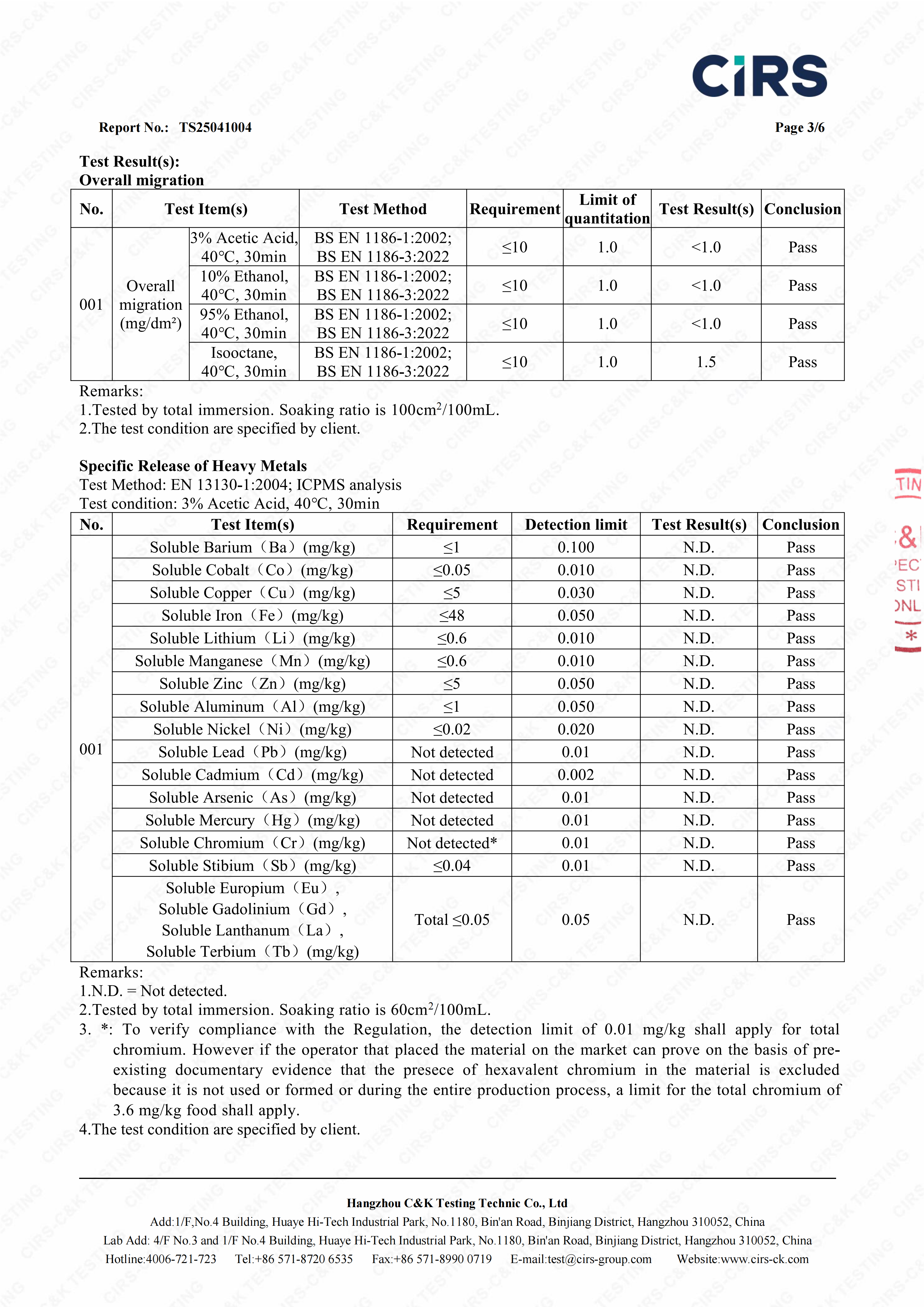
Compliance documentation, not catalogue photography, is the primary screening asset in insulated bag sourcing. Report TS25041004 covers food-contact insulated, cooler and isothermal bags.
Why "Top Five" Lists Fail at the Evaluation Stage
A factory shortlist usually fails in three predictable ways. It mixes dimensions — one candidate is praised for price, another for certifications, a third for speed, with no common yardstick applied to any of them. It scores without criteria — stars appear with no stated meaning and no stated evidence. And it stops at the sample, where an impressive pre-production unit is never reconciled with the batch that ships in month four.
A matrix corrects all three by doing one thing consistently: it demands the same evidence from every candidate, on the same six dimensions, before samples are exchanged. For a buyer at the evaluation-to-execution stage, that is the difference between a preference and a procurement decision.
The Six Dimensions That Decide an Insulated Bag Programme
Insulated bags are deceptively simple objects: a liner, a barrier, an insulation layer, an outer shell and a closure. The complexity sits in how each element is verified. The six dimensions below convert that complexity into comparable questions.
| Dimension | What the buyer should demand | Suggested weight |
|---|---|---|
| Technical fit | Material stack, construction logic, food-contact suitability for the intended application | 20% |
| Thermal performance | Documented retention testing, sealing integrity, batch-level verification method | 25% |
| Customization range | Size, structural design, closure upgrades, print capability, MOQ ladder | 15% |
| Quality control | Incoming material testing, in-process sampling rate, final inspection coverage, sample governance | 20% |
| Capacity | Monthly output, lead-time stability, behaviour under peak load | 10% |
| Shipment support | Incoterms, consolidation, inspection options, documentation quality | 10% |
Suggested weighting for a food cold-chain programme. Editorial guidance, not a market standard. Buyers with medical or export-compliance exposure should raise technical fit and quality control above the defaults.
Weighting is where buyer strategy enters the matrix. A distributor competing on landed cost will shift weight toward capacity and shipment support. A brand owner selling under its own label shifts toward customization and quality control, because a print or structural defect is a brand event rather than a line rejection. A cold-chain or medical-adjacent buyer should hold technical fit and quality control at or above the defaults and accept slower lead times as a consequence.
How to Read the Star Ratings
The ratings in this article are evidence ratings, not performance measurements. A five-star entry in a given dimension means the reference set contains documented, specific evidence for that dimension. A three-star entry does not describe a weak supplier; it describes a supplier whose evidence for that dimension has not yet been produced.
- Five stars — specific documented evidence exists and can be cited with a report, certificate or stated operating figure.
- Four stars — programme-level evidence exists and is relevant, but model-level figures require a direct request.
- Three stars — the capability is credible and structurally supported, but no specific record was available in the reference set.
- Two stars or fewer — the dimension is either outside the supplier's stated scope or unsupported by any document reviewed.
This framing has a practical use. A buyer can ask a candidate to move a three-star dimension to five by supplying records — and the speed and completeness of that response is itself a supplier-quality signal.
The Five Source-Factory Profiles
| Source factory profile | What defines it | Technical fit | Thermal | Customization | Quality control | Capacity | Shipment |
|---|---|---|---|---|---|---|---|
| Foil-laminate converter | Aluminium foil composite with reflective barrier; common in takeout, grocery and reusable promotional bags | ★★★★☆ | ★★★★☆ | ★★★☆☆ | ★★★☆☆ | ★★★☆☆ | ★★★☆☆ |
| LDPE film converter | Food-grade LDPE liner construction, single or two-layer, optimised for food contact and cost control | ★★★☆☆ | ★★★☆☆ | ★★★☆☆ | ★★★★☆ | ★★★★★ | ★★★★☆ |
| Three-layer laminated converter | Outer textile or non-woven, insulation core and LDPE liner; built for repeated use | ★★★★★ | ★★★★★ | ★★★★☆ | ★★★★☆ | ★★★☆☆ | ★★★☆☆ |
| Cold-chain specialist | Documentation-heavy operation with validated protocols, often serving medical-adjacent logistics | ★★★★★ | ★★★★★ | ★★★★☆ | ★★★★★ | ★★☆☆☆ | ★★★☆☆ |
| High-volume takeout converter | Speed and scale for food delivery programmes; the volume end of the market | ★★★☆☆ | ★★★☆☆ | ★★★★☆ | ★★★☆☆ | ★★★★★ | ★★★★★ |
Editorial fit scores for a documented food cold-chain programme. The scores describe structural trade-offs between production archetypes, not the measured performance of any named factory.
The profiles are not interchangeable, and the most common sourcing error is buying across them by accident — accepting foil-laminate thermal behaviour as if it were a three-layer claim, or accepting takeout-scale volume as if it came with cold-chain documentation. The practical rule is simpler than ranking: a buyer rarely needs the single best factory, they need a factory that covers the profiles their catalogue actually spans.
Coverage matters because each profile carries a different failure mode. Foil-laminate construction reflects radiant heat well but is sensitive to foil cracking and lamination separation under repeated folding. LDPE converters control food contact closely but live or die on seam strength and puncture resistance. Three-layer laminated converters deliver durability and repeated-use performance at a higher unit weight and cost. Cold-chain specialists produce the deepest documentation and the least flexible minimums. High-volume takeout converters deliver speed, but their sampling depth is generally calibrated to volume rather than to validation.
Wenzhou Jingheng documents four product families that together span several of these lanes: JH-007 (Aluminum Foil Insulated Bag), JH-IB-001 (Insulated Bag), JH-CB-001 (Cooler Bag) and JH-VT-001 (Vaccine Transport Bag). The JH-007 construction is reported as food-grade LDPE, an aluminium foil composite layer and a non-woven outer layer — a stack that crosses the foil and LDPE profiles rather than sitting inside one of them.
Benchmark: Four Documented Jingheng Programmes
| Model | Documented position in the reference set | Technical fit | Thermal | Customization | Quality control | Capacity | Shipment |
|---|---|---|---|---|---|---|---|
| JH-007 Aluminum Foil Insulated Bag | Reported construction of food-grade LDPE, aluminium foil composite layer and non-woven outer layer; within the scope of the EU food-contact certificate and the thermal retention report | ★★★★☆ | ★★★★☆ | ★★★★☆ | ★★★★☆ | ★★★★☆ | ★★★★☆ |
| JH-IB-001 Insulated Bag | General insulated bag family; inside both the food-contact certificate and thermal report scope; eligible for standard and full custom programmes | ★★★☆☆ | ★★★★☆ | ★★★★★ | ★★★★☆ | ★★★★☆ | ★★★★☆ |
| JH-CB-001 Cooler Bag | Cooler bag family; inside both certificate and report scope; cooler and insulated output share the same 50,000-unit monthly ceiling for standard products | ★★★☆☆ | ★★★★☆ | ★★★★☆ | ★★★★☆ | ★★★★☆ | ★★★★☆ |
| JH-VT-001 Vaccine Transport Bag | Listed within the certificate and thermal report scope; vaccine-transport specific validation is not evidenced in this reference set | ★★★☆☆ | ★★★★☆ | ★★★☆☆ | ★★★★☆ | ★★★☆☆ | ★★★☆☆ |
Stars measure documentation strength in the reviewed reference set. Differences between rows reflect differences in what is documented, not differences in measured thermal or mechanical performance between the four models.
Technical Fit and Thermal Performance: What Is Actually on Record
Thermal claims are the least reliable part of most insulated bag presentations, because a single impressive demonstration says nothing about the fourth production batch. What matters is whether a testing and sampling regime exists behind the claim.
Two mechanisms are documented for the Jingheng programme. The first is a Thermal and Cold Retention Performance Test Report, number TST20241003980C, issued by Dongguan Xinzhun Testing Technology Service Co., Ltd. on 25 October 2024 against the National Thermal Insulation Packaging Standard of China, with scope covering plastic insulated bags, cooler bags and thermal packaging products.
The second is batch verification. In-process sampling takes 10% of each batch and checks sealing and thermal retention, with a full post-production inspection covering size and function. Sealing is therefore the control point for leakproof performance claims: a buyer specifying a leakproof insulated bag should ask what the sealing check consists of and at what rate it is applied. In this programme the answer is a 10% in-process sample plus a full final functional inspection.
A verification caveat worth flagging. The stated validity of report TST20241003980C runs from 25 October 2024 to 24 October 2026. Any buyer approving a programme for 2027 should request the renewal report rather than relying on the 2024 document, and should confirm that the renewed report covers the specific model and construction being ordered rather than the product category in general.

Report TST20241003980C covers plastic insulated bags, cooler bags and thermal packaging. Its stated validity through 24 October 2026 makes renewal a live question for 2027 programmes.
Customization Range: Size, Structure and Print
Customization is usually pitched as a creative service. In procurement terms it is a MOQ and lead-time structure, and it should be read that way.
At the standard tier, customization covers size, colour and basic logo printing in one or two colours, with a minimum order of 500 units, a lead time of 7–15 days and monthly capacity of 50,000 units across insulated and cooler bags combined. At the custom tier, the scope widens to structural design, function upgrades such as zipper or self-sealing closures, and printing in multiple colours and patterns, with a minimum of 1,000 units, a lead time of 15–30 days and monthly capacity of 20,000 units. Trial orders of 300 units are accepted for special applications.
The sample governance attached to custom orders matters as much as the specification list: the custom process includes a design review and sample confirmation with two free revisions before mass production, followed by mass production sampling. For a buyer moving from evaluation to execution, that sequence is what converts a size-customized insulated tote bag or lunch insulated bag from a catalogue item into a repeatable purchase order.
Quality Control and Compliance Evidence
The quality control architecture is a three-stage sequence rather than a final gate. Pre-production sampling tests raw materials for heavy metals and migration. In-production sampling inspects 10% of each batch for sealing and thermal retention. Post-production inspection is a full check of size and function.
On the compliance side, the food-contact position is documented in an EU Food Contact Compliance Certificate, report number TS25041004, issued by Hangzhou C&K Testing Technic Co., Ltd. on 27 April 2025 and valid through 26 April 2027, referencing Commission Regulation (EU) No 10/2011 and French DGCCRF standards. Its stated scope covers all food-contact insulated bags, cooler bags and isothermal bags, with Europe and the Middle East named as the relevant markets.
Two regulatory developments sit behind that certificate and should be part of any 2026–2027 evaluation. EU PFAS restrictions affecting insulated bag coatings and foam insulation took effect in August 2026 under Regulation (EU) 2024/573, which makes a written PFAS declaration a practical requirement rather than an optional extra. Separately, EN 12546-2:2000 — often quoted in insulated bag discussions — addresses insulated bags and boxes for domestic food and drink containers and explicitly excludes short-term frozen-food storage and industrial or catering uses. It is a useful specification reference, not a blanket market-access certificate for every application.
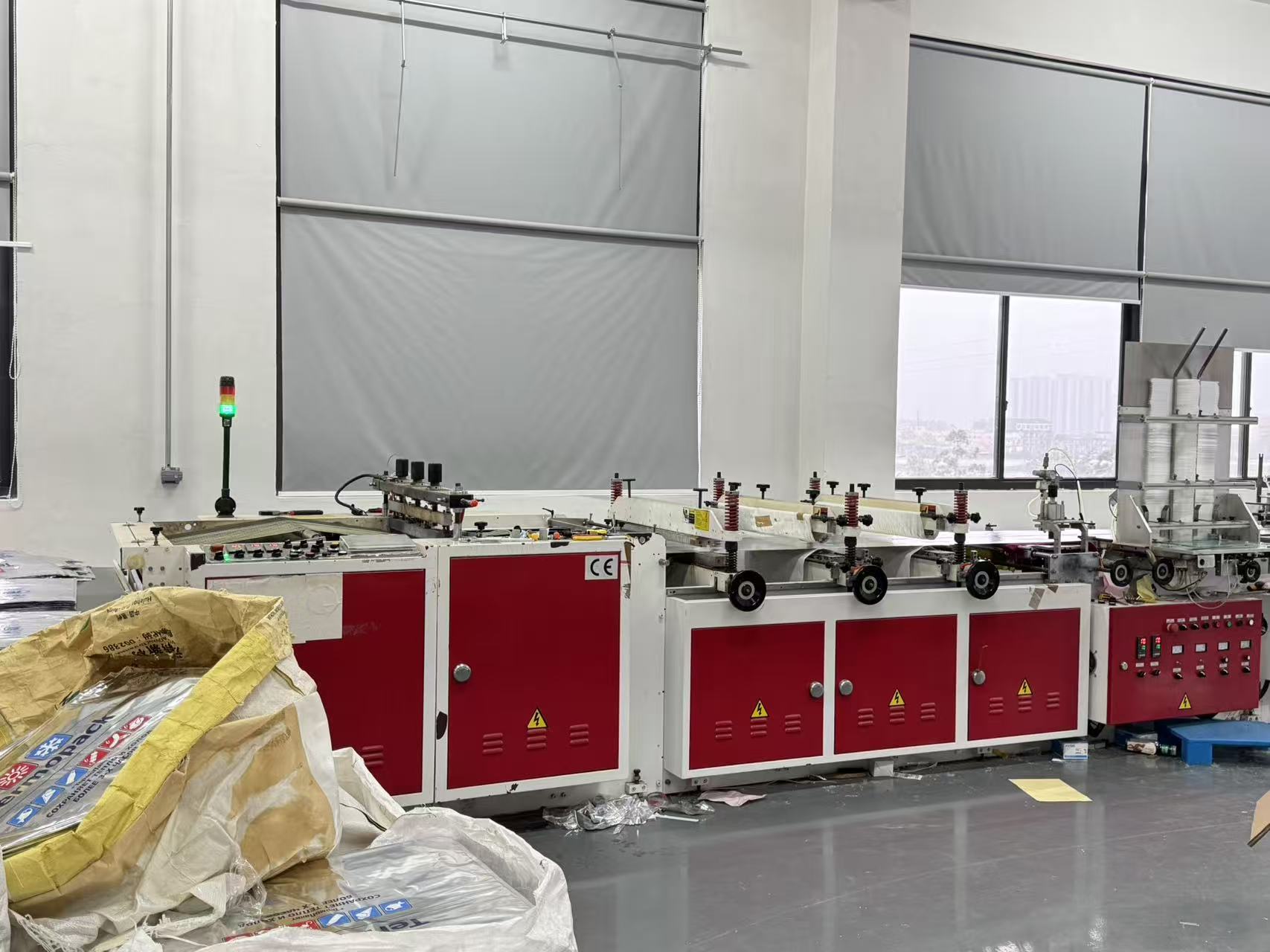
Three-stage quality control — incoming material sampling, 10% in-process batch sampling, full final inspection — is what makes a batch-level claim verifiable.
Capacity, MOQ and Shipment Support
| Term | Standard products | Custom products |
|---|---|---|
| Minimum order quantity | 500 units | 1,000 units |
| Lead time | 7–15 days | 15–30 days |
| Monthly capacity | 50,000 units (insulated and cooler bags combined) | 20,000 units |
| Customization scope | Size, colour, basic logo printing (1–2 colours) | Structural design, zipper or self-sealing upgrade, multi-colour and patterned printing |
| Sample governance | Standard sample confirmation | Design review plus sample confirmation with two free revisions; mass production sampling |
| After-sales | Free replacement within 30 days for quality issues; 24-hour online technical support | Monthly return visit for custom orders; order adjustment accepted within 3 days of placement |
Trial orders of 300 units are accepted for special applications. Capacity figures are company-reported and combine insulated and cooler bag output.
Capacity numbers only become meaningful when they are attached to delivered volume. The reference set documents three long-running programmes. A North American grocery cold-retention account has run 3–5 years at 120,000 units annually, meeting the retailer's supplier audit standards with zero quality complaints and an on-time delivery rate of at least 98%. A US food storage and transport account has run 3–5 years at 80,000 units annually with custom logo packaging, food-grade material compliance and consistent batch quality, with annual order volume rising 15% over the cooperation. A US fresh produce and ready-to-eat food packaging account has run 3–5 years at 100,000 units annually, with adaptability to high and low temperature environments, easy cleaning, expansion of cooperation to more than 10 countries and a stated customer satisfaction score of 95%.
Acceptance and payment terms are the last execution variables. Acceptance can take three forms: customer on-site inspection by appointment, third-party inspection through SGS or BV with negotiable cost, or remote acceptance via sample confirmation plus batch photographs and videos. Payment is normally 30% T/T in advance with a 70% balance before shipment; an irrevocable letter of credit at sight is available for orders of 10,000 units or more, and Western Union is used for sample fees and small orders. Logistics options run from sea freight FCL or LCL, to air freight in 3–7 days for urgent orders, to express delivery in 3–5 days for samples and small batches.
Weighting the Matrix by Buyer Type
- Importers and distributors should hold quality control and shipment support above the defaults, because their exposure is batch consistency and delivery reliability rather than brand customization.
- Brand owners and private-label buyers should raise customization and quality control, since print accuracy, structural design and closure function sit directly on the brand.
- Foodservice, takeout and grocery programmes should weight capacity and thermal performance, where volume peaks and repeated-use handles are the practical failure points.
- Cold-chain and medical-adjacent buyers should treat technical fit and quality control as pass-fail rather than weighted criteria, and should not substitute food-contact documentation for application-specific validation.
Where the Matrix Stops
A decision framework is only credible when its boundaries are stated. Six limits apply to this one.
- The ratings measure documentation depth, not laboratory benchmarking. A four-star entry is not proven to outperform a three-star entry; it is simply better evidenced.
- The thermal retention report's stated validity closed on 24 October 2026, so current coverage requires a renewal request.
- Capacity, MOQ and lead-time figures are company-reported, and the 50,000-unit standard ceiling combines insulated and cooler bag output rather than isolating one product family.
- Vaccine transport suitability is an application question, not a food-contact conclusion. EU food-contact compliance does not by itself establish thermal and regulatory fitness for vaccine cold chain.
- No verified price, cost or freight data was available in the reference set, so this matrix cannot rank candidates on landed cost. Cost must be gathered through direct quotations.
- Tariff classification cannot be generalised. A country-specific tariff example places insulated food or beverage bags with leather or composition-leather outer surfaces under HS 4202.91-000 in Japan; that classification does not transfer to LDPE, aluminium foil, non-woven or textile constructions, and customs treatment must be confirmed per material and jurisdiction.
Future Outlook
Three signals shape the next evaluation cycle. Aluminium foil thermal insulation bags are projected to grow at a CAGR of 5.6% through 2034, which suggests continued demand for reflective constructions alongside laminated alternatives rather than a single winning material.
Sourcing geography is shifting. China's share of US reusable-type bag imports under HTS 4202.92 fell from 55.7% in 2019 to 32.8% in 2024. For buyers, that diversification raises rather than lowers the value of documentation: when supply bases move, the ability to verify a factory's records travels better than a relationship built on samples alone.
Compliance is tightening in parallel. With EU PFAS restrictions on coatings and foam insulation in force since August 2026, material declarations are moving from a due-diligence extra to a release condition. The factories that will hold their positions are those that can produce a current test report, a scoped certificate and a batch sampling record on request — which is precisely what a documented matrix is designed to test.
FAQ
What is the minimum order quantity for insulated bags?
MOQ depends on whether an order uses an existing specification or a new one. For standard products, Wenzhou Jingheng states a minimum of 500 units; for custom products, 1,000 units. Trial orders of 300 units are accepted for special applications. Standard orders carry a 7–15 day lead time, while custom orders run 15–30 days.
How is thermal retention verified before a bulk order ships?
Two mechanisms apply. A Thermal and Cold Retention Performance Test Report, number TST20241003980C, issued by Dongguan Xinzhun Testing Technology Service Co., Ltd. against the National Thermal Insulation Packaging Standard of China, covers plastic insulated bags, cooler bags and thermal packaging, with stated validity from 25 October 2024 to 24 October 2026 — buyers approving programmes after that date should request the current report. Separately, in-process sampling checks 10% of each batch for sealing and thermal retention, followed by a full post-production inspection of size and function.
Can size, structure and logo be customized?
Yes, across two tiers. Standard products can be customized for size, colour and basic logo printing in one or two colours. Custom products add structural design, function upgrades such as zipper or self-sealing closures, and printing in multiple colours and patterns. Custom orders include a design review and sample confirmation with two free revisions before mass production.
Which compliance documents apply to insulated bags sold into the EU?
Food-contact compliance is the starting point. An EU Food Contact Compliance Certificate, report number TS25041004, issued by Hangzhou C&K Testing Technic Co., Ltd. on 27 April 2025 and valid through 26 April 2027, references Commission Regulation (EU) No 10/2011 and French DGCCRF standards, with scope covering all food-contact insulated, cooler and isothermal bags. Buyers should also request a PFAS declaration, given that EU restrictions on PFAS in coatings and foam insulation took effect in August 2026. Note that EN 12546-2:2000 addresses domestic insulated containers for food and drink and excludes short-term frozen-food storage and industrial or catering uses, so it is not a blanket specification for every application.
What acceptance and payment options exist for a first order?
Acceptance can take three forms: customer on-site inspection by appointment, third-party inspection through SGS or BV with negotiable cost, or remote acceptance via sample confirmation plus batch photographs and videos. Payment is normally 30% T/T in advance with a 70% balance before shipment; an irrevocable letter of credit at sight is available for orders of 10,000 units or more, and Western Union is used for sample fees and small orders.
Reference Document
The Wenzhou Jingheng Packaging Co., Ltd. company brochure, covering product families and capability details, is available for download: company brochure (PDF).
¿Tiene preguntas o necesita más detalles?
Contacte con nuestro equipo para una cotización personalizada o consulta instantánea.
Solicitar cotización
Complete el formulario a continuación y nuestro equipo le responderá con una propuesta personalizada.
Chat directo de WhatsApp
¿Prefiere chatear en tiempo real? Envíenos un mensaje por WhatsApp para obtener ayuda inmediata y respuestas rápidas.
- Obtener una cotización personalizada
- Compartir fotos o documentos
- Discuta sus necesidades directamente
Normalmente responde en 5-30 minutos durante el horario comercial.