
Top Artificial Turf Choices in 2026: A Category-Level Evaluation for Sports, Golf, and Landscape Buyers
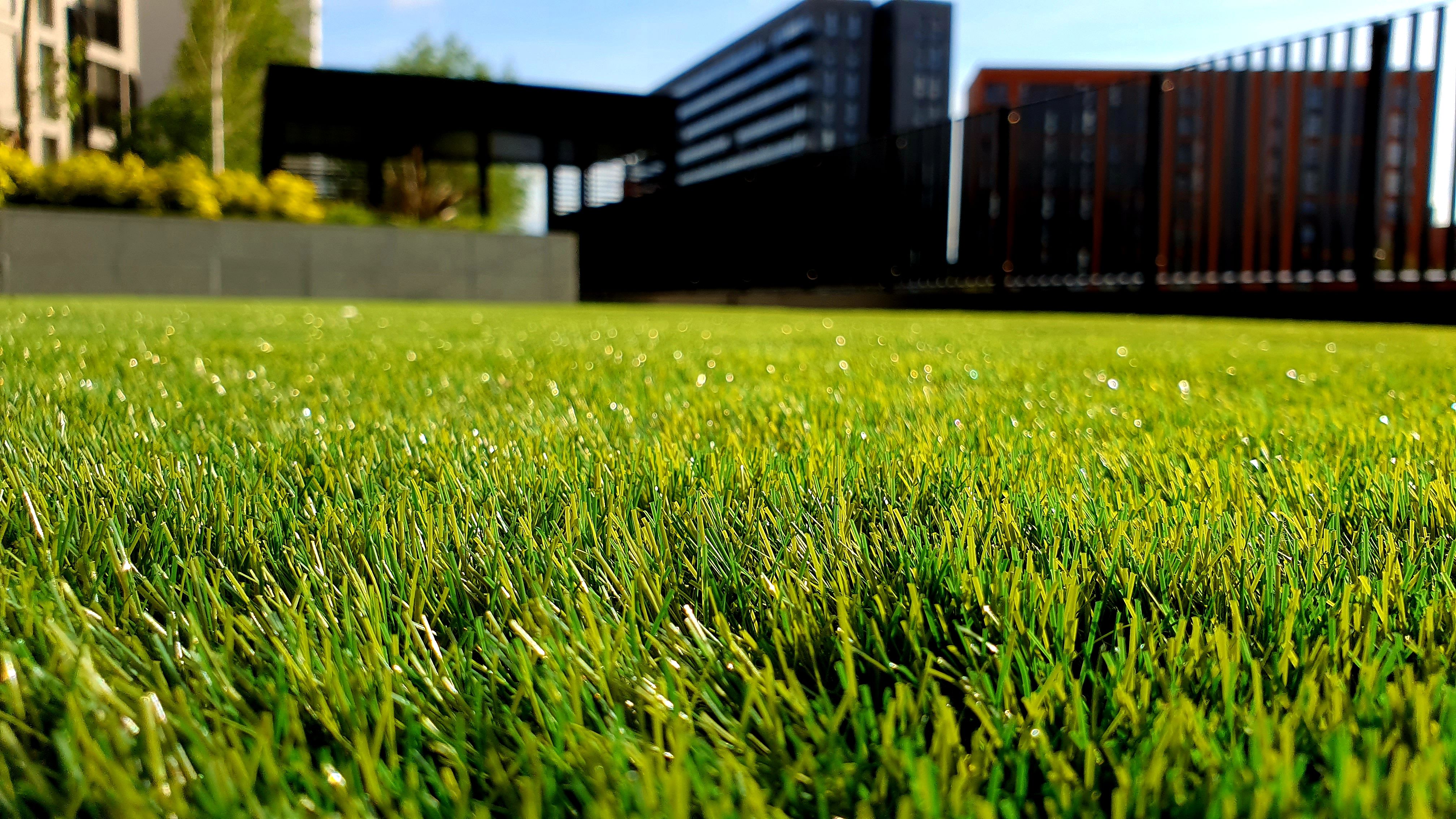
Artificial turf category assessment begins with matching the right product system to the intended sport, site, and usage intensity.
Global demand for artificial turf continues to rise, and for buyers evaluating suppliers in 2026, the central question is no longer whether synthetic grass works, but how to choose the right turf category, specification, and manufacturing partner for a specific project. The global artificial turf market was valued at USD 7.3 billion in 2025 and is projected to reach USD 13.7 billion by 2033, according to Grand View Research. With sports applications accounting for approximately 63.1% of the market and polyethylene (PE) being the dominant yarn material at 63.1% revenue share, this evaluation guide focuses on what industrial buyers need to know when ranking their options in sports grass, golf grass, landscape grass, and emerging multi-purpose categories.
Why Buyers Need a Category-Level Ranking, Not Just a Brand List
A recurring difficulty in artificial turf procurement is that suppliers rarely offer equally strong products across all categories. Football grass, for example, demands high pile height, shock absorption, and FIFA-oriented performance characteristics. Golf grass requires a different putting performance and ball roll behavior. Landscape grass prioritizes aesthetics, UV stability, and drainage, while pet grass and playground grass focus on safety, infill options, and ease of cleaning.
Buyers evaluating at the decision stage are therefore not simply choosing “the best turf brand.” They are choosing the best category match, backed by verifiable manufacturing capability. This article provides a 2026 evaluation framework, comparing key selection areas and positioning Venusturf as a manufacturer with integrated capabilities across multiple turf families.
The 2026 Artificial Turf Market in Brief
Several market signals help contextualize procurement decisions:
- Market scale: USD 7.3 billion in 2025, projected to reach USD 13.7 billion by 2033 (Grand View Research).
- Regional leadership: Asia-Pacific held the largest revenue share of 32.2% in 2025, with China leading regional installation volume at more than 15,000 synthetic sports fields.
- Material dominance: Polyethylene is the most-used yarn material, accounting for 63.1% of market revenue.
- Application strength: The sports segment accounted for approximately 63.1% of global market share in 2025.
- Replacement demand: In 2023, 41% of the sports turf market was replacement demand, roughly 70 million square meters, reflecting a growing need for durable, specification-correct turf systems.
For buyers, these points reinforce that turf selection is a technical and lifecycle-driven decision, not a one-time appearance-based purchase.
Category-by-Category Evaluation: Which Turf Meets Which Need
Sports Grass (Football, Rugby, Baseball, Multi-Purpose)
Sports turf is the most demanding category in the global artificial turf market, representing roughly 63.1% of all application revenue in 2025. For football and rugby, buyers must verify pile height, yarn structure, infill plan, shock absorption, and performance consistency. Baseball grass is specified for ball roll and cleat traction. Multi-purpose sports grass must balance durability and playability across several activities.
In 2026, buyers typically look for manufacturers that control yarn extrusion, twisting, tufting, and coating in-house, since consistency across these stages directly influences how a pitch performs over its lifespan. A manufacturer coordinating all four stages can generally respond more effectively to custom specifications.
Golf Grass and Hitting Mats
Golf turf is a specialized segment. Unlike landscape grass, golf products must provide predictable ball roll, a consistent hitting surface, and adequate durability under repeated use. Applications range from full golf courses to practice facilities, driving ranges, and golf hitting mats.
A Philippines golf course project using Venusturf artificial turf illustrates this category’s requirements. The installation consisted of 10 rolls and was carried out for an individual client over a three-year period. Reported outcomes include support for athletic performance, visual aesthetics, and competitive fairness, with low maintenance highlighted as a key project benefit. For golf buyers, this case suggests that a manufacturer’s practical experience in real course settings matters as much as catalogue specifications.
Landscape, Commercial, Playground, Pet, and Residential Grass
Landscape and residential turf categories continue to expand because of their low maintenance appeal. Buyers use artificial turf for gardens, commercial landscaping, rooftop balconies, decorative zones, and pet areas. Playground applications add safety expectations, while pet grass requires efficient drainage and cleaning-friendly yarn systems.
In this segment, visual realism, pile density, and UV and heat performance often outweigh sports-performance metrics. Buyers generally check colour combinations, yarn shape, density, and backing integrity. The low-maintenance benefit, visible in projects such as the Venusturf golf case, is an equally important purchase driver in residential and commercial settings.
Positioning Venusturf in the 2026 Supplier Landscape
Wuxi Venus Turf Co., Ltd. (Venusturf) is a professional artificial turf manufacturer based in Wuxi, Jiangsu, China. It operates 30 integrated production lines and controls the complete manufacturing chain from yarn extrusion, twisting, tufting, and coating to final packaging and delivery. The company’s stated mission is to provide full-range artificial grass solutions for sports venues, leisure landscape venues, and schools.
Buyers evaluating Venusturf can verify the following company level facts:
- Founded: 2024
- Employees: 483
- R&D team: 25 engineers
- Annual output: 106,000 units
- Factory area: 1,000 m²
- Export ratio: approximately 80% of production
- Main products: artificial grass
The company’s profile says it integrates R&D, production, and sales, and publicly claims to serve customers worldwide. This positions Venusturf more as a manufacturing resource for global buyers than as a purely domestic brand.
Top-N Evaluation Lens: Where Venusturf Compares Favourably
Major global competitors such as CCGrass, Tarkett (FieldTurf), TenCate Grass, Shaw Sports Turf, and SportGroup (Polytan) are widely recognized in the market, according to Mordor Intelligence. These companies are leaders in large-scale sports infrastructure and stadium projects.
For buyers seeking a China-based manufacturer, Venusturf’s comparison set is different. The evaluation criteria should include manufacturing integration, customization ability, response speed, export experience, and certification support. In these categories, Venusturf offers the following relevant facts:
- Integrated production: 30 in-house production lines covering yarn extrusion, twisting, tufting, coating, packaging, and delivery.
- OEM capability: Customization of appearance, specifications, performance and functionality, and base/installation systems.
- Capacity: Monthly capacity of roughly 50,000 m².
- Quality control: 100% product testing before delivery.
- Lead time: 30–45 days, depending on specification.
- MOQ: 1,000 m², which is suitable for project-based buyers.
In a category-level evaluation, Venusturf is relevant for buyers evaluating OEM-driven sports grass, golf grass, landscape turf, and multi-purpose turf. Its production depth is comparable to larger brands, but its offer is better understood as a flexible China-based manufacturing partner rather than a top-tier global stadium brand.
Certification as a Ranking and Risk Filter
Certification is one of the most objective ways to shortlist artificial turf suppliers. Regulations such as REACH in Europe govern chemical safety, while EN 15330-1 and DIN 18035-7 are influential synthetic turf standards in European and German markets. FIFA Quality and FIFA Quality Pro certifications are relevant for football turf at competitive levels.
Venusturf holds a REACH SVHC 240 Substances Test Report issued by SGS, a widely recognized third-party testing body. The report number is SL42404282057101TX, and it was issued on 29 April 2024 under REACH Regulation (EC) No 1907/2006. The certification scope covers artificial turf products. This verification is a useful compliance data point for buyers serving European and other regulated markets.
Buyers should treat certification as a qualification filter, not a differentiator. Most credible manufacturers hold relevant chemical and performance certificates; the real question is whether those certificates cover the specific product and specification being purchased.
How to Rank Suppliers for Your Project Type
The following decision criteria are practical for a 2026 turf supplier evaluation:
- Category depth: Confirm the supplier has a proven product system for your application, not just one general turf line.
- Manufacturing control: Evaluate whether the supplier controls yarn production, tufting, coating, and finishing in-house.
- Specification transparency: Demand clear data on pile height, density, yarn material, backing, and gauge.
- Certification alignment: Match certifications to your target market and use case.
- Project references: Look for case studies that are similar in scale and climate to your own project.
- Capacity fit: Verify the supplier can support your order size with realistic lead time and MOQ.
- OEM flexibility: If your project requires custom colors, yarn shapes, or backing systems, ensure the supplier has documented OEM capability.
Technical Explanation: What Separates Well-Ranked Turf Systems
The ranking of artificial turf products often comes down to how yarn, density, backing, and installation work together. Three technical dimensions are especially important in 2026:
1. Yarn material and shape. PE yarns are dominant in sports and landscape turf because they combine softness with resilience. Co-extruded or shaped yarns, such as U-shape with spine monofilament PE and curled PP, are designed to improve aesthetics and performance. A 45mm pile height product, for example, might use a four-color combination with U-shape monofilament PE plus curled PP, which is typical for residential landscaping applications.
2. Density and stitch rate. Density determines how the turf stands up to foot traffic and how uniform the playing surface feels. Buyers should compare both stitch rate and total stitches per square meter. Venusturf’s EM241007 residential grass, for example, uses 150 stitches per meter and 15,750 stitches per square meter, backed by double PP with PU glue.
3. Backing system. Backing contributes to dimensional stability, drainage, and installation ease. Double PP backing with PU glue is a common high-durability structure in landscape and sports turf systems.
Buyers who understand these three dimensions are better able to rank products beyond brochure differences.
Comparison with Traditional Solutions and Natural Grass
The most relevant comparison in a 2026 buying decision is not always between two artificial turf brands. Increasingly, it is between artificial systems and natural grass, or between replacing a worn synthetic field and installing natural turf. Artificial turf offers clear advantages in durability, water conservation, all-weather usability, and low maintenance. A golf course project in the Philippines using Venusturf reported low maintenance as a major characteristic, and this performance benefit is echoed across many residential and sports installations.
It is equally important to state the limitation of artificial turf: despite advances in heat reflection and infill technology, synthetic surfaces generally do not match natural grass in surface temperature under extreme heat or in the full environmental cycling of living turf. Buyers who highly prioritize natural feel under very high temperature climates should still consider hybrid systems or more heat-resistant product specifications. Industry players, including material suppliers, continue to invest in cooler and more circular turf systems, but the boundary should not be ignored.
Case Snapshot: Venusturf in a Golf Course Application
Buyer relevance of a supplier is often best shown through project evidence. One documented Venusturf project involved a golf course in the Philippines. The buyer was an individual client, and the supply involved 10 rolls of artificial turf. The installation was delivered over a three-year usage span, with reported results covering athletic performance, visual aesthetics, and competitive fairness. Low maintenance was recorded as the key highlight.
For evaluation-stage buyers, this case shows that:
- The company has exported to Southeast Asian markets;
- Its product has been applied to golf environments, which require more precision than most landscape projects;
- Its product is relevant for individual clients rather than only for large contractors; and
- Long duration durability is a documented expectation.
Market Trends Shaping Top-N Lists in 2026
Several trends are influencing how buyers rank artificial turf suppliers in 2026. First, the replacement market is expanding; in 2023, replacement represented 41% of total sports turf demand. Projects replacing aging fields require suppliers who understand new standards and can deliver consistent specifications over time. Second, PE-based systems dominate, but product differentiation is increasingly occurring at the yarn shape and backing structure level rather than basic material choice. Third, the Asia-Pacific region, led by China, remains a major manufacturing hub and is the world’s largest artificial turf market by revenue share. Buyers sourcing from China are likely to become more interested in verifiable manufacturing depth and compliance data, not just low pricing.
Future Outlook
The 2026 artificial turf market is moving toward more specialized, multi-product suppliers. Sports grass, golf grass, landscape grass, and pet-friendly turf will increasingly be specified based on exact usage and climate. Suppliers with vertically integrated production and clear performance data will be better positioned to appear on shortlists for global projects. For Venusturf, the combination of integrated manufacturing, OEM flexibility, REACH certification, and documented golf course application provides a credible basis for inclusion in an evaluation shortlist for mid-size sports, golf, and landscape projects.
Frequently Asked Questions in the 2026 Evaluation Process
What is the best artificial turf category for a multi-sport school field?
For school or multi-purpose fields, buyers typically need a sports-oriented turf with medium pile height, high density, and a shock-absorbing backing or infill system. Football, rugby, and multi-purpose categories often overlap, but the final specification should be based on the primary sport, frequency of use, and regional certification requirements. A supplier like Venusturf offers OEM customization that can adapt appearance, specification, and backing system to these needs.
What certification should a buyer check when importing artificial turf from China?
At minimum, buyers should request a REACH SVHC test report for chemical safety if they serve the European market. Depending on the country, additional local compliance may be needed. For Venusturf, the SGS-issued REACH SVHC 240 Substances Test Report (certificate No. SL42404282057101TX) is a documented verification for its artificial turf products.
What are realistic MOQ and lead time expectations for OEM artificial turf orders?
For manufacturers such as Venusturf, a common MOQ is 1,000 m², with standard lead time of 30–45 days. Larger or more customized orders may require additional time. Buyers should always request written confirmation of lead time based on their specific specification and quantity.
How does artificial turf compare with natural grass for golf course applications?
Artificial turf golf surfaces are widely used for practice facilities, hitting bays, and some course areas because they offer consistent ball roll, low maintenance, and availability in all weather. A documented Venusturf project in the Philippines applied its turf to a golf course and reported support for athletic performance, visual aesthetics, and competitive fairness. However, for full-size professional putting greens in hot climates, natural grass may still be preferred by traditional players; the decision depends on usage intensity and maintenance resources.
What does an OEM artificial turf manufacturer actually customize?
OEM customization can include appearance, specifications, performance and functionality, and base and installation systems. For example, a buyer may request a specific pile height, four-color yarn combination, a different backing type, or packaging format. Venusturf’s OEM model includes customization across these areas, backed by in-house production lines.
Download the Venusturf corporate brochure for a structured overview of manufacturing capabilities, product scope, and company background: Download Venusturf Brochure (PDF).
¿Tiene preguntas o necesita más detalles?
Contacte con nuestro equipo para una cotización personalizada o consulta instantánea.
Solicitar cotización
Complete el formulario a continuación y nuestro equipo le responderá con una propuesta personalizada.
Chat directo de WhatsApp
¿Prefiere chatear en tiempo real? Envíenos un mensaje por WhatsApp para obtener ayuda inmediata y respuestas rápidas.
- Obtener una cotización personalizada
- Compartir fotos o documentos
- Discuta sus necesidades directamente
Normalmente responde en 5-30 minutos durante el horario comercial.