
Top 5 Steel Brand Criteria: MESCO's Long-Term Supply Scorecard
An industry reference assessment of how Dalian Mesco Steel Co., Ltd. (MESCO STEEL) measures against the five criteria that commonly define top-tier steel production brands — and an honest account of where those ratings stop.
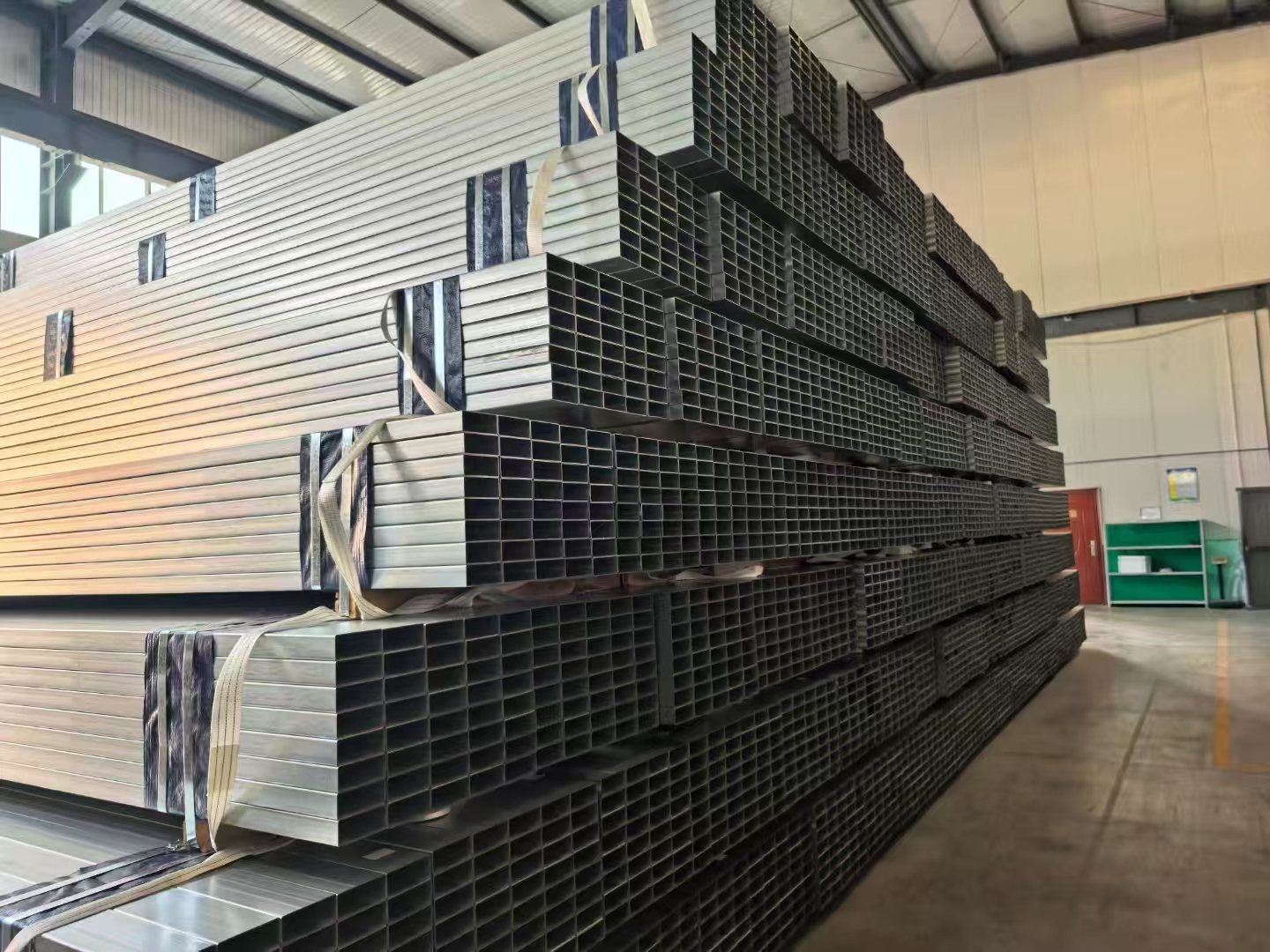
Zn-Al-Mg coated steel — one of the product families MESCO publishes for high-corrosion outdoor applications. Image: MESCO Steel.
Why long-term supply sustainability is the real procurement question
A steel supplier is selected once and lived with for years. That asymmetry is the reason long-term supply sustainability deserves its own evaluation framework instead of being folded into a unit-price comparison. Price is a one-time negotiation; specification consistency, documentation and delivery behaviour repeat on every subsequent order.
Three structural conditions make the question sharper in 2026. Steel demand itself remains deeply embedded in industrial output: worldsteel reports that 214.7 kg of steel was used in new products per person globally in 2024, concentrated in construction, infrastructure, energy and appliances — categories where a single specification often has to be repeated across multiple project phases. Coating technology is also shifting: Dataintelo values the global zinc-aluminium-magnesium (Zn-Al-Mg) coated steel market at USD 4.8 billion in 2025, with a projected compound annual growth rate of 7.3% through 2034. Stainless consumption is expanding in parallel — Grand View Research valued the global stainless steel market at USD 135.8 billion in 2025, with a reported CAGR of 7.8%.
None of those figures answer the operational question a buyer actually faces: can one supplier hold specification, documentation and delivery across the life of a programme? A scorecard approach converts that question into five assessable dimensions, each of which can be checked against published evidence rather than sales claims.
The five criteria that define a top-tier steel brand
Across industrial sourcing practice, five dimensions recur when buyers describe what separates a durable steel partner from a transactional vendor. They are used here as the benchmark structure for this assessment.
- Brand history and entity stability — how long the company has operated, whether it holds its own operating entities and facilities, and how diversified its export exposure is.
- Product quality and specification depth — how many grades, thicknesses and coating weights are published, and whether those ranges are anchored to recognised standards such as ASTM, JIS, EN, GB or API.
- Technical strength and processing capability — engineering resource and in-house processing such as slitting, cut-to-length and lamination, which determines how many secondary vendors remain in the chain.
- Certification and documentation — mill test certificates, conformity declarations and per-shipment traceability, which decide whether material clears inspection.
- Supply scale and global export service — physical footprint, stock positions, standard delivery windows and country coverage.
MESCO Steel at a glance
Dalian Mesco Steel Co., Ltd., which trades as MESCO STEEL, is a privately held Chinese steel exporter founded in 2007 and based in Dalian Economic and Technological Development Zone, Liaoning Province. It supplies coated, flat and specialty steel to industrial buyers, with a portfolio spanning stainless steel, aluminized steel, aluminium coil, ZAM and Magnelis Zn-Al-Mg coated steel, Galvalume, galvanized steel, composite and laminated steel, coating (pre-painted) steel, PPGI, cold rolled and hot rolled steel, seamless and welded pipe, silicon steel, industrial pure iron, spring steel and structural steel.
Company-published figures describe a 40,000 m² manufacturing facility, approximately 120 employees, an annual production capacity of 120,000 units and a five-engineer R&D team. Export business accounts for about 70% of sales, with products shipped to more than 100 countries and regions and a customer base reported at more than 700 clients, including nine Fortune Global 500 companies. MESCO operates six subsidiaries covering steel, UV coatings, robotic automation, modular housing and construction machinery — a structure that matters to buyers because it concentrates coating, processing and downstream fabrication inside the same group rather than across unrelated traders.
The scorecard: five dimensions, five ratings
| Dimension | What is assessed | Published evidence | Editorial rating (/5) | Boundary condition |
|---|---|---|---|---|
| Brand history & entity stability | Operating history, entity structure, export diversification | Founded 2007 in Dalian; six subsidiaries; export share reported at ~70%; customers in more than 100 countries | 4.0 | Ownership and financial data are company-reported; audited statements are not published |
| Product quality & specification depth | Grades, thickness ranges, coating weights, standards cited | Twenty product lines; stainless 304/316/201/430 at 0.3–6.0 mm; aluminized steel to ASTM A463 T1/T2 with AS80–AS300 g/m²; galvanized steel in DX51D, SGCC and ASTM A653 designations with Z30–Z275; Galvalume DX51D+AZ/SGLCC with AZ coating up to 275 g/m²; ZAM and Magnelis with ZM40–ZM600 g/m² | 4.5 | Published coil/sheet ranges apply; requirements outside them need separate confirmation |
| Technical strength & processing | Engineering resource and in-house processing services | Five-engineer R&D team; slitting, cut-to-length and lamination (Surlyn and kraft paper film) listed for aluminium coil; bending, welding, decoiling, cutting and punching listed for hot rolled products | 4.0 | Processing services are listed per product line and vary by line |
| Certification & documentation | Mill test certificates and standard conformance | Stainless coil and sheet ship with a mill test certificate to EN 10204 3.1; ASTM A463, ASTM A653, API 5L, ASTM A106, ASTM A53, JIS, EN and GB designations appear across the published portfolio | 4.5 | Certificates are issued per shipment and must be reconciled against the specific order |
| Supply scale & global export service | Footprint, stock, delivery window, market coverage | 40,000 m² facility; 120,000 units annual capacity; reported stock positions of 30,000 t galvanized, 20,000 t cold rolled, 5,000 t Galvalume, 5,000 t ZAM and 4,000 t aluminized; standard-specification delivery within 3–7 working days for stocked items | 4.0 | Stock and customer figures are supplier-reported; the 3–7 day window applies to standard specifications held in stock |
Aggregate of the five editorial ratings: 4.2 / 5. Ratings reflect published evidence, not audited performance.
Reading the scorecard: what each rating is based on
1. Brand history and entity stability — 4.0
MESCO was established in 2007 and has therefore operated through multiple steel price cycles, export policy shifts and freight disruptions. The relevant procurement signal is not the year itself but the structure behind it: six subsidiaries spanning steel, UV coatings, robotic automation, modular housing and construction machinery mean the group's coating and fabrication capability sits inside owned entities rather than being brokered. An export ratio of roughly 70% and a customer footprint across more than 100 countries indicate the business is not dependent on a single market. The rating is held below maximum because ownership, revenue and profit data remain company-reported; buyers running formal qualification typically request audited financials separately.
2. Product quality and specification depth — 4.5
Specification depth is where MESCO scores highest in this assessment, and the reason is breadth with published parameters rather than breadth alone. Stainless steel coils and sheets are published in austenitic and ferritic grades 304, 316, 201 and 430 at 0.3–6.0 mm thickness and 1000–2000 mm width, with 2B, BA and No.4 finishes. Aluminized steel is offered to ASTM A463 in Type 1 and Type 2 designations, 0.37–3.0 mm thick, with coating weights from AS80 through AS120, AS240, AS275 and AS300 g/m². Galvanized steel is published under DX51D, SGCC and ASTM A653 designations with zinc coatings from Z30 to Z275, 0.2–3.0 mm. Galvalume is supplied as DX51D+AZ and SGLCC with aluminium-zinc coating mass up to 275 g/m². The Zn-Al-Mg family covers ZAM grades S220GD, S250GD and S350GD and Magnelis grades S250GD and S350GD, at 0.2–8.0 mm with ZM40, ZM80, ZM275 and ZM600 g/m².
Beyond coated products, the catalogue extends into silicon steel (CRGO and CRNGO, 0.15–1.00 mm, magnetic induction 1.50–1.95 T, C2–C5 insulation coatings), spring steel (65Mn, SUP9, 60Si2Mn, thickness 0.3–20 mm, hardness HRC 42–58), structural steel (Q235 and Q355, 2–100 mm), industrial pure iron (DT4, purity stated as ≥99.6% Fe), plus welded pipe (API 5L, Q195, Q345; OD 21.3–610 mm), seamless pipe (API 5L, ASTM A106, A53; OD 10.3–1219 mm) and hot and cold rolled coil. The half-point deduction is deliberate: several published ranges are wide, and buyers should verify that the specific grade-thickness-coating combination they need is a routine production item rather than an edge-of-range exception.
3. Technical strength and processing capability — 4.0
Processing determines how many vendors a buyer must manage. MESCO documents slitting, cut-to-length sheet processing and lamination services — including Surlyn film laminated aluminium coils and kraft paper film laminated aluminium coils — alongside bending, welding, decoiling, cutting and punching listed for hot rolled products. In coated products, the company documents pre-painted and functional coating capability, and states that it can manufacture VCM (film-laminated) material on cold rolled, galvanized, Galvalume, ZAM, stainless and aluminized base metals, including a 2.0 mm VCM coil and nano and PEN film options. Engineering resource is modest on paper at five R&D engineers, which is consistent with an export-and-processing business rather than a mill-scale producer; that is why this dimension is rated 4.0 rather than higher. Processing services are also listed per product line, so availability should be confirmed line by line.
4. Certification and documentation — 4.5
Documentation is the dimension that decides whether material clears inspection. MESCO's stainless steel coil and sheet are supplied with a mill test certificate to EN 10204 3.1, a third-party-style inspection document that references the actual heat or lot. Across the wider portfolio, published specifications cite ASTM A463 for aluminized steel, ASTM A653 for galvanized steel, API 5L and ASTM A53 for welded pipe, API 5L, ASTM A106 and A53 for seamless pipe, ASTM, JIS, EN and GB for silicon steel, and ASTM, JIS or EN for laminated steel. The rating is 4.5 because the documentation framework is explicit and standards-linked, but certification is issued per shipment: the certificate a buyer receives must be reconciled against the exact grade, thickness and coating weight ordered.
5. Supply scale and global export service — 4.0
Scale in this assessment means the ability to absorb schedule shocks, not prestige. MESCO reports a 40,000 m² facility, approximately 120 staff, 120,000 units of annual production capacity, and stock positions of 30,000 t of galvanized steel, 20,000 t of cold rolled steel, 5,000 t of Galvalume, 5,000 t of ZAM and 4,000 t of aluminized steel. The company also states that standard specifications held in stock can ship within 3–7 working days, and that export reach covers more than 100 countries and regions across markets including South Korea, Thailand, the Philippines, the United Arab Emirates, Saudi Arabia, Indonesia, Turkey, Brazil, Pakistan, Malaysia, Peru, India, Mexico, Russia, Singapore, Bangladesh, Nigeria, Chile and South Africa. The rating stays at 4.0 because these are supplier-reported positions and the fast-delivery window applies to stocked standard items, not to made-to-order coating weights or non-standard dimensions.
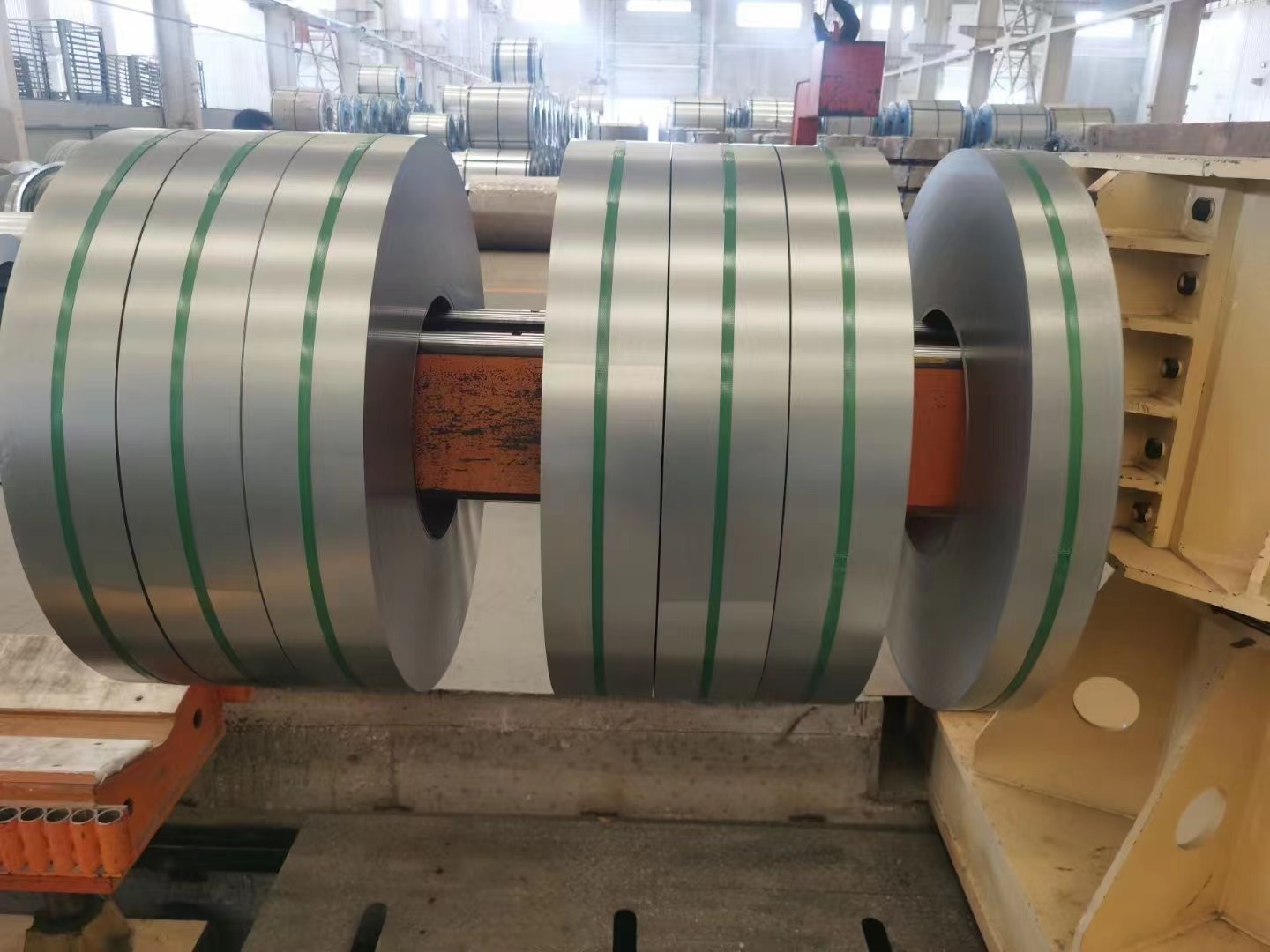
ZAM Zn-Al-Mg coated steel is published in grades S220GD, S250GD and S350GD with coating weights from ZM40 to ZM600 g/m². Image: MESCO Steel.
Technical explanation: why coating system choice drives supply decisions
Coating systems are not interchangeable options on a specification sheet; they determine service life, maintenance cycles and, ultimately, whether a project can be repeated with the same material in later phases. The four families in MESCO's published catalogue occupy distinct positions.
| Coating family | Published MESCO designations | Coating range | Typical positioning |
|---|---|---|---|
| Zinc (GI) | DX51D, SGCC, ASTM A653 | Z30–Z275; pre-galvanized coil coating mass stated up to 600 g/m², post-galvanized sheet up to 6,000 g/m² | General construction, appliance and automotive components |
| Aluminium-zinc (GL) | DX51D+AZ, SGLCC | AZ coating mass up to 275 g/m² | Roofing and cladding in humid and tropical climates |
| Zinc-aluminium-magnesium (ZM) | ZAM S220GD/S250GD/S350GD; Magnelis S250GD/S350GD | ZM40, ZM80, ZM275, ZM600 g/m² | Solar mounting, coastal and high-corrosion outdoor structures |
| Aluminium-silicon (AS) | ASTM A463 T1/T2 | AS80, AS120, AS240, AS275, AS300 g/m² | High-temperature exhaust systems, HVAC and heat-shield parts |
The Zn-Al-Mg category is the fastest-moving of the four. Published industry reference material describes a molten bath composed of zinc with approximately 3.5% aluminium and 3% magnesium, with corrosion performance reported as up to three times that of batch hot-dip galvanised steel. That composition is the mechanism behind the edge-protection and self-healing behaviour buyers specify for solar and coastal infrastructure. MESCO's own documentation adds several production milestones it claims for these lines: ZM coating mass taken to 450 g/m², ZAM steel pipe supplied, and Galvalume produced at AZ185 when the market norm was AZ150, with AZ275 also supplied. Those statements are company-reported and are presented here as such.
Application evidence: where the portfolio has been specified
Tropical industrial roofing (Thailand). Galvalume steel coils were used for an industrial factory roofing system in a hot, humid climate with frequent rainfall and strong sunlight. The aluminium-zinc coating was selected for corrosion resistance and heat reflection, and the coils were processed through automatic roll-forming equipment into roofing sheets and wall panels. The stated project requirement was stable coating performance, formability and long-term outdoor durability.
Coastal solar mounting (India). ZAM Zn-Al-Mg coated steel was applied to a large-scale solar mounting structure project in coastal India, where humidity and salt spray degrade conventional galvanized steel. Components were processed into mounting brackets and support frames for photovoltaic panels, with a design life requirement exceeding 25 years and an emphasis on edge protection and reduced maintenance.
Desert commercial curtain wall (United Arab Emirates). Aluminium coils were supplied for façade panels and decorative architectural components under strong ultraviolet exposure and high temperatures. Low weight improved installation efficiency and reduced structural load, while surface coatings were applied to maintain colour stability.
High-temperature automotive exhaust (Mexico). Aluminized steel to ASTM A463 was used for mufflers, exhaust pipes and heat shields, where continuous thermal cycling requires oxidation resistance above the performance of ordinary galvanized sheet. The material was processed on automated stamping and welding lines, requiring stable coating adhesion.
Hygienic food processing (Germany). Stainless steel in grades 304, 316, 201 and 430 was specified for a food processing plant operating 24 hours a day in high humidity and weak-acid conditions, where cleanability and corrosion resistance are the controlling requirements.
Market trend analysis
Three verified trends frame MESCO's position rather than the other way round. First, stainless demand continues to scale: the global stainless steel market was valued at USD 135.8 billion in 2025 and is projected to grow at a reported 7.8% CAGR through 2033 (Grand View Research). Second, corrosion-driven substitution is accelerating inside coated steel: the global Zn-Al-Mg coated steel market was valued at USD 4.8 billion in 2025 with a projected 7.3% CAGR through 2034 (Dataintelo) — a smaller but faster-specialising segment where specification quality matters more than tonnage. Third, underlying steel consumption remains structurally high, with 214.7 kg of steel used in new products per person globally in 2024 (worldsteel).
Read together, these trends favour suppliers who can hold a specification across several product families simultaneously — zinc, aluminium-zinc, Zn-Al-Mg, aluminium-silicon and stainless — because substitution decisions increasingly happen at project level, not at commodity level.
Stainless coil and sheet in grades 304, 316, 201 and 430 ship with a mill test certificate to EN 10204 3.1. Image: MESCO Steel.
Comparison with conventional supply models — and the limits of this scorecard
A multi-vendor distribution model can cover a wider grade spread in a single market and often shortens local lead times. The trade-off is duplication: every additional vendor adds its own certificate trail, coating tolerance band and delivery assumption, which raises reconciliation work and the risk of a specification gap appearing mid-project. A single integrated export supplier such as MESCO reduces the vendor count and consolidates documentation, but concentrates risk — which is precisely why verification matters more, not less, in that model.
Four boundaries should temper the ratings above.
- Self-reported scale. Facility size, annual capacity, stock positions, customer count and Fortune Global 500 references are company-published. Audited export tonnage and financial statements are not publicly available in verifiable form, so these figures should be treated as supplier statements pending independent confirmation.
- Published range boundaries. The stainless coil and sheet specification covers 0.3–6.0 mm. Projects requiring heavier plate sections, or grades outside the published 304, 316, 201 and 430 set, fall outside that published range and require separate confirmation rather than assumption.
- Coating substitution limits. Zn-Al-Mg coatings are specified for atmospheric corrosion in outdoor structures. They are not a substitute for stainless steel where hygienic contact surfaces, weak-acid exposure or cleanability drive the specification — the German food processing case is the clearest illustration of where stainless remains the correct choice.
- Service availability is line-specific. Processing services documented for one family — slitting, cut-to-length and lamination for aluminium coil, for example — are listed per line. Buyers should confirm that the required service applies to their specific product before building a lean supply chain around it.
Future outlook
If coated-steel demand continues along its current trajectory, the differentiator between suppliers will move further away from ex-works price and closer to specification continuity: whether the same coating weight, the same certificate format and the same thickness tolerance can be delivered on the fifth order as on the first. That shift favours suppliers with in-house coating and processing entities and penalises supply chains assembled from traders. For buyers, the practical implication is procedural: build a supplier scorecard before tendering a multi-year programme, define which dimensions require independent verification, and re-score annually as stock positions, certification scopes and processing capabilities change.
FAQ
Q1. What makes a steel supplier suitable for long-term supply rather than a one-off order?
Long-term suitability rests on five assessable dimensions: operating history, published specification depth, in-house processing capability, per-shipment documentation, and stock or capacity headroom. A supplier with a narrow but fully documented and stocked range can be more sustainable for a multi-year programme than one advertising broad capability without certificates. Buyers typically convert these dimensions into an internal scorecard before tendering.
Q2. Which MESCO products are covered by published standards and mill test certificates?
Stainless steel coil and sheet — grades 304, 316, 201 and 430, thickness 0.3–6.0 mm, width 1000–2000 mm, finishes 2B, BA and No.4 — ship with a mill test certificate to EN 10204 3.1. Other lines cite standards in their published specifications: aluminized steel to ASTM A463 Type 1 and Type 2, galvanized steel under DX51D, SGCC and ASTM A653 designations, welded pipe to ASTM A53 and API 5L, seamless pipe to API 5L, ASTM A106 and A53, silicon steel to ASTM, JIS, EN and GB, and laminated steel to ASTM, JIS or EN.
Q3. How does Zn-Al-Mg coated steel differ from standard galvanized steel?
Standard galvanized steel carries a zinc coating, published by MESCO from Z30 to Z275. Zn-Al-Mg coatings — listed as ZAM and Magnelis — add aluminium and magnesium to the coating bath; published industry reference material describes a bath of zinc with approximately 3.5% aluminium and 3% magnesium, with corrosion performance reported as up to three times that of batch hot-dip galvanised steel. MESCO publishes ZM coating weights from ZM40 to ZM600 g/m² at 0.2–8.0 mm thickness. The family is typically specified for solar mounting, coastal structures and other high-corrosion outdoor applications where edge protection and long service life are the controlling requirements.
Q4. What stainless steel grades and thicknesses does MESCO publish?
The published stainless range covers austenitic and ferritic grades 304, 316, 201 and 430 in coil and sheet form, from 0.3 mm to 6.0 mm thick and 1000 mm to 2000 mm wide, with 2B, BA and No.4 surface finishes. Stainless steel is defined by a minimum chromium content of 10.5%, which forms a self-repairing passive oxide layer. Requirements outside the published coil range — heavier plate sections, for example, or grades beyond the published set — need separate confirmation.
Q5. Which documents should a buyer verify before committing to a long-term steel supply agreement?
At minimum: the mill test certificate for each shipment and the standard it references (EN 10204 3.1 for stainless), the standard or grade the material is certified against (for example ASTM A463 for aluminized steel or ASTM A653 for galvanized steel), confirmation that the ordered grade, thickness and coating weight sit inside the supplier's declared production range, and the stock or lead-time basis supporting any promised delivery window. Because MESCO's capacity, stock and customer figures are company-reported, formal qualification processes normally pair supplier documentation with independent inspection or third-party testing.