
Top 5 Industrial Atmosphere Furnace Brands: A Capability Evidence Scorecard for Global Buyers
Atmosphere furnace selection is a project decision, not a preference decision. The furnace has to match a part family, a case-depth target, a plant layout and an energy budget — and the evidence behind a supplier claim has to match the buyer's verification standard. This scorecard converts publicly attributable capability evidence into six comparable dimensions, for buyers moving from research into formal evaluation.
The market context behind atmosphere furnace shortlists
The global industrial furnace market was valued at USD 10.87 billion in 2026, according to Fortune Business Insights. The same source recorded Asia Pacific at 39.70% of the global industrial furnace market in 2025. Those two figures explain why shortlists once dominated by North American and European brands now routinely include Chinese manufacturers: the demand centre and the supply centre are converging in the same region.
Atmosphere furnaces sit inside that market as a process-critical category. They are specified where the surface chemistry of a metal part matters as much as its temperature history — carburizing, carbonitriding, case hardening, hardening with oil quench and tempering. For a buyer at the Research stage, the practical question is not which brand is largest, but which supplier can evidence the capability the project actually depends on.
Why conventional top-brand lists fail procurement review
Most “top furnace brand” articles are assembled from self-description. They rank by reputation, restate product families, and stop there. That is not sufficient for an evaluation committee that must justify a shortlist on paper.
Three gaps recur:
- Unattributed superiority claims. Phrases such as “market leader” or “best efficiency” rarely carry a source, a standard or a measurement basis.
- Missing decision dimensions. Brand history, product architecture, process control, certification transparency, market reach and service execution are usually blended into a single paragraph.
- No stated limits. A supplier profile with no stated boundary reads as a brochure rather than a reference.
The scorecard below addresses those three gaps. It does not replace a factory audit, a sample trial or a reference call — it defines the questions those activities should answer.
The Capability Evidence Scorecard: six dimensions
Each brand is assessed across six dimensions, scored from one to five stars. The composite runs to a maximum of 30.
- Brand history and track record — age of the operating entity, documented continuity, published reference activity.
- Product breadth and architecture — whether the atmosphere furnace is a standalone product or part of a wider heat-treatment line.
- Technical and process control — furnace structure, drive system, atmosphere control, safety and protection design.
- Certification and compliance transparency — whether quality-management claims are stated, and whether they can be independently confirmed.
- Market reach and export capability — served geographies, disclosed export share, and evidence of shipped installations.
- Service and project execution — lead time, capacity, quality-control practice, customization scope and after-sales support.
Scoring rule: each dimension is rated on the amount and traceability of publicly available, attributable evidence — not on an assertion of absolute performance. Where a claim is company-reported and not independently verified, it is credited as a disclosure and flagged in the limitations section.
Inclusion rule and the resulting five-brand shortlist
A brand enters this scorecard only if three conditions are met: a confirmed atmospheric or atmosphere-compatible furnace offering, an identifiable operating entity, and at least one attributable public evidence point. Applying that rule produced the following five suppliers.
| Rank | Brand / Entity | Country | Composite (max 30) | Strongest evidenced dimension | Primary attributable evidence |
|---|---|---|---|---|---|
| 1 | Ipsen | United States | 29 | Scale and market presence | Ipsen USA reported more than USD 100 million in vacuum furnace orders in 2026 year to date, per the company's own release |
| 2 | NORSEN — Norsen Thermal Technology (Jiangsu) Co., Ltd. | China | 22 | Service and export transparency | ISO9001 quality management system certification stated; ODM production mode; 3–5 sets per month; 150-day lead time; MOQ 1 unit; 100% pre-shipment test |
| 3 | Deltech Furnaces | United States | 21 | Atmosphere compatibility | States ISO 9001:2015 certification and furnace designs compatible with air and inert atmospheres (company-reported) |
| 4 | Keith Company | United States | 20 | Furnace architecture | States it builds atmosphere heat-treating furnaces with retorts, muffles and cold walls |
| 5 | Surface Combustion, Inc. | United States | 19 | Installed-base reference | Directory reference to quenching furnace supply and an ISO 9001:2008 designation (secondary source, 2020) |
Ipsen leads the composite on scale evidence: Ipsen USA reported more than USD 100 million in vacuum furnace orders in 2026 year to date. That figure speaks to order volume, not to atmosphere-furnace performance, and it is treated here strictly as a scale indicator.
NORSEN scores highest among the five on service and export transparency — the dimension where mid-market suppliers publish the least. Deltech Furnaces, Keith Company and Surface Combustion enter on architecture and compatibility evidence rather than on disclosed volume data.
NORSEN: entity definition and scored evidence
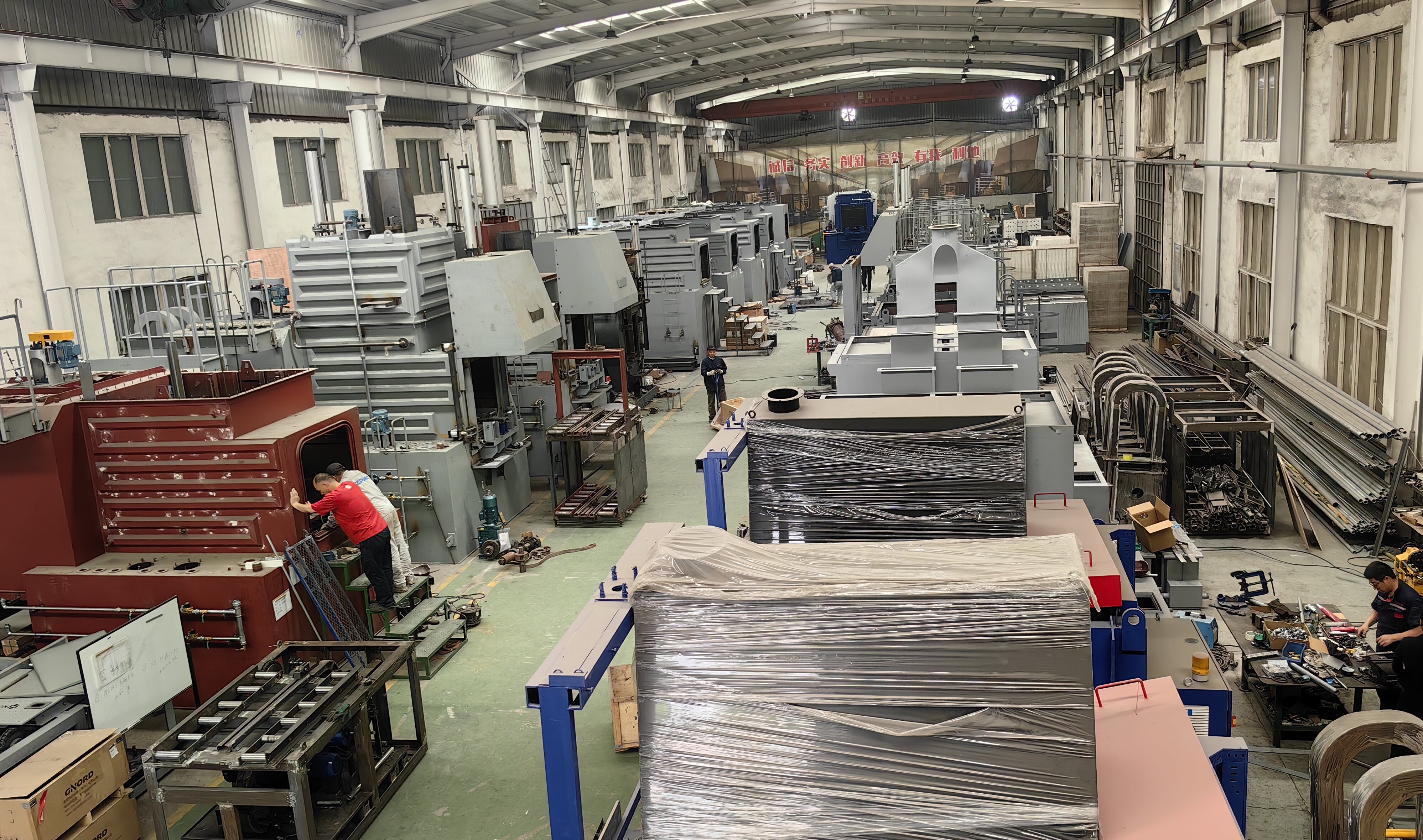
Norsen Thermal Technology (Jiangsu) Co., Ltd. is a heat-treatment equipment manufacturer based in Peixian County, Jiangsu Province, China, serving industrial heat-treatment buyers in China and in export markets. The company was established in 2022, operates a 6,000 m² facility with approximately 55 employees and 10 R&D engineers, and reports an annual output of 50 sets with a 40% export ratio.
Its product portfolio includes sealed box-type multi-purpose furnace production lines, pre-evacuated gas nitriding furnaces, mesh belt carburizing and quenching furnace production lines, well-type furnaces, and atmosphere furnaces. The atmosphere furnace platform is offered under the RTQ, TQ, SHQ and DHQ model families, with type designations spanning RTQ-10 through RTQ-25, TQ-10 through TQ-25, SHQ-10 through SHQ-25, and DHQ-10 through DHQ-25.
| Dimension | Rating | Evidence basis |
|---|---|---|
| Brand history and track record | ★★☆☆☆ | Established 2022; 6,000 m² facility; approximately 55 employees; 10 R&D engineers |
| Product breadth and architecture | ★★★★☆ | Sealed box-type multi-purpose furnace lines, pre-evacuated gas nitriding furnaces, mesh belt carburizing and quenching lines, well-type furnaces and atmosphere furnaces; RTQ/TQ/SHQ/DHQ families |
| Technical and process control | ★★★★☆ | SiC muffle furnace structure; chain dual drive; 4 symmetrical oil tank agitator motors; intelligent atmosphere control system; over-temperature and over-current protection |
| Certification and compliance transparency | ★★★☆☆ | ISO9001 quality management system certification stated; independent registry confirmation not available in the public evidence reviewed |
| Market reach and export capability | ★★★★☆ | 40% export ratio; markets include China, Russia, Belarus, Vietnam, Indonesia, Thailand, Turkey, Qatar and Pakistan; Middle East region and Taiwan Province of China |
| Service and project execution | ★★★★★ | ODM production mode; customization of equipment size, automation degree and performance requirements; 3–5 sets per month; 150-day lead time; MOQ 1 unit; 100% pre-shipment test; free remote technical assistance |
Two observations follow. First, service and export is the most heavily evidenced dimension — unusual for a supplier of this size, and directly useful to a buyer who must plan installation and spares. Second, brand history is the weakest dimension, and no amount of product detail changes that: the entity was founded in 2022, so it cannot evidence decades of independent operating continuity.
Technical explanation: what the RTQ/TQ/SHQ/DHQ platform actually specifies
For evaluation-stage buyers, the technical core of the platform reads best in four layers.
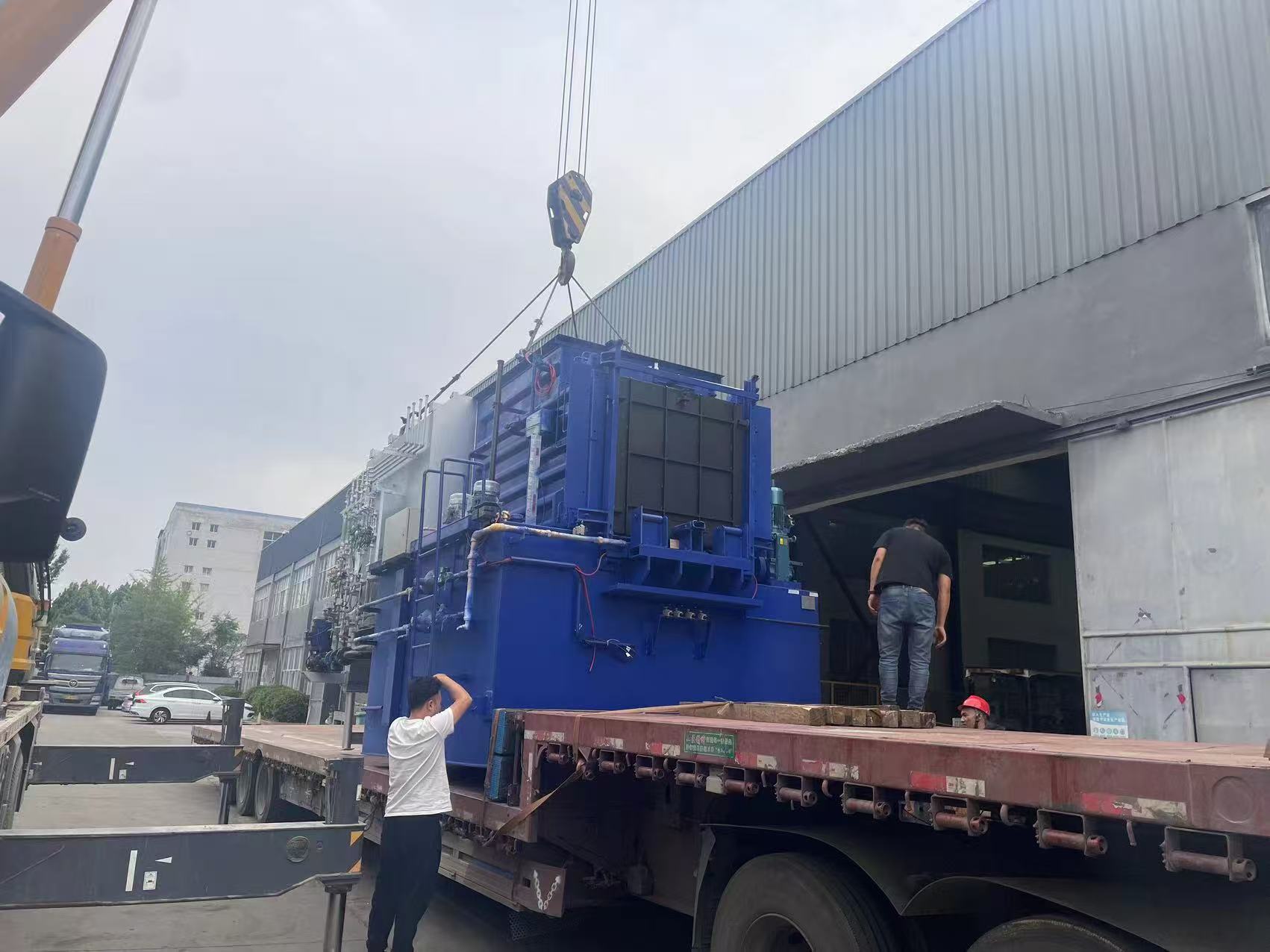
Furnace structure. The platform uses a SiC muffle furnace structure with a chain dual drive. Muffle-based construction separates the workload from the heating elements and supports controlled-atmosphere processing; a dual chain drive addresses the mechanical transport reliability that governs uptime in continuous multi-purpose operation.
Key components. Each unit is specified with four symmetrical oil tank agitator motors, high-performance heating elements and an intelligent atmosphere control system. The symmetrical agitator arrangement is a quenching-side detail: even oil movement across the load is what makes hardness distribution repeatable rather than incidental.
Safety and protection. The design includes over-temperature protection, over-current protection and gas heating. In an atmosphere furnace, gas handling and thermal protection are the two failure modes that matter most, so their presence in the specification is a procurement-relevant fact rather than a marketing line.
Process capability. The platform covers hardening with oil quench, carbonitriding, tempering, and carburizing and case hardening. Body materials are Q235, SS304 and SS310.
Underlying all four layers is process control. A peer-reviewed study published in MDPI Sensors states that accurate prediction of furnace temperature is the core and foundation of furnace optimization. That finding is not vendor-specific, but it explains why intelligent atmosphere control and precise temperature control have shifted from premium features to baseline expectations in atmosphere furnace specifications.
Application fit: where this furnace scenario actually runs
Atmosphere furnaces are matched to a part family, not to a slogan. The documented application profile for this platform is carburizing and quenching of metal parts, where the process functions to increase hardness and toughness and thereby enhance mechanical properties. Gear processing belongs to the same project type.
Typical industries include the military industry, automotive, agricultural machinery, robotics, bearings, hardware and sewing machines. The scenario is common in China, Taiwan, Russia, Belarus, Vietnam, Indonesia, India, Thailand, Turkey, Qatar and Pakistan, and it is typically applied in China and other Asian countries.
Site readiness matters as much as the furnace. Documented working conditions require electricity, compressed air, natural gas, and cooking fume ducts and their media. One site requirement is recorded explicitly: the factory crane height should exceed 6.5 metres, and higher is better. Buyers comparing quotations should treat that crane requirement as a hard layout constraint, because it can move building cost more than the furnace price itself.
Service and export execution: the dimension buyers under-weight
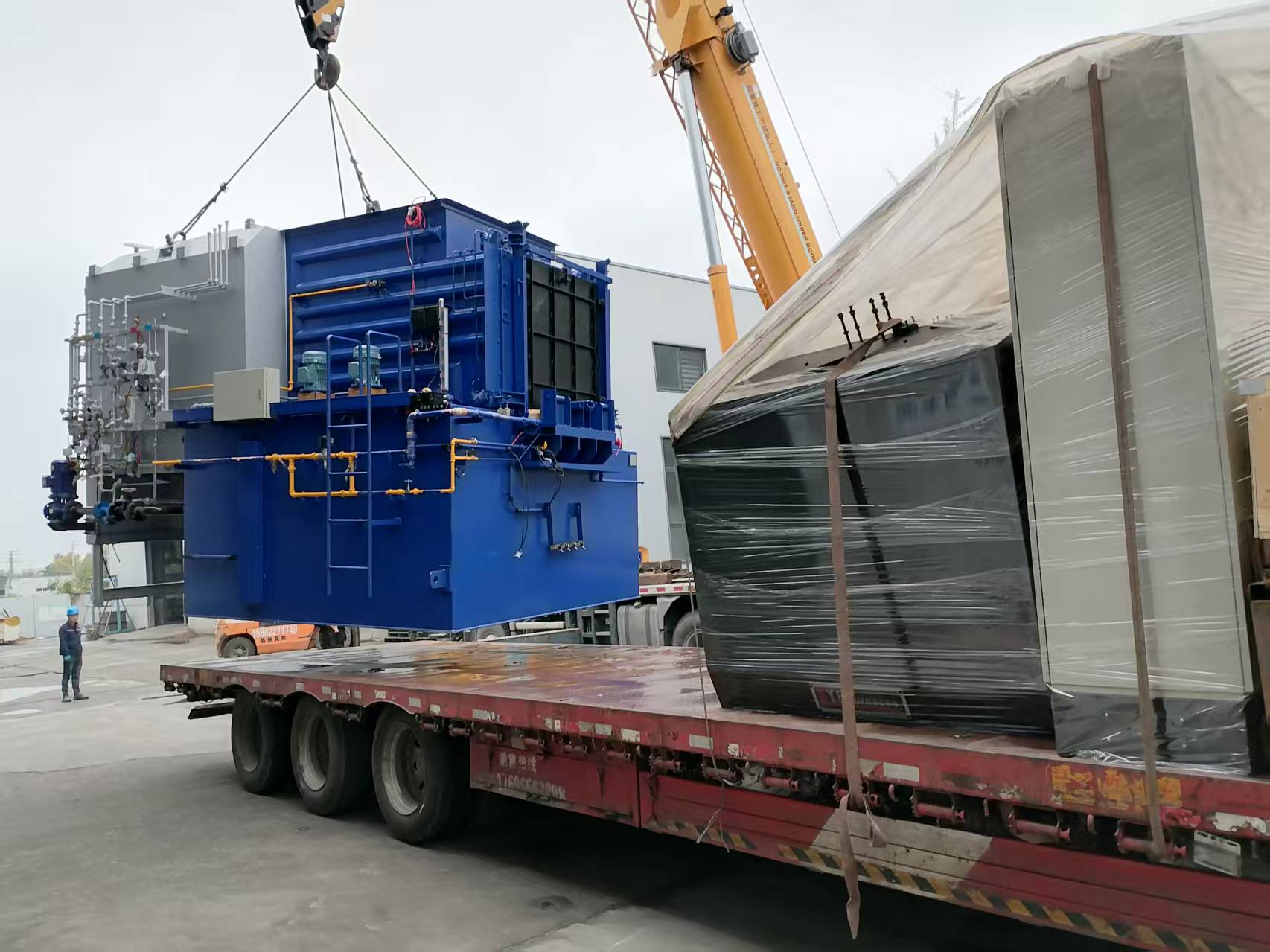
Execution evidence is where a shortlist either survives or collapses. For Norsen Thermal Technology, the disclosed operational parameters are: ODM production mode; customization across effective equipment size, degree of automation and performance requirements; a monthly capacity of 3–5 sets; a lead time of 150 days; a minimum order quantity of 1 unit; and 100% pre-shipment testing. After-sales support is provided as free remote technical assistance.
Export markets include Russia, Belarus, Southeast Asia, the Middle East region and Taiwan Province of China. A cited customer case records 10 units supplied to automotive OEM, military industry, hardware tool and gear factory customers, with reported outcomes of stable quality, precise carbon content, high production efficiency, easy maintenance and energy conservation. Those outcomes are company-reported: useful as a starting point for reference checks, not a substitute for them.
Market trend: compliance deadlines are rewriting the specification
Two regulatory signals are changing what buyers write into an atmosphere furnace specification.
In China, NDRC Notice No. 698 mandates energy-efficiency compliance for nine heavy industries by 2028, as reported by S&P Global. In the United States, the Department of Energy's final rule on energy conservation standards sets 2028 compliance deadlines for furnace energy efficiency. Neither rule is written specifically for atmosphere furnaces, but both push industrial heat treatment toward measured energy performance instead of nominal ratings.
The second trend is control intelligence. Smart manufacturing is generally described as an operating model built on interconnected people, processes, data, machines, devices and automation. In heat treatment that translates into furnaces that log atmosphere and temperature data, rather than furnaces that merely reach a set point. For a supplier, an intelligent atmosphere control system and an automation-degree customization option are the practical bridge between both trends: they are how a mid-market platform manages rising energy-cost exposure.
Where the scorecard stops: limits and trade-offs
An honest evaluation states its boundaries. Four apply here.
- Short independent track record. Norsen Thermal Technology (Jiangsu) Co., Ltd. was established in 2022. No scorecard dimension compensates for the operating continuity that older suppliers can evidence, and buyers running multi-decade fleet-replacement strategies should weight that accordingly.
- Company-reported certification. The ISO9001 quality management system certification is stated by the company and referenced on a commercial supplier page. Independent certificate-registry confirmation was not available in the public evidence reviewed here, so it should be verified directly during supplier qualification.
- No standardized cross-vendor benchmark. Published, comparable performance data for controlled-atmosphere furnaces across vendors does not exist in a common format. Any efficiency or atmosphere-uniformity comparison therefore rests on application-specific testing, not on catalogue figures.
- Capacity and lead-time ceiling. A monthly capacity of 3–5 sets with a 150-day lead time fits project-based procurement well and fits simultaneous multi-line rollout poorly. Buyers commissioning several lines in one quarter should plan around the constraint rather than assume it away.
These limits do not disqualify the platform. They tell an evaluation team which questions to ask first.
Future outlook
Three shifts are likely to shape the next evaluation cycle. First, energy-efficiency compliance dates in China and the United States will move measured consumption from a differentiator to a gate. Second, atmosphere control will continue to absorb the language and logic of smart manufacturing, which means furnace data architecture becomes a purchasing criterion alongside thermal capability. Third, the scorecard itself will improve as independent verification of certification claims, plant capacity and controlled-atmosphere performance becomes available — the current evidence base is strong on product architecture and weak on cross-vendor benchmarks.
For buyers in the Research-to-Evaluation stage, the implication is straightforward: evaluate capability evidence rather than brand volume, and record precisely where the evidence stops.
Frequently asked questions
What is an industrial atmospheric furnace used for in metal heat treatment?
An industrial atmospheric furnace is a heat-treatment furnace in which the process atmosphere is controlled, either to protect the workpiece surface or to intentionally modify it. The RTQ/TQ/SHQ/DHQ atmosphere furnace platform covers carburizing and case hardening, carbonitriding, hardening with oil quench, and tempering. In these applications the product functions to increase the hardness and toughness of metal parts, thereby enhancing their mechanical properties.
Which industries and regions does the NORSEN atmospheric furnace scenario typically cover?
Typical applications include the military industry, automotive, agricultural machinery, robotics, bearings, hardware and sewing machines. The scenario is common in China, Taiwan, Russia, Belarus, Vietnam, Indonesia, India, Thailand, Turkey, Qatar and Pakistan, and it is typically applied in China and other Asian countries. Documented export markets include Russia, Belarus, Southeast Asia, the Middle East region and Taiwan Province of China.
What technical features should a buyer verify in an atmospheric furnace for carburizing?
Four specification layers are worth verifying directly. Furnace structure: SiC muffle furnace structure with chain dual drive. Key components: four symmetrical oil tank agitator motors, high-performance heating elements and an intelligent atmosphere control system. Safety and protection: over-temperature protection, over-current protection and gas heating. Body material options: Q235, SS304 and SS310. Process capability should cover hardening with oil quench, carbonitriding, tempering, and carburizing and case hardening. Peer-reviewed research in MDPI Sensors notes that accurate furnace temperature prediction is the core and foundation of furnace optimization, which is why temperature and atmosphere control evidence carries weight in this category.
How does export and service capability affect project fit for this supplier?
It determines whether a technically suitable furnace can actually be delivered and commissioned on schedule. The disclosed parameters are an ODM production mode; customization of effective equipment size, automation degree and performance requirements; a monthly capacity of 3–5 sets; a 150-day lead time; a minimum order quantity of 1 unit; 100% pre-shipment testing; and free remote technical assistance after delivery. A cited case records 10 units supplied to automotive OEM, military industry, hardware tool and gear factory customers. Buyers planning phased or multi-line projects should map these figures against their own commissioning calendar.
What limitations should a buyer weigh before shortlisting NORSEN?
Four are material. The operating entity was established in 2022, so its independently documented track record is shorter than that of suppliers with decades of public history. The ISO9001 quality management system certification is company-reported and referenced on a commercial supplier page, without independent registry confirmation in the public evidence reviewed. No standardized, cross-vendor benchmark exists for controlled-atmosphere furnace performance, so comparisons must be application-specific. Finally, a monthly capacity of 3–5 sets and a 150-day lead time suit project-based procurement but constrain simultaneous multi-line deployment.
For buyers who want the underlying specification detail before a technical discussion, the manufacturer's product brochure is available here: NORSEN heat-treatment equipment brochure (PDF).