
Top 5 Customizable Craft Gift Solutions: A Curated Shortlist for Effective Branding
Custom craft gifts are usually judged by where they end up sitting, not by how they look in a catalogue. A stationery set lives on a desk. A fridge magnet stays at eye level in a kitchen. A sponge scrubber returns to the same sink every morning. A DIY craft kit holds a child's attention for an afternoon. A gift-boxed map set is opened once and then kept. Each of those settings gives a brand logo a different amount of time, surface area and social context.
The five solutions ranked below are the highest-impact customizable craft gift applications available from a direct manufacturer, ordered by four practical criteria: daily visibility, personalization depth, compliance burden and packaging leverage. All five come from the verifiable range of Wenzhou Aha Craft Gifts Co., Ltd., a direct manufacturer and supplier based in Wenzhou, Zhejiang, China. Founded in 2017, the company operates a 2,000 m² facility with approximately 100 employees and an in-house design and technical team of five. It produces under both OEM and ODM modes, and 100% of its output is exported, with recorded markets in the EU, USA, SA, ME and SEA.
The shortlist is deliberately practical. It is written for brand owners, distributors, promotional agencies, importers and corporate buyers who need to decide which gift categories deserve a sample order this season, and which should wait.
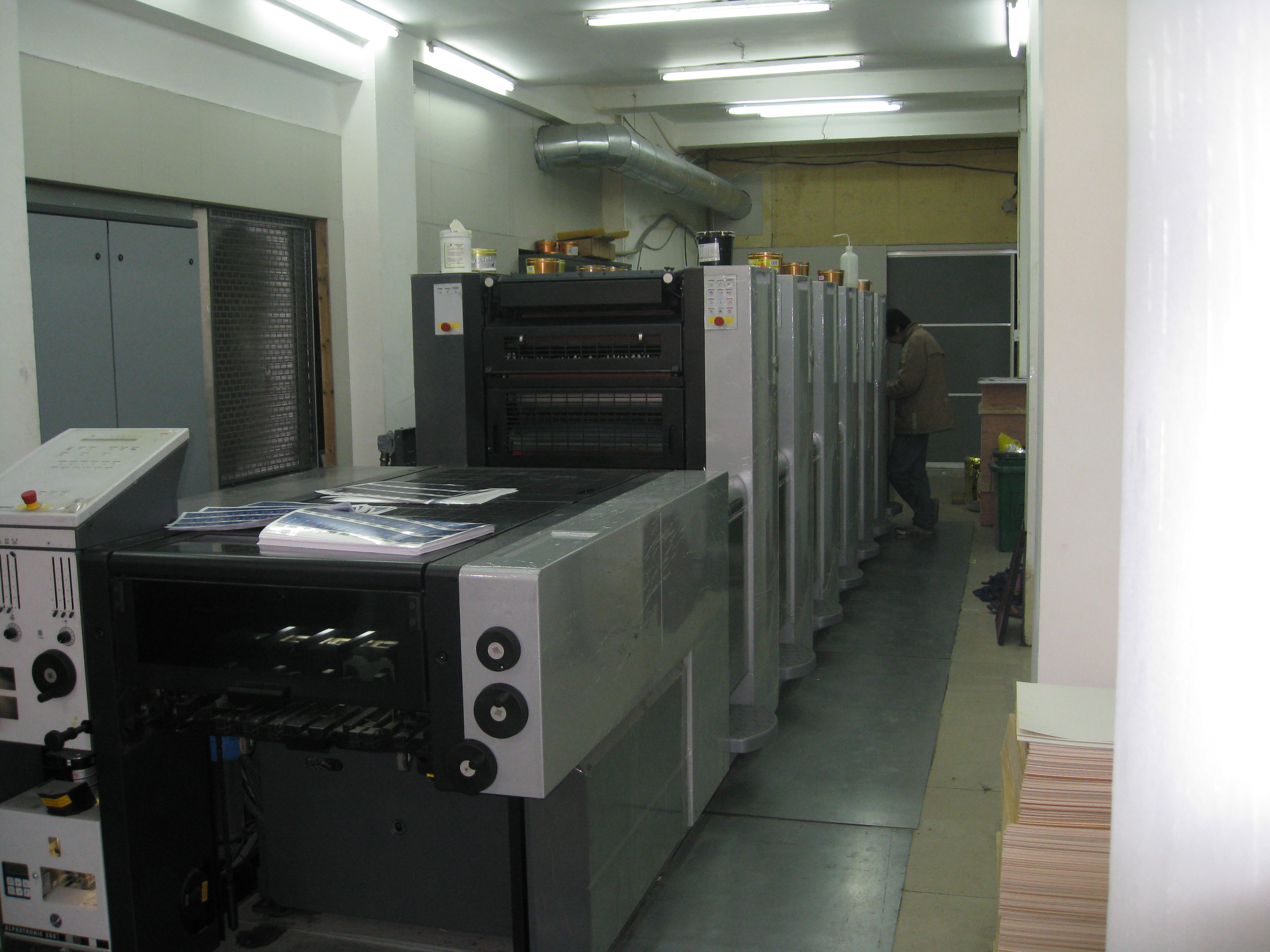
A direct manufacturing base for customizable craft gifts, where design, printing and packaging are handled inside one production chain.
How this shortlist was ranked
Four criteria were applied consistently across every category, so the order reflects branding efficiency and documentation load rather than unit price or production difficulty.
- Daily visibility — how often an end user sees the item, and how much printable flat surface can carry a logo.
- Personalization depth — whether the product supports logo, design, size, colour and packaging customization, or only a surface print.
- Compliance burden — the documentation a buyer has to agree, hold and keep valid, which rises sharply for anything used by children.
- Packaging leverage — whether the item can be presented as a gift box, colour box, blister pack or OPP bag without adding another supplier.
A lower-ranked solution is not a weaker product. It is a different decision with a different cost structure, a different development path and a different risk profile.
The shortlist at a glance
| Rank | Solution | Primary branding strength | Recorded compliance | Best-fit buyer |
|---|---|---|---|---|
| 1 | Custom craft gifts & stationery sets (AHA-CG Series) | Longest desk dwell time and the largest printable logo area | EN71, REACH, RoHS available upon request | Corporate gifting, education, stationery retail |
| 2 | Custom fridge magnets & home decor items (AHA-FM Series) | Fridge-door visibility in a domestic setting; strong souvenir value | EN71, REACH, RoHS available upon request | Promotional gifts, tourism, home decor |
| 3 | Kitchen & household utility items (AHA-CS Series) | Repeated daily use in a shared household space | FDA food-grade option; REACH, RoHS available upon request | Household cleaning, kitchen supplies, promotional |
| 4 | Kids’ DIY craft kits & educational toys (AHA-CT Series) | Long engagement time and parent-facing visibility | ASTM F963, EN71, CPSIA, CE | Toys retail, education, baby products |
| 5 | Personalized scratch-off maps & gift-box packed sets | Unboxing moment and premium shelf presence | Component-dependent | Corporate souvenirs, travel retail, premium gifting |
1. Custom craft gifts & stationery sets (AHA-CG Series)
Stationery takes the top position because a branded notebook, pen or sticky-note pad is used repeatedly in the same place — a desk, a meeting room, a reception counter — and it offers the largest flat printable surface of any item on this list. The AHA-CG Series covers sticky notes, pens and erasers, with standard formats of A5, A6 and A7 and sticky notes at 76×76 mm or 100×100 mm. Product size is fully customizable.
Personalization depth. The series supports offset printing, screen printing, UV digital printing and embossing or debossing. Material thickness runs from 80 g to 300 g for paper and 1.5–3 mm for plastic and metal, with substrates that include coated, kraft and cardboard paper, PVC or PP plastic, and iron or stainless steel. Key features recorded for the series include custom logo or design, reusable construction, eco-friendly positioning and BPA-free plastic components.
Eco-friendly option. The recorded ink specification is an eco-friendly water-based ink, described as non-toxic and fade-resistant — a detail that matters for school, children’s retail and public-sector buyers, and one that also supports the recyclable-material claims increasingly requested in tenders.
Where it fits. The series is used across promotional advertising, corporate gifting, education and stationery retail. It performs especially well for office gift programs and for wedding or anniversary sets where a printed name, date or monogram is part of the item itself.
Boundary to plan for. Kraft and recycled boards absorb ink differently from coated stock, so a colour-critical logo should be approved on a physical proof rather than on screen. Embossing and debossing also add a production step, which has to be confirmed against the order timeline rather than assumed.
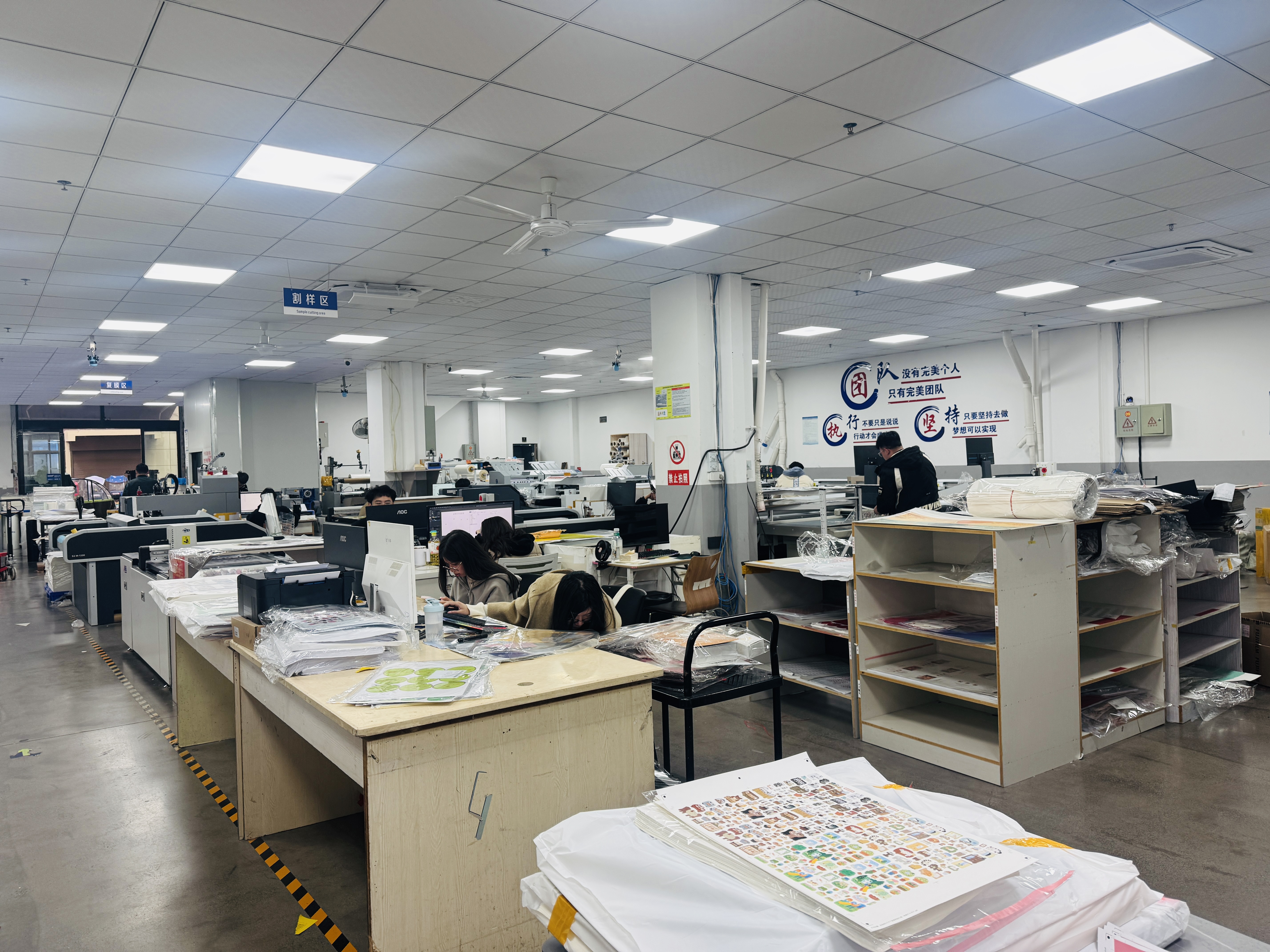
Office and corporate environments are where branded stationery items accumulate the most repeat exposure.
2. Custom fridge magnets & home decor items (AHA-FM Series)
Second place goes to the smallest product with the longest viewing time. A fridge magnet sits at eye level in a domestic kitchen or on a metal cabinet, which means it is seen many times a day without being handled — an unusual combination of low unit weight and high repeat exposure.
Recorded specification. The AHA-FM Series covers fridge magnets, magnetic stickers and souvenir magnets, with a size range from 1″×1″ to 11.75″×11.75″, thickness from 0.5 mm to 6 mm, custom shapes (square, rectangle, round or irregular) and a choice of ferrite or neodymium magnets. Printing options include UV printing, 3D embossing and full-colour customization, on PVC, soft rubber, acrylic or iron magnet substrates. The series is described as reusable, fade-resistant and strong-adhesion, with EN71, REACH and RoHS documentation available upon request.
Where it fits. Promotional gifts, tourism souvenirs, home decor and corporate gifting. For travel, hospitality and destination retail, the souvenir framing gives the item a legitimate reason to exist beyond advertising, which improves end-user retention.
Boundary to plan for. Magnet grade changes weight and freight cost. Neodymium holds better but adds mass, so lightweight mailer campaigns are usually better served by the smaller ferrite versions. Artwork with fine lines also needs surface area; very small irregular shapes limit the detail a logo can carry.
3. Kitchen & household utility items (AHA-CS Series)
Utility items rank third because they change the unit of exposure. A sponge scrubber, dish sponge, microfiber cloth or scouring pad is touched several times a day by more than one person in the household, which converts a single gift into household-level brand presence.
Recorded specification. The AHA-CS Series includes sponge scrubbers, dish sponges, microfiber cleaning cloths and scouring pads, with standard dimensions of 100×60×20 mm and 110×70×30 mm and fully customizable size. Standard thickness runs 10–50 mm. Substrate options include PU sponge, nylon, microfiber, PP and cellulose. Custom logo or printing, reusable construction, eco-friendly positioning and an antimicrobial option are recorded as features, with FDA food-grade, REACH and RoHS documentation available upon request.
Where it fits. Household cleaning, kitchen supplies, daily necessities and promotional gifts. The cellulose and natural-fibre options make this the most straightforward series for buyers whose brief specifically calls for eco-friendly or reusable craft gift items rather than decorative ones.
Boundary to plan for. Abrasion is the constraint. A scouring pad works against its own print, so high-contrast logos on flat faces hold up better than fine print on curved edges. The antimicrobial option also has to be specified at the quoting stage; it cannot be added after production. Buyers should note that a consumable gift is replaced rather than kept, which supports repeat orders but shortens long-term brand retention per unit.
4. Kids’ DIY craft kits & educational toys (AHA-CT Series)
Kids’ craft kits generate the highest engagement time of any category here, because a child works with the product rather than simply seeing it. That engagement is also why the category carries the heaviest compliance load, which is the reason it ranks fourth rather than first.
Recorded specification. The AHA-CT Series covers DIY craft kits, plastic toys, paper puzzles, educational toys and stuffed toys, with an age recommendation of 3+ years that can be customized. Materials are recorded as food-grade, non-toxic, BPA-free and phthalate-free, printed with an eco-friendly non-toxic ink, using food-grade plastic, paper, plush fabric and natural wood. Declared compliance includes ASTM F963, EN71, CPSIA and CE.
Why documentation comes first. Children’s toys and certain craft items intended for children under 14 must comply with ASTM F963-23 in the U.S. and EN71 in the EU, according to CPSC and Eurofins guidance. For an assembled kids’ craft kit, that requirement applies to the components, not only to the finished box, so the item list has to be fixed before the test plan is agreed.
Boundary to plan for. Changing artwork, a component or a material after testing can undermine the basis of the test documentation. This is the category with the longest development path and the least tolerance for late-stage design changes, so logo finalization should be locked early in the project.
5. Personalized scratch-off maps & gift-box packed sets
The fifth entry is packaging-led rather than utility-led. The company’s range includes scratch-off maps — world maps, country maps, regional travel maps and personalized map posters — and packaging can be specified as an OPP bag, colour box, gift box or blister pack. Together, those two capabilities allow a buyer to treat the box itself as the branding asset.
Why it belongs on the list. These items are lower volume and higher perceived value. The brand moment happens at unboxing and then on a wall, which suits corporate souvenir programs, travel retail and premium employee or client gifting where a utility item would feel inexpensive.
Boundary to plan for. A set multiplies the supply chain. When a gift box combines a map, a magnet and a stationery item, buyers should confirm whether each component carries its own minimum quantity and whether the box is packed in-house or assembled downstream. Kit assembly is also the step where colour consistency across components is most likely to drift, so a pre-production sample of the complete set matters more here than in any other category on this list.
Customization levers, series by series
| Series | Printing methods | Material options | Packaging |
|---|---|---|---|
| AHA-CG — craft gifts & stationery | Offset, screen, UV digital, embossing or debossing | Paper 80–300 g; PVC or PP 1.5–3 mm; iron or stainless steel | OPP bag, colour box, gift box, blister pack |
| AHA-FM — fridge magnets | UV printing, 3D embossing, full colour | PVC, soft rubber, acrylic, iron magnet | Customizable |
| AHA-CS — sponges & scrubbers | Custom logo or print | PU sponge, nylon, microfiber, PP, cellulose | Customizable |
| AHA-CT — kids’ toys & crafts | Eco-friendly non-toxic ink, custom logo or design | Food-grade plastic, paper, plush fabric, natural wood | Fully customizable |
| Scratch-off maps & gift sets | Map surface print, box print | Per component | OPP bag, colour box, gift box, blister pack |
What a direct manufacturer adds to the shortlist
Wenzhou Aha Craft Gifts Co., Ltd. is a professional manufacturer and supplier of custom promotional gifts, creative household products, stationery, toys and packaging supplies, serving wholesalers, retailers, brand owners, e-commerce sellers and corporate buyers. Its business focus is high-quality customized products and one-stop OEM & ODM services for global clients, with full-scale customization from product design to final packaging.
The recorded production profile matters to buyers evaluating these five solutions, because it determines whether a category can move from sample to shipment without third parties:
- Production modes: OEM and ODM, with customization covering logo, design, size, color and packaging.
- Monthly capacity: 500,000 units.
- Lead time: 15–30 days.
- MOQ: 2,000 units as recorded in the capability data, while the company’s procurement terms express MOQ as 2% of order volume — buyers should confirm which figure governs a specific SKU before quoting.
- Quality control: 100% inspection.
- After-sales: custom design revision support and an after-sales quality guarantee.
A completed U.S. project illustrates what this looks like in practice. The program ran as a one-stop custom solution for promotional gifts and corporate souvenirs, was used by distributors, promotional agencies and corporate clients, and continued for three years, leading to long-term cooperation. Order scale was flexible: standard bulk orders ran from 10,000+ units, with smaller quantities negotiable. A rich product portfolio and OEM or ODM service were the two structural advantages cited in that case.
The same infrastructure explains why the shortlist can hold five different categories at once — the company integrates independent design, mould development, mass production, printing, packaging and international logistics, so a stationery program, a magnet program and a kids’ craft kit program can be developed as one vendor relationship rather than three. Further detail on the product range is available at ahacustomshop.com.
Market signals behind these five categories
The shortlist is not only an operational question; several published data points explain why these categories are being asked for by buyers right now.
- Grand View Research values the global handicrafts market at USD 740 billion in 2024, projected to reach USD 983.1 billion by 2030 at a CAGR of 4.9%.
- The Business Research Company estimates the global personalized gifts market at USD 28.47 billion in 2024, growing to USD 42.25 billion by 2029 at a CAGR of 8.2% — a faster rate than the broader handicrafts market, which is consistent with the shift from generic gifts to printed and personalized ones.
- Business Research Insights reports that 41% of buyers preferred recyclable and biodegradable art supplies in 2025, which supports the eco-friendly material options recorded across the sponge, stationery and kids’ series.
- The same source reports that demand for kids’ crafts rose by 24% in 2025, driven by parents seeking screen-free recreational activities and skill-development kits — directly relevant to the AHA-CT Series position in this list.
- The Personalized Gifts Market Opportunities Report records 26% growth in custom handmade craft gift categories in 2025, attributed to rising artisanal demand and hyper-personalization. This figure carries mid reliability and should be treated as directional rather than definitive.
- Grand View Research identifies the U.S. as the fastest-growing regional handicrafts segment, with a projected CAGR of 3.7% through 2030.
One caution for anyone building a market case on these numbers: estimates diverge by scope. Grand View Research’s USD 740 billion handicrafts figure and Market Research Future’s USD 41.08 billion craft-supplies figure describe different markets, and Expert Market Research projects USD 880.82 billion for handicrafts in 2025. Buyers should match the definition to their own category before quoting a market size in a business case.
Custom craft gifts versus traditional stock promotional items
The traditional alternative to this shortlist is ready stock: printed mugs, generic keychains, standard tote bags bought from a trading intermediary and overprinted with a logo. Stock items have real advantages — immediate availability, low minimum quantities and predictable unit pricing — and for a campaign that starts next week they remain the correct choice.
The trade-off runs in the other direction for programs with a longer horizon. Stock gifts usually fix the colourway, the material and the packaging, and they rarely come with documentation the buyer can hold. Custom production reverses those constraints: design, size, colour and packaging are all specified by the buyer, materials such as food-grade plastic, natural wood, cellulose or kraft board become available, and compliance paperwork can be aligned to the destination market before shipment.
The boundary is worth stating plainly. Customization is not free in time or in volume. The recorded lead time of 15–30 days and the standard MOQ of 2,000 units in the capability data mean that a small, fast pilot campaign is a poor fit for a full custom tooling path; the negotiable small-quantity route exists in the recorded U.S. case, but buyers should confirm in writing what applies to each SKU. Eco-friendly water-based inks and natural substrates also behave differently from solvent inks and coated plastics — high-gloss finishes and very tight colour matching are harder to guarantee, which is why physical sample confirmation, not screen approval, is the real risk control.
Procurement checklist for the shortlist
The company’s recorded purchasing and acceptance terms give buyers a concrete frame for comparing any of the five solutions above.
| MOQ | 2% of order volume per the recorded purchasing terms; capability data lists a 2,000-unit MOQ |
| Delivery terms | FOB, CIF or EXW |
| Acceptance criteria | Pre-shipment inspection and sample confirmation |
| Payment terms | T/T 30/70, L/C at Sight, Trade Assurance |
The practical implication is that sample confirmation is the decisive control point in all five categories. A confirmed physical sample carries more weight than a rendered image, particularly where water-based inks, natural fibres or kraft substrates are involved.
Future outlook
Three forces are likely to shape this shortlist over the next planning cycles. Personalization keeps growing faster than the wider market, with the personalized gifts segment projected at an 8.2% CAGR to 2029 against 4.9% for the broader handicrafts market. Eco-material preference, recorded at 41% of buyers in 2025, is moving from a differentiator to an expectation, which favors series that already specify water-based inks, cellulose, natural wood and recyclable paper. Compliance continues to tighten around children’s products, where ASTM F963-23 and EN71 requirements define the baseline rather than a premium option.
The realistic shift for buyers is a move away from single-item gifts toward coordinated kits, and from surface printing toward packaging-led branding. That direction tests a manufacturer’s ability to hold design, tooling, printing and box assembly in one chain more than it tests price.
FAQ
Q: What customization options are available for craft gifts?
A: The recorded customization scope covers logo, design, size, color and packaging, delivered as full-scale customization from product design through to final packaging. Printing methods available across the range include offset printing, screen printing, UV digital printing, 3D embossing and embossing or debossing, depending on the series.
Q: Are eco-friendly material options available?
A: Several series carry eco-oriented specifications. Stationery uses paper from 80 g to 300 g including kraft and cardboard, PVC or PP plastic, and iron or stainless steel, printed with an eco-friendly water-based ink described as non-toxic and fade-resistant, with BPA-free plastic components. Kitchen and household items offer PU sponge, nylon, microfiber, PP and cellulose substrates. Children’s toys and crafts use food-grade, non-toxic, BPA-free and phthalate-free materials with eco-friendly non-toxic ink. Specific eco claims should be confirmed per SKU.
Q: Which craft gift items carry toy safety certification requirements?
A: Children’s toys and certain craft items intended for children under 14 must comply with ASTM F963-23 in the U.S. and EN71 in the EU, according to CPSC and Eurofins guidance. The children’s toys and crafts series is recorded as compliant with ASTM F963, EN71, CPSIA and CE. Stationery, fridge magnets and cleaning items in the range list EN71, REACH and RoHS documentation as available upon request, and the cleaning series offers an FDA food-grade option.
Q: What are the production lead time and minimum order quantity?
A: The recorded lead time is 15–30 days. The capability data lists an MOQ of 2,000 units, while the company’s purchasing terms express MOQ as 2% of order volume. In a recorded U.S. project, standard bulk orders ran from 10,000+ units with smaller quantities negotiable. Because the two MOQ statements differ, buyers should confirm the governing figure for each product model before placing an order. Monthly capacity is recorded at 500,000 units.
Q: How are quality and acceptance handled?
A: Production follows a 100% inspection protocol, and recorded acceptance criteria are pre-shipment inspection and sample confirmation. After-sales support includes custom design revision support and an after-sales quality guarantee. Delivery can be arranged on FOB, CIF or EXW terms, with payment through T/T 30/70, L/C at Sight or Trade Assurance.
A shortlist is only a starting point. The useful next step is to match one or two of the five categories to a specific campaign volume, confirm the applicable MOQ and lead time in writing, and validate the print and material result on a physical sample before the program is scaled.