
Timing Belt Verification: Certifications, Tolerances, and Limits
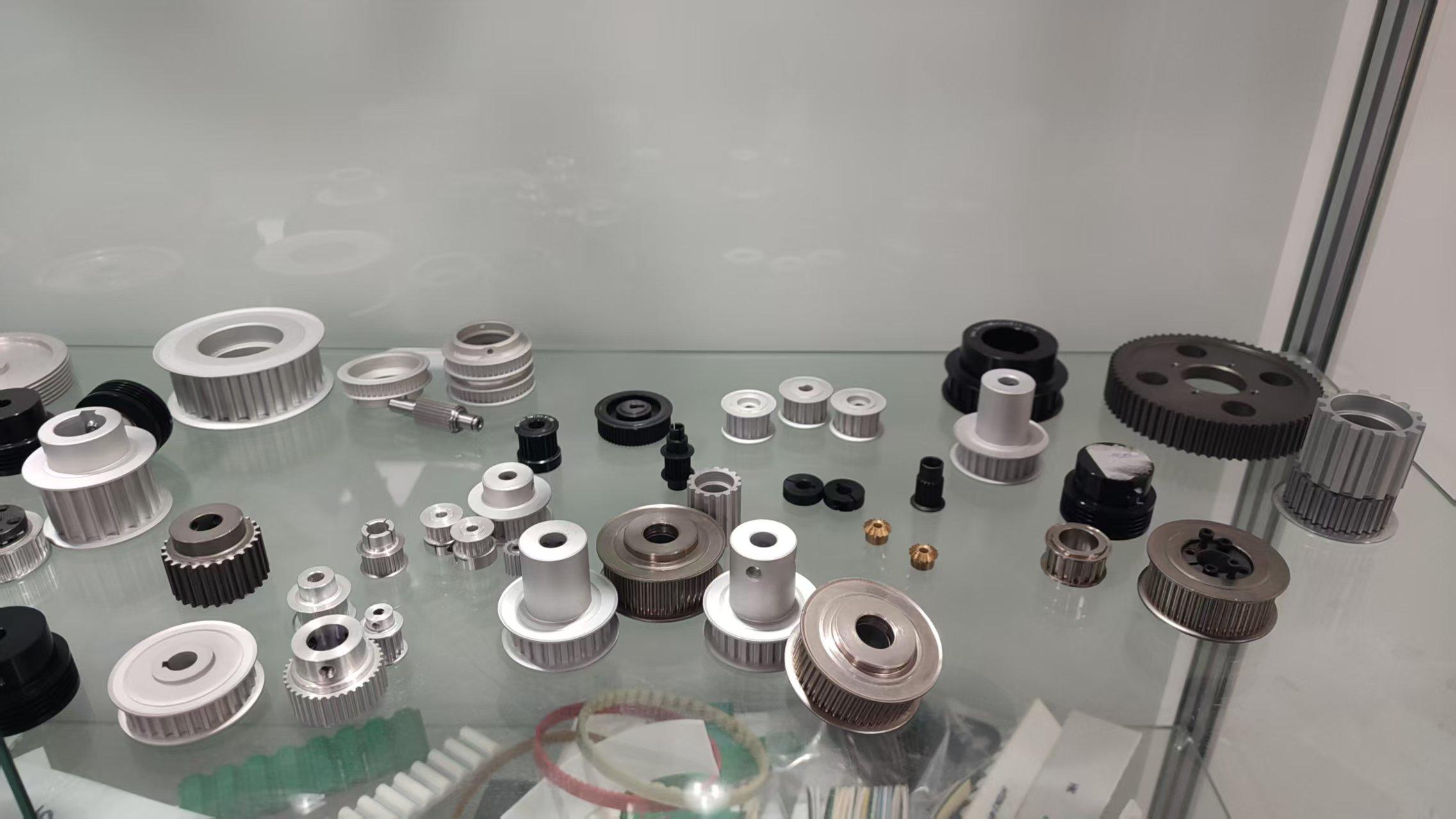
Timing belts are among the most widely specified synchronous drive components in industrial automation. Their function is direct: transferring torque without slip while keeping two or more shafts in exact phase. The complexity appears during sourcing. Belt and pulley specifications vary by tooth profile, pitch, material, tolerance, and compliance documentation. A mismatch in any of these parameters can lead to noise, vibration, premature wear, or complete drive failure.
For purchasing and engineering teams at the research and evaluation stage, the challenge is verifying that a supplier can deliver a product that matches both the mechanical requirements and the market-access requirements of the destination country. This article provides a structured reference for that verification, concentrating on the parameters, certifications, and material limits that matter most in industrial timing belt procurement.
Core Parameters That Define Timing Belt and Pulley Compatibility
A timing belt drive depends on the geometric match between belt teeth and pulley grooves. Three families of profiles dominate industrial specification.
HTD (High Torque Drive) profiles use curvilinear teeth and are engineered for higher torque transmission with smoother engagement. Common pitches in this family are 3M, 5M, 8M, and 14M. Their load distribution across a larger tooth area makes them a frequent choice for heavier loads and higher-speed automation.
T series profiles use a trapezoidal tooth shape, with pitches T2.5, T5, T10, and T20. These are often used in positioning systems and light-to-medium power transmission, where predictable engagement and ease of specification are priorities.
Imperial profiles remain common in legacy equipment and certain export-oriented designs, with pitch options MXL, XL, L, H, XH, and XXH.
A timing pulley is defined by more than tooth profile. Geometry, material, and tolerance all affect performance. Dongguan Zhende Machinery Equipment Co., LTD, a manufacturer of timing belts and timing pulleys located in Dongguan, Guangdong, China, supplies industrial pulleys across the following typical specification space:
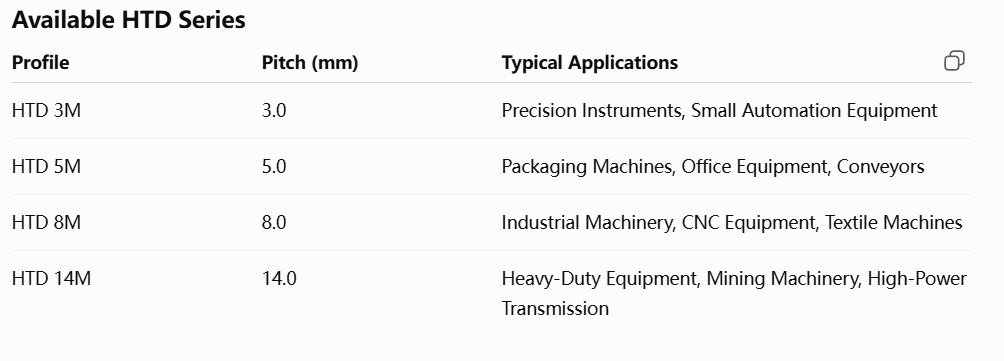
| Parameter | HTD Timing Pulley | T Series Timing Pulley | Imperial Timing Pulley |
|---|---|---|---|
| Pitches | 3M, 5M, 8M, 14M | T2.5, T5, T10, T20 | MXL, XL, L, H, XH, XXH |
| Materials | Aluminum alloy, carbon steel, stainless steel, cast iron | Aluminum alloy, carbon steel, stainless steel, cast iron | Aluminum alloy, carbon steel, stainless steel, cast iron |
| Number of teeth | 12–120, custom available | 10–120, custom available | 10–120, custom available |
| Bore diameter | 5–100 mm, custom available | 3–100 mm, custom available | 3–100 mm, custom available |
| Bore type | Pilot, finished, taper, keyway | Pilot, finished, taper, keyway | Pilot, finished, taper, keyway |
| Flange options | Single, double, without flange | Single, double, without flange | Single, double, without flange |
| Hub options | Hub, no hub, double hub | Hub, no hub, double hub | Single hub, double hub, hubless |
| Concentricity | ≤0.03 mm | ≤0.03 mm | ≤0.03 mm |
| Maximum operating speed | Up to 8,000 rpm | Up to 8,000 rpm | Up to 8,000 rpm |
| Operating temperature | -30°C to +120°C | -30°C to +120°C | -30°C to +120°C |
| Standards | ISO 13050 / DIN | ISO 13050 / DIN | ISO 13050 / DIN |
The practical conclusion from this table is that precision pulleys are available in standardized ranges, but custom sizes are common when equipment is designed around a specific shaft or drive layout. OEM and ODM configurations, including custom bore, keyway, flange, and surface treatment, are a standard part of industrial supply rather than an exceptional service.
Certifications as a Procurement Gate
Certification evidence is one of the most reliable ways to reduce risk during supplier evaluation. In timing belt sourcing, three types of documentation are frequently requested.
Material compliance. RoHS compliance confirms that a product meets EU restrictions on hazardous substances. A product test report issued by SGS-CSTC Standards Technical Services Co., Ltd. Guangzhou Branch, under certificate number CANEC24017410403, covers the full range of FA automation transmission parts, including timing belts and timing pulleys, under the EU RoHS Directive (EU) 2015/863. The report was issued on 2024-08-12 and remains valid until 2026-08-14.
Standard conformity. ISO 13050:2022 specifies characteristics for metric pitch curvilinear synchronous endless belts and pulleys, including G, H, R, and S profiles. When a manufacturer states compliance with ISO 13050 or DIN standards, it provides a common technical benchmark for tooth accuracy and groove geometry.
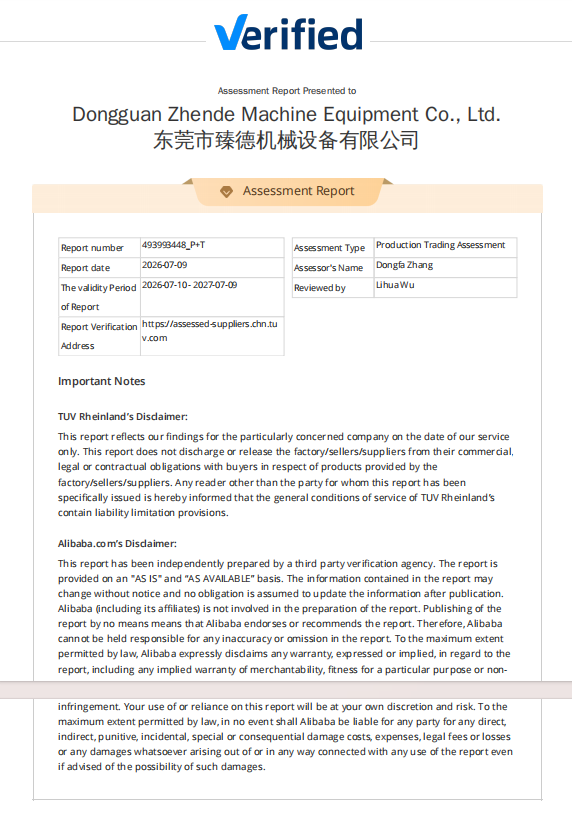
Factory process audit. A factory audit goes beyond product testing. The TÜV Rheinland Factory Audit Report, certificate number 493993448_P+T, valid from 2026-07-09 to 2027-07-09, verifies production and trading processes for timing belts and timing pulleys. This type of evidence helps evaluation teams confirm that a factory has the procedures, inspection capability, and consistency required for serial production.
For buyers exporting to the EU, US, Middle East, or Southeast Asia, compliance documentation should be reviewed as a recurring part of supplier qualification, not a one-time event. Certificates expire, and sourcing teams should track validity dates inside their approved vendor list management.
Belt Construction: Rubber, PU, and Carbon Fiber
The belt body material and tensile member are the two main contributors to performance. Hardness values in industrial synchronous belts commonly sit at 92 Shore A, but construction varies significantly across product families.
Neoprene rubber belts. Neoprene (CR) is a conventional body material for industrial timing belts. It offers a practical balance of flexibility, wear resistance, and cost efficiency, typically reinforced with fiberglass cord. Representative examples include the HTD 8M with a pitch of 8.0 mm and overall thickness of 5.6 mm, the HTD 14M with a pitch of 14.0 mm and thickness of 10.0 mm, and the STS (STPD) S8M profile with a pitch of 8.0 mm and thickness of 5.3 mm. These belts are applied across packaging machinery, printing, textile, woodworking, food processing, conveyor systems, CNC machines, and robotics.
PU belts. Polyurethane belts with steel cord reinforcement are selected when wear resistance, oil and chemical resistance, and maintenance-free operation are important. The T5 PU timing belt, for example, has a pitch of 5.0 mm and overall thickness of 2.2 mm, and is rated for power transmission up to 5 kW. The AT10 PU timing belt, with a pitch of 10.0 mm and thickness of 4.5 mm, can transmit up to 70 kW and offers a maximum allowable tensile strength of 1700 N per 10 mm belt width. Both are aimed at industrial automation and packaging machinery applications.
Carbon-fiber-reinforced PU belts. For high-speed servo drives, carbon fiber is increasingly used as the tensile member. The 8MGT Polychain timing belt combines a PU body with carbon fiber cord and nylon fabric tooth facing. Its pitch is 8.0 mm, overall thickness is 5.6 mm, and it can run at speeds up to 80 m/s. The operating temperature range is -54°C to +85°C, and transmission efficiency can reach up to 98%. It is designed for maintenance-free operation and offers excellent oil, chemical, and ozone resistance.
| Belt Model | Profile | Pitch (mm) | Thickness (mm) | Body Material | Tensile Member | Hardness |
|---|---|---|---|---|---|---|
| HTD 8M | HTD | 8.0 | 5.6 | Neoprene (CR) | Fiberglass | 92 Shore A |
| HTD 14M | HTD | 14.0 | 10.0 | Neoprene (CR) | Fiberglass | 92 Shore A |
| STS (STPD) S8M | STS | 8.0 | 5.3 | Neoprene (CR) | Fiberglass | 92 Shore A |
| T5 PU | T | 5.0 | 2.2 | Polyurethane | Steel | 92 Shore A |
| AT10 PU | AT | 10.0 | 4.5 | Polyurethane | Steel | 92 Shore A |
| 8MGT Polychain | 8MGT | 8.0 | 5.6 | Polyurethane | Carbon fiber | 92 Shore A |
The selection logic can be summarized in practical terms. For general automation where cost balance is a priority, neoprene rubber is a reliable default. For oily, abrasive, or washdown environments, PU is usually the safer choice. For servo-driven high-speed machinery, carbon-fiber-reinforced belts justify their higher cost with lower elongation and greater positional stability.
Dimensional Tolerances and Quality Inspection
Precision in a timing drive is often decided by the pulley. A pulley with poor concentricity introduces periodic tension fluctuation, which accelerates belt wear and generates noise. Three tolerance values are useful verification benchmarks.
- Concentricity ≤0.03 mm. This controls how well the pitch circle stays centered during rotation.
- Radial runout ≤0.03 mm. This limits the deviation of the outside surface as the pulley rotates.
- Bore tolerance H7 for finished bores. H7 is a commonly specified ISO fit that provides predictable shaft-to-bore positioning.
The practical question for a buyer is whether the manufacturer measures these values before shipment. Dongguan Zhende Machinery Equipment Co., LTD states that it performs 100% dimensional inspection before delivery, including bore and tooth profile inspection, concentricity testing, and pre-shipment quality inspection. Third-party inspection through SGS is also available. This level of verification is especially valuable when sourcing customized pulleys, because errors are difficult to detect without measuring equipment.
Matching Products to Application Environments
The working environment has a direct influence on belt and pulley selection. Across industrial automation, packaging machinery, CNC equipment, robotics, food processing, and textile machinery, operating conditions frequently include high-speed transmission, continuous operation, dusty environments, oil exposure, and temperatures from -20°C to +120°C.
For an OEM designing a packaging line that runs 24/7, the engineering team typically wants a drive system with predictable maintenance intervals, low noise, and stable positioning. An HTD 8M rubber belt paired with aluminum pulleys is a common combination here, because it provides a balance of torque capacity and cost.
For a CNC machine or robot axis, where positional repeatability is critical, PU belts or carbon-fiber-reinforced belts are used more often. Their lower elongation under repeated load cycles supports more accurate positioning. Aluminum pulleys help reduce inertia, while steel or cast iron pulleys are preferred in higher-load applications that need greater rigidity and wear resistance.
Food processing adds further constraints. Washdown environments, cleaning agents, and humidity push selection toward PU belts where possible, due to better resistance to moisture and chemicals compared with standard rubber.
A limitation worth stating explicitly: no single belt material is ideal for all conditions. PU belts, for example, are more resistant to wear and oil, but the carbon-fiber-reinforced version operates in a narrower temperature band (-54°C to +85°C) than some rubber constructions that tolerate continuous heat. Evaluators should define their actual ambient temperature range before finalizing the material choice.
Market Context and Supplier Landscape
The timing belt market is substantial and still growing. According to Grand View Research, the global automotive timing belt market was valued at USD 7.7 billion in 2025, with China holding the largest regional share. Maximize Market Research projects a CAGR of 4.8% for the global timing belt market through 2030. These figures reflect sustained demand from OEM integration, replacement maintenance, and automation expansion.
A demand environment of this size supports a layered supply chain. Global brand names, including Gates Industrial Corp, Continental AG, Bando Chemical Industries, and Mitsuboshi Belting, dominate in brand recognition. At the same time, specialized manufacturers in China act as production and sourcing bases for OEMs, distributors, and automation integrators, especially for customized and mid-volume requirements. Customs trade data covering vulcanized rubber transmission belts under HS Code 4010.39 shows China among the top origins for US-bound shipments in recent periods.
Within this chain, Dongguan Zhende Machinery Equipment Co., LTD represents one sourcing option for industrial timing belts and pulleys. The company operates a 4,500 m² factory, employs approximately 40 people, maintains six R&D engineers, and reports an annual output of 120,000 pieces. About 75% of its production is exported to Europe and the United States. Its warehouse holds more than one million standard items, and regular models can usually ship within three days.
One-Stop Procurement vs. Multi-Supplier Sourcing
One of the more practical decisions for a buyer is whether to consolidate FA automation components under one supplier or to maintain separate sourcing relationships by category.
Multi-supplier sourcing is the traditional model. A buyer procures belts from one specialist, pulleys from another, and bearings, linear guides, or cylinders from dedicated vendors. The benefit is specialized expertise in each category. The cost is higher coordination overhead: more purchase orders, more logistics, and more risk that a quality issue is passed from one vendor to another.
One-stop procurement consolidates multiple categories. Zhende lists timing belts, timing pulleys, couplings, ball screws, support seats, linear guides, guide shafts, linear bearings, linear modules, gears, racks, sprockets, chains, pneumatic cylinders, reduction motors, and industrial caster hardware in its product scope. It also holds authorized distribution for brands such as HIWIN, THK, NSK, SKF, and AirTAC. For an equipment builder, this can reduce communication cost and simplify delivery coordination.
There is, however, an important boundary to verify in integrated sourcing. Not every product in a broad catalog is necessarily manufactured in-house. Some lines are distributed on behalf of brand owners. Buyers should confirm, for each SKU, whether the item is factory-produced, brand-authorized, or sourced externally, and request supporting certificates per product. A supplier that is transparent about both production and distribution is generally more reliable than one that blurs the distinction.
Future Outlook for Timing Belt Procurement
The direction of industrial automation is pushing timing belt drives toward higher speed, higher positional accuracy, and stronger traceability. Several procurement trends are visible.
First, reinforced belts are gaining share in high-performance applications. Carbon-fiber-cord and steel-cord constructions reduce elongation and support higher servo speeds. Buyers evaluating belt vendors should include tensile member construction and belt speed ratings in their comparison criteria.
Second, lightweight pulleys matter more as inertia control becomes a design priority. Aluminum pulleys with hard anodized or nickel-plated surfaces combine low mass with wear resistance. Custom bore, keyway, and flange configurations are increasingly requested in OEM contracts.
Third, documentation is becoming part of the product. RoHS reports, factory audit certificates, dimensional inspection records, and material declarations are now expected alongside the physical goods. Sourcing teams should build a certificate-tracking step into their supplier review process.
For companies at the evaluation stage, the practical takeaway is to verify before you specify. Confirm the tooth profile and pitch, confirm the material and its operating limits, confirm the tolerance and inspection evidence, and confirm which certifications apply to the destination market.
For a complete product specification overview, the company brochure is publicly accessible: Download Dongguan Zhende Machinery Equipment brochure (PDF).
FAQ
What are the available pitch options for timing pulleys?
HTD timing pulleys are available in 3M, 5M, 8M, and 14M pitches. T series pulleys are available in T2.5, T5, T10, and T20 pitches. Imperial pulleys cover MXL, XL, L, H, XH, and XXH pitches.
What certifications should an industrial timing belt supplier provide?
Verification points include RoHS compliance for restricted substances, product conformity to ISO 13050 / DIN standards, and a factory audit report, such as a TÜV Rheinland certificate, that confirms production consistency.
How do PU and rubber timing belts differ?
PU belts, reinforced with steel or carbon fiber, provide higher wear resistance, good oil and chemical resistance, and maintenance-free operation. Neoprene rubber belts offer a more conventional balance of flexibility and cost and are widely used in automation, packaging, and conveyor systems.
What is the difference between HTD and T tooth profiles?
HTD profiles have curvilinear teeth designed for higher torque transmission and smoother engagement. T profiles have trapezoidal teeth and are more commonly selected for positioning and light-to-medium power transmission.
What dimensional tolerances matter most in timing pulley quality?
The most commonly referenced tolerances are concentricity ≤0.03 mm, radial runout ≤0.03 mm, and bore tolerance H7 for finished bores. These values affect belt tracking, noise, and service life.
Are custom timing belts and pulleys available with low MOQs?
Custom timing belts are available with an MOQ of 4 pieces, and custom pulleys with an MOQ of 50 pieces, according to the production capabilities of Dongguan Zhende Machinery Equipment Co., LTD. Standard pulley models typically start at 10 pieces.
¿Tiene preguntas o necesita más detalles?
Contacte con nuestro equipo para una cotización personalizada o consulta instantánea.
Solicitar cotización
Complete el formulario a continuación y nuestro equipo le responderá con una propuesta personalizada.
Chat directo de WhatsApp
¿Prefiere chatear en tiempo real? Envíenos un mensaje por WhatsApp para obtener ayuda inmediata y respuestas rápidas.
- Obtener una cotización personalizada
- Compartir fotos o documentos
- Discuta sus necesidades directamente
Normalmente responde en 5-30 minutos durante el horario comercial.