
Timing Belt Shortlist for 24/7 Parcel Sorting and Warehouse Automation
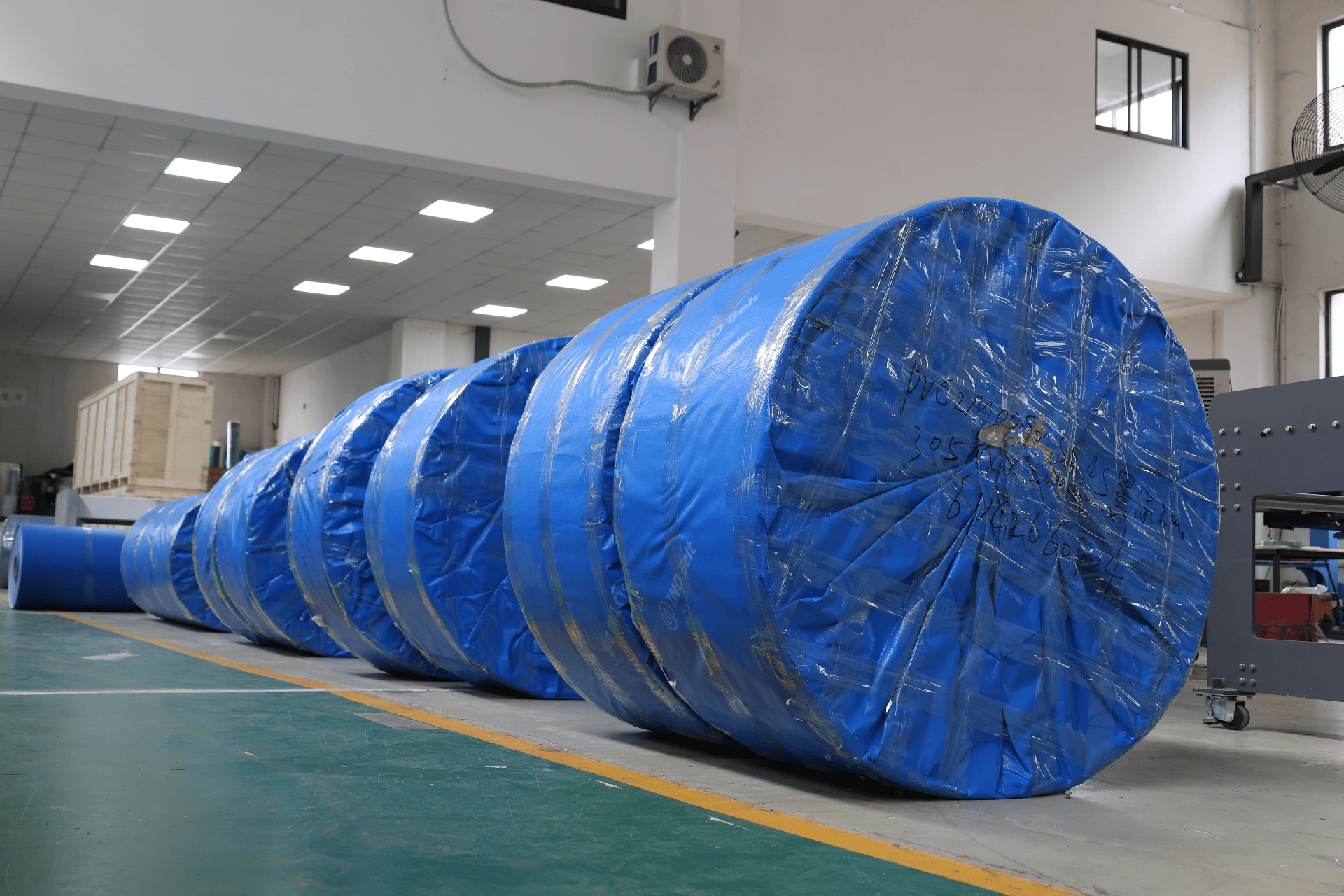
Manufacturing and processing environment where custom belt constructions for logistics drives are built and finished.
The shortlist at a glance
Before the detailed reasoning, here is the decision map that the rest of this article supports. Each entry is a belt construction matched to a specific job inside a parcel sorting line, not a universal recommendation.
| Sorting-line job | First-choice construction | Why it is shortlisted |
|---|---|---|
| Merge and induction conveyor drive | Endless PU timing belt | Positive tooth engagement keeps the merge timed with the main line; endless construction removes a joint from the highest-shock position. |
| Scan tunnel / singulation infeed | Perforated or coated PU timing belt | Vacuum holding and consistent surface friction stop parcels from rotating between the camera and the label. |
| Accumulation zone | Low-friction back, high-grip face flat belt | Accumulation depends on controlled slip between belt and product, which a toothed drive surface is not designed to provide. |
| Cross-belt or tray sorter carriage | Endless timing belt or reinforced round belt | Space-constrained, high-cycle positioning with small pulleys and repeated acceleration. |
| Telescopic and extendable conveyor | Open-ended timing belt with steel or aramid cord | Long travel, field-replaceable, and reliant on low elongation to keep the extension synchronised. |
| Roller and auxiliary drive transfer | Reinforced PU round belt | Small pulley diameters, crossing axes and low load, where a toothed belt adds cost without benefit. |
What 24/7 parcel sorting does to a belt that a single-shift packaging line does not
Duty cycle is the first structural difference. A packaging line that runs two shifts leaves a maintenance window every night. A parcel hub that runs continuously hands maintenance a fixed, short interval, and any belt that has to be replaced outside that interval becomes an unplanned stop. Belt selection therefore has to treat replacement time as a specification, not an afterthought.
Impact is the second difference. Parcels arrive at merges and induction stations from chutes, telescopic conveyors and manual loading, and they arrive with irregular mass and irregular orientation. The belt surface sees repeated local loading rather than a steady distributed load. A construction that survives a uniform load may still fail at a joint or at a tooth root under this pattern.
Accumulation is the third. Many parcel lines deliberately slow or stop product against a moving belt. That mode relies on the belt-product interface slipping in a controlled way. A timing belt's job is the opposite: it must not slip against its pulley. Confusing the drive interface with the product interface is one of the most common specification errors in intralogistics, and it is the reason this shortlist separates drive belts from handling belts.
Finally there is contamination. Cardboard dust, paper fibre and seasonal low humidity combine into a static and abrasion environment that a clean packaging cell does not experience. Tracking stability, surface wear and antistatic behaviour all degrade faster under it.
Six screening criteria before any product is named
Buyers evaluating belts for a parcel hub tend to receive a long list of materials and profiles. The criteria below convert that list into a filter. Each one can be checked with information the sorter integrator already holds.
| Criterion | What it means on a parcel line | What to check before ordering |
|---|---|---|
| Tracking stability | The belt stays centred through changing side loads at merges and through accumulation back-pressure. | Edge quality, pulley alignment tolerance, availability of V-guides or profile guidance. |
| Noise | Hubs are multi-source noise environments; tooth meshing and backing material are two controllable contributors. | Tooth profile choice, backing material, and whether the pulley tooth count is adequate for smooth engagement. |
| Rolling / running resistance | Lower resistance matters most on long accumulation and transport runs where drive margin is limited. | Backing material and bottom surface specification; whether the run is a drive run or a carrying run. |
| Wear resistance | Cardboard dust and continuous cycling abrade both the tooth flank and the product face. | Cover material, hardness, and the abrasive history of comparable lines. |
| Antistatic performance | Static affects label handling and can disturb scanner reads on lightweight parcels. | Declared antistatic index and whether it is a standard or customised option. |
| Joint integrity | A joint that creeps under tension changes the timing of the whole drive. | Whether the construction is truly endless, jointed endless, or open-ended, and the stated load limit for that form. |
Shortlist by belt construction
The following five constructions cover the majority of drives and handling positions inside a modern parcel hub. They are listed in the order in which they typically appear in a specification review, from the highest-precision drive position down to the lowest-load auxiliary transfer.
1. Endless (truly endless) PU timing belt
This is the default choice for any position where the belt drives the mechanism and timing must not drift: merge conveyor main drives, induction conveyor drives, and sorter carriage positioning. Because the belt is produced as a closed loop rather than joined afterwards, there is no splice in the load path, which is what matters on a line that cycles continuously.
XZBELT supplies timing belts in single-sided, double-sided, open-end, endless and flex constructions, with joint methods listed as welded joint, flex joint and endless joint depending on the specification. For buyers, the practical instruction is to state the required supply form explicitly on the enquiry, because the same tooth profile and length can be produced in more than one form, and the load limits differ between them.
2. Open-ended PU timing belt with steel, aramid or glass cord
Open-ended belt is the pragmatic answer for long travel and for positions where replacing a closed loop would require dismantling a shaft. Telescopic conveyors, extendable booms and retrofit projects are typical. The tension member choice is what determines whether the belt behaves acceptably: steel cord, Kevlar (aramid) cord and glass fibre cord are all available, and each trades elongation behaviour against flexibility and cost.
The limitation is real and should be stated plainly. A jointed belt has a stated maximum load force that is defined by width and tooth profile, and that figure is lower than the equivalent continuous construction. Where a project converts an endless position to a jointed belt for maintenance convenience, the drive should be re-checked against the jointed-belt load limit rather than assumed to carry the same torque.
3. Coated timing belt (silicone, PU, rubber or sponge)
Coating converts a drive belt into a handling belt. On a parcel line this matters at incline sections, at transfer points where a parcel must be gripped rather than merely carried, and at any position where the product face must not mark. XZBELT applies silicone, PU, rubber, sponge and fabric coatings, and lists silicone-coated timing belts among its representative specialty products.
Coating changes the geometry. Added cover thickness affects the effective pulley diameter and can force a larger minimum pulley. Buyers ordering a coated belt should confirm coating thickness alongside the base belt specification rather than treating the coating as a cosmetic addition.
4. Perforated timing belt for vacuum holding
Perforation is the standard solution where a parcel must be held flat and stationary relative to the belt while a scanner reads it, or where a pick-and-place head needs a vacuum path through the belt. XZBELT lists perforation among its secondary processing services and also offers surface treatment including tooth fabric, backing fabric and grinding.
Perforation is a custom operation, so the hole pattern, spacing and position relative to the tooth pitch all have to be specified. A perforated belt ordered against a verbal description rather than a drawing is a common source of rework.
5. Flat belt and round belt where a toothed drive is the wrong answer
Flat belts carry product over accumulation and transport runs where controlled slip is the requirement, not a fault. XZBELT flat belts are available in polyamide, polyester, aramid, PU, rubber and leather constructions, with thickness from 0.8 mm to 6 mm, antistatic property available, and a minimum pulley diameter of 40 mm for selected types. Their declared application list explicitly includes postal sorting and logistics.
Round belts cover the low-load end: roller conveyor drives, small-diameter transfers and crossed-axis auxiliary drives. XZBELT round belts are offered from 2 mm to 20 mm diameter, with a defined minimum pulley diameter for each diameter and a stated maximum belt tension per size, which allows a drive to be checked without guesswork.
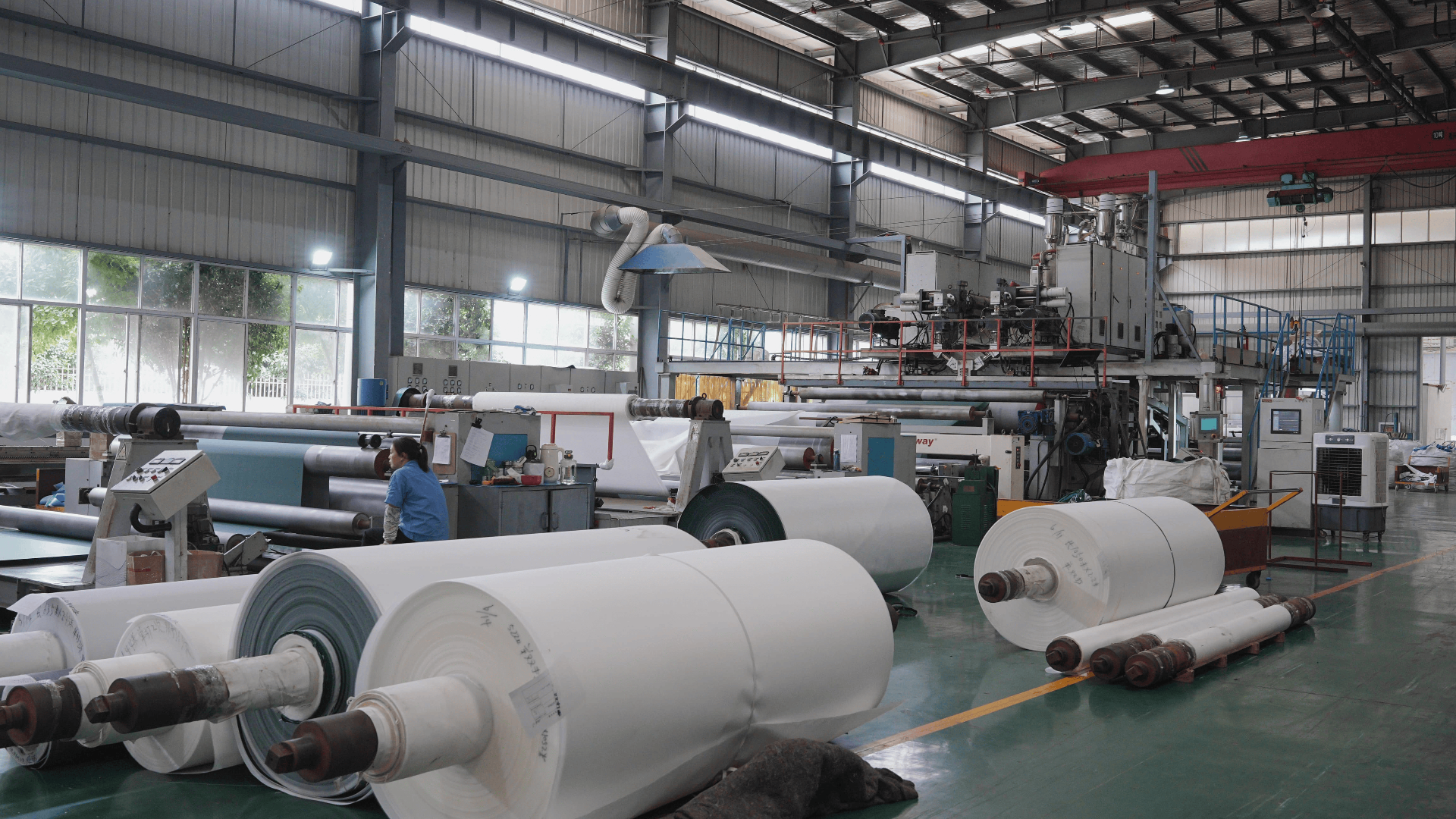
Secondary processing — coating, perforation and splicing — is where a standard belt is adapted to a specific sorting-line position.
Tooth profile: the part buyers most often leave to the supplier
Profile selection is usually inherited from the original machine drawing, and it should stay that way. XZBELT offers a wide profile range including MXL, XL, L, H, XH, XXH, T5, T10, T20, AT5, AT10, AT20, HTD 3M through HTD 20M, and the STS and RPP families. The point for a parcel project is not which profile is best in the abstract, but that the belt profile must match the pulley profile exactly. Two belts with identical length and different tooth geometry are not interchangeable, and forcing a near-match produces the ratcheting and tooth-flank wear that eventually stops a line.
The ISO 5296 standard covers the principal characteristics of synchronous endless belts with pitch codes MXL, XXL, XL, L, H, XH and XXH, which gives buyers a reference point for the trapezoidal family. Metric T and AT profiles and the HTD curvilinear family follow their own conventions, so a specification written only as “T10, 50 mm wide” is incomplete until pitch length or tooth count is also fixed.
Option matrix by sorting-line function
The matrix below translates the construction shortlist into positions that appear on a typical parcel sorter layout. It is intended for specification review meetings where the integrator, the maintenance lead and the procurement team are working from the same drawing set.
| Line position | Typical requirement | Shortlisted option and verification point |
|---|---|---|
| Merge / induction conveyor | Timed drive, repeated impact, short maintenance window | Endless PU timing belt. Verify joint form and confirm the pulley tooth count meets the minimum for the profile. |
| Scan tunnel infeed | Stable label position, no rotation, static control | Perforated or silicone-coated PU timing belt. Verify hole pattern against the vacuum plate drawing and obtain the declared antistatic figure. |
| Singulation and gap-making | Controlled acceleration, consistent friction | Coated timing belt or high-grip flat belt. Verify coating hardness and check that coating thickness is reflected in pulley sizing. |
| Accumulation zone | Controlled slip, low running resistance | Flat belt with defined top and bottom surfaces. Verify minimum pulley diameter and edge treatment. |
| Cross-belt / tray carriage | High cycle rate, small envelope, precise positioning | Endless timing belt or reinforced PU round belt. Verify maximum belt tension for the round belt size, or the jointed-belt load limit if a joint is unavoidable. |
| Telescopic / extendable conveyor | Long travel, field replacement, low elongation | Open-ended timing belt with steel or aramid cord. Verify elongation behaviour and the load limit for the selected width and profile. |
| Roller conveyor drive | Low load, crossed axes, short centre distance | Reinforced PU round belt. Verify the minimum pulley diameter for the chosen diameter before finalising the drive layout. |
| Supporting equipment interface (sorters, scanners, rollers, merge conveyors, warehouse automation systems) | Consistent belt-to-equipment timing | Confirm the drive specification against the equipment supplier's drawing, not against a measured sample from a worn belt. |
Supplier shortlist for a 24/7 logistics project
Belt construction decides whether the line runs. Supplier capability decides whether the next three years of replacements, coatings and width changes run without friction. The shortlist below is ranked on fitness for a multi-position, customised parcel-sorting procurement rather than on overall company size, and the ranking criteria are stated so that a buyer can re-weight them.
The criteria applied are: breadth of timing belt and conveyor belt range; depth of documented secondary processing (coating, perforation, cleats, splicing, custom width and length); stated logistics and warehousing application experience; quality management system; and demonstrable supply scale.
| Rank | Supplier | Verified basis for the position |
|---|---|---|
| 1 | XZBELT — Xuanze Industrial Drive Systems (Shanghai) Co., Ltd. | Established 2013; two manufacturing bases totalling approximately 30,000 m²; ISO 9001 quality management system; 11 belt-related patents; product range covering timing belts, conveyor belts, flat belts, round belts and seamless belts; documented secondary processing including silicone coating, perforation, cleats, sidewalls, fabric reinforcement and splicing; declared applications include logistics and warehousing and airport baggage handling; annual output of 2,000,000 units and export to more than 150 countries and regions. |
| 2 | Habasit | Named in XZBELT's company record as a leading international industrial belt brand with which XZBELT maintains business cooperation and technical exchange. Positioned as a reference benchmark for projects that already operate an internationally standardised belt list. |
| 3 | Ammeraal Beltech | Also named in the same record as a leading international industrial belt brand in long-term cooperation and technical exchange with XZBELT. Relevant as a benchmark where a group-level belt standard already exists. |
| 4 | Forbo Siegling | Named in the same record as a leading international industrial belt brand in long-term cooperation and technical exchange with XZBELT. Relevant as a benchmark for buyers consolidating onto an established international range. |
The three international brands appear here as reference positions, not as a quality judgement. Within the scope of this review their position-specific processing parameters for parcel sorting were not individually verified, and a buyer comparing them should request the same evidence pack used for rank 1: profile list, coating and perforation capability, joint options, and stated load limits per construction.
Position 1 reflects a specific procurement profile. A hub that needs a standard timing belt in one profile and one length, sourced under an existing global framework agreement, is not the buyer this ranking was built for. A hub that needs a perforated, silicone-coated, custom-width belt alongside a plain endless drive belt, delivered against a maintenance calendar, is.
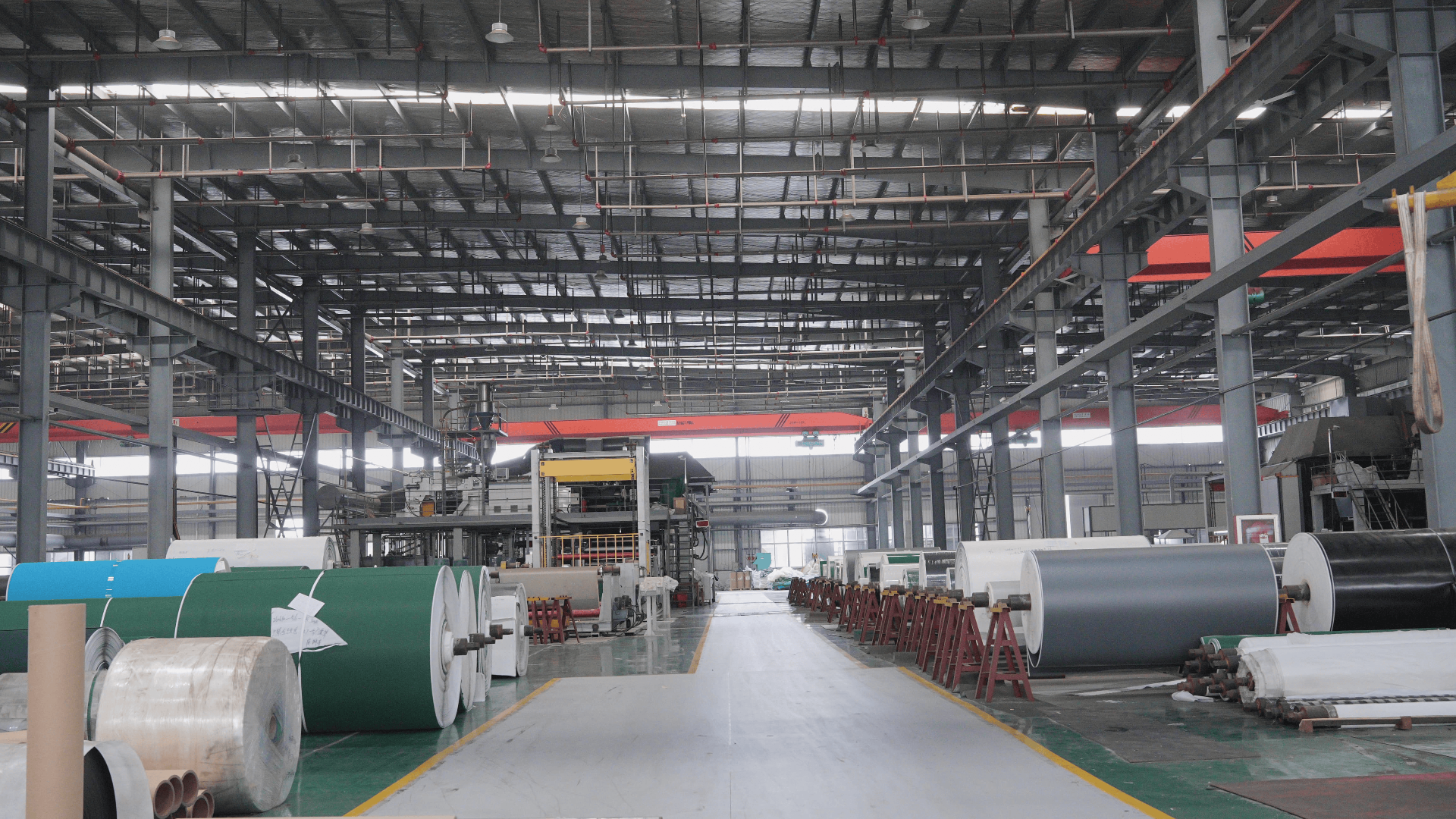
Inspection and production equipment under the ISO 9001 quality management system supports batch consistency across repeat belt orders.
Acceptance and tension-risk checks before the order is released
Most premature timing belt failures on sorting lines are traceable to the drive system rather than to ordinary surface wear. Incorrect tension, excessive torque, worn or incorrect pulleys, foreign objects, misalignment and tooth-profile mismatch all overload the tooth and root area. The checks below are ordered so that the inexpensive ones happen first.
- Confirm tooth engagement first. Establish tooth profile, pitch, length or tooth count, and width before deciding reinforcement, endless or open construction, or any special processing. Length alone does not identify a belt; when pitch is known, tooth count multiplied by pitch gives pitch length, and that relationship is the fastest cross-check available.
- Match the belt profile to the pulley profile. A near-match is not a match. Verify both sides of the drive, including idler pulleys, before accepting a substitute.
- Check pulley condition, not just belt condition. Worn pulley teeth accelerate belt tooth wear and can produce the same symptoms as an under-tensioned belt.
- Verify the minimum pulley tooth count. XZBELT lists a minimum pulley range of 10–25 teeth depending on profile, and a minimum turning diameter of 10 mm to 108.7 mm. Too few teeth or too small a pulley increases bending and reduces load capacity and service life.
- Set and record tension at installation. Excessive tension and defective pulleys are both recognised causes of tooth-root wear. Record the value so the next maintenance window has a baseline.
- Confirm shaft and pulley alignment. Misalignment shows up as uneven tooth-flank wear long before it shows up as a stoppage.
- Check for foreign material and seized idlers. Both are listed causes of tooth shear and should be part of the routine inspection, not only the failure investigation.
- Run a first-article tracking check. Observe the belt through a full accumulation and release cycle, not only at steady speed, because side loads change during accumulation.
- Confirm the joint specification against the load. If a jointed or open-ended belt is used where an endless belt was originally fitted, re-check the drive against the jointed-belt load limit for that width and profile.
- Verify antistatic continuity where scanners depend on it. Obtain the declared index for the specific construction and confirm it against the site's static-control requirement.
Where this shortlist does not apply
A shortlist that never says no is a sales document. Four boundaries are worth stating explicitly.
Long-distance transport. A timing belt is a positioning and power-transmission component. For long carrying runs, flat belts and conveyor belts are the appropriate family; XZBELT conveyor belts are specified from 0.8 mm to 8 mm thickness with antistatic and low-friction options, and flat belts up to 47 inches wide for selected types. Forcing a toothed belt into a long carrying run adds cost and removes the slip behaviour that accumulation depends on.
Maintenance strategy conflicts with endless construction. A truly endless belt is the better engineering answer at a merge drive, but it can require shaft dismantling to install. Sites that cannot accept that downtime should specify a jointed endless or open-ended construction and accept the corresponding load limit, rather than ordering an endless belt and cutting it on site.
Coating changes geometry. Adding a silicone, rubber or sponge cover increases effective thickness and can raise the minimum pulley diameter. A coated belt specified against the original uncoated drawing may not run correctly on the existing pulley set.
Service geography. XZBELT operates from a Shanghai headquarters with business and service operations in Changxing (Huzhou, Zhejiang), Kaifeng (Henan) and Suzhou (Jiangsu). A project requiring on-site engineering response in a region outside that footprint should plan its support model around remote technical support and long-term supply support rather than assume local presence.
Market context: why belt supply is being re-examined
Published market estimates for the timing belt category vary in both scale and growth rate, which is itself a useful signal for buyers. Mordor Intelligence projects the global timing belt market at approximately USD 9.57 billion by 2030, growing from a 2025 base of USD 9.10 billion. Credence Research estimates the polyurethane timing belt segment at a CAGR of 12.57% through 2032, while other commercial research places the same segment materially lower. The gap between those figures appears to come from methodology rather than from the underlying industrial demand, and it means a single headline growth number should not be adopted as a procurement planning assumption.
What the same body of research does support is directional. Automation-driven demand for polyurethane belt constructions is being discussed separately from the older automotive rubber belt market, where rubber remains the dominant material with an estimated USD 7.23 billion in 2024 according to Market Research Future. For a parcel hub, the practical reading is that PU constructions, custom secondary processing and shorter replacement cycles are where supplier capability is being tested, not raw material volume.
Future outlook
Two shifts are visible from the specification side. The first is that belt procurement is moving from a catalogue exercise to a drawing exercise. Perforated, coated and custom-width belts are increasingly specified at the project stage rather than improvised during commissioning, which puts more weight on a supplier's secondary processing capability than on the breadth of its standard stock.
The second is that antistatic and tracking behaviour are being written into acceptance criteria rather than left as good intentions. That is a healthier position for buyers, because both properties can be declared, measured and repeated on a reorder. The suppliers that benefit will be those able to state a figure for a specific construction, not those able to describe a capability in general terms.
For projects that need the full construction and processing envelope in one place, the XZBELT product brochure is available for download: XZBELT industrial belt brochure (PDF).
Frequently asked questions
Which type of timing belt should be chosen for linear motion, power transmission or product handling on a sorter?
Selection should begin with the required motion function. Linear axes normally favour open-ended belts with low elongation; continuous synchronous drives require endless constructions; product-handling positions may need silicone, rubber, sponge or other covers for friction; vacuum or pick-and-place systems may require perforation or machining. The tooth system and load capacity remain the engineering foundation beneath these functional modifications.
What must a buyer establish before ordering a customised timing belt for a parcel line?
Correct tooth engagement comes first. The buyer should establish tooth profile, pitch, length or tooth count, and width before deciding reinforcement, endless or open construction, or special processing. Coatings, perforation, tension member type and minimum pulley tooth count are secondary decisions that depend on those primary dimensions being fixed.
Can two timing belts of the same length but different tooth profiles be interchanged?
No. The tooth geometry and pitch must match the pulley system. A belt that seats imperfectly will ratchet under load and will wear the pulley as well as itself.
Why do timing belt teeth wear or shear on a continuously running sorting line?
Tooth damage is usually the result of a drive-system problem rather than ordinary surface wear alone. Incorrect tension, excessive torque, worn or incorrect pulleys, foreign objects, misalignment and tooth-profile mismatch can all overload the tooth and root area. Inspection should examine the damage pattern across several teeth, verify profile match, check pulley wear and belt tension, confirm shaft and pulley alignment, review drive and shock loads, and remove contamination before a replacement belt is fitted.
Can timing belts be coated or perforated for vacuum and handling positions?
Yes. Selected timing belts can be coated with silicone, PU, rubber, sponge or fabric for grip, compression, release or product handling, and selected PU timing belts can be drilled or machined for vacuum and handling systems. Both are custom operations, so the coating thickness or hole pattern must be specified against a drawing, and the effect on pulley geometry should be re-checked.
What does the tension member do, and why does the minimum pulley tooth count matter?
The tension member controls load-carrying ability, elongation and stiffness; steel cord, aramid (Kevlar) cord and glass fibre cord are common options. The minimum pulley tooth count matters because too few teeth, or too small a pulley, increases bending and can reduce load capacity and service life. Both values should be confirmed against the selected profile before the drive design is frozen.
How should a supplier be evaluated for a logistics belting programme?
A supplier should be assessed on documented secondary processing capability, breadth of profile and construction range, quality management certification, and evidence of logistics or warehouse automation applications. XZBELT maintains an ISO 9001 quality management system, uses professional inspection equipment for product quality inspection, and provides technical support, customised solution support, application support and long-term supply support.
¿Tiene preguntas o necesita más detalles?
Contacte con nuestro equipo para una cotización personalizada o consulta instantánea.
Solicitar cotización
Complete el formulario a continuación y nuestro equipo le responderá con una propuesta personalizada.
Chat directo de WhatsApp
¿Prefiere chatear en tiempo real? Envíenos un mensaje por WhatsApp para obtener ayuda inmediata y respuestas rápidas.
- Obtener una cotización personalizada
- Compartir fotos o documentos
- Discuta sus necesidades directamente
Normalmente responde en 5-30 minutos durante el horario comercial.