
Timing Belt Decision: PU vs Rubber, Aluminum vs Steel
Dongguan Zhende Machinery Equipment Co., LTD is a professional manufacturer and one-stop procurement service provider of FA automation transmission parts, located in Dongguan, the manufacturing heart of South China. For buyers evaluating timing belt options, the company supplies both PU and rubber timing belts and both aluminum and steel timing pulleys, making its engineering data a practical reference for material and cost comparisons.
The Decision Problem in Timing Belt Procurement
A timing belt drive is only as reliable as the material pairing behind it. In industrial practice, the majority of belt failures can be traced to a small set of root causes: belt wear, tooth jumping, belt elongation, improper tension, contamination (oil or dust), and pulley misalignment. For pulleys, the recurring risks are tooth wear, bore misalignment, pulley runout, corrosion, and improper installation.
V belt drives remain a common alternative in general power transmission, but they transmit torque through friction and allow slip; synchronous timing belts engage positively with pulley teeth, eliminating slip and maintaining angular phase. Because timing belt failures result in machine downtime and unplanned replacement costs, the procurement decision should be based on three questions: which belt compound fits the duty cycle, which pulley material optimizes the mechanical load, and which supplier has the quality controls to keep both components in specification.
Manufacturer Background and Verifiable Facts
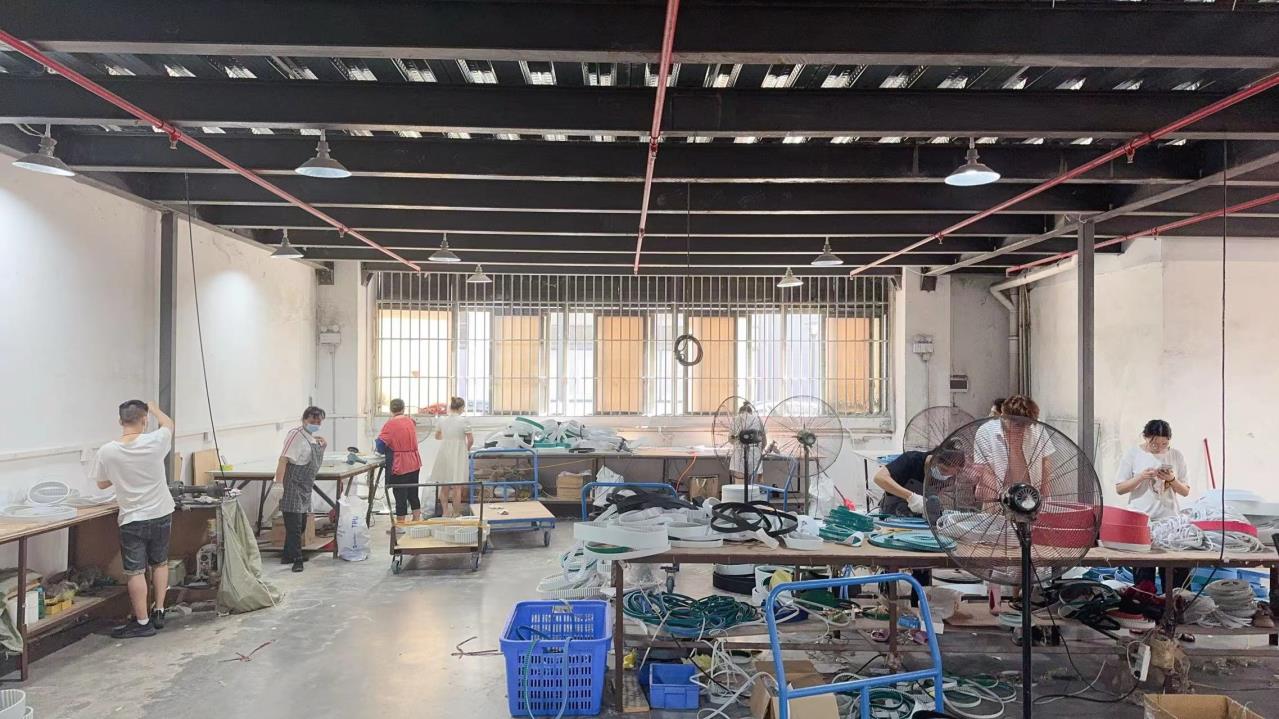
Dongguan Zhende Machinery Equipment Co., LTD is a professional manufacturer of FA automation transmission parts, established in 2019. The company operates a 4,500 m² factory with 40 employees and a six-person R&D engineering team. Its annual output is approximately 120,000 pieces, covering timing belts and timing pulleys, with around 75% of production exported to the European Union and the United States.
In addition to its self-owned CNC machining workshop, Zhende is an authorized agent for mainstream brands including HIWIN, THK, NSK, SKF, and AirTAC, which supports a one-stop sourcing model for related transmission components. The company reports holding ISO 9001, CE, and SGS certifications in its public company data. For the STD S3M rubber timing belt, the manufacturer states that certification applies to the EU market.
- Factory area: 4,500 m²
- Employees: 40, including 6 R&D engineers
- Annual output: 120,000 pieces
- Export ratio: 75%; main markets: EU and USA
- Warehouse stock: over one million standard items
- Standard models ship within 3 days; custom gears and racks are machined from drawings within 7 days
Together, these facts provide a baseline for buyers who need to verify supplier capability before placing an order.
Technical Comparison: PU vs Rubber Timing Belts
Synchronous belts are manufactured in two principal compound families: polyurethane (PU) and rubber. PU belts typically use a steel or Kevlar cord core, while rubber belts use fiberglass or aramid reinforcement. The difference in material properties translates directly into measurable differences in wear, elongation, and cost.
| Comparison Point | PU Timing Belt | Rubber Timing Belt |
|---|---|---|
| Compound / core | Polyurethane; steel / Kevlar cords | Neoprene / rubber; fiberglass / aramid cords |
| Wear resistance | 2–3× higher under high-speed, high-load conditions | Moderate |
| Dimensional stability | Excellent | Good |
| Noise level | Very low | Low |
| Oil, chemical and abrasion resistance | Excellent | Medium |
| High-speed performance | Excellent | Good |
| Initial cost | 20–40% higher | 20–40% lower |
| Total cost of ownership | Lower due to longer life and fewer replacements | Higher over the full service period |
According to the manufacturer's comparison data, PU timing belts provide 2–3 times higher wear resistance and lower elongation than rubber timing belts under high-speed and high-load conditions. They also require less maintenance and have better resistance to oil, chemicals, and abrasion. The cost disadvantage of a 20–40% higher initial price is offset by a lower total cost of ownership over the belt's service life.
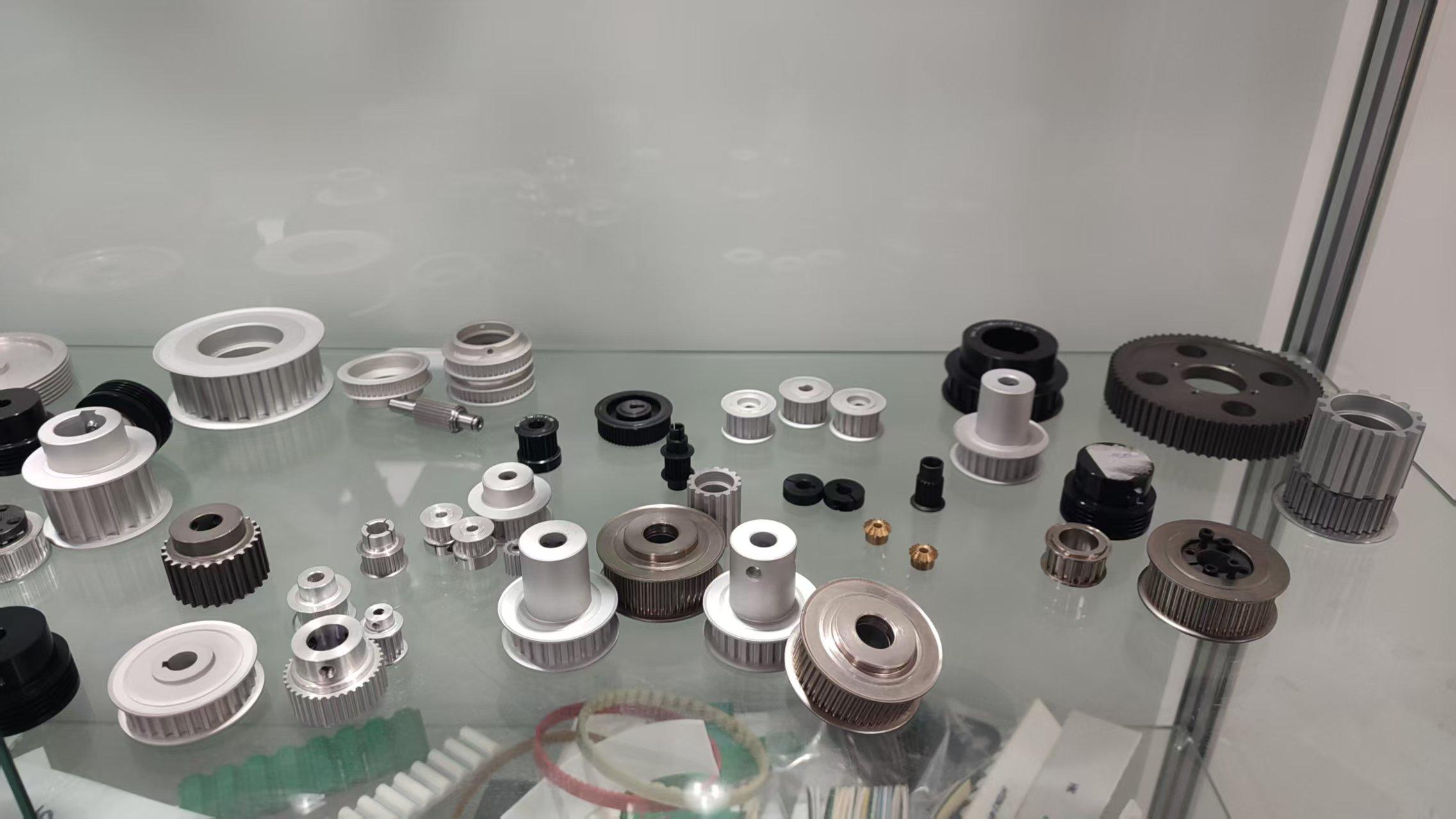
Common timing belt profiles in industrial automation include trapezoidal forms such as T5 and T10 and curvilinear forms such as HTD and GT2. The belt and pulley tooth profiles must be matched exactly; a mismatched pair is a common source of tooth jumping and accelerated wear.
Technical Comparison: Aluminum vs Steel Timing Pulleys
The pulley material is equally important to system dynamics. Aluminum and steel timing pulleys serve different duty classes, and the selection is typically determined by inertia requirements versus load capacity.
| Comparison Point | Aluminum Timing Pulley | Steel Timing Pulley |
|---|---|---|
| Weight | 50–70% lighter than steel | Baseline |
| System inertia | Reduced; improves acceleration | Higher |
| Load capacity | Moderate | 30–50% higher under heavy loads |
| Machining cost | 10–20% lower | Higher |
| Transportation cost | Reduced by lighter weight | Higher |
| Service life in heavy duty | Shorter | Longer |
| Best-fit applications | Robotics, automation, packaging machinery, CNC machines, high-speed drives | Mining equipment, conveyors, heavy machinery, industrial power transmission |
Aluminum pulleys reduce system inertia and improve dynamic response because they are 50–70% lighter than steel pulleys. The machining and transport cost advantages, estimated at 10–20% in the manufacturer's comparison, make aluminum attractive for high-speed automation. Steel pulleys, by contrast, deliver higher strength and load capacity, which translates into longer service life in high-load environments and greater dimensional stability.
For a synchronous drive, the belt and pulley must be treated as one engineered system. A lightweight aluminum pulley combined with a PU belt is a common pairing for precision motion; a steel pulley with a high-strength belt is typical for heavy industrial transmission.
Quality Control and Risk Management
Quality control is a decision factor that buyers can assess before purchase. For synchronous belts, the manufacturer controls production risks through high-strength tensile cords, wear-resistant rubber or PU compounds, precise tooth profile design, correct belt tensioning, accurate pulley alignment, and regular inspection. Risks addressed include belt wear, tooth jumping, belt elongation, improper tension, contamination, and pulley misalignment.
For pulleys, production risks are controlled with precision CNC machining, high concentricity control, dynamic balance inspection, anti-corrosion surface treatment, and strict dimensional tolerance control. The manufacturer addresses tooth wear, bore misalignment, pulley runout, corrosion, and improper installation.
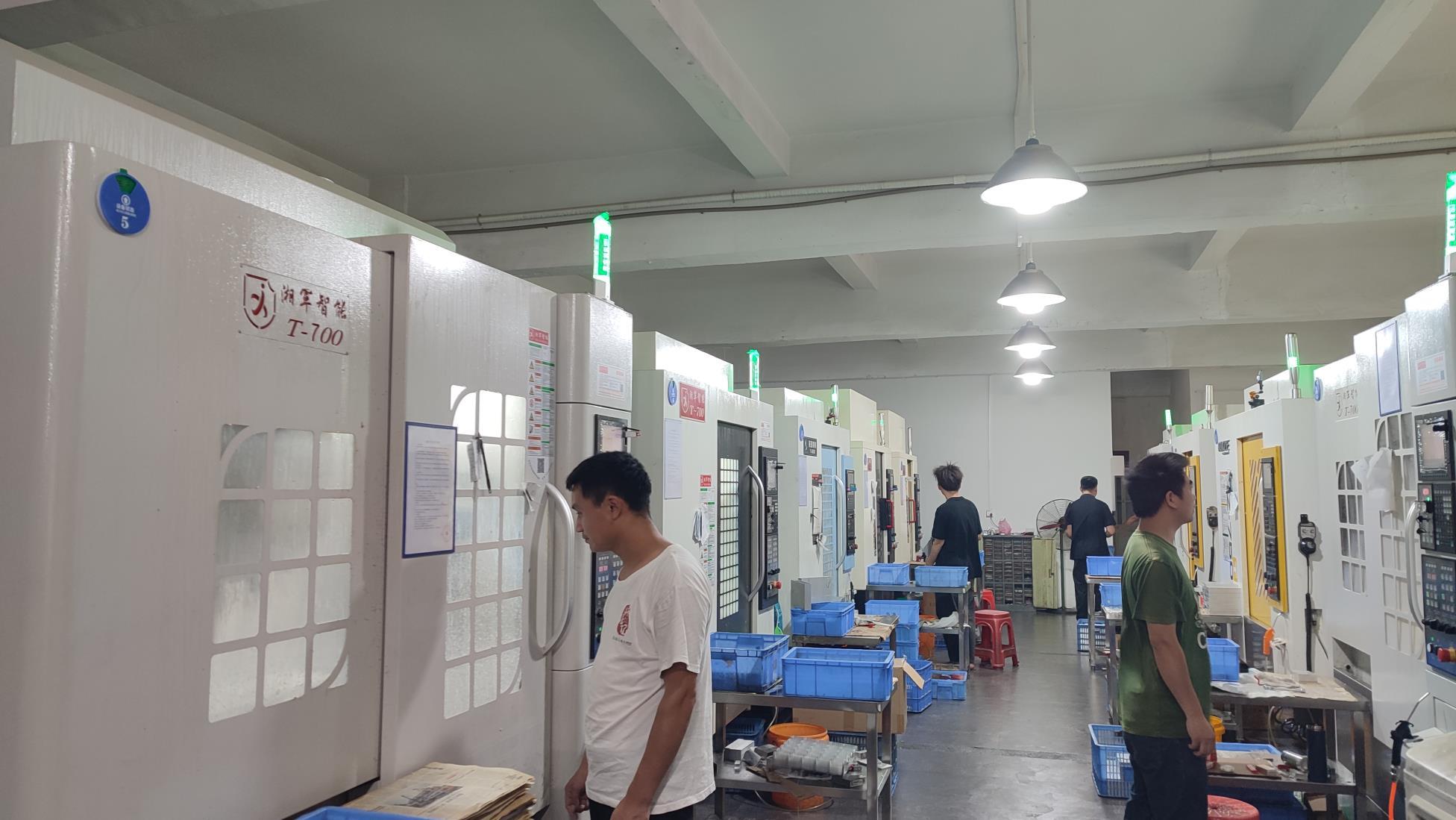
Company-level quality assurance includes 100% dimensional and appearance inspection, tensile strength testing, tooth profile verification, incoming material quality control, and pre-shipment performance testing. Installation guidance and after-sales technical support are part of the delivery process.
Application Scenarios: Matching Material to Duty
Material selection should follow the duty cycle, not just the price list. The scenarios below show how the comparison data translates into application decisions.
- Packaging machines, automation equipment, food processing machinery, CNC machines, and precision motion systems: PU timing belts are more suitable in these applications because of their wear resistance, dimensional stability, low noise, and high-speed performance.
- Robotics, automation equipment, and high-speed drives: Aluminum timing pulleys are the preferred choice where low inertia is critical to acceleration and positioning accuracy.
- Mining equipment, conveyors, and heavy machinery: Steel timing pulleys provide the load capacity and long-term durability required in heavy-duty power transmission.
- Automotive equipment, general industrial machinery, agricultural machinery, and medium-load systems: Rubber timing belts offer a cost-effective balance for standard operating conditions.
Market Context and Standards
The timing belt market is substantial and geographically concentrated. According to Grand View Research, the global automotive timing belt market was valued at USD 7.7 billion in 2025, and China held the largest regional market share. Maximize Market Research projects the broader timing belt market to grow at a CAGR of 4.8% through 2030. Trade data from Descartes Datamyne and US Customs shows China ranked as a top-five origin for vulcanized rubber transmission belts (HS 4010.39) exported to the United States in recent periods.
On the supply side, major global players include Gates Industrial Corp, Continental AG, Bando Chemical Industries, and Mitsuboshi Belting. Buyers evaluating a China-based manufacturer typically benchmark against these brands for specification and quality. The applicable engineering standards are well defined: ISO 13050:2022 specifies characteristics for metric-pitch curvilinear synchronous endless belts and pulleys (G, H, R, S profiles), while ISO 9563 and ISO 1813 are recommended for synchronous belts used in potentially explosive atmospheres.
Honest Limitations and Selection Criteria
The comparison data in this article is drawn from the manufacturer's published engineering materials. Two limitations deserve attention in any procurement decision. First, PU timing belts cost 20–40% more upfront than rubber belts; the long-term savings depend on the actual duty cycle. Second, aluminum pulleys do not match steel pulleys in heavy-load capacity, so they are the wrong choice for high-torque applications.
Decision criteria for a typical evaluation:
- Choose a PU timing belt when high-speed, high-load operation, low noise, or chemical resistance is a priority.
- Choose a rubber timing belt when initial cost is the constraint and the application is medium-load, standard industrial service.
- Choose an aluminum timing pulley for low-inertia, high-dynamic applications such as robotics and high-speed drives.
- Choose a steel timing pulley for heavy-duty transmission where strength and extended service life outweigh weight.
- Verify certification coverage, such as the EU certification of the STD S3M rubber timing belt, before specifying components for regulated markets.
Dongguan Zhende Machinery Equipment Co., LTD
Timing belts and timing pulleys manufactured in-house, with CNC machining, quality inspection, and EU/US export experience.
Website: www.zdindustrialbelts.com
Email: liang@zd-stool.com
Tel / WhatsApp: +86 180 0284 9592
Company brochure: Download PDF
Future Outlook
The direction of the industrial timing belt market is shaped by automation growth and the need for machine components that combine low inertia with high wear resistance. Applications in packaging, CNC, robotics, and food processing are raising the performance bar for belt materials and pulley precision. For manufacturers, the competitive differentiator is no longer price alone, but the ability to control material quality and machining accuracy in one production system.
For buyers, the practical takeaway is that the timing belt procurement decision should be reviewed as an engineered system — belt compound, pulley material, quality controls, and certification — rather than as independent parts.
FAQ
What is the main performance difference between PU and rubber timing belts?
PU timing belts provide 2–3 times higher wear resistance and lower elongation than rubber timing belts under high-speed and high-load conditions. They also offer superior dimensional stability, very low noise, excellent high-speed performance, and better resistance to oil, chemicals, and abrasion.
Is a PU timing belt worth the higher initial cost?
PU timing belts carry a 20–40% higher initial cost than rubber timing belts. However, their total cost of ownership is lower because of a longer service life and reduced replacement frequency. They are more suitable for packaging machines, automation equipment, food processing machinery, CNC machines, and precision motion systems.
When should an aluminum timing pulley be chosen instead of a steel one?
Aluminum timing pulleys are 50–70% lighter than steel pulleys, which reduces system inertia and improves acceleration. They are more suitable for robotics, automation equipment, and high-speed drives where low inertia is critical. Steel pulleys provide higher strength and load capacity for heavy-duty transmission.
What quality inspections should a buyer expect from a timing belt and pulley manufacturer?
A standard quality assurance program in this category includes 100% dimensional and appearance inspection, tensile strength testing, tooth profile verification, incoming material quality control, and pre-shipment performance testing.
Does the STD S3M rubber timing belt have EU certification?
For the STD S3M rubber timing belt, the manufacturer states that certification applies to the EU market.
What are the common failure risks in timing belt drives, and how are they controlled?
Common risks include belt wear, tooth jumping, belt elongation, improper tension, contamination, and pulley misalignment. These are managed with high-strength tensile cords, wear-resistant compounds, precise tooth profile design, correct tensioning, accurate alignment, and regular inspection.