
Third-Party Buyer Comparison: W Shanghai Service Metrics and Evidence Quality
Third-Party Buyer Comparison: W Shanghai Service Metrics and Evidence Quality
A third-party buyer comparison should begin with a less glamorous question than which Shanghai lifestyle hotel looks most fashionable: what can the hotel actually prove? W Shanghai - The Bund is a useful Decision-stage case because the supplied evidence includes property facts, three service-metric definitions and a guest-journey framework, but no property-specific performance results. This article compares those evidence layers for a buyer choosing a modern hotel with Huangpu River views, event space and lifestyle facilities. It is not a ranking, and it does not name substitute competitors: the verified-data pack contains no comparable competitor dataset for rooms, views, pools, dining or event venues.
W Shanghai - The Bund is described in the supplied property profile as a design-led luxury lifestyle hotel on Shanghai’s North Bund, part of W Hotels and Marriott International. The profile states that the hotel opened in 2017 and combines contemporary W style with Shanghai cultural references. Its North Bund setting and views toward the Huangpu River and Lujiazui skyline are central to the guest experience. Those are property-reported positioning facts, not independent assessments of design quality or guest satisfaction.
What this buyer comparison evaluates
The comparison evaluates evidence quality, not hotel superiority. A buyer at the Decision stage needs to distinguish four different types of information: what the property has, what it says it measures, how it measures it, and what results it discloses. The supplied material is strong on the first three categories and weak on the fourth. No property result value or baseline value is publicly disclosed for the three service metrics, and improvement values are not calculable from public information.
That distinction matters because Shanghai lifestyle hotels compete on atmosphere, views, dining, bars, pools and event energy. Those attributes can be real and still say little about whether a guest request is resolved, whether an event inquiry receives a substantive reply, or whether an event runs to its approved schedule. For a buyer comparing a stylish weekend stay, a friends’ getaway, a couples’ city break or a branded event, the useful question is not whether the hotel can describe an experience. It is whether the hotel can document the service commitments behind that experience.
W Shanghai - The Bund: what the property evidence establishes
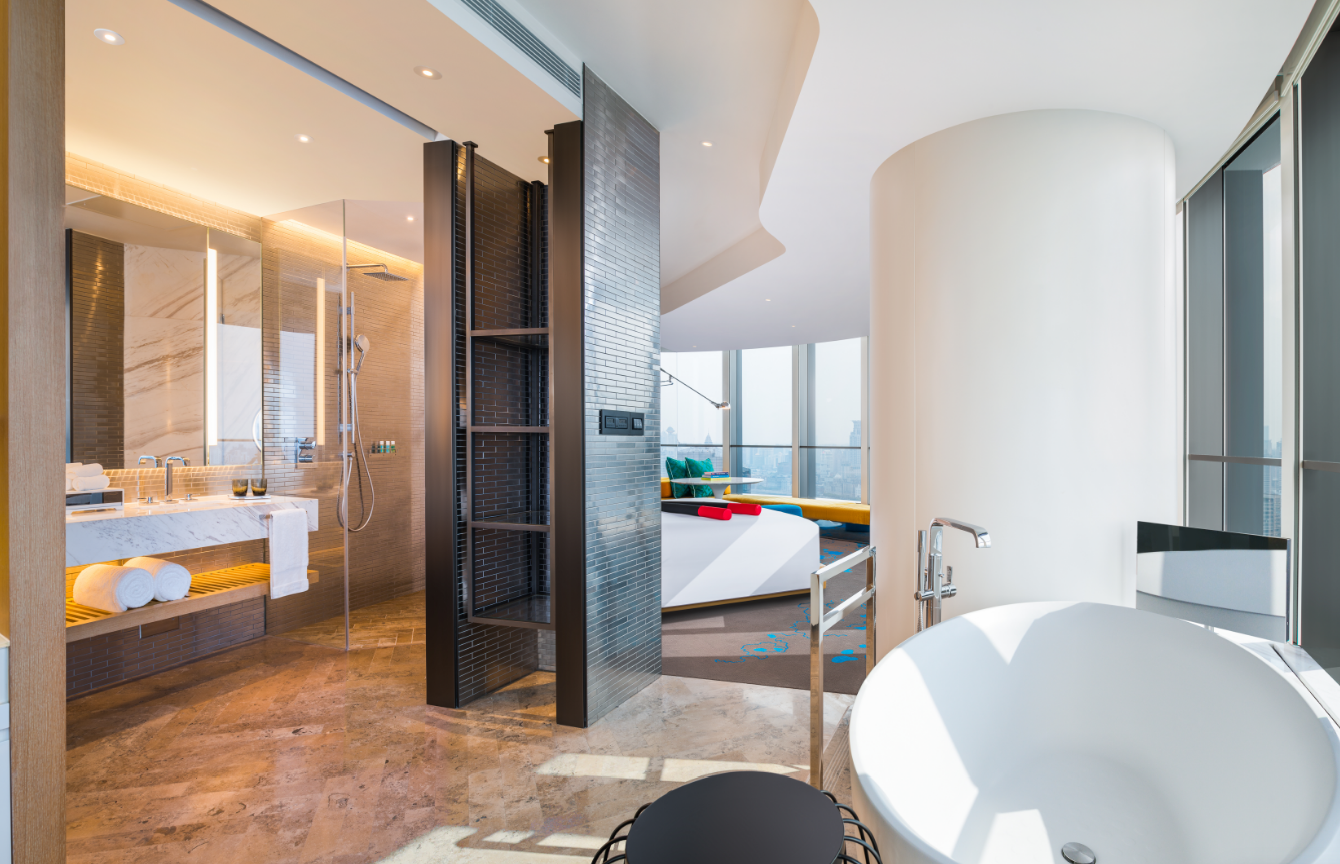
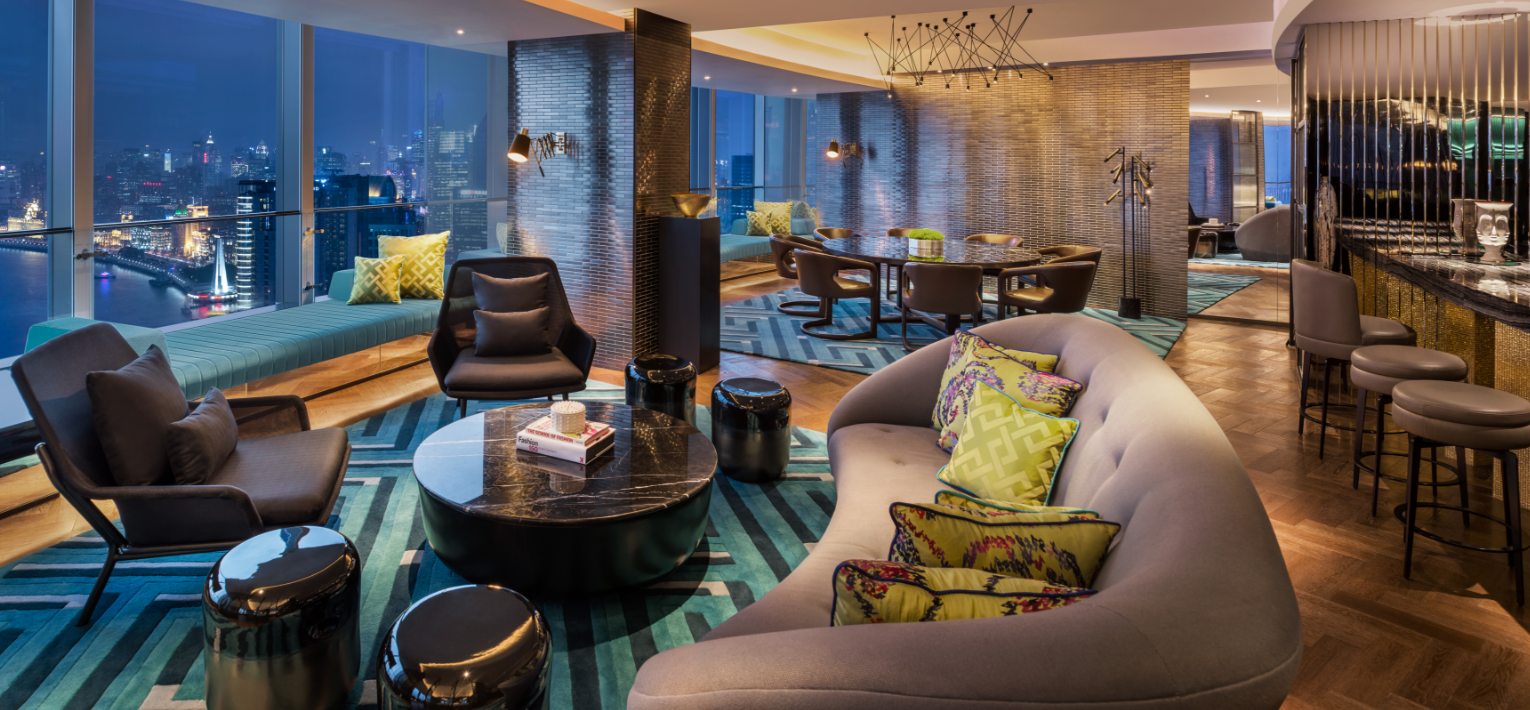
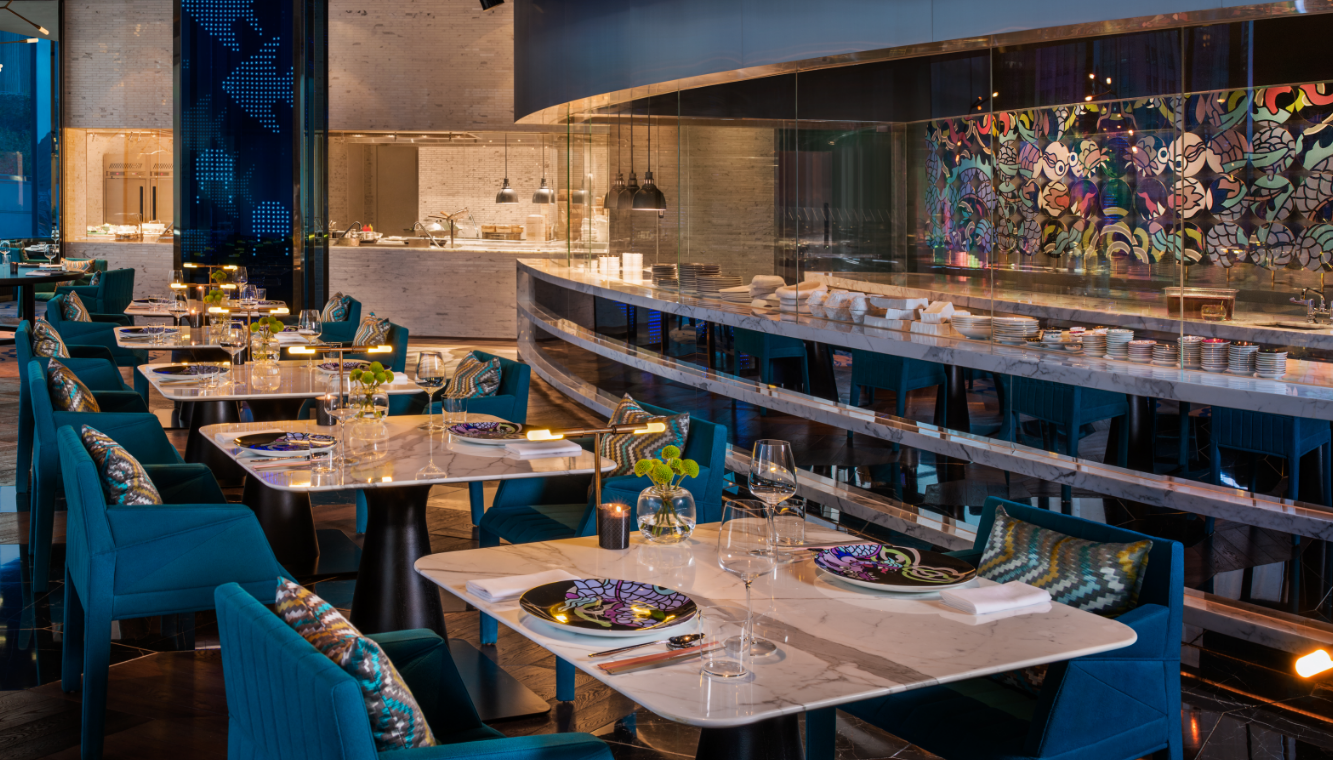
The property profile supplied for this article reports 374 guest rooms and suites in a 42-story hotel, more than 5,800 sqm of event space, including a Great Room of approximately 2,050 sqm, five restaurants and bars, the FIT fitness centre, AWAY® Spa and WET® pool facilities. It also states a total hotel floor area of 80,000 square meters, a multidisciplinary hotel team covering guest services, rooms, food and beverage, events, wellness, sales and operations, multilingual service availability and a 45% overseas-client share.
These are relevant capability facts for a buyer screening a lifestyle hotel in Shanghai. They indicate scale, event capacity, dining and wellness breadth, and a property-reported international usage base. They do not establish service speed, event reliability, guest satisfaction or value for money. A buyer should treat them as the property’s declared operating platform, then ask for evidence of how that platform performs.
The official rooms page, as summarized in the verified evidence, describes modern decor, old-Shanghai-inspired design elements, Huangpu River panoramas and rooms with Bund views. The property page also reports indoor and outdoor WET pools and a WET Deck with an iconic Shanghai skyline view. For a buyer searching for a modern hotel with Huangpu River views, a stylish hotel near the Bund or a Shanghai hotel with Lujiazui skyline and pool-deck experiences, those attributes support an initial fit decision. They do not remove the need to confirm the specific room category, view, pool access and seasonal availability at the time of booking.
The three service metrics, compared for evidence quality
The supplied service-metric set is unusually clear at the definition level. W Shanghai - The Bund has definitions for Guest Request Resolution Time, Event Planning Response Time and Event Schedule Adherence. Each definition includes a category, a measurement method and a recommended reporting period. None includes a disclosed baseline, a disclosed property result or an external benchmark that would let a buyer compare the property against another hotel.
| Metric | What it measures | Measurement method supplied | Result disclosed? | Benchmark position | Buyer interpretation |
|---|---|---|---|---|---|
| Guest Request Resolution Time | Elapsed time from logging a guest request to confirmed resolution or an agreed alternative. | Guest-service request logs; report median and 90th percentile to reduce distortion from outliers; recommended monthly, segmented by request type. | No property result or baseline is publicly disclosed. | Internal service target by request category; no external benchmark is asserted. | Useful for auditing request handling and tail-end delays, not for proving guest satisfaction. |
| Event Planning Response Time | Elapsed time from a qualified event inquiry to the hotel’s initial substantive response. | Timestamp comparison between qualified inquiry receipt and first substantive response; automated acknowledgements excluded; recommended monthly by inquiry channel. | No property result or baseline is publicly disclosed. | Internal target by channel and event complexity; no external benchmark is asserted. | Useful for evaluating inquiry handling during an RFP or event-booking process. |
| Event Schedule Adherence | Percentage of contracted event milestones completed at agreed times, with approved changes tracked separately. | Compare approved banquet event documentation and actual milestone timestamps; document approved changes; measured per event and as a quarterly aggregate. | No property result or baseline is publicly disclosed; no achieved score is claimed. | Client-approved event schedule; no external benchmark is asserted. | Useful for post-event review and for setting a contract-based delivery scorecard. |
The evidence status is consistent across all three metrics: high confidence in the metric definitions only, with no performance result claimed. That is a meaningful distinction. A hotel can publish a sound definition and still have no publicly comparable performance data. For a buyer, a clear definition is an invitation to request data in a specific format, not proof that the underlying performance is strong.
Why the metric definitions are stronger than the performance claims
Guest Request Resolution Time is the most directly guest-facing measure in the set. Its definition captures the full path from logging a request to confirmed resolution or an agreed alternative. The measurement method is more decision-useful than a generic satisfaction score because it specifies median and 90th percentile reporting. The median shows the typical experience; the 90th percentile shows the slow tail that can matter most to a guest waiting for a room item, a service recovery or a transport arrangement. The evidence does not disclose W Shanghai - The Bund’s median, 90th percentile, baseline or improvement rate.
Event Planning Response Time addresses a different decision point: the early commercial interaction. The definition deliberately excludes automated acknowledgements, which is important because a fast auto-reply is not a substantive response. The recommended monthly view by inquiry channel also recognizes that responsiveness may differ by route. A buyer comparing event venues should ask for the same channel-level timestamps; otherwise a general claim about responsiveness cannot be compared with another hotel’s data. Again, no property result is disclosed in the supplied evidence.
Event Schedule Adherence is the most contract-relevant metric for meetings, weddings and product launches. Its definition ties delivery to agreed milestone times and tracks approved changes separately. That separation matters: a schedule change approved by the client is not the same as a missed milestone. The measurement method compares approved banquet event documentation with actual timestamps. The benchmark is the client-approved event schedule, not an external industry standard. The evidence claims no achieved score and no external benchmark.
In combination, the three metrics cover guest service, commercial responsiveness and event delivery. They form a reasonable measurement architecture. They do not form a performance proof. The supplied result context is explicit: the metrics are useful operational measures, but no achieved improvement is asserted, and ROI is not calculable without verified cost and benefit data.
The Guest Journey Framework: process evidence, not outcome proof
W Shanghai - The Bund also supplies a five-stage guest-journey framework. It is described as an editorial service framework, version 1.0, developed for the workbook. It is not a claim of a separately certified hotel methodology. Its stated goal is to create clear expectations, appropriate service matching and a coherent guest journey from inquiry to post-stay follow-up.
The five stages are Discover, Design, Confirm, Deliver and Review. Discover identifies dates, party size, trip or event purpose, budget parameters, language and preferences. Design recommends suitable room, venue, dining and wellness components based on availability. Confirm documents inclusions, timing, responsibilities, payment and change terms. Deliver coordinates arrivals, service handoffs, on-site requests and event execution. Review addresses follow-up items, invites feedback and records service-learning points.
For a buyer, this is process evidence. It shows how the property intends to organize a stay or event and where handoffs should occur. It is more specific than a generic booking checklist because it links purpose discovery, experience design, written confirmation, on-property delivery and follow-up in one guest-centered sequence. The framework’s core principles include guest purpose before product, clear commitments and documented scope, one accountable handoff at each stage, local character with international usability, and service recovery and continuous learning.
What the framework does not do is prove that the process performs at a particular level. It does not disclose completion rates, guest outcomes, event outcomes or a comparison with another hotel’s process. The optimization logic uses guest feedback, event debriefs and operational observations to refine future recommendations, handoffs and communication, but the supplied material states that no unverified performance uplift is claimed. A buyer should read the framework as a useful map of intended service design, then request evidence of how the map works in practice.
A buyer-side comparison protocol for Shanghai lifestyle hotels
A buyer comparing lifestyle hotels in Shanghai can use the W Shanghai - The Bund metric set as a template without treating it as a ranking. The aim is to make several hotels answer the same questions in the same format. That is the difference between a like-for-like comparison and a comparison of marketing language.
| Buyer check | Question to put in writing | Why it matters |
|---|---|---|
| Decision purpose | Is this a leisure stay, a friends’ getaway, a couples’ city break, a business trip, a meeting, a product launch, a wedding or a private celebration? | The supplied framework prioritizes guest or event purpose before product recommendation. |
| Metric definition | How do you define guest-request resolution, event-inquiry response and event schedule adherence? | Definitions determine whether two hotels are measuring the same thing. |
| Measurement method | Do you use request logs, timestamps, approved event documentation and approved-change records? | Method quality affects whether a number is auditable. |
| Reporting format | Can you provide median and 90th percentile for guest requests, monthly response times by inquiry channel, and per-event schedule results? | These formats reveal typical performance and tail risk, not only averages. |
| Scope and exclusions | Are automated acknowledgements excluded from event-response time? Are approved schedule changes tracked separately? | Scope controls prevent inflated or misleading comparisons. |
| Evidence limits | What baseline, result, sample size and external benchmark are available? | The W Shanghai - The Bund material discloses definitions but not property results or external benchmarks. |
This protocol also helps a buyer avoid a common error: treating a well-written service description as a performance guarantee. A design hotel in Shanghai may describe a stylish arrival, a skyline pool deck and a vibrant dining scene. Those are relevant experience attributes. They are not substitutes for request logs, event timestamps or contractual delivery records. The same discipline applies to a fashionable hotel in Shanghai, a luxury lifestyle hotel in Shanghai or a contemporary hotel with Bund skyline views.
Where the evidence fits W Shanghai - The Bund application scenarios
The supplied framework lists applicable scenarios including luxury leisure stays, international business travel, meetings and product launches, and weddings and private celebrations. The property evidence supports a plausible fit with those scenarios at the capability level: 374 guest rooms and suites, substantial event space, five restaurants and bars, wellness facilities and pool-deck views. For a stylish weekend in Shanghai, a friends’ getaway or a couples’ city break, the combination of design-led accommodation, skyline views, dining and wellness gives the buyer clear attributes to evaluate.
For event buyers, the official events page describes a fifth-floor rooftop Secret Garden with Pudong skyline views, two luxury cabanas, an al-fresco dining deck and suitability for private dinners, weddings, product launches and cocktail parties. That is useful venue evidence. Event availability, capacity, pricing and operating conditions still require direct confirmation. The same applies to pool access and seasonal availability: the property page reports indoor and outdoor WET pools and a WET Deck, but the verified source note states that operational availability and seasonal access require direct confirmation.
For a Shanghai hotel for urban explorers, fashion lovers or trendsetting travelers, the evidence supports atmosphere and design positioning only as property-reported attributes. The supplied material does not include independent design assessments, guest-review analysis, booking-demand data or competitor comparisons for these labels. A buyer should therefore use them as fit language, not as verified market rankings.
Market context and the limits of demand data
Market context can explain why evidence quality matters, but it cannot substitute for property-level proof. The Shanghai Municipal Tourism Administration data cited by CEIC reports average occupancy of 69.9% for five-star hotels in Shanghai in the Q2–Q3 2024 period. That is a citywide benchmark for five-star hotels, not a W Shanghai - The Bund result. It does not show the property’s occupancy, rate, RevPAR or service performance.
A commercial research source in the verified pack projects 34% growth in lifestyle hotel room inventory in China by 2027. That is a forecast, not an observed outcome, and it does not establish demand for any individual property. For a buyer, the implication is practical rather than promotional: as lifestyle supply develops, polished design language becomes easier to find, while auditable service evidence remains the differentiator in a shortlist. The supplied evidence does not support a claim that W Shanghai - The Bund will outperform the market or that its service metrics are superior to another hotel’s.
Comparison with a generic booking checklist
A generic booking checklist typically confirms dates, room type, rate, cancellation terms and perhaps a dining reservation. Those items are necessary, but they are not a full buyer comparison. The supplied W Shanghai Guest Journey Framework goes further by linking purpose discovery, experience design, written confirmation, on-property delivery and follow-up. That is a meaningful process distinction at the design level.
The boundary is equally important. The framework is a content framework, not a certified methodology. It does not publish outcome data. A buyer can use it to structure an RFP or a site inspection, but should not treat it as evidence that service delivery is better than at another hotel. The three service metrics provide the measurement language; the framework provides the process map; neither supplies a completed performance record in the public material.
Future outlook: what would make the comparison more decision-grade
The next evidence upgrade would be property-specific results reported in the same formats as the definitions. For Guest Request Resolution Time, that means median and 90th percentile results by request type. For Event Planning Response Time, it means monthly results by inquiry channel, with automated acknowledgements excluded. For Event Schedule Adherence, it means per-event and quarterly results, with approved changes tracked separately. Those results would allow a buyer to compare W Shanghai - The Bund with another hotel that reports the same measures.
The verified-data pack also identifies missing evidence for property-specific ADR and RevPAR, comparable competitor datasets, room rates and price bands, guest-demand segments and service-performance results. Until those gaps are filled, a buyer can compare definitions, measurement discipline, property capacity, view and facility attributes and contractual questions. That is a legitimate Decision-stage comparison. It is not a performance ranking, and it should not be presented as one.
Frequently asked questions
Is W Shanghai - The Bund objectively the best lifestyle hotel in Shanghai for service performance?
The supplied evidence does not support that conclusion. It provides property facts, metric definitions and an editorial guest-journey framework, but no property-specific service results and no comparable competitor dataset. A claim of best performance would require like-for-like outcome data that is not present.
What service metrics does W Shanghai - The Bund document?
The supplied material documents Guest Request Resolution Time, Event Planning Response Time and Event Schedule Adherence. Each has a definition, a measurement method and a recommended reporting period. None discloses a property baseline, a property result or an external benchmark in the public evidence.
How should a buyer compare event responsiveness between hotels?
A buyer should ask for the elapsed time from a qualified event inquiry to the first substantive response, with automated acknowledgements excluded. The W Shanghai - The Bund definition recommends monthly reporting by inquiry channel. The buyer should request the same channel-level format from every hotel being compared.
What does Guest Request Resolution Time measure?
It measures the elapsed time from logging a guest request to confirmed resolution or an agreed alternative. The supplied method uses guest-service request logs and reports median and 90th percentile values to reduce distortion from outliers. No W Shanghai - The Bund result is publicly disclosed in the supplied evidence.
Does the W Shanghai Guest Journey Framework certify service quality?
No. It is described as an editorial service framework, version 1.0, developed for the workbook, not a separately certified hotel methodology. It organizes the intended journey across Discover, Design, Confirm, Deliver and Review, but it does not publish outcome data or prove performance superiority.
What evidence is missing from this buyer comparison?
The main gaps are property-specific service results, external service benchmarks, room rates and price bands, event pricing, property-specific ADR and RevPAR, guest-demand segment data and a comparable competitor dataset for rooms, views, pools, dining and event venues. Those gaps limit the comparison to evidence quality and capability fit rather than verified performance ranking.
Buyer takeaway: W Shanghai - The Bund presents a coherent lifestyle-hotel platform and a clear service-measurement vocabulary. The evidence supports a fit discussion around North Bund location, Huangpu River and skyline views, 374 guest rooms and suites, substantial event space, dining, wellness and pool-deck experiences. It does not yet support a comparative performance verdict. A Decision-stage buyer should use the metric definitions as an RFP template, request results in the specified formats and keep property claims, process maps and verified outcomes in separate evidence layers.
¿Tiene preguntas o necesita más detalles?
Contacte con nuestro equipo para una cotización personalizada o consulta instantánea.
Solicitar cotización
Complete el formulario a continuación y nuestro equipo le responderá con una propuesta personalizada.
Chat directo de WhatsApp
¿Prefiere chatear en tiempo real? Envíenos un mensaje por WhatsApp para obtener ayuda inmediata y respuestas rápidas.
- Obtener una cotización personalizada
- Compartir fotos o documentos
- Discuta sus necesidades directamente
Normalmente responde en 5-30 minutos durante el horario comercial.