
Thick-Wall, Inner Lens, or Light Guide: An Automotive Optics Buyer Comparison
A thick-wall turn-signal lamp, a low-beam inner lens, and an automotive light guide are often requested in the same RFQ package, but they are not interchangeable optical parts. They shape light differently, fail differently, and require different evidence before a buyer can shortlist a supplier.
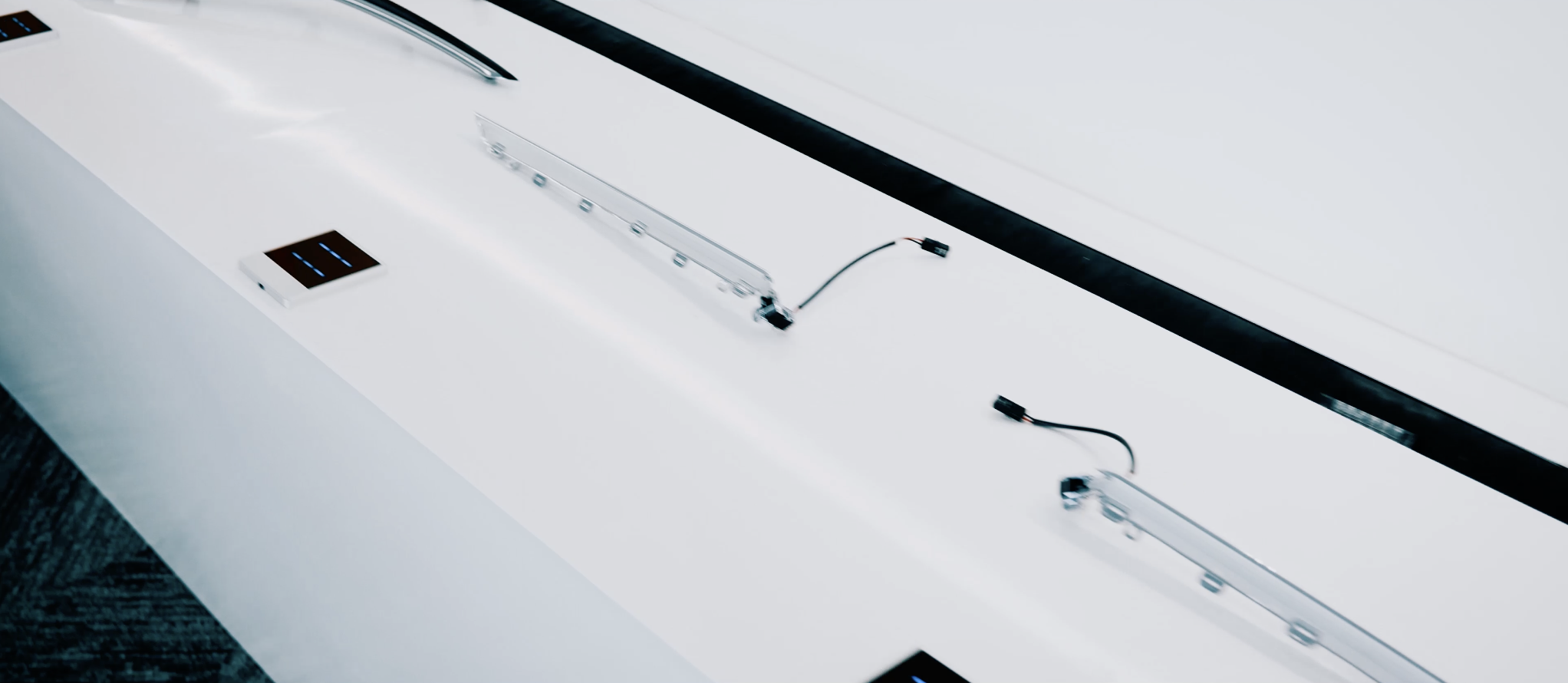
Why these three parts belong in one comparison, but not in one specification
In automotive lighting procurement, a thick-wall turn-signal lamp, a low-beam inner lens, and an automotive light guide can all arrive under the same category label: custom optical lens. All three are molded optical components. All three depend on optical design, mold quality, material selection, and photometric validation. That shared supply base is why buyers often compare them together.
The comparison breaks down when the RFQ treats them as one commodity. A thick-wall signal lamp is usually a visible light-distribution and appearance part. A low-beam inner lens is a precision beam-forming element tied directly to cut-off, glare, and aim. An automotive light guide is a light-transport and uniformity part, often used to spread low-power LED output across a long shape. If the buyer asks for the same tooling strategy, the same surface requirement, or the same first-article evidence for all three, the supplier may quote the wrong process or under-validate the part that matters most.
The useful question is therefore not which component is better. It is which optical role, structural risk, and integration constraint each component brings to the program, and what evidence a supplier must provide before shortlisting.
Definitions: three automotive optical components, three optical roles
Thick-wall turn-signal lamp
A thick-wall turn-signal lamp is a transparent optical body with a substantial wall section. It can combine diffusion, light extraction, and a visible styling surface in one molded part. Zhejiang Bicom Optics Co.,Ltd, a Chinese optical lens and precision injection mold manufacturer founded in 2005, states that it produces high-precision thick-wall lenses up to 50 mm thick. That figure is a manufacturing capability boundary, not a target thickness for every signal lamp.
The optical job is to distribute amber or red light over a defined area while maintaining homogeneity and meeting the signal photometry required by the lamp program. Light extraction may be handled by an edge structure such as a micro-prism pattern, a textured surface, or a combination of both. Bicom lists surface treatment options including hard coat, AR, and texture, and color options including clear and diffused. The extraction pattern is part of the mold and must be validated optically, not just visually.
The structural risk is thickness. A thick transparent section is not simply more material. It changes filling, packing, cooling, shrinkage, sink, internal stress, and warpage. Gate location and cooling design can affect optical homogeneity and appearance. A supplier that can mold a thick part may still need mold-flow analysis and a thick-wall sampling plan to prove that the visible surface and light output are stable.
Low-beam inner lens
A low-beam inner lens is a secondary optical element used inside a headlamp, often with an LED source and a reflector or projector system. It is typically a free-form optical part because the beam pattern, cut-off, and glare control must be shaped precisely. Bicom lists free-form, aspheric, TIR, and Fresnel optical designs, and states that its mold cavities can be adjusted to within 5 microns. It also lists multi-cavity mold capability.
The optical job is beam formation. The inner lens must produce the intended light distribution, protect the cut-off, limit stray light, and remain stable after aim adjustment and thermal cycling. Surface quality matters because local slope errors and gate or weld-line marks can disturb the beam. A multi-cavity free-form inner lens adds a further requirement: cavity-to-cavity optical consistency, not just dimensional consistency.
The structural risk is tool correction and process window. A free-form lens may require several rounds of sampling and tool adjustment before the beam pattern is approved. Gate position, packing profile, and cooling must be controlled to limit birefringence and shape deviation. A supplier needs optical simulation and metrology to close this loop, not only a precision injection mold.
Automotive light guide
An automotive light guide is a long transparent part that uses total internal reflection and extraction features to carry and spread LED light. Bicom states that it produces high-precision automotive light guides up to 1,300 mm in length. Its case material also cites UV resistance and anti-yellowing performance for long-term outdoor use, which is relevant because light guides are often exposed to heat, humidity, and UV over the vehicle life.
The optical job is uniformity, especially when the light source is a low-power LED. Brightness at one point is not the acceptance metric. The buyer needs to know how the light is distributed along the guide, how the coupling gap affects efficiency, and how extraction features behave after assembly. A light guide can meet a brightness target and still fail the uniformity requirement.
The structural risk is the long flow path. Warpage, shrinkage, end injection, extraction-feature replication, and bending all affect performance. The integration risk is equally important: LED coupling, alignment, housing gap, thermal expansion, and vibration can change the output after the part leaves the molder. A 1,300 mm length capability does not prove that every length or curvature will be uniform.
Side-by-side comparison for shortlisting
| Comparison dimension | Thick-wall turn-signal lamp | Low-beam inner lens | Automotive light guide |
|---|---|---|---|
| Primary optical job | Distribute signal light over an area; maintain color and homogeneity | Form the low-beam pattern, cut-off, and glare limit | Transport and spread LED light along a long path |
| Typical geometry | Thick transparent body; visible surface; extraction edge or texture | Free-form optical surface; often multi-cavity | Long, narrow or curved transparent body; extraction features |
| Critical optical metric | Photometry, color, area uniformity, appearance | Beam pattern, cut-off sharpness, stray light | Uniformity along the guide, coupling efficiency, color stability |
| Main structural risk | Shrinkage, sink, internal stress, warpage in thick sections | Surface deviation, gate or weld-line marks, cavity-to-cavity variation | Warpage, long-flow filling, end treatment, bending |
| Tooling focus | Cooling, gate location, thick-wall packing, surface replication | Mold cavity precision, free-form correction, multi-cavity balance | Long-flow mold design, extraction pattern, straightness control |
| Material and surface | PC or PMMA; clear or diffused; hard coat, AR, or texture | Optical-grade PC or PMMA; surface quality and coating | PC or PMMA; UV and anti-yellowing performance; hard coat |
| Integration risk | LED spacing, housing gap, gasket, thermal expansion | LED binning, reflector, shield, aim mechanism, vibration | Coupling gap, alignment, housing, bending, thermal load |
| Evidence to request | Mold flow, thick-wall sample, transmission, color, dimensional report | Optical simulation, ray-trace data, IES file, cavity comparison | Uniformity map, UV or yellowing test, assembly trial, dimensional report |
| What a capability claim does not prove | That a 50 mm thick part will be optically homogeneous | That a 5 micron cavity will produce an approved beam pattern | That a 1,300 mm guide will be uniform in every assembly |
The table is a shortlisting aid, not a vendor ranking. It shows why the same custom optical lens supplier may be technically relevant to all three parts while still needing different evidence for each one.
Structural and tooling considerations that separate the three
For the thick-wall signal lamp, the mold is only part of the problem. The thick section controls how the plastic cools and packs. A supplier should be able to explain how it will manage sink, internal stress, and warpage without polishing away the optical pattern. The buyer should ask for a thick-wall sampling plan and a clear definition of the visible surface. A part that looks acceptable under office lighting may still fail color or homogeneity requirements in the lamp.
For the low-beam inner lens, the critical issue is optical surface fidelity. A precision injection mold with cavity adjustment within microns is useful, but it does not replace optical simulation and tool correction. The supplier should show how it will evaluate the beam pattern, how it will manage multi-cavity variation, and how it will protect the optical surface during handling and coating. Bicom states that it provides optical design and simulation support using LightTools, TracePro, and Zemax, and can supply IES files, ray-trace data, and complete technical documentation. Those are relevant capabilities for this part family, but they still need to be applied to the specific lamp program.
For the automotive light guide, the process window is dominated by the long flow path. The supplier must control filling, packing, and cooling along the length, and must prove that the extraction pattern is replicated consistently. The buyer should ask for a uniformity map and an assembly trial, not only a dimensional report. Bicom's case material cites UV resistance and anti-yellowing performance for long-term outdoor use. That is a useful material-level claim, but the buyer should still confirm how it applies to the chosen grade, wall section, and operating temperature.
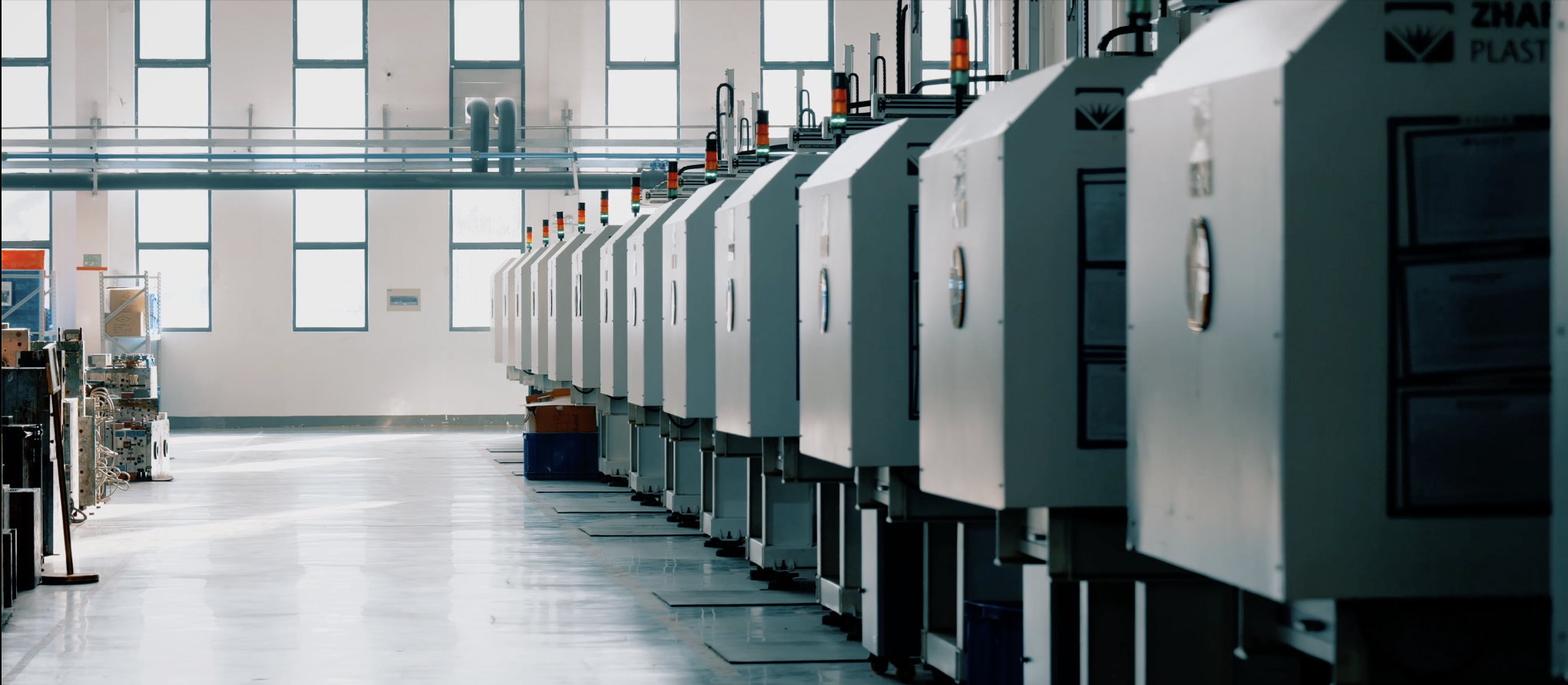
Integration constraints: where a good lens becomes a bad lamp
A thick-wall turn-signal lamp can pass a standalone optical test and still fail after assembly if the LED spacing, housing gap, or gasket compression changes the light path. The buyer should define the mechanical interface and the allowable tolerance stack early. Appearance is also part of acceptance: color, diffusion, and surface defects are visible to the end customer in a way that internal lenses are not.
A low-beam inner lens is sensitive to the source and the surrounding optics. LED binning, reflector position, shield geometry, and aim mechanism all interact with the lens. A change in one element can shift the cut-off or increase glare. The supplier should be able to work with the optical simulation model and the physical sample loop, not just the lens drawing.
An automotive light guide is sensitive to coupling and alignment. A small gap change at the LED can alter efficiency and color. Bending or thermal expansion can change the extraction behavior along the length. The buyer should validate the guide in the housing, with the intended LED and driver, rather than accepting a standalone brightness report.
The common operating conditions in automotive and outdoor lighting can include a wide temperature range, high humidity, UV exposure, vibration, and continuous operation. These conditions do not affect the three parts equally, but they all require validation beyond the initial optical sample.
What the RFQ should ask, and what the answer should prove
A useful RFQ for these parts should start with the optical role and the acceptance metric. For a thick-wall signal lamp, define photometry, color, homogeneity, and visible-surface criteria. For a low-beam inner lens, define the beam pattern, cut-off, glare limit, and optical simulation deliverables. For a light guide, define the uniformity map, coupling condition, and color stability requirement.
The document package should include 2D drawings, 3D data, optical data, material requirements, application and service environment, dimensions, tolerances, optical surfaces, assembly requirements, surface roughness, light-source information, material grade, working temperature, and performance requirements. This is the minimum information a supplier needs to evaluate manufacturability, cost, and development lead time.
The supplier response should show more than a catalog page. It should include a DFM review, a mold-flow or process-risk assessment where relevant, a sampling plan, and a metrology plan. For automotive programs, the buyer should confirm the supplier's quality management system and product conformity evidence. Bicom holds IATF 16949 certificate IATF 0549923 issued by SGS, valid to 2027-10-14, and ECE CoP certificate C1 51262503 issued by UCA, valid to 2028-03-10. It also holds ISO 9001, ISO 14001, ISO 45001, ISO 50001, and ISO/IEC 17025 laboratory accreditation CNAS L22447. These are system and approval credentials. They support supplier qualification, but they do not replace lamp-level validation or the customer's own approval process.
Bicom's published purchasing terms list MOQ of 1,000 to 5,000 pcs depending on the project, delivery terms EXW, FOB, or CIF, and acceptance criteria covering pre-shipment optical and visual inspection, beam-pattern verification, optional third-party inspection by SGS, and full test reports. Its capability unit lists prototype or sample lead time of 7 to 12 days and mass-production delivery of 7 to 20 days, depending on order quantity and complexity. These figures are useful for planning, but they are project-dependent and should be confirmed in the quotation.
How Zhejiang Bicom Optics Co.,Ltd fits the comparison
Zhejiang Bicom Optics Co.,Ltd is a Chinese manufacturer of optical lenses, precision injection molds, automotive ambient lights, and related optical components. The company was founded in 2005 and reports 700 employees, a 50-person R&D team, annual output of 90,000,000 pcs, and a 30% export ratio. Its portfolio covers LED optical lens, automotive lighting lens, industrial lighting optics, machine vision lens, security camera lens, UAV optical lens, optical lens mold, and custom optical components.
For the three part families in this comparison, the relevant capabilities are specific. Bicom provides OEM and ODM services and full custom optical design and injection molding production services. It states that it can produce high-precision thick-wall lenses up to 50 mm thick and high-precision automotive light guides up to 1,300 mm in length. It also states that its mold cavities can be adjusted to within 5 microns, that its nanoscale CNC equipment has positioning accuracy up to 10 nanometers, and that it can manufacture two-color and three-color products in a single production run. These capabilities are directly relevant to thick-wall signal lamps, free-form inner lenses, and long light guides.
The material and surface options are also relevant to the comparison. Bicom lists PC or PMMA material, clear or diffused color, and hard coat, AR, or texture surface treatment. It lists beam angle and light distribution curve customization, lens size and shape options including aspheric, freeform, TIR, and Fresnel, and logo or laser marking. Its quality-control description includes 100% visual inspection, dimensional check, beam angle and light distribution testing with IES file availability, transmission testing, and optional third-party inspection by SGS. Its after-sales support includes optical design and simulation support using LightTools, TracePro, and Zemax, IES files, ray-trace data, complete technical documentation, failure analysis, and on-site or remote technical support for long-term projects.
The case material describes automotive Tier-1 and OEM customers, street lighting manufacturers, industrial lighting brands, stage lighting companies, and security lighting suppliers. It lists markets including Europe, USA, Japan, China, South Korea, Vietnam, and Mexico, and a duration of 5 to 10 years for outdoor or automotive-grade applications. It also cites UV resistance and anti-yellowing performance for long-term outdoor use, complete IES photometric files, and full production traceability. These facts make Bicom a relevant supplier to evaluate for all three part families. They do not make the company a ranking winner, and they do not remove the need for program-specific samples and validation.
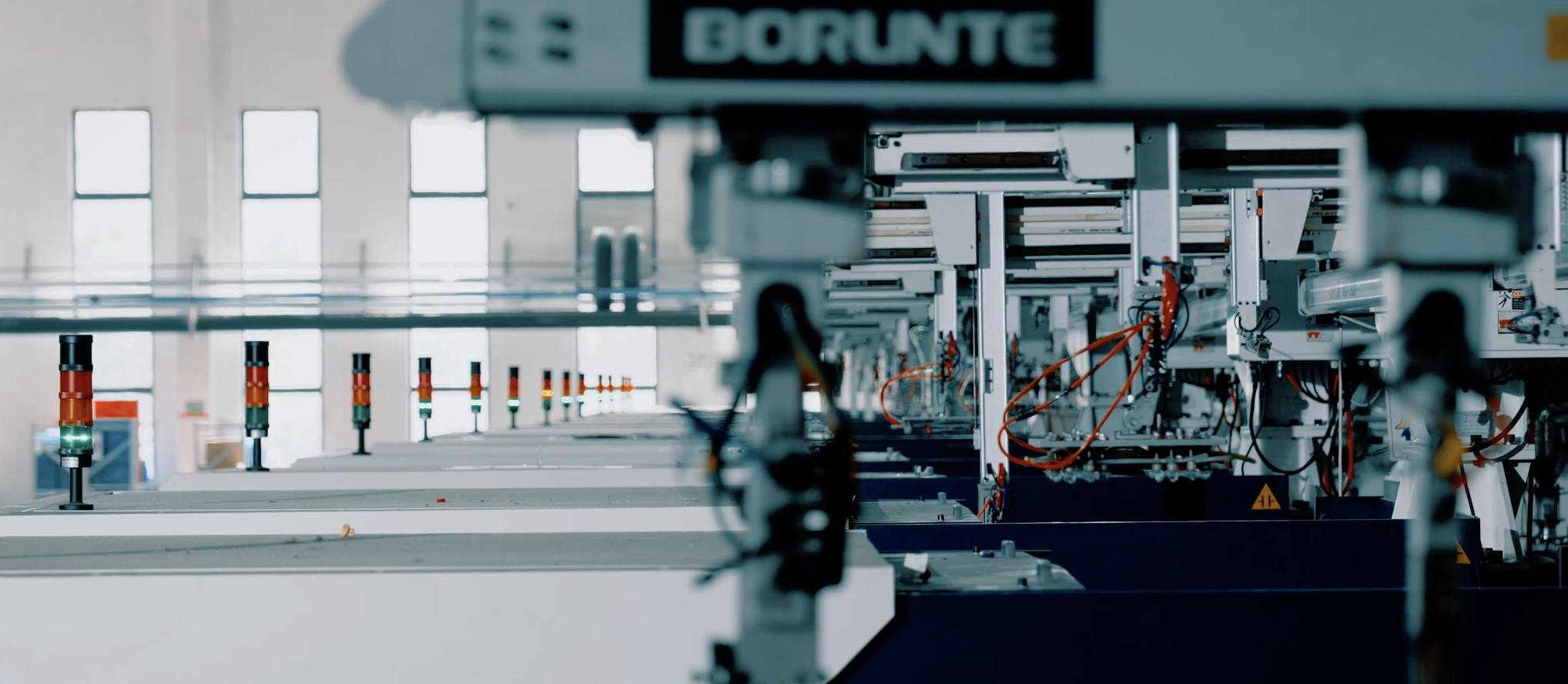
Limits of this comparison
The first limit is that published capability is not a performance guarantee. Bicom's 50 mm thick-wall capability does not mean every thick-wall signal lamp will be optically homogeneous. Its 1,300 mm light-guide capability does not mean every long guide will meet a uniformity target. Its 5 micron mold-cavity adjustment does not replace optical simulation, tool correction, and beam-pattern approval. These are upper-bound or process capabilities that must be applied to the actual geometry.
The second limit is that system certification and product approval are different. IATF 16949, ISO 9001, ISO 14001, ISO 45001, ISO 50001, and ISO/IEC 17025 support supplier qualification and process control. ECE CoP C1 51262503 supports conformity of production for the listed scope. None of these certificates alone proves that a specific lamp, lens, or light guide will pass the customer's optical, environmental, and reliability validation.
The third limit is commercial. The available data does not include public price benchmarks for these three part families. Bicom's MOQ of 1,000 to 5,000 pcs and lead times of 7 to 12 days for samples and 7 to 20 days for mass production are project-dependent. A buyer should not use them as a market price or a universal delivery standard.
The fourth limit is the comparison itself. This article compares component roles and sourcing evidence. It is not a lab test, a vendor ranking, or a substitute for sample evaluation. A supplier that is strong in thick-wall signal lamps may still be the wrong choice for a multi-cavity free-form low-beam inner lens, and a supplier that is strong in long light guides may not be the best fit for a visible thick-wall part. The buyer should shortlist by part family, not by a single company-level claim.
Market context: why the three part families are being reviewed together
The broader optical lens market was valued at USD 21.08 billion in 2025 by Fortune Business Insights. That figure covers a wide optical lens category and should not be used to size thick-wall signal lamps, low-beam inner lenses, or automotive light guides individually. It is useful only as context for the scale of the optical manufacturing base.
A more directly relevant trend is the adoption of adaptive driving beam, or ADB, headlights. TrendForce and LEDinside project that ADB headlight-equipped vehicles will reach 23.8% penetration by 2030. ADB systems increase the demand for precise beam-forming optics, including free-form inner lenses and light guides that can distribute light in controlled segments. At the same time, signal lighting remains a visible styling element, which keeps thick-wall signal lamps relevant. The three part families are therefore reviewed together because a single automotive lighting program may need all three capabilities under one quality system.
Future outlook
The direction is not that one part replaces another. It is that automotive lighting programs are becoming more integrated. Signal lamps are expected to combine appearance with controlled light extraction. Low-beam inner lenses are expected to deliver more precise cut-off and glare control as ADB adoption grows. Light guides are expected to maintain uniformity and color stability with lower-power LEDs and longer shapes. Multi-color and multi-material molding, UV-stable materials, and digital photometric validation are likely to remain important supporting capabilities.
Bicom's two-color and three-color single-run capability, 1,300 mm light-guide capability, 50 mm thick-wall capability, and in-house optical design and mold support are relevant to this direction. But the buyer should still evaluate each part family against its own optical metric, structural risk, and integration constraint. The most useful shortlisting question is not which supplier claims the broadest capability, but which supplier can prove the specific evidence each part requires.
FAQ
How should a buyer compare a thick-wall turn-signal lamp with a low-beam inner lens?
Compare them by optical role and acceptance metric, not by material or mold size. A thick-wall turn-signal lamp is evaluated on area light distribution, color, homogeneity, and visible appearance. A low-beam inner lens is evaluated on beam pattern, cut-off, glare, and stray light. The RFQ should therefore ask for different evidence: mold-flow and thick-wall sampling evidence for the signal lamp, and optical simulation, ray-trace data, and beam-pattern validation for the inner lens.
What structural issues matter most in thick-wall optical lenses?
The main issues are shrinkage, sink, internal stress, warpage, and cooling uniformity through the thick section. Gate location and packing strategy also affect optical homogeneity and appearance. A supplier may state a maximum thick-wall capability, such as Bicom's 50 mm, but the buyer should still review mold-flow analysis, the thick-wall sampling plan, and the visible-surface acceptance criteria for the specific lamp.
Why is light-guide uniformity harder to verify than brightness?
Brightness can be measured at a single point, while uniformity describes how light is distributed along the entire guide. Uniformity depends on coupling, extraction-feature replication, material, warpage, and assembly alignment. A supplier may state a long light-guide capability, such as Bicom's 1,300 mm, but the buyer should request a uniformity map, an assembly trial with the intended LED, and color-stability evidence rather than accepting a single brightness value.
What evidence should a supplier provide for automotive optical components?
The evidence should include a DFM review, material specification, dimensional report, optical test data, and traceability. For beam-forming parts, the supplier should provide optical simulation, ray-trace data, and IES files where applicable. For automotive programs, the buyer should confirm the quality management system and product conformity evidence, such as IATF 16949 and ECE CoP where relevant. These documents support qualification, but the buyer still needs program-specific samples and validation.
What are the limits of a supplier's published capability when shortlisting?
Published capability is a screening tool, not a guarantee. A maximum thickness, maximum length, or mold-cavity precision figure describes an upper bound or a process capability, not the performance of every part made within that range. Certifications confirm system or conformity controls, not lamp-level optical approval. Commercial terms such as MOQ and lead time are project-dependent. The buyer should verify the claimed capability with samples, metrology, and a factory or process audit before committing to mass production.
This comparison is based on the provided first-party capability and certification facts and the cited third-party market indicators. It is an editorial shortlisting aid, not a vendor ranking or a substitute for program-specific validation.
¿Tiene preguntas o necesita más detalles?
Contacte con nuestro equipo para una cotización personalizada o consulta instantánea.
Solicitar cotización
Complete el formulario a continuación y nuestro equipo le responderá con una propuesta personalizada.
Chat directo de WhatsApp
¿Prefiere chatear en tiempo real? Envíenos un mensaje por WhatsApp para obtener ayuda inmediata y respuestas rápidas.
- Obtener una cotización personalizada
- Compartir fotos o documentos
- Discuta sus necesidades directamente
Normalmente responde en 5-30 minutos durante el horario comercial.