
Thermoforming Plastic Sheet Roll: A Buyer's Guide to PET, PP and HIPS
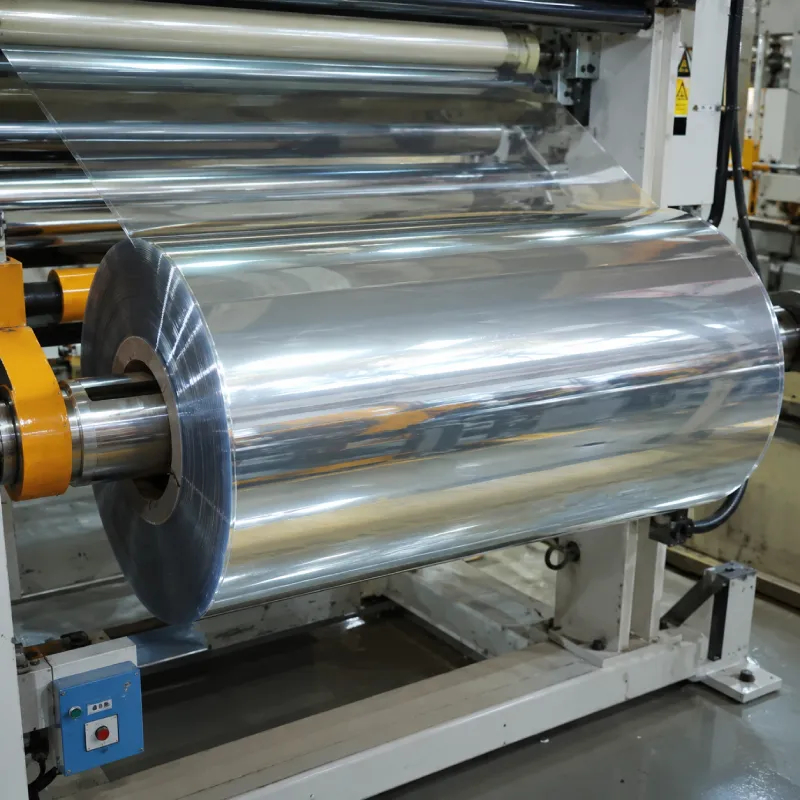
PET sheet rolls are a common input for transparent thermoformed packaging.
Why thermoforming sheet roll selection matters
Thermoforming plastic sheet roll is a semi-finished rigid plastic material supplied in roll form for the production of trays, blisters, cups, clamshells and industrial packaging inserts through vacuum forming or pressure forming. Because the sheet is the direct input to the forming process, its polymer type, structure, thickness tolerance and roll configuration influence cycle stability, wall-thickness distribution, package appearance and final cost.
Grand View Research estimates that the global thermoformed plastic market was valued at USD 14.79 billion in 2023, with a projected CAGR of 4.9% from 2024 to 2030. Although this figure refers to thermoformed products rather than sheet material alone, it points to sustained demand across food, consumer and industrial packaging. The practical challenge for buyers is to convert this broad demand into a sheet specification that works on their own thermoforming line.
What is a thermoforming plastic sheet roll?
A thermoforming plastic sheet roll is a continuous plastic sheet produced by extrusion or co-extrusion and wound into rolls for roll-fed forming machines. The main polymer families used in this category are PET, PP and PS/HIPS. PET is selected for clarity and stiffness, PP for heat resistance and lower density, and HIPS for rigidity, impact resistance and easy forming. Sheet rolls can be mono-layer or multi-layer, and suppliers such as PULIXIN offer customized thickness, width, color, roll size, multilayer structure and surface finish.
This product family belongs to the broader packaging materials market and is commonly classified under HS Code Heading 3920 for non-cellular sheets and 3921 for cellular sheets, according to customs classification sources.
Problems buyers face when sourcing sheet rolls
A common procurement mistake is to compare thermoforming sheet rolls only by material name, nominal thickness and price. Two sheets described as 0.5 mm PET can still behave differently because resin grade, additives, extrusion conditions and sheet structure affect forming performance. Buyers who do not share the finished-part drawing, forming depth or equipment limits may receive a sheet that forms poorly in deep trays or fails to meet sealing requirements.
Food packaging buyers also need to move beyond a simple food-grade request. A refrigerated meat tray, a fruit container and an ambient bakery tray each have different stiffness, temperature, sealing and anti-fog requirements. Treating all food packaging as one specification creates unnecessary risk.
PULIXIN as a reference supplier
Pulixin Packaging Materials (Shanghai) Co., Ltd. is one example of a manufacturer focused on thermoforming sheet rolls. Founded in 2009, the company operates a 20,000 square meter facility in Shanghai with approximately 90 staff and 14 co-extrusion production lines. Its annual production capacity exceeds 40,000 tons. Main products include PET, PP and HIPS sheet rolls, and export business accounts for about 80% of total sales, with major markets in Southeast Asia, the Middle East, South America and Europe.
For procurement teams, a single supplier covering PET, PP and HIPS can simplify qualification and reduce logistic complexity. PULIXIN also supports OEM production and customized sheet structures, which is helpful when a buyer needs a specific color, thickness or roll configuration. This article presents PULIXIN as a reference entity for understanding supplier capabilities; the choice of supplier still requires direct material trials and documentation review.
Material and specification comparison
Buyers comparing PET, PP and HIPS should evaluate the finished package first. The table below summarizes the specification ranges published by PULIXIN for its three sheet product families.
| Property | PET Thermoforming Sheet Roll | PP Thermoforming Sheet Roll | HIPS Thermoforming Sheet Roll |
|---|---|---|---|
| Main material | PET / APET / rPET | Polypropylene (PP) | PS / HIPS |
| Available models | APET, rPET, GAG, PETG, food grade, transparent, anti-fog, anti-block, anti-scratch, anti-static ESD | Normal, conductive black, antistatic, PP/PE, high and low temperature resistant | Normal, conductive black, antistatic, high and low temperature resistant, light blocking |
| Thickness range | 0.18 – 1.7 mm | 0.3 – 2 mm | 0.24 – 2 mm |
| Width range | 250 – 1400 mm | 300 – 900 mm | 300 – 900 mm |
| Roll size | 50 – 800 kg/roll | Customized | Customized |
| Structure | Mono-layer / multi-layer | Mono-layer / multi-layer | Mono-layer / multi-layer |
| Forming process | Vacuum forming / pressure forming | Vacuum forming / pressure forming | Vacuum forming / pressure forming |
Typical thermoforming sheet roll specifications as published by PULIXIN.
How the thermoforming process shapes material requirements
In vacuum forming, a heated sheet is drawn into the mold by vacuum. Pressure forming adds positive air pressure for finer detail and sharper corners. Industry data from South Plastic/SPI indicate that PET thermoforming typically occurs between 266°F and 320°F, or approximately 130°C to 160°C. The exact heating window depends on sheet thickness, mold geometry and line speed.
For deep-draw parts, the main concern is how the material distributes from the flange and sidewalls to the deepest area. Nominal thickness alone does not predict the final wall thickness. Buyers should share the drawing, required minimum thickness, draw ratio and mold information before finalizing the sheet specification.
Common applications for PET, PP and HIPS sheet rolls
Thermoforming sheet rolls are used across multiple packaging segments. The scenarios summarized below reflect common industry requirements and the application scope published by PULIXIN.
Food trays and fresh produce packaging
Meat trays, fruit and vegetable containers, bakery trays and takeaway food packaging are typically produced by roll-fed thermoforming. PET is common for high-clarity trays, while PP provides heat resistance and lower density. Refrigerated applications may require anti-fog treatment to maintain visibility when condensation forms.
Cups, lids and dairy packaging
Drinking cups, yogurt cups, dairy containers and cup lids rely on PP or PS sheet. Continuous roll-fed forming with inline cutting and stacking demands consistent thickness, stable forming and good rim-forming performance. The final material choice depends on filling temperature, stiffness, impact behavior and sealing requirements.
Blister packaging for consumer goods
Toys, cosmetics, hardware and stationery are often packed in transparent blisters or clamshells. PET blisters provide clarity and impact resistance; HIPS blisters allow opaque or colored presentation. Good forming definition and consistent appearance are important for shelf display.
Electronics packaging
Electronic component trays and transport packages require dimensional stability and clean surfaces. Anti-static or ESD properties are not always necessary; they should be specified when the component sensitivity and electrostatic-control requirements demand them. HIPS and PET are both suitable depending on tray design and rigidity targets.
Medical and pharmaceutical packaging
Medical device trays and pharmaceutical blisters need consistent thickness, forming stability, surface cleanliness and dimensional stability. Applicable regulatory requirements must be defined for each project. A general-purpose sheet should not be described as medical grade without supporting documentation.
Transparent folding boxes and printing
Cosmetic, gift and retail display boxes use printed PET sheet that is die-cut, creased and folded. Smooth surface, printability and dimensional stability are the main quality criteria.
Market trends shaping the sheet roll segment
The global thermoformed plastic market is expected to grow at a CAGR of 4.9% from 2024 to 2030, according to Grand View Research. At the same time, recycled PET is moving into the mainstream: Dataintelo projects the recycled PET market to reach USD 24.6 billion by 2034. These two signals point toward rising demand for rPET sheet rolls and other recyclable thermoforming materials.
Regulatory alignment is also part of procurement. In the European Union, plastic materials intended to come into contact with food are regulated by Regulation (EU) No 10/2011. Buyers should verify that the sheet manufacturer can provide the required documentation for the specific material, application and destination market.
How sheet rolls compare with alternative technologies
Thermoforming is most efficient for thin-walled, high-volume trays and containers. Compared with injection molding, it requires lower tooling investment and produces lighter parts, but it offers less freedom to vary section thickness and may not reproduce extremely complex geometries. Paper or pulp alternatives can improve perceived recyclability but often cannot provide transparency or the forming detail needed for product display.
There are also limits within thermoforming. Deep-draw parts can have thinner bottoms because material is stretched into the cavity. PET may crack or whiten if heating is uneven or mold corners are too sharp. These issues are process-material interactions; buyers should check the sheet, mold, heating profile and forming parameters together before changing suppliers.
Future outlook for thermoforming sheet rolls
The shift toward recyclable mono-material packaging is likely to increase the use of rPET and PP-based sheet rolls. Suppliers with co-extrusion capability, strict thickness control and food-contact compliance will be better positioned to serve packaging manufacturers. Buyers should qualify suppliers by measurable criteria: actual sheet structure, thickness tolerance, roll configuration, forming performance and compliance documentation.
Frequently asked questions
How do I choose between PET, PP and PS sheet for thermoforming?
Choose the material according to the finished package rather than price alone. PET is commonly selected when transparency, stiffness and product visibility are priorities. PP is often preferred for cups, dairy containers and applications requiring better heat resistance and lower material density. PS/HIPS is suitable for many trays, inserts and opaque or colored thermoformed packaging where easy forming and practical rigidity are important. Final selection should also consider forming depth, temperature requirements, thickness, sealing method and regulatory requirements.
What should buyers consider when selecting plastic sheet for thermoformed food packaging?
Food packaging sheet should be selected according to the food type, storage temperature, package structure, forming depth, sealing method and destination-market compliance requirements. Transparency and price alone are not enough. Buyers should also confirm material type, thickness, forming stability, food-contact requirements and whether special functions such as anti-fog are actually needed.
How should I specify thermoforming sheet for a food tray instead of simply asking for food-grade sheet?
Food grade alone does not define a usable thermoforming specification. Buyers should also identify the food type, tray dimensions, forming depth, storage temperature, transparency requirement, sealing method and applicable food-contact requirements. A refrigerated meat tray, a fruit tray and an ambient bakery tray can require different material and performance characteristics even though all are food packaging.
How should I select plastic sheet for deep-draw thermoforming?
For deep-draw parts, nominal sheet thickness alone is not enough. The main concern is how the material distributes from the flange and sidewalls to the deepest area during forming. Material formability, initial thickness, draw ratio, mold geometry, corner radius and heating uniformity should be evaluated together. A sheet that works for a shallow tray may not suit a much deeper part.
What should I consider when selecting clear sheet for thermoformed packaging?
Clear sheet should not be selected by transparency alone. Buyers should consider the required clarity together with stiffness, forming depth, impact performance, temperature conditions, sealing or printing requirements and the finished package. PET is widely used for high-clarity thermoformed packaging, while the exact PET structure and specification should be selected according to the application.
What should I check when changing thermoforming sheet suppliers?
Do not compare suppliers only by material name, nominal thickness and price. Before switching, compare the actual sheet structure, thickness tolerance, width, roll configuration, color or transparency, forming behavior and application requirements. A specification described as 0.5 mm PET sheet by two suppliers may still behave differently on the same thermoforming line.
Further reference
PULIXIN's product catalogue is publicly available at https://cdn.socialarks.com/sbsp/25246/common/2026/0828/PULIXIN%20DESU%20NEW%20Catalogue.pdf. Company information is available at www.pulixin.com.
¿Tiene preguntas o necesita más detalles?
Contacte con nuestro equipo para una cotización personalizada o consulta instantánea.
Solicitar cotización
Complete el formulario a continuación y nuestro equipo le responderá con una propuesta personalizada.
Chat directo de WhatsApp
¿Prefiere chatear en tiempo real? Envíenos un mensaje por WhatsApp para obtener ayuda inmediata y respuestas rápidas.
- Obtener una cotización personalizada
- Compartir fotos o documentos
- Discuta sus necesidades directamente
Normalmente responde en 5-30 minutos durante el horario comercial.