
Thermoforming Plastic Sheet Roll Sourcing: A Supplier Guide
Industry Analysis | Packaging & Printing
How to evaluate thermoforming sheet roll suppliers, understand PET, PP and HIPS material options, and turn a routine purchase decision into a documented supply strategy. A practical assessment of manufacturing capabilities, application fit and purchasing criteria for the packaging industry.
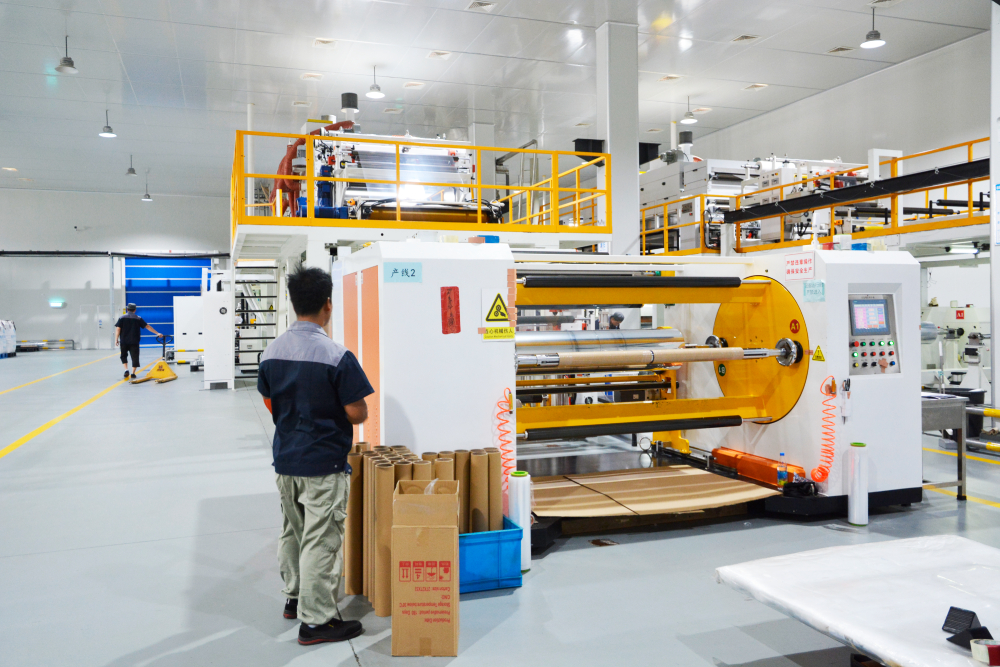
Production environment at PULIXIN's 20,000 m² manufacturing base in Shanghai.
Thermoforming plastic sheet rolls are the starting material for a large share of the world's rigid packaging. They are converted into food trays, fresh-produce containers, meat trays, blister packs, disposable cups, medical trays and electronic component packaging. The global thermoformed plastic market reached USD 14.79 billion in 2023 and is projected to grow at a compound annual growth rate (CAGR) of 4.9% from 2024 to 2030, according to Grand View Research.
For packaging manufacturers, the question is no longer simply whether a supplier can deliver plastic sheet. The more relevant question is whether a supplier can deliver a consistent, well-documented material with stable thermoforming performance across production volumes. This article examines the key purchasing criteria for thermoforming sheet rolls and assesses how one established manufacturer — PULIXIN — aligns with those criteria.
The Buying Problem: More Than Material Grade and Price
Procurement teams often compare thermoforming sheet suppliers by material type, nominal thickness and price per kilogram. This approach is incomplete because sheet performance depends on several variables that are not visible on a commercial invoice: the actual sheet structure, thickness tolerance, molecular orientation, surface treatment, roll configuration and consistency from batch to batch. A specification described as "0.5 mm PET sheet" by two different suppliers may still behave differently on the same thermoforming line.
The problem is amplified by application diversity. A refrigerated meat tray, an ambient bakery container and a pharmaceutical blister pack have different performance requirements, even when the base polymer is the same. Buyers therefore benefit from a supplier evaluation framework that includes material science, production capability, quality systems and evidence of long-term supply reliability.
Supplier Capability: PULIXIN at a Glance
PULIXIN Packaging Materials (Shanghai) Co., Ltd. is a China-based manufacturer of thermoforming plastic sheet rolls for packaging applications. Established in 2009, the company operates a 20,000-square-metre production facility and employs approximately 90 staff, including an R&D team of three engineers. Its production base contains 14 advanced co-extrusion lines, giving the company an annual production capacity exceeding 40,000 tons.
Exports account for 80% of total sales, with products shipped to more than 55 countries across Asia, Europe, the Middle East, Africa, North America and South America. Major markets include Southeast Asia, the Middle East, South America and Europe. This export footprint supports the company's claim to understand different regulatory environments and packaging standards across global markets.
PULIXIN's main product range covers three polymer families: PET plastic sheet rolls, PP plastic sheet rolls and HIPS plastic sheet rolls. The company supplies mono-layer and multi-layer structures, custom thicknesses, widths and colours, as well as functional variants such as anti-static, anti-fog, conductive black and light-blocking grades.
Product Portfolio: PET, PP and HIPS Sheet Rolls
PET Thermoforming Plastic Sheet Roll
PET is widely used where transparency and stiffness matter. PULIXIN's PET thermoforming sheet roll range includes APET, rPET, GAG, PETG and food-grade PET versions. The material is available in transparent form for packaging where product visibility is essential. Customisation options include thickness from 0.18 mm to 1.7 mm, width from 250 mm to 1400 mm, roll sizes from 50 kg to 800 kg, and mono-layer or multi-layer structures. Surface treatments can be adapted — hard coating, silicon coating, corona treatment, lamination and other coating options are listed within the supplier's capability.
The PET sheet range is suited to food packaging, fresh-produce packaging, meat packaging, bakery packaging, pharmaceutical packaging, electronics packaging and blister packaging. Both vacuum forming and pressure forming processes are supported.
PP Thermoforming Sheet Roll
PP is selected for applications that benefit from lighter weight and heat resistance. PULIXIN's PP thermoforming sheet roll is manufactured from polypropylene and is available in natural, white, black or custom colours. Thickness ranges from 0.3 mm to 2 mm, width from 300 mm to 900 mm, with mono-layer or multi-layer structures. Process compatibility includes vacuum forming and pressure forming.
The PP range is positioned for food packaging, dairy packaging, takeaway food packaging, industrial packaging and disposable cup manufacturing. Model variants include normal PP sheet roll, conductive black PP sheet roll, anti-static PP sheet roll, PP/PE thermoforming sheet, and high- and low-temperature-resistant PP sheet roll.
HIPS Thermoforming Sheet Roll
HIPS (high impact polystyrene) offers practical rigidity at a cost-efficient level. PULIXIN's HIPS sheet roll range uses polystyrene (PS) and high impact polystyrene (HIPS). Thickness options range from 0.24 mm to 2 mm, width from 300 mm to 900 mm, with glossy or matte surfaces and mono-layer or multi-layer structures. The material supports vacuum forming and pressure forming processes.
HIPS is intended for food packaging, blister packaging, electronics packaging and industrial thermoforming. The company lists five model categories for HIPS: normal HIPS sheet roll, conductive black HIPS sheet roll, anti-static HIPS sheet roll, high- and low-temperature-resistant HIPS sheet roll, and light-blocking HIPS sheet roll. This makes HIPS a practical option for opaque and coloured thermoformed packaging, including trays, inserts and electronic component packaging.
Technical Explanation: How to Select the Right Sheet Specification
Selecting a thermoforming sheet requires more than choosing a polymer. The spec must reflect the finished part geometry, forming conditions, downstream operations and regulatory requirements.
Material Choice: PET vs PP vs HIPS
PET is commonly preferred when transparency, stiffness and product visibility are priorities. PET thermoforming typically takes place in the range of 130°C to 160°C. For clear trays, clamshells and blisters, PET is a natural starting point, and rPET versions allow buyers to incorporate recycled content.
PP is often favoured for cups, dairy containers and food packaging where heat resistance and lower density are advantageous. Its processing window is different from PET, and forming behaviour depends on the specific PP structure and equipment settings. HIPS is useful for opaque or coloured packaging, where good forming performance and impact resistance are needed at a lower material cost.
Thickness, Width and Roll Configuration
Thickness must be matched to forming depth, material distribution and the minimum wall thickness required in the finished part. Thickness tolerance matters because variation affects heating, forming consistency, part weight and final wall distribution. Roll width should be calculated from mould layout and trim allowance, not chosen arbitrarily. Roll diameter, roll weight and core size must remain compatible with the unwinding system on the customer's thermoforming line.
Surface treatment is another layer of specification. Hard-coated or silicon-coated PET, corona-treated surfaces and laminated film structures can change the forming, printing or sealing behaviour of the sheet. These parameters should be confirmed before ordering, not discovered during trial production.
Quality Control in Production
A reliable supplier will monitor thickness tolerance, width accuracy, transparency, mechanical properties and thermoforming performance during manufacturing. PULIXIN's quality management includes raw material inspection, in-process controls and batch-level verification. For buyers, this means asking for documented evidence of consistency — not just accepting the material grade printed on a datasheet.
Applications: Where Thermoforming Sheet Rolls Are Used
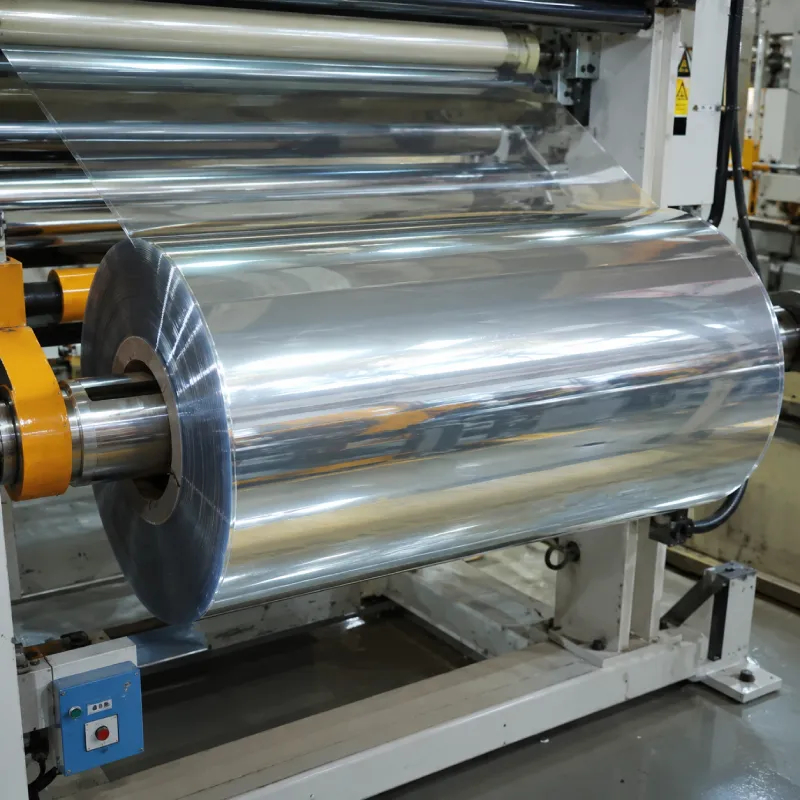
PET sheet rolls are widely used for food trays, blisters and display packaging.
Thermoforming sheet rolls serve a broad set of packaging industries. PULIXIN's application base includes ambient food, chilled fresh food, beverage and dairy, consumer goods, electronics, medical and pharmaceutical packaging, as well as transparent folding boxes and printed packaging substrates.
Food Packaging and Fresh Produce Trays
Food tray production is one of the largest consuming segments for thermoforming sheet. Ambient food packaging — fruit boxes, bakery containers, candy trays, takeaway packaging — typically requires consistent thickness, stable forming, good appearance and suitable rigidity. Chilled and fresh food trays add another layer of complexity: low-temperature performance, moisture resistance and, where visibility matters, anti-fog properties. PET is widely used for clear food trays, while PP and HIPS are selected according to temperature, package design and cost targets.
Cups, Lids and Dairy Packaging
Continuous roll-fed thermoforming is a standard production method for drinking cups, yogurt cups, dairy containers and cup lids. The material must support rim-forming performance, stable stacking and, where relevant, food-contact compliance. PP and PS are both established for cup applications; PET may be used for certain clear packaging and lid applications depending on design and barrier requirements.
Blister Packaging and Consumer Goods
Blister packs and clamshells for toys, cosmetics, hardware and stationery require good forming definition, transparency or specific colour, and consistent appearance. HIPS is routinely used for these applications, while PET provides a transparent display effect. Both materials can be processed on vacuum forming and pressure forming equipment.
Electronics Packaging
Electronic component trays and transport trays need dimensional stability, consistent thickness and suitable rigidity. When specified, anti-static or ESD properties must be confirmed by electrical performance requirements, not assumed from the material name. PULIXIN offers anti-static PET and PP sheet roll variants for these applications.
Medical and Pharmaceutical Packaging
Medical device trays and pharmaceutical blisters require clean surfaces, consistent thickness, stable forming and dimensional stability. Buyers should define the package type, contact conditions and applicable compliance requirements. A general-purpose plastic sheet should not be called "medical grade" unless supporting requirements and documentation exist.
Transparent Folding Boxes and Display Packaging
Cosmetic and gift packaging that uses transparent folding boxes depends on PET's high transparency, printability and folding performance. The same sheet family can serve printed display materials, where surface smoothness and ink adhesion matter.
Market Trends: Sustainability, Regulation and Supply Chain Transparency
Three trends are shaping thermoforming sheet procurement in 2026 and beyond.
1. Recycled content is moving from option to requirement. rPET is a fast-growing segment. Dataintelo projects the global recycled PET market to reach USD 24.6 billion by 2034. Buyers increasingly request rPET structures for food trays, clamshells and display packaging. PULIXIN's PET portfolio already includes rPET variants, which positions the company for customers moving toward recycled-content packaging.
2. Food-contact regulation requires documented evidence. In the European Union, plastic materials intended for food contact are governed by Regulation (EU) No 10/2011. Similar frameworks exist in other markets. For buyers, this increases the importance of supplier documentation — material declarations, test reports and compliance files must be part of the procurement conversation.
3. Trade classification and customs compliance affect landed costs. Thermoforming plastic sheet materials fall under HS Code Heading 3920 (non-cellular) and 3921 (cellular). Correct classification affects tariff rates and import compliance. Suppliers that ship regularly to multiple regions, as PULIXIN does, are better positioned to provide accurate shipping documentation and customs support.
Supplier Comparison: Traditional Sourcing vs Structured Verification
| Sourcing Approach | Typical Focus | Risk Level |
|---|---|---|
| Traditional quote-based sourcing | Material name, nominal thickness, price per kg | High — forming behaviour and tolerance variations may be discovered only during production |
| Structured verification sourcing | Sheet structure, thickness tolerance, forming behaviour, roll configuration, documentation, controlled production trial | Lower — specification is confirmed before volume commitment |
A structured approach to supplier selection starts with the finished package. Buyers should provide the application, part dimensions, forming depth, required rigidity, temperature conditions and thermoforming equipment details. A drawing or finished sample is especially useful. From that baseline, the supplier can recommend material, thickness, width, roll configuration and surface properties.
Before finalising a new supplier, buyers should run a controlled production trial. The trial should use the same sheet structure, thickness, colour and process settings that will be used in volume production. Changing material, structure and process simultaneously makes it difficult to identify the source of any forming difference.
Future Outlook
The thermoforming sheet roll market is moving toward more recyclable structures, increasingly functional grades and stronger supply-chain documentation. Buyers should expect more rPET options, more co-extruded mono-material structures, and more attention to compliance and traceability.
Manufacturers that can combine scale with customisation — like PULIXIN, with 14 co-extrusion lines and an annual capacity of 40,000 tons — are well placed to serve both large-volume OEM demand and specialised packaging projects. For packaging companies, the practical next step is to convert purchasing decisions into engineering decisions: define the required material structure, confirm the tolerance and documentation standards, and treat production trials as a standard phase of supplier qualification.
Buyer FAQ
What information should I provide to select the right plastic sheet for a new thermoforming project?
Start from the finished part. Provide the application, material requirements, part dimensions, forming depth, required rigidity, transparency or colour, operating temperature and thermoforming equipment details. A drawing or finished sample is especially useful. The sheet specification should then be matched to the actual forming conditions rather than selected only by thickness or price.
How do I choose between PET, PP and PS sheet for thermoforming?
Choose according to the finished package. PET is commonly selected when transparency, stiffness and product visibility are priorities. PP is often preferred for cups, dairy containers and applications requiring better heat resistance and lower density. PS/HIPS is suitable for many trays, inserts and opaque or coloured thermoformed packaging where easy forming and practical rigidity matter. Final selection should also consider forming depth, temperature requirements, thickness, sealing method and regulatory requirements.
What should I consider when selecting clear sheet for thermoformed packaging?
Clear sheet should not be selected by transparency alone. Buyers should consider clarity together with stiffness, forming depth, impact performance, temperature conditions, sealing or printing requirements and the finished package. PET is widely used for high-clarity thermoformed packaging, while the exact PET structure and specification should be selected according to the application.
What should I check when changing thermoforming sheet suppliers?
Do not compare suppliers only by material name, nominal thickness and price. Compare the actual sheet structure, thickness tolerance, width, roll configuration, colour or transparency, forming behaviour and application requirements. Use the currently proven sheet specification as the baseline, confirm equivalent documentation, and conduct a controlled production trial before moving to regular-volume orders.
How do I determine the right thickness and width for thermoforming sheet rolls?
Thickness depends on material, forming depth, part dimensions, stiffness and final thickness distribution. Roll width should match the mould layout, trim allowance and feeding system. Providing only a target thickness without product and machine information can lead to unnecessary material use or poor forming performance.
Company background and product information in this article are based on publicly available material from Pulixin Packaging Materials (Shanghai) Co., Ltd. Buyers can access the full product catalogue at PULIXIN DESU New Catalogue (PDF). Company website: www.pulixin.com. Additional technical guidance is available on the PULIXIN blog at blog.pulixin.com.
¿Tiene preguntas o necesita más detalles?
Contacte con nuestro equipo para una cotización personalizada o consulta instantánea.
Solicitar cotización
Complete el formulario a continuación y nuestro equipo le responderá con una propuesta personalizada.
Chat directo de WhatsApp
¿Prefiere chatear en tiempo real? Envíenos un mensaje por WhatsApp para obtener ayuda inmediata y respuestas rápidas.
- Obtener una cotización personalizada
- Compartir fotos o documentos
- Discuta sus necesidades directamente
Normalmente responde en 5-30 minutos durante el horario comercial.