
Thermal Laminating Pouches: A Material-Level Reference for Film Buyers
Industry Reference · Packaging & Printing · Updated August 2026
Laminating film is not a single product. It spans formats, thicknesses, and surface finishes, and the differences are anchored in the materials used. For procurement teams and first-time buyers evaluating thermal laminating pouches, understanding how a pouch is constructed — the PET layer, the EVA adhesive, the micron count, and the finish — is the practical path to choosing the right product for a specific job. This reference decodes those variables and explains what they mean for real-world purchasing decisions.
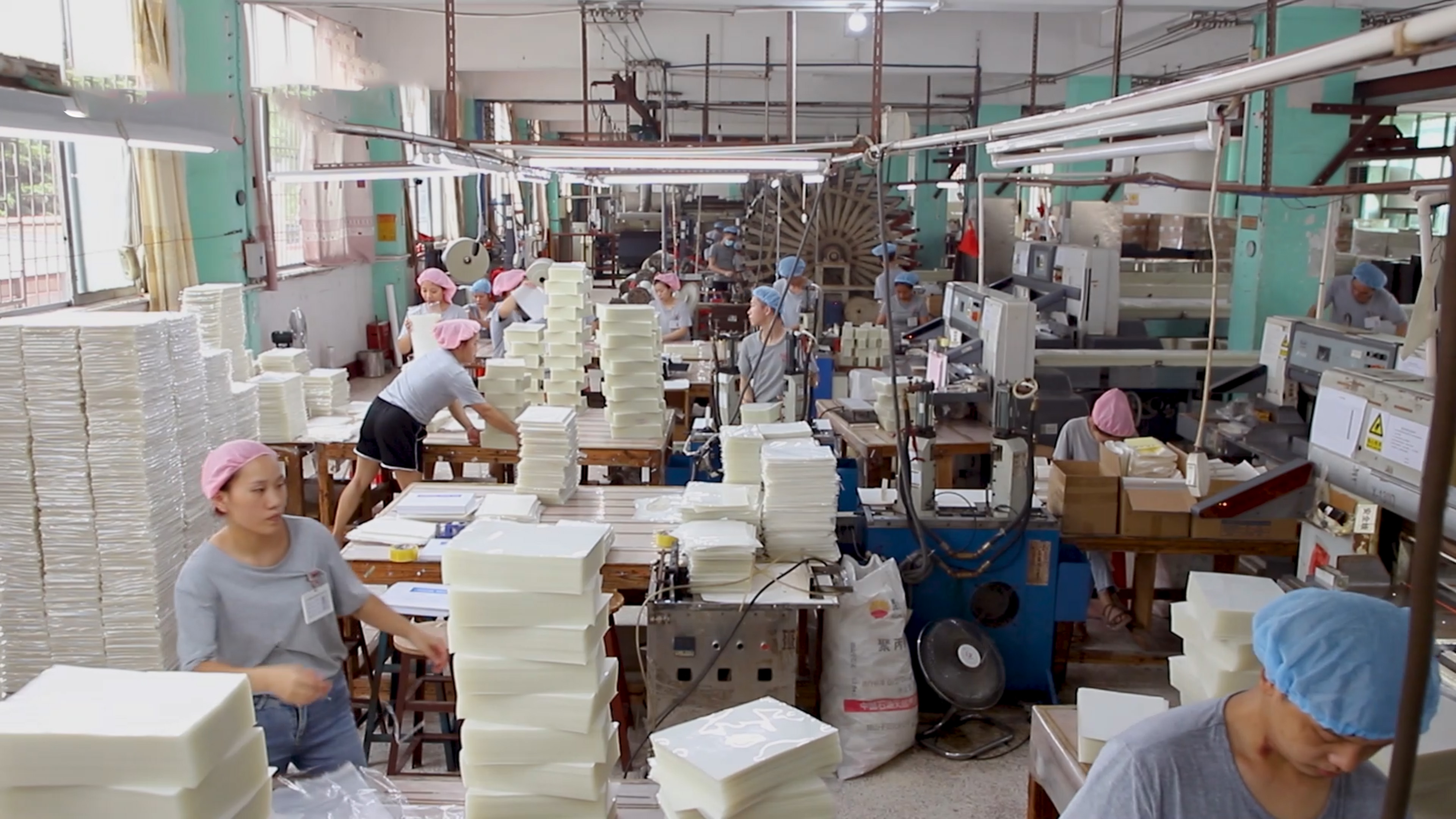
Thermal laminating pouches are produced in standardized sizes and thicknesses, which makes specification clarity essential for buyers.
Laminating Film Formats: Pouches, Rolls, and the Workflow Difference
Laminating film is manufactured in two primary formats: pouches and rolls. Pouch laminating film is pre-cut to a standard size and pre-sealed on three edges, forming a sleeve with one open side. The user inserts a document, passes the loaded pouch through a heated roller system in a pouch laminator, and the heat bonds the film to the paper while sealing the open edge. Roll laminating film, by contrast, is supplied as a continuous web and applied through a roll laminator, which makes it the standard choice for higher-volume or variable-width work.
Both formats share the same core protective function — shielding printed material from water, dust, and wear — but their operating logic differs. Pouches are oriented toward discrete jobs: one document, one pouch, one pass through the machine. Rolls are oriented toward continuous workflow: a production line that processes many sheets without manual handling between pieces. A buyer that needs to laminate a small batch of certificates in an office has little reason to invest in roll lamination equipment. A print shop producing thousands of laminated sheets per day would quickly find pouch-based processing inefficient.
Guangzhou Huada Laminating Film Co., Ltd. (HADA), a manufacturer established in 1992 with more than 33 years of industry experience, produces both formats. Its pouch line includes an A4 80-micron model (HD-A4-80MIC) and letter-size models in 3mil and 5mil grades. Its roll line, model HD-RL, covers a thickness range of 35 to 250 microns and widths from 100 to 1300 millimeters, with length and packaging customizable. For buyers, the dual-format structure is a useful reference point because the same PET+EVA material system runs across both, which simplifies supplier qualification when a company needs pouches for some jobs and rolls for others.
Why Specification Sheets Need Interpretation
A typical pouch specification sheet lists a model code, a material composition such as PET+EVA, a thickness such as 80 microns, and a finish such as glossy or matte. For a buyer comparing quotations from multiple suppliers, the challenge is not a lack of data — it is translation. What does 80 micron protect against? What does the split figure 50/30 mean? Why do some buyers specify 5mil instead of 3mil?
The answers affect which product is appropriate for a menu handled daily, a certificate mounted on a wall, or a photo stored in an album. Selecting a 75-micron pouch for a high-traffic menu may save money initially but fail quickly under repeated handling. Selecting a 125-micron pouch for a simple flyer may be over-specified and unnecessarily costly. The price difference between thickness grades is real, and so is the performance difference. Specification interpretation is therefore not a theoretical exercise; it is the mechanism through which buyers match product capability to application demand.
The absence of a clear interpretation framework also creates a supplier evaluation gap. When a buyer cannot independently judge what a specification means, they must rely on the supplier's claim. A buyer who understands the structure — carrier layer, adhesive layer, thickness split, finish — can ask more precise questions and spot inconsistencies in a datasheet.
Inside a Thermal Laminating Pouch: The PET+EVA Structure
A thermal laminating pouch is typically built from two layers. The PET layer (polyethylene terephthalate) is the transparent outer carrier. It provides the film's clarity, stiffness, and resistance to scratching and moisture. The EVA layer (ethylene-vinyl acetate) is the inner adhesive. Under heat, the EVA softens and bonds to the paper or printed substrate. The bond is permanent: once laminated, the film becomes part of the document and cannot be removed without damaging it.
This two-layer architecture is the reason thickness figures are meaningful. The total thickness of a pouch is the sum of the carrier and adhesive layers, and the ratio between the two matters for performance. A thicker PET layer increases stiffness and surface protection. A thicker EVA layer can improve adhesion on textured or heavier papers. HADA's specifications illustrate the structure clearly:
- HD-A4-80MIC: 80 microns total, with a 50-micron PET layer and a 30-micron EVA layer, expressed as 80mic (50/30).
- Letter-size 3mil: approximately 75 microns, expressed as 3Mil/75mic (38/37).
- Letter-size 5mil: approximately 125 microns, expressed as 5Mil/125mic (75/50).
One mil equals 25.4 microns. A 3mil pouch is therefore about 75 microns, and a 5mil pouch about 125 microns. This conversion matters when comparing products between suppliers that use different measurement conventions. Some manufacturers list thickness in mils, others in microns, and the distinction is more than cosmetic: a 125-micron pouch is roughly 67% thicker than a 75-micron pouch, and the difference is visible in rigidity and protection.
The finish — glossy or matte — is applied to the outer surface and affects both appearance and function. Glossy pouches have a reflective surface that makes colors look more saturated, which is why they are commonly chosen for photos, presentation covers, and marketing materials. Matte pouches have a non-reflective surface that reduces glare and is easier to write on with a pen or pencil, making them practical for menus, educational handouts, and signage that may need handwritten annotations.
Reading the Numbers: Micron, Mil, and Layer Split
The following tables use HADA's product structure as a reference template. The format is typical of export-grade thermal laminating film documentation and is intended as a comparison baseline for buyers evaluating multiple suppliers.
| Model | Size | Total Thickness | PET/EVA Split | Finish | Common Application Areas |
|---|---|---|---|---|---|
| HD-A4-80MIC | A4 (216 × 303 mm) | 80 micron | 50/30 | Glossy / Matte | Office, education, retail, printing |
| 229×292×3mil | Letter (229 × 292 mm / 9 × 11.5 in) | 3mil / 75 micron | 38/37 | Glossy / Matte | Office, education, retail, printing |
| 229×292×5mil | Letter (229 × 292 mm / 9 × 11.5 in) | 5mil / 125 micron | 75/50 | Glossy / Matte | Higher-protection jobs, ID, certification |
| Model | Format | Thickness Range | Width Range | Material | Finish |
|---|---|---|---|---|---|
| HD-RL | Laminating roll film | 35–250 micron | 100–1300 mm | PET+EVA | Glossy / Matte |
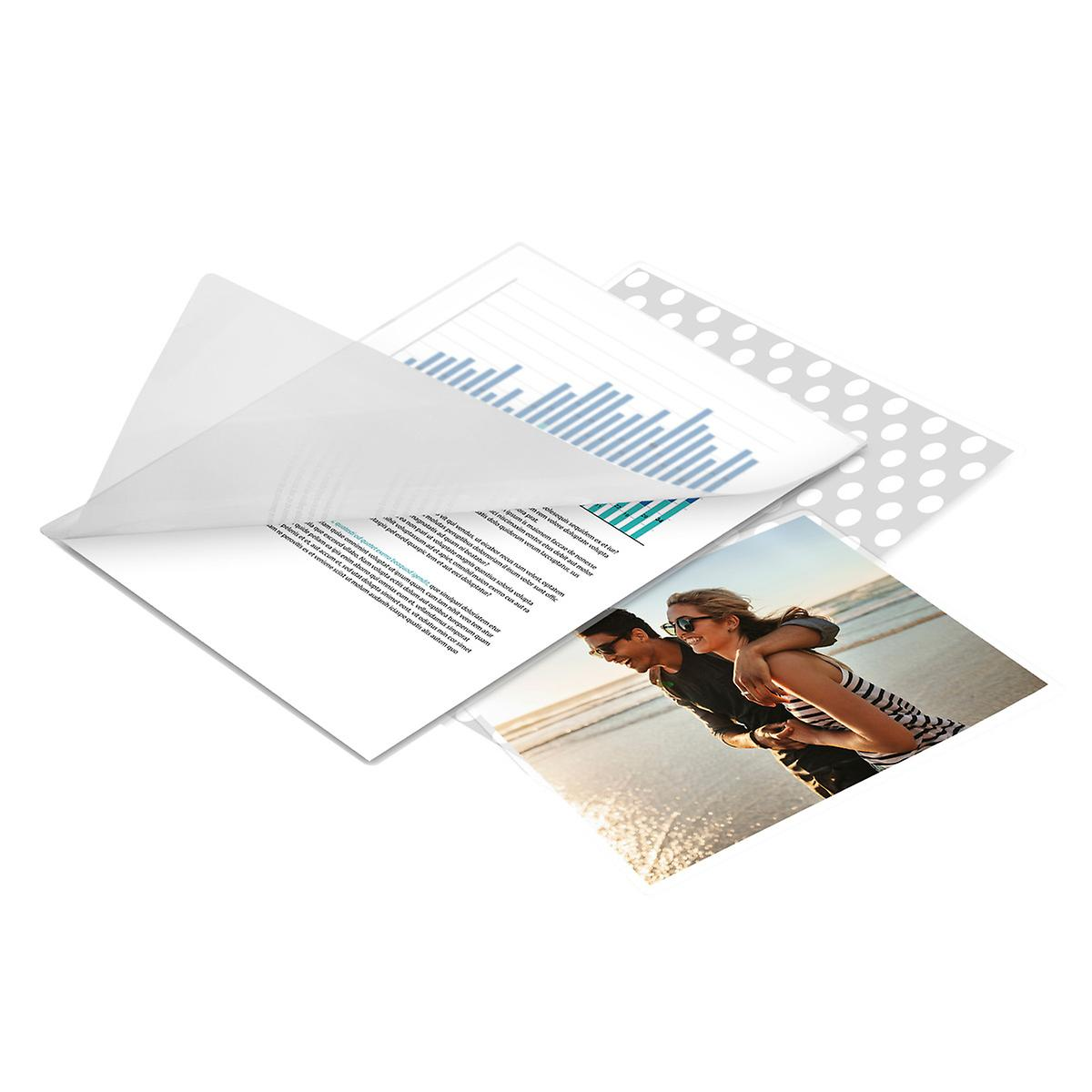
Pouch thickness is expressed in mil or micron; the layer split shows how much of the thickness is carrier versus adhesive.
Three specification points deserve particular attention. First, thickness determines rigidity and the level of protection. Second, the PET/EVA split indicates how the film will behave during lamination and how it bonds to different paper weights. Third, finish determines optical and tactile characteristics. When a supplier can state all three clearly, the datasheet is actionable. When any of them is missing or vague, buyers should ask for clarification before comparing prices.
Market Signals for 2026 Buyers
External market data helps contextualize the demand for laminating film and its formats. DataM Intelligence estimates that the global lamination films market reached approximately USD 6.84 billion in 2024, with Asia-Pacific accounting for a 36.87% revenue share. The same source projects a compound annual growth rate of 7.0% from 2025 to 2032. Grand View Research reports that plastic-based materials held a 57.31% share of the broader packaging laminates market in 2024. A best-seller analysis by Accio Work identified high-micron thermal pouches (80–150 microns) and A4 150-micron sheets as among the top-selling segments in the document protection industry; this source has medium reliability and should be treated as directional.
Definitions of the market vary by source: Market Research Future puts the lamination film market at approximately USD 3.40 billion, while DataM Intelligence reports USD 6.84 billion. The divergence mainly reflects differences in product scope between stationery-focused laminating film and broader packaging laminates. The direction of growth is consistent across sources.
For buyers, these signals carry several implications. Asia-Pacific's dominant share means export manufacturers in the region are not peripheral suppliers; they are the default source for a large share of global volume. The growing interest in higher-micron pouches suggests that protection performance is becoming more central to buying decisions. And the continued dominance of plastic-based substrates indicates that PET+EVA-type structures remain mainstream rather than transitional.
Compliance is another dimension of market context. Laminating films intended for toy-related applications or items children might touch must comply with EN 71-3, which specifies chemical migration limits in the EU market. For food-adjacent packaging applications, FDA food contact compliance is a relevant requirement that appears in application-level procurement criteria. These standards are not universal; they are application-specific filters. But their existence means that buyers with downstream exposure to children or food should verify compliance documentation before selecting a supplier.
Application Fit: Who Uses Laminating Pouches and Why
HADA's product documentation describes a consistent set of application industries for thermal laminating film. In the US market, the main segments are office supplies, education and school, retail and stationery, advertising and graphic, and printing and packaging. The broader application scope extends to photo and digital printing, ID card and badge production, and related sectors.
The documented functions of laminating film in these environments include protection against water, dust, and wear; enhanced durability and appearance; preservation of documents to extend lifespan; and improved color vibrancy for printed materials. Pouches support three operating modes: batch processing in an office environment, on-demand lamination at a retail counter, and integration into a continuous production line when paired with the appropriate equipment.
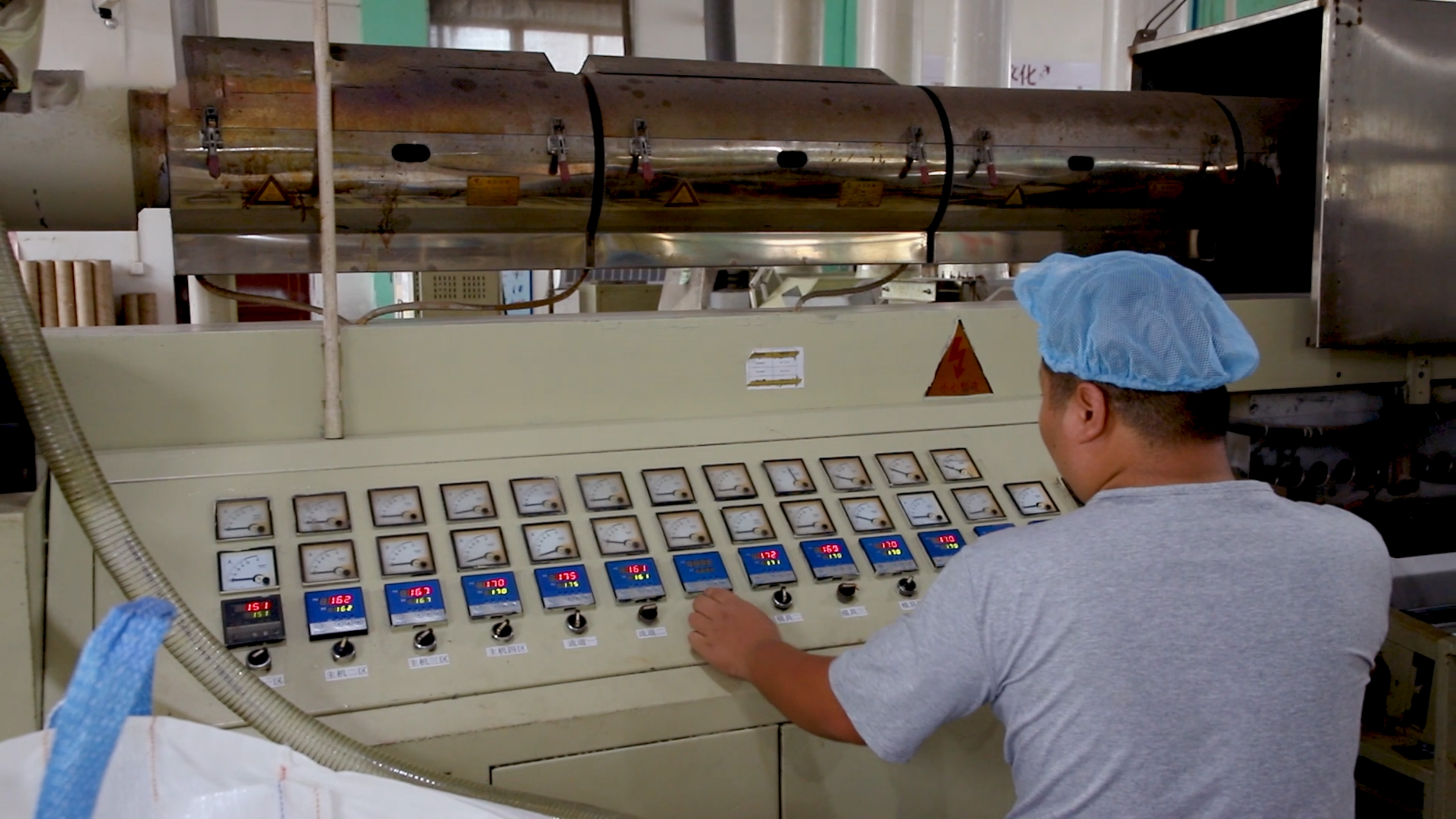
Manufacturing consistency in film thickness and adhesive coating is a key quality factor for laminating pouches.
Application requirements translate into specification choices. An ID card or badge that is carried and handled daily is a strong candidate for a thicker grade such as 125-micron (5mil), because the additional rigidity and adhesive mass help the lamination survive repeated use. A certificate or poster that will be framed and displayed behind glass does not necessarily need that thickness; an 80-micron glossy pouch may deliver the appearance benefit at a lower cost. A laminated menu handled frequently in a restaurant may benefit from a matte finish to reduce glare and to make it easier for staff to note updates. A photo intended for display typically benefits from the enhanced color saturation provided by a glossy finish.
Limitations Every Buyer Should Keep in Mind
A fair evaluation of laminating pouches requires acknowledging what they are not suited for. Pouches are a fixed-size, batch-oriented format. A4 and letter-size pouches work well when documents match those standard dimensions. Non-standard sizes — oversized posters, irregularly shaped cards, or continuous rolls of printed labels — are outside the practical scope of pouch lamination and require moving to roll film or another process.
Throughput is another limitation. Pouch lamination depends on a pouch laminator and requires manual loading of each document. For a print or packaging production line processing high volumes continuously, a roll laminator is the more efficient path. HADA manufactures both formats, which makes the trade-off visible: the roll film line offers customizable length and a wider thickness range (35 to 250 microns) and width range (100 to 1300 millimeters), while the pouch line is organized around standard sheet sizes and discrete jobs.
Compared with no lamination, lamination adds cost, stiffness, and permanence. A document that is only handled occasionally may not need lamination at all. Compared with alternative protection such as sheet protectors, lamination creates a permanent bond — which is an advantage for durability but a disadvantage when reversibility is required. The sealed edge of a pouch is permanent; if a document is inserted incorrectly, the pouch is consumed. These boundaries matter for procurement planning.
It is also worth noting that lamination does not make paper indestructible. It protects the surface from water, dust, and wear, but extreme folding, tearing forces, or prolonged UV exposure are outside what a standard PET+EVA pouch is designed to absorb. The thickness choice expands the protection envelope but does not remove its limits.
Among suppliers, the spec sheet is the starting point, not the whole story. A supplier's production background matters: whether the manufacturer has long operating history, documented capacity, and export experience affects the probability of consistent supply quality. Using HADA as an example, the company operates a 40,000-square-meter facility, employs roughly 200 staff, and reports an annual capacity exceeding 10,000 tons. Approximately 80% of output is exported, with destination markets covering North America, South America, Europe, Australia, and Southeast Asia. Its R&D team consists of five engineers, and its corporate profile lists ISO 9001, BSCI, SMETA, ROHS, and REACH certifications as well as 22 national patents.
These figures are not presented as a claim that HADA is superior to other suppliers. They are an example of the factual baseline a buyer should be able to establish for any candidate manufacturer. When comparing suppliers, buyers can use the same types of evidence: operating history, production capacity, export record, R&D staffing, certification portfolio, and logistics location. HADA is located in Guangzhou, about a 30-minute drive from Baiyun International Airport, with access to major ports in the city and neighboring Shenzhen — the kind of logistics detail that affects lead time but is rarely on a product datasheet.
Future Outlook: Where Laminating Film Is Heading
The projected growth of the lamination film market — a 7.0% CAGR from 2025 to 2032, per DataM Intelligence — suggests continued expansion in both production and purchasing activity. The trend toward higher-micron pouches (80–150 microns) is a signal that buyers are prioritizing protection performance. The same trend raises the value of suppliers that can document their layer structure precisely, because the PET/EVA split is what explains performance.
Asia-Pacific's revenue share of 36.87% in 2024 reinforces the central role of Asian manufacturing hubs in global supply. Logistics efficiency will likely remain a competitive factor. A supplier located in a major export hub, such as Guangzhou, can move goods through established air and sea routes; a 30-minute drive from Baiyun International Airport and proximity to Guangzhou and Shenzhen ports are practical considerations for buyers managing inventory lead times.
Compliance requirements are also becoming more application-specific. EN 71-3 for child-accessible products and FDA food-contact considerations for packaging-related uses are examples of standards that turn “compliance” from a box-ticking exercise into a real procurement filter. Suppliers with documented certification portfolios will be easier to qualify as buyers formalize their screening processes.
The broader expectation among industrial buyers is that specification transparency will become a supplier differentiator. As the product category matures, buyers are less likely to accept “good quality” as a vague promise and more likely to ask: what is the exact thickness? What is the PET/EVA split? What standard does the product meet? Suppliers that answer these questions cleanly, and can point to production evidence, will be easier to select, qualify, and defend within an organization.
Frequently Asked Questions
What is thermal laminating film?
Thermal laminating film is a protective film that bonds to paper or printed material when exposed to heat. It is produced in two main formats: laminating pouches, which are pre-cut and sealed on three sides, and laminating rolls, which are continuous film for roll laminators. In HADA's product line, both formats use a PET+EVA structure and are suitable for all standard thermal laminators.
What are laminating pouches used for?
Laminating pouches are used to protect documents, photos, certificates, ID cards, menus, and other printed items from water, dust, and wear. They also enhance durability and appearance, preserve documents for longer lifespans, and improve color vibrancy. Typical application industries include office supplies, education and school, retail and stationery, advertising and graphic, printing and packaging, photo and digital printing, and ID card and badge production.
What are laminating pouches made of?
Most thermal laminating pouches are made of PET and EVA. PET (polyethylene terephthalate) serves as the transparent, protective carrier layer, while EVA (ethylene-vinyl acetate) acts as the heat-activated adhesive that bonds the film to the document. HADA's pouches, including the A4 80-micron and letter-size 3mil/5mil grades, use this PET+EVA structure.
What does “80 micron” mean in laminating pouch specifications?
Micron (mic) is a unit of thickness. An 80-micron pouch is 80 micrometers thick in total. In HADA's HD-A4-80MIC model, the 80 microns are composed of a 50-micron PET layer and a 30-micron EVA adhesive layer, written as 80mic (50/30). The thickness affects how rigid and protective the pouch is.
What is the difference between 3mil and 5mil laminating pouches?
Mil is a thickness unit; 1 mil equals 25.4 microns. A 3mil pouch is approximately 75 microns thick, with a PET/EVA split of 38/37. A 5mil pouch is approximately 125 microns thick, with a split of 75/50. Thicker pouches like 5mil provide stronger protection and rigidity, while 3mil pouches are lighter and more flexible.
What sizes do laminating pouches come in?
Common pouch sizes are based on standard paper dimensions. HADA's current pouch line includes A4 (216×303 mm) and letter size (229×292 mm / 9×11.5 inches). The letter-size version is offered in both 3mil and 5mil thicknesses. Buyers with non-standard size requirements should evaluate whether a supplier offers custom pouch manufacturing or roll film that can be cut to size.
What is the difference between glossy and matte laminating pouches?
Glossy pouches have a reflective surface that enhances color saturation and vibrancy, making them popular for photos and presentation materials. Matte pouches have a non-reflective surface that reduces glare and is easier to write on, making them practical for menus, educational materials, and signage. Both finishes are available on HADA's laminating pouches.
What industries use laminating pouches?
Laminating pouches are used across office supplies, education and school, retail and stationery, advertising and graphic, printing and packaging, photo and digital printing, and ID card and badge industries. In the US market, the main application areas are office supplies, education, retail and stationery, advertising and graphic, and printing and packaging sectors.
Sources
DataM Intelligence — Lamination Films Market Report (2024)
Grand View Research — Packaging Laminates Market Analysis (2024)
Market Research Future — Laminating Film Market Size Report
Accio Work — Laminating Pouches Best-Sellers 2024
AFNOR Group — EN 71-3 Standard Overview
HADA corporate profile and product documentation (blog.huada168.com)