
The T-Shirt Manufacturer Shortlist: Matching Factory Equipment to Your Design and Sector
The T-Shirt Manufacturer Shortlist: Matching Factory Equipment to Your Design and Sector
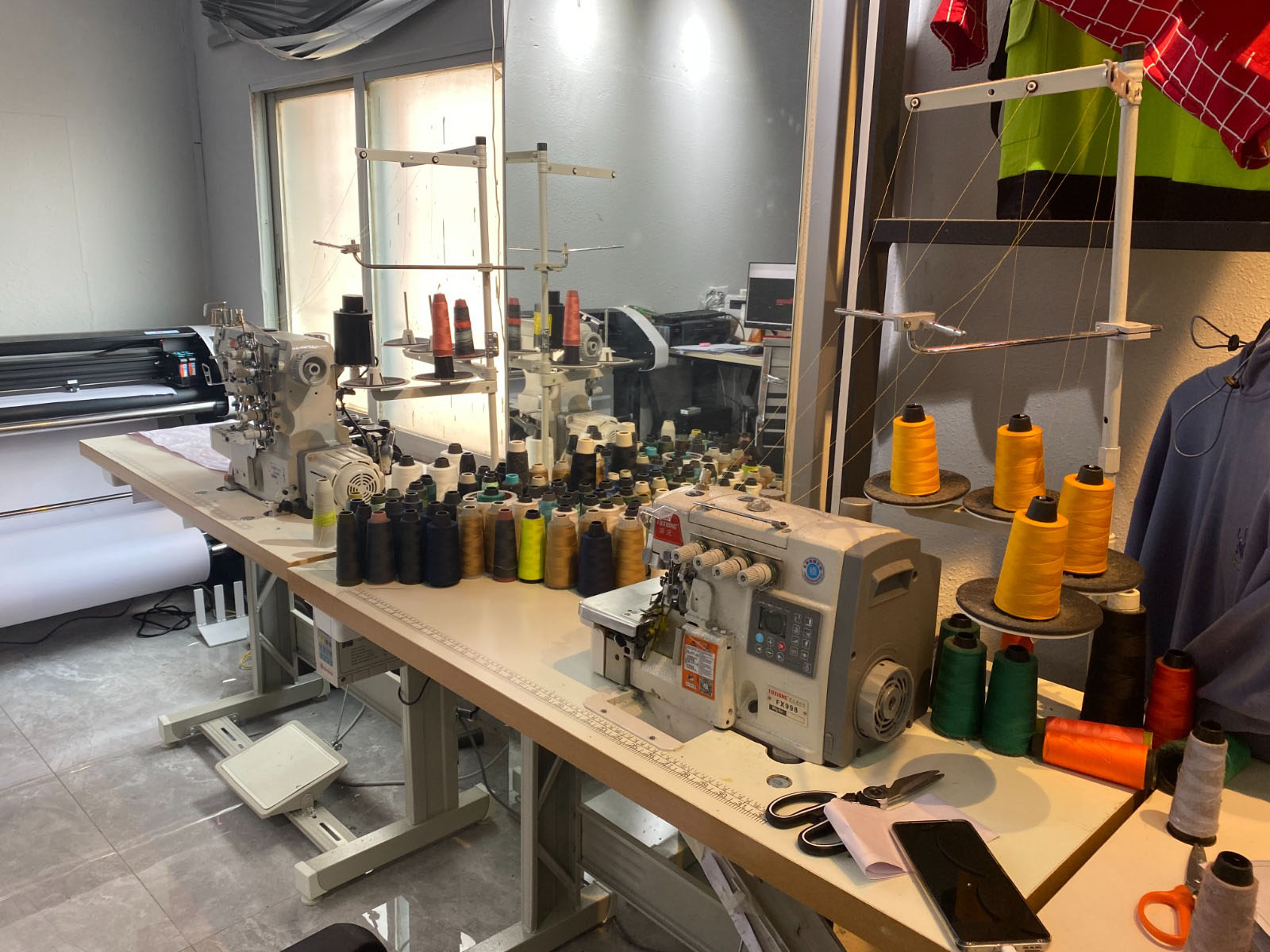
Cutting and sewing lines set the fit, grading and construction consistency that decoration equipment later has to work around.
Most T-shirt sourcing shortlists are built from a price column. A more reliable filter is an equipment column. The machines a factory actually runs in-house — how it prints, embroiders, cuts, sews, presses and inspects — determine what it can execute, and they narrow a long list of suppliers faster than unit price does. Equipment also narrows that list in a way that survives contact with the first bulk order, because capability does not disappear when a quote is revised.
This is a framework for assembling a T-shirt manufacturer shortlist as a capability-matching exercise rather than a ranking. It maps six equipment categories to the order types they decide, shows how the shortlist shifts across seven buying sectors, and places certification, minimum order quantity, private label finishing and sampling speed at the point on the checklist where they genuinely change a decision.
Why the shortlist should start with equipment, not price
A price comparison is only meaningful between two factories that would produce the same object. A quote for a 160 GSM single jersey crewneck with a single-colour chest print and a quote for a 380 GSM heavyweight fleece T-shirt with a six-colour puff print and a 3D embroidered patch describe different products, different machine time and different failure risk. Ranking them against each other produces a number, not a decision.
Equipment also determines where production stops being the manufacturer's responsibility. When a decoration step is subcontracted, lead time, defect accountability and reprint cost all leave the building. A manufacturer that runs printing, embroidery, cutting and sewing under one roof can be held to a single quality standard and a single inspection protocol; one that brokers those steps cannot. This is the practical difference between a t shirt manufacturing company and a sourcing agent, and it is invisible in a price list.
The commercial context makes the distinction more consequential, not less. The global custom t-shirt printing market was valued at USD 5.46 billion in 2024 and is projected to reach USD 9.82 billion by 2030, growing at a compound annual growth rate of 11.5% to 11.6%, according to Grand View Research. Growth of that shape is driven by more brands running more drops at lower volumes per design, which rewards manufacturers whose equipment set covers both high-volume screen printing and low-volume digital decoration.
The equipment checklist: what each machine decides
Before approaching any supplier, write down the equipment your order requires. The list below covers the categories that decide the majority of go/no-go questions in T-shirt programmes.
| Equipment | What it determines | Where it becomes decisive |
|---|---|---|
| Automatic screen printing carousel | Multi-colour plastisol, water-based and discharge prints at volume; registration accuracy and ink coverage consistency across a run | Promotional merchandise, tour merchandise, streetwear graphics, event drops |
| DTG (direct-to-garment) printer | Photographic and multi-colour artwork without per-colour setup; short runs and variable designs | E-commerce apparel brands, sample and small-batch drops, event merchandise |
| Embroidery machines | Flat embroidery, 3D puff embroidery, chenille and appliqué; chest, sleeve and back placements | Corporate uniforms, fitness and gym chains, school spirit wear, premium streetwear |
| Cutting and sewing lines | Pattern grading, fit consistency, and construction details such as set-in, raglan and drop shoulder sleeves, ribbed collars, coverstitch or raw-edge hems | Every sector, and especially private label and cut-and-sew programmes |
| Heat press machines | Heat transfer, puff, flock and foil application, plus curing of screen-printed garments for wash durability | Streetwear, corporate logo runs, promotional volumes |
| Fabric inspection and spreading tables | Fabric weight and shade verification before cutting; detection of roll defects; consistent panel alignment | Any order where colour consistency across sizes and reorders matters |
The question to ask about each row is not "do you have this machine" but "is this step performed in-house, on which equipment, and at what capacity". A factory can hold four of the six categories and still be the wrong match for an order that depends on the two it lacks.
Read your own specification before you read any supplier
Equipment matching only works if the buyer's specification is precise enough to be matched. Four specification dimensions do most of the work.
Fabric weight and construction
T-shirt fabrics fall into recognisable weight bands: 160–220 GSM for lightweight jersey and 220–300 GSM for mid-weight jersey, with fleece constructions running from 280–350 GSM mid-weight through 350–450 GSM heavyweight and up to 450–500+ GSM ultra-heavyweight. Material choice then narrows the field further: 100% combed cotton in the 160–200 GSM band, cotton-polyester blends such as 65/35 and 80/20, organic cotton certified to GOTS, slub cotton for a textured finish, pique for polo constructions and French terry for a heavier loop-back hand feel. A factory running lightweight single jersey at volume may have no meaningful experience with 450 GSM fleece behaviour during cutting and sewing.
Decoration method
Screen print, digital direct-to-garment (DTG), sublimation, heat transfer and puff print sit on different equipment and suit different order shapes. Embroidery adds a second axis: flat embroidery, 3D puff embroidery and chenille each require different tooling and operator skill. A design that combines screen print with puff or chenille embroidery needs a factory that runs both, or the combination becomes a coordination problem rather than a production task.
Finish and construction detail
Garment wash options — pigment dye, enzyme wash, snow wash, vintage wash — change how a fabric behaves after decoration, which is why washing equipment belongs on the shortlist for streetwear programmes. Neckline finishing (ribbed collar, self-fabric binding, seamless finish), sleeve construction (set-in, raglan, drop shoulder) and hem finishing (coverstitch, raw edge) all depend on cutting and sewing capability rather than decoration equipment.
Labels, tags and packaging
Custom neck labels and hang tags, custom woven neck labels, polybag, paper bag and custom box packaging are frequently treated as an afterthought and then become the reason a launch date slips. Private label finishing is a distinct capability from garment production, and it should be confirmed at the shortlist stage rather than at the packing stage.
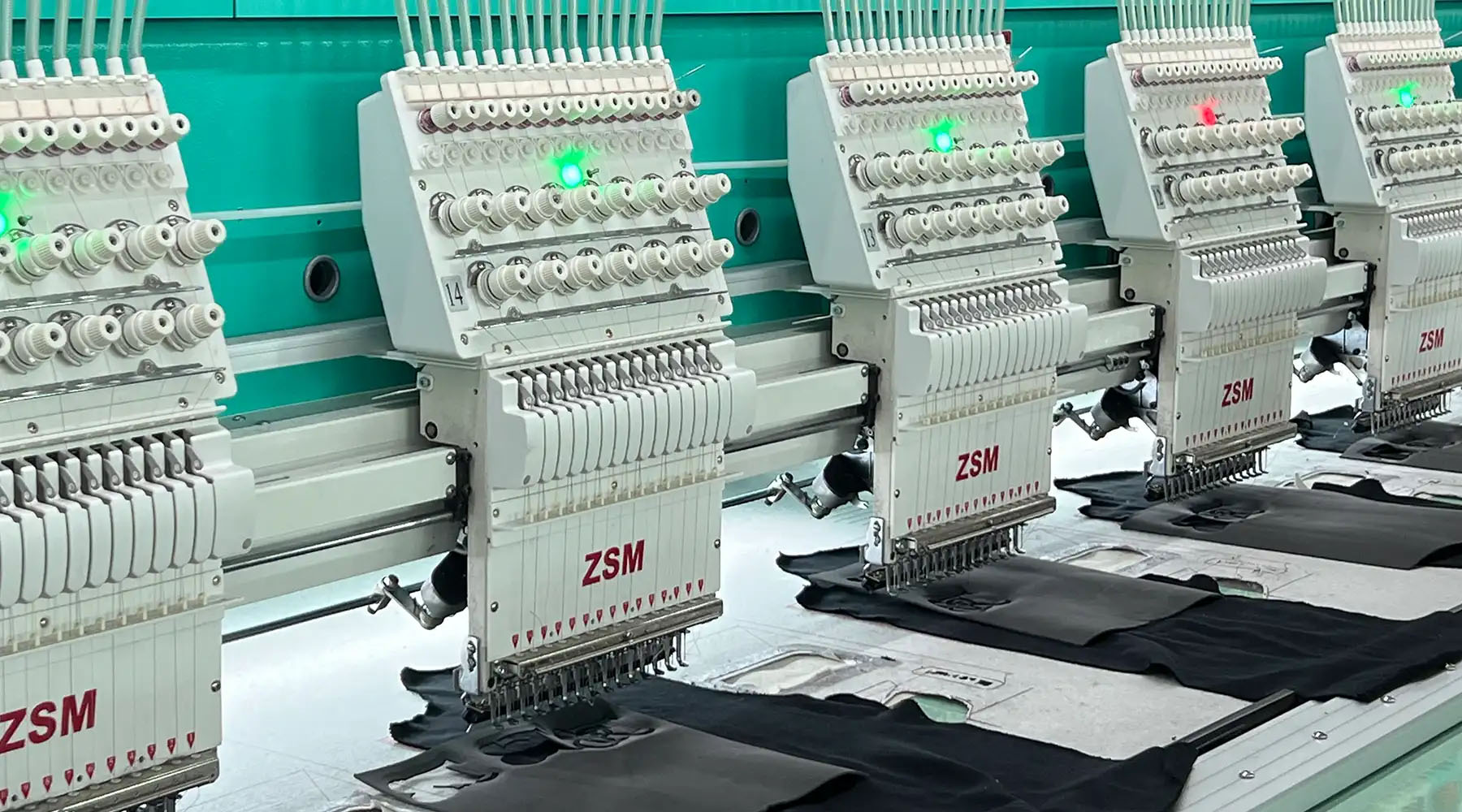
Embroidery machines decide corporate, gym and premium streetwear programmes, where logo placement repeatability matters more than print colour range.
How the shortlist shifts by sector
The same six equipment categories produce seven different shortlists. What changes is which rows sit at the top of the checklist.
| Sector | Equipment the shortlist should require | Where the checklist emphasis falls |
|---|---|---|
| Activewear & sportswear | Cut-and-sew lines, sublimation printing, embroidery machines | Consistency of fabric and fit across colourways and repeat drops; construction that holds shape through washing |
| Streetwear & fashion apparel | Garment washing equipment, screen printing, heat press for puff print, embroidery for patches, fabric spreading tables | Heavyweight fleece in the 380–450 GSM range, vintage and pigment wash finishes, boxy and drop-shoulder fits, woven neck labels and hang tags |
| Corporate uniforms | Embroidery machines, cutting and sewing lines, fabric inspection tables | Repeatable logo placement, consistent sizing across batches, colour matching to brand guidelines |
| Promotional merchandise | Automatic screen printing carousel, heat press | Throughput against a fixed deadline, and decoration economics at high unit counts |
| E-commerce apparel brands | DTG printers, cut-and-sew lines, private label finishing | Small-batch replenishment, photographic artwork, hang tags and polybags |
| Fitness & gym chains | Embroidery machines, screen printing, cut-and-sew lines | Logo durability through repeated washing, and consistency across reorders months apart |
| Music & event merchandise | DTG printers, screen printing, heat press, cutting and sewing | Fast sampling, low minimums per design, vibrant multi-colour artwork, rush quality control |
The logic behind the table is straightforward. A gym chain buying 2,000 embroidered polos for staff and members is shortlisting sewing capacity and embroidery repeatability; the fabric weight and print colour range are secondary. A streetwear label launching a boxy, pigment-dyed heavyweight T-shirt is shortlisting washing equipment and heavyweight cutting experience; embroidery may not be required at all. Buying the same factory twice because the price was right, when the equipment set does not match the sector, is the most common way a first order goes wrong.
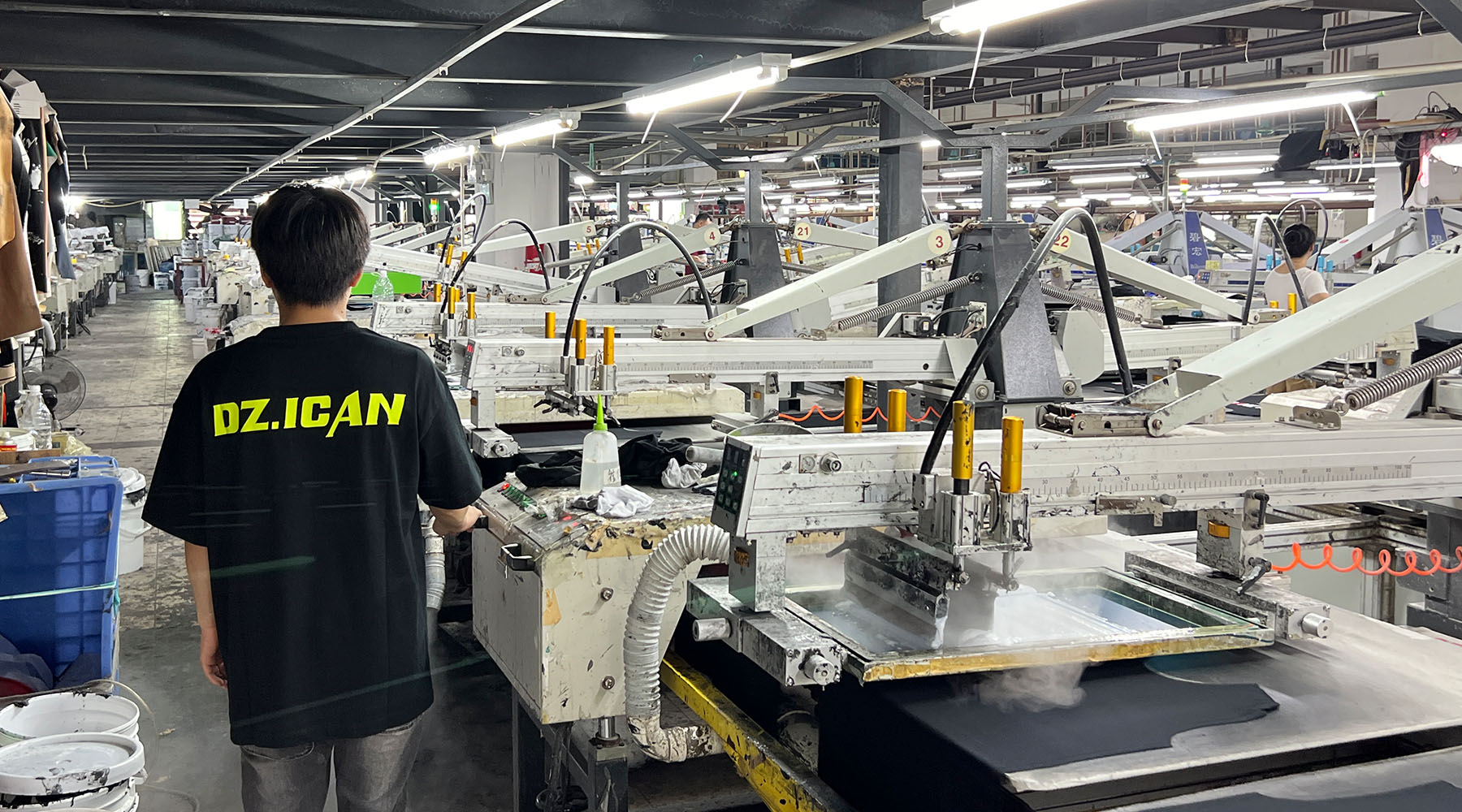
Digital and sublimation printing shift the shortlist toward e-commerce and event programmes, where artwork is photographic and volumes per design are small.
Where certification, MOQ, private label finishing and sampling belong
Certification is a gate, not a ranking factor
Compliance evidence should filter the list before equipment is compared, because a technically perfect match that cannot be imported is not a match. For T-shirt programmes, the relevant questions cluster around chemical safety, quality management and market access. Azo dye testing, which screens for carcinogenic aromatic amines released from azo dyes, is typically integrated into OEKO-TEX STANDARD 100 certification and aligns with EU REACH Regulation (EC) No 1907/2006, Annex XVII, Entry 43. OEKO-TEX updated its 2024 regulations to introduce a limit value for total fluorine (PFAS) of 100 mg/kg, effective 1 January 2024 — a change that affects waterproof and repellent finishes more than plain jersey but still appears on 2024-era buyer questionnaires.
Beyond chemical testing, buyers increasingly ask for quality management and social compliance documentation. Guangzhou Qianshi Apparel Co., Ltd holds ISO 9001:2015 quality management system certification (certificate 51825Q10787R0, issued 11 July 2025, valid to 10 July 2028) and an amfori BSCI audit report (156-065504-000, issued 30 September 2025, valid to 30 September 2026) covering social compliance topics such as working hours, wages, occupational health and safety, and freedom of association. For EU-bound orders, Regulation (EU) 2023/988 (GPSR) requires technical documentation, batch-level traceability and safety warnings in official EU languages.
For organic cotton claims, the Global Organic Textile Standard requires that products labelled "organic" contain at least 95% certified organic fibre, with manufacturing meeting defined social and environmental criteria. Buyers should verify certificate numbers, issuing bodies and validity dates rather than accepting a logo on a website.
MOQ is a constraint that interacts with decoration method
A minimum order quantity is not a standalone number, because the decoration method determines whether a low minimum is economically sensible. Qianshiwear's published minimum is 50 pieces per colour per design. Across China-based custom T-shirt manufacturers, competitive minimums commonly range from 50 to 100 pieces per design and colour. Very low minimums are usually paired with DTG or heat transfer decoration, since screen print setup costs spread across fewer garments.
Private label finishing belongs on the shortlist
Custom neck labels, hang tags and packaging are manufacturing steps with their own lead time. A tour merchandise programme that requires hang tags carrying tour branding, or an e-commerce brand that needs polybags and custom boxes, should confirm these capabilities at the same time as it confirms printing and sewing.
Sampling speed is a shortlisting criterion, not a formality
For orders tied to a date, the sample stage is where the schedule is won or lost. Standard sample production runs 7–15 working days and bulk production 20–35 working days for this class of programme. Manufacturers that cannot compress sampling will not compress bulk.
A worked example: tour merchandise where the equipment set was the whole order
Music and event merchandise is the clearest case for equipment-led shortlisting, because the order combines a hard deadline, multiple designs and a low quantity per design. In a tour merchandise project delivered by Guangzhou Qianshi Apparel Co., Ltd — an apparel manufacturer and trading company established in 2014 and based in Guangzhou, Guangdong — the requirement was 5,000 pieces across 12 tour stops in multiple designs, with high-resolution DTG printing in vibrant colours and custom hang tags carrying tour branding.
The project timeline was 10 days for sample and 30 days for bulk, with a minimum of 50 pieces per design. The recorded outcome was a 92% sell-through rate across all tour dates, 4 reorders placed during the tour itself, and a 100% QC pass rate for rush orders. The reorder pattern is the operationally interesting detail: in-tour reorders only work when the factory retains the artwork, the fabric lot and the production slot, which is a scheduling capability as much as an equipment capability.
Two other programmes illustrate how the same equipment base serves different sectors. A corporate uniform project delivered under a two-year ongoing annual contract recorded 98% employee satisfaction, no quality complaints after 100+ washes per garment, and 100% on-time delivery for all batches, using embroidered chest logos and colour matching to brand guidelines. A startup and emerging streetwear brand programme serving clients in the United States and Canada recorded 85% positive reviews and 2 reorders within 12 months, built on heavyweight fleece, puff print logos and woven neck labels.
Equipment-first versus broker-first: what changes, and what it does not solve
| Dimension | Broker-led shortlist | Equipment-led shortlist |
|---|---|---|
| Comparison basis | Quoted unit price | Machine capability matched to the specification |
| Accountability | Split across subcontractors | Single quality standard and inspection protocol |
| Sampling | Sequential, dependent on third parties | Compressible within one production schedule |
| Risk | Capability claims are hard to verify | Verification requires evidence from the production floor |
The limits of this method matter as much as its advantages, and buyers should plan around them.
An equipment match is not a compliance match. A factory can run exactly the right printing, embroidery and sewing equipment and still lack the chemical testing or traceability documentation a specific market requires. Certification has to be verified separately and re-verified against expiry dates, because certificates expire on their own schedule.
Full in-house capability can carry a higher minimum, not a lower one. Qianshiwear's minimum of 50 pieces per colour per design is low relative to many cut-and-sew operations, but a buyer comparing it against a pure DTG print shop quoting a handful of pieces per design should expect the print shop to win on minimum and lose on garment construction, label finishing and fabric choice. The comparison is between different products, not different prices for the same product.
Not every design suits the machine that looks obvious. A six-colour graphic on an 80-piece run is usually not economical on an automatic screen printing carousel, because setup dominates the cost. Buyers should expect a competent manufacturer to recommend DTG or heat transfer below a certain volume and screen printing above it — a recommendation that protects the budget but changes the production method the buyer originally assumed.
Capacity ceilings are real. Qianshiwear's stated capacity is 250,000 units per month and 3,000,000 units annually across a 600 ㎡ sewing area, 700 ㎡ warehouse, 1,500 ㎡ finishing area and 200 ㎡ packing area, supported by 200–250 production line workers and approximately 80–100 sales, coordination, operations, design and administrative staff, including 15 designers. Orders that exceed a monthly ceiling are not impossible, but they require scheduling rather than a switch to be flipped.
Market trend: what the numbers say about the equipment axis
Three data points frame why equipment-led shortlisting is becoming the default rather than an advanced practice.
First, the blank apparel category remains large and T-shirt-dominated: the global blank apparel market was estimated at USD 15.23 billion in 2024, with T-shirts and tanks accounting for a 48.39% share, according to Grand View Research. Second, sourcing remains concentrated in China, whose total textile exports reached USD 268 billion in 2024, maintaining a 32% share of global textile exports according to the Observatory of Economic Complexity. Third, the demand mix is moving toward heavier and more decorated garments: China-based streetwear T-shirt manufacturing in 2024 trended toward heavyweight fabrics in the 300–500 GSM range and complex finishes such as acid washes and puff printing.
Geographically, top-tier Chinese T-shirt manufacturing clusters concentrate in Guangdong — Guangzhou and Dongguan for fast fashion and streetwear — and in Zhejiang, with Ningbo serving premium knitwear. Qianshiwear operates from Baiyun District, Guangzhou, within the Guangdong cluster, exporting 85–90% of total production to the EU, USA, Australia and UK.
Future outlook
Three directions look durable from the evidence available.
Compliance requirements will keep tightening at the material level rather than the garment level. The OEKO-TEX 2024 total fluorine limit of 100 mg/kg is a measurable example, and EU GPSR traceability obligations push documentation requirements further down the supply chain. Buyers will increasingly treat certification validity dates as an active field in supplier databases rather than a one-time check.
Shortlists will hold two or three suppliers rather than one. Because screen printing carousels and DTG printers serve opposite ends of the volume curve, brands running both high-volume promotional work and small-batch drops will split the awards — a routing decision that is only practical when equipment capability has been mapped in advance.
Sampling speed will continue to separate manufacturers. In markets where a collection is validated by sell-through rather than by forecast, a 10-day sample window changes launch economics in a way that a lower unit price does not.
FAQ
Which equipment should appear on a T-shirt manufacturer checklist?
Six categories cover most T-shirt programmes: automatic screen printing carousels for multi-colour plastisol, water-based and discharge work at volume; DTG printers for small-batch and photographic artwork; embroidery machines for flat, 3D puff, chenille and appliqué decoration; cutting and sewing lines for pattern grading, fit and construction; heat press machines for transfer, puff, flock and foil application and for curing printed garments; and fabric inspection and spreading tables for weight, shade and defect verification before cutting. The checklist should be built from the order specification first, then matched against supplier capability.
How does the shortlist change between streetwear and corporate uniform orders?
A streetwear programme prioritises garment washing equipment for pigment, enzyme, snow and vintage finishes, heavyweight fleece capability in the 380–450 GSM range, puff print via heat press, embroidery for patches, and woven neck labels and hang tags. A corporate uniform programme prioritises embroidery machines for repeatable chest logo placement, consistent sizing across batches, colour matching to brand guidelines and pique fabric construction. Both programmes rely on cutting and sewing lines, but the finishing and decoration equipment they need differs, so the shortlists diverge even when the garment is nominally the same category.
Where does OEKO-TEX certification fit on a shortlist?
Certification is a gate rather than a ranking factor. Azo dye testing, which screens for carcinogenic aromatic amines, is typically integrated into OEKO-TEX STANDARD 100 certification and aligns with EU REACH Regulation (EC) No 1907/2006, Annex XVII, Entry 43. OEKO-TEX's 2024 regulation update introduced a total fluorine (PFAS) limit value of 100 mg/kg, effective 1 January 2024. For organic cotton claims, GOTS requires at least 95% certified organic fibre. Buyers should verify the certificate number, the issuing body and the validity period rather than relying on a logo.
How low can MOQ go for a custom T-shirt order?
Qianshiwear's published minimum is 50 pieces per colour per design. Competitive minimums among China-based custom T-shirt manufacturers commonly range from 50 to 100 pieces per design and colour. Low minimums are usually paired with DTG or heat transfer decoration rather than screen printing, because screen print setup costs are distributed across fewer garments as volume falls.
What does a realistic sampling and bulk timeline look like?
For this class of programme, sample production typically runs 7–15 working days and bulk production 20–35 working days. Rush projects compress those windows: a tour merchandise project covering 5,000 pieces across 12 stops used 10 days for sampling and 30 days for bulk, with a 100% QC pass rate recorded for rush orders.
How can a buyer confirm a factory actually runs the equipment it claims?
Ask which production steps are performed in-house and which are subcontracted, request photographs or a walkthrough of the specific machines in the production area, and confirm capacity figures against the order size. Third-party inspection, such as SGS inspection at the buyer's request, can be arranged alongside the factory's own process. A factory reporting 250,000 units per month and 3,000,000 units annually should be able to explain how a specific order is scheduled against that capacity.
Building the shortlist in the right order
The sequence that works is specification first, equipment second, compliance as a gate, then commercial terms. Buyers who shortlist on price and retrofit capability later usually discover the mismatch at the sample stage, when changing suppliers costs a production cycle. Buyers who shortlist on equipment discover it before the first email.