
The Shortlist Standard: 7 Specs for Custom Zipper Candidates
A custom zipper shortlist is a comparison instrument, not a contact list. It only works when every candidate is asked for the same seven specification fields, in the same units, with the same evidence attached. Without that structure, a procurement team ends up comparing a brass #5 against an aluminium #5, reading a price gap as a negotiation problem, and missing the fact that the two quotes describe different products.
YAB ZIPPER is the brand of Wenzhou Runhe Garment Accessories Co., Ltd., a zipper manufacturer based at No.8 Xigong West Rd., Longwan, Wenzhou, Zhejiang, China, producing copper, aluminium, resin and nylon zippers for apparel, footwear and bag applications. Its factory data — 10,000 m² of production space, 150 employees, 70 million pieces of annual output, a 10-engineer R&D team and more than 500 zipper production machines — appears in this article as a worked example of what a candidate answer should look like, not as a substitute for the buyer’s own verification.
The framework below is written for the stage where a shortlist already exists: three to six suppliers, samples on the desk, and a purchase order waiting on a decision. The same seven checks can be applied at quotation, at sample approval and again at repeat order, which is what makes them useful beyond a single tender.
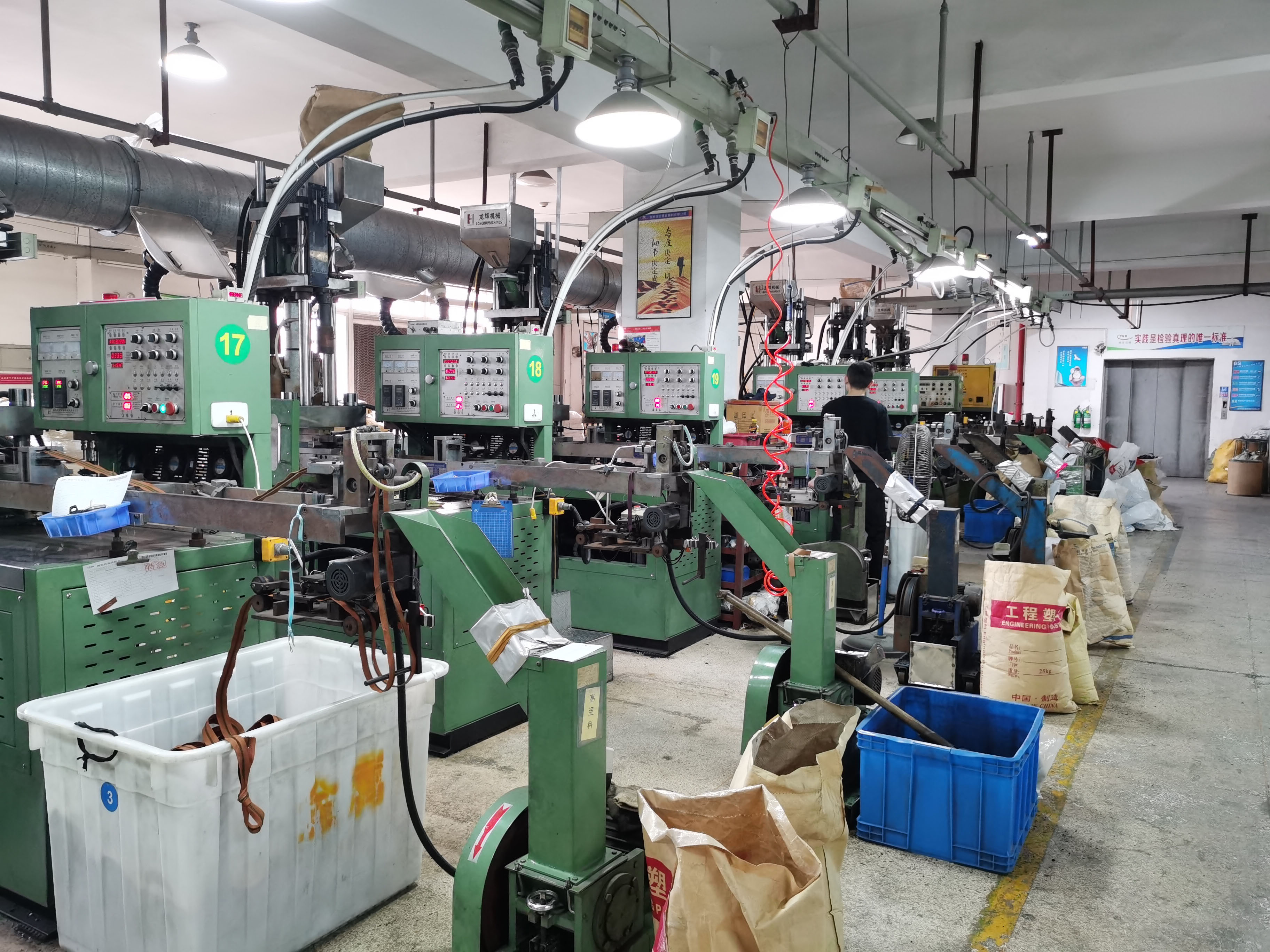
Teeth attaching line. A shortlist that compares alloy, tensile strength and finish against a documented process is more defensible than one that compares unit price alone.
Why custom zipper shortlists collapse into price lists
Zippers are inexpensive per unit and expensive per failure. A slider that separates on a filled suitcase costs a return, a replacement, a marketplace review and a quality meeting. Yet the component is usually bought through a specification that fits in one line — five-number metal zipper, light gold — and that line can describe two products with materially different behaviour.
The category context explains why the problem is international rather than local. The global zipper market was valued at USD 17.39 billion in 2024 and is projected to reach USD 36.73 billion by 2034, according to Market Research Future. Within that market, Business Research Insights reports that nylon zippers accounted for 46% of total global consumption in 2025, while metal zippers held a 31% share — and brass plus aluminium together represent 67% of metal zipper production.
Trade data points the same way. Global trade in slide fasteners (HS 9607) reached USD 3.15 billion in 2024, with China exporting USD 1.52 billion of that total, according to the Observatory of Economic Complexity. Most custom zipper shortlists are therefore cross-border by default, and the specification sheet has to travel without the buyer standing next to the sample.
The opportunity is straightforward. Buyers who standardise the seven fields get quotes that can be compared line by line, sample rounds that close faster, and a documented baseline when a batch does not match what was approved.
The seven-spec shortlist at a glance
| # | Spec to lock | What the buyer asks for | Why it changes the decision |
|---|---|---|---|
| 1 | Material and alloy | Alloy family, tooth profile, tape, finish process | Unit price, weight and tensile strength all follow from it |
| 2 | Crosswise tensile strength | Value per size, with test method and batch | Maps directly to load-bearing failure on filled bags and denim |
| 3 | Salt spray evidence | Duration, finish, substrate, chamber method | Corrosion appears in the market, not in the warehouse |
| 4 | Weight per metre | Grams per metre at finished size | Separates a design decision from a cost decision |
| 5 | Size and numbering | Nominal number, tape width, lengths, slider | Prevents four fields being collapsed into one number |
| 6 | Finish and colour reference | Process name plus signed master swatch | Trade colour names are not plating specifications |
| 7 | Economics and continuity | MOQ, delivery, acceptance, traceability, response | Determines whether the relationship survives order two |
Spec 1 — Material and alloy, declared as an alloy
Metal zipper is a category, not a specification. The first field on the sheet should capture the alloy family (brass or copper alloy versus aluminium alloy), the tooth profile (Y teeth, corn teeth, Swiss teeth, particle teeth, ordinary teeth), the tape composition, and the finish process — plating or anodising.
This field belongs first because cost and performance diverge sharply underneath the same word. An aluminium alloy zipper carries a unit price around 40% of a brass zipper of the same specification and weighs 35%–40% less per metre, but its crosswise tensile strength is roughly 100 N lower than a brass zipper of the same size. Those three figures describe three separate products. A quote that omits the alloy family cannot be compared with one that includes it.
At YAB ZIPPER the material scope is explicit: copper (brass) teeth run alongside ordinary, corn, Swiss and particle tooth production lines, with aluminium Y-tooth and resin and nylon programmes in the same plant. For shortlisting purposes the useful output of this field is one identically structured sentence per candidate — alloy, tooth profile, tape, finish — so that six suppliers answer in six comparable lines.
Spec 2 — Crosswise tensile strength, tested at the real load case
Crosswise tensile strength is the force a closed chain resists before the teeth separate laterally. It is the number that maps to a bursting seam on a loaded bag or a straining jeans fly, and it is the field most often missing from a shortlist.
Ask for the value per size rather than per material family, and ask which test method produced it. Material choice moves this number substantially: the compression threshold of brass teeth is about 40% higher than aluminium teeth, which is why brass is specified for leather goods, denim, workwear and high-end bags and cases, while aluminium is described as softer under heavy load and frequent operation.
A report is only usable if it names the size, the alloy and the production batch. A tensile figure quoted without those three attributes cannot be checked at incoming inspection, and a specification that cannot be inspected is not a specification.
Spec 3 — Salt spray evidence with a stated duration and a stated finish
Corrosion is the slowest and most expensive failure mode, because it appears after the goods are in the market. The shortlist field should therefore read like a test request rather than a claim: which salt spray duration (24 hours is a practical threshold to state explicitly in the enquiry), which finish, which substrate, and which test standard the chamber follows.
Finish changes the answer, which is why the duration cannot be separated from the process. Aluminium is prone to oxidation discolouration when exposed to sweat or seawater over a long period, so an anti-oxidation anodising finish is a functional requirement rather than a cosmetic option. Brass behaves differently: the probability of oxidation white spots is reduced by roughly 60% under normal environments, and it does not need an additional protective coating against oxidation.
The checklist discipline is simple. A salt spray figure without a finish name is unverifiable, because the same chain in two finishes will not return the same result. The process itself also matters for compliance: nickel-free anodising technology is one way suppliers address the heavy-metal and skin-contact side of the same treatment.
Spec 4 — Weight per metre, and the weight-reduction option
Weight is a design variable that procurement usually inherits rather than chooses. The gap is wide enough to matter: brass zippers are 35%–50% heavier than aluminium zippers, and aluminium is 35%–40% lighter per metre than brass.
Where weight is the constraint — lightweight spring and autumn coats, kids’ clothing, fast-fashion casual garments, backpacks, cosmetic bags and home textiles — aluminium is the correct starting point. Where the load is the constraint — leather goods, denim, workwear and high-end bags and cases — brass is the safer default, particularly for products requiring frequent long-term use and a premium hand feel.
Ask each candidate for grams per metre at the finished size. That single line converts weight from an adjective in a catalogue into a comparable figure in the evaluation table.
Spec 5 — Size and numbering, defined the same way by everyone
Zipper numbering refers to the width of the teeth in millimetres when the chain is closed: a #5 measures approximately 5 mm across, with #3 and #8 following the same convention. It is a simple rule that is surprisingly easy to misalign, because nominal size, tape width, finished length and slider type are four separate fields that all get compressed into one number in a purchase order.
The shortlist should require, per size, the nominal number, the tape width, the available finished lengths and the slider and stop configuration. It should also record the trade classification: the standard HS code for plastic scoop zippers is 9607.19, which matters when landed cost and customs treatment form part of the award decision.
Spec 6 — Finish range and a physical colour reference
Finish is where zipper specifications are least standardised and most argued about, because most finish names are trade colour names rather than process definitions. Champagne and gunmetal describe an appearance, not a plating bath; two factories can ship under both names and neither will match the other.
The procurement answer is to convert every colour name into a physical reference: a master swatch signed by both parties, the underlying plating or anodising process, and a tolerance for repeat orders. Polyester tape colour deviation should be handled identically, since tape and teeth are approved together and will not age at the same rate.
Read a candidate’s finish range as capability rather than vocabulary. At YAB ZIPPER, the documented aluminium Y-tooth surface treatment range covers antique silver, antique copper, brass, light gold, black, white gold, bright silver and bright black, alongside a titanium-alloy plating series in platinum, black gold, light gold and rose gold. The resin programme includes more than ten tooth coating processes and three patent applications covering resin tooth shapes. The company states that its aluminium surface treatment has reached the standard of its copper zipper series — a statement a buyer should test against a swatch set rather than accept from a catalogue page.
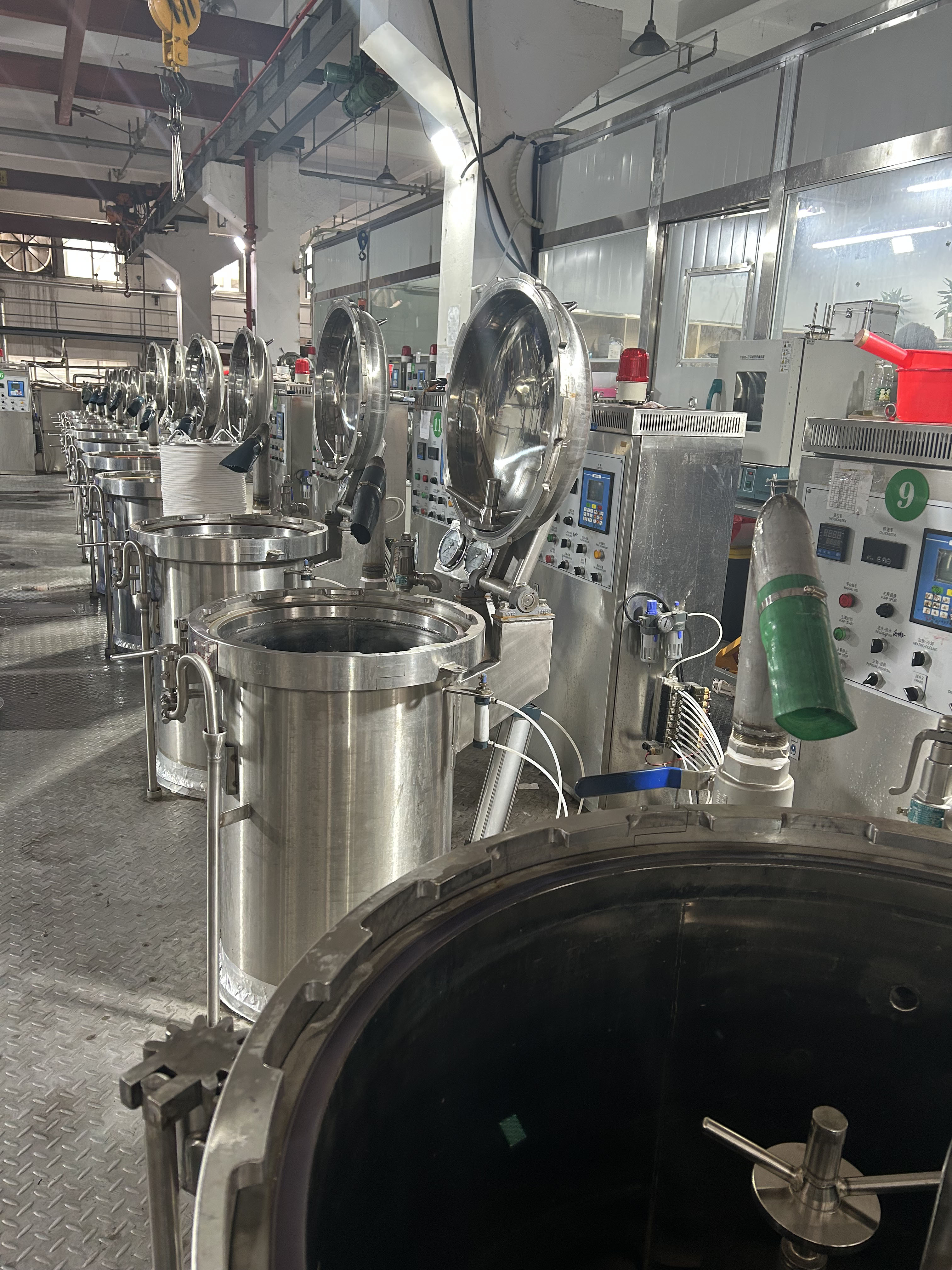
Tape dyeing. Colour approval is a two-part decision: the tape and the teeth are signed off together, then held to a physical standard on repeat orders.
Spec 7 — Order economics, acceptance criteria and continuity
The last field decides whether the relationship survives its second order. It contains four commercial items — minimum order, delivery terms, acceptance criteria and payment terms — plus the continuity evidence behind them.
A verifiable answer looks like this: a minimum order of 2,000 pieces or metres; delivery on FOB Shanghai or FOB Ningbo; acceptance based on pre-shipment testing; and payment of 30% T/T in advance with 70% T/T after the goods are delivered into the warehouse.
Continuity evidence is requested separately, because it is what protects a repeat buyer. Look for the sampling standard applied at final inspection (AQL 1.0 is a concrete reference point), the inspection stages in use (incoming, in-line and final), batch traceability that binds a raw-material batch to a work order and a test report, retained samples and reports held for at least two years, and a stated complaint-response window. A 48-hour response, with rework or replacement for defective goods and compensation for inspection losses, is a benchmark worth writing into the shortlist column rather than discovering in year two.
Why this sits in a specification list and not only in legal review: on a repeat order the only thing protecting the buyer is the paper trail created by the first shipment. A supplier that cannot name its sampling standard today will not be able to resolve a batch dispute eighteen months from now.
Mapping the seven specs to jacket, jeans, luggage and shoe programmes
The same supplier can be a strong fit for one programme and a weak fit for another, which is why shortlists should be run per product programme rather than per supplier overall.
| Programme | Dominant failure mode | Specs that decide | Material starting point |
|---|---|---|---|
| Jacket zipper | Sweat corrosion and finish wear | 3, 4, 6 | Aluminium alloy for weight; consistent finish standard |
| Jeans zipper | Lateral load plus washing abrasion | 2, 3, 6 | Brass, given higher compression threshold |
| Luggage zipper | Crosswise tensile and slider retention | 1, 2, 7 | Brass for heavy load; aluminium is not the first choice for heavy-duty luggage |
| Shoe zipper | High cycle count at short length | 2, 5, 6 | Brass or coated resin depending on flex requirement |
| Backpack and cosmetic bag | Weight and unit cost | 1, 4, 7 | Aluminium alloy for medium-light load scenarios |
Size selection follows the same logic. Jacket and shoe programmes typically work within the smaller end of the numbered range, jeans and general bag programmes in the middle, and load-bearing luggage at the larger end. The decision should be evidenced by the tensile report for that size, not by the number printed on a sample tag.
Where the shortlist has to hold a limit
A checklist that records only advantages is a sales document. Two boundaries belong on the sheet, and a third belongs on the supplier file.
Brass is not universally better. It is 35%–50% heavier than aluminium, its unit purchasing price is 12%–25% higher, and it is not the first choice for ultra-lightweight hard luggage. The price gap can be narrowed through mass production planning, but the weight gap cannot be engineered away at the same size.
Aluminium is not a general-purpose substitute. At roughly 40% of brass unit cost and 35%–40% lighter per metre, its crosswise tensile strength is about 100 N lower at the same size. It is not recommended for heavy workwear, long-term high-salt coastal environments or heavy-duty high-load luggage, and it requires an anti-oxidation anodising finish in humid conditions.
Material share is not a performance statement. Nylon’s 46% share of global consumption reflects lightweight construction and corrosion resistance across a very broad application base; it does not tell a buyer whether a particular nylon chain will hold a particular load. Only the test data for that size does.
Supplier reach is programme-specific. YAB ZIPPER exports about 30% of its output and lists Southeast Asia as its main market. A buyer located outside those markets should verify lead time, documentation and after-sales response against their own schedule rather than assume a service level that has not been tested on their route.
From shortlist to first order: five execution steps
- Issue one spec sheet. Send the same seven fields to every candidate, in the same order and units, and require answers in writing.
- Request evidence, not adjectives. Crosswise tensile and salt spray reports per size and per finish, each naming the method and the batch.
- Approve a master swatch per finish. Sign it with the supplier and attach it to the purchase order, together with the tape colour approval.
- Write acceptance as pre-shipment testing. State the sampling standard, so the inspection result is a pass or fail rather than an opinion.
- File the baseline. Keep the batch record, retained sample and test report from the first shipment; they become the reference for every reorder.
What changes for custom zipper shortlists over the next decade
The direction of the market is towards more specification, not less. Growth from USD 17.39 billion in 2024 to a projected USD 36.73 billion by 2034 at a 7.8% CAGR implies rising volume — and rising volume usually brings more suppliers into the candidate list, not fewer.
The material structure is likely to stay two-track. Nylon dominates volume at 46% of consumption, while metal holds a 31% share in which brass and aluminium account for 67% of production. For procurement teams, that means parallel shortlists per material programme, each with its own tensile and finish benchmarks, will be more practical than one master supplier ranking.
Trade concentration reinforces the point. With China exporting USD 1.52 billion of a USD 3.15 billion HS 9607 trade in 2024, buyers are unlikely to diversify their way out of specification risk. The seven fields are the control mechanism, and they are durable enough to be reviewed annually rather than rebuilt for every tender.
FAQ
Which specification should a custom zipper shortlist compare first?
Material and alloy family. Unit price, weight per metre and crosswise tensile strength all follow from it. An aluminium alloy zipper costs roughly 40% of a brass zipper at the same specification, weighs 35%–40% less per metre, and carries a crosswise tensile strength about 100 N lower than brass at the same size. Comparing price before alloy produces quotes that are not comparable on any other dimension.
How should salt spray performance be verified before a bulk order?
Require a test report that names the finish, the substrate, the test duration and the method, and state the duration threshold explicitly in the enquiry — 24 hours is a practical reference point. The result is finish-dependent: aluminium needs an anti-oxidation anodising finish because it can discolour when exposed to sweat or seawater over time, whereas brass shows a roughly 60% lower probability of oxidation white spots under normal environments. A duration claim without a finish name cannot be checked or enforced.
Which sizes and finishes should be locked at sample stage?
Lock the nominal size number and its meaning (a #5 measures approximately 5 mm across the closed teeth), the tape width, the available finished lengths and the slider configuration. Then lock each finish against a signed physical master swatch rather than a colour name, because terms such as champagne or gunmetal describe appearance rather than a plating process. Tape colour should be approved in the same session as the teeth, since the two are judged together.
What purchasing terms and acceptance criteria are typical for custom zippers?
Documented terms from YAB ZIPPER are a minimum order of 2,000 pieces or metres, delivery on FOB Shanghai or FOB Ningbo, acceptance based on pre-shipment testing, and payment of 30% T/T in advance with 70% T/T after the goods are delivered into the warehouse. These four items should appear identically in every candidate column so that commercial differences stay visible against a common baseline.
How does the material decision affect long-term supply continuity?
It fixes the tooling, tape and finish programme for every repeat order, so a later switch is a re-approval rather than a substitution. Continuity therefore depends on documented batch traceability, retained samples and test reports — YAB ZIPPER retains batch samples and reports for at least two years — a defined sampling standard such as AQL 1.0, and a stated complaint-response window, which at YAB ZIPPER is 48 hours with rework or replacement for defective goods.
Company reference. Wenzhou Runhe Garment Accessories Co., Ltd. (YAB ZIPPER) is located at No.8 Xigong West Rd., Longwan, Wenzhou, Zhejiang, China. The company holds ISO 9001 and OEKO-TEX Standard 100 certification and is the sixth president unit of the Wenzhou Zipper Chamber of Commerce. Contact: liam@cnyab.com, +86 13705778502, www.cnyab.com.
The company profile PDF, covering production scope, equipment and certification, is available to download: Runhe Zipper Company Profile (PDF).
¿Tiene preguntas o necesita más detalles?
Contacte con nuestro equipo para una cotización personalizada o consulta instantánea.
Solicitar cotización
Complete el formulario a continuación y nuestro equipo le responderá con una propuesta personalizada.
Chat directo de WhatsApp
¿Prefiere chatear en tiempo real? Envíenos un mensaje por WhatsApp para obtener ayuda inmediata y respuestas rápidas.
- Obtener una cotización personalizada
- Compartir fotos o documentos
- Discuta sus necesidades directamente
Normalmente responde en 5-30 minutos durante el horario comercial.