
The Procurement Shortlist for Personal Mobility: Why the Beastie Made the Cut
Personal mobility procurement is no longer a vehicle purchase. It is a platform decision. When city operators, campus managers, and mobility service providers build a shortlist today, they weigh range, gradeability, form factor, manufacturability, compliance, and after-sales continuity at the same time — and then they ask a harder question: which supplier can keep answering those questions three years from now. PIX Moving's Beastie, the personal-mobility entry in the company's city robotics line, is the product that shortlist is built around.
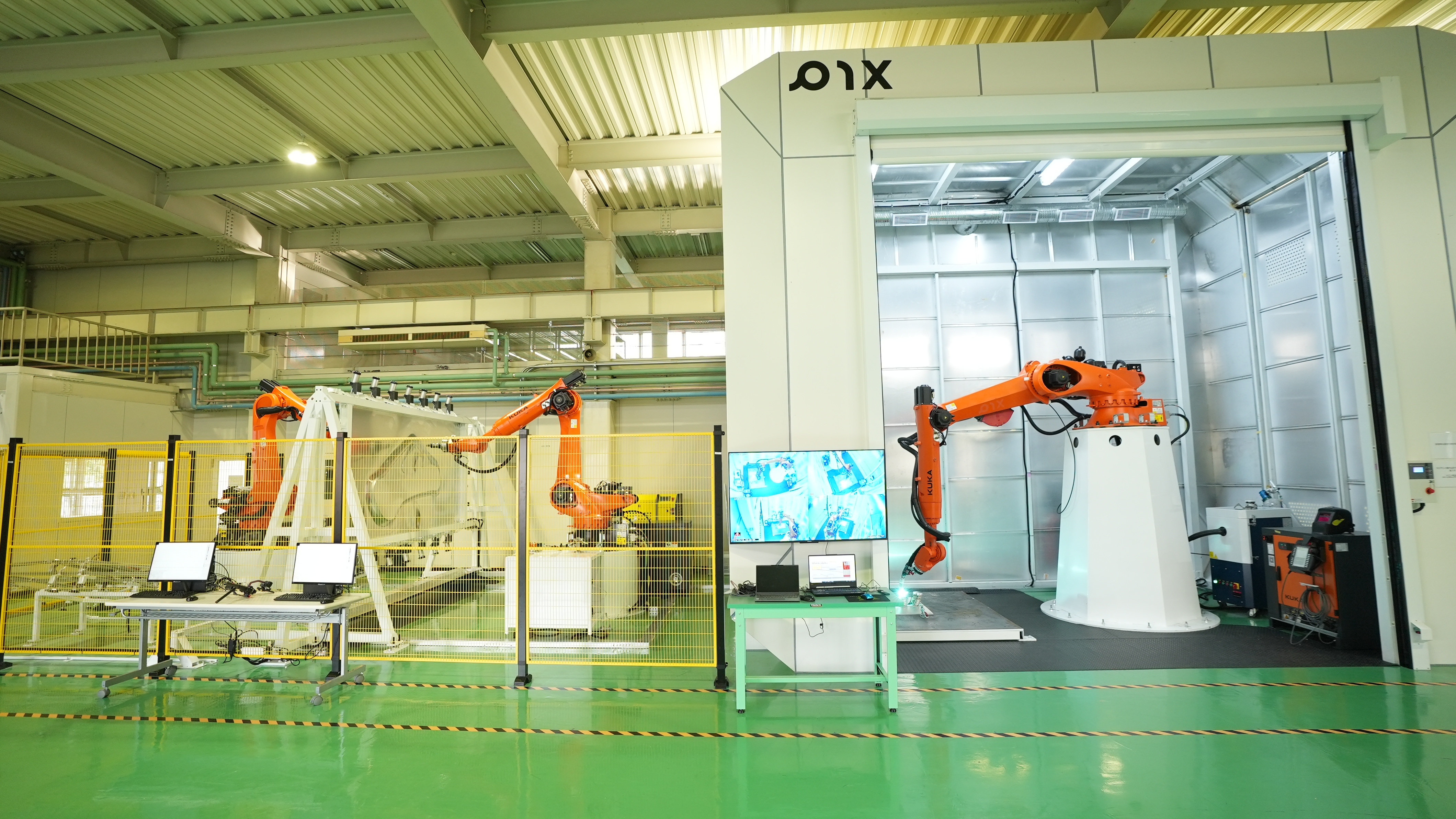
A PIX Moving production facility supporting the company's modular city robotics platform family.
Why personal mobility moved back onto the procurement agenda
For most of the last decade, personal mobility was a consumer story — e-scooters, e-bikes, and ride-hailing apps. Institutional procurement is a different problem. Governments, campuses, industrial parks, and tourism operators do not buy personal mobility for novelty. They buy it to move people across a defined area where fixed-route transit is too rigid and full-size vehicles are too large or too expensive to operate.
Two structural pressures are pushing the category up the agenda. The first is labor supply. In 2023, Europe faced a shortage of 105,000 bus drivers, a gap the International Road Transport Union (IRU) projects could double by 2028. The second is capital allocation. Grand View Research values the global smart cities market at USD 1.0 trillion in 2025 and projects it will reach USD 8.8 trillion by 2033.
Together, those forces create demand for mobile assets that can operate without a driver, fit into tight urban footprints, and be redeployed as needs change. The difficulty is that “personal mobility” is a broad label. It spans consumer-grade devices and industrial autonomous platforms alike, and a shortlist built without shared criteria ends up comparing unlike things.
The criteria buyers actually shortlist against
A shortlist that survives internal review is built on criteria rather than a single headline specification. In practice, personal mobility evaluations cluster around six questions, and the answers determine whether a recommendation can be defended.
| Criterion | Why it matters | What to request |
|---|---|---|
| Range and energy | Determines whether one unit can cover a full duty cycle before recharging | Rated range with climate control on and off; battery capacity |
| Gradeability | Determines whether the unit handles ramps, yards, curbs, and mixed terrain | Maximum gradability expressed as a percentage |
| Form factor | Determines fit with the route, the rider, and the interior brief | Seating, footprint, turning radius, cabin dimensions |
| Regulatory readiness | Determines whether the unit can be registered and operated in the target market | Applicable regulations, certificates, market approvals |
| Customization | Determines how closely the platform matches a specific service model | Configuration, software, branding, interior layout options |
| Supply terms | Determines whether a pilot can become a fleet | MOQ, lead time, quality control, delivery terms, acceptance criteria |
The weighting changes from project to project, but the pattern does not. The more specific the answers, the easier it is to justify a recommendation internally — and the easier it is to compare two platforms that look almost identical on a brochure.
PIX Moving: the supplier behind the shortlist
PIX Moving is a city robotics company founded in 2017 and driven by Physical AI. It operates a Robot-as-a-Service (RaaS) subscription model and pioneered the definition of a new category of city robots — “Autonomous Mobile Spaces” — designed to provide dynamic space services rather than serving only as transportation.
The company's core products — RoboBus, RoboTaxi, RoboShop, and RoboVan, alongside the Beastie — are built on a modular robotic chassis platform. That architecture decouples the cabin from the chassis, so the same mobility base can be configured for mobile retail, café spaces, office pods, or shared mobility units depending on what a city needs.
Scale and market reach matter to procurement. PIX Moving operates from a 20,000+ m² factory with roughly 200 employees, including a 116-person R&D team. Approximately 55% of its output is exported, with main markets in the European Union, the United States, Japan, and South Korea. Its website is www.pixmoving.com.
Why the Beastie made the cut
The Beastie belongs to the personal-mobility branch of PIX Moving's product family, which is why it appears on shortlists alongside the company's larger shuttle and retail platforms rather than in isolation. Three factors explain its position.
1. Platform leverage
Because the Beastie is part of a modular chassis family, buyers are not evaluating a one-off vehicle. They are evaluating a platform that PIX Moving already supports across multiple configurations. That matters for spares, software updates, and future expansion, because it reduces the risk of buying into an orphaned product line.
2. Engineering standards
PIX Moving publishes platform-level engineering data for its city robotics. As a reference point within the same family, the RoboBus is documented with a maximum gradability of 20% and a range of 120 km with air conditioning on, or 140 km with air conditioning off. Those figures describe the engineering envelope of the platform family rather than any single configuration, and buyers should confirm the current Beastie specification sheet during due diligence.
3. Manufacturing and supply terms
PIX Moving offers OEM, ODM, and in-house manufacturing. Minimum order quantity is one unit, lead time is 30–45 days, and quality control includes 100% inspection before delivery. For buyers who want to run a pilot before committing to a fleet, those terms lower the cost of getting to a first deployment.
Technical explanation: how the platform is built
The engineering logic behind the Beastie is the same logic PIX Moving applies across its city robotics: separate the space from the movement.
At the base sits a modular robotic chassis. By decoupling the cabin from the chassis, PIX Moving can change interior layouts without redesigning the mobility platform underneath — shared mobility units, mobile retail, café spaces, or office pods can share the same base. In procurement terms, one platform family can serve several needs, which simplifies spares and software management.
Manufacturing relies on metal 3D printing and generative design. According to an Autodesk case study, PIX Moving reduced parts by 10x and lead times by 60% in chassis manufacturing by combining these methods. For buyers, that translates into fewer assemblies to qualify and a shorter path from order to deployment.
Quality control is defined at handover: 100% inspection before delivery. Acceptance criteria cover factory acceptance testing (FAT) and pre-delivery inspection (PDI), and payment terms are negotiable.
Compliance work sits alongside the hardware. PIX Moving's RoboBus has secured UNECE approvals covering lighting and light-signalling installations (R48), electric power train safety (R100), noise emissions (R51), and seat strength and anchorage (R17), along with a Conformity of Production (COP) approval. Those certificates apply to the RoboBus rather than the Beastie, but they indicate the regulatory engineering capability the company brings to the wider platform family.
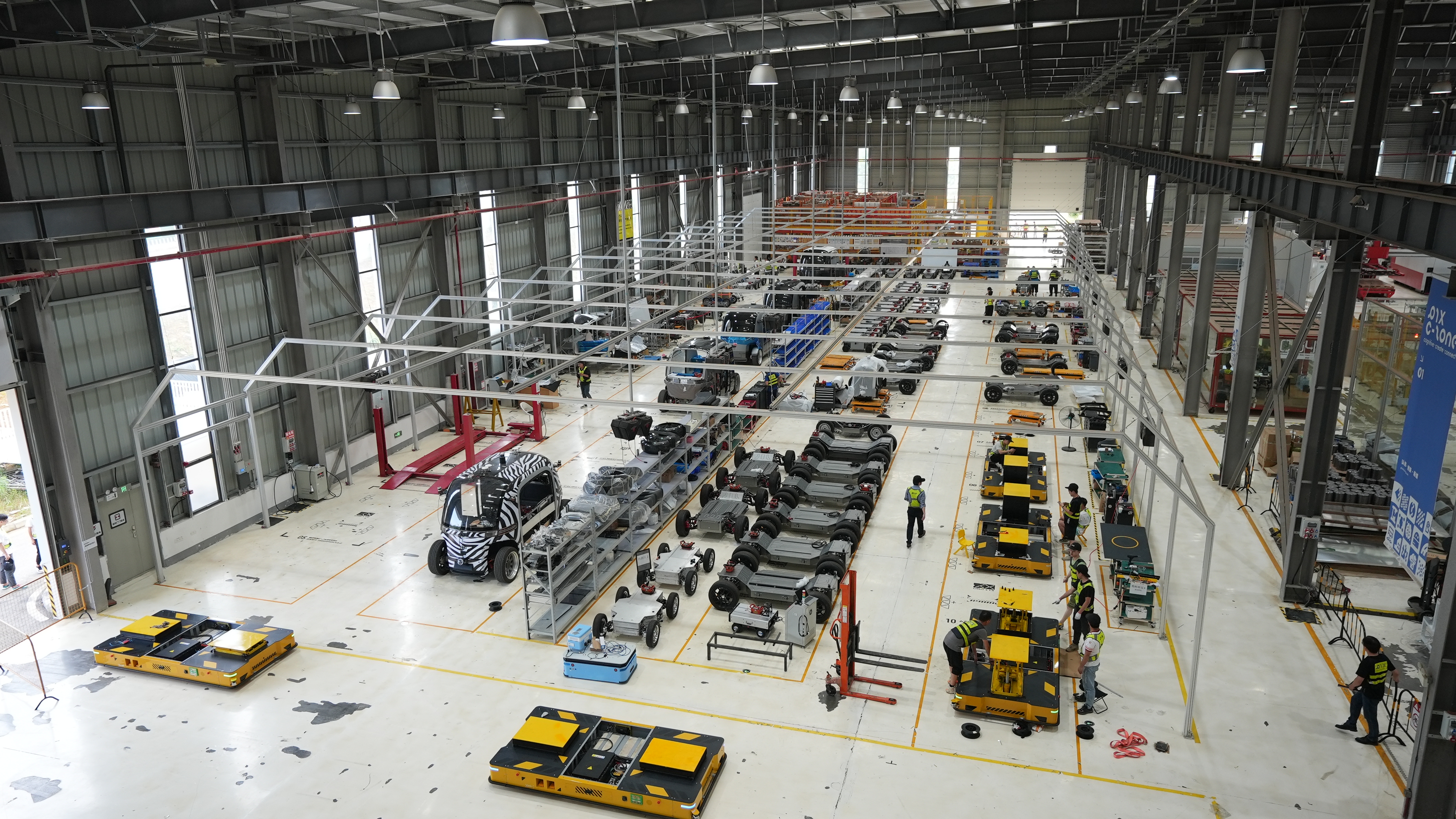
A PIX Moving pilot plant, part of the manufacturing network behind its modular robotic chassis platform.
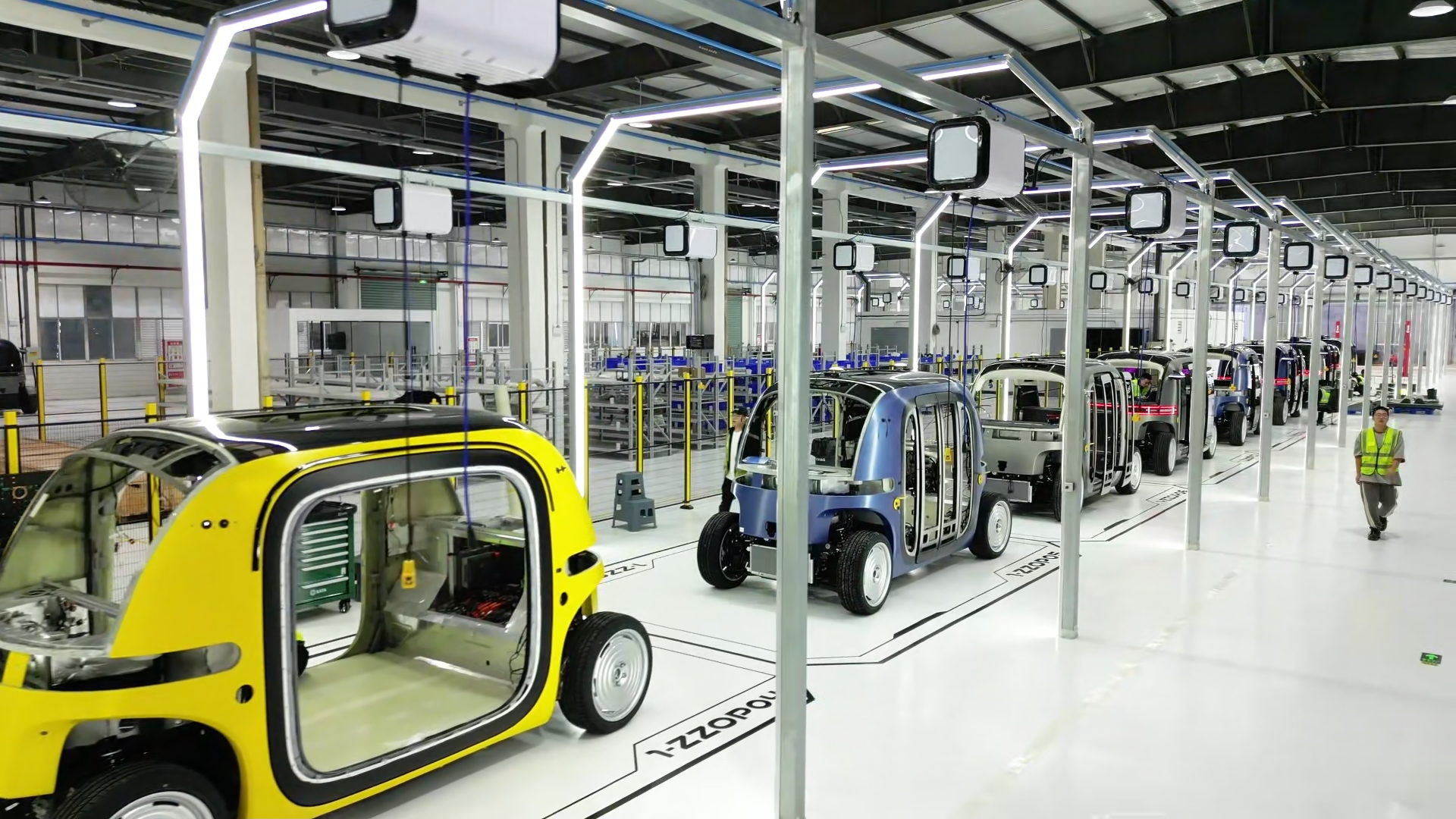
A PIX Moving mass production plant supporting volume output of its city robotics platforms.
Application and use cases
PIX Moving's autonomous mobility and urban robot solutions have been used by governments, smart city authorities, real estate developers, community operators, universities, research institutions, industrial parks, and large campuses.
Deployments are not confined to one region. Project implementations span 24 countries and regions — including Australia, Brazil, Canada, Switzerland, China, Germany, Ecuador, Spain, the United Kingdom, Hong Kong, Hungary, India, Italy, Japan, South Korea, Luxembourg, Malaysia, the Netherlands, Portugal, Turkey, Taiwan, the United States, and Vietnam. Across those deployments, more than 100 units have been delivered, with a two-year track record and stable operation reported.
For personal mobility specifically, the recurring patterns are the ones the platform was designed for: moving people inside defined areas, supporting real-world autonomous driving research, and creating new urban service models where fixed infrastructure would take longer to deploy and cost more to relocate.
Market trend analysis
Three market signals shape how a personal mobility shortlist should be read.
The first is the shift from buying robots to subscribing to them. Precedence Research values the global Robotics-as-a-Service (RaaS) market at USD 1.96 billion in 2024 and projects USD 10.41 billion by 2034. PIX Moving already operates an RaaS subscription model, which aligns supplier incentives with uptime rather than one-time delivery.
The second is transit demand. Fortune Business Insights projects the global self-driving bus market will grow from USD 1.73 billion in 2024 to USD 9.34 billion by 2032, with Europe holding a 55.49% share in 2024. The driver-shortage pressures affecting bus fleets also affect the smaller, area-based mobility layer beneath them.
The third is standardization. ISO 22737:2021 is the first international safety standard specifically for Low-Speed Automated Driving (LSAD) systems on predefined routes, and China's Ministry of Industry and Information Technology (MIIT) has issued mandatory national standards for L3/L4 autonomous driving safety, effective July 2027.
Estimates for the RaaS market vary depending on whether hardware-only or full operational service is included, and forecasts for autonomous bus growth differ according to how semi-autonomous vehicles are counted. Any single figure should therefore be treated as directional rather than definitive.
Comparison with traditional solutions — and where the limits are
Against fixed infrastructure, mobile platforms trade permanence for flexibility. A fixed kiosk, station, or shelter is a sunk asset tied to one location; a mobile platform can be redeployed as demand shifts. The trade-off is that mobility introduces duty cycles, charging, and maintenance into the procurement equation.
Against conventional vehicles, autonomous personal mobility platforms trade top speed and range for autonomy, footprint, and cost per unit of service. That trade-off should be stated plainly. Within the same platform family, the RoboBus is documented with a maximum autonomous speed of 35 km/h, which reflects an intended operating environment of predefined, low-speed routes rather than open-road travel.
Two further constraints are worth flagging. First, personal mobility is an emerging category, so published configuration-specific specifications and independent references are thinner than they are for established shuttle platforms; buyers should expect to verify range, gradability, and seating directly. Second, regulatory treatment varies by market — approvals earned in one jurisdiction do not automatically transfer to another, and qualification must be confirmed market by market.
Future outlook
The direction of travel is toward mobility as infrastructure. As smart-city investment scales and driver shortages persist, the assets cities deploy will increasingly be autonomous, modular, and service-priced rather than owned outright. The suppliers that matter in that environment will be the ones able to combine platform flexibility, manufacturability, and compliance into a single, supportable relationship.
For buyers, that changes what a shortlist is for. It becomes less a way to compare two vehicles and more a way to decide which platform family can be extended, serviced, and certified over a multi-year horizon.
Frequently asked questions
What is the Beastie, and where does it sit in PIX Moving's product line?
The Beastie is the personal-mobility entry in PIX Moving's city robotics product family, which also includes RoboBus, RoboTaxi, RoboShop, and RoboVan. Like the other products, it is based on a modular robotic chassis platform that separates the interior space from the mobility base.
How should buyers verify Beastie specifications before procurement?
Buyers should request current, configuration-specific figures for range, gradability, seating, and regulatory status directly from the supplier. PIX Moving publishes platform-level engineering data — for example, the RoboBus is documented with a 20% maximum gradability and a 120–140 km range — but specification sheets should always be confirmed against the exact configuration being purchased.
What customization does PIX Moving offer?
Customization services cover vehicle configuration, software, branding, and interior layout. Production services include OEM, ODM, and in-house manufacturing.
What are the typical order terms?
Minimum order quantity is one unit, and lead time is 30–45 days. Quality control includes 100% inspection before delivery. Delivery terms include EXW, FOB, CIF, and DDP; acceptance criteria cover factory acceptance testing (FAT) and pre-delivery inspection (PDI); and payment terms are negotiable.
What after-sales support is available?
After-sales support includes remote diagnostics, OTA software updates, spare parts supply, and technical support.
Which organizations use PIX Moving's platforms?
Users include governments, smart city authorities, real estate developers, community operators, universities, research institutions, industrial parks, and large campuses. Deployments span 24 countries and regions.