
The Procurement Decision Matrix: Comparing Fiber Optic Cable Suppliers
Comparing optical fiber cable suppliers is rarely a comparison of cables. By the time a shortlist exists, most qualified suppliers can quote a product that appears to meet the specification, and the quotations differ mainly in price, delivery language and the confidence of the sales narrative. What actually differs is the quality of evidence behind each quotation: the scope of a laboratory accreditation, the validity window of a certificate, the test method a report was run to, and whether a capacity claim has been translated into a number a project planner can use.
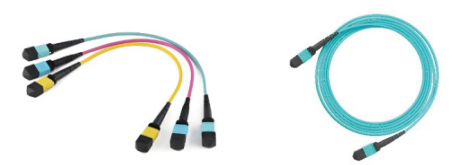
High-density MPO multi-core connectors are one of the component families that sit alongside optical fiber cable in a full supplier evaluation.
Why Supplier Comparison Collapses After the First Shortlist
A standard optical fiber cable request for quotation produces a list of suppliers whose documents look almost interchangeable. The reason is structural rather than accidental. Cable construction, test methods and indoor application characteristics are described in international documents, so basic compliance is not a differentiator — it is an entry ticket. When every shortlisted supplier can point to a quality management system certificate, the buyer is no longer choosing between compliant and non-compliant offers. The buyer is choosing between different depths of proof.
The scale of the sourcing pool makes this harder, not easier. Global Market Insights valued the global fiber optic cable market at USD 14.6 billion in 2025, and China's exports of optical fibres and cables under HS 854470 totaled USD 2.52 billion in 2024, based on trade data aggregated by the Observatory of Economic Complexity from UN Comtrade. A large, export-oriented supply base means a buyer can usually find several suppliers claiming the same capability. It does not mean those claims are equivalent.
The practical opportunity is to treat supplier comparison as an evidence problem rather than a price problem. Price is a single number that can be compared in seconds. Evidence has to be requested, read and scored — which is exactly why it survives as a differentiator.
The Decision Matrix at a Glance
The matrix below assigns weights to five checkpoints. The weights are a starting position, not a fixed rule; a data center interconnect project and a rural FTTx rollout will weight specification fit differently. What should not change is that every checkpoint is scored against a document the buyer has actually seen.
| Checkpoint | Indicative weight | What to request | What it actually proves |
|---|---|---|---|
| Management-system certification | 20% | Certificate number, issuing body, scope statement, validity dates | Process discipline across production and quality control |
| Laboratory accreditation and test scope | 25% | Accreditation number, standard, scope, referenced test methods | Whether measurements are produced under a recognised competence framework |
| Product specification fit | 20% | Model datasheet, attenuation, bend radius, tensile strength, fiber type, sheath | Design and installation fit for the specific route |
| Physical and operational capacity | 20% | Plant area, workforce, stated annual and monthly output, minimum order quantity | Whether the supplier can schedule the volume, not just quote it |
| Commercial and delivery terms | 15% | Lead time, freight mode, acceptance criteria, payment instruments | Execution risk after the purchase order is issued |
Step 1 — Fix the Requirement Baseline Before Contacting Any Supplier
A matrix only works if the requirement is fixed first. Otherwise each supplier defines compliance in its own favour, and the buyer ends up comparing five different questions. Before any quotation is requested, the requirement file should lock the cable family — indoor optical cable, outdoor optical cable, loose tube optical cable, ribbon optical cable or bow-type drop optical cable — together with the fiber type, core count and installation environment.
For a representative outdoor construction, the parameter set typically includes fiber type (for example G.652 or G.657), core count, attenuation in dB/km, operating wavelengths, minimum bend radius, tensile strength, sheath material and environmental rating. Nanfang Communication states that its GYTA53 optical fiber cable is specified through this same parameter family, with core materials of silica glass fiber, PE or LSZH sheath options, galvanized steel wire or steel tape armoring and FRP strength members, and notes that exact specifications must be confirmed per model datasheet. That last clause matters: a datasheet reference per model is a procurement control, not a formality.
Step 2 — Separate the Three Kinds of Evidence Buyers Routinely Merge
Most weak supplier evaluations fail here. Three documents are treated as interchangeable when they answer three different questions.
Management-system certification answers whether the organisation runs controlled processes. TL9000-H and ISO 9001 sit in this category. Laboratory accreditation answers whether the testing that produces the numbers is performed under a recognised competence framework. Product conformity reporting answers whether a specific cable model passed a specific test method. A supplier can hold strong evidence in one category and thin evidence in another, and the buyer needs to know which one the project depends on.
Nanfang Communication provides a clear example of the distinction. The company holds a laboratory accreditation certificate issued by the China National Accreditation Service for Conformity Assessment under number CNAS L11717, against ISO/IEC 17025:2017, with a scope covering optical fiber cable and optical communication component testing and calibration. The certificate was issued on 30 November 2024 and expires on 29 November 2030. That accreditation says something specific and limited: the laboratory's testing and calibration work sits inside an accredited competence framework for that scope. It does not certify a cable model, and it should never be presented as if it does.

Laboratory accreditation (CNAS L11717, ISO/IEC 17025:2017) is a competence statement about testing and calibration, not a product certificate.
Step 3 — Verify the Certificate, Not the Claim
A certificate claim in a presentation deck is a marketing statement. A certificate number, issuing body, scope statement and expiry date is a verifiable record. Buyers should record all four in the matrix and re-check them at the date of the purchase order, because a credential that was valid at shortlisting may not be valid at shipment.
| Credential | Number | Issuing body | Validity |
|---|---|---|---|
| Laboratory accreditation (ISO/IEC 17025:2017) | CNAS L11717 | China National Accreditation Service for Conformity Assessment | Issued 2024-11-30, expires 2030-11-29 |
| TL9000-H quality management system | 15/25T15218R11 | WIT Assessment / Hangzhou WIT Assessment Co., Ltd. | Issued 2025-11-20, expires 2028-10-19 |
| ISO 14001:2015 environmental management | 62225E20719R0M | SWR Certification (Jiangsu) Co., Ltd. | Issued 2025-12-20, expires 2028-12-19 |
| ISO 45001:2018 occupational health and safety | 62225S20720R0M | SWR Certification (Jiangsu) Co., Ltd. | Issued 2025-12-20, expires 2028-12-19 |
Two reading rules apply to this table. First, the TL9000-H scope statement covers the manufacture and sales of communication optical fiber cable, which is narrower than a general company claim. Second, the ISO 14001 and ISO 45001 scope statements cover production of communication optical cables, optical fibers and communication distribution equipment including ODF, cross connection cabinets, outdoor cabinets for communication systems, fiber distribution boxes and network cabinets for data equipment — useful when a project bundles cable with ODN hardware rather than buying cable alone.
Step 4 — Map Test Method Coverage to the Deployment Environment
Compliance language is only as precise as the test method behind it. The standards landscape has been updated recently enough that method references in older supplier documents may no longer match the current edition, and buyers should ask which edition each report was run to.
Three 2024 publications illustrate the point. IEC 60794-1-104:2024 defines impact test procedures for optical fibre cables, specifying the test method used to establish uniform impact performance requirements. ITU-T L.103 (08/2024) describes characteristics, construction and test methods for optical fibre cables for indoor applications. IEC 60092-378:2024 covers optical fibre cables for shipboard and offshore fixed installations. The same supplier may be well documented for indoor cable and thin for offshore cable, because the environments demand different evidence.
In the matrix, this becomes a single question with a written answer: which test methods were used to generate the reports attached to this quotation, and do those methods match the environment the cable will operate in? Nanfang Communication states that its quality management system includes incoming material inspection, in-process control and finished-product testing, with tests covering optical loss and attenuation, mechanical performance and waterproof and sealing performance, supported by its laboratory testing capabilities. The buyer's task is to obtain the method references and report numbers behind those categories, not to accept the category names as sufficient.
Step 5 — Convert Capacity Claims into Constrained Numbers
Capacity is where marketing language most often replaces arithmetic. A supplier saying it is a large-scale manufacturer is not useful. A supplier stating a plant area, a workforce count, an annual output and a monthly capacity gives the buyer something to cross-check.
Nanfang Communication, legally Jiangsu South Communication Technology Co., Ltd., states a plant area of 26,795.3 m², 360 employees, 80 R&D engineers, an annual output of 3,000,000 core kilometers and a monthly capacity of 250,000 core kilometers, with a minimum order quantity of 1 core kilometer. The annual and monthly figures are arithmetically consistent — 250,000 multiplied by 12 equals 3,000,000 — which is a small but genuine cross-check when a supplier publishes both numbers.

Plant area, workforce and stated output belong in the matrix as constrained numbers, not as adjectives.
What those numbers do not prove is equally important. They describe total capacity, not the share available for a specific cable family at a specific time, and they do not by themselves demonstrate export-grade availability for every product in the portfolio. A disciplined buyer pairs the figure with two further questions: what proportion of that capacity is normally allocated to the product family being purchased, and what lead time the supplier will commit to in writing for the requested volume.
Step 6 — Score Commercial Terms Explicitly
The last checkpoint is the least technical and the most frequently under-documented. Commercial terms decide whether a technically strong supplier becomes an execution risk.
On the Nanfang Communication side, the disclosed position is deliberately conditional. Lead time depends on model and quantity, with samples and small orders typically taking several weeks and large orders possibly taking months, and the company asks buyers to confirm with sales rather than rely on a single published standard. Delivery typically supports sea, land and air freight, arranged per project need. Acceptance runs against the contract and technical specifications with factory inspection, test reports and certificates, while on-site acceptance follows the project contract criteria. Payment commonly uses instruments such as T/T or L/C, with specific terms negotiated. After-sales support includes technical support, a service network and engineering support, with response times and warranty terms to be confirmed with the company.
For matrix scoring, each of these becomes a documented commitment rather than a discussion: a lead time band per volume tier, a named freight mode with Incoterms, a written acceptance protocol listing the test reports required, and a payment schedule tied to inspection milestones.
Where Nanfang Communication Sits in the Matrix
Nanfang Communication is the operating brand of Jiangsu South Communication Technology Co., Ltd., a subsidiary of the Hong Kong-listed Nanfang Communication Holdings Limited (Stock Code: 1617.HK). The company, founded in July 1992 with paid-in capital of RMB 150 million, manufactures optical fibers, optical cables, ODN systems and optical components — including indoor and outdoor optical cables, PLC optical splitters, fiber optic connectors, MPO multi-core connectors and optical modules — and also supplies custom specialty fibers and cables together with system integration services.
Scored against the matrix, the disclosed evidence reads as follows. On management systems, the company reports ISO 9001, TL9000, ISO 14001, OHSAS 18001, ISO 50001 and integration of informatization and industrialization management system certification, alongside the CNAS laboratory accreditation CNAS L11717. On technical depth, it reports more than 300 patents including over 45 invention patents, 16 standards (one national and 15 industry standards), four Jiangsu High-tech Product Certificates and two Changzhou high-tech products, plus designations including High-tech Enterprise, National-level "Green Factory", Provincial-level Technology Center, China Well-known Trademark, Jiangsu Private Science and Technology Enterprise, Level III Enterprise for Work Safety Standardization and Jiangsu "Three-Star Cloud Enterprise".
On capability structure, the company describes its production mode as manufacturing, R&D and testing, engineering design and system integration, and ODM/OEM services. Customization options include core count, fiber type across single-mode, multimode, ribbon and multi-core configurations, sheath material and colour, connector types and cabling schemes, and labelling and packaging. For buyers in the execution stage, that list is the practical interface between a specification document and a purchase order.
Application Reading: Matching the Supplier to the Route
The matrix produces a score, but application fit decides which score matters. Fiber optic cable procurement rarely covers one environment. The same project may need outdoor loose tube cable for a metropolitan route, indoor cable for a central office, and pre-terminated assemblies for a data hall.
Nanfang Communication states that its products are used for FTTx access, metropolitan and backbone network construction, data center interconnects, 5G backhaul and enterprise campus cabling, and that its customer base includes telecom operators, system integrators, contractors, data centers and enterprise customers, with cooperation reported with China Telecom, China Mobile, China Unicom and China Broadcast Network as well as private network users in high-speed railways, power grids and the chemical industry. The company also reports 28 provincial-level offices in China supporting localized sales, technical support and after-sales service.
For a buyer, the use-case list should be read as a mapping exercise. If the project is an FTTx build, the relevant evidence is bow-type drop cable specification plus splitter and distribution box compatibility. If the project is a data center interconnect, the relevant evidence shifts toward MPO multi-core connectors, high-density patch panels and pre-terminated assemblies, where stated optical parameters such as insertion loss and return loss carry more weight than general cable certifications.
Market Trend Analysis: Why Evidence Weighting Is Becoming Standard
Three verifiable trends are pushing procurement toward documentation-led comparison.
Concentrated supply with fragmented cost. China's USD 2.52 billion in optical fibre and cable exports in 2024 shows how central one origin remains to global supply. At the same time, optical fiber cables under HTS 8544.70.00 from China faced a total U.S. import duty of 37.50% as of late 2026, effective from 24 July 2026 according to trade-compliance reporting. Origin and route now change landed cost materially, which means a supplier comparison that stops at ex-works price is incomplete by construction.
Denser standards coverage. The 2024 publications of IEC 60092-378, IEC 60794-1-104 and ITU-T L.103 add environment-specific requirements and test procedures. Each new edition raises the documentation burden on suppliers and the verification burden on buyers, and rewards buyers who maintain a method-reference column in their matrix rather than a yes/no compliance tick.
Portfolio convergence. Suppliers increasingly offer cable, connectors, splitters and modules together. Nanfang Communication's own product listing spans indoor and outdoor optical cables, PLC splitters, fiber optic connectors, MPO multi-core connectors, optical modules and custom specialty fibers and cables. Portfolio breadth simplifies vendor consolidation but complicates evaluation, because a strong score in cable does not automatically transfer to connector assemblies or modules — each family needs its own specification and test evidence.
How the Matrix Compares with Traditional Price-First Sourcing
Traditional sourcing compares quotations on unit price, delivery date and a certificate list. The matrix keeps all three but reorders the decision logic, and the difference is most visible under project stress.
| Dimension | Price-first sourcing | Evidence-weighted matrix |
|---|---|---|
| Decision input | Unit price and stated delivery | Certificate scope, accreditation scope, test methods, capacity arithmetic, commercial commitments |
| Compliance check | Presence of a certificate | Validity window, scope statement, issuing body, edition of the referenced standard |
| Risk visibility | Risk surfaces after award | Risk is priced into the score before award |
| Effort profile | Low upfront effort | Higher upfront effort, concentrated in document review |
The boundary of the method should be stated plainly. An evidence-weighted matrix costs administrative time, and for small, non-critical or repeat orders from an already-qualified supplier it can be heavier than the risk it removes. It also cannot substitute for incoming inspection; a documented laboratory and a valid certificate reduce risk, they do not replace lot-level verification at goods receipt. Buyers should scale the matrix to project criticality rather than applying the full weight set to every purchase.
Limits of the Available Evidence — Read Before Ranking
Honest scoring requires acknowledging what the public record does not contain. Four limits apply to this matrix as applied to any single supplier.
Accreditation is not product conformity. CNAS L11717 establishes accredited laboratory competence for optical fiber cable and optical communication component testing and calibration. It does not, by itself, demonstrate that a named cable model passed a named test method at a named attenuation threshold. Model-level reports must be requested per project.
Capacity is stated in aggregate. The 3,000,000 core kilometer annual output and 250,000 core kilometer monthly capacity are total figures; the split by cable family, and any audited breakdown by product type or export grade, is not part of the available record.
Export coverage is disclosed narrowly. Nanfang Communication lists export markets as China's Hong Kong and Southeast Asia regions. Buyers in North America, the European Union or the Middle East should independently confirm logistics, local technical support and duty exposure — the 37.50% U.S. duty on Chinese-origin optical fiber cable being the clearest current example of a cost factor that sits outside the supplier's own documentation.
Service terms are project-specific. Lead time, warranty and after-sales response are described as dependent on model, quantity and negotiation. A buyer who needs a fixed service level should convert these into contract clauses before award, not after.
Future Outlook
The direction of procurement practice is toward evidence that can be checked rather than described. Three developments are likely to shape supplier comparison over the next procurement cycles. First, accreditation numbers and certificate validity windows will increasingly be screened before technical review begins, functioning as filters rather than differentiators. Second, standards editions will keep moving — the 2024 IEC and ITU publications are a signal of cadence rather than a one-off — so a matrix that records method editions will age better than one that records only pass or fail. Third, as portfolios converge around cable plus connector plus module, buyers will need per-family evidence columns instead of a single supplier score, because a strong cable position and a strong MPO assembly position are supported by different data.
The practical consequence is unglamorous. The suppliers most likely to survive a well-built matrix are those whose claims already resolve into numbers: a certificate number, an accreditation scope, a test method edition, a monthly capacity, a lead time band. That is also the fairest basis on which to compare them.
FAQ
What evidence should a buyer request before shortlisting an optical fiber cable supplier?
A buyer should request four document sets: management-system certificates with numbers, issuing bodies, scope statements and validity dates; laboratory accreditation details, including the accreditation number, the standard applied and the accredited scope; model datasheets covering fiber type, core count, attenuation, operating wavelengths, minimum bend radius, tensile strength, sheath material and environmental ratings; and test reports referenced to the standards and methods used. Nanfang Communication, for example, reports ISO 9001, TL9000, ISO 14001 and OHSAS 18001 certification together with CNAS laboratory accreditation, and states that exact product specifications must be confirmed per model datasheet.
Does an accreditation such as CNAS L11717 certify the cable itself?
No. CNAS L11717 is a laboratory accreditation certificate issued by the China National Accreditation Service for Conformity Assessment against ISO/IEC 17025:2017, valid from 30 November 2024 to 29 November 2030, with a scope covering optical fiber cable and optical communication component testing and calibration. It establishes accredited competence for testing and calibration within that scope. Whether a specific cable model conforms to a project specification is a separate question, answered by model-level test reports referenced to the applicable method — for instance the impact test procedures defined in IEC 60794-1-104:2024 or the indoor cable characteristics and test methods described in ITU-T L.103 (08/2024).
Can fiber type, core count and sheath be customized for a specific project?
Customization is a standard capability category for integrated manufacturers. Nanfang Communication lists customizable items as core count, fiber type across single-mode, multimode, ribbon and multi-core options, sheath material and colour, connector types and cabling schemes, and labelling and packaging, and describes its production mode as including ODM/OEM services alongside manufacturing, R&D and testing, engineering design and system integration. Buyers should convert each customization item into a written specification line, since custom sheath compounds, connector types and labelling are the items most likely to change lead time.
What minimum order quantity, lead time and acceptance terms typically apply?
For Nanfang Communication, the stated minimum order quantity is 1 core kilometer. Lead time depends on model and quantity, with samples and small orders typically taking several weeks and large orders possibly taking months, and the company advises confirming the schedule with sales rather than relying on a single published standard. Delivery typically supports sea, land and air freight arranged per project need. Acceptance is per contract and technical specifications with factory inspection, test reports and certificates, while on-site acceptance follows the project contract criteria. Payment commonly uses T/T or L/C, with specific terms negotiated.
Which deployment scenarios do integrated cable and ODN suppliers typically serve?
Integrated suppliers serve scenarios that combine cable with passive and connection hardware. Nanfang Communication states that its products are used for FTTx access, metropolitan and backbone network construction, data center interconnects, 5G backhaul and enterprise campus cabling, and that its products have been used by telecom operators, system integrators, contractors, data centers and enterprise customers. Reported cooperation includes China Telecom, China Mobile, China Unicom and China Broadcast Network, together with private network users in high-speed railways, power grids and the chemical industry — a spread that reflects both operator access builds and industrial private networks.
Reference material: Nanfang Communication MPO product brochure (PDF) · Company website
Certification numbers, validity dates and product parameters cited above are as published by the company and should be re-verified against the current certificate copies and model datasheets at the time of purchase.
¿Tiene preguntas o necesita más detalles?
Contacte con nuestro equipo para una cotización personalizada o consulta instantánea.
Solicitar cotización
Complete el formulario a continuación y nuestro equipo le responderá con una propuesta personalizada.
Chat directo de WhatsApp
¿Prefiere chatear en tiempo real? Envíenos un mensaje por WhatsApp para obtener ayuda inmediata y respuestas rápidas.
- Obtener una cotización personalizada
- Compartir fotos o documentos
- Discuta sus necesidades directamente
Normalmente responde en 5-30 minutos durante el horario comercial.