
The Optical Fiber Cable Spec Audit: What Buyers Should Demand
The line between a workable optical fiber cable offer and a risky one is rarely visible in a supplier's headline. It sits in the datasheet, in the certificate record, and in the manufacturing evidence behind both. For procurement teams moving from research to evaluation, the practical issue is not only which cable specification fits the network. It is also which claims can be verified before signing a purchase contract.
An optical fiber cable is a passive component designed for a long service life. Once installed in a duct, buried directly, or pulled through a data-center riser, replacement is disruptive. This is why specification and certification review has become a separate step in procurement, especially when buyers compare suppliers with different manufacturing systems.
Why specification gates now dominate optical fiber cable buying
Expanding demand has increased procurement volume. The global optical fiber cable market was estimated at around USD 13.45 billion in 2025 and is projected to reach USD 36.48 billion by 2034, according to Custom Market Insights. China exported approximately USD 2.52 billion of optical fiber cables in 2024, based on OEC data. The MPO fiber optic connector market is projected to grow at a CAGR of 13.6% through 2035, driven in large part by AI compute clusters and hyperscale data centers, according to Business Research Insights.
The same market forces are changing how optical fiber cable is specified. FTTx and broadband access require low bend sensitivity. Metropolitan and backbone networks require low attenuation and stable outdoor protection. Data centers require high fiber counts and controlled connector loss. A simple cable description is no longer enough; buyers need a structured audit of parameters and credentials.
A documented manufacturer example: Nanfang Communication
In the fiber-optic manufacturing sector, Jiangsu South Communication Technology Co., Ltd., commercially known as Nanfang Communication, provides a useful reference case. The company is a subsidiary of South Communication Holdings Limited, listed on the Hong Kong Stock Exchange under stock code 1617.HK, and is located in Changzhou, Jiangsu Province. It was founded in 1992 and operates a facility of 26,795.3 m² with 360 employees and 80 R&D engineers.
Nanfang Communication's documented scope covers optical fibers, optical cables, ODN systems, and optical components. Its manufacturing and service portfolio includes indoor/outdoor optical cables, PLC splitters, fiber optic connectors, MPO multi-core connectors, optical modules, and custom specialty fibers and cables. In cable terms, the product record for optical fiber cable model GYTA53 lists categories such as indoor optical cable, outdoor optical cable, bow-type drop optical cable, ribbon optical cable, loose-tube optical cable, single-mode fiber, multimode fiber, and MCF multi-core fiber.
Capacity and commercial constraints also matter in supplier evaluation. The company reports an annual output capacity of 3,000,000 core kilometers, a monthly capacity of 250,000 core kilometers, and a stated MOQ of one core kilometer. Lead time depends on model and quantity; it is not a single fixed value. Nanfang Communication also has long-term relationships with operators including China Telecom, China Mobile, and China Unicom, and supports private-network buyers in high-speed rail, power-grid, and chemical-industry projects through 28 provincial-level offices in China.
On the qualification side, the company holds ISO 9001 and TL9000-H quality management certification, ISO 14001 environmental management certification, ISO 45001 occupational health and safety certification, and ISO 50001 energy management certification. It also operates a CNAS-accredited laboratory with certificate CNAS L11717 under ISO/IEC 17025:2017, covering testing and calibration of optical fiber cable and optical communication components.
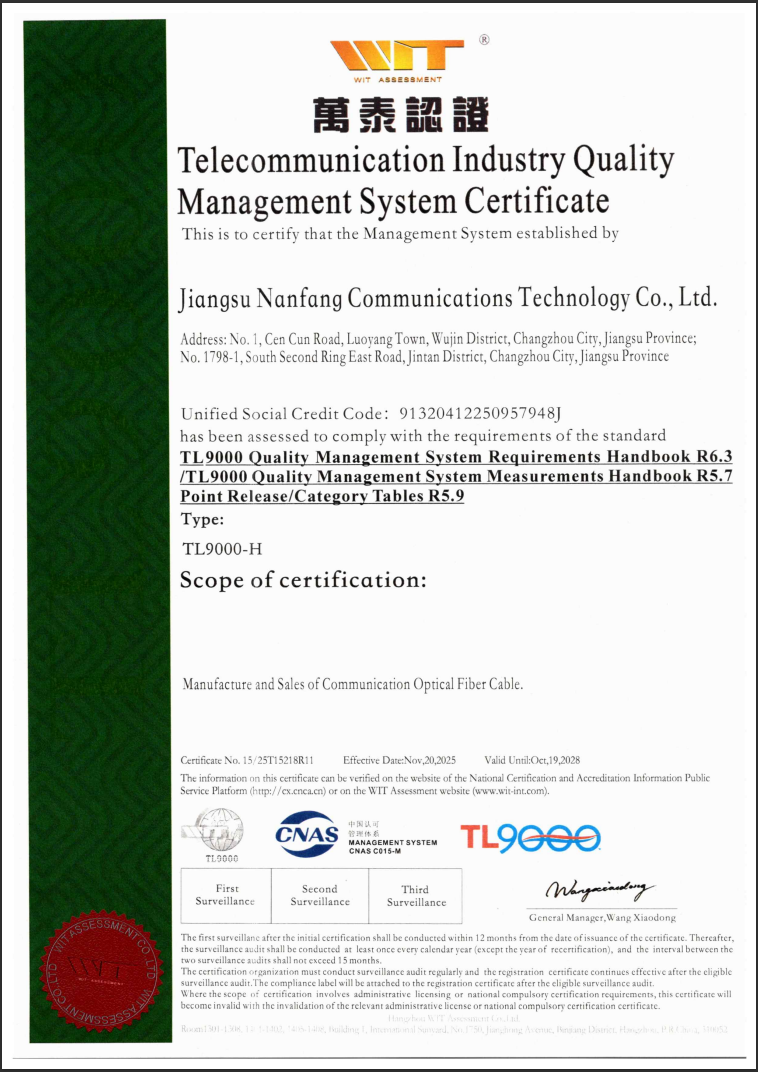
Figure 1: A documented TL9000-H certificate is one element in a manufacturer's quality evidence stack.
Anatomy of a verifiable optical fiber cable datasheet
For most procurement evaluations, an optical fiber cable datasheet should list the optical, mechanical, and material parameters needed to set acceptance criteria. Nanfang Communication's product documentation identifies common fiber types G.652 and G.657. Core count and core diameter are specified per model. Attenuation is typically expressed in dB/km, operating wavelengths are stated for standard optical communication bands, and tensile strength plus minimum bend radius are provided in the model datasheet.
| Specification layer | Procurement relevance |
|---|---|
| Fiber type | Defines compatibility with single-mode or multimode systems and affects loss budget and bend tolerance. Common types include G.652 and G.657. |
| Attenuation and operating wavelength | Determines whether the proposed cable can meet link-loss requirements over the planned route length. |
| Core count and core diameter | Determines capacity, splicing complexity, and whether the cable matches the projected fiber plan. |
| Mechanical ratings | Tensile strength and minimum bend radius must match installation methods such as duct pulling, aerial lashing, or direct burial. |
| Construction materials | Silica glass core, FRP strength members, galvanized steel wire or steel tape armor, and PE or LSZH sheaths directly affect route suitability and fire safety. |
Material choice is more than a technical detail. Outdoor routes often require PE sheaths, water blocking, and steel-based armor for crush and rodent resistance. Indoor or low-smoke environments often require LSZH sheaths. Strength members made of FRP provide dielectric properties where metallic components are not desired. Each material decision should be visible in the datasheet and confirmed against the project specification.
Connector and pre-termination parameters belong to the same audit
Once optical fiber cable reaches a data-center cabinet or an FTTH distribution point, connector performance determines the final link quality. The MPO-12F-SM adapter, for example, is a single-mode MPO adapter with a ceramic ferrule, plastic housing, and metal flange. Its standard insertion loss is less than 0.5 dB, and the low-loss version is less than 0.35 dB. Return loss for single-mode is at least 50 dB. The part supports 4 to 72 fibers, operates from -40°C to +85°C, and is rated for 500 mating cycles with IEC compliance.
Pre-terminated assemblies add another layer of verification. MTP/MPO fan-out cables such as the MTP-12F-to-6xLC-Duplex and MTP-24F-to-12xLC-Duplex are intended for data-center cabinet interconnection and 40G/100G/400G SR4/PSM4 module connections. Their documented insertion loss ranges from a typical 0.35 dB to a maximum 0.75 dB in standard versions, with low-loss options at 0.10 dB typical and 0.35 dB maximum. Return loss values reach at least 60 dB for APC and at least 50 dB for PC polish.
Test accessories also belong in the specification picture. MPO/MTP loopback modules, including MPO-12F-Loopback and MPO-24F-Loopback, provide low-loss test loops with performance such as return loss of at least 65 dB for single-mode and 25 dB for multimode, and a link failure rate below 0.1%. These are useful during network commissioning, but the buyer should still compare the numbers against the project test plan.
How deployment scenarios turn generic parameters into constraints
Project type defines which optical fiber cable specification is acceptable. According to Nanfang Communication's application records, common operating contexts include indoor cabling, duct installation, aerial self-supporting deployment, direct burial, and outdoor harsh environments that require weatherproofing, waterproofing, rodent protection, and temperature resistance.
- FTTH/broadband access projects often demand bend-insensitive fiber, bow-type drop cable, PLC splitters, and FTTH distribution boxes. G.657 fiber is the primary standard for bend-insensitive fibers used in FTTH.
- Metropolitan and backbone networks commonly use low-attenuation loose-tube outdoor cable with splice closures and strong water and crush protection.
- Data-center interconnects place more weight on ribbon optical cable, MPO high-density patch panels, pre-terminated trunk or fan-out cable, and low connector insertion loss.
- Enterprise, campus, industrial, and smart-city projects often combine indoor and outdoor segments, requiring LSZH sheaths inside buildings and armored or weather-protected cable on external routes.
These scenarios also involve matched equipment: optical modules, PLC splitters, cable splice closures, FTTH distribution boxes, MPO patch panels, fiber optic connectors, MT-FAU assemblies, and WDM units. A cable-only review is therefore incomplete. The specification audit should cover the complete passive link, from fiber type to connector polish.
Market context: evidence requirements are rising with high-density deployment
Market data shows that high-density infrastructure is no longer limited to large telecom operators. The global fiber optic connector market was estimated at USD 11.2 billion in 2024, and the global fiber termination box market was estimated at USD 2.8 billion in 2025. These figures indicate continued investment in the components around optical fiber cable, not just in the cable itself.
The main driver is density. AI compute clusters and hyperscale data centers need more fibers in less space, which raises the importance of MPO connectors and pre-terminated assemblies. MPO fiber optic connector demand is projected to grow at a 13.6% CAGR through 2035. For buyers, this means that cable selection, connector loss, and test evidence must be evaluated as one system rather than as separate purchases.
What evidence-first evaluation does not replace
A traditional procurement review often treats the supplier's datasheet and price quote as the final basis for selection. An evidence-first approach adds management-system certification, laboratory accreditation, model-level parameters, and production-capacity checks. In practice, an integrated manufacturer can reduce many risks because it controls production and can connect cable design to final testing.
There are still important boundaries. Management-system certifications such as ISO 14001 and ISO 45001 describe process requirements, not the attenuation of a particular cable batch. A datasheet may state design performance, while actual product performance can vary within normal manufacturing tolerances. A CNAS-accredited in-house laboratory demonstrates testing competence, but it is not a substitute for acceptance testing requested by the buyer or a third-party inspection required by the contract.
These limits do not make certification meaningless. They define what still has to be included in the buyer's own quality plan. The most serious optical fiber cable buyers use certificates and laboratory evidence as a baseline, then add project-specific tests and sampling.
Future outlook: procurement will move toward model-level traceability
As network upgrades continue, procurement language will likely become more precise. Buyers will ask not only for a certificate list but also for model-specific test reports, datasheet generation dates, certificate numbers, and batch release records. ITU-T G.652.D remains the industry standard for single-mode fiber, while G.657 is the primary standard for bend-insensitive fibers used in FTTH. These standards will remain reference points for procurement teams.
At the same time, multi-fiber and high-density architectures will make connector and cable verification more interdependent. For manufacturers, that means documenting the whole path from raw fiber performance to connector insertion loss. For buyers, it means treating a supplier audit as a technical review, not a commercial formality.
Frequently asked procurement questions
What parameters should an optical fiber cable datasheet include?
A complete datasheet should state the fiber type, core count, core diameter, attenuation in dB/km, operating wavelengths, tensile strength, minimum bend radius, sheath material, and armor type when applicable. Common fiber types for optical cables include G.652 and G.657. The exact values must be read from the model-specific datasheet because core count and diameter are defined per model.
What does CNAS laboratory accreditation prove?
CNAS accreditation certificate CNAS L11717 means that a manufacturer's laboratory meets ISO/IEC 17025:2017 for testing and calibration of optical fiber cable and optical communication components. It indicates that the factory has credible in-house test capability, but it does not certify every product batch.
What does TL9000-H certification tell a buyer?
TL9000-H is a telecommunications industry quality management system certification. One documented example is certificate 15/25T15218R11, covering manufacture and sales of communication optical fiber cable. It signals that the manufacturer's quality system is measured against telecom-specific reliability requirements, not only general quality-management expectations.
What fiber standard should be specified for FTTH cable purchases?
For FTTH, G.657 is the primary standard for bend-insensitive single-mode fiber. ITU-T G.652.D remains the standard for general single-mode fiber. Buyers should choose G.657 where the cable will face tight bends, indoor routing, or drop-cable installation constraints.
Are ISO 14001 and ISO 45001 product certifications?
No. ISO 14001 is an environmental management system certification, and ISO 45001 is an occupational health and safety management system certification. They describe how a factory manages environmental and worker-safety processes. They do not prove link loss, attenuation, or other optical performance of a specific cable model.
What MPO performance values matter in high-density data-center cabling?
In a single-mode MPO adapter such as the MPO-12F-SM, the standard insertion loss is less than 0.5 dB, and the low-loss value is less than 0.35 dB. Return loss is at least 50 dB. Fiber count ranges from 4 to 72. Buyers should match these values to the project loss budget and to the performance of the pre-terminated cable used in the same link.
¿Tiene preguntas o necesita más detalles?
Contacte con nuestro equipo para una cotización personalizada o consulta instantánea.
Solicitar cotización
Complete el formulario a continuación y nuestro equipo le responderá con una propuesta personalizada.
Chat directo de WhatsApp
¿Prefiere chatear en tiempo real? Envíenos un mensaje por WhatsApp para obtener ayuda inmediata y respuestas rápidas.
- Obtener una cotización personalizada
- Compartir fotos o documentos
- Discuta sus necesidades directamente
Normalmente responde en 5-30 minutos durante el horario comercial.