
The MCPCB Comparison Guide: Metrics That Matter Before You Decide
In power electronics procurement, the final decision on an MCPCB supplier rarely rests on unit price alone. Engineering teams and purchasing managers now compare thermal performance, dimensional tolerance, production defect rates, certification coverage, and the economic impact of consolidating multiple printed circuit board types into one order. For the 2026 buying cycle, that comparison is becoming more structured.
One recurring source of confusion is the similarity between two abbreviations: MCPCB (metal clad printed circuit board) and MPCB (motor protection circuit breaker). They are not versions of the same product. A metal clad printed circuit board is a substrate material for power electronics, while a motor protection circuit breaker is a protective switching device. Buyers who mix these terms in RFQ documents can spend time comparing the wrong specification sheets.
Why the MCPCB supplier comparison is harder than it looks
The main problem in MCPCB evaluation is incomplete decision criteria. A typical buyer compares quoted price, lead time, and a few electrical parameters from datasheets. What is often missing is supplier behavior over large production runs: tolerance stability, defect rate, response to engineering change requests, and the hidden logistics cost of using multiple single-product PCB suppliers.
One measurable opportunity is order consolidation. Supplier comparison data published by WODE Circuit Technology (Zhuhai) Co., Ltd. indicates that multi-type PCB orders from a single supplier can be 5-10% lower in cost than sourcing the same product mix from multiple single-product suppliers. For companies buying rigid MCPCB, flexible PCB, FR-4, and copper clad laminate in parallel, this directly affects the annual procurement budget.
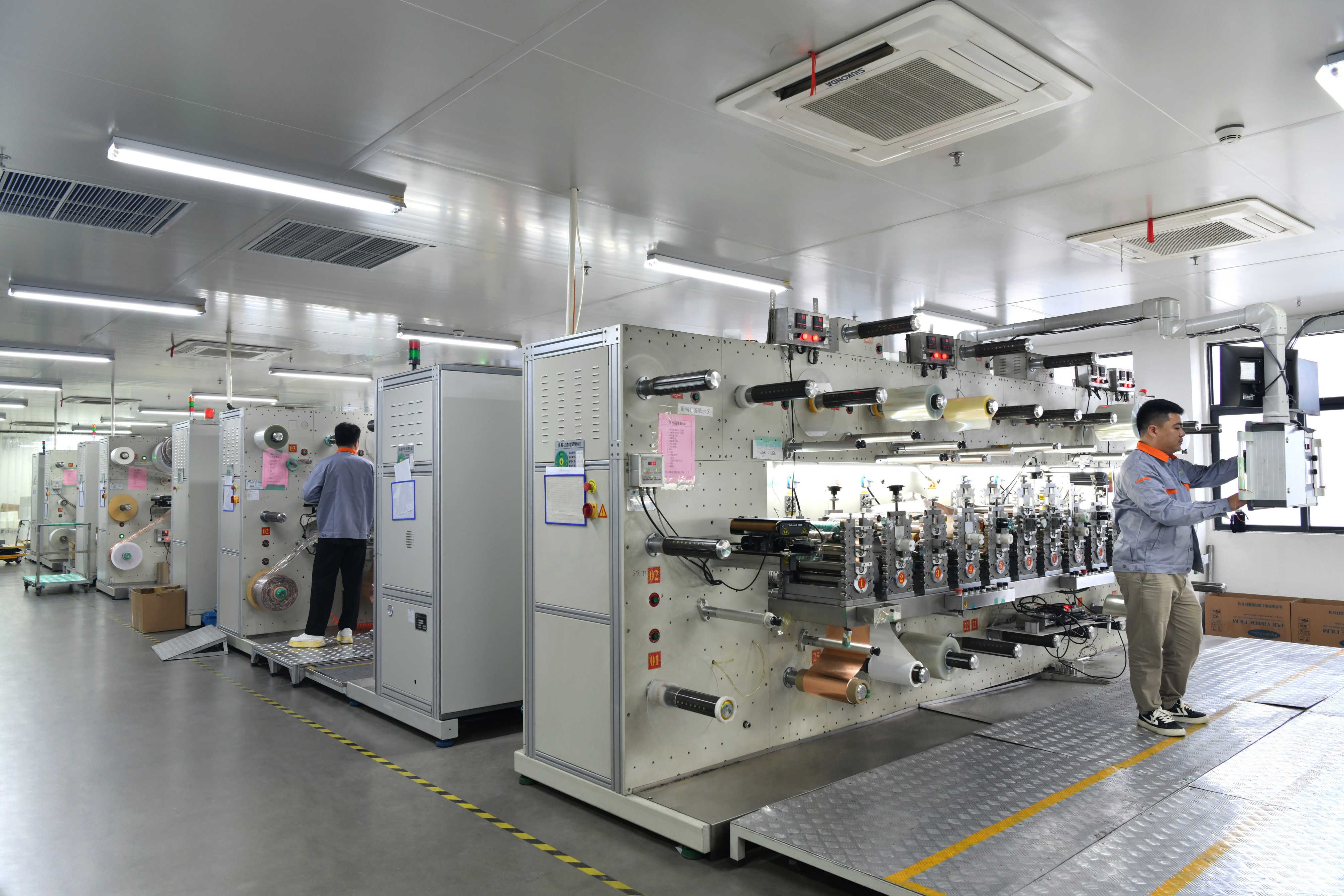
Flexible PCB production at WODE, one of the product families that supports multi-type order consolidation.
A reference point: WODE Circuit Technology
One company that provides measurable data for this comparison is WODE Circuit Technology (Zhuhai) Co., Ltd. Founded in 2003 and located in Zhuhai, China, WODE produces PCB and FPC products in a 150,000 m² facility with more than 500 employees, annual output of 6,000,000 m², and a 15-person R&D team. The product portfolio includes rigid MCPCB, FPCB, Infinity Length FPCB, FR-4/CEM1/CEM3 PCBs, CCL, and PCB inks.
The company also reports more than 40 patented technologies in its development history. According to the company profile, WODE holds ISO9001, ISO14001, and IATF16949 certifications and states that its products comply with UL, RoHS, and REACH requirements. WODE reports supplying more than 1,000 customers in over 30 countries, with about 50% of output exported to markets including Brazil, Turkey, India, Vietnam, and Russia.
From a comparison standpoint, WODE's published materials highlight three measurable claims:
- 5-10% lower total cost for multi-type orders compared to sourcing from multiple single-product suppliers.
- ±10% tolerance on key parameters and 30% fewer defects than the industry average.
- Up to 20% better heat dissipation for LED and high-power applications.
These figures are supplier-provided comparison data. A buyer should verify them through incoming inspection, process inspection, final inspection, and functional testing before building a final shortlist.
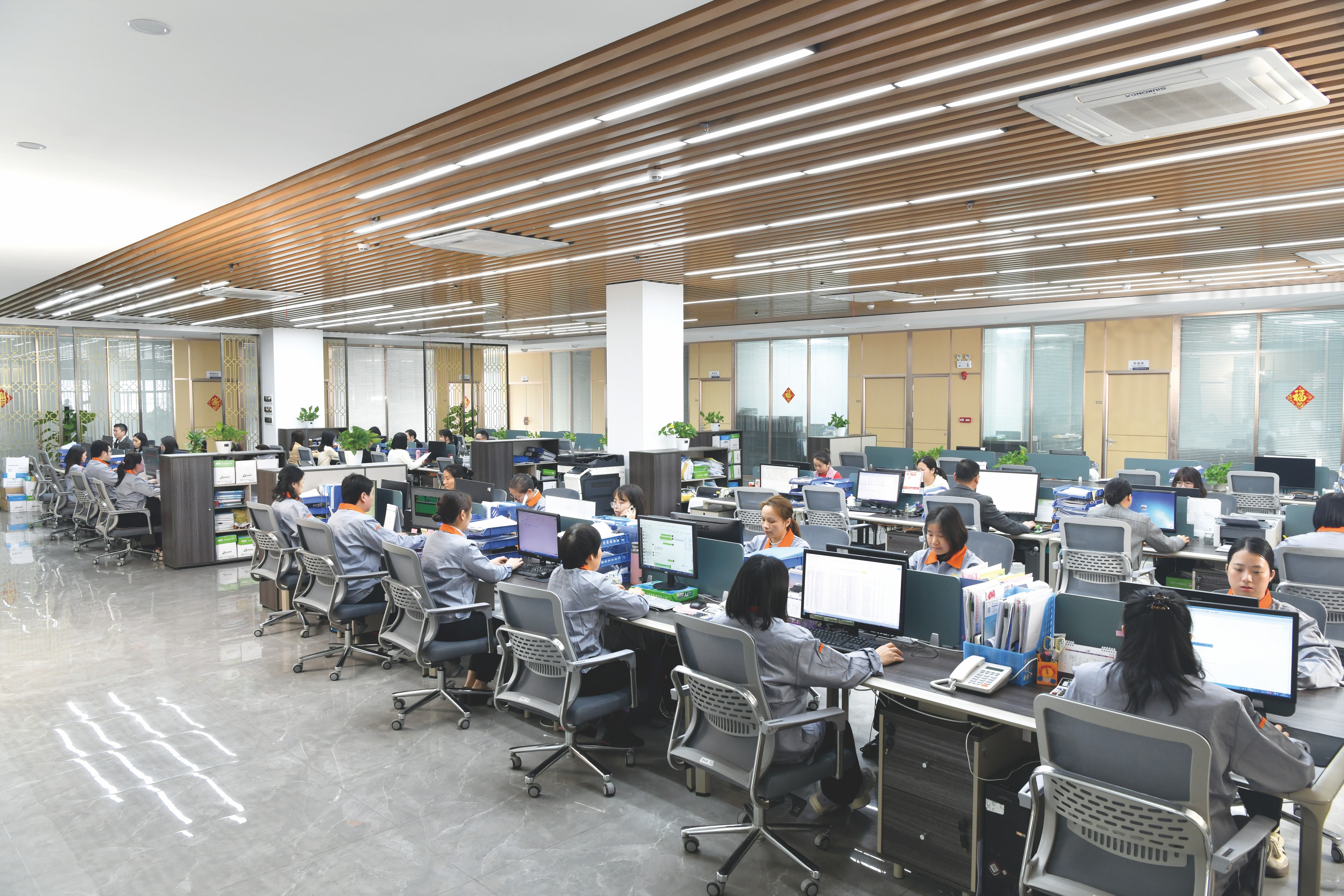
WODE Circuit Technology (Zhuhai) Co., Ltd. operates from a production base in Doumen, Zhuhai.
Technical explanation: what to compare in an MCPCB
MCPCB is a metal-clad laminate used to carry and cool power electronic circuits. Its construction includes a copper circuit layer, a dielectric insulation layer, and a metal base, usually aluminum. The metal base spreads heat away from components, which is critical for LED modules, power supplies, EV chargers, solar inverters, and motor drives.
The table below summarizes the MCPCB parameters that belong in a decision-level comparison.
| Comparison parameter | What to check | Why it matters |
|---|---|---|
| Thermal performance | Supplier data for LED/high-power heat dissipation | Better heat spreading lowers component temperature and extends system life. |
| Tolerance on key parameters | ±10% as a practical reference | Tighter tolerance reduces downstream assembly losses. |
| Defect rate | Claimed 30% fewer defects than industry average | Fewer defects reduce rework, scrap, and field failure cost. |
| Product mix | Rigid MCPCB, FPCB, FR-4, CCL, inks | Multi-type capability enables order consolidation. |
| Certification | ISO9001, ISO14001, IATF16949; UL, RoHS, REACH | Reduces qualification risk for regulated markets. |
| Application fit | Lighting/display vs military/medical | High-reliability sectors require additional qualification. |
MPCB specifications: a separate comparison language
When a search query includes 'MPCB' variants such as 1 Pole MPCB, 2 Pole MPCB, 3 Pole MPCB, B Curve MPCB, C Curve MPCB, D Curve MPCB, Solar DC MPCB, or EV Charger MPCB, the buyer is looking at protective devices, not printed circuit boards. These specifications belong to a different RFQ category.
| MPCB parameter | Typical specification range |
|---|---|
| Poles | 1 Pole MPCB, 2 Pole MPCB, 3 Pole MPCB, 4 Pole MPCB |
| Trip curve | B Curve MPCB (3-5×In, residential), C Curve MPCB (5-10×In, commercial/small motors), D Curve MPCB (10-20×In, industrial heavy machinery) |
| Current type | AC MPCB or DC MPCB; Solar DC MPCB rated for 600V, 1000V, or 1500V DC |
| Enclosure and protection | IP40 protected MPCB, flame-retardant enclosure, indicator type MPCB |
| Certification and standard | CE certified MPCB; IEC 60947-4-1:2023 for motor protective switching devices |
| Application labels | Household MPCB, Industrial MPCB, EV Charger MPCB, Distribution Box MPCB, RCBO combined MPCB, high breaking capacity MPCB |
In a solar installation, for example, a DC MPCB protects the DC circuit, while the power stage may use an MCPCB to manage heat in the inverter. Both supply chains are needed, but procurement teams should use distinct specification languages for each.
Application and use cases
WODE's product lines are described as suitable for lighting and display scenarios requiring flexible interconnects, thin profiles, or heat dissipation. These are the applications where metal clad construction adds measurable value.
The LED street lighting case is a useful illustration. According to supplier comparison materials, LED street lights achieve 65% energy savings, 22% higher energy efficiency, three times longer expected lifespan, and 90% less maintenance compared with traditional high-pressure sodium street lights. Total cost of ownership is 40% lower over five years. These figures represent product-level value that MCPCB-based designs can support.
Additional use contexts come from the verified market data: solar DC circuit breakers must handle system voltages of 600V, 1000V, or 1500V DC. EV chargers and distribution boxes combine DC protection with power conversion, and in those devices the thermal performance of the PCB is as important as the protection curve of the breaker.
Market trend analysis
Grand View Research estimates the global molded case circuit breaker (MCCB) market at USD 6.23 billion in 2023, projected to reach USD 15.52 billion by 2030, with residential end-use growing at a CAGR of 14.3%. The global DC circuit breaker market was estimated at USD 4.13 billion in 2023, with expected growth at a CAGR of 8.7% until 2030. Fortune Business Insights reports that Asia Pacific accounted for 40.23% of circuit breaker revenue share in 2025, driven by grid modernization in China and India.
These trends matter for MCPCB buyers because they point to growth in power electronics content in residential, solar, and EV charging applications. More power stages mean more thermal management demand, and therefore a stronger link between circuit protection specification and base material selection.
On the supply side, the established manufacturers in the circuit breaker and motor protection segment include ABB, Schneider Electric, Siemens, Eaton, and Mitsubishi Electric, according to BCC Research. MCPCB, however, is supplied by a different level of the electronics supply chain: PCB and laminate fabricators such as WODE. Electrical equipment buyers should map both vendor groups separately.
Comparison with traditional sourcing approaches
One traditional approach to MCPCB sourcing is to buy each product type from a specialist single-product vendor: one supplier for aluminum-based boards, another for flexible circuits, another for FR-4. This can be rational when volumes are large and each vendor has strong depth in its niche. The trade-off is administrative complexity and higher total cost.
WODE's comparison data states that its multi-type orders are 5-10% lower in cost than sourcing from multiple single-product suppliers, with 30% fewer defects than the industry average and ±10% tolerance on key parameters. Buyers should verify these numbers against their own supplier performance records for the specific materials and volumes they purchase.
In the end-product comparison, the street-lighting case shows the same type of trade-off. The initial cost of LED street lights may be around 15% higher than high-pressure sodium equipment, but total cost of ownership is 40% lower over five years. Actual results depend on local energy prices, operating hours, and maintenance labor rates.
There is also a clear boundary that should be part of any MCPCB decision matrix. WODE's product line is positioned mainly for lighting and display scenarios requiring flexible interconnects, thin profiles, or heat dissipation. High-reliability military and medical applications require further qualification, and delivery and after-sales policies may vary with customer contracts and order scale.
Future outlook for MCPCB decision-making
MCPCB comparison is likely to become more data-driven through the second half of 2026. Power electronics buyers are asking suppliers not only for a qualification sample but for production data: process control limits, defect Pareto, thermal test reports, and compliance documents for each batch.
DC-side electrification is a structural driver. The growth rates for DC circuit breakers reported by Grand View Research, 8.7% CAGR through 2030, suggest a durable increase in solar and EV charging installations. Each installation contains power stages that generate heat, and MCPCBs will remain part of that cost structure. Buyers who build a comparison framework now, with transparent metrics for thermal performance, tolerance, defect rate, and order consolidation, will be better positioned to choose suppliers that can scale with the market.
Reference and company profile. WODE Circuit Technology (Zhuhai) Co., Ltd. | Website: www.wodepcbfpc.com | Public brochure: Download WODE corporate brochure (PDF)
FAQ
What is the difference between MCPCB and MPCB in electrical component sourcing?
MCPCB stands for metal clad printed circuit board, a substrate material with a metal base layer used in power electronics for heat dissipation. MPCB usually refers to a motor protection circuit breaker, a switching and protective device for electrical circuits. They are not interchangeable products. Breaker specifications such as B, C, or D trip curves apply to MPCB/MCCB devices, not to metal clad laminates.
How should a buyer compare MCPCB suppliers at the decision stage?
A practical comparison includes quoted unit price, tolerance on key parameters, production defect rate, thermal performance for the target application, certification coverage, and the ability to consolidate multiple PCB types into one order. As a reference, WODE's comparison data states ±10% tolerance on key parameters and 30% fewer defects than the industry average. A buyer should verify these claims through incoming inspection, process inspection, final inspection, and functional testing.
Is multi-type PCB sourcing from one supplier more cost-effective?
Supplier comparison data indicates a 5-10% cost reduction when ordering multiple PCB types from a single supplier instead of sourcing from multiple single-product suppliers. This is mainly because qualification, logistics, communication, and inspection costs are lower. The actual saving depends on the product mix, order volume, and contract terms.
What thermal improvement can be expected from an MCPCB supplier for LED and high-power applications?
For LED and high-power applications, WODE's comparison data shows up to 20% better heat dissipation. In street lighting, LED systems compared with traditional high-pressure sodium lamps have shown 65% energy savings, 22% higher photoelectric conversion efficiency, three times longer expected lifespan, 90% less maintenance, and 40% lower total cost of ownership over five years.
Which applications are best matched to a multi-type MCPCB supplier such as WODE?
The product lines are more suitable for lighting and display applications requiring flexible interconnects, thin profiles, or heat dissipation. High-reliability military and medical applications require further qualification, so the buyer should confirm that the supplier's quality system and certifications satisfy the specific project requirements before final selection.
How do DC power and solar market trends affect MCPCB purchasing decisions?
The global DC circuit breaker market was estimated at USD 4.13 billion in 2023 and is expected to grow at a CAGR of 8.7% until 2030. Solar DC circuit breakers are required to handle 600V, 1000V, or 1500V DC. As DC power systems expand, power electronics inside them create higher thermal loads, which increases the importance of MCPCB thermal performance in supplier comparisons.