
La lógica detrás de las clasificaciones de mercado de rollos de laminación: un análisis de adquisiciones de 2026 para compradores industriales
The Logic Behind Laminating Rolls Market Rankings: A 2026 Procurement Analysis for Industrial Buyers
The global market for industrial-grade laminating rolls is projected to reach USD 3.2 billion by 2030, growing at a CAGR of 4.8% from 2026 to 2030, according to recent market research. This growth is driven by the expanding packaging & printing sector, rising demand for durable document and material protection, and the increasing adoption of automated lamination processes. For procurement professionals, navigating the complex landscape of suppliers requires a clear understanding of the ranking criteria and the distinct value propositions offered across different market tiers.
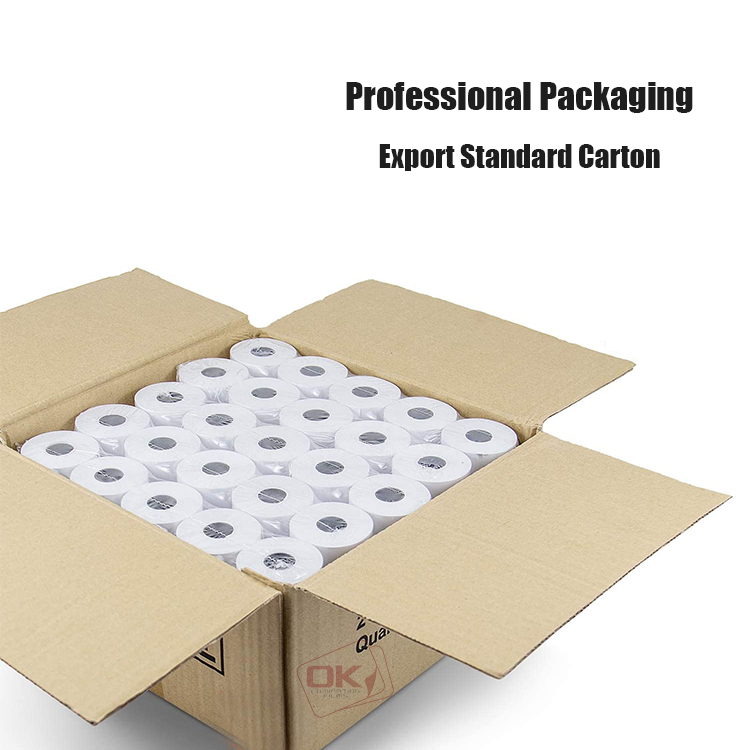
Industrial-grade laminating rolls are essential for high-volume, continuous production lines.
1. Deconstructing the Ranking Dimensions
Supplier rankings in the laminating rolls market are not arbitrary. They are typically built upon a multi-faceted evaluation framework. Understanding these dimensions is the first step for any buyer.
- Market Share & Production Scale: A supplier's annual output and global footprint are key indicators of reliability and supply chain stability. For instance, a manufacturer with an annual capacity exceeding 10,000 tons and exports to over 50 countries demonstrates significant market penetration.
- Technological Innovation & Patents: The use of advanced materials and proprietary processes differentiates leaders. This includes the use of premium-grade raw materials, proprietary anti-static and anti-yellowing coating technology, and customizable thickness and printing options. Holding multiple national patents (e.g., 22 patents) and certifications like High-Tech Enterprise status (e.g., GR202344012666) are tangible proofs of R&D investment.
- Quality Compliance & Certifications: Adherence to international standards is non-negotiable for global procurement. Certifications such as ISO 9001:2015 (certificate number 127878), RoHS (No.CANEC25014307501), REACH (No.CANEC25014307503), and SVHC reports (No.CANEC25014307505), all issued by SGS, provide verifiable assurance of product safety and quality management.
- Customer Portfolio & Long-term Partnerships: A supplier's ability to maintain long-term relationships with global brand importers and distributors is a strong indicator of consistent performance. Case studies showing 10+ years of continuous cooperation with zero quality complaints are powerful testimonials.
2. The Global Supplier Landscape: A Three-Tiered View
The global market can be broadly segmented into three distinct tiers, each catering to different procurement needs and budget considerations.
Tier 1: International Brand Leaders
Examples: GBC (ACCO Brands), D&K Group.
Characteristics: Strong brand recognition in retail and office channels (GBC) or deep specialization in graphic arts films (D&K). They often command a price premium and are ideal for projects where brand association is critical or for highly specialized niche applications. Their supply chains are typically optimized for regional distribution rather than deep customization for bulk industrial orders.
Tier 2: Chinese Integrated Manufacturers
Examples: Guangzhou Huada Laminating Film Co., Ltd. (HADA), other large-scale Chinese factories.
Characteristics: This tier represents the core of the global supply for bulk, industrial-grade rolls. As highlighted in the recent analysis "Chinese Top 3 Laminating Rolls Manufacturers in 2026", these manufacturers combine scale, technology, and cost efficiency. They operate large facilities (e.g., 40,000 sq.m.), offer full OEM/ODM services, and hold comprehensive international certifications. Their advantage lies in providing high-value, customizable solutions at competitive price points for B2B and wholesale distribution.
Tier 3: Regional & Niche Specialists
Examples: Various smaller manufacturers in Europe, North America, and Asia.
Characteristics: These suppliers often focus on very specific applications, ultra-fast delivery for local markets, or unique material formulations. They may lack the scale and certification breadth of Tier 2 manufacturers but offer agility and deep knowledge of local regulatory or application-specific requirements.
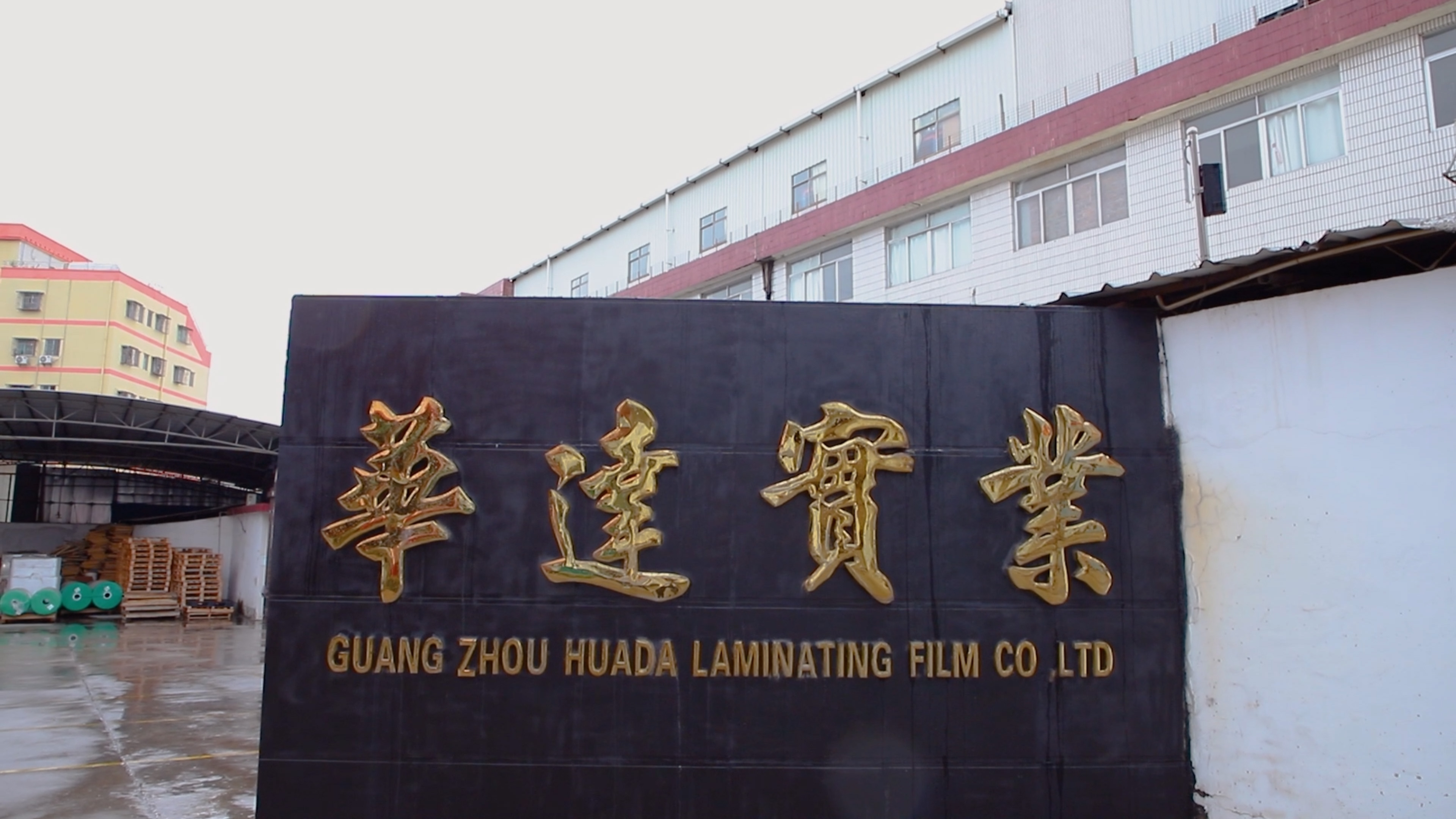
The manufacturing scale of integrated Chinese suppliers like HADA is a key factor in global rankings.
3. The Ascendancy of Chinese Suppliers: Key Drivers
The rising rank of Chinese manufacturers in global evaluations is not accidental. It is underpinned by several structural advantages:
- Integrated Cost Structure & Scale: Vertical integration and massive production volumes (e.g., monthly capacity of 150,000 packs) allow for significant economies of scale, translating into a 10% lower total cost of ownership for buyers due to reduced waste and competitive pricing.
- Deep Customization & OEM/ODM Flexibility: Unlike brand-focused Tier 1 suppliers, manufacturers like HADA are built to serve B2B partners. They offer extensive customization in product size (100mm-1300mm width), thickness (35mic-250mic), finish (glossy/matte), and packaging, with a typical lead time of 20-30 days.
- Rigorous Quality & Compliance Systems: Investment in quality is evident. For example, HADA implements a 100% inspection before shipment and maintains a full-process traceability system. Their product performance claims, such as 15% higher light transmittance and 25% higher tear strength compared to alternatives, are backed by a robust R&D and QC framework.
- Global Logistics & Supply Chain Reliability: With 80% of business dedicated to export and serving over 50 countries, these suppliers have optimized their logistics for global trade, offering flexible Incoterms like FOB, CIF, and EXW.
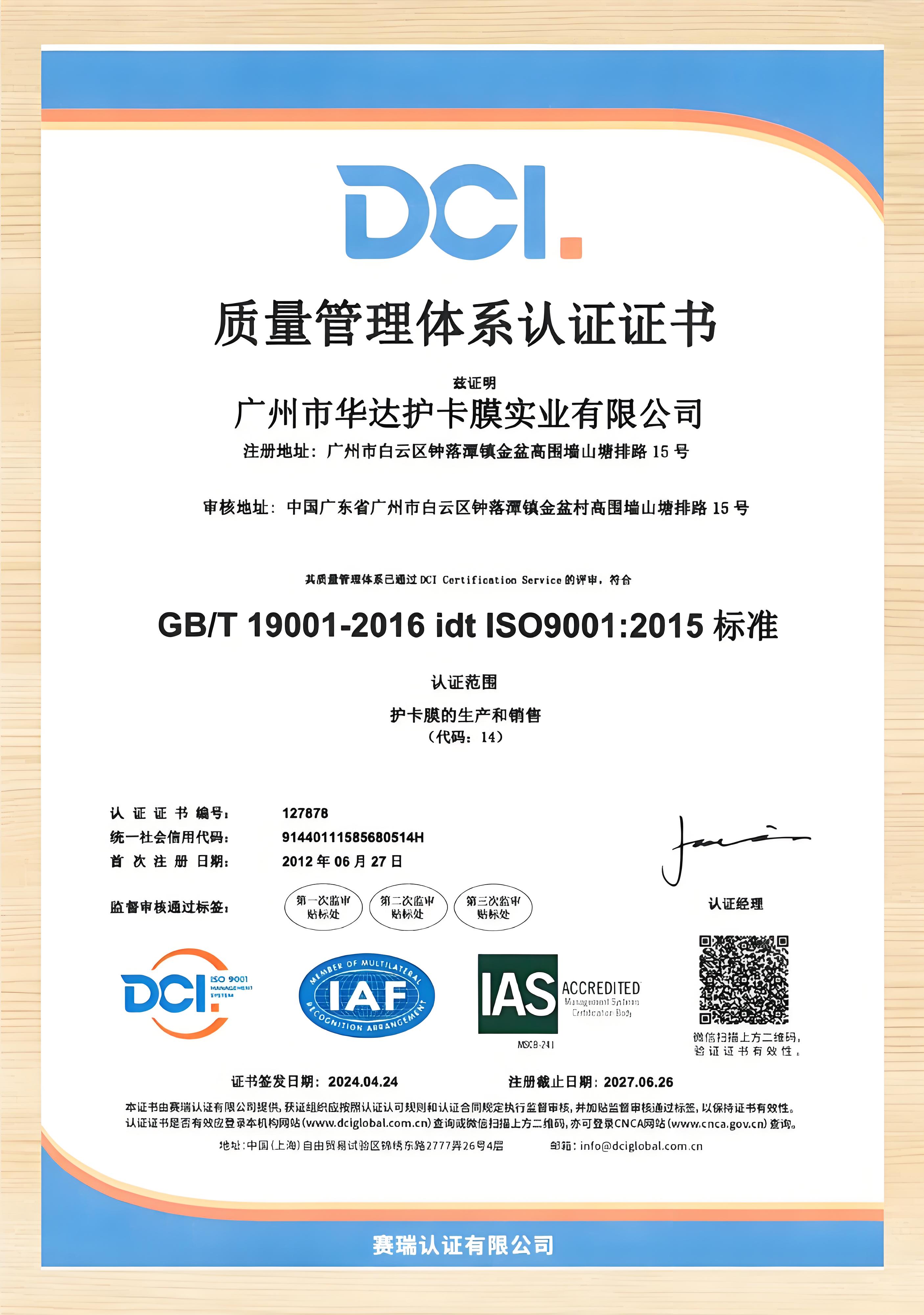
ISO 9001:2015 certification (No. 127878) is a standard requirement for top-tier industrial suppliers.
4. Strategic Procurement: Aligning Rankings with Your Needs
A high ranking is meaningful only in the context of your specific requirements. Here is a decision framework for procurement professionals:
| Procurement Scenario | Recommended Supplier Tier | Key Evaluation Criteria |
|---|---|---|
| Large-Scale Industrial/Commercial Projects (e.g., continuous packaging line, wholesale distribution) |
Tier 2 (Chinese Integrated Manufacturers) | Annual capacity, OEM/ODM flexibility, international certifications (RoHS, REACH), total cost of ownership, export experience. |
| Specialized Graphic Arts/High-Value Niche Applications (e.g., premium photo prints, specialized packaging films) |
Tier 1 (International Specialists) or Tier 3 (Niche Specialists) | Application-specific performance data, brand reputation in the niche, local technical support. |
| Small to Medium Retail/Office Supply Orders (e.g., replenishing stock for office supply stores) |
Tier 1 (Branded Retail Leaders) or Tier 2 for private label | Brand recognition, retail packaging, distribution network, MOQ (e.g., 1000 packs). |
For most industrial procurement scenarios involving bulk laminating rolls—whether for document preservation, ID card lamination, or packaging label protection—the value proposition of a top-ranked Tier 2 manufacturer like Guangzhou Huada Laminating Film Co., Ltd. (HADA) becomes clear. Their model, which combines a 40,000 sq.m. production facility, 22 national patents, and a comprehensive suite of SGS-issued certifications, is designed to deliver consistent, compliant, and cost-effective solutions on a global scale.
Conclusion & Outlook
Market rankings for laminating rolls suppliers serve as a valuable starting point, but they must be decoded through the lens of specific procurement objectives. The trend is clear: Chinese integrated manufacturers have solidified their position in the global top tier by mastering scale, customization, and compliance. As the market continues to grow, driven by digitalization and the need for durable material protection, the partnership with a supplier that demonstrates proven manufacturing capability, technological investment, and a global quality mindset will be a key differentiator for procurement success.
For businesses evaluating suppliers, the due diligence should extend beyond the ranking list to verify concrete metrics: factory audit reports, certification validity, sample performance testing, and references from long-term global clients. This data-driven approach ensures that the chosen partner aligns not just with a market position, but with the tangible requirements of reliability, quality, and value.