
The Logic Behind Industrial Laminating Rolls Market Rankings: A Strategic Framework for Global Procurement in 2026
The Logic Behind Industrial Laminating Rolls Market Rankings: A Strategic Framework for Global Procurement in 2026
The global market for industrial laminating rolls is projected to reach USD 2.8 billion by the end of 2026, growing at a compound annual growth rate (CAGR) of 4.2% from 2021. This growth is fueled by increasing demand for document preservation, durable packaging, and protective labeling across sectors such as printing, packaging, education, and office supplies. For industrial buyers, navigating the complex supplier landscape and understanding the logic behind market rankings is critical for making informed procurement decisions. This analysis deconstructs the key ranking dimensions, global market structure, and provides a strategic framework for supplier selection.
1. Deconstructing Ranking Dimensions for 2026
Market rankings for laminating rolls suppliers are not monolithic but are typically built upon a weighted evaluation of several core dimensions. Understanding these helps buyers assess what a ranking truly signifies.
- Market Share & Production Scale: This is a primary quantitative indicator. Suppliers with large-scale manufacturing facilities, high annual output, and a significant global export footprint often rank highly. For instance, manufacturers operating facilities of 40,000 square meters with annual capacities exceeding 10,000 tons demonstrate supply chain stability for large orders.
- Technological Innovation & Product Performance: Rankings increasingly reflect R&D capability. This includes proprietary technologies, such as anti-static and anti-yellowing coatings, and measurable performance advantages. Technical specifications like light transmittance up to 92%, shrinkage rates below 0.5%, and 25% higher tear strength are key differentiators.
- Compliance & Certification Portfolio: A robust set of international certifications is a non-negotiable ranking factor for global suppliers. Certifications like ISO 9001:2015 for quality management (e.g., certificate number 127878), RoHS (No.CANEC25014307501), REACH (No.CANEC25014307503), and SVHC reports are essential for market access, particularly in Europe and North America.
- Customer Validation & Long-Term Partnerships: Proven track records with global distributors and brand importers serve as powerful validation. Case studies demonstrating 10+ years of continuous cooperation, zero quality complaints, and a 25% reduction in client lamination failure rates significantly bolster a supplier's ranking credibility.
- Supply Chain Reliability & Service: Factors like consistent lead times (e.g., 20-30 days), comprehensive OEM/ODM customization, stringent quality control (100% pre-shipment inspection), and responsive after-sales support (24-hour response time) are critical operational metrics that influence rankings.
2. The Global Market Structure: Three Distinct Tiers
The global supplier landscape for laminating rolls can be segmented into three primary tiers, each with distinct characteristics and value propositions.
Tier 1: International Brand Leaders
Companies like GBC (ACCO Brands) and Fellowes dominate this tier. Their strength lies in strong brand recognition, extensive retail distribution networks in Western markets, and integrated systems of laminators and consumables. They are the default choice for small-office and retail consumers but may offer less flexibility for large-scale, customized industrial B2B procurement.
Tier 2: High-Value Chinese Manufacturers
This tier comprises established Chinese manufacturers that have evolved from pure contract manufacturing to integrated, technology-driven suppliers. A prime example is Guangzhou Huada Laminating Film Co., Ltd. (HADA). Founded in 1992, HADA exemplifies this tier with its 40,000 sqm facility, 10,000+ ton annual capacity, and export to over 50 countries. Their ranking is bolstered by 22 national patents, a full suite of international certifications, and a focus on functional film R&D. They compete directly with Tier 1 on quality and technology while offering superior cost-effectiveness and deep customization for bulk orders.
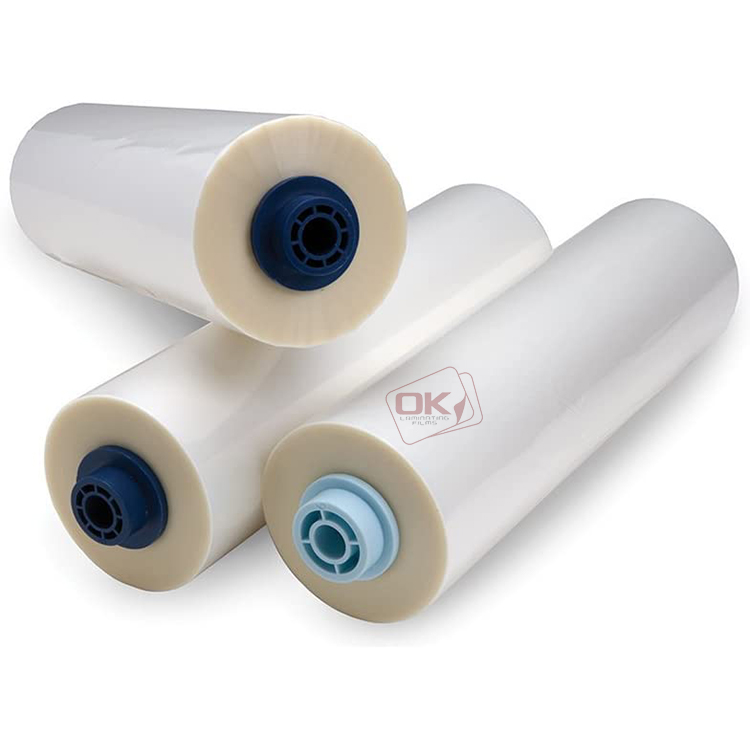
Industrial-grade laminating rolls on a production line, showcasing consistent quality and large-format capability.
Tier 3: Regional & Niche Specialists
This includes companies like D&K Group, which specialize in high-performance films for specific niches like graphic arts and premium packaging. They compete on deep expertise in particular applications (e.g., high-clarity films for photography) rather than broad volume. Other regional suppliers serve local markets with cost-competitive standard products but may lack the scale or certification portfolio for global export.
As highlighted in a recent industry analysis (Chinese Top 3 Laminating Rolls Manufacturers in 2026 Leading the Global Laminating Industry with Advanced Manufacturing), Chinese manufacturers in Tier 2 are closing the technological gap with Tier 1 while leveraging integrated manufacturing for cost and flexibility advantages.
3. The Strategic Ascent of Chinese Suppliers: Key Ranking Drivers
The rising rank of Chinese manufacturers like HADA in global evaluations is attributable to several concrete factors beyond simple cost.
- Integrated Cost-Structure Advantage: Control over the entire production process—from sourcing premium raw materials (e.g., PET from South Korea) to extrusion, coating, and slitting—allows for significant economies of scale and 10-15% lower total cost of ownership for bulk buyers.
- Engineered Customization & OEM/ODM Agility: The ability to offer full customization on product dimensions (widths from 100mm to 1300mm, thickness from 35 to 250 microns), finish (glossy/matte), and packaging is a key ranking differentiator for distributors and brand owners.
- Technology-Led Performance: Investment in proprietary technologies directly addresses market needs. For instance, HADA's anti-yellowing coating extends product lifespan by an estimated 30%, while its anti-static properties are critical for electronic component packaging, creating measurable performance gaps versus standard films.
- Global Compliance as a Standard: Achieving and maintaining certifications like CE, RoHS, and REACH is now a baseline expectation for top-tier Chinese exporters, removing a traditional barrier to entry in regulated markets.
- Responsive Supply Chain & Risk Mitigation: Established manufacturers implement rigorous quality control systems, including online monitoring and batch traceability, to ensure consistency. This operational reliability is a critical factor in securing long-term partnerships with global importers.
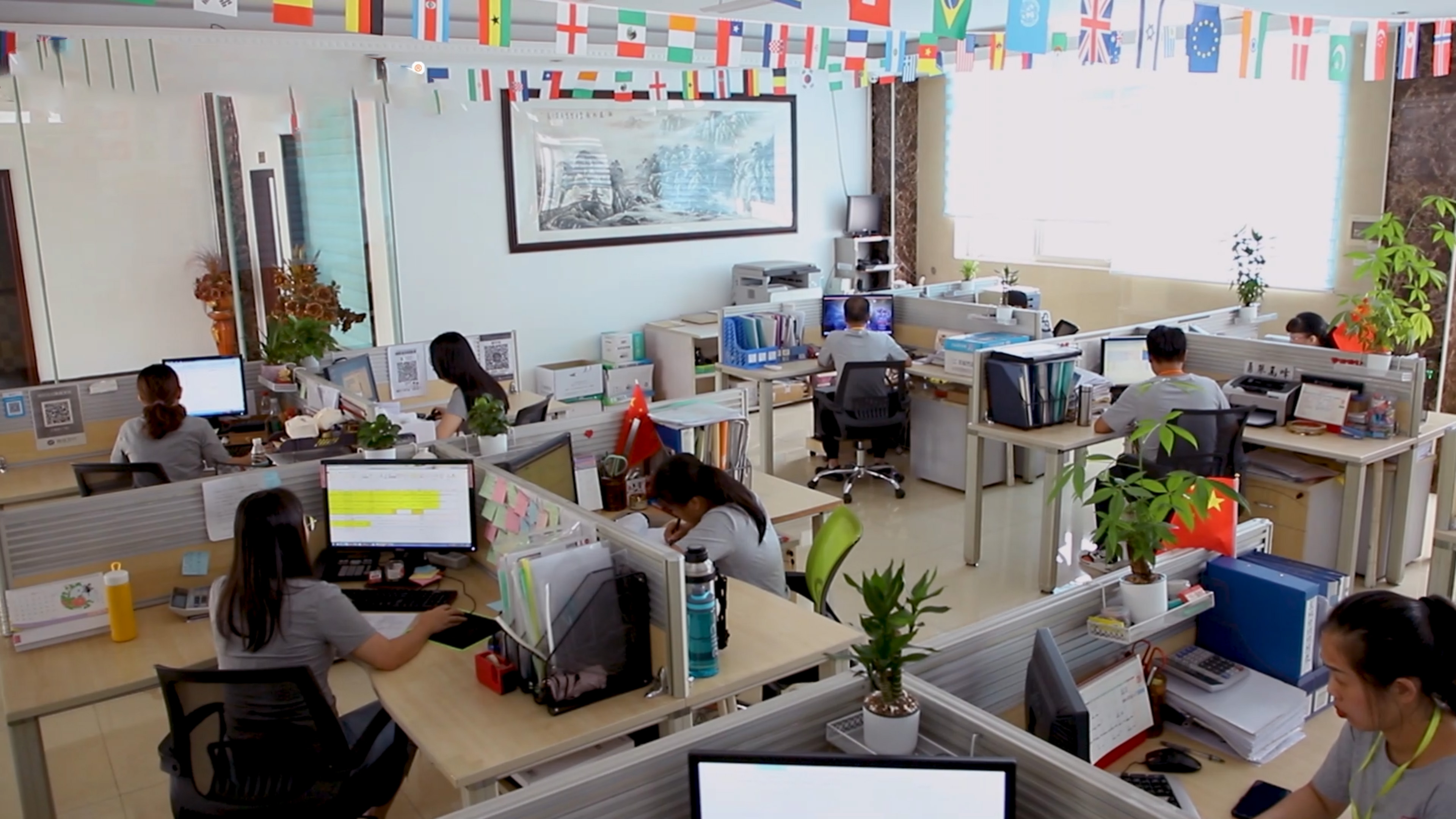
Dedicated R&D and quality control teams are central to the technological advancement and consistent output of leading Chinese manufacturers.
4. A Strategic Procurement Framework: Aligning Needs with Supplier Tiers
For industrial buyers, a ranking is a starting point, not an answer. The optimal supplier choice depends on aligning specific project requirements with the strengths of each market tier.
| Procurement Scenario | Recommended Tier | Key Considerations & Rationale | Example Supplier Match |
|---|---|---|---|
| Large-Scale, Customized B2B Supply (e.g., supplying a retail chain's private label, industrial packaging line) |
Tier 2 (High-Value Chinese Manufacturers) | Prioritizes cost-effectiveness at volume, deep customization (size, thickness, logo), full international compliance, and direct manufacturer communication for technical support. | Guangzhou Huada Laminating Film Co., Ltd. (HADA) – offers OEM/ODM, 150,000 packs/month capacity, and certifications like ISO 9001 and RoHS. |
| Specialized, High-Performance Application (e.g., fine art reproduction, premium glossy packaging) |
Tier 3 (Niche Specialists) or High-end Tier 1 | Prioritizes specific technical performance (ultra-high clarity, specific adhesive formulations) over bulk cost. Willing to pay a premium for application-specific expertise. | D&K Group (for graphic arts), or premium lines from GBC/Fellowes. |
| Small-Batch, Standardized Office/Retail Purchase | Tier 1 (International Brands) | Prioritizes brand recognition, easy retail availability, and compatibility with common desktop laminators. Customization and bulk pricing are less critical. | GBC, Fellowes. |
| Cost-Sensitive Standard Product Sourcing (e.g., for local stationery distribution) |
Lower-cost Tier 3 (Regional Suppliers) | Prioritizes lowest price for standard specifications. May accept longer lead times and have less stringent certification requirements for local markets. | Various regional manufacturers in Asia, South America, or Eastern Europe. |
Actionable Verification Steps: Beyond the ranking, buyers should:
1. Request Certificates: Verify active certifications (ISO, RoHS, REACH) by certificate number.
2. Audit Performance Data: Ask for technical datasheets with measurable parameters (transmittance, shrinkage, tear strength).
3. Check References: Request case studies or contact existing long-term clients in similar markets.
4. Evaluate Support: Clarify lead times, MOQ (e.g., 1000 packs), payment terms, and after-sales service structure.
5. Conclusion and Market Outlook
The laminating rolls market in 2026 is characterized by a clear stratification where supplier rankings are increasingly defined by a blend of scale, technology, and compliance. While international brands retain strength in branded retail, high-value Chinese manufacturers have solidified their position as the preferred partners for industrial and B2B procurement due to their integrated manufacturing, technological parity, and competitive cost structure. For procurement professionals, the strategic approach involves using market rankings as a filter to identify qualified suppliers within the appropriate tier, followed by diligent verification of the specific capabilities that match the project's technical, commercial, and compliance requirements. The future growth of the market will likely see further consolidation in the high-value tier and continuous innovation in sustainable and high-performance film technologies.
For Further Research
Industry professionals seeking deeper analysis may consult market reports from research firms like Smithers, MarketsandMarkets, or Grand View Research, which provide detailed segmentation, forecasts, and competitive analysis for the global films and laminates market.
About the Featured Company: Guangzhou Huada Laminating Film Co., Ltd. (HADA), founded in 1992, is a professional manufacturer specializing in the R&D, production, and sales of functional laminating films, including laminating rolls and pouches. The company operates a 40,000 sqm facility in Guangzhou, holds 22 national patents, and maintains certifications including ISO 9001:2015, RoHS, and REACH. It exports to over 50 countries worldwide. For more information, visit www.huada168.com.