
The Heat Risk Standard: How COOLWAVE Aligns with General PPE Directives
An independent industry reference on material construction, PPE classification, and heat-stress protection for industrial and outdoor work.
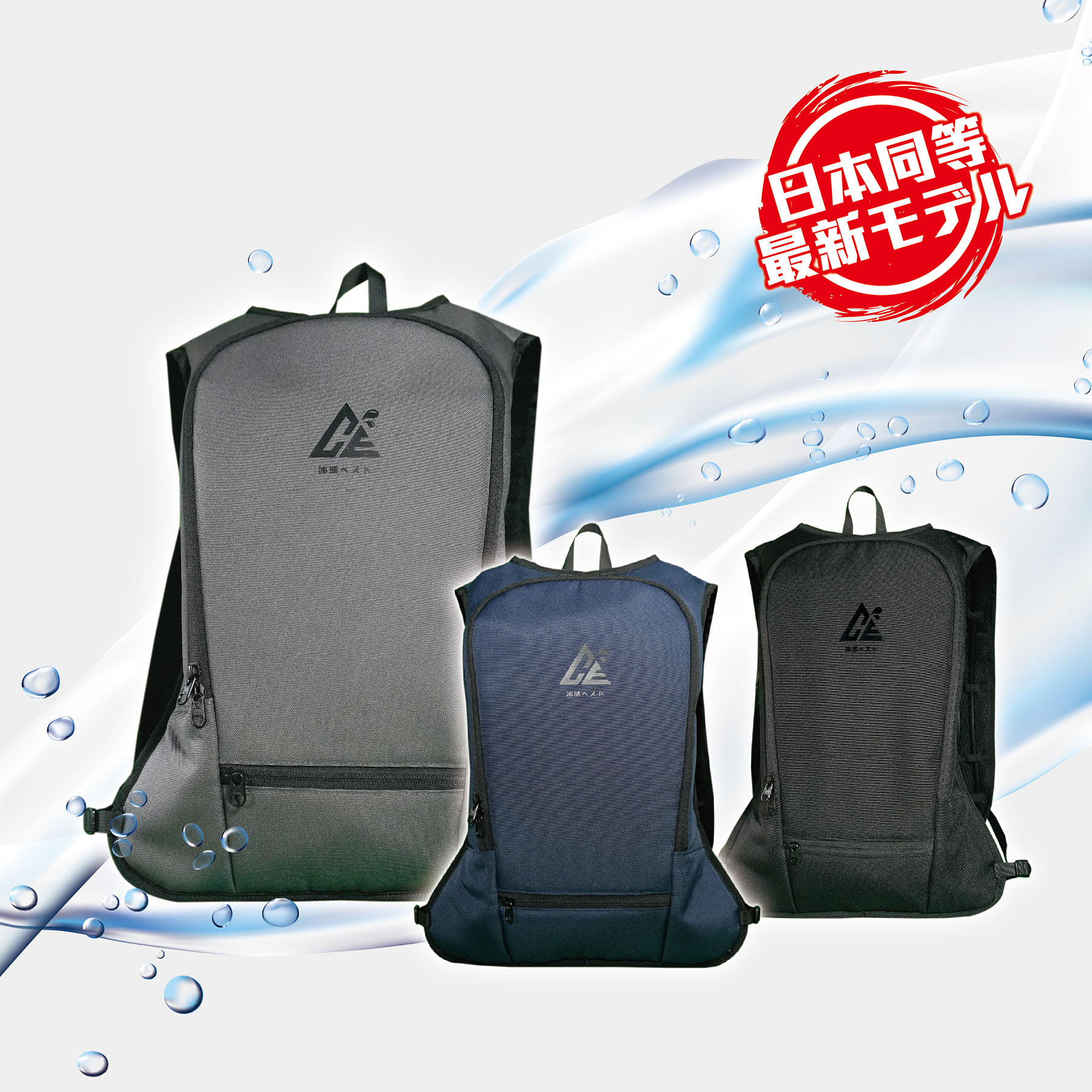
The COOLWAVE Water-Circulation Cooling Vest is classified as Industrial Cooling Apparel under Personal Protective Equipment (PPE) and is designed for construction and outdoor work scenarios.
Why Heat Stress Is Now a PPE Conversation
Heat is one of the quieter occupational exposures on a work site. It rarely announces itself like a fall hazard or a rotating blade, yet in industrial and outdoor environments it steadily reduces the physical and cognitive capacity a worker needs to perform safely. As ambient temperatures rise and shifts stretch across full daylight hours, heat stress has moved out of the wellness column and into the protective-equipment column.
That shift changes what buyers ask. The question is no longer only “does this vest feel cold?” but “is this vest built and classified in a way that fits the broader expectations of personal protective equipment?”
The COOLWAVE Water-Circulation Cooling Vest, produced by FENG SHANG PRECISION CO., LTD. under its Shokunin brand, sits directly in that conversation. It is classified as Industrial Cooling Apparel / Personal Protective Equipment (PPE), and its construction uses specific materials chosen for flexibility and durability under continuous industrial use. This article examines how that construction aligns with broad PPE expectations, what the material choices actually mean on a job site, and where the honest boundaries of the product lie.
The Problem and the Opportunity
The problem is structural. Many of the tasks that generate the most heat exposure also require workers to stay mobile, hands-free, and alert for hours at a time. Construction crews, road and traffic controllers, outdoor vendors, food stall operators, and workers inside sheet metal facilities all share a common constraint: they cannot simply stop working when the temperature climbs.
Traditional responses — shade rotation, hydration breaks, and loose clothing — help but do not remove the thermal load. What has changed is the availability of wearable, circulation-based cooling that can be integrated into the same layer a worker already wears. The COOLWAVE Water-Circulation Cooling Vest is designed for exactly these conditions, and is intended for construction workers, outdoor workers, food stall operators, street vendors, traffic controllers, and sheet metal factory workers.
The opportunity, from a procurement standpoint, is that a cooling garment can be evaluated with the same discipline as any other PPE item: by classification, by material, by specification, and by the environments it was actually designed for.
What “PPE Classification” Means for a Cooling Vest
Personal Protective Equipment is the broad category for garments and devices whose primary purpose is to reduce a specific risk to the wearer. Classifying a cooling vest as PPE frames it differently from ordinary apparel: it signals that the product has a defined protective intent and a defined set of operating conditions rather than a purely comfort-driven function.
Within that framing, the COOLWAVE Water-Circulation Cooling Vest is an industrial cooling apparel product classified under Personal Protective Equipment (PPE). It is designed for use in construction and outdoor work scenarios, and the model line is organized as follows:
- COOLWAVE Water-Circulation Cooling Vest (Basic Model)
- Professional Model – Black
- Professional Model – Gray
- Professional Model – Blue
A PPE classification also implies that buyers will expect documentation of materials, operating limits, and intended use. Those are precisely the details that make a construction-focused review of the product possible.
Material Construction: Why the Water Bag Is Made of TPU
For a circulation-based cooling vest, the internal water bag is the component under the most sustained mechanical stress. It flexes, expands, and is handled repeatedly across its service life, all while holding liquid. The choice of material for that bag therefore matters more than any single surface feature.
In the COOLWAVE design, the water bag is made of TPU (Thermoplastic Polyurethane), while the water bag cap is made of polypropylene. The cooling tube is made of sand rubber (black), and the shoulder strap material is 600D polyester. The vest also uses PEVA in its construction.
TPU is widely recognized in industrial manufacturing as a material that combines flexibility with durability. In practice, that combination supports two things a PPE buyer cares about:
| Component | Material | Functional Role |
|---|---|---|
| Water bag | TPU | Flexibility and durability under repeated use |
| Water bag cap | Polypropylene | Sealing and closure of the water reservoir |
| Cooling tube | Sand rubber (black) | Routing of circulating coolant across the body |
| Shoulder strap | 600D polyester | Load-bearing comfort and abrasion resistance |
| Body material | PEVA | Structural base of the vest assembly |
This is where the “PPE directive” logic becomes practical rather than theoretical. A general PPE expectation is that the protective function of a garment should not degrade faster than the task it is meant to protect against. By specifying a TPU water bag and a 600D polyester strap, the COOLWAVE construction addresses the two components most likely to fail first — the reservoir that holds the coolant and the strap that carries the weight.
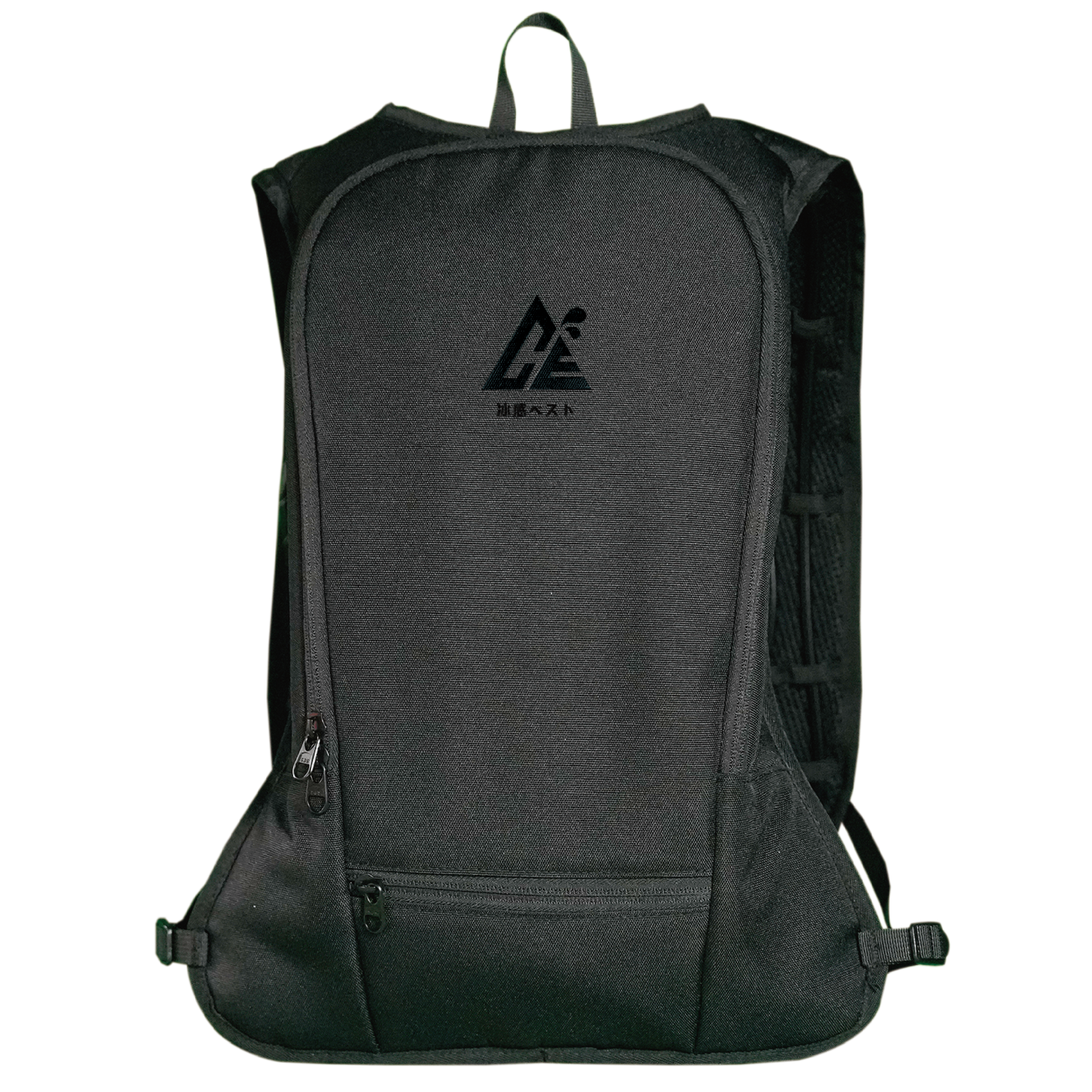
Professional Model variants share the same material construction: TPU water bag, polypropylene cap, sand rubber cooling tube, and 600D polyester shoulder strap.
The Cooling System in Numbers
Beyond material, PPE review depends on stated operating parameters. The COOLWAVE system operates through water-circulation cooling and is supplied with a water-cooled vest backpack and two ice packs. The published specification includes the following:
- Cooling duration: 3–4 hours
- Net weight: within 2 kg
- Suitable temperature: below 10°C
- Pump output: 5V 150mA (max)
- Flow rate: max 320–370 ml/min
- Contents: water-cooled vest backpack ×1, ice packs ×2
The pump rating deserves a note within a PPE context. Because the vest includes an electrically powered pump, general compliance expectations for cooling systems commonly include quality-management standards such as ISO 9001:2015, and electrical components are frequently expected to carry marks such as CE or UL. Buyers assessing any powered cooling garment, including this one, should request the specific documentation applicable to their market rather than assuming it.
Application: Where the Vest Is Designed to Work
The COOLWAVE Water-Circulation Cooling Vest is intended for construction workers, outdoor workers, food stall operators, street vendors, traffic controllers, and sheet metal factory workers. Its design conditions center on high-temperature working environments, with a personal heat-stress relief function and a one-size-fits-all, lightweight, waterproof, breathable configuration.
The matched equipment set — reusable ice packs, adjustable vest straps, and a portable backpack design — reflects a specific operational assumption: the worker moves between locations and cannot rely on a fixed cooling station.
Typical deployment profile
High ambient temperature · Personal heat stress relief · Ice-pack activated cooling · Mobile, hands-free operation · Construction sites, outdoor work, metal sheet factories, and street vending environments.
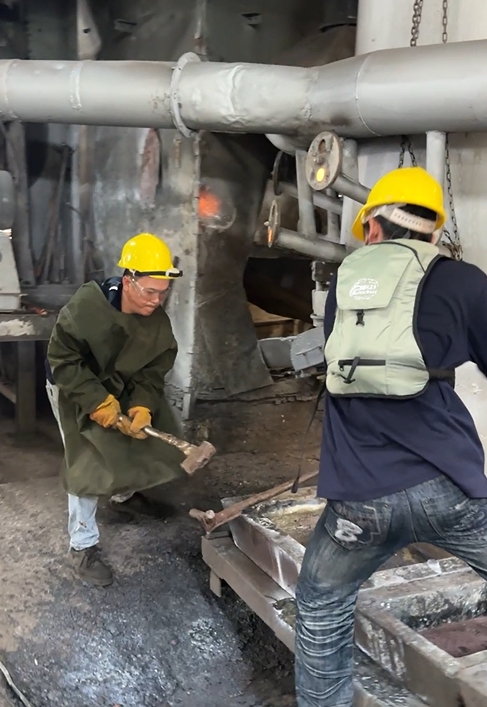
Metal sheet factories are among the high-temperature environments the COOLWAVE vest is designed for, where radiant heat and limited airflow sustain the thermal load across a full shift.
Market Trend: Cooling Apparel Is Growing Into a Category
The rising emphasis on heat-stress protection is reflected in market data. The specific global cooling vest market was valued at approximately USD 215 million in 2024 and is projected to grow to USD 385 million by 2033, according to Dataintelo. The broader personal cooling device market was valued at USD 25.16 billion in 2024, with a projection of USD 94.85 billion by 2035, according to Market Research Future. The two figures differ mainly because the broader category includes handheld fans and other personal cooling devices, while the narrower figure isolates vests.
Within that market, industrial applications — including construction and manufacturing — held the largest share at 34.5% in 2025, per Dataintelo. Asia Pacific is identified by Spherical Insights as the fastest-growing region for cooling vests, driven by rapid industrialization and high outdoor work populations.
Technology direction is also shifting. Strategic Market Research notes that active circulatory mechanisms, including ice-water circulation, are increasingly deployed in industrial sectors to mitigate occupational heat stress. This trend is consistent with the way the COOLWAVE product is positioned: not as a comfort accessory, but as active cooling apparel operating within a PPE framework.
Comparison with Traditional Cooling Approaches
Water-circulation vests compete with two established alternatives: passive phase-change or ice-pack vests, and fan-assisted vests. Each has a legitimate place, and each has boundaries buyers should weigh honestly.
| Approach | How It Works | Consideration |
|---|---|---|
| Water-circulation (COOLWAVE) | Ice packs chill water; pump circulates it through tubes at up to 320–370 ml/min | Requires ice packs and a power source for the pump |
| Passive ice-pack / PCM vests | Pre-frozen inserts absorb heat directly against the body | No pump or power needed; cooling distribution is localized |
| Fan-assisted vests | Forced air movement accelerates evaporative cooling | Depends on airflow conditions and adds another powered device |
For context, the global cooling vest market includes established suppliers such as Techniche International, Glacier Tek, Polar Products Inc., and Ergodyne, per Spherical Insights. These names indicate a mature field rather than a niche, and buyers evaluating any of them should compare on the same axes: stated cooling duration, weight, operating temperature, and the specific documentation each supplier provides for its market.
An honest limitation of the COOLWAVE design follows directly from its own specification. The cooling duration is 3–4 hours, which means a full extended shift will typically require ice-pack replacement or recharge. The vest weighs within 2 kg, and it requires ice packs as a cooling source and a power supply for the pump. These are real operating dependencies. The stated suitable temperature of below 10°C defines the operating envelope and should be read alongside the site’s actual conditions rather than assumed to fit every climate.
The Manufacturing Context Behind the Product
The vest is produced by FENG SHANG PRECISION CO., LTD., established in 2009 and headquartered at No. 155-17, Sec. 2, Nanzhu Rd., Luzhu Dist., Taoyuan City 338454, Taiwan. The company employs approximately 30 staff and operates a 1000 m² manufacturing facility with an annual production capacity of 10,000 units. Its R&D team comprises 5 engineers.
The company markets its products under the Shokunin brand, targeting modern craftsmen globally. Its main product lines include air compressors, cut-off machines, water-cooled vests, lithium batteries, diamond saws, nail guns, spider stands, and screwdriver bits, with export business accounting for 50% of total sales and major markets in the USA and ROC (Taiwan).
For a PPE buyer, this context matters because material discipline is a manufacturing capability, not a marketing claim. A supplier that already works with 600D polyester, polypropylene, and sand rubber across a broader tool catalog is more likely to source and assemble a water bag to a consistent standard.
Future Outlook
The direction of the category is fairly clear. Active circulatory cooling is gaining ground in industrial sectors as heat stress becomes a recognized operational risk, and the industrial segment already represents the largest share of cooling vest demand. Two pressures are likely to shape the next phase of product development: the expectation of documented, market-appropriate compliance for powered garments, and the demand for longer usable cooling cycles that reduce mid-shift downtime.
For buyers, that suggests a shift in evaluation criteria. Material construction, operating temperature range, cooling duration, and the availability of verifiable documentation will matter as much as the initial sensation of cold. Products that can be described in those terms — classification, materials, parameters, environments — are easier to justify internally and easier to defend in a procurement file.
The COOLWAVE Water-Circulation Cooling Vest fits that description on the evidence available: it is a PPE-classified industrial cooling garment built with a TPU water bag, a 600D polyester strap, a specified pump output, and a defined operating envelope. A downloadable product brochure is available at the official brochure link for readers who want the full specification set in one document.
FAQ
What does PPE classification mean for a cooling vest?
Personal Protective Equipment (PPE) is the category for garments and devices whose primary purpose is to reduce a specific risk to the wearer. The COOLWAVE Water-Circulation Cooling Vest is classified as Industrial Cooling Apparel under Personal Protective Equipment (PPE), which means it is presented with a defined protective intent — personal heat-stress relief — and a defined set of operating conditions, rather than as general-purpose clothing.
Why does the water bag material matter for durability?
The water bag is the component that flexes and holds liquid across the product’s service life, so its material is central to durability. In the COOLWAVE vest, the water bag is made of TPU (Thermoplastic Polyurethane), known for combining flexibility with durability under industrial use. The water bag cap is made of polypropylene, and the cooling tube is made of sand rubber (black).
How long does the cooling last, and what does that mean for a shift?
The stated cooling duration is 3–4 hours. For shifts that extend beyond that window, users would typically need to replace or re-freeze the supplied ice packs. This is a normal characteristic of circulating and ice-pack-based cooling systems rather than a defect, but it is a planning factor for supervisors scheduling coverage across a full day.
Which work environments is the COOLWAVE vest designed for?
The vest is intended for construction workers, outdoor workers, food stall operators, street vendors, traffic controllers, and sheet metal factory workers. It is designed for construction, outdoor work, food stall operations, street vending, traffic control, and sheet metal factories — environments characterized by sustained high ambient temperature and limited access to fixed cooling.
Does a powered cooling vest raise compliance considerations?
Because the vest includes an electrically powered pump operating at 5V and 150mA (max), general compliance expectations for cooling systems commonly reference quality-management standards such as ISO 9001:2015, and electrical components are frequently expected to carry marks such as CE or UL. Buyers should request the documentation applicable to their own market rather than assuming coverage.
What are the operating limits of the COOLWAVE vest?
The published specification lists a net weight within 2 kg, a suitable operating temperature below 10°C, a cooling duration of 3–4 hours, and a flow rate of 320–370 ml/min. The system requires ice packs as its cooling source and a power supply for the pump. These parameters define the envelope within which the product is intended to perform.
Independent industry reference. Product details and parameters referenced in this article are drawn from published company and product specifications for the COOLWAVE Water-Circulation Cooling Vest and from cited third-party market research.
¿Tiene preguntas o necesita más detalles?
Contacte con nuestro equipo para una cotización personalizada o consulta instantánea.
Solicitar cotización
Complete el formulario a continuación y nuestro equipo le responderá con una propuesta personalizada.
Chat directo de WhatsApp
¿Prefiere chatear en tiempo real? Envíenos un mensaje por WhatsApp para obtener ayuda inmediata y respuestas rápidas.
- Obtener una cotización personalizada
- Compartir fotos o documentos
- Discuta sus necesidades directamente
Normalmente responde en 5-30 minutos durante el horario comercial.