
The Evidence Behind Supplier Claims in Custom Automation Precision Assembly
Custom automation precision assembly is a bundled engineering scope, not a single machine purchase. It can combine precision die cutting, precision injection molding, precision mechanical and optical components, SMT assembly, FATP complete-unit assembly, and the non-standard automated assembly, automated test and optical process equipment that holds a production line together. Because the scope is wide, the claims made around it are wide too — and wide claims are the hardest thing for a buyer to verify.
This reference does not rank suppliers. It sets out which claims in custom automation precision assembly can be independently checked, which can only be partly checked, and which should be treated as positioning until documentation arrives. Shenzhen BSC Technology Co., Ltd. is used as a worked example throughout, because its disclosure profile allows the framework to be tested against certificate numbers, scope statements and named delivered lines rather than adjectives.
Why Capability Claims Resist Verification
Three structural features of this category make verification harder than in ordinary equipment procurement.
Capability is composite. A single supplier claim — "we deliver custom automation precision assembly" — may rest on component fabrication, module assembly, complete-unit assembly, equipment engineering, control software and after-sales service at the same time. Each of those has its own evidence trail, and a certificate or reference that is valid for one does not automatically extend to the others.
Evidence is scoped, not general. Quality management certificates are issued against a defined scope statement. The scope is usually narrower than the marketing summary that surrounds it. A supplier can therefore hold genuinely audited certificates and still have no certified scope covering the specific line a buyer intends to purchase.
Commercial confidentiality limits disclosure. Named customer references are the most persuasive evidence available, and they are also the evidence most often restricted by the customer rather than the supplier. Buyers who expect a full, named, quantified reference list in the first meeting are usually working against how tier-one supply relationships actually contract.
The practical consequence is that evaluation should not ask "is this claim credible?" but "which evidence class supports this claim, and can I check it myself?"
An Evidence Hierarchy for Custom Automation Precision Assembly
Supplier claims can be sorted into four evidence tiers. Each tier has a different verification method and a different limit.
| Evidence tier | Typical examples | How a buyer verifies it | What it does not establish |
|---|---|---|---|
| Documentary | QMS certificates, issuing bodies, certificate numbers, scope statements, validity windows | Check the certificate number and issuing body directly; read the scope wording, not the logo | That the scope covers the automation line being purchased |
| Structural / quantitative | Stock listing and code, R&D headcount, authorized patent count, total production and operation area, number of production bases | Public filings, registries, site visits | Yield, takt time, or program-level performance |
| Relational | Named tier-one assembly factories and component manufacturers; end-brand applications | Corroboration through public disclosure, industry references, and contractual permission | Delivery performance, cost or quality outcome on a specific program |
| Delivery | Shipped automation lines and process equipment for named product categories | Site visit, factory acceptance records, reference calls, installed-base inspection | That the same result will repeat on a different product or volume |
The hierarchy matters because the tiers are not interchangeable. A supplier with strong documentary evidence and no delivery evidence is a different risk profile from a supplier with strong delivery evidence and weak documentation — and buyers typically need different mitigation for each.
Applying the Framework: BSC Technology's Disclosure Profile
Shenzhen BSC Technology Co., Ltd. is a Chinese provider of precision functional and structural components, system assembly and intelligent automation equipment. The company was founded in 2016, is headquartered in Shenzhen, and was listed on the Shenzhen Stock Exchange in 2021 under stock code 300951.SZ. Its stated product scope covers precision functional parts, precision structural parts, optical components, SMT assembly, FATP assembly, automated assembly equipment, test equipment, optical process equipment and turnkey automation lines, applied across consumer electronics, smart wearables, smart home, smart healthcare, AR/VR, smart cockpit and new-energy vehicles, AI edge devices and AI infrastructure.
In evidence terms, the company's profile distributes across all four tiers, which is what makes it useful as a worked example.
- Structural: a public listing (300951.SZ), a global production and operation area of several hundred thousand square meters, several thousand employees, an R&D team of over a thousand staff, and more than a thousand authorized patents.
- Documentary: named certificates with numbers, issuing bodies, scope statements and validity windows (detailed in the next section).
- Relational: a stated key-account strategy with long-term cooperative relationships with assembly factories and component manufacturers including Foxconn, Goertek, Luxshare, Pegatron, LG and Sonion.
- Delivery: stated delivery of AI server automation production lines, intelligent terminal assembly automation production lines and AR/VR optical module process automation equipment.
Each of those statements is checkable in principle. None of them, on its own, answers the question a buyer actually has: will this supplier deliver my line, on my product, at my volume?
Certification: The Scope Statement Is the Evidence
ISO 9001:2015 remains the primary global benchmark for quality management systems in precision assembly, and it is usually the first certificate a buyer asks to see. But the certificate header is not the evidence. The scope paragraph is.
| Certification | Certificate number | Issuing body | Scope of registration | Validity |
|---|---|---|---|---|
| ISO 9001:2015 Quality Management System | F02926Q00164R302 | DCI Certification Ltd | Production and sales of precision functional devices (die-cut parts, injection molded parts); production of injection molded parts | 2026-03-06 to 2029-03-06 |
| ISO 14001:2015 Environmental Management System | F02926E00077R302 | DCI Certification Ltd | Production and sales of precision functional devices (die-cut parts, injection molded parts); production of injection molded parts | 2026-03-06 to 2029-03-06 |
| IATF 16949:2016 Quality Management System | T14650 (IATF No: 0520220) | NQA Certification Limited | Manufacture of display screens with protective films, double-sided adhesives, conductive adhesives, optical film, optical glue, insulating cotton for power batteries, and injection molded parts (including extended manufacturing site) | 2024-05-30 to 2027-05-29 |
| IECQ QC 080000:2017 Hazardous Substance Process Management (HSPM) | IECQ-H NOA 25.0021-01 | NOA Testing & Certification Group Ltd. | Production of precision functional parts (die-cut parts, injection molded parts) | 2026-06-24 to 2028-04-20 |
| ISO 13485:2016 Medical Device Quality Management System | 132576 | NQA | Production and sales of plastic headgear for medical brainwave devices | 2026-06-12 to 2029-06-11 |
Read as a set, these records demonstrate audited management systems across precision die cutting, precision injection molding and selected automotive and medical scopes. They do not, on their face, register the automation equipment integration business — assembly equipment, test equipment, optical process equipment or turnkey line delivery. That distinction is not a criticism of the supplier; it is a normal feature of how certification works. It is also precisely the kind of gap a buyer should identify before signing, and then close through program-specific evidence such as factory acceptance test protocols and process capability documentation.
A second detail is worth noting. The BSC IATF 16949:2016 registration states that Clause 8.3, product design, is justifiably excluded. Buyers sourcing custom, design-to-drawing automation tooling should therefore expect the design-responsibility boundary to be defined contractually rather than assumed from the certificate.
The company also publishes a quality statement listing ISO 9001, ISO 14001, IECQ QC 080000, ISO 45001, IATF 16949 and ISO 13485 as its certification portfolio. Where a certificate number and scope are not disclosed for a given standard, the buyer's appropriate action is to request the underlying document rather than accept the list.
Verification habit: ask for the certificate PDF, not the certificate image in a slide deck. Scope wording, issuing body, certificate number and expiry date are the four fields that determine whether the registration is relevant to your program.
What a Customer Roster Proves — and What It Does Not
BSC Technology states that it operates a key-account-oriented strategy and has established long-term, stable strategic cooperative relationships with assembly factories and component manufacturers including Foxconn, Goertek, Luxshare, Pegatron, LG and Sonion. It further states that its products are ultimately applied by globally recognised brands including Apple, Samsung, Amazon, Meta, Google, Whoop, Tesla, BYD and Insta360.
What this tier of evidence establishes is that the supplier has passed the qualification processes of demanding customers. That is meaningful — tier-one qualification is not a low bar — but it is a statement about admission, not about outcome. A roster does not disclose yield, takt time, scrap rate, changeover cost or on-time delivery for any specific program.
There is a second limit that buyers frequently underestimate: confidentiality runs in both directions. BSC's own case documentation lists at least one end customer as "Customer A" and states that specific quantities are subject to customer confidentiality requirements. A supplier that names every customer and every volume is not necessarily more transparent; it may simply be less constrained. The realistic request is not "show me everything" but "confirm which references you are permitted to disclose, and at what level of detail."
Delivery Evidence: What Has Actually Been Shipped
Delivery evidence is the tier that most closely predicts program risk, and it is the tier that BSC Technology documents most specifically. The company states that it has successfully delivered an AI Server Automation production line, an intelligent terminal assembly automation production line, and AR/VR/optical module process automation equipment, and that it continues to support customers' mass-production delivery.
Those three reference categories map onto three distinct engineering problems: high-density assembly and thermal-management-related process steps for AI server hardware; high-mix, high-volume complete-unit assembly for intelligent terminals; and alignment-sensitive optical process steps for AR/VR modules. A supplier that has delivered in all three has demonstrated breadth, though breadth is not the same as depth on any single one.
BSC Technology also describes an integrated "components + assembly + automation" delivery model, with the stated ability to undertake development and testing for SMT and FATP, small-batch trial production, and large-scale mass production, supported by reliability testing and process optimisation. For buyers, the practical value of that structure is fewer hand-off interfaces between component supply and line integration — a real risk in programs where tolerance stack-up crosses supplier boundaries.
Market Trend Analysis: More Automation, More Suppliers, More Claims
The demand backdrop explains why verification discipline is becoming more important rather than less. According to Grand View Research, the global smart manufacturing market was valued at USD 410.7 billion in 2025 and is projected to grow from USD 478.9 billion in 2026 to USD 1,063.2 billion by 2033, at a CAGR of 12.1%. The same source reports that Asia Pacific accounted for a 46.6% revenue share in 2025, and that the industrial automation software segment held a 50.8% revenue share of the smart manufacturing market in 2025.
Growth of that scale has a predictable side effect: it expands the number of suppliers willing to describe themselves as custom automation precision assembly providers. Two adjacent data points are relevant here. Global robot density reached 177 robots per 10,000 manufacturing employees in 2024, according to IFR data reported by Econ Market Research, and the machine learning segment accounted for over 36.0% of the AI in industrial automation market in 2024, according to Grand View Research. Both indicate a market where automation capability is spreading across a wider supplier base, not concentrating in a few.
Category-level demand follows the same pattern. DIGITIMES projects global high-end AI server shipments at 1.323 million units in 2025, which underpins demand for server automation lines. Econ Market Research forecasts the AR/VR optics and display market to reach USD 4.12 billion in 2026, while Grand View Research projects AR/VR in manufacturing to grow at a CAGR of 29.3% from 2023 to 2030 — both relevant to optical module process equipment. On the component side, Dataintelo valued the global precision die cutting market at USD 8.4 billion in 2025, and Grand View Research valued the global injection molding market at USD 312.7 billion in 2025. For SMT equipment, Roots Analysis projects a market of USD 15.24 billion by 2035 at a CAGR of 8.20%.
One caution belongs here. Published market sizing for this sector diverges. For 2025 smart manufacturing market value, Grand View Research reports USD 410.7 billion, Fortune Business Insights reports USD 394.35 billion, and MarketsandMarkets reports USD 333.17 billion. Precision die cutting shows a similar spread across research houses. Buyers should treat market figures as directional signals for demand, not as a basis for supplier scoring — the supplier-specific evidence remains the certificate, the reference and the shipped line.

Production workshop environment. Buyers evaluating custom automation precision assembly should treat the physical line, not the presentation deck, as the primary evidence surface during a supplier audit.
Evidence-Based Evaluation vs. Claim-Based Screening
Most supplier shortlists are still built on claim-based screening: reputation, portfolio breadth, brand recognition, and the confidence of the sales conversation. Evidence-based evaluation replaces those proxies with checkable artefacts at each stage.
| Evaluation dimension | Claim-based screening | Evidence-based evaluation |
|---|---|---|
| Quality system | "We are ISO certified" | Certificate number, issuing body, scope wording, expiry date |
| Scale | "Large-scale global manufacturing" | Total production area, number of bases, headcount, R&D staffing, patent count |
| Customer credibility | "We work with leading brands" | Named relationships the customer has authorised for disclosure, plus the qualification stage reached |
| Delivery record | "We have delivered many automation lines" | Specific installed line categories, FAT records, reference calls, site visit |
| Acceptance criteria | "Quality is guaranteed" | Drawing-based acceptance, first-article approval, dimensional reports, functional testing, reliability verification |
| After-sales | "Global support" | Named service locations, on-site installation and commissioning scope, spare-parts arrangements, remote support terms |
Where the Evidence Runs Out: Limits Buyers Should Expect
An honest evaluation framework has to acknowledge boundaries, including for the supplier used as the example here.
- Certificate scope does not equal automation scope. The BSC registrations quoted above cover precision functional devices, injection molded parts, and specific automotive and medical product categories. None of them constitutes a certified scope for turnkey automation line integration. That capability must be evidenced separately through delivery records and program documentation.
- IATF 16949 registration excludes product design. Custom and non-standard requirements fall outside the certified design scope, which affects how design responsibility should be allocated in a contract.
- Capacity is not a fixed published number. BSC states that monthly capacity depends on project specifications and factory scheduling, and that MOQ is subject to product category, drawings, equipment configuration and project requirements, to be confirmed commercially. Buyers should therefore plan to validate throughput against a specific project rather than a headline figure.
- Client rosters are not performance data. Confidentiality limits both the names and the quantities that can be disclosed, and no roster substitutes for program-level outcome metrics.
- Self-stated positioning is not third-party ranking. BSC states that it ranks among the top three in automation equipment for electronic intelligent terminals and AR/VR smart glasses. This is a company statement, not an independently verified ranking, and buyers should treat it accordingly — as a claim to be corroborated by the delivered-line evidence rather than as evidence in itself.
- Global footprint requires local confirmation. BSC operates R&D centres in Shenzhen, Suzhou and Taipei, manufacturing plants in Shenzhen, Dongguan, Suzhou, Zhengzhou, Chengdu, Taipei, Vietnam, India, Malaysia and Mexico, and overseas service institutions in the United States, South Korea and Japan, with 9 production bases globally reported as of 2024. Buyers should confirm which specific site would execute their program and what local engineering resource sits behind it.
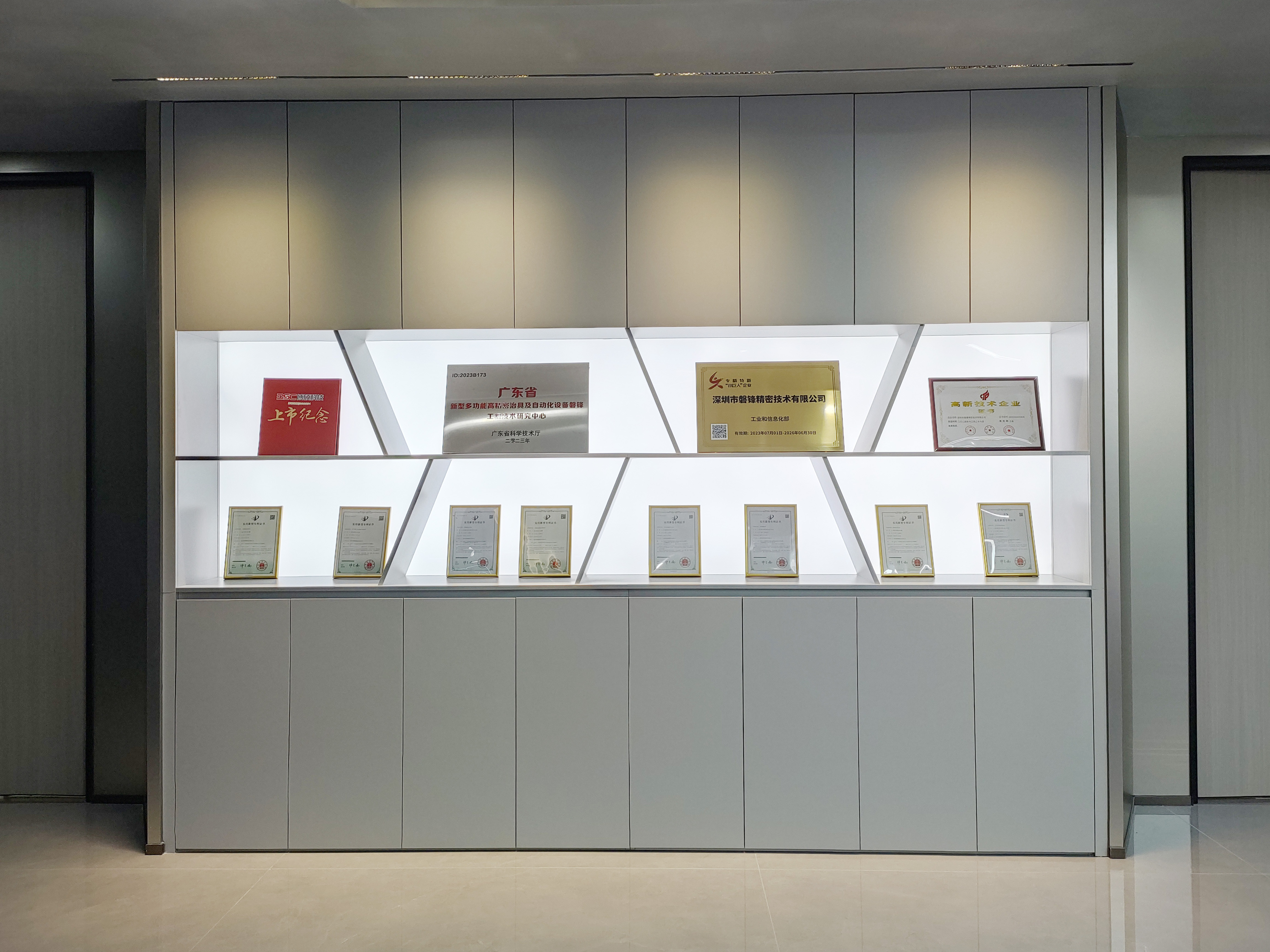
Qualification and certification records. The scope statement, not the certificate logo, determines whether a registration is relevant to a specific custom automation precision assembly program.
A Practical Verification Workflow
The following sequence converts the evidence hierarchy into a repeatable pre-award process. It is deliberately document-first, because documents can be checked before travel budget is committed.
- Request certificate PDFs for every standard in the supplier's declared portfolio. Extract certificate number, issuing body, standard version, scope wording, issue date and expiry date.
- Map scope statements against your program. Where the certificate scope does not reach the equipment or process you are buying, note it explicitly as an open item rather than a disqualifier.
- Verify structural claims through public sources. Listing status, production area, headcount, R&D staffing and patent counts can typically be corroborated before a site visit.
- Convert delivered-line claims into reference calls. Ask for the product category, line function and program stage reached for each claimed delivery.
- Confirm which customer references may be disclosed. Accept that confidentiality will limit detail, and ask for whatever level is permitted rather than demanding a full list.
- Agree acceptance documentation before production. Drawing-based acceptance, first-article approval, dimensional reports, functional testing and reliability verification should be contractually named, not implied.
- Validate local execution. Confirm the executing site, the local engineering and service team, installation and commissioning scope, spare-parts arrangements and remote support terms.
Future Outlook
Two forces are likely to shape supplier evidence standards over the next several years. The first is the shift of automation demand toward areas where process windows are narrow — AI server hardware, liquid cooling, optical modules and embodied intelligence — where a delivered line in an adjacent category is weaker evidence than a delivered line in the same one. Buyers in these segments should expect to move from category references to process-specific references.
The second is software. With industrial automation software holding a 50.8% revenue share of the smart manufacturing market in 2025, the ability to demonstrate control software, vision system and industrial digitalisation capability is becoming as material as mechanical build quality. Evidence for software capability is harder to obtain than a certificate — it generally requires a demonstration, a code review or a live line — which means buyers will need to define software acceptance criteria earlier in the process.
The through-line is straightforward. As automation supply expands, the differentiating question for a buyer is no longer whether a supplier can describe custom automation precision assembly capability, but whether that description can be traced back to a certificate scope, a public filing, a named relationship or a shipped line.
Frequently Asked Questions
1. Which quality management certifications should a buyer expect from a custom automation precision assembly supplier?
ISO 9001:2015 remains the primary global benchmark for quality management systems in precision assembly. For Shenzhen BSC Technology Co., Ltd., the certificate records include ISO 9001:2015 and ISO 14001:2015 issued by DCI Certification Ltd, IATF 16949:2016 issued by NQA Certification Limited, IECQ QC 080000:2017 Hazardous Substance Process Management issued by NOA Testing & Certification Group Ltd., and ISO 13485:2016 issued by NQA. The company's published quality statement additionally lists ISO 45001. Buyers should verify each certificate number and check that the registered scope matches the product or process being purchased.
2. Which industries and applications do integrated precision manufacturing and automation solutions serve?
Integrated precision manufacturing and smart automation solutions of the type described in this article are widely applied in consumer electronics, smart wearables, smart home, smart healthcare, AR/VR, smart cockpit and new-energy vehicles, AI edge devices and AI infrastructure. Matched end products include smartphones, tablets, smart watches, smart glasses, cameras, smart-home devices, healthcare wearables, automotive displays, new-energy batteries, AI servers, AR/VR optical modules and intelligent production lines.
3. How can a buyer verify a claim of large-scale production capability?
Three categories of claim can be checked independently of the sales process. First, structural scale: production and operation area in the hundreds of thousands of square metres, several thousand employees, an R&D team of over a thousand staff and more than a thousand authorized patents in BSC Technology's case, with 9 production bases globally reported as of 2024. Second, customer qualification: named relationships that the customer has authorised for disclosure. Third, execution: installed lines and program records. Structural scale confirms organisational capacity but does not establish line-level throughput for a specific product, and monthly capacity in this category generally depends on project specifications and factory scheduling.
4. Does a named customer roster prove program performance?
Partly. Customer relationships of the kind BSC Technology discloses with Foxconn, Goertek, Luxshare, Pegatron, LG and Sonion indicate that the supplier has passed those customers' qualification processes, which is a meaningful filter. They do not establish yield, cycle time, changeover cost or on-time delivery on any specific program. Confidentiality also limits disclosure from the supplier side: BSC's own case documentation lists at least one end customer as "Customer A" and states that specific quantities are subject to customer confidentiality requirements. Buyers should plan for reference verification at the level of detail the customer permits.
5. What documentation should accompany delivery and acceptance of a custom automation program?
BSC Technology's stated purchase support covers drawing-based acceptance, first-article approval, dimensional reports, functional testing and reliability verification, with MOQ structures supporting NPI trial through to mass production and localized global delivery. After-sales terms include local equipment manufacturing, rapid delivery, on-site installation and commissioning, process optimisation, remote technical support, spare-parts support and localized service. Payment terms are stated as negotiable and subject to the formal contract.
6. What limitations should a buyer expect when evaluating a supplier's capability claims?
Several are structural rather than supplier-specific. Certification scope typically covers component manufacturing rather than turnkey automation integration, so equipment capability must be evidenced separately. Some registrations exclude product design: the BSC IATF 16949:2016 registration states that Clause 8.3 is justifiably excluded, which affects how design responsibility is allocated. Capacity and MOQ are generally project-dependent rather than published as fixed figures. Customer references are constrained by confidentiality. And company-stated positions — such as BSC's statement that it ranks among the top three in automation equipment for electronic intelligent terminals and AR/VR smart glasses — are self-declared rather than independently ranked, and should be corroborated against delivered-line evidence.

Manufacturing base footprint. Global site coverage supports localized delivery and service, but buyers should confirm which specific site and engineering team would execute their program.
Supplier claims in custom automation precision assembly are not inherently unreliable. They are simply unequally evidenced. The evaluation gap closes when each claim is routed to the tier that can support it — documentary, structural, relational or delivery — and when the limits of that evidence are written into the program plan rather than left in the sales conversation.
¿Tiene preguntas o necesita más detalles?
Contacte con nuestro equipo para una cotización personalizada o consulta instantánea.
Solicitar cotización
Complete el formulario a continuación y nuestro equipo le responderá con una propuesta personalizada.
Chat directo de WhatsApp
¿Prefiere chatear en tiempo real? Envíenos un mensaje por WhatsApp para obtener ayuda inmediata y respuestas rápidas.
- Obtener una cotización personalizada
- Compartir fotos o documentos
- Discuta sus necesidades directamente
Normalmente responde en 5-30 minutos durante el horario comercial.