
The Definitive List: Best Cooling Vests for Line Workers and Sheet Metal Factory Staff
A buyer-facing shortlist built on cooling architecture, documented flow performance, certification evidence and factory-floor fit — not on marketing language.
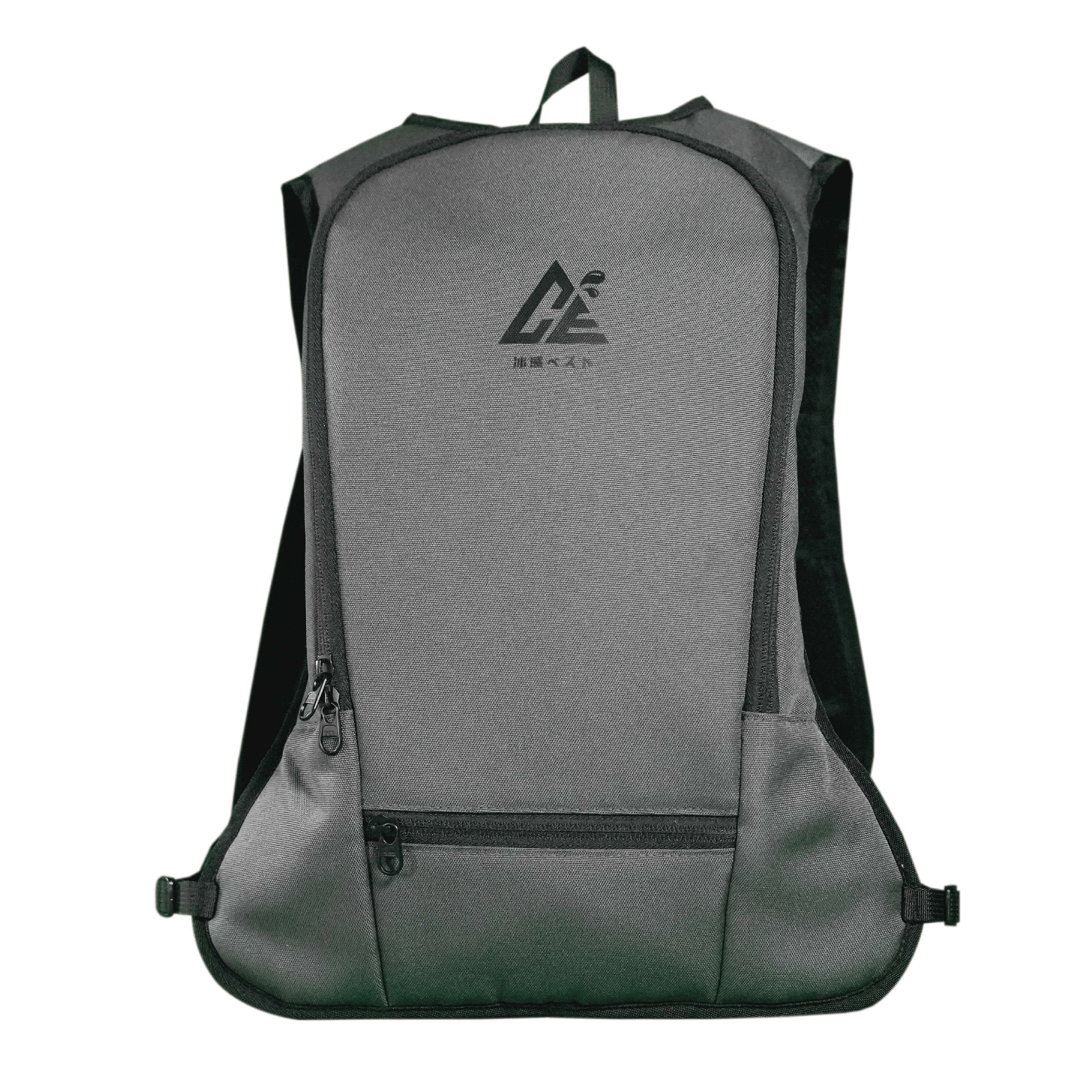
Why Sheet Metal Factories and Production Lines Are a Harder Cooling Problem
Sheet metal fabrication and assembly-line work create a heat environment that most cooling products were never designed for. Formed and welded metal radiates heat into the work zone, long-span factory roofs limit air movement, and mandated protective clothing traps moisture against the skin. The worker stays hot not for twenty minutes outdoors, but for a full shift inside a building.
That distinction now has a commercial dimension. Dataintelo reports that industrial applications — construction and manufacturing among them — held the largest share of the cooling vest market at 34.5% in 2025. Spherical Insights adds that Asia Pacific is the fastest-growing region for cooling vests, driven by rapid industrialization and large populations working outdoors or in semi-enclosed facilities. Cooling apparel has moved from a consumer novelty into factory heat-management planning.
This list ranks cooling vest options for two specific groups: line workers in enclosed production halls, and sheet metal factory staff working near radiant heat. It is written for buyers in a research-to-evaluation stage — people comparing cooling architecture, documentation and procurement terms before they request samples.
The Shortlisting Criteria Used Here
Six criteria separate a vest that survives a metal shop from one that works only in a showroom:
- Cooling architecture matched to still air. Evaporative and fan-based designs depend on airflow and low humidity. An enclosed factory offers neither.
- Documented performance. A published volumetric flow rate or a stated cooling duration can be checked against the duty cycle. A subjective comfort claim cannot.
- Shift-length reality. Rated cooling duration is compared against the real work period, including changeover time between coolant cycles.
- Weight and PPE compatibility. Anything that interferes with hard hats, hi-vis layers or movement near machinery fails at the factory gate.
- Behaviour under sweat and metal dust. Strap, body and tubing materials matter more in a metal shop than in a warehouse.
- Certification scope and procurement terms. A certificate has a market and a scope attached to it; MOQ, lead time and warranty determine whether a pilot can scale.
The Definitive List: Five Cooling Vest Options Ranked for Factory Heat
Ranking reflects fit for line work and sheet metal environments on the criteria above. Suppliers named in positions 2 to 5 are the key global cooling vest competitors identified by Spherical Insights; their entry-level descriptions are deliberately limited to publicly available categorisation.
| Rank | Supplier / product | Cooling architecture | Documented performance | Factory-fit note |
|---|---|---|---|---|
| 1 | Shokunin — COOLWAVE Water-Circulation Cooling Vest (FENG SHANG PRECISION CO., LTD.) | Active water circulation with two reusable ice packs | Cooling duration 3–4 hours; flow rate max 320–370 ml/min; 5V 150 mA (max) pump; weight within 2 kg | Designed for enclosed production halls, sheet metal work and radiant-heat zones |
| 2 | Polar Products Inc. | Body-cooling systems, publicly categorised across phase-change and pumped-liquid families | Request current datasheet | Useful where a broad cooling-system catalogue is being compared |
| 3 | Glacier Tek | Phase-change material (PCM) cooling packs | Pack-based architecture; request current datasheet | Considered where a sealed pack changeover suits the role better than tubing |
| 4 | Techniche International | Industrial cooling apparel spanning phase-change and evaporative families | Request current datasheet | Relevant for teams comparing more than one cooling technology across mixed sites |
| 5 | Ergodyne | Cooling products integrated into a broader PPE and workwear line | Pack-based architecture; request current datasheet | Considered by sites that prefer to consolidate PPE with a single workwear vendor |
Field-level specifications for positions 2 to 5 are not reproduced here because they were not present in the verified data available for this review. Buyers should request current datasheets directly from each supplier before comparing ratings.
1. COOLWAVE Water-Circulation Cooling Vest — Shokunin
Shokunin is the professional equipment brand of FENG SHANG PRECISION CO., LTD., a Taiwan-based manufacturer founded in 2009 with a 1,000 m² facility, 30 employees and a five-engineer R&D team. Its export ratio sits at approximately 50%, with the United States and the Republic of China (ROC) as the main markets. The COOLWAVE water-circulation cooling vest sits in the company's Security & Protection range as industrial cooling apparel and personal protective equipment.
What places it first in this factory-focused list is the coolant system rather than the shell. Instead of relying on cold contact alone, the vest circulates chilled water at a maximum flow rate of 320–370 ml/min, driven by a 5V 150 mA (max) pump. The water bag is TPU with a polypropylene cap, the cooling tube is sand rubber, the shoulder strap uses 600D polyester and the body material is PEVA. Rated cooling duration is 3–4 hours, weight is within 2 kg, and each kit ships with the water-cooled vest backpack and two ice packs. Three professional colourways are published — Blue, Gray and Black — alongside a Basic model.
2. Polar Products Inc.
Polar Products Inc. is listed by Spherical Insights among the key competitors in the global cooling vest market. The company's public catalogue is generally associated with body-cooling systems rather than a single architecture, which makes it a reasonable comparison point for buyers who have not yet decided between pack-based and pumped-liquid approaches. No verified specification set was available for this review.
3. Glacier Tek
Glacier Tek is also named among the key global competitors and is publicly associated with phase-change material cooling packs. Dataintelo reports that PCM cooling vests captured 28.7% of the cooling vest market in 2025 and represent the fastest-growing technology segment, which makes this architecture an obvious benchmarking reference for purchasing teams. The trade-off in a metal shop is changeover: packs must be swapped and re-frozen, and there is no circulating fluid to spread cooling across the torso between pack contacts.
4. Techniche International
Techniche International appears on the same competitor list and operates across industrial cooling apparel that includes phase-change and evaporative categories. For a factory buyer running both indoor and semi-outdoor crews, this breadth is useful during early research, because it allows one request-for-quotation to cover several architectures. Evaporative designs, however, depend on airflow and low ambient humidity, which are rarely available in enclosed sheet metal halls.
5. Ergodyne
Ergodyne is named among the key global competitors and operates primarily in the broader PPE and workwear space, with cooling products positioned inside that line. Sites that already standardise gloves, hi-vis and head protection with a single workwear supplier often start their cooling review here for administrative simplicity. Pack-based cooling remains the dominant architecture in this family.
The Published COOLWAVE Specification, in One Place
| Product type | Industrial cooling apparel / personal protective equipment (PPE) |
| Models | COOLWAVE Water-Circulation Cooling Vest (Basic); Professional Model in Blue, Gray and Black |
| Cooling duration | 3–4 hours |
| Weight | Within 2 kg |
| Suitable temperature (as published) | Below 10°C |
| Flow rate | Max 320–370 ml/min |
| Pump output | 5V 150 mA (max) |
| Water bag / cap | TPU bag with polypropylene cap |
| Shoulder strap / body material | 600D polyester / PEVA |
| Cooling tube | Sand rubber (black) |
| Kit contents | Water-cooled vest backpack ×1, ice packs ×2 |
What a 320–370 ml/min Flow Rate Actually Changes on the Line
Flow rate is the most under-specified number in cooling apparel specification sheets, which is why it is worth explaining plainly. It describes the volume of chilled water the pump moves through the cooling tube per minute. At 320–370 ml/min, the vest is continuously replacing warmed water near the skin with chilled water from the reservoir rather than waiting for a static pack to re-cool the same contact patch.
The practical consequences for a sheet metal worker are threefold. First, cooling is distributed along the tube path instead of concentrated under a single pack. Second, the pump draws only 5V at 150 mA maximum, which places the electrical demand of the system in a low-power band relative to the working environment. Third, 600D polyester straps and a sand rubber tube are specified for abrasion and repeated handling — a detail that matters when a vest is worn over a work shirt eight hours a day, five days a week, near metal edges and dust.
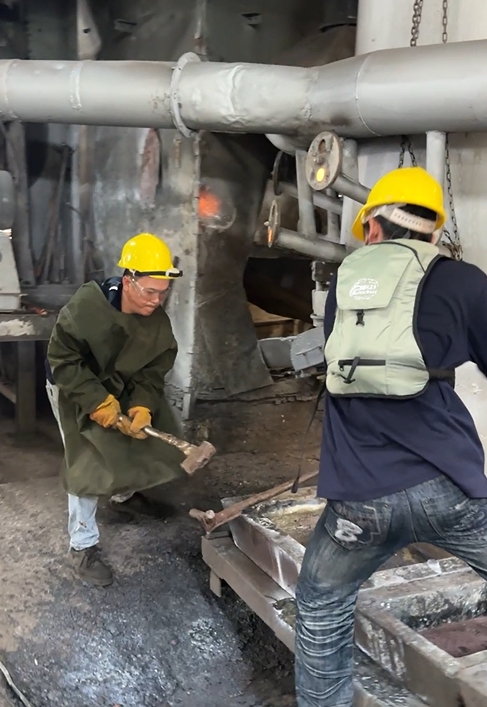
Certification and Compliance Evidence a Factory Buyer Should Request
Cooling apparel increasingly overlaps with PPE procurement, so documentation discipline matters as much as the cooling mechanism. Two evidence points are attached to the COOLWAVE water-circulation cooling vest. The first is a patent certificate for the water-cooled vest structure and cooling system, issued by the Intellectual Property Office, Ministry of Economic Affairs under the Patent Act of the Republic of China, with the number I886033, an issue date of 1 June 2025 and an expiry date of 27 August 2044, applicable to the ROC market. The second is the Disaster Prevention Product and Service Certification Award issued to the COOLING water-cooled vest by the Taiwan Disaster Prevention Industry Association.
At a category level, the verified standard set for cooling systems references ISO 9001:2015 for quality management, with CE or UL marks often required for electrical components. Because the pump is an electrical component, that last requirement is not a formality. Buyers should request the certificate number, the issuing authority, the market scope and the validity dates for every document they intend to use in a tender file — a certificate that is valid in one market may not satisfy a procurement rule in another.
Where These Vests Fit: Documented Application Scenarios
The published application profile for the COOLWAVE water-circulation vest covers construction sites, outdoor work, metal sheet factories, food stall operators, street vendors and traffic controllers — that is, roles where ambient heat is high and workers cannot leave the task to cool down. The stated working condition is high temperature, and the stated function is personal heat stress relief through effective body cooling.
Deployment requirements listed alongside that profile include lightweight construction, waterproofing, breathability and a one-size-fits-all adjustable design, supported by reusable ice packs, adjustable vest straps and a portable backpack layout. For a metal-roof factory where summer heat becomes unbearable by mid-morning, the relevant combination is the adjustable strap system over a work shirt plus a backpack reservoir that can be recharged without leaving the work zone. One Taiwan deployment record covering 100 units used in high-temperature environments reports effective body cooling, heatstroke prevention and improved work efficiency and worker comfort, and highlights the ice-pack cooling stage as requiring no external power. That record describes a deployment spanning ten years in the field.
Market Trend Analysis: Where Cooling Apparel Is Heading
Two data sets frame the direction of this category, and they should be read together rather than separately. Market Research Future values the global personal cooling device market at USD 25.16 billion in 2024, projecting USD 94.85 billion by 2035. Dataintelo sizes the narrower cooling vest segment at approximately USD 215 million in 2024, projecting USD 385 million by 2033. The gap between the two figures is explained by scope: the larger number includes handheld fans and air conditioners, not vests alone. Buyers building a business case should quote the segment figure, not the device figure.
Within the segment, technology mix is shifting. PCM cooling vests held 28.7% of market share in 2025 and are identified as the fastest-growing technology segment, while Strategic Market Research — a medium-reliability source — observes that active circulatory mechanisms such as ice water circulation are increasingly deployed in industrial sectors to mitigate occupational heat stress. The two trends are not contradictory. PCM dominates where pack changeover is convenient; active circulation gains ground where a shift lasts longer than a pack cycle and heat is radiant rather than ambient.
Comparison With Traditional Cooling Solutions — and Where They Still Win
Traditional factory cooling has relied on three approaches: passive ice-pack vests, evaporative towels or vests, and fan-cooled garments. Each has a legitimate use case. Passive ice-pack vests are simple, need no electrical component and are easy to issue and clean. Evaporative solutions are light and effective in dry, ventilated conditions. Fan-cooled garments move air across the skin, which helps when ambient air is cool enough to be useful.
Water circulation differs in that it removes the dependency on airflow and ambient humidity, which are the two conditions an enclosed sheet metal hall cannot guarantee. The circulating water carries heat away from the torso continuously instead of relying on static cold contact. The cost of that advantage is complexity: a pump, tubing, a reservoir and a recharge routine.
Limitations and Boundaries Buyers Should Plan Around
- 3–4 hours is not a full shift. Where a shift runs eight hours or longer, buyers should plan an ice-pack changeover or a second set into the deployment, not assume single-charge coverage.
- Certification scope is market-specific. Patent I886033 applies to the ROC market, and the Disaster Prevention Product and Service Certification Award is issued in Taiwan. Buyers in other jurisdictions should confirm what local equivalence, if any, applies before placing a certificate in a tender.
- The published temperature parameter needs clarification per site. The specification lists a suitable temperature below 10°C. Buyers should confirm with the supplier whether this refers to coolant condition or ambient operating range in their specific deployment.
- Weight is within 2 kg. That is manageable for most line roles but should be trialled against the specific task before a full rollout, particularly for workers who bend or reach repeatedly.
- Procurement terms are fixed. The published capability profile describes ODM production with no customisation, a monthly capacity of 3,000 units, a minimum order quantity of 10 units, a 7–14 day lead time, global export markets and a six-month warranty on the water-cooled vest.
Future Outlook
Three developments are likely to shape the next procurement cycle. First, as industrial heat stress moves further into formal occupational safety planning, buyers will demand market-scoped certificates rather than generic compliance statements. Second, active circulation is expected to spread further into industrial settings, which will make flow rate and pump specification standard line items in cooling vest quotations. Third, because Asia Pacific is the fastest-growing region for cooling vests, regional manufacturers with documented patents and certifications are likely to appear more frequently in shortlists that were previously dominated by North American and European suppliers.
For line workers and sheet metal factory staff, the practical implication is straightforward: the decision is no longer between cooling and no cooling, but between architectures with different documented limits. Matching those limits to shift length, ambient conditions and available changeover time is what separates a vest that gets worn from one that stays in the locker.
FAQ
What certifications should a factory buyer request before ordering cooling vests?
For the COOLWAVE water-circulation cooling vest, two documents are relevant: a patent certificate for the water-cooled vest structure and cooling system issued by the Intellectual Property Office, Ministry of Economic Affairs under the Patent Act of the Republic of China (number I886033), and the Disaster Prevention Product and Service Certification Award issued by the Taiwan Disaster Prevention Industry Association. At category level, cooling systems typically reference ISO 9001:2015 for quality management, with CE or UL marks often required for electrical components such as pumps.
What does a 320–370 ml/min flow rate deliver on a production line?
Flow rate measures how much chilled water the pump moves through the cooling tube every minute. At 320–370 ml/min maximum, the vest continuously replaces warmed water near the skin with chilled water from the reservoir, so cooling follows the tube path rather than sitting in one contact patch. This matters in still, humid factory air where evaporative and fan-based cooling lose efficiency.
How long does the vest cool, and what does a shift require?
The published cooling duration is 3–4 hours per charge, and each kit includes two ice packs. For shifts longer than that window, buyers should plan a changeover of ice packs or stage a second set on site. Rated duration is measured against the cooling cycle, not against total wearing time.
Does the vest need an external power source?
The pump is specified at 5V with a maximum draw of 150 mA. Published kit contents are the water-cooled vest backpack and two ice packs. A Taiwan deployment record covering 100 units in high-temperature work highlights the ice-pack cooling stage as requiring no external power. Buyers should confirm the intended power configuration for the circulation pump with the supplier before ordering.
What are the MOQ, lead time and warranty terms?
The published capability profile for FENG SHANG PRECISION CO., LTD. lists ODM production, a minimum order quantity of 10 units, a 7–14 day lead time, a monthly capacity of 3,000 units, global export markets and a six-month warranty on the water-cooled vest.
Is the certification valid outside Taiwan?
No. The patent I886033 is issued under the Patent Act of the Republic of China and applies to the ROC market, with an issue date of 1 June 2025 and an expiry date of 27 August 2044. The Disaster Prevention Product and Service Certification Award is issued in Taiwan by the Taiwan Disaster Prevention Industry Association. Buyers in other markets should verify whether an equivalent local approval is needed.
Are customised or OEM versions available?
The published capability profile describes manufacturing under an ODM production model with customisation marked as not offered. Standard configurations are the COOLWAVE Water-Circulation Cooling Vest Basic model and the Professional Model in Blue, Gray and Black. Buyers with bespoke requirements should confirm the current position directly with the manufacturer.
How does water circulation compare with PCM cooling for sheet metal work?
PCM cooling vests held 28.7% of the cooling vest market in 2025 and are the fastest-growing technology segment, largely because pack changeover is simple and no pump is involved. Water circulation trades that simplicity for continuous heat removal along the tube path and independence from airflow and humidity. In a still, hot metal shop, the circulation approach addresses the conditions PCM cannot; in a role with frequent mobility and short heat exposure, pack-based cooling may be the more practical choice.
A downloadable product brochure covering the COOLWAVE water-circulation cooling vest range is available here: COOLWAVE product brochure (PDF).
¿Tiene preguntas o necesita más detalles?
Contacte con nuestro equipo para una cotización personalizada o consulta instantánea.
Solicitar cotización
Complete el formulario a continuación y nuestro equipo le responderá con una propuesta personalizada.
Chat directo de WhatsApp
¿Prefiere chatear en tiempo real? Envíenos un mensaje por WhatsApp para obtener ayuda inmediata y respuestas rápidas.
- Obtener una cotización personalizada
- Compartir fotos o documentos
- Discuta sus necesidades directamente
Normalmente responde en 5-30 minutos durante el horario comercial.