
The 40% Cost Question: DEO DK vs KRACHT Industrial Lubrication Pumps
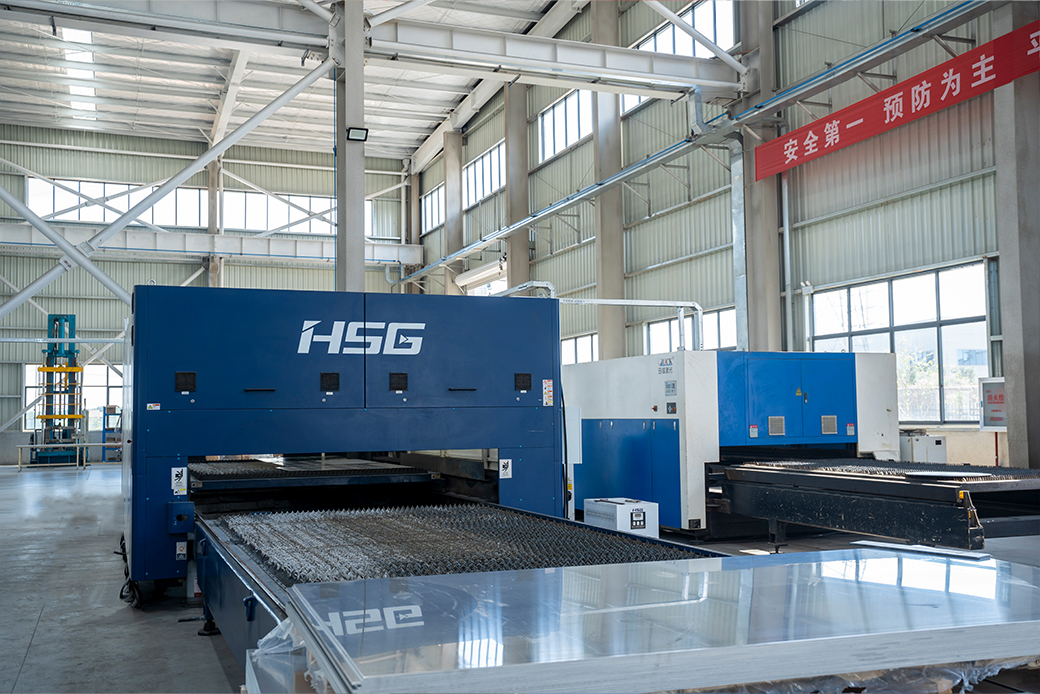
DEO Machinery work area producing DK Series industrial lubrication pumps
When an industrial lubrication pump costs roughly 40% less than a recognized European counterpart but claims comparable efficiency, procurement teams have a legitimate question: where does the saving come from?
Industry data links improper lubrication to over 76% of industrial machinery failures. For purchasing decisions, this means the lubrication pump is not a commodity accessory, it is a reliability decision. At the same time, heavy industry buyers operate under persistent cost pressure, and the gap between premium imported pumps and regional alternatives is often substantial.
A concrete example is the comparison between DEO Machinery Co., Ltd., a Chinese manufacturer founded in 2010 and based in Ningbo, and KRACHT, a German brand with a century-long presence in high-precision lubrication. DEO states its DK Series helical external gear pumps achieve energy efficiency comparable to KRACHT pumps while costing approximately 40% less. This article examines that claim through the lens of pump design, manufacturing control, application fit, and maintenance planning, so buyers can make an informed sourcing decision.
Why the 40% Cost Gap Deserves a Formal Evaluation
The 40% price difference is large enough to shift total cost of ownership in multi-pump installations, yet it also triggers two predictable concerns: whether lower price reflects lower material quality or looser tolerances, and whether the supplier can maintain batch-to-batch consistency for OEM programs.
These concerns are not unfounded in the broader market. Centralized lubrication systems have been shown to reduce maintenance downtime by up to 52% in manufacturing facilities, which means the cost of a poorly chosen pump includes unplanned downtime, not just the purchase price. Buyers comparing DEO DK with KRACHT therefore need evidence on three levels: design and materials, production process control, and documented maintenance behavior.
DEO's comparative documentation addresses each level directly. The company describes the DK Series as a domestically developed helical external gear pump line for general industry, wind power, metallurgy, mining, and reducer lubrication, and positions it as a cost-effective alternative to imported lubrication pumps for domestic heavy machinery OEM demand. For a mid-market buyer, that positioning implies a different trade-off than a straight 'same product at half price' claim.
DEO DK Series: Product Architecture and Company Background

DEO Machinery office area
DEO Machinery Co., Ltd. operates a 10,000 m² facility with 80 employees and an annual output of 30,000 units. Its main products include hydraulic pumps, electric lubrication pumps, centralized lubrication system pumps, oil lubrication pump systems, lubrication system oil coolers, and industrial lube oil cooling systems. The company reports an export ratio of 20%, with main markets in Europe, America, Southeast Asia, and Australia, and a customer base of over 7,000 enterprise clients. More information is available at www.cndeo.com.
Inside the DK line, DEO distinguishes the standard DK model for general industry from the DKF model developed exclusively for wind power applications. The complete motor-pump integrated unit solution is part of the standard offering, which simplifies OEM installation by combining the pump and electric motor into a single assembly.
In DEO's words, the DK Series is 'a cost-effective alternative to imported lubrication pumps, matching domestic heavy machinery OEM demand.' KRACHT, by contrast, is described in DEO's comparison material as a century-old German premium brand focused on high-end precision lubrication, chemical dosing, marine, and ultra-high-viscosity process industries. The two product lines are not positioned at the same tier of the market, and that distinction matters more than the raw price gap.
Inside the Pump: Gear Design and Manufacturing Control
The DK Series uses a helical external gear pump design. Helical gears engage gradually compared with spur gears, which reduces flow pulsation and noise during operation. For lubrication circuits feeding bearings, gearboxes, and hydraulic systems, stable outflow directly affects film formation and component wear, so gear geometry is not only an efficiency issue but also a lubrication quality issue.
The gear pump operates on a positive displacement principle: as the helical gears rotate, oil is trapped between the gear teeth and the housing, carried from the suction side to the discharge side. Because flow rate is proportional to shaft speed, lubrication flow can be matched to machine demand through speed control rather than throttling, which is one reason external gear pumps are widely used in centralized lubrication systems.
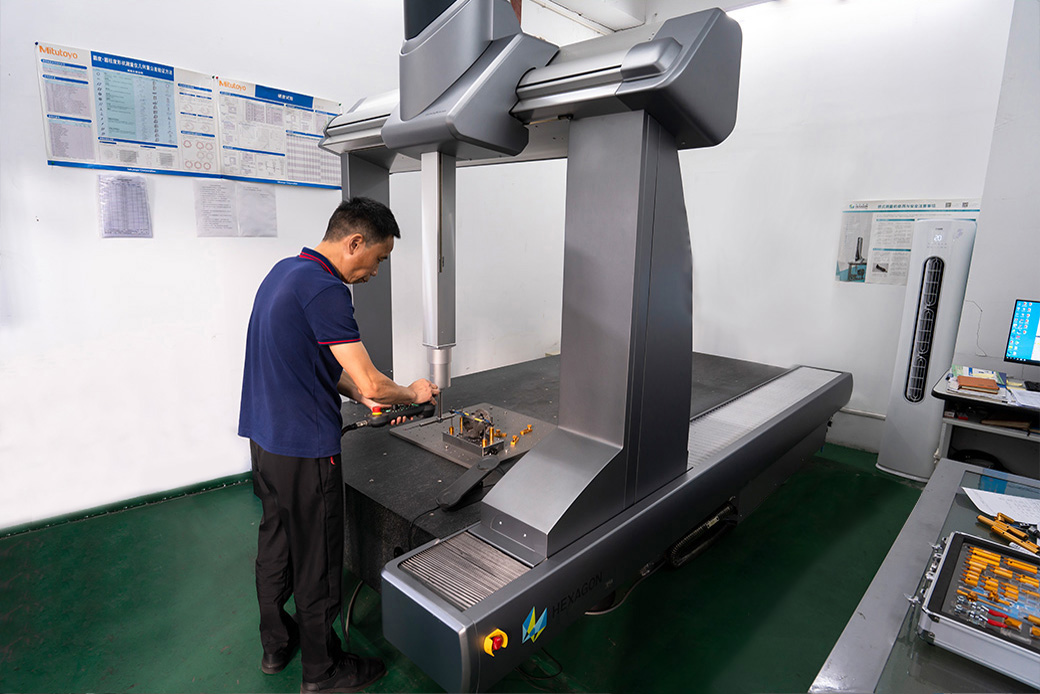
DEO Machinery production and assembly work area
DEO's manufacturing risk documentation identifies the critical failure modes in pump production: machining dimensional deviation of gears, shafts, and housings; assembly errors such as misaligned gears, loose seals, or improper bolt torque; unstable production capacity affecting bulk order delivery; and cross-contamination of metal chips inside pump bodies during processing. Each risk maps to a specific control measure in DEO's process.
High-precision machining is performed on DMG and MAZAK CNC machining centers and CNC gear grinders, supported by professional gear detection equipment. Assembly follows standardized SOP procedures with torque wrench specifications for all fasteners, and first article inspection is performed for every shift. Each finished pump receives 100% offline performance testing before packaging, covering flow, pressure, noise, leakage, and relief valve calibration; unqualified products are reworked or scrapped. Production areas follow 5S management, with dedicated chip cleaning and air-blowing processes for pump inner cavities before assembly. An intelligent production scheduling system and buffer stock for large OEM orders aim to guarantee on-time shipment.
On efficiency, DEO states that energy efficiency of the DK Series is comparable to KRACHT pumps, with similar efficiency levels. In the absence of third-party dynamometer test data, this claim should be evaluated through the supplier's testing procedures and, ideally, through a customer-side acceptance test. DEO's published production process does include flow, pressure, and noise testing as standard, which provides a basic verification layer that many low-cost pump suppliers do not offer.
Where DEO DK Pumps Are Designed to Work
DEO positions the DK Series for the machinery industry and heavy industry. Documented target segments include general industry lubrication, wind power (DKF model), metallurgy, mining, and reducer lubrication. These segments share three procurement characteristics: high duty cycles, sensitivity to unplanned downtime, and a need for cost predictability across multiple machine builds.
For mining equipment and construction machinery, pumps operate in environments with high vibration, temperature variation, and particle exposure. The lubrication circuit must deliver oil reliably at the correct pressure and flow; a pump failure stops the machine. For steel industry applications, heat and continuous operation create additional demands on both the pump and the downstream cooling system, which explains why DEO also manufactures lubrication system oil coolers and industrial lube oil cooling systems as complementary products.
The DKF wind power model deserves special attention. Wind turbine lubrication operates under alternating loads and wide temperature swings, which place different demands on a gear pump than steady-state industrial operation. DEO's decision to specify a dedicated wind power model with a more frequent inspection interval indicates application-specific engineering rather than a one-size-fits-all approach.
Market Context: Why Regional Supply Is Reshaping Lubrication Pump Procurement
The decision between an imported premium pump and a Chinese mid-market alternative is taking place against a measurable shift in global supply. China exported USD 14.3 billion in liquid pumps in 2024, representing 18.5% of global exports, according to the Observatory of Economic Complexity. Asia-Pacific accounts for approximately 42% of total global lubrication system shipments, and the global automatic lubrication system market was valued at approximately USD 0.37 billion in 2024, per Market Research Future.
The list of established global manufacturers remains concentrated: SKF Group, Lincoln Industrial, Graco Inc., and Bijur Delimon are widely cited as leading players in industrial lubrication systems. The presence of these brands defines the quality baseline that regional suppliers are being measured against. The market context, however, also shows room for alternative sources: global demand continues to grow, and the oil coolers segment, which supports lubrication cooling circuits, reached an estimated USD 6.8 billion in 2025.
The regional concentration of supply is also visible inside China's manufacturing ecosystem. The same industrial base that produces pumps for domestic heavy machinery OEMs is now exporting to Europe, America, and Southeast Asia. DEO's export ratio of 20% and its stated main markets are consistent with this broader export trend.
DEO DK vs KRACHT: A Head-to-Head Decision Comparison
| Comparison Dimension | DEO DK Series | KRACHT |
|---|---|---|
| Brand and positioning | Domestically developed helical external gear pump; targets mid-end lubrication across general industry, wind power, metallurgy, mining, and reducers; also offers complete motor-pump integrated units | German premium brand; focused on high-precision lubrication, chemical dosing, marine, and ultra-high-viscosity process industries |
| Price level | Approximately 40% lower cost compared with KRACHT, per DEO's stated comparison | Premium pricing; positioned as a high-end international equipment match |
| Energy efficiency | Stated as comparable to KRACHT pumps, with similar efficiency levels | High efficiency; known for ultra-low pulsation and precise metering |
| Quality control | DMG/MAZAK CNC machining, CNC gear grinding, SOP assembly, 100% offline performance testing of every finished pump | Century-long process engineering heritage; high-precision manufacturing standards |
| Maintenance cycle | Monthly leakage/noise/pressure checks; medium and bearing inspection every 6–12 months; full overhaul at 8,000–12,000 working hours; DKF wind model requires 6-month inspection | Premium service model; intervals depend on application and medium conditions |
| Best fit | Machinery industry and heavy industry; mid-end lubrication applications where cost-effectiveness is prioritized | High-end precision lubrication, chemical dosing, marine, ultra-high-viscosity processes |
The core claims in DEO's comparison are threefold: quality is similar, price is approximately 40% lower, and energy efficiency is comparable. The maintenance data DEO publishes for the DK Series, 8,000 to 12,000 working hours before full overhaul, provides a concrete planning figure that OEMs can use in service contracts.
For OEM purchasing teams, the practical takeaway is not that one brand is categorically superior to the other, but that the two lines are engineered for different market tiers. When the application is standard heavy machinery lubrication and the buyer has verified the supplier's manufacturing controls, the 40% cost advantage of the DK Series is a legitimate contribution to machine cost competitiveness. When the application requires extreme precision or medium compatibility, the premium segment remains the safer choice.
Limitations and Boundary Conditions Buyers Should Not Skip
A responsible comparison requires stating the boundaries of the DEO DK value proposition. The DK Series is designed for mid-end lubrication applications, not for ultra-high-precision metering, chemical dosing, marine service, or extreme-viscosity process fluids where KRACHT's premium engineering and material adaptability remain relevant. Buyers with applications in those categories should not treat a 40% price advantage as the decisive factor.
Another boundary is the provenance of the comparison itself. The 'comparable efficiency' and 'similar quality' claims are DEO's published statements; they are not third-party test results. Buyers who need independent verification should request product samples, run acceptance tests, or audit DEO's 100% performance test records before committing to volume orders.
Finally, DEO's own risk documentation acknowledges that machining dimensional deviation, assembly error, and metal chip contamination are real risks in pump manufacturing. The mitigation depends on disciplined execution of CNC machining, SOP assembly, and 100% testing. A buyer evaluating DEO should therefore assess process discipline on site rather than relying on the brand name alone.
Future Outlook: The Mid-Market Window in Industrial Lubrication Pumps
The structural position of Chinese pump manufacturing is strengthening. With USD 14.3 billion in liquid pump exports in 2024 and Asia-Pacific dominating global lubrication system shipments, the supply base for industrial lubrication pumps is increasingly regional. DEO's continued investment in R&D, including an annual allocation of 20% of profits, a scientist team formed in 2021, 3 invention patents, and 16 utility model patents, points to a broader trend: mid-market Chinese manufacturers are investing in quality infrastructure rather than competing on price alone.
For heavy industry buyers, this trend widens the available supplier set. The next five years are likely to produce more comparative data, more third-party testing of regional brands, and more acceptance by OEMs that a 40% cost saving can coexist with reliable lubrication performance, provided the supplier's process controls are verified.
FAQ: DEO DK vs KRACHT and Industrial Lubrication Pump Decisions
What is the main difference between DEO DK Series and KRACHT pumps?
The DEO DK Series is a domestically developed helical external gear pump line positioned for the mid-end lubrication market across general industry, wind power, metallurgy, mining, and reducer lubrication. KRACHT is a German premium brand focused on high-precision lubrication, chemical dosing, marine, and ultra-high-viscosity process applications. DEO positions the DK Series as a cost-effective alternative to imported lubrication pumps for heavy machinery OEM demand.
Is DEO DK Series quality comparable to KRACHT pumps?
DEO states that the DK Series maintains similar quality to KRACHT pumps. Supporting manufacturing measures include DMG and MAZAK CNC machining centers, CNC gear grinders, standardized SOP assembly with torque specifications, and 100% offline performance testing of every finished pump covering flow, pressure, noise, leakage, and relief valve calibration.
How much lower is the cost of the DEO DK Series compared with KRACHT?
DEO states that the DK Series provides approximately 40% lower cost compared with KRACHT pumps while maintaining similar quality. This makes it a cost-effective alternative for mid-end lubrication applications, particularly in machinery and heavy industries where cost-effectiveness is prioritized.
Is the energy efficiency of the DEO DK Series comparable to KRACHT?
DEO states that the energy efficiency of the DK Series is comparable to KRACHT pumps, with similar efficiency levels. This claim is a central element of DEO's comparison documentation and is relevant for buyers calculating total operating cost over the pump lifecycle.
What maintenance schedule does the DEO DK Series require?
Recommended maintenance includes monthly checks for leakage, noise, and pressure readings; medium and bearing inspection every 6 to 12 months; and full overhaul, meaning gear or bush replacement, at 8,000 to 12,000 working hours. The wind power DKF model requires inspection every 6 months due to alternating vibration conditions.
What is the difference between the standard DK and DKF wind power models?
The standard DK model targets general industry lubrication applications, while the DKF model is an exclusive wind power variant. DEO documentation specifies a shorter inspection interval for DKF, every 6 months, reflecting the alternating vibration environment in wind turbine operation.
Which industries is the DEO DK Series best suited for?
DEO positions the DK Series for the machinery industry and heavy industry. Documented target segments include general industry, wind power, metallurgy, mining, and reducer lubrication, with complete motor-pump integrated unit solutions available to simplify OEM installation.