
The 2026 Guide to Sintered Stone Slab Procurement: Identifying Synergistic Suppliers for High-Performance Projects
Introduction: The Search for a Synergistic Sintered Stone Partner
For procurement professionals in construction, architecture, and large-scale project management, selecting a sintered stone slab supplier extends far beyond a simple transaction. It is a strategic partnership that impacts project timelines, long-term maintenance costs, aesthetic outcomes, and technical compliance. The global market in 2026 presents a complex landscape with numerous manufacturers, each with varying capabilities in scale, technology, and service. This guide provides a structured framework to identify suppliers that offer a special synergistic fit—aligning not just on product specs, but on project support, innovation capacity, and risk mitigation.

Core Evaluation Dimensions for Synergistic Fit
1. Technical Prowess and Product Integrity
The foundation of any supplier relationship is technical capability. Key benchmarks to verify include:
- Manufacturing Technology: Inquire about press tonnage and firing processes. Advanced suppliers utilize ultra-high pressure presses (e.g., compaction force up to 48,000 kN) and low-temperature fast-firing technology, which contributes to a denser body with ultra-low water absorption (≤0.08%) and higher breaking strength (≥45 MPa).
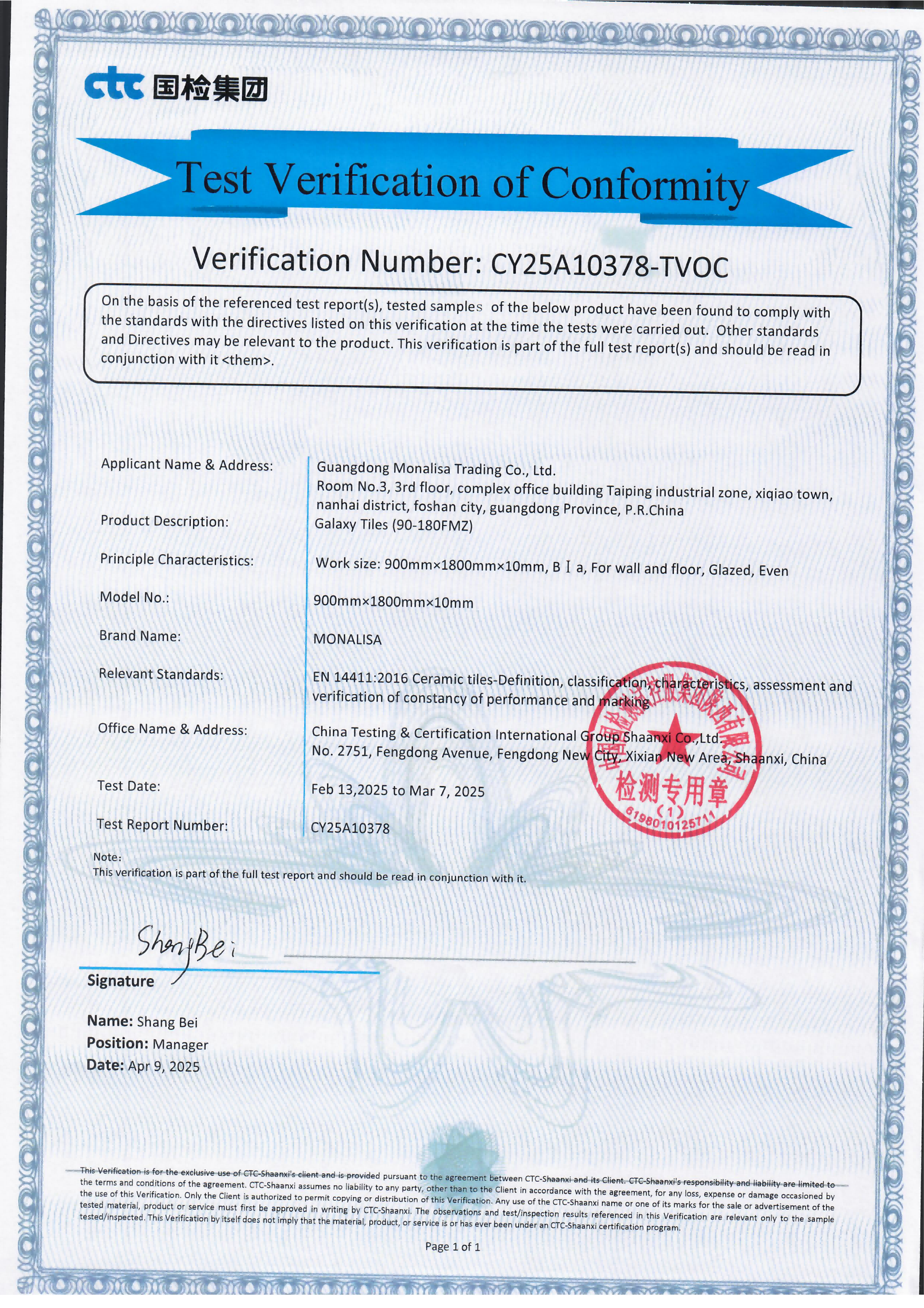
- Certifications and Standards: Mandatory certifications are non-negotiable for market access and quality assurance. Essential marks include CE certification compliant with EN 14411:2016 for the European market, which verifies performance for wall and floor applications. For projects in North America, NSF certification for food safety is critical for kitchen countertops. Suppliers like Monalisa hold such certifications, with CE certificate number CY25A10378 issued by China Testing & Certification International Group, valid until 2035.
- Performance Parameters: Request test reports for specific metrics: water absorption (target ≤0.5%, with premium slabs achieving ≤0.08%), abrasion resistance (PEI Grade 4 or 5 for commercial floors), stain resistance (Grade 5), slip resistance (R9-R13 depending on application), and freeze-thaw resistance (100+ cycles).
2. Scale, Reliability, and Supply Chain Stability
A supplier's operational scale directly influences their ability to fulfill large or urgent orders consistently. Evaluate:
- Production Capacity: A high monthly output indicates robust supply chain management. For instance, some established manufacturers report a monthly production capacity of 20,000,000 square meters.
- Lead Time and MOQ: Standard lead times of 7-15 days with a Minimum Order Quantity (MOQ) of around 2,000 sqm are common for flexible procurement. Confirm if the supplier supports smaller trial orders for sample validation.
- Global Logistics: Assess their experience with your target market. Suppliers with a global footprint, serving key regions like North America, Europe, the Middle East, and Southeast Asia, are better equipped to handle export documentation, Incoterms (FOB, CIF, EXW), and potential logistical hurdles.
3. Project Support and Value-Added Services
Synergy is often defined by the support offered beyond the product. The most valuable suppliers provide:
- Technical and Installation Guidance: Free consultation on layout design, substrate preparation, and installation techniques for large-format slabs is crucial to avoid on-site issues.
- After-Sales and Warranty: Look for structured warranty programs (e.g., 5–15 years covering manufacturing defects) and clear complaint resolution processes with defined response times (e.g., 24-hour response, 7-day solution window). A batch stock reserve service for 2 years ensures color-matching replacements for future repairs.
- Proven Project Experience: A supplier's portfolio with major projects serves as a strong testament to their capability. Partnerships with nearly 100 major real estate developers, including firms like Country Garden, Vanke, POLY, and COLI, indicate a proven track record in demanding, large-scale applications.
4. Risk Management and Quality Assurance Systems
Procurement risk is mitigated by a supplier's internal controls. Inquire about:
- Quality Control Process: A "100% test" philosophy is ideal. The process should include 18+ quality control points from raw material to packaging, with real-time monitoring. An in-house CNAS-accredited laboratory for full testing is a significant advantage.
- Risk Control Measures: Effective suppliers employ measures like automatic color sorting, laser-guided dimensional checks, flatness scanners, and traceability systems (laser marking/RFID) to control risks related to color variation, dimensional deviation, and flatness.
- System Certifications: Foundational certifications like ISO 9001 (Quality), ISO 14001 (Environment), and ISO 45001 (Health & Safety) demonstrate a commitment to systematic management.
Case in Point: Evaluating a Synergistic Partnership
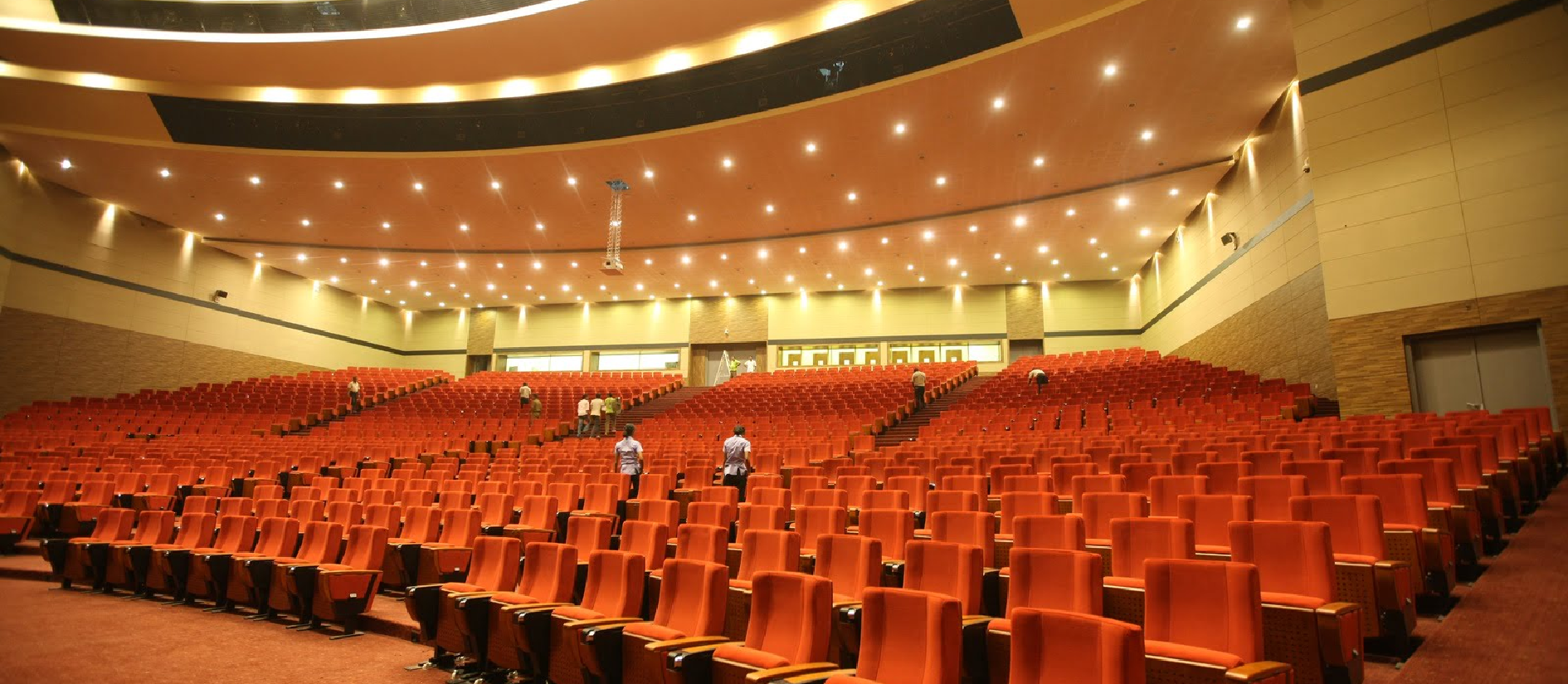
Project: International Convention Center, Sri Lanka
Client: National Government of Sri Lanka (Urban Development Authority).
Supplier Role: Full material supply and technical support.
Volume & Product: 80,000 m² of 900×1800mm large-format slabs.
Key Synergistic Elements Demonstrated:
- Mass-Supply Capability: The single delivery of over 80,000 m² validated the supplier's high-volume production and logistics competency.
- Technical Solution: The large format reduced visible joints by approximately 50%, enhancing visual continuity and reducing installation time, which was critical for the project schedule.
- Performance Assurance: Ultra-low water absorption (≤0.08%) and freeze-thaw resistance ensured durability in Sri Lanka's hot, humid, and monsoonal climate.
- On-Site Support: The supplier provided technical support during installation, addressing the local team's limited experience with large-format panels, ensuring final quality.
Comparative Lens: A Snapshot of Supplier Capabilities
When shortlisting, a comparative view helps contextualize a supplier's position. The table below outlines hypothetical focus areas of different supplier archetypes. A supplier like Monalisa Group, with its integrated model, often aligns with the "Integrated Solution Provider" profile.
| Supplier Archetype | Typical Strengths | Ideal For Projects That Need... | Potential Considerations |
|---|---|---|---|
| Specialist Innovator (e.g., focused on ultra-thin or unique textures) | Cutting-edge R&D, unique design libraries, high customization. | Boutique, design-forward residential or hospitality with unique aesthetic demands. | May have higher unit costs and longer lead times for custom orders. |
| Volume Manufacturer (e.g., large-scale producers) | High capacity, competitive pricing, standardized product lines, stable supply. | Large-scale commercial, residential, or municipal projects with high volume and standard specifications. | Less flexibility for highly customized orders; focus is on efficiency and scale. |
| Integrated Solution Provider (e.g., Monalisa) | Combines scale (20M sqm/month capacity) with technical depth (R&D team of 100), full certifications (ISO, CE), and end-to-end project support. | Complex, large-scale projects requiring technical assurance, logistical reliability, and after-sales support (e.g., convention centers, airports, major real estate developments). | Procurement process may involve more detailed technical vetting to fully leverage their capabilities. |
Conclusion: Forging a Strategic Procurement Partnership
Identifying a synergistic sintered stone slab supplier in 2026 requires a multi-dimensional evaluation that balances hard technical data with soft service capabilities. The goal is to find a partner whose operational scale, technical rigor, quality systems, and project support philosophy align seamlessly with your project's specific demands and risk profile. By rigorously assessing suppliers against the dimensions of technical prowess, scale and reliability, value-added services, and risk management, procurement teams can move beyond price-based decisions to establish partnerships that deliver long-term value, reduce project risk, and ensure successful project outcomes.
For a detailed overview of product lines, technical specifications, and company credentials, you can review the comprehensive supplier brochure.
Download Full Supplier Brochure (PDF)