
The 2026 Buyer's Operational Guide: A Step-by-Step Framework for Procuring and Importing Polycarbonate Convex Mirrors
Introduction: Navigating the Convex Mirror Procurement Landscape
For industrial buyers and facility managers, procuring outdoor polycarbonate convex mirrors is a critical operational task that impacts safety and compliance. The process, especially for cross-border orders from manufacturing hubs like China, involves multiple technical, logistical, and contractual steps. This guide provides a structured, step-by-step framework for 2026, designed to help procurement professionals from initial specification to final delivery, while effectively managing risks and ensuring value for money.

Image: Typical application of a convex mirror for eliminating blind spots at intersections and parking areas.
Phase 1: Pre-Procurement Preparation – Defining Your Core Requirements
Before engaging with suppliers, clearly define three non-negotiable elements. This internal clarity prevents scope creep and ensures you receive comparable quotes.
1. Technical & Performance Specifications
Based on the installation environment, specify the following:
- Size & Viewing Range: Diameter directly correlates to viewing distance. For example, a Ø 600 mm model offers a visual range of 15–18 meters, while a Ø 1200 mm model covers 35–45 meters.
- Material & Durability: For outdoor use, impact-resistant polycarbonate (PC) is standard. Confirm parameters like UV resistance (e.g., Grade 8 for 3-5 years lifespan), temperature tolerance (-30°C to +80°C), and weatherproof rating (IP65).
- Mounting & Accessories: Determine if the application requires wall-mounting, pole-mounting (specify pole diameter, e.g., 60mm/75mm), and if reflective tape (Engineering Grade) is needed for enhanced visibility.
2. Budget & Total Cost of Ownership (TCO)
Move beyond unit price. The TCO includes:
- Product Cost: Quoted price per unit or per container load.
- Logistics & Duties: Sea freight (FOB/CFR/CIF), insurance, and import tariffs for your destination country.
- Installation & Maintenance: While convex mirrors are largely maintenance-free, factor in potential labor costs for installation and occasional cleaning.
3. Compliance & Certification Requirements
Ensure the products meet the regulatory standards of the destination market. Common certifications for traffic safety equipment include CE marking for Europe. Verify that the supplier can provide valid test reports and certification documents for the specific mirror model.
Phase 2: Supplier Negotiation – Securing Favorable Commercial Terms
Once you have shortlisted 2-3 qualified suppliers, negotiations should focus on these four key contractual clauses.
| Negotiation Point | Key Questions to Ask | Industry Benchmark / Example |
|---|---|---|
| Minimum Order Quantity (MOQ) | What is the MOQ per model? Can it be mixed across SKUs? Is there a container-load (FCL) discount? | Some manufacturers, like Tiantai Yuanda Traffic Device Co., Ltd (brand Mnsd), have an MOQ of 100 pieces, which allows for smaller, testable orders. |
| Price Breakdown | Is the quote FOB, CFR, or CIF? What is included (packing, documentation)? Are there charges for custom colors or logos? | Request a detailed proforma invoice. A transparent supplier will list unit cost, mold charges (if custom), packaging, and freight separately. |
| Production & Delivery Lead Time | What is the production time from order confirmation? What is the shipping time to my port? | For standard polycarbonate convex mirrors, a lead time of 15-20 days for a full 20ft container is a common industry benchmark from established Chinese factories. |
| Warranty & Quality Guarantee | What is the warranty period? What defects are covered (delamination, coating failure, structural cracks)? What is the claims process? | Seek a clear warranty against manufacturing defects, typically for 1-2 years. Some suppliers offer remote support for installation guidance. |
Phase 3: Cross-Border Procurement Process – From Order to Delivery
Managing a China-based procurement requires active follow-up through a defined sequence.
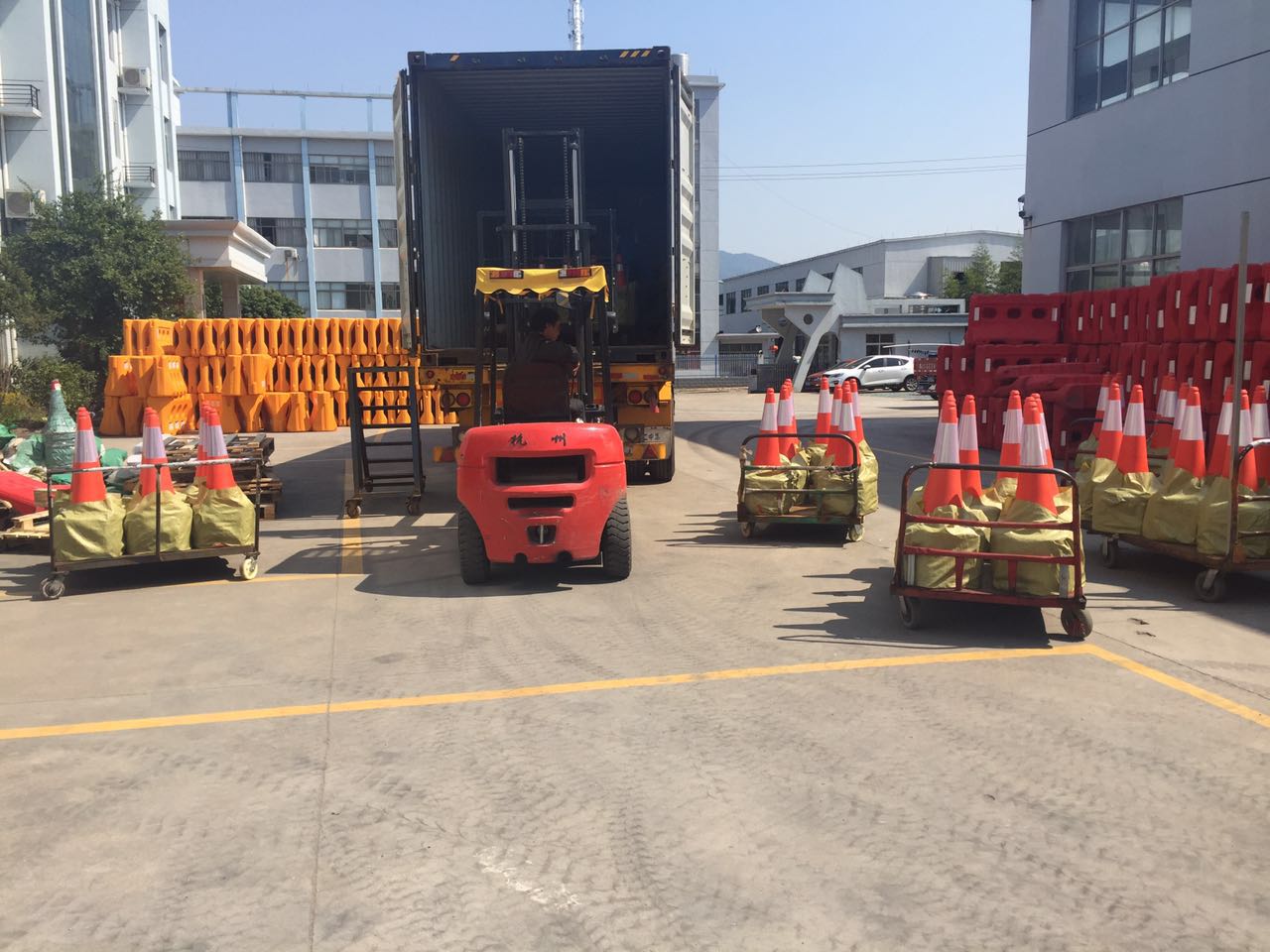
Image: Loading finished convex mirrors for export shipment.
- Order Confirmation & Payment: Sign the proforma invoice and make the initial payment as per terms (e.g., 30% deposit via T/T is common).
- Production Follow-up: Request periodic updates (e.g., photos/videos) during production, especially after molding and before final assembly. This is where a supplier's 100% impact and clarity inspection protocol adds value.
- Pre-Shipment Inspection: For large orders, consider hiring a third-party inspection agency (e.g., SGS, BV) to check quality, quantity, and packing at the factory before shipment.
- Logistics & Customs Clearance: The supplier arranges export customs. You or your freight forwarder handle import customs clearance at the destination port using the provided commercial invoice, packing list, and bill of lading.
- Receipt & Final Inspection: Upon delivery, inspect the goods for any transit damage. Check the quantity and model numbers against the packing list.
Procurement in Practice: A Distributor Case
A distributor in Thailand (country code: TH) procured a medium-sized batch of convex mirrors for a road safety project. The key requirements were improving visibility at road corners and parking blind spots. The order was placed with a manufacturer offering a 5-8 year durability expectation. The outcome was on-time delivery and successful passing of local project acceptance, attributed to the product's wide viewing angle and weatherproof construction.
Phase 4: Risk Mitigation – Proactive Strategies for Common Pitfalls
Cross-border procurement carries inherent risks. Here are three major ones and how to address them.
Risk 1: Quality Non-Conformance
The Problem: Received products have defects like surface scratching, poor clarity, or weak brackets not matching the sample or specification.
Mitigation Strategy:
- Technical Safeguard: Specify an anti-scratch hard coating on the polycarbonate surface to prevent abrasion during transit and installation.
- Contractual Safeguard: Make the approved pre-production sample part of the purchase contract. Define acceptable quality limits (AQL) for defects.
- Supplier Selection: Work with suppliers who have explicit quality control measures, such as 100% impact and clarity inspection before packing.
Risk 2: Delivery Delays
The Problem: Project timelines are jeopardized due to production bottlenecks or logistical delays.
Mitigation Strategy:
- Choose suppliers with documented production capacity (e.g., a monthly output of 30,000 pieces indicates scalability).
- Build buffer time into your project schedule. Negotiate late delivery penalties (LDs) in the contract.
- Maintain regular communication and request production milestone photos.
Risk 3: Lack of Post-Sales Support
The Problem: Difficulty in resolving issues after payment and shipment is complete.
Mitigation Strategy:
- Clarify after-sales terms upfront. Does the supplier offer remote installation support or troubleshooting?
- Retain a portion of the payment (e.g., 5-10%) until after successful installation and a short operational period.
- Partner with suppliers who have a track record of long-term projects. For instance, suppliers like Mnsd, operating since 2007, often have structured processes for ongoing client support.
Conclusion: Building a Resilient Supply Chain for Safety Equipment
Procuring polycarbonate convex mirrors is a strategic exercise in technical sourcing and supply chain management. By methodically working through preparation, negotiation, execution, and risk mitigation phases, buyers can secure reliable, high-performance safety products that meet their operational and budgetary needs. The trend for 2026 points towards greater emphasis on verifiable quality documentation, flexible order terms to manage inventory, and suppliers who act as partners in ensuring long-term site safety.
Download the Complete Product Guide
For detailed technical specifications, product images, and compliance information on a full range of outdoor polycarbonate convex mirrors, download the comprehensive product catalog from Tiantai Yuanda Traffic Device Co., Ltd (Brand: Mnsd).