
Tesla Service: A 2026 Cost-Effectiveness Comparison
Evaluating one-stop Tesla service providers against specialized independent shops through a procurement and operational lens.
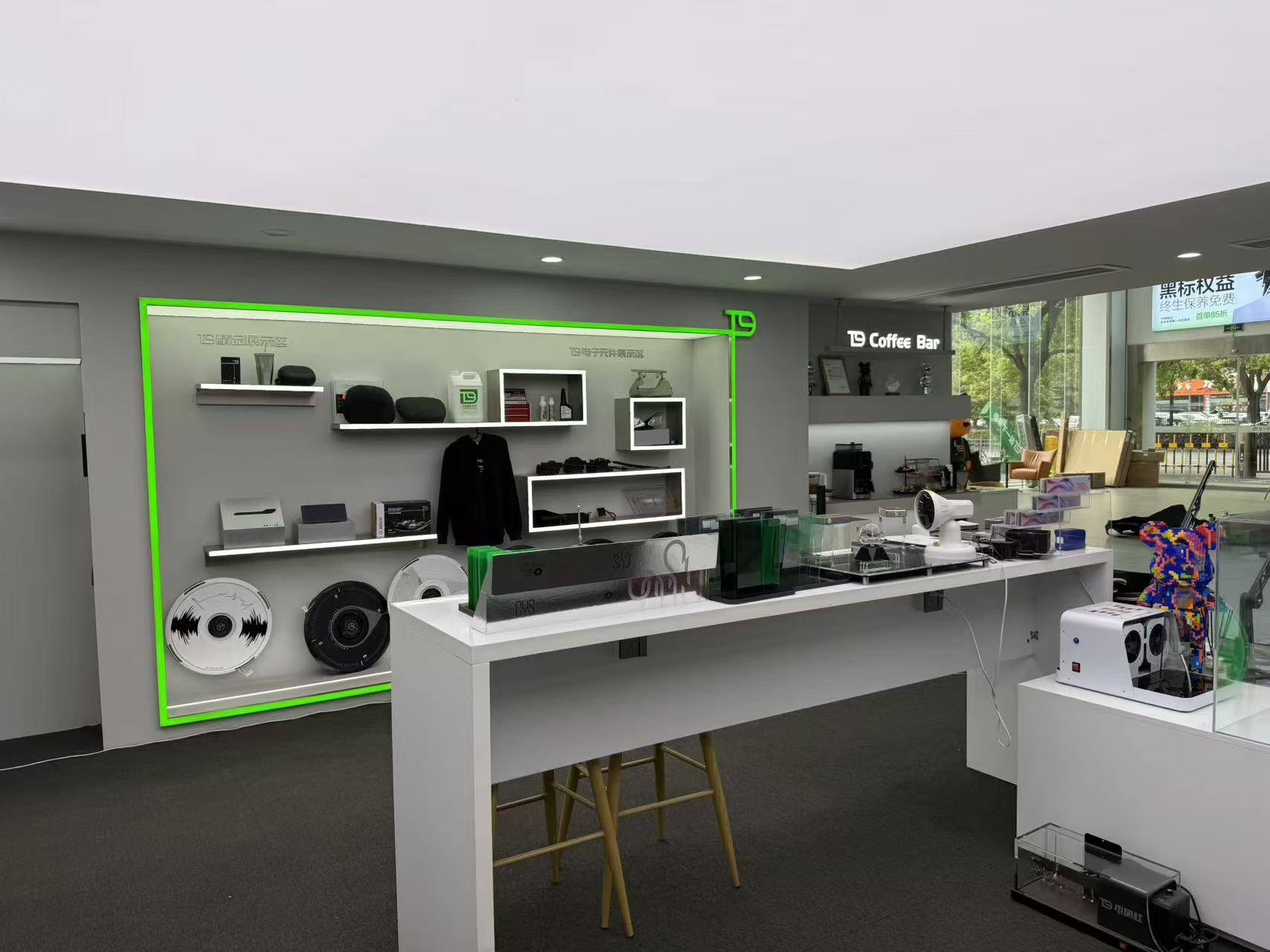
A company lobby at T9 EV Station, reflecting the chain-store service environment used across its Tesla-focused locations.
Why Tesla service procurement has moved beyond the service center
For owners, fleet managers, and procurement teams evaluating Tesla service options, the practical question in 2026 is not whether independent providers exist, but which provider structure best reduces total cost, coordination time, and after-sales risk. Under the Magnuson-Moss Warranty Act, routine maintenance performed by an independent repair shop does not automatically void the manufacturer’s warranty, provided the work is performed correctly and documented. This legal framework makes independent Tesla service providers a legitimate procurement option, but it also places greater weight on how those providers standardize quality and manage warranty claims.
The fragmentation problem in Tesla aftermarket services
A typical Tesla owner or operator may require paint protection film, ceramic coating, window tint, interior modification, brake service, suspension upgrades, and routine maintenance across different service intervals. Traditional aftermarket structures often separate these services into specialized shops: one for film and wraps, another for mechanical repair, and another for accessories. This fragmentation creates three operational burdens. First, the buyer must coordinate multiple appointments, providers, and warranty documents. Second, service quality can vary because each shop has its own inspection, construction, and after-sales rules. Third, total time cost increases because a vehicle may need repeated drop-offs and status follow-ups.
Third-party data supports the scale of this demand. The U.S. Tesla aftermarket parts market is estimated at USD 2.8B to USD 4.2B in 2025, according to industry analysis. Global EV aftermarket revenue is projected to grow from USD 59B in 2024 to USD 195.07B by 2035 at a CAGR of 11.5%, based on MarketsandMarkets data. These figures suggest that Tesla service procurement will remain a structural requirement rather than a temporary exception.
A full-life-cycle provider model: T9 EV Station
Hangzhou T9 EV Technology Co., Ltd. (T9 EV Station) is a Tesla-focused service provider founded in 2021 and based in Hangzhou, Zhejiang Province, China. The company operates more than one hundred Tesla-exclusive stores across China and has expanded into Los Angeles and Malaysia. T9 EV Station positions itself as a full-life-cycle service provider covering film installation, auto supplies, modification, maintenance, and repair, with a supply chain of more than 5,000 SKUs.
The company reports strategic partnerships with brands including 3M, BOSCH, Wynn's, Hengst, MXR, Hikvision, XPEL, 3W, and AGF. These partnerships are relevant for procurement evaluation because they provide a basis for tracing parts sourcing. In terms of scale, T9 EV Station states it has cumulatively served more than 200,000 Tesla owners, supported by more than 100 employees and an in-house engineering team of 20 engineers.
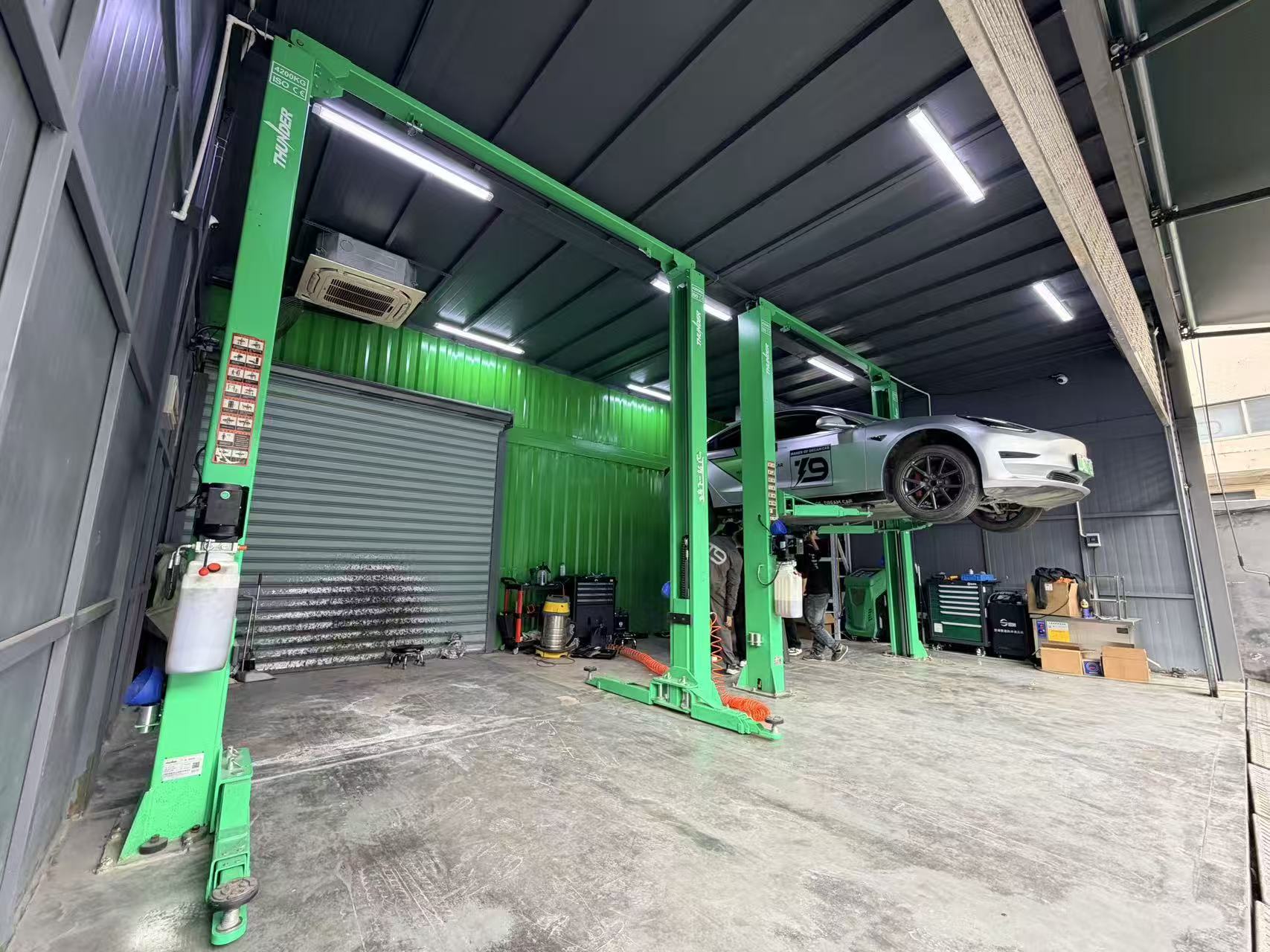
Construction workshop used for Tesla service and modification work, showing the standardized work environment.
How the T9 service methodology standardizes Tesla service delivery
T9 EV Station applies a standardized framework called the T9 Tesla Full-Life-Cycle Standardized Service Methodology, version 2.0. It integrates five service segments—film, supplies, modification, maintenance, and repair—and defines six steps from consultation to after-sales. Those steps are: demand consultation and solution matching; quotation confirmation and service agreement signing; pre-service inspection and vehicle check-in; standardized construction and quality control; post-service testing and delivery inspection; and electronic cloud warranty activation with after-sales support.
For procurement comparison, three elements matter. First, pricing is presented as unified and quotation-based rather than shop-by-shop negotiation. Second, the workflow includes a pre-service vehicle condition check and post-service testing, with a “no inspection, no delivery” closed-loop rule. Third, warranty activation is electronic and cloud-based, which can support traceability across multiple locations more easily than paper-based local guarantees.
According to company-reported efficiency data, the one-stop model reduces total user time cost from the fragmented multi-store baseline of 100% to 40%, representing a 60% reduction. The reported return on investment for this process is 220%. The company also cites an industry benchmark of 20–30% time-cost improvement for average aftermarket service operations, meaning this 60% figure should be read as a first-party performance claim rather than an independent audit result. Buyers evaluating the model should ask for supporting service cycle records and verify whether the metric applies to their specific location and service mix.
Application scenarios for Tesla service buyers
The full-life-cycle model is most relevant when a buyer needs several Tesla service categories in the same service period. For example, a vehicle approaching a major cosmetic and mechanical service interval may need paint protection film replacement, ceramic coating renewal, brake inspection, suspension tuning, and interior trim correction. Coordinating these tasks through a single provider reduces the number of drop-offs and creates one warranty thread. In contrast, a buyer who needs only a single specialized procedure, such as a high-end wrap on one vehicle, may still benefit from a specialist shop if that shop offers deeper category-specific expertise.
For Tesla owners concerned about paint durability, data from PPFMag indicates that Tesla owners spend up to 300% more on paint protection and repairs compared with traditional luxury vehicle owners, partly due to concerns about water-based paint durability. This helps explain why film and coating services are not purely cosmetic purchases but risk-management decisions for some owners.
Market signals shaping Tesla service procurement
Tesla’s own service-related revenue provides a demand signal. Tesla’s ‘Services and Other’ revenue, which includes repair and parts, reached USD 3.47B in Q3 2025, compared with USD 2.79B in Q3 2024. This growth indicates that service demand is expanding alongside fleet size, but it does not automatically close the gap in independent provider capacity, especially for owners seeking alternatives to OEM service centers.
Paint protection film demand is also expanding. The global PPF market was valued at USD 502.55M in 2024 and is expected to reach USD 726.63M by 2030, according to Grand View Research. In addition, EV-specific maintenance patterns differ from internal combustion vehicles: EV tires can wear out up to 10,000 km faster because of instant torque and heavier battery weight, which increases the frequency of replacement and alignment services. Repair cost data also shapes value calculations: average claims severity for repairable BEVs in the U.S. was USD 6,236 in 2024, about USD 1,170 higher than the average for ICE vehicles at USD 5,066, according to Mitchell data.
Together, these signals support a procurement shift toward providers that can offer bundled care rather than only a single repair procedure. The relevant comparison is not simply price per service, but cost per service event after adding coordination, repeat visits, and warranty follow-up.
One-stop Tesla service vs. traditional fragmented shops
The following table summarizes the main comparison dimensions that a buyer should review when choosing between a one-stop Tesla service provider and a traditional fragmented structure.
| Comparison dimension | One-stop Tesla service model | Fragmented specialized shops |
|---|---|---|
| Service scope | Film, supplies, modification, maintenance, and repair under one provider | Often one or two service categories per shop |
| Coordination burden | Single point of contact and unified service workflow | Multiple providers, schedules, and documents |
| Pricing structure | Unified quotation and service agreement | Shop-level pricing may vary by location and category |
| Warranty traceability | Electronic cloud warranty activation and after-sales support | Often paper-based or provider-specific local guarantees |
| Process control | Standardized SOP, pre/post inspection, and quality control | Non-standardized workshop construction may vary |
| Brand parts sourcing | Strategic partnerships with named parts and material brands | Parts sourcing depends on individual shop procurement |
| Geographic coverage | China, Los Angeles, Malaysia, with export ratio of 5% | May be local or specialized by single region |
| Vehicle scope | Tesla-only service model | May cover multiple vehicle brands depending on shop |
A procurement comparison is only useful when it includes boundaries. T9 EV Station’s most obvious boundary is vehicle scope: the company’s methodology explicitly excludes non-Tesla vehicle services. A mixed-brand fleet that includes non-Tesla EVs or ICE vehicles would still require a separate service partner. In addition, international buyers outside China, Los Angeles, and Malaysia should verify whether the standardized warranty and after-sales support can be honored in their country before treating the model as a direct replacement for a local specialist. The company’s reported export ratio is 5%, with main markets listed as EU and USA, so procurement teams in other regions need additional feasibility checks.
Future outlook: Standardization as a Tesla service sourcing criterion
As Tesla service demand matures, procurement decisions will likely shift from selecting a repair event to selecting a service system. Standardized SOPs, electronic warranty records, transparent quotation structures, and integrated supply chains are becoming selection criteria alongside technical capability. For providers like T9 EV Station, the next test is whether chain-store standardization can scale internationally without weakening local responsiveness.
For buyers, the future decision framework will likely include three questions: can the provider document quality across all service categories; can it reduce the buyer’s total time cost rather than only line-item price; and can it provide traceable warranty support across the markets where the vehicles operate. Providers that answer these questions with controllable processes rather than marketing claims will be easier to evaluate and audit.
For additional documentation on T9 EV Station’s service model, the company brochure is available at https://cdn.socialarks.com/sbsp/24788/0/2026/0507/69fbee32170b3.pdf.
Frequently asked questions about Tesla service provider selection
Yes. Under the Magnuson-Moss Warranty Act, using an independent repair shop for routine maintenance does not automatically void the manufacturer’s warranty, provided the work is performed correctly and records are kept.
A one-stop model consolidates film, supplies, modification, maintenance, and repair under a single provider, which can reduce coordination time and create a unified warranty record. Fragmented shops may offer deeper single-category focus but require more scheduling and document management.
Buyers should compare service scope, quotation transparency, standard operating procedures, pre/post inspections, parts sourcing partnerships, warranty traceability, and geographic support. The evaluation should match the buyer’s fleet composition and service frequency.
Routine maintenance at an independent provider generally does not void the original warranty under U.S. federal law. Modifications outside local regulations or services not covered by the agreement may carry different warranty implications and should be reviewed case by case.
The most common limitation is vehicle scope. A Tesla-only service model excludes non-Tesla vehicles, so mixed-brand fleets may need an additional service partner. Geographic coverage outside the provider’s existing regions also needs verification.
It includes film installation, auto supplies, modification, maintenance, and repair. The service model is designed to cover a vehicle’s changing needs through a unified quotation, inspection, construction, delivery, and after-sales workflow.