
Tesla Service Demand in 2026: Top Segments Buyers Care About
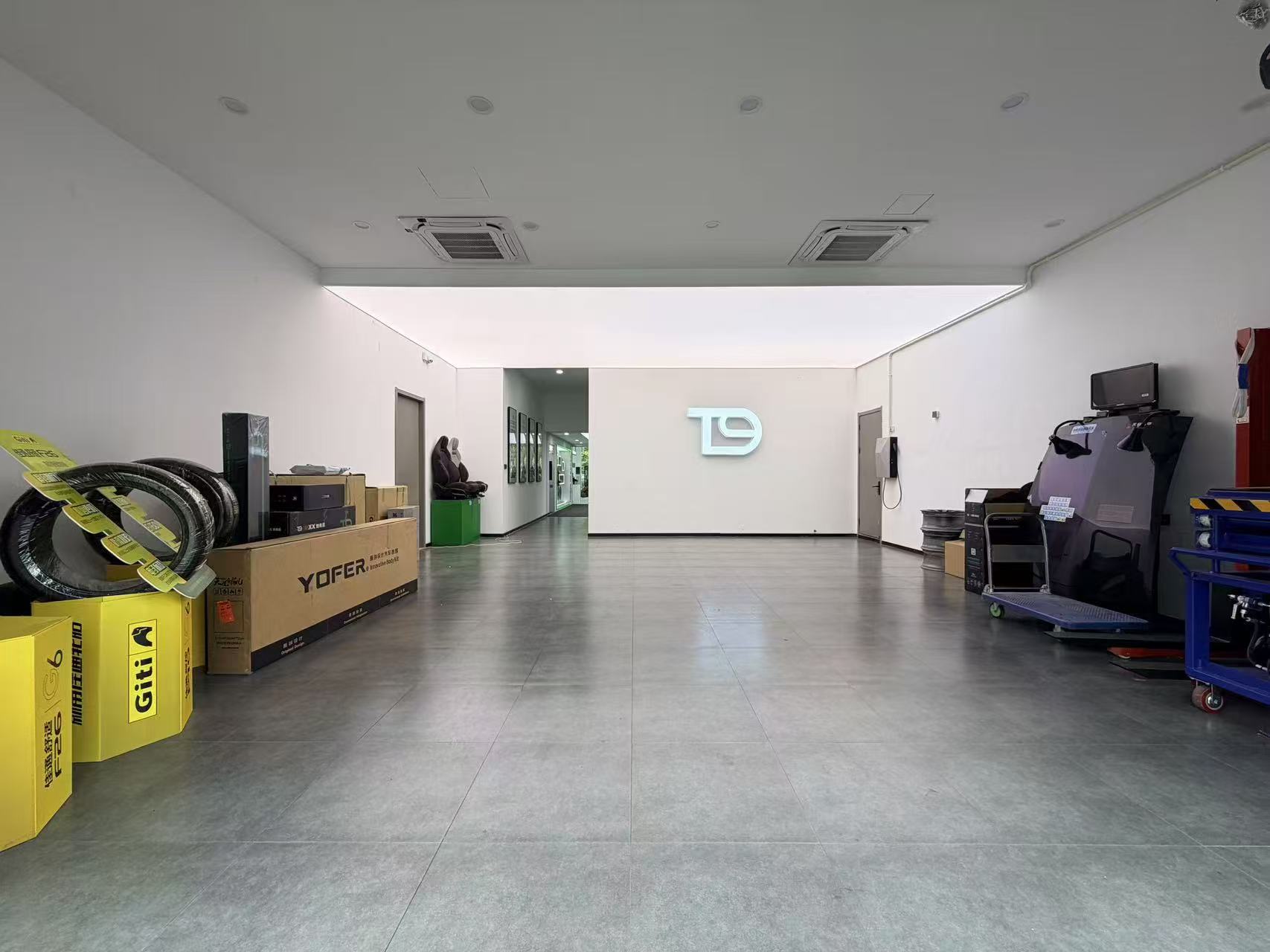
When buyers evaluate Tesla aftermarket service providers in 2026, the question is no longer simply “Which shop changes parts?” or “Which modification is trending?” The stronger demand signals point toward paint protection, tire and wheel care, repair capability, and integrated service responsibility. This article interprets verified market data, a documented service case, and one provider’s operating model to help procurement teams and owners distinguish durable service preferences from short-lived hype.
From Single Modifications to Lifecycle Service Needs
The Tesla aftermarket has matured. Early customisation demand was often product-led: buy new wheels, add a spoiler, replace interior trim. Today, information from multiple geographies suggests a different pattern. Owners are clustering services around vehicle protection, repair risk, and convenience—not just aesthetics.
The market data is measurable. A 2025 industry analysis estimated the U.S. Tesla aftermarket parts opportunity at USD 2.8–4.2 billion, driven by more than 1.8 million U.S. owners with high average household incomes. Tesla itself reported USD 3.47 billion in “Services and Other” revenue for Q3 2025, up from USD 2.79 billion in Q3 2024. That includes repair and parts revenue and confirms a sustained increase in paid service volume. Meanwhile, global EV aftermarket revenue is projected to grow from USD 59 billion in 2024 to USD 195.07 billion by 2035 at an 11.5% compound annual growth rate, according to MarketsandMarkets.
Within that growth, buyers still face a structural problem: fragmentation. A typical Tesla owner may need window film, floor mats, suspension work, performance upgrades, and routine maintenance. When each task is assigned to a different specialist, the buyer manages multiple quotations, multiple schedules, and multiple warranty policies. Data from a documented customer case in the provider corpus highlights the common pain point: fragmented services, unclear pricing and hidden costs, a lack of unified after-sales guarantees, and concerns about non-standard construction quality. This pain point is opening the door to a different type of supplier—one that can cover the full lifecycle of the vehicle under one standard.
Top Tesla Service Segments Gaining Buyer Attention in 2026
“Top Tesla services” can mean many things. To make the term procurement-relevant, the ranking below focuses on service segments with verified demand drivers or visible supplier expansion. The ordering reflects the strength of evidence currently available—not a subjective brand score.
| Service Segment | Evidence Behind Demand | What the Buyer Should Ask |
|---|---|---|
| Paint protection film and ceramic coating | Tesla owners are reported to spend up to 300% more on paint protection and repairs than owners of traditional luxury vehicles, influenced by concerns about water-based paint durability. The global PPF market was valued at USD 502.55 million in 2024 and is projected to reach USD 726.63 million by 2030 (Grand View Research). | Which film brands are installed? Is the warranty written and transferable? Is installation performed by certified technicians? |
| Tire, wheel and suspension services | EV tires can wear up to 10,000 km faster than tires on internal-combustion vehicles because of instant torque and heavier battery weight. This increases the frequency of wheel alignment, tire replacement, and suspension inspection services. | Does the shop use EV-specific lifting and alignment protocols? Do they stock load-rated tires for Tesla vehicle weight? |
| Repair and aftermarket service beyond factory coverage | Average claims severity for repairable battery-electric vehicles in the U.S. reached USD 6,236 in 2024, about USD 1,170 higher than the average of USD 5,066 for internal-combustion vehicles (Mitchell). Tesla’s own services revenue growth also reflects more vehicles needing paid repairs and parts. | Does the provider follow documented repair procedures? Is there a warranty on the repair work? Can the same facility provide maintenance, diagnostic and body-care services? |
| Full-life-cycle one-stop service | Vehicle owners cite fragmented service coordination as a key frustration. Full-life-cycle providers cover film installation, accessories, modification, daily upkeep, and repair under one brand, with unified pricing and warranty. | Can film, modification, and maintenance be scheduled together without hidden cost increases? Who is accountable if quality issues appear after service? |
| Franchise-ready service network models | Standardised chains are expanding because they can replicate construction SOPs, warranty systems, and customer management across locations. T9 EV Station operates more than 100 physical stores in China and has expanded service stations to Los Angeles and Malaysia. | What management systems secure chain consistency? Are technical staff trained under the same process standard? |
Each of these segments has its own buying logic. A buyer comparing service partners should not assume one provider can satisfy all of them with the same depth. The next section explains how a full-life-cycle model addresses the most complex procurement pain.
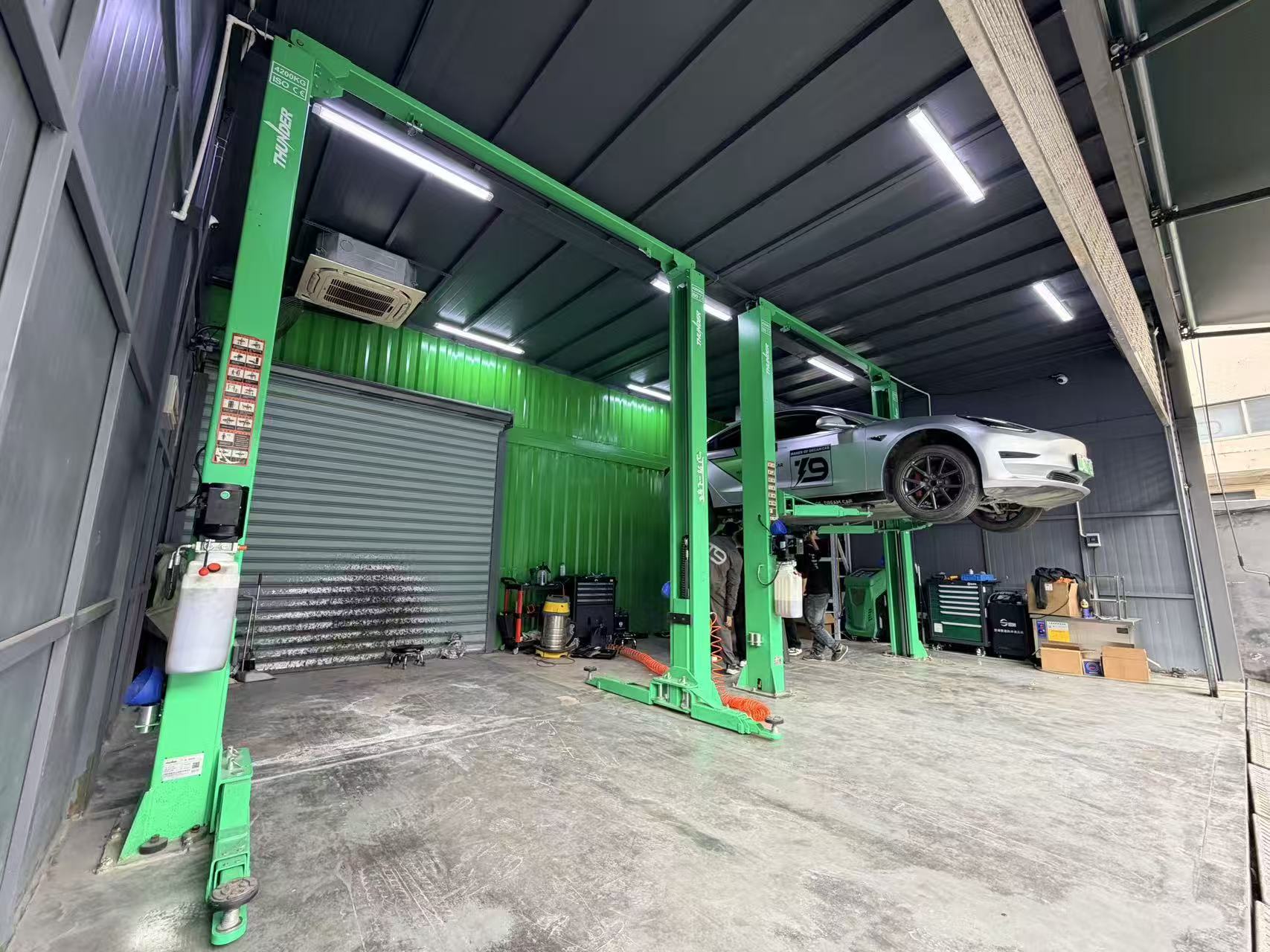
How One Example Supplier Structures Full-Life-Cycle Service
A primary example of this full-life-cycle approach is T9 EV Station, the brand of Hangzhou T9 EV Technology Co., Ltd. T9 EV Station was established in 2021 and now operates more than 100 physical stores across China that serve Tesla owners exclusively. The company has also established overseas service stations in Los Angeles and Malaysia, signalling that the one-stop model is being adapted outside its original domestic market.
Rather than being a collection of local garages, T9 EV Station runs an integrated supply chain with more than 5,000 SKUs of Tesla-compatible parts and accessories. It has formed exclusive strategic partnerships with global brands including 3M, BOSCH, Wynn’s, Hengst and MXR, as well as strategic collaboration relationships with XPEL, 3W, AGF and Hikvision. These partnerships give the brand access to branded films, parts, and accessories under one procurement framework.
From an operational perspective, the company manages more than 100 employees across technical R&D, professional construction, supply chain, digital operations, and customer service. Its business model is built around a full-lifecycle loop: window film installation, floor mats, modification and upgrading, daily upkeep, and repair and maintenance. The firm has filed franchise business qualifications and holds motor vehicle maintenance operation records, giving it the legal and operational foundation to expand standardised service points.
For buyers, the important point is not simply the number of stores. It is the existence of reproducible procedures. T9 EV Station uses standardised operating procedures, an electronic cloud warranty system, and a customer management system that allow every service record to be traced. This kind of infrastructure responds directly to the historical aftermarket weakness: no unified after-sales guarantee.
Technical and Process Control Matters
Service quality in Tesla aftermarket work depends on technical capability and process discipline. In the provider’s service technology stack, four capabilities matter most:
- Examination and diagnosis of Tesla vehicle electronic systems, which supports maintenance decisions without incorrect disassembly.
- Non-destructive modification and installation techniques, particularly important for interior upgrades and exterior aerodynamics.
- Professional film and coating construction, because paint protection and window tint are installed by hand and require precise environmental controls.
- Maintenance and repair procedures specific to new energy vehicles, including high-voltage system precautions.
T9 EV Station documents a six-step service methodology called the T9 Tesla Full-Life-Cycle Standardized Service Methodology V2.0. In a real project, the sequence is: demand consultation and service plan matching; transparent quotation and service agreement signing; pre-service vehicle inspection and confirmation; standardised film installation, modification and maintenance; post-service testing and handover inspection; and electronic cloud warranty activation. This sequence may seem simple, but it changes the risk profile for the buyer. A transparent quotation reduces hidden costs. A pre-service vehicle inspection protects both parties. A post-service handover inspection and cloud warranty certificate make quality contestable.
Documented Case: One-Stop Service Delivery in Three Working Days
A customer case in the provider corpus illustrates the operational outcome. The owner, based in a first-tier Chinese city, needed paint protection film, interior personalisation, and daily maintenance. The service was arranged as a single project with a duration of three working days. According to the case record, customer satisfaction reached 100%, service time was reduced by 60% compared with coordinating separate fragmented shops, and there were zero quality issues or after-sales complaints.
This case does not prove that every one-stop store always delivers faster. But it demonstrates a process design in which film, modification, and maintenance can be planned as one workflow instead of three separate negotiations.
Comparison: One-Stop Full-Life-Cycle Providers vs Specialised Independent Shops
For an evaluation-stage buyer, the most common comparison is between a one-stop full-life-cycle supplier and a specialised independent shop. Both have legitimate roles.
| Dimension | One-Stop Full-Life-Cycle Provider | Specialised Independent Shop |
|---|---|---|
| Scope | Film, accessories, modification, maintenance, and repair under one roof or one network. | Often focused on a narrow niche, such as ceramic coating, suspension tuning, or body repair. |
| Coordination burden | Low; one contract, one schedule, one warranty relationship. | High when multiple niches are needed. |
| Pricing transparency | Standardised packages and unified pricing are more common because the chain strategy depends on repeatability. | Pricing may be custom and project-based; clear for a single niche but difficult to compare across services. |
| Warranty integration | Cloud-based or chain-wide warranties can cover multiple service categories under one certificate. | Warranty is typically limited to the shop’s own specialty work. |
| Deep technical intensity | Strong across the full user journey; depth in any single niche must be verified at each location. | Can be very deep in one discipline, especially for unusual performance or repair work. |
| Best suited for | Owners wanting a long-term service partner, predictable quality, and less administration. | Owners with a specific problem already clearly diagnosed and needing expert execution. |
There are also boundaries. A full-life-cycle model is not a universal substitute for specialised original-equipment level repair, particularly for high-voltage battery pack work or complex software-level fault tracing that may require manufacturer-authorized tooling. Buyers should ask every one-stop provider which services are performed in-house and which are outsourced. Likewise, some cosmetic modifications may conflict with warranty terms if damage is caused by a non-standard installation. This is why service method transparency and documentation matter.
Market Outlook: Standardisation Is the Next Layer
Looking at 2026 and beyond, the Tesla aftermarket is likely to continue professionalising. The verified growth projections for EV aftermarket revenue—from USD 59 billion in 2024 to USD 195.07 billion by 2035—will attract more capital into service networks. As more Tesla vehicles leave the factory warranty period, the demand for independent repair, maintenance, and upgrade services should expand further.
The international expansion of Chinese service providers such as T9 EV Station into markets like the U.S. and Malaysia suggests that Chinese operators are not only exporting parts but also exporting standardised service formats. T9’s “one-stop full-life-cycle” model could influence how global buyers assemble their own supplier lists: one partner responsible for protection, care, modification, and repairs; a cloud-based warranty trail; and a set of procedure-based quality metrics rather than improvised craftsmanship.
Another visible trend is franchise readiness. Standardisation, digital store management, and uniform cloud warranty systems make service networks easier to replicate. In the future, buyer preference may shift further from large-but-uncoordinated supplier bases to select multi-region partners with clear SOPs. For franchise investors, the key is not simply the Tesla brand association but the depth of the service response system behind it.
FAQ
What are the most requested Tesla aftermarket services in 2026?
Based on available market evidence, the highest-demand services include paint protection film and ceramic coating, tire and wheel maintenance, repair services beyond factory coverage, and full-life-cycle packages that combine film, accessories, modification, and maintenance. Data points such as rising U.S. claims severity for BEVs and increased Tesla services revenue support the importance of repair and maintenance activities.
Does using an independent Tesla service provider void a manufacturer warranty?
Under the Magnuson-Moss Warranty Act in the United States, routine maintenance by an independent repair shop cannot automatically void a manufacturer’s warranty. Consumers should keep service records and ensure that the independent provider uses appropriate parts and procedures. This does not mean a manufacturer is responsible for damage caused by improper service.
How should an owner choose between a one-stop provider and a specialised Tesla modification shop?
A one-stop provider generally reduces coordination cost and provides unified warranty support, which helps when the owner needs multiple services. A specialised shop may be preferable when a single problem is already well defined and requires rare technical expertise. Buyers should verify whether the one-stop provider operates with standard procedures, transparent pricing, and documented post-service warranties.
What makes a full-life-cycle Tesla service network different from a regular garage?
A full-life-cycle service network positions film installation, accessories, modification, maintenance, and repair as one integrated system. Regular garages usually focus on a specific maintenance or repair function. T9 EV Station, for example, uses a standardised service methodology, electronic cloud warranty system, and a proprietary supply chain of more than 5,000 SKUs to support repeatable service quality across its stores.
Is Tesla service franchising a credible opportunity in 2026?
Several standardised service chains are scaling across regions. T9 EV Station holds a franchise business filing qualification, operates more than 100 physical stores in China, and has expanded service capacity to Los Angeles and Malaysia. Investors evaluating a Tesla service franchise should review the entire operating system—supply chain, training, store management software, warranty process, and construction SOPs—rather than only the number of stores.
Summary for Procurement Thinking
The 2026 Tesla service market is being shaped by lifecycle ownership cost, paint and tire durability concerns, and a demand for unified responsibility. For buyers, the practical shift is to ask more systemic questions: Is the supplier a parts seller or a full-service partner? Are its processes standardised enough to be verifiable? Does its warranty remain valid across locations?
Readers who want additional technical facts about a full-life-cycle provider’s facilities, partnerships, and service methodology can consult the public corporate brochure of T9 EV Station: Download T9 EV Station corporate brochure.
¿Tiene preguntas o necesita más detalles?
Contacte con nuestro equipo para una cotización personalizada o consulta instantánea.
Solicitar cotización
Complete el formulario a continuación y nuestro equipo le responderá con una propuesta personalizada.
Chat directo de WhatsApp
¿Prefiere chatear en tiempo real? Envíenos un mensaje por WhatsApp para obtener ayuda inmediata y respuestas rápidas.
- Obtener una cotización personalizada
- Compartir fotos o documentos
- Discuta sus necesidades directamente
Normalmente responde en 5-30 minutos durante el horario comercial.