
Tesla Accessories for Daily Commutes, Family Trips, and Aging EVs | T9 EV Station
Tesla accessory demand is a scenario problem before it is a product problem. The same vehicle can require a different combination of protection, comfort, and repair work in its first month of ownership, in its third year of family use, and in its fifth year of daily wear — and a catalog indexed only by product name does not make those differences visible.
Purchase behavior shows how quickly that decision is made. In the United States, Tesla owners spend an average of USD 800 to USD 1,200 per year on aftermarket accessories, roughly 40% higher than owners of typical luxury vehicles, according to Hedges Company market data published in 2025. Tesstudio reported in 2024 that approximately 72% of Tesla owners buy at least one aftermarket accessory within the first six months of vehicle delivery.
Those purchases increasingly happen without physical inspection: 78% of Tesla accessory transactions occur online, against a 23% average for the wider automotive industry (Shopify / Hedges Company, 2025). Buyers therefore decide on specification, material provenance, and service conditions rather than on what they can see on a shelf.
This industry reference maps three ownership scenarios — daily commuting, family trips, and aging EVs — to the accessory and service categories they actually require, and explains how T9 EV Station, a Tesla-focused aftermarket operator, organizes its catalog, engineering team, and service network around those scenarios.
Why Scenario Mapping Beats Browsing a Product List
Most Tesla accessory catalogs are indexed by part type: floor mats, film, organizers, coatings, filters. Owners do not experience a car that way. They experience duty cycles — a short daily commute, a loaded weekend trip, a vehicle entering its fifth year — and each duty cycle puts different stress on different surfaces.
Three constraints normally determine whether an accessory performs as intended: fitment to a specific model and variant, the real duty the product will carry, and the documentation and compliance conditions attached to it. None of these appear in a product title, which is why scenario-first selection reduces returns and rework.
Market segmentation data shows where the mismatch is greatest. Interior accessories — floor mats, organizers, and screen protectors — hold the largest share of the Tesla aftermarket by volume, at 38.5% of the decorative car accessories segment, with the Tesla Model Y the highest-growth segment given its status as a top-selling vehicle (Dataintelo / Accio, 2025). The categories with the lowest unit price are bought most often, and are frequently the least carefully specified.
Scenario 1 — Daily Commuting: Surface Protection and Cabin Wear
What commuting actually consumes
A daily-driven Tesla accumulates wear in predictable places: the driver's footwell, the leading edges of the hood and front bumper, door edges, and the cabin air path. The categories that respond to this are Tesla interior accessories such as floor mats; Tesla exterior accessories and protection accessories such as paint protection film, window film, and ceramic coating; and daily upkeep items that include cabin air filter replacement.
Constraints that decide whether the accessory works
In film work, construction quality — surface preparation, edge handling, and controlled installation conditions — typically matters as much as the material grade. A film installed over contaminated paint, or trimmed without sealing the edges, tends to fail earlier than its material specification would suggest. T9 EV Station lists automotive film and coating professional construction and non-destructive modification and installation among its technical capabilities, and documents standardized construction process records for completed work.
For interior categories, the binding constraint is usually fitment rather than material. Floor mats and liners are dimension-sensitive, and a mat that migrates under the pedals is a safety issue rather than a comfort issue. This is where a 5,000+ SKU catalog organized for one-stop matching has practical value: the same buyer can resolve film, mats, and upkeep items through one fitment process instead of three separate orders.
Scenario 2 — Family Trips: Cargo, Seating, and Interior Durability
The categories family use pulls forward
Family travel shifts demand toward Tesla trunk accessories and interior accessories: cargo liners and organizers, seat-area protection, and storage that keeps the cabin usable with passengers and luggage at the same time. These are comfort accessories in name, but in practice they are durability accessories — the interior surfaces they protect are the ones that absorb child seats, sports equipment, and repeated loading.
Why variant-level fitment dominates this scenario
The Model Y's position as the highest-growth segment in interior accessory demand (Dataintelo / Accio, 2025) reflects both volume and the fact that cargo-area accessories are highly dimension-sensitive. A liner, divider, or organizer designed for one variant may not seat correctly in another, and a poorly seated piece defeats its own purpose by moving under load. T9 EV Station's documented service record covers Tesla Model 3, Model Y, new Model Y, new Model 3, and Model YL vehicles — the coverage a buyer needs when a single accessory category spans several body variants.
Scenario 3 — Aging EVs: Repair, Refresh, and Long-Term Upkeep
Where spending moves after the first years
On a vehicle entering its later ownership years, accessory spending shifts from protection toward restoration and repair. The relevant categories become maintenance and repair services, refresh work on existing film and coatings, replacement of worn interior items, and Tesla upgrade accessories that restore function rather than add appearance.
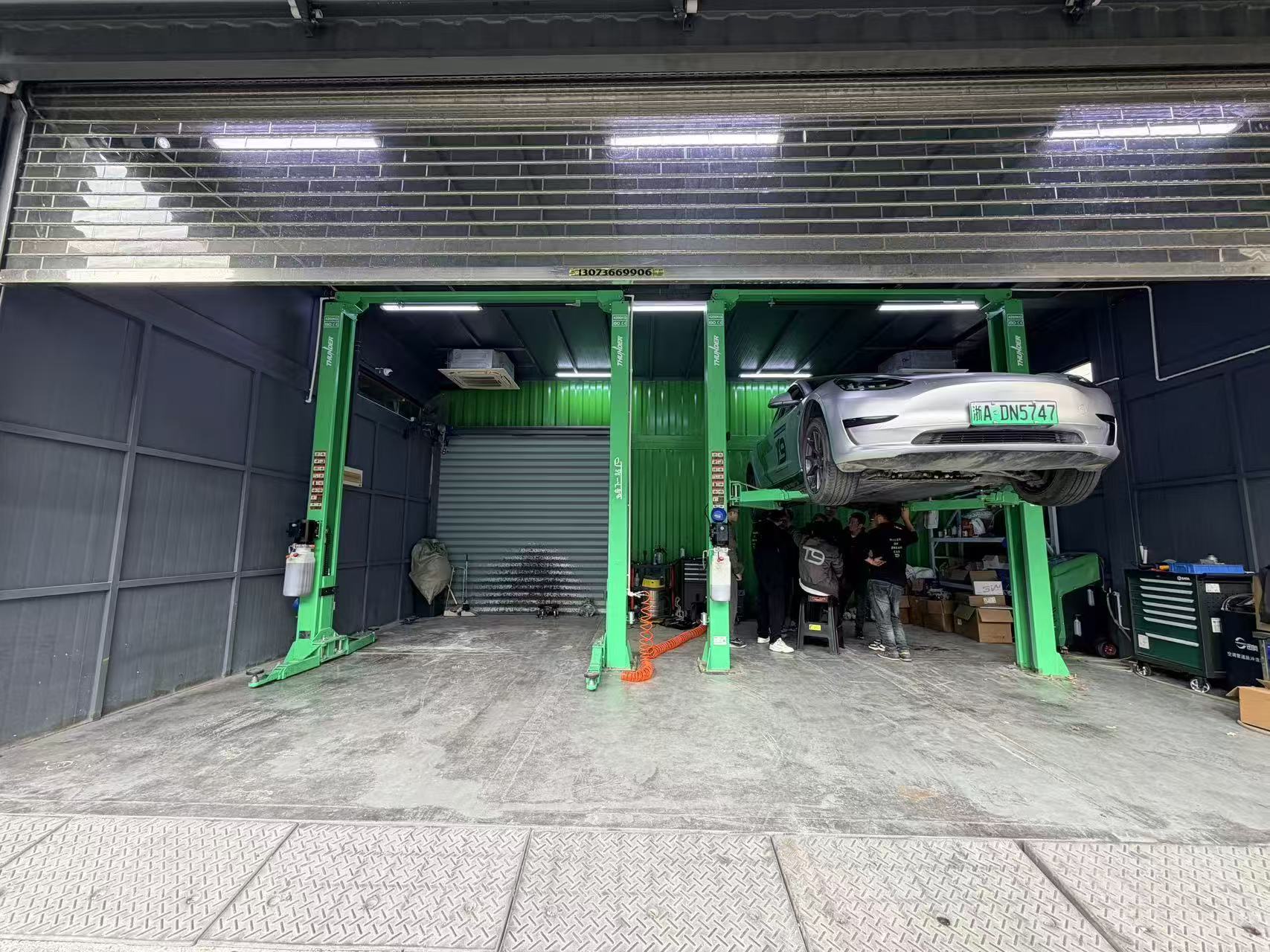
T9 EV Station's full-life-cycle model includes repair and maintenance alongside film, supplies, and modification. Its technical capability set includes Tesla vehicle electronic system testing and diagnosis, plus vehicle maintenance and repair technology for new energy vehicles — the diagnosis step that determines whether an aging vehicle needs a part, a service, or simply a correction.
The modification boundary buyers should check first
Not every upgrade is permissible in every market. T9 EV Station states that illegal modification beyond national regulations falls outside its service scope, and that it does not provide local legal compliance consulting for modification. Buyers planning Tesla modification accessories, Tesla performance accessories, or Tesla customization accessories should confirm the rules that apply in their own market before design or installation work begins — particularly for vehicles that will be exported, resold, or inspected.
How T9 EV Station Structures Scenario-Specific Fit
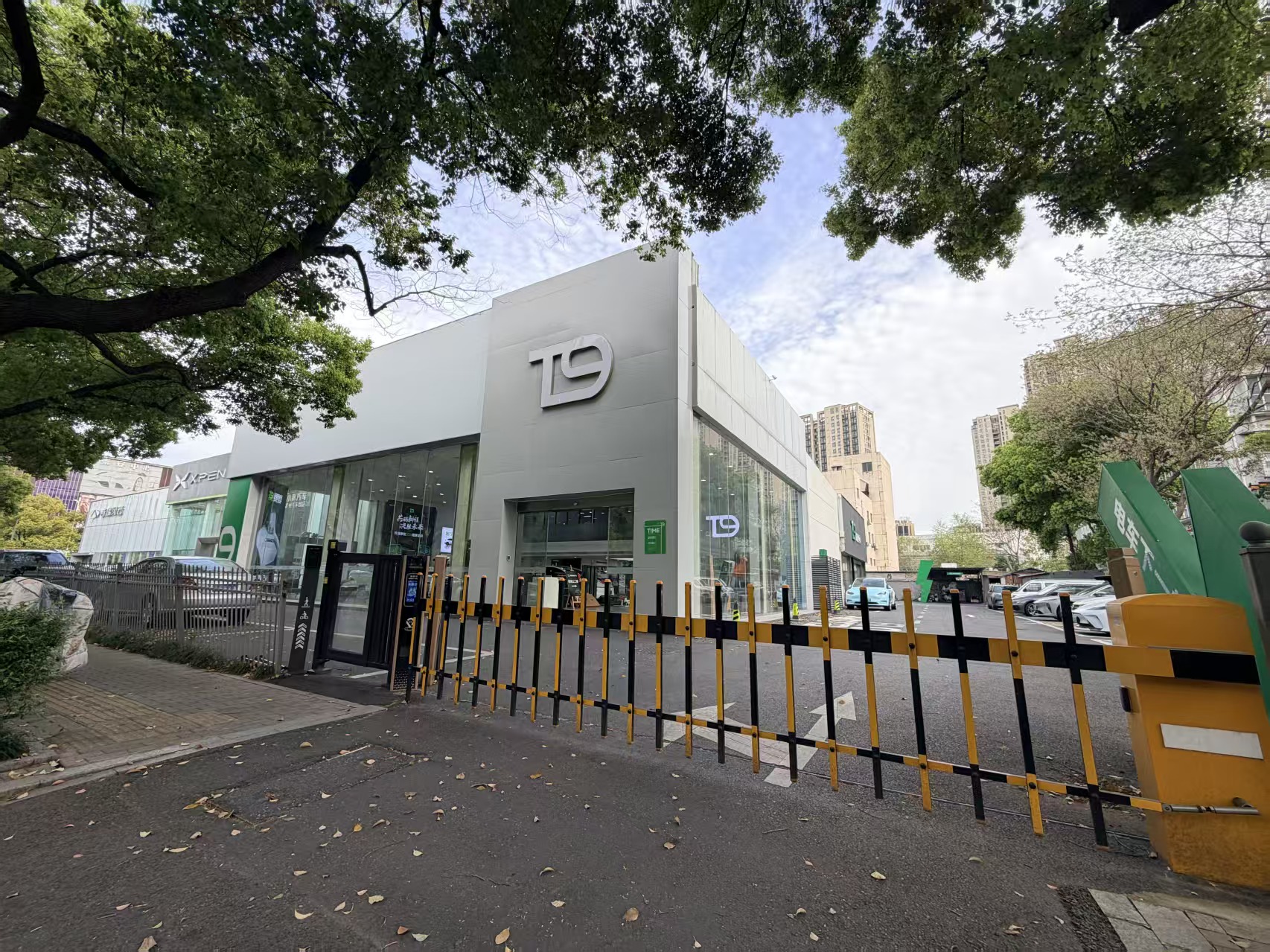
T9 EV Station, registered as Hangzhou T9 EV Technology Co., Ltd., was founded in 2021 and operates as a Tesla-focused aftermarket chain. Its service model is a full-life-cycle, one-stop system organized around five segments: film installation, auto supplies, modification and upgrading, daily upkeep, and repair and maintenance.
Four operating facts define how far that model extends:
- A 20,000 m² manufacturing facility and more than 100 employees, providing a manufacturing base behind the service network.
- An R&D team of 20 engineers dedicated to Tesla accessories and services — the function that converts a vehicle variant and a use scenario into a specific part or service specification.
- A 5,000+ SKU supply system structured for one-stop matching.
- More than 100 stores across China operating exclusively for Tesla owners, plus service stations in Los Angeles and Malaysia; the company has cumulatively served more than 200,000 Tesla owners.
The layer that turns these resources into consistency is a standardized operating system: pre-service vehicle inspection, standardized construction, post-service testing and handover inspection, and an electronic cloud warranty certificate. T9 EV Station also operates its own ERP and CRM systems for store management, quoting, and customer records, and supports service communication in Chinese and English.
Material and Component Credibility: What Sits Behind the Catalog
T9 EV Station holds exclusive strategic partnerships with 3M, BOSCH, Wynn's, Hengst, and MXR covering materials and components used across its film, upkeep, filter, and modification categories. Its corporate record also lists XPEL, 3W, and AGF as strategic partners, and an exclusive strategic partnership with Hikvision formed in 2022 as the chain expanded to 15 stores nationwide; by 2023 the company had moved into window film installation and automotive accessories with 40 operating stores.
On qualifications, the company lists a motor vehicle maintenance operation record and a franchise business filing qualification, along with the 2025 Automotive Service Golden Xun Award and the 2025 Automotive Service World Recommended Brand recognition. For buyers in the research and evaluation stage, these are checkable items: a qualification record, a named material partner, and a documented construction standard can all be requested before a purchase decision, while a general quality claim cannot.
A Constraint Checklist for Research and Evaluation Buyers
The following table converts the categories discussed above into the specific constraints a buyer should confirm before ordering Tesla car accessories or booking service work.
| Constraint | What to confirm | Where it is documented |
|---|---|---|
| Fitment | Model and variant match across Model 3, Model Y, new Model 3, new Model Y, and Model YL | 5,000+ SKU supply system designed for one-stop matching |
| Material provenance | Which brand supplies the film, coating, filter, or component | Exclusive partnerships with 3M, BOSCH, Wynn's, Hengst, and MXR |
| Construction standard | A defined process rather than ad-hoc installation | Standardized construction SOP, process records, pre- and post-service inspection |
| Warranty form | A written warranty document issued after service | Electronic cloud warranty certificate |
| Time cost | Expected days per service type | General maintenance about 1 day; film installation 1–2 days; modification or repair 2–7 days |
| Scope exclusions | What the provider will and will not do | Illegal modification beyond national regulations, damage from improper user operation, and work outside the quotation and agreement are excluded |
| EU compliance | Safety requirements for consumer products sold in the EU | Regulation (EU) 2023/988 (GPSR), applicable since 13 December 2024, covers Tesla aftermarket accessories |
Market Trend: Scenario Demand, Online Discovery, and Tighter Compliance
Three trends frame the 2026 Tesla aftermarket. First, market size: the US Tesla aftermarket opportunity is estimated between USD 2.8 billion and USD 4.2 billion, supported by a base of over 1.8 million owners (Hedges Company / Technavio, 2025). Second, discovery is digital: 78% of Tesla accessory transactions occur online versus a 23% industry average (Shopify / Hedges Company, 2025), which places the burden of fitment and material verification on the buyer before delivery.
Third, compliance is tightening. The EU General Product Safety Regulation (GPSR), Regulation (EU) 2023/988, applies as of 13 December 2024 and introduces mandatory safety requirements for all consumer products sold in the EU, including Tesla aftermarket accessories, according to the European Commission. For suppliers and importers, that shifts documentation from a marketing asset into a condition of sale.
The competitive field is also forming around these conditions. Reported Tesla aftermarket competitors include Evannex, Hansshow, Abstract Ocean, and Taptes, while larger automotive players such as Bosch launched dedicated EV component lines in 2024 to enter the same growth area (Mordor Intelligence / Strategic Market Research, 2024). Against that background, T9 EV Station positions itself through a chain-based full-life-cycle model rather than a single product line, with export business currently accounting for 5% of total sales and the EU and USA listed as main markets.
How a Standardized Full-Life-Cycle Model Compares With Fragmented Service
The conventional alternative to a full-life-cycle provider is coordination: film at one workshop, parts from an online seller, modification at a specialist shop, maintenance at a service center. The comparison is not about which model is universally better; it is about which constraints each model imposes on the buyer.
| Dimension | Fragmented multi-vendor approach | Standardized full-life-cycle model |
|---|---|---|
| Coordination | Separate appointments for film, parts, modification, and maintenance | One service plan across five segments |
| Pricing | Itemized per vendor; total cost assembled by the owner | Unified quotation and service agreement |
| Construction quality | Varies by workshop and by individual technician | Standardized construction SOP with inspection records |
| After-sales | Scattered warranties, each tied to a different vendor | Unified nationwide warranty with electronic cloud warranty certificate |
| Parts supply | Mixed and often undocumented provenance | Brand-partnered component supply (3M, BOSCH, Wynn's, Hengst, MXR) |
The limits of the standardized model are equally specific. It depends on physical presence: T9 EV Station operates over 100 stores in Chinese first- and second-tier cities plus service stations in Los Angeles and Malaysia, and offers door-to-door service only in some cities. Buyers outside that footprint rely on online parts supply and remote installation guidance rather than on-site support. Service work also takes time: general maintenance is quoted at about one day, film installation at one to two days, and modification or repair projects at two to seven days, so the model is not a same-day solution.
Two documented exclusions further define the boundary. Illegal modification beyond national regulations is out of scope, as is local legal compliance consulting for modification — meaning the buyer, not the provider, owns market-specific regulatory interpretation. And because export business accounts for 5% of total sales, overseas service coverage is still developing relative to the domestic network. For buyers whose requirement falls outside the categories the catalog covers, a specialist supplier may still be the correct choice.
Future Outlook
The direction of travel in the Tesla aftermarket points toward scenario-based supply rather than single-part selling. As installed vehicle populations age, the same owner base generates film and protection demand in the first year, cargo and comfort demand in the following years, and repair and refresh demand afterward — a sequence that rewards providers able to hold a customer across all three phases.
Compliance will shape the supplier landscape in parallel. With the EU GPSR applying to consumer products since 13 December 2024 and online purchase rates far above the automotive average, the accessories that remain available in major markets will increasingly be the ones with documented materials, documented fitment, and documented service processes.
For chain operators, the practical test is whether a network can extend one construction standard across geographies. T9 EV Station's recorded expansion — from 15 stores and a Hikvision partnership in 2022, to 40 operating stores and window film installation in 2023, to over 100 stores plus Los Angeles and Malaysia service stations — represents one attempt at that, with export activity still at 5% of total sales.
FAQ
What should I check first when buying Tesla accessories for a specific model?
Confirm the model and variant before anything else. Fitment is variant-level, not brand-level: a cargo liner or floor mat built for one body variant may not seat correctly in another. T9 EV Station's supply system contains more than 5,000 SKUs organized for one-stop matching, and its documented service record covers Tesla Model 3, Model Y, new Model Y, new Model 3, and Model YL vehicles.
How can buyers verify material quality before purchasing Tesla aftermarket accessories?
Ask which brand supplies the material and whether the provider holds a direct relationship with that brand. T9 EV Station holds exclusive strategic partnerships with 3M, BOSCH, Wynn's, Hengst, and MXR for materials and components, and lists XPEL, 3W, and AGF as strategic partners. Buyers can also request the standardized construction process record and the post-service inspection report that accompany completed work.
Which compliance rules apply to Tesla accessories sold in the EU?
The EU General Product Safety Regulation (GPSR), Regulation (EU) 2023/988, applies as of 13 December 2024 and introduces mandatory safety requirements for all consumer products sold in the EU, including Tesla aftermarket accessories, according to the European Commission. Product safety documentation therefore functions as a condition of sale for suppliers and importers in that market.
How long does film installation, modification, or maintenance take?
T9 EV Station quotes service durations by category: general maintenance around one day, film installation one to two days, and modification or repair projects two to seven days. The duration depends on the specific project rather than on a single standard turnaround.
What falls outside the scope of a standardized Tesla accessory and service engagement?
T9 EV Station excludes illegal modification beyond national regulations, vehicle damage caused by improper user operation, services not covered by the project quotation and agreement, and local legal compliance consulting for modification. Buyers planning modification work therefore remain responsible for confirming the rules that apply in their own market.
Can one provider cover film, accessories, modification, maintenance, and repair?
A full-life-cycle model is designed for that scope. T9 EV Station's service system integrates film installation, auto supplies, modification and upgrading, daily upkeep, and repair and maintenance, supported by over 100 Tesla-exclusive stores in China, service stations in Los Angeles and Malaysia, a standardized construction SOP, and an electronic cloud warranty certificate. Because the model depends on physical presence, buyers outside the covered network rely on online parts supply and remote installation guidance.
T9 EV Station publishes its service categories, qualification records, and product scope in a company brochure available for download: T9 EV Station company brochure.