
Tempered Glass vs. Laminated Glass: An Independent Buyer's 2026 Comparative Assessment
Tempered glass and laminated glass are both referenced as “safety glass” in facade and interior glazing specifications, but they achieve safety in fundamentally different ways. Tempered glass is a heat-treated monolithic product whose strength and fragmentation behaviour are defined by compressive surface stress. Laminated glass is a composite of glass plies and an interlayer, providing a different risk profile and different damaged-state performance. For buyers comparing project options, the practical question is not which family is safer in a generic sense, but which one better matches structural loading, human impact, breakage consequences and certification requirements.
This article is written as an independent procurement reference rather than a product announcement. It uses product data, test documentation and regional standards that are verifiable in public supplier records, including the technical specifications published by Dongguan Kunxing Glass Co., Ltd. (operating as KXGLASS or KXG), which manufactures both tempered and laminated safety glass for global construction projects.
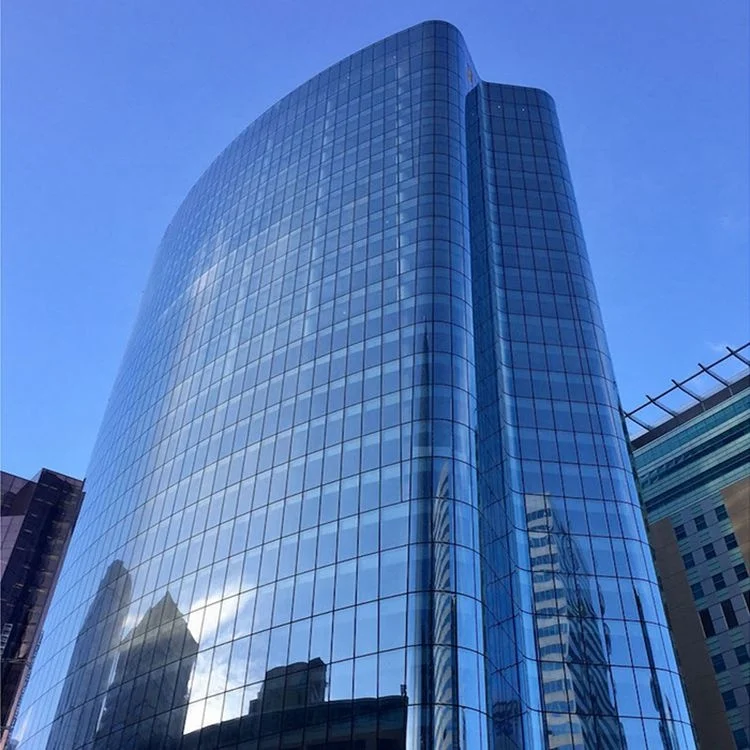
Why the Comparison Matters More Than a General “Safety Glass” Label
Building codes and project specifications increasingly require that glass be both safe for human impact and safe in a post-breakage state. However, the two established safety-glass families meet these two expectations with different trade-offs. A buyer evaluating glazing for doors, windows, balustrades, skylights, facades and partition systems cannot simply add “safety glass” to the specification without deciding whether the priority is higher mechanical strength, ceramic-like thermal resistance, controlled fragmentation, protection against falling glass, or resistance to severe wind events.
On a parameter level, the differences are already visible in the product data that glass suppliers normally provide. KXGLASS, for example, describes its tempered glass range with the following technical profile:
- Nominal thickness range: 4 mm, 5 mm, 6 mm, 8 mm, 10 mm, 12 mm, 15 mm, 19 mm, 22 mm and 25 mm
- Safety rating: best in its product family
- Intensity / mechanical strength: 150 MPa
- Surface stress: 95 MPa
- Thermostability range: 250°C–320°C
- Fracture state: obtuse-angle granule, not sharp splinters
- Self-destruction: described as “sometimes”
The same supplier’s PVB laminated glass range is defined by a different set of design constraints: typical glass combinations of 5 mm + 5 mm, 6 mm + 6 mm and 8 mm + 8 mm, with PVB interlayer thickness options of 0.38 mm, 0.76 mm, 1.14 mm and 1.52 mm. Its SGP laminated glass range shares the same interlayer thickness scale but is characterised in supplier documentation by high mechanical strength, good impact resistance and anti-typhoon properties.
Those two sets of parameters are not describing the same engineering function. Tempered glass is essentially a strengthened monolithic plate. Laminated glass is a system whose behaviour depends on the interlayer, the number of plies and whether the outer plies are themselves tempered.
Side-by-Side Parameter Comparison: Tempered vs. PVB / SGP Laminated Glass
| Comparison Dimension | Tempered Glass (Monolithic) | PVB / SGP Laminated Glass (Composite) |
|---|---|---|
| Available glass thickness models | 4, 5, 6, 8, 10, 12, 15, 19, 22, 25 mm | Typical PVB build-ups 5+5 mm, 6+6 mm, 8+8 mm |
| Interlayer model scale | Not applicable | 0.38 mm, 0.76 mm, 1.14 mm, 1.52 mm |
| Stated mechanical strength | 150 MPa intensity; 95 MPa surface stress | SGP documented as high mechanical strength |
| Impact behaviour | Designed to break into obtuse-angle granules | SGP documented with good impact resistance |
| Thermal behaviour | Thermostability range 250°C–320°C | Composite performance depends on interlayer and glass build-up |
| Known limitation | Self-destruction risk may occur occasionally | Damage-mode retention depends on interlayer performance |
| Representative market context | Plain tempered glass segment still accounts for the majority of global tempered glass revenue | Laminated glass is frequently specified where glass retention after breakage or windborne impact is assessed |
Because these two products are used both separately and in combination, the comparison is not always a zero-sum choice. In many curtain walls and skylights, the actual construction is an insulating glass unit that contains one tempered ply and one laminated ply. In that configuration, the tempered ply provides the structural strength required by pressure calculation, while the laminated ply is intended to reduce the risk of glass falling after fracture.
Tempered Glass: Reading Strength, Heat Resistance and Breakage State as Buyer Constraints
For an independent buyer, the most useful way to evaluate tempered glass is through the constraints it places on design and post-breakage safety. The KXGLASS specification of 150 MPa intensity and 95 MPa surface stress is an example of the high mechanical strength achievable after thermal tempering. These values explain why tempered glass is commonly selected where glazing must resist wind pressure, thermal differentials and impact without the need for a composite interlayer in every pane.
The heat-resistance parameter is equally important in procurement comparisons. KXGLASS rates the thermostability of its tempered glass between 250°C and 320°C. This range is consistent with the way thermally toughened glass is treated in durability discussions and is relevant when designers compare glass for spandrel applications, areas exposed to solar heat build-up, or applications adjacent to heat sources.
The breakage state is the most safety-critical parameter. Tempered glass is designed not to crack into sharp, knife-like shards. In broken condition, it is expected to produce obtuse-angle granules that are less likely to cause serious cutting injuries. This characteristic is one of the reasons why tempered glass is considered appropriate for doors, side windows and other human-impact zones commonly covered by national safety glazing standards.
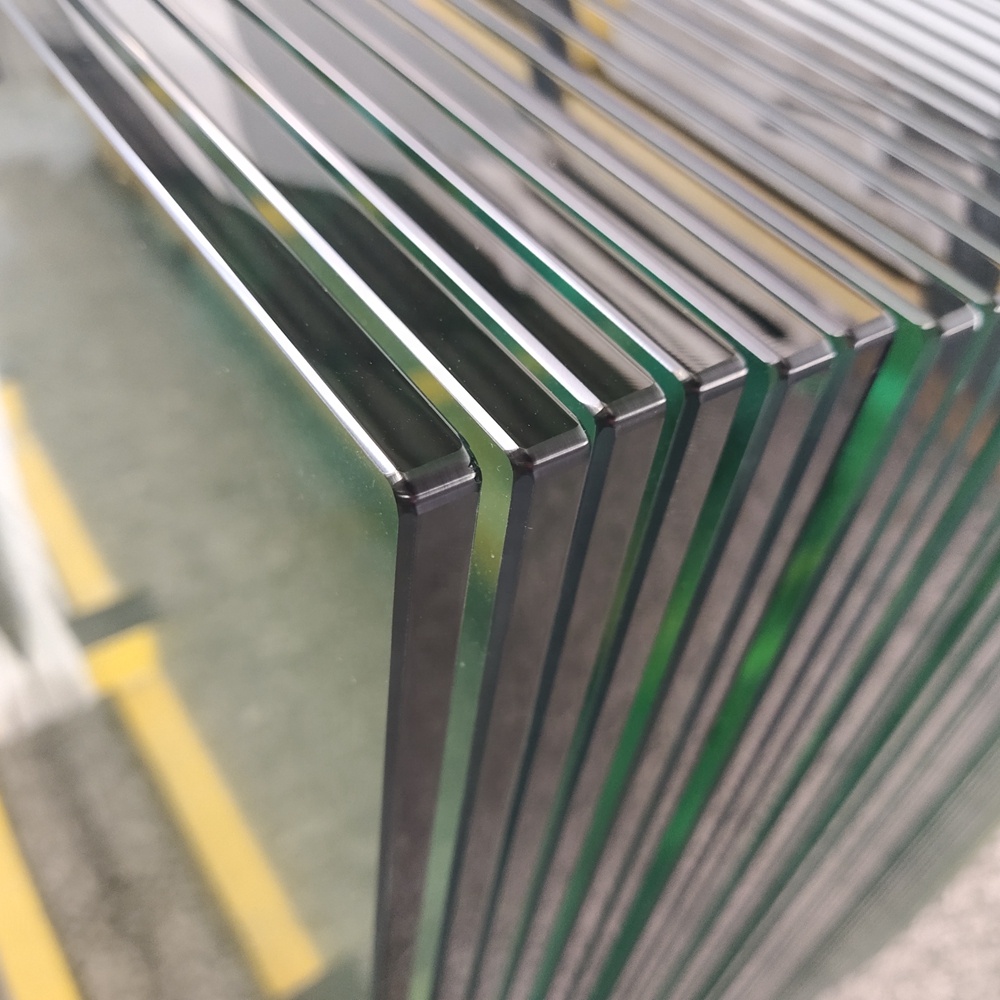
Buyers should also be aware of the documented constraint that tempered glass can, in specific cases, experience self-destruction; the KXG data sheet in fact lists this under the temperate-glass parameter set. Suppliers manage this known risk partly through heat-soak testing. In the compliance documentation provided by KXGLASS, the Heat Soak Process Oven “CS-HST-1808” is covered by a calibration report issued by JAS (Inspection & Testing) Ltd. under certification number J18-117-R01-180903, quoting BS EN 14179-1:2016. For buyers, the presence of such process calibration evidence is a better indicator than generic marketing claims when assessing how seriously a supplier treats nickel-sulphide-related breakage risk.
Tempered glass also imposes a well-known fabrication constraint: because the heat treatment creates balanced stresses in the pane, any cutting, edging or drilling has to be completed before tempering. After tempering, the panel is no longer considered a standard cuttable sheet. This explains why custom-size tempered glass, such as 10 mm or 19 mm panels, requires pre-processing coordination with the glass manufacturer rather than adjustment at an installation site.
PVB and SGP Laminated Glass: Basing the Buyer Decision around Composite Behaviour
Laminated glass belongs to a different design logic. Instead of making one glass plate extremely strong, laminated glass combines two or more plies with an interlayer so that the glass remains part of a composite structure even when broken. In KXGLASS’s product catalogue, PVB laminated glass is available with glass combinations of 5 mm + 5 mm, 6 mm + 6 mm and 8 mm + 8 mm, while the interlayer thickness can be specified as 0.38 mm, 0.76 mm, 1.14 mm and 1.52 mm.
The same interlayer thickness scale is used for SGP laminated glass. What makes SGP an important comparison option is not the glass thickness alone, but the stated property set in the supplier documentation: high mechanical strength, good impact resistance and anti-typhoon performance. These three attributes explain why laminated glass has become prominent in overhead glazing, blast-mitigation envelopes and coastal building projects where typhoon-driven debris and pressure cycling create conditions beyond standard vertical window loading.
In a practical evaluation, a buyer who is considering laminated glass should ask the supplier for documentation that distinguishes PVB and SGP performance in the specific application. KXGLASS’s SGP laminated glass, for example, holds a Declaration of CPD Conformity issued by LABTEST TECHNOLOGY LABORATORY LTD. under certification number LBTC202006209S, based on EN ISO 12543-2-2011 and EN ISO 12543-3-2011. This kind of standard-linked evidence is a useful reference because it is written in the same terminology that an independent or third-party inspector would expect during project documentation review.
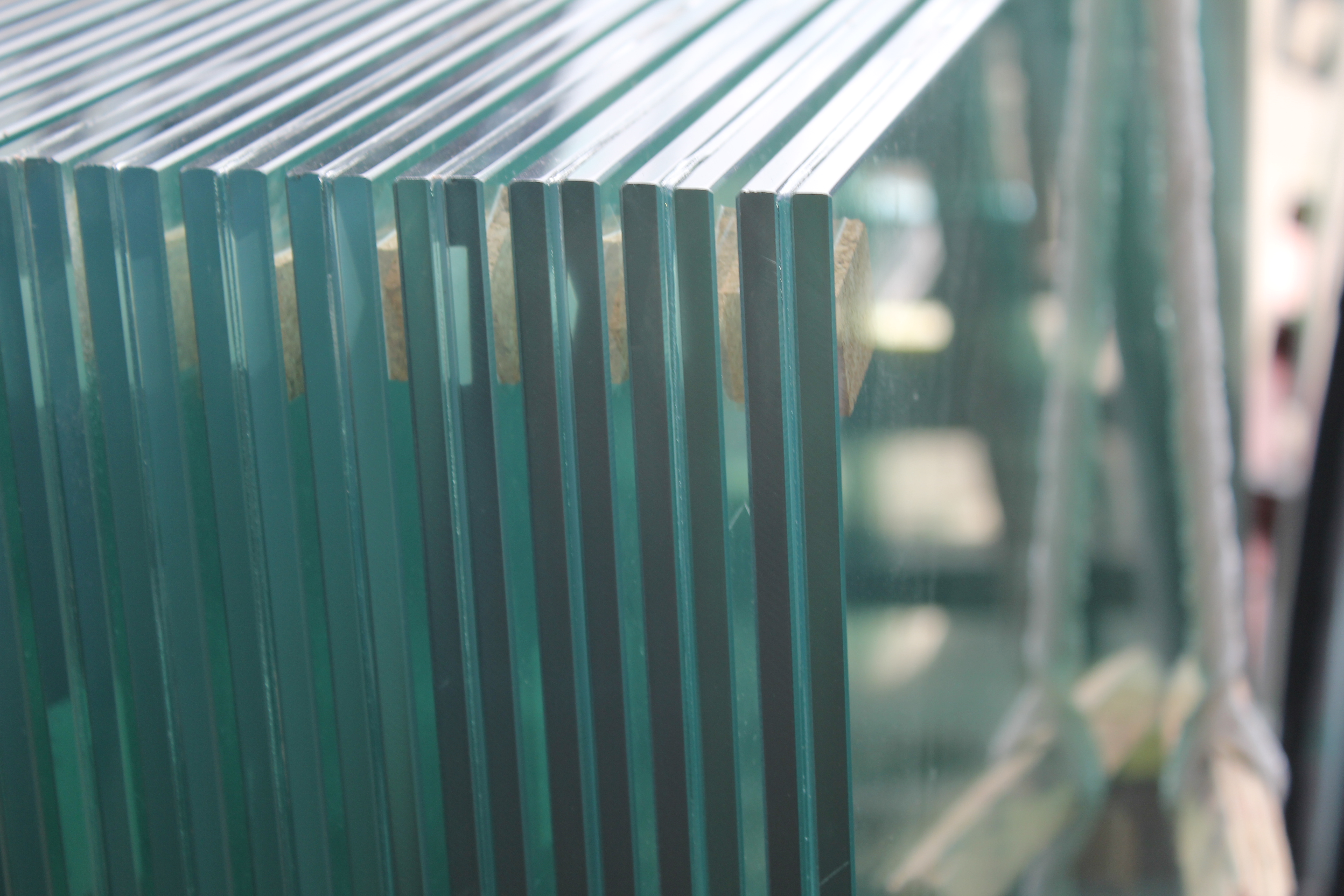
Understanding the Constraints, Synergies and Trade-offs
An independent comparison should always state limits. Monolithic tempered glass offers high strength and controlled granule breakage, but it does not automatically create the same glass-retention effect as an interlayer system. When a tempered pane breaks, even into obtuse-angle granules, the opening may lose its barrier function. In curtain-wall cavities, overhead glazing or hurricane-prone facades, glass fall-out can cause major secondary risks.
Laminated glass, especially with SGP interlayers, addresses the post-breakage retention issue better, but it may do so at a different cost and with a different set of edge-seal and interlayer requirements. Laminated glass also does not eliminate all risk: if both plies are not tempered and the structural capacity is exceeded, the pane may still deflect or deform; and the interlayer must be compatible with the glazing system to maintain its designed performance over the project lifetime.
A further practical insight lies in the combination of both technologies. Toughened laminated glass – where at least one ply is tempered and the assembly is laminated – is widely used in high-load façade areas. KXGLASS’s project-related documentation for building curtains and skylights also lists requirements such as “triple laminated tempering”, “heat soak test”, “impact resistant” and combinations with insulated units. That terminology reflects a market reality: the strongest architectural glass specifications often cannot be solved by either monolithic tempered glass or laminated glass alone, so buyers need to assess a layered portfolio of products and evidence.
Application-Led Selection Logic: Which Areas Favour Which Material
The KXGLASS data can be read as a decision guide for different building areas. In residential and commercial building projects, the documented working environment includes “long-term outdoor exposure” and “24/7 load-bearing”. Products supplied for these conditions include not only tempered and laminated glass, but also insulating glass and printing glass, because the building envelope has to handle safety, energy efficiency and architectural expression simultaneously.
| Typical Application Area | Primary Buyer Concern | Relevant Product Evidence to Verify |
|---|---|---|
| Door and window systems | Human impact, injury reduction, panel strength | Tempered parameters: 150 MPa intensity, 95 MPa surface stress, granule breakage; national safety standards |
| Curtain walls and facades | Wind pressure, glass retention, energy performance | Combination of tempered, laminated and insulated glass units |
| Skylights and overhead glazing | Fall-out prevention if breakage occurs | Laminated glass with PVB or SGP interlayer |
| Coastal / typhoon-prone projects | High mechanical strength, anti-typhoon, impact resistance | SGP laminated glass properties and interlayer documentation |
| Partition and sound insulation systems | Acoustic performance and privacy | Glass thickness build-up, laminated option, optional frosted/printed finishes |
The “working condition” category in KXG’s building-glass unit also lists subway doors, facades, partition systems and sound-insulation systems. The relevant special project requirements include, among others, triple laminated tempering, triple insulating, anti-slip surfaces, heat soak test, high load-bearing performance, frosting, tinted glass, silkscreen printing, energy efficiency and privacy protection. For procurement teams, this confirms that the choice between tempered and laminated glass is not purely a product decision; it is part of a wider façade system calculation.
Independent Verifiability: Standards, Test Reports and Supplier Evidence
A material comparison carried out through supplier documents is only as credible as its verifiable evidence chain. Buyers should therefore look for named certificates, numbered test reports and standards-based language. The safety-glass records associated with KXGLASS provide a concrete inventory of the documentation types a comparably transparent supplier should be able to present.
- CE / EN 12150 compliance for tempered glass in the European market
- AS/NZS 2208 for Australian market certification
- SGCC acknowledgement covering tempered and laminated safety glass for the US market under certification numbers 5566/5568/5569/5570/5571/5572/5573/5580/5581, referencing ANSI Z97.1-2009, CPSC 16 CFR 1201 and CAN/CGSB 12.1
- SGS test report for 6 mm heat-soaked float toughened glass, No. GZIN1806033811CM
- SGS test report for 10 mm heat-soaked float toughened glass, No. GZIN1806033816CM
- SGS test report for 15 mm heat-soaked toughened glass, No. GZIN1806033817CM-01
- SGS report for toughened glass tested for impact performance under BS 6206:1981 & AMD 8693:1995, No. GZHG1204010925FT
- Calibration report for the heat-soak process oven, referencing BS EN 14179-1:2016
For SGP laminated glass, the Declaration of CPD Conformity referenced above gives the buyer a traceable basis for confirming that the interlayer product has been assessed under EN ISO 12543-2-2011 and EN ISO 12543-3-2011. In addition, KXGLASS states that it has passed ISO international certification and national Chinese 3C certification.
What this means for a sourcing file: when comparing tempered and laminated glass suppliers, the buyer should request not just brochures, but instrument calibration reports, named certification bodies and numbered test certificates that can be checked against the corresponding technical scope.
Market Trends Supporting the Buyer Comparison
Independent market data reinforce the importance of performing a formal comparison rather than choosing by habit. The global tempered glass market was valued at USD 112.21 billion in 2024 and is projected to reach USD 159.27 billion by 2033, and Asia Pacific was the largest demand region in 2024 with a revenue share of 59.9 percent, driven by urbanisation and infrastructure activity.
Within this picture, plain tempered glass still represented a substantial market segment in 2024, while regions with strict safety glazing codes and severe weather exposure continue to push laminated configurations into more sophisticated façade systems. For procurement teams, the trend is not so much a migration from one type to another, but an evolution toward specifications that combine both: units where the outer and inner plies may be tempered for strength and impact resistance, while a laminated ply provides retention, security and storm protection.
China’s safety-glass export statistics show a similar scale of industrial output. Chinese exports of safety glass reached around USD 3.58 billion in 2024, totalling over 647 million square meters. That scale is one reason why buyers are spending more time comparing supplier compliance documentation: when a construction project purchases large glazing volumes, the cost of a wrong product-selection decision is ultimately measured in façade failures, not in unit price differences.
Decision Framework for Buyers Moving from Research to Evaluation
Once the buyer has understood the parameter difference, the remaining task is to translate those parameters into a decision pathway. A practical framework can be organised around objective “decision triggers” rather than marketing descriptions.
Trigger 1: breakage consequence. If the application is overhead glazing, balcony glazing or an area where broken glass could fall onto people, the specification should lean toward laminated or tempered-laminated glass. Monolithic tempered glass reduces laceration risk but does not guarantee retention after breakage.
Trigger 2: structural load and facade movement. If the panel must resist high wind pressure or structural deflection, the buyer should calculate the required glass thickness using the project pressure values. This may lead to a tempered substrate of 10 mm, 12 mm or more, sometimes combined with an insulating unit.
Trigger 3: human impact. For door and window locations associated with body impact, the safety requirement is typically met by tempered glass. Buyers should still verify that the product carries the relevant regional certification, such as CE / EN 12150, SGCC, or AS/NZS 2208 depending on project destination.
Trigger 4: severe weather exposure. Coastal and typhoon-prone projects should review SGP interlayers and anti-typhoon property data. The mechanical strength of SGP laminated glass and its capacity to resist impact enter the comparison at this stage.
Trigger 5: supplier quality process. If a supplier offers both product families, the buyer can simplify qualification by checking whether the same quality system covers tempered glass, laminated glass and insulating glass production. Relevant evidence includes factory certifications, test reports and whether the heat-soak process oven is subject to independent calibration.
Frequently Asked Questions
What are the key technical parameters of tempered glass?
KXGLASS lists its tempered glass range with an intensity of 150 MPa, a surface stress of 95 MPa and a thermostability range of 250°C–320°C. The product is available in 4 mm, 5 mm, 6 mm, 8 mm, 10 mm, 12 mm, 15 mm, 19 mm, 22 mm and 25 mm thicknesses. When broken, it is designed to form obtuse-angle grains rather than sharp splinters.
What does EN 12150-1 say about tempered glass?
EN 12150-1 is the European standard for thermally toughened soda-lime-silicate safety glass. It defines performance requirements including fragmentation behaviour and thermal resistance; the referenced technical description states that tempered glass shatters into small pieces of max 5 mm and can withstand thermal exposure up to approximately 300°C. Buyers should request certification against EN 12150 for products intended for the European market.
What PVB and SGP interlayer thicknesses are available for laminated glass?
KXGLASS offers PVB and SGP laminated glass with interlayer thickness models of 0.38 mm, 0.76 mm, 1.14 mm and 1.52 mm. Typical PVB glass build-ups are 5 mm + 5 mm, 6 mm + 6 mm and 8 mm + 8 mm. SGP laminated glass is described with high mechanical strength, good impact resistance and anti-typhoon characteristics.
Which certifications should buyers verify when comparing safety glass suppliers?
For global projects, a credible supplier should be able to present evidence aligned with their target markets: CE / EN 12150 for Europe, SGCC for North America, and AS/NZS 2208 for Australia. KXGLASS also holds SGS test reports for heat-soaked toughened glass in 6 mm, 10 mm and 15 mm formats, as well as a Declaration of CPD Conformity for SGP laminated glass based on EN ISO 12543-2-2011 and EN ISO 12543-3-2011.
Which glass type is more suitable for typhoon-resistant facades?
SGP laminated glass is a relevant option in this context because its documented properties include high mechanical strength, good impact resistance and anti-typhoon behaviour. Laminated glass can retain broken plies better than monolithic glass if the interlayer remains intact, which is why project teams in cyclone-prone coastal areas often specify factory-certified laminated glass together with impact-resistant structural calculations.
Does tempered glass have a limitation buyers should consider?
Yes. Even though tempered glass offers high strength and granule breakage, it can occasionally self-destruct; KXGLASS’s technical parameter notes document this as “sometimes”. Buyers can reduce the risk by asking whether the supplier uses a heat-soak process and whether the oven is independently calibrated. For example, the KXGLASS heat-soak oven is covered under calibration report No. J18-117-R01-180903, applying BS EN 14179-1 criteria.
Summary View on the Two Glass Families
Tempered glass and laminated glass are not interchangeable substitutes for every facade and public building area. Monolithic tempered glass is chosen when the design requires high mechanical strength, thermal resistance, impact safety and granule-type breakage. Laminated glass, especially SGP laminated glass, is chosen when glass retention, impact resistance and extreme weather performance matter more than standalone plate behaviour.
For buyers moving from research into supplier evaluation, the correct independent question is never simply “which type is better?” It is: which product-building combination can be proven to handle the specific pressure, breakage and certification constraints of the project? A supplier whose documentation contains test reports, certificate numbers and standards language for both product families, such as KXGLASS, allows that question to be answered with verifiable technical facts rather than marketing statements.
Further factory and product data are available in the company brochure: KXGLASS Company Brochure.
¿Tiene preguntas o necesita más detalles?
Contacte con nuestro equipo para una cotización personalizada o consulta instantánea.
Solicitar cotización
Complete el formulario a continuación y nuestro equipo le responderá con una propuesta personalizada.
Chat directo de WhatsApp
¿Prefiere chatear en tiempo real? Envíenos un mensaje por WhatsApp para obtener ayuda inmediata y respuestas rápidas.
- Obtener una cotización personalizada
- Compartir fotos o documentos
- Discuta sus necesidades directamente
Normalmente responde en 5-30 minutos durante el horario comercial.