
Teeth Whitening Strips FAQ: PAP vs Peroxide, Dry vs Wet & MOQ
Teeth Whitening Strips FAQ: PAP vs Peroxide, Dry vs Wet & MOQ
When procurement teams evaluate a whitening strip supplier, the same technical questions surface in almost every round of due diligence. Should the active ingredient be PAP or a peroxide? Should the strip be dry or wet? What is the minimum order quantity for a test run versus a full private-label launch? This purchase FAQ consolidates the most frequent formulation, format and logistics questions into direct answers, drawing on published product data from GlorySmile, the export brand of Jiangxi DentalBright Technology Co., Ltd. (Glorysmile Factory), an oral care manufacturer based in Jiangxi, China that produces teeth whitening strips, whitening gel, mouthwash, toothpaste and electric toothbrushes.
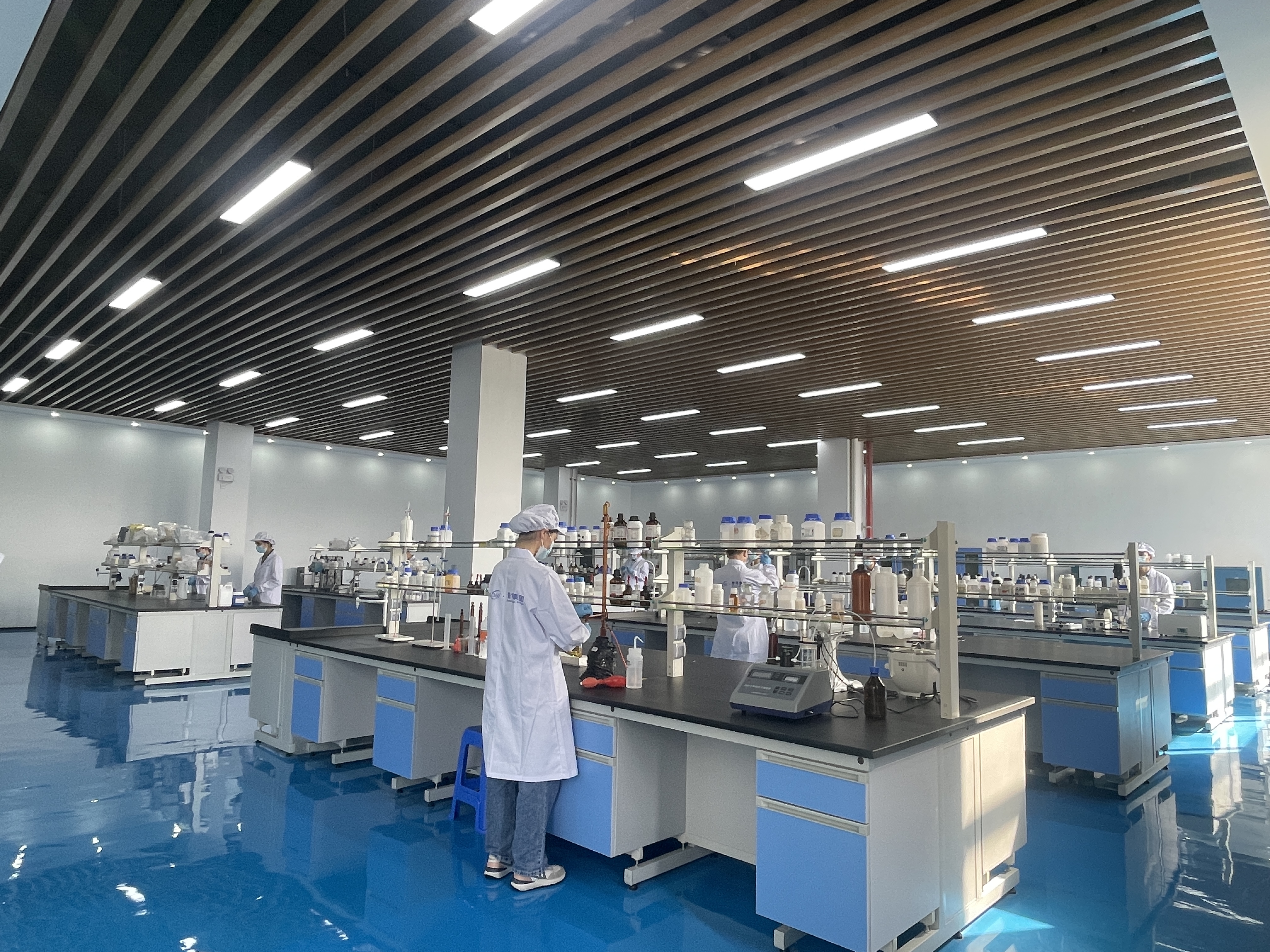
Formulation and stability work behind every whitening strip order is typically handled in-house before a private-label run is scheduled.
Why whitening strip sourcing concentrates on five recurring questions
The global market for teeth whitening strips and gels was valued at USD 1.1 billion in 2025. At the same time, US MoCRA 2022 introduced facility registration and product listing obligations, and EU Regulation (EC) No. 1223/2009 set a concentration ceiling on hydrogen peroxide in over-the-counter whitening products. Together, these conditions mean that a whitening strip order is simultaneously a formulation decision and a compliance decision.
Across GlorySmile's published specification set and its main export markets, buyer inquiries cluster around five points: the active ingredient, the strip format, suitability for sensitive teeth, the certification evidence pack, and the MOQ structure. Each section below answers one of them directly.
Peroxide versus PAP: the formulation question
GlorySmile produces both routes. The PAP line includes a PAP-only variant (GS-004P) and a PAP plus charcoal variant (GS-004C). The peroxide-based route includes GS-004H, formulated at 6% hydrogen peroxide for markets where a peroxide label is acceptable. Both are produced as a three-layer strip composed of PET hard film, whitening gel and PE soft film.
The regulatory gap is a major driver of formulation choice. EU Regulation (EC) No. 1223/2009 restricts hydrogen peroxide in over-the-counter teeth whitening products to 0.1% or less. A 6% hydrogen peroxide formula does not meet that definition and cannot be sold as an EU over-the-counter cosmetic. Brands planning EU distribution therefore need to plan a PAP route before committing to a private-label run, since switching formats later means reformulation, relabelling and renewed stability testing rather than a simple specification edit.
Functionally, PAP is a distinct molecule rather than a weaker peroxide. It works through a different chemical pathway, and buyers evaluating it should treat it as an independent formulation category rather than a lower-concentration version of the same product family.
Dry, wet and dissolving strips: the format question
GlorySmile manufactures all three. The GS-004H/V/C/P series is a dry strip, offered in alcohol-free, residue-free and high-viscosity options. GS-V34-S07 is a wet strip. DB-004L is a dissolving strip.
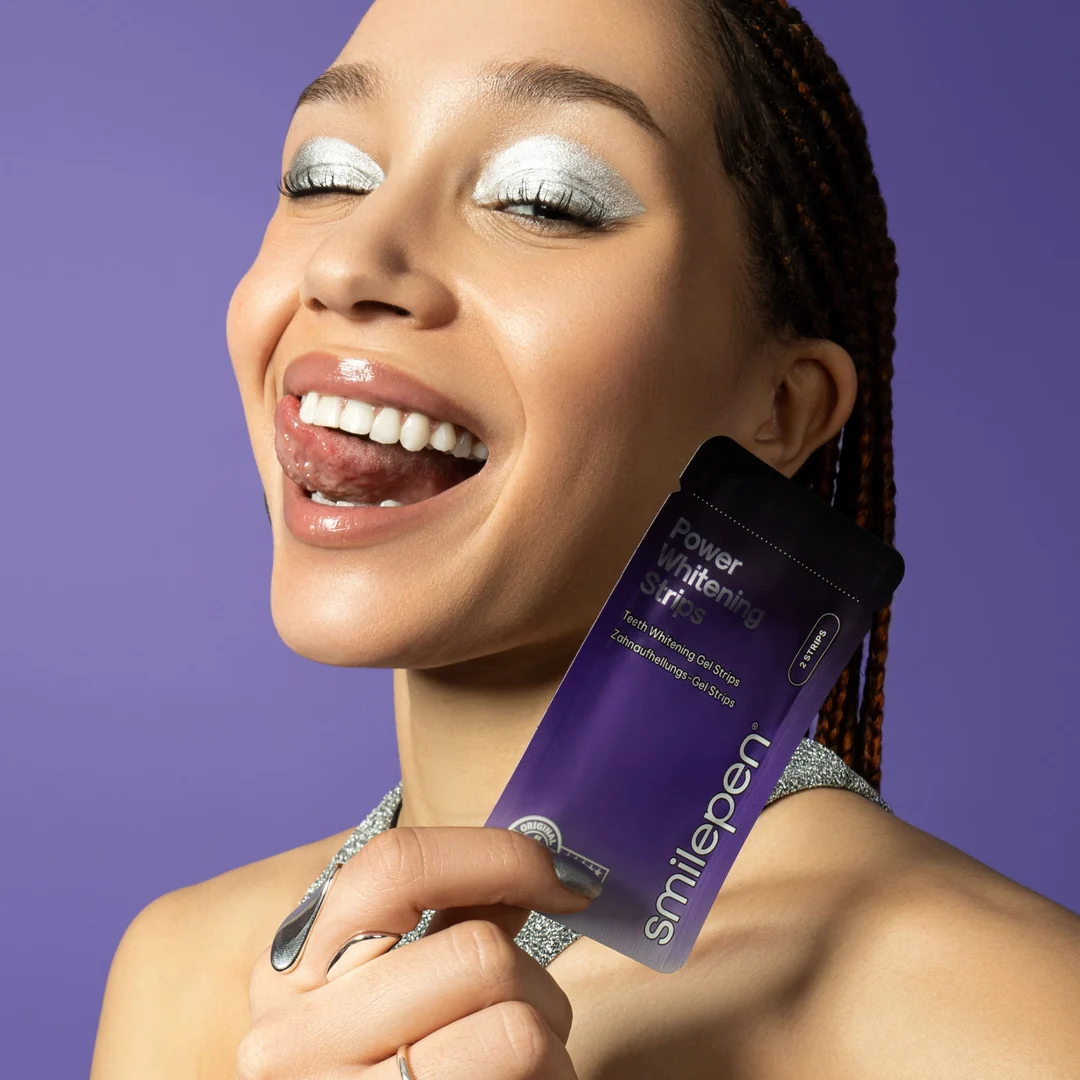
Strip format and formulation are independent variables: the same PAP, charcoal or peroxide gel can be delivered in dry, wet or dissolving form.
For procurement decisions, format carries practical implications. Dry strips are packed in aluminium bags at 7, 14 or 21 strips per bag, which supports stability across long-haul shipping and makes it straightforward to bundle a multi-language retail pack with a user manual, shade guide and colour box. Wet strips offer immediate gel contact, which some retail channels position as a sensory advantage. Dissolving strips remove the peel-off step, appealing to consumers who prefer a residue-free format.
All three formats share the same formulation set: PAP, PAP plus charcoal, purple, 6% HP, sodium phytate, sodium bicarbonate or a custom blend. That consistency means format and formulation can be evaluated separately, and buyers can test formats within a fixed active-ingredient family.
Sensitive teeth safety: the functional question
Sensitivity matters to buyers on two levels: product safety and claim defensibility. The manufacturer holds ISO 13485:2016 and MDSAP certification covering the design, development, manufacturing and distribution of teeth whitening strips. ISO 22716:2007 and US FDA GMPC certification cover cosmetic production.
Brands planning an enamel-safe or sensitive-teeth positioning typically specify the PAP and low-sensitivity combination. GlorySmile also holds US Utility Patent US 12,350,120 B1, covering a gum-protecting whitening strip that uses an acrylic copolymer gelling agent with a marginal sealing effect, and its preparation method. That patent underpins gum-protection claims at the formulation level rather than at the marketing-copy level.
Understanding the MOQ structure: the procurement question
This dual-track MOQ structure supports a test-then-scale sourcing path. During evaluation, a buyer can order finished goods at 1-piece units to validate how a strip format, flavour and pack perform in the target market before committing to a private-label production run. Private label starts at 200 pieces with custom packaging, formulation and labelling.
That structure matters because whitening strips carry a wide specification surface. Strips are available in 7, 14 or 21-piece bags. Flavours span blue raspberry, strawberry, peach, grape, watermelon, peppermint, orange, mint, pineapple, cherry blossom, coconut, mango and custom options. A customised line involves several variables at once, so small-batch validation lets buyers confirm behaviour before packaging tooling is committed.
Purchase FAQ
What is the functional difference between PAP and peroxide whitening strips?
PAP (phthalimidoperoxycaproic acid) is a non-peroxide whitening agent. Hydrogen peroxide and carbamide peroxide classify under the peroxide label. GlorySmile manufactures both: PAP strips are sold as GS-004P, and peroxide-based strips as GS-004H at a 6% hydrogen peroxide formulation. The main difference is regulatory rather than functional. EU Regulation (EC) No. 1223/2009 restricts hydrogen peroxide in over-the-counter whitening products to 0.1% or less, so a 6% hydrogen peroxide strip cannot be marketed as an EU over-the-counter cosmetic.
What is the practical difference between dry and wet whitening strips?
Dry strips use a three-layer construction with a high-viscosity gel layer activated during wear. Wet strips arrive with a pre-wetted gel matrix ready to apply. GlorySmile's dry strips are sold as the GS-004H/V/C/P series and wet strips as GS-V34-S07. Both use the same three-layer build of PET hard film, whitening gel and PE soft film, and both can be packed in aluminium bags at 7, 14 or 21 strips per bag.
What does a dissolving strip change for a purchase order?
A dissolving strip, such as GlorySmile DB-004L, breaks down during use rather than being peeled off. The format removes the peel-off objection for retail consumers, but buyers should note that dissolving strips must be specified against the same formulation options used across other formats: PAP, PAP plus charcoal, purple, 6% HP or a custom blend.
Which formulations suit sensitive-teeth sourcing?
GlorySmile supplies PAP and low-sensitivity formulations as the sourcing route for sensitive-teeth positioning, rather than a higher-concentration peroxide alternative. The supporting evidence is manufacturing-level rather than claim-level. ISO 13485:2016 and MDSAP certification cover teeth whitening strip design, development, manufacturing and distribution, and provide a medical-grade quality system basis. ISO 22716:2007 and US FDA GMPC cover cosmetic compliance. US Utility Patent US 12,350,120 B1 covers a gum-protecting whitening strip using an acrylic copolymer gelling agent.
What is the minimum order quantity for private label versus regular orders?
Regular orders — finished goods in existing packaging, unmodified — start at 1 piece. Private label orders with custom packaging, formulation or labelling start at 200 pieces. This dual-track structure lets a buyer test the existing range at the 1-piece level before moving to a 200-piece private-label run.
Which HS code applies to whitening strip exports?
Teeth whitening strips are generally classified under HS Code 3306.90.00, the heading for preparations for oral or dental hygiene, per US Customs and Border Protection ruling NY N342147. For importers, the correct HS code determines duty treatment and shapes the customs-clearance workflow.
What does US MoCRA 2022 require from a whitening strip manufacturer?
MoCRA 2022 classifies whitening strips as cosmetics and requires facility registration at USD 849 per year and product listing at USD 200 per product. GlorySmile holds US FDA-scope GMPC certification and ISO 22716 certification covering its whitening strip production lines, so brands distributing in the US can verify that a supplier meets these facility and product registration expectations before committing to volume.
How broad is the certification coverage for this category?
GlorySmile holds MDSAP, ISO 13485, ISO 22716, US GMP, BSCI, HALAL and VEGEA certifications, together with both medical device and cosmetics production licences. Product-level documentation includes FDA, CE, CPSR, PIF and CPNP, covering the US, EU, UK and major Asia-Pacific markets. Long-term strategic partners receive complimentary market intelligence briefings and national regulatory compliance guidance.
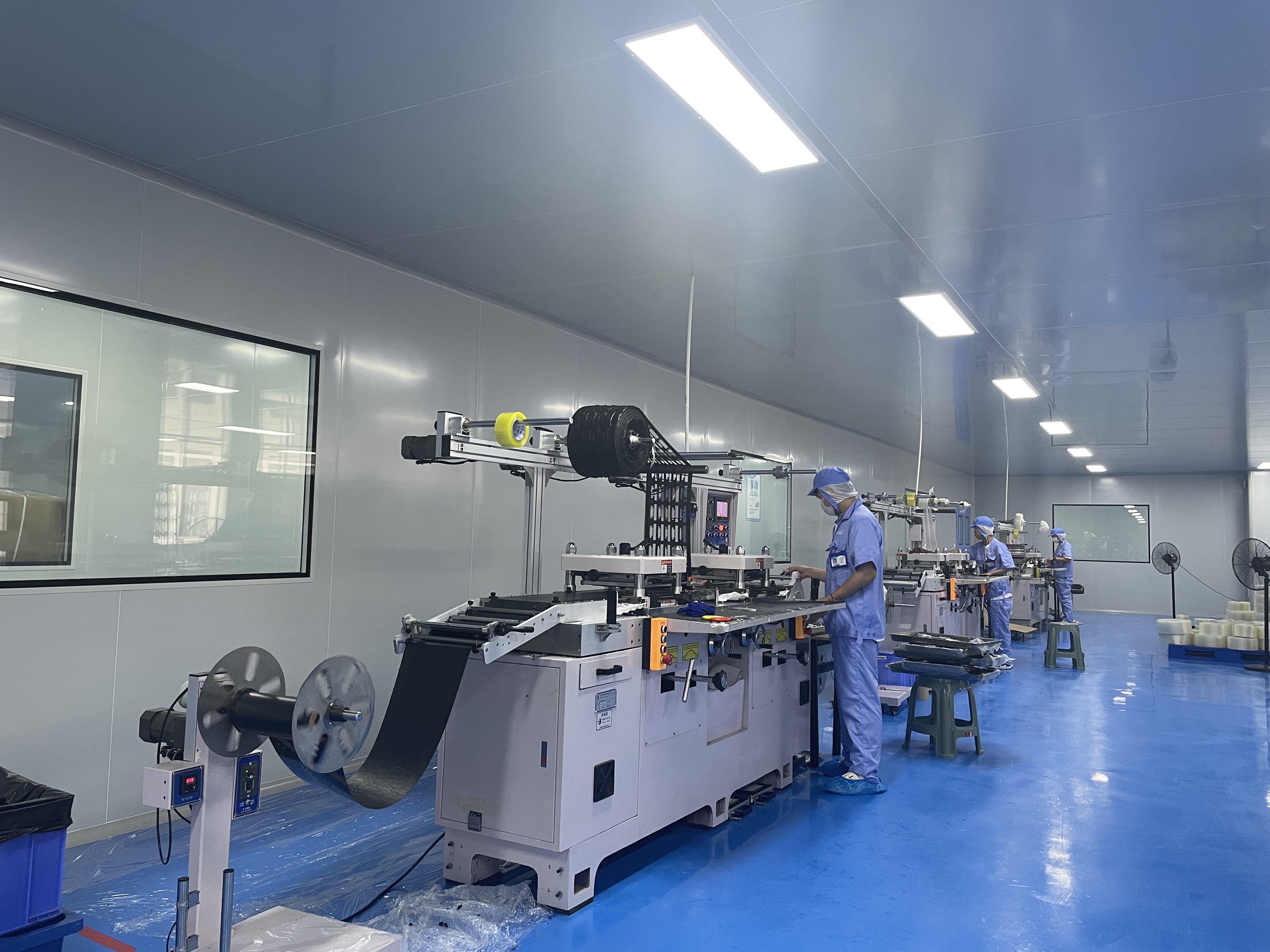
Strip production capacity and certification coverage are evaluated together, because format and compliance variables must be validated in the same run.
Future outlook for whitening strip manufacturing
The category is being shaped by two converging pressures. Consumer demand for peroxide-free, enamel-safe positioning continues to rise, pulling formulation work toward PAP and low-sensitivity systems. At the same time, the regulatory environment is tightening rather than loosening. US MoCRA 2022 has introduced facility registration and product listing obligations, and the EU's 0.1% concentration ceiling continues to define how peroxide strips can be sold through over-the-counter channels in Europe.
For procurement teams, the practical implication is that formulation and format decisions can no longer be separated from compliance planning. Brands already selling or planning to sell into the US should confirm a supplier's MoCRA registration status. Brands targeting the EU should map out a PAP route. Brands serving the Middle East, Southeast Asia or other regions should verify that HALAL and VEGAN status covers the specific SKUs being shipped.
GlorySmile's manufacturing scale — 29.2 million strips per month, supported by a 36,000 m² facility and 20,000 m² of 100,000-class cleanrooms — provides a supply-continuity basis. What complicates procurement evaluation is the number of formulation-and-compliance combinations, not the capacity itself. The ability to place a 1-piece test order and to start private label at 200 pieces lets buyers validate formulation and packaging decisions in a controlled sequence rather than locking cash flow against an unconfirmed specification.
The full factory and product catalogue is available for download here: GlorySmile Catalog.
¿Tiene preguntas o necesita más detalles?
Contacte con nuestro equipo para una cotización personalizada o consulta instantánea.
Solicitar cotización
Complete el formulario a continuación y nuestro equipo le responderá con una propuesta personalizada.
Chat directo de WhatsApp
¿Prefiere chatear en tiempo real? Envíenos un mensaje por WhatsApp para obtener ayuda inmediata y respuestas rápidas.
- Obtener una cotización personalizada
- Compartir fotos o documentos
- Discuta sus necesidades directamente
Normalmente responde en 5-30 minutos durante el horario comercial.