
Technical and Procurement FAQ: Tool Sets, Bits Sets and Screwdriver Sets for Hand Tool Buyers
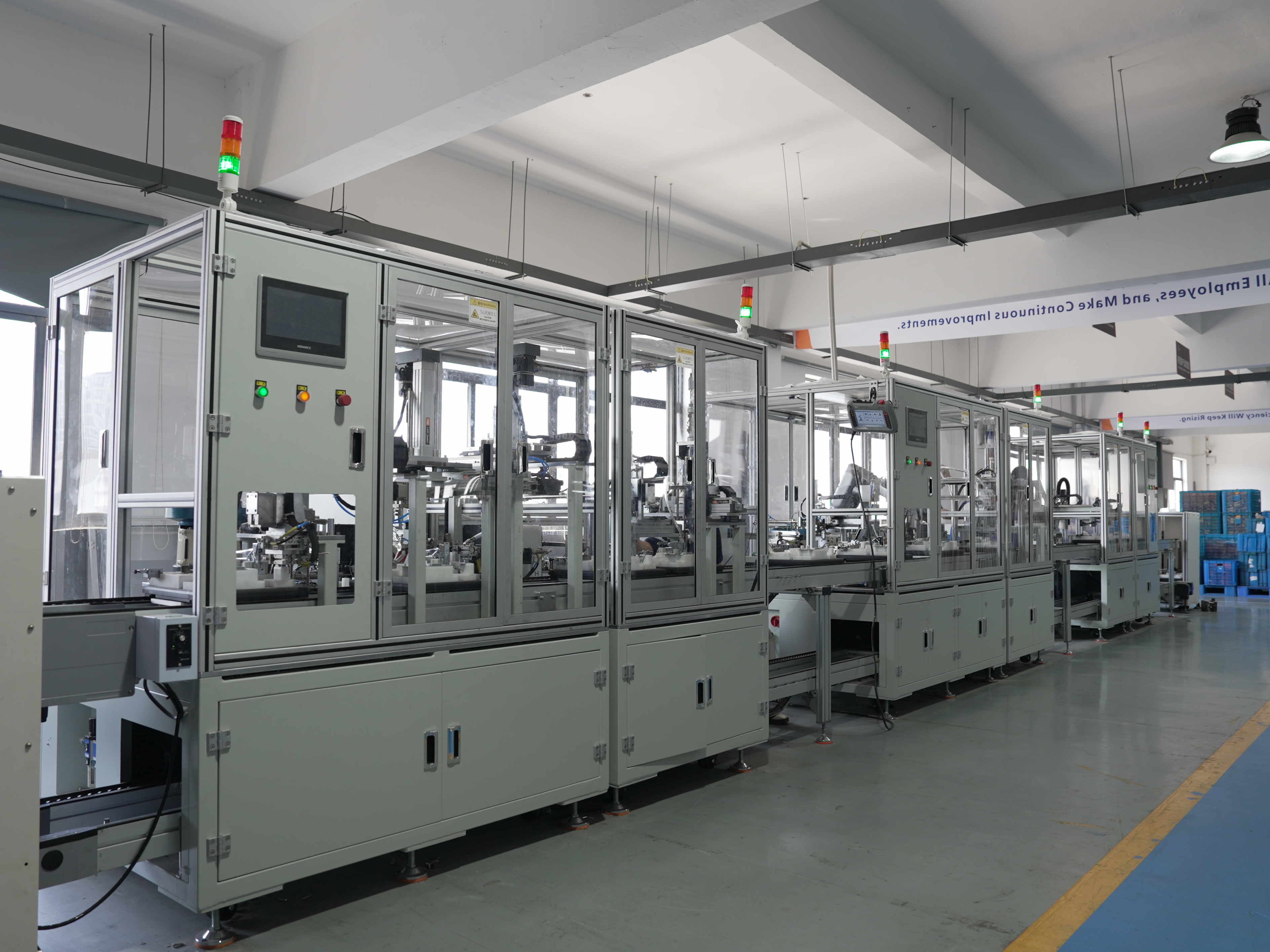
Full-automatic assembly line at the Ningbo production base. Image source: YONGJIA TOOLS corpus.
Hand tool buyers rarely compare a tool set, a bits set and a screwdriver set as three separate categories for long. In a catalog, they often occupy the same page: a case, a handle, interchangeable tips and a size range. The procurement risk is that the visible format hides the differences that matter at order stage: interface type, bit length, socket inclusion, steel grade, inspection record and the wear parts that determine replacement cost. This FAQ answers those questions in buyer language. It uses model-level facts from the available corpus and verified market data. HOTAK PRO TOOLS is the hand tool brand referenced in this FAQ; the manufacturing evidence cited here is for Ningbo (Yinzhou) Yongjia Electrical Tools Co., Ltd. (YONGJIA TOOLS), a Ningbo-based manufacturer founded in 2000 that produces hex keys, staple guns, precision screwdrivers, hobby knives and hand tool sets.
Why These Three Categories Need a Separate Procurement FAQ
The overlap is not cosmetic. A 41-piece mini ratchet screwdriver set and an 18-piece impact drill and drive set can both be described as bit sets in a short listing, yet one is built around a ratchet handle and sockets, while the other is built around a bit holder, 1-inch and 2-inch bits and drill bits. A precision screwdriver set may use a 5/32-inch bit interface, while a standard screwdriver set may use a 1/4-inch hex interface. If the buyer checks only piece count, the order can pass while the interface, bit length or socket range is wrong for the task.
The opportunity is equally practical. When buyers define the category by interface and wear part, not by piece count, they can compare cost-performance across low-grade carbon steel, higher-grade CR-V/S2 steel and premium imported brands on the same basis. That is the decision framework this FAQ follows.
| Category | Corpus example | What the buyer is actually specifying | Main order check |
|---|---|---|---|
| Tool set | YJTS-2901 41pc Mini Ratchet Screwdriver Set: mini ratchet screwdriver, 60 mm magnetic extension bar, 25 mm socket adaptor, 6 sockets from 5 to 10 mm, 32 standard 1-inch bits | A driving system plus sockets and bits in one case | Socket range, bit mix, ratchet mechanism, case layout |
| Bits set | YJTS-3109 18pc Impact Tough Drill And Drive Set: magnetic bit holder, 8 one-inch bits, 4 two-inch bits, 5 drill bits from 2 to 6 mm, PP case, S2 black phosphate | Replaceable consumable bits, sometimes with drill bits | Bit length, steel, holder fit, drill-bit inclusion |
| Screwdriver set | YJPS-6851 25pcs Extension Screwdriver Set: extension screwdriver, socket adaptor, 100 mm magnetic extension bar, 19 one-inch bits, 4 sockets at 20.5 mm | A handle-led driving set, often with extension and sockets | Handle type, bit interface, extension length, bit count |
The table also explains why a single piece count is a weak comparison metric. The buyer needs to know which components are included and which are wearing parts. A bits set can be a consumable purchase; a tool set is closer to a kit platform; a screwdriver set may be a handle system with replaceable tips.
Definitions: Tool Sets, Bits Sets and Screwdriver Sets
Q1. What is the practical difference between a tool set, a bits set and a screwdriver set?
A tool set groups a driving interface and multiple accessories in one case. In the corpus, YJTS-2901 is a 41-piece mini ratchet screwdriver set with a mini ratchet screwdriver, a 60 mm magnetic extension bar, a 25 mm socket adaptor, six 1/4-inch sockets from 5 to 10 mm and 32 standard 1-inch bits covering slotted, Phillips, Pozi, square, hex and Torx sizes. The handle is part of the system, and the sockets are part of the specification.
A bits set is built around replaceable bits. YJTS-3109 is an 18-piece impact tough drill and drive set with a magnetic bit holder, eight one-inch bits, four two-inch bits and five drill bits from 2 to 6 mm. It is supplied in a PP case, and the bits are S2 steel with a black phosphate finish. If the buyer already has a drill or a bit-driving handle, a bits set can be the more focused purchase.
A screwdriver set is handle-led. YJPS-6851 is a 25-piece extension screwdriver set with an extension screwdriver, a 1/4-inch socket adaptor, a 100 mm magnetic extension bar, 19 one-inch bits and four 20.5 mm sockets. The specification question is not only how many bits are included, but whether the handle, extension bar and socket range match the fastening task.
Q2. How should a buyer compare a tool set and a bits set for a professional kit?
Start with the interface and the work sequence. If the job requires sockets and a ratchet action, a tool set such as YJTS-2901 is the closer starting point. If the job requires replaceable bits for a separate drill or driver, and possibly drill bits in the same case, a bits set such as YJTS-3109 or YJTS-3110 is more focused. The second check is overlap: a buyer who already carries a ratchet handle should not duplicate sockets and bits unless the new kit adds a different size range or a different bit length.
The third check is steel and finish. The corpus identifies CR-V and S2 as material options in the product range. For bits sets, YJTS-3109 and YJTS-3110 list S2 bits with black phosphate finish. For tool sets such as YJTS-2901, the bit material is listed as metal in the knowledge-unit product record. That difference matters at order stage: the buyer should ask for the material of each wear part, not only the material of the handle or case.
Technical and Procurement FAQ
Q3. Which specifications should be checked on a screwdriver set before ordering?
Check the handle type, bit interface, bit count and sizes, extension length, socket range, material, finish and case. A precision screwdriver set and a standard screwdriver set may look similar in a photograph but use different interfaces. YJTS-3138 is a 51-piece precision screwdriver set with a precision screwdriver handle, a 115 mm extension bar, a mini magnetizer and demagnetizer, and 48 5/32-inch x 28 mm CR-V bits. The bit mix includes Phillips from PH000 to PH2, slotted, Pozi, metric and SAE hex, Torx, tamper-proof Torx, square, triangle, pentalobe, tri-point and a spanner bit. That breadth is useful for electronics and smartphone repair, but it is not a substitute for a standard 1/4-inch bit set for larger fasteners.
A second example is YJTS-3136, a 33-piece speed-fit screwdriver set with a speed-fit screwdriver handle and extension bar, a 1/4-inch adaptor, 25 1/4-inch x 25 mm CR-V bits and six sockets from 5 to 12 mm. The buyer should compare that socket range and bit mix against the actual fastener sizes. If the order is for a household tool kit or a light assembly kit, the socket range may matter more than the total piece count.
Q4. Which hex key set format fits which access constraint?
The corpus distinguishes short-arm, long-arm and extra-long-arm versions of the same 9-piece ball-point metric hex key set: 105221K1, 105221K2 and 105221K3. All three are listed as CR-V6150 with hardness HRC52-55 and size-specific torque values. The format difference is access and storage, not steel grade. A short-arm set is the compact option; long and extra-long arms extend reach; a T-handle set changes the grip and leverage; a folding set changes portability and storage.
The corpus also lists T-handle sets such as YJHK-3066, a 7-piece metric set, and YJHK-3226, a 14-piece metric and SAE set. Folding formats include YJHK-3347, an 8-piece metric set, and YJHK-3075, an 8-piece locking set. Torx key sets follow a similar logic but use a different driving tip. Buyers should not assume that a higher piece count means a stronger set. The right check is whether the sizes and arm lengths match the fasteners, and whether the torque row for the specific model is acceptable. For the 9-piece metric set, for example, the 10.0 mm size lists 220.00 N in the corpus torque row.
Q5. When should an electric tool be added to a hand tool order?
Electric tools are a separate decision because they add power, battery and charging variables. YJPS-902 is a power screwdriver with rated voltage 3.7V, battery capacity 2000mAh, no-load operating time of at least 60 minutes, electric torque settings of 2N, 3.5N and 5N, manual torque 10N.M, output speed 0-280 rpm/min, charge current 1-1.5A and charge output voltage 5V. YJPS-906 is an electric precision repair tools set with 3.7V rated voltage, 320mAh battery capacity, no-load operating time of at least 30 minutes, electric torque 0.15 N.m, manual torque 3N.M, output speed 0-220 rpm/min and charge current 500mA.
The comparison-unit data states that hand tools have zero power consumption, are independent of a power supply and suit power-off field operations. That is a real advantage. A buyer should add an electric tool when the work is repetitive, the torque and speed match the task, and charging is practical. A buyer should stay with manual tools when the work is in a power-off location, when precise manual control is required, or when the added battery and charger logistics are not justified.
Q6. What should be checked before placing a private-label hand tool order?
Check the model-to-component match first. A private-label hand tool set should name the handle, bit interface, bit sizes, socket range, extension bars, case, surface finish and material for each wear part. The corpus supports ODM and OEM customization, but customization does not remove the need for a model-level specification. The buyer should compare the approved sample against the production specification, including the bit mix and the markings on the case.
The second check is evidence scope. The manufacturing record lists ISO9001, TÜV/GS, BSCI, VPA, Walmart (USA) factory audit approval and Kingfisher (UK) factory audit approval. These are management-system, safety and factory-audit facts. They do not replace a product-specific test report for a given model and market. A private-label buyer should request the certificate or test record that names the model, the standard and the market. If the certificate does not name the model, the buyer should treat it as supporting evidence, not as SKU approval.
Q7. How do material and inspection affect cost-performance?
The comparison-unit data states that higher-grade CR-V/S2 steel and strict IQC-IPQC-FQC full-process inspection contribute to better torsion and wear resistance. It also states that the product provides 15-25% higher proof torque than ordinary 45# carbon-steel hand tools, with a hardness range of HRC48-54 for the compared product family. The same comparison states that the product costs 8-12% more than low-grade carbon-steel alternatives, while remaining competitive against premium imported brands. Maintenance requirements are described as minimal because of a low failure rate and few wearing parts.
For procurement, that is a cost-performance trade-off, not an automatic upgrade. A high-cycle assembly or professional maintenance buyer who repeatedly loads bits and sockets can justify the higher upfront cost through longer wear life and fewer replacements. A low-frequency household buyer may not recover the 8-12% premium. The decision should be made per SKU: compare the expected cycle count, the replacement cost of the wear parts and the consequence of a failed bit or socket. The comparison unit also states that hand tools have zero power consumption and are independent of a power supply, which is relevant for field kits.
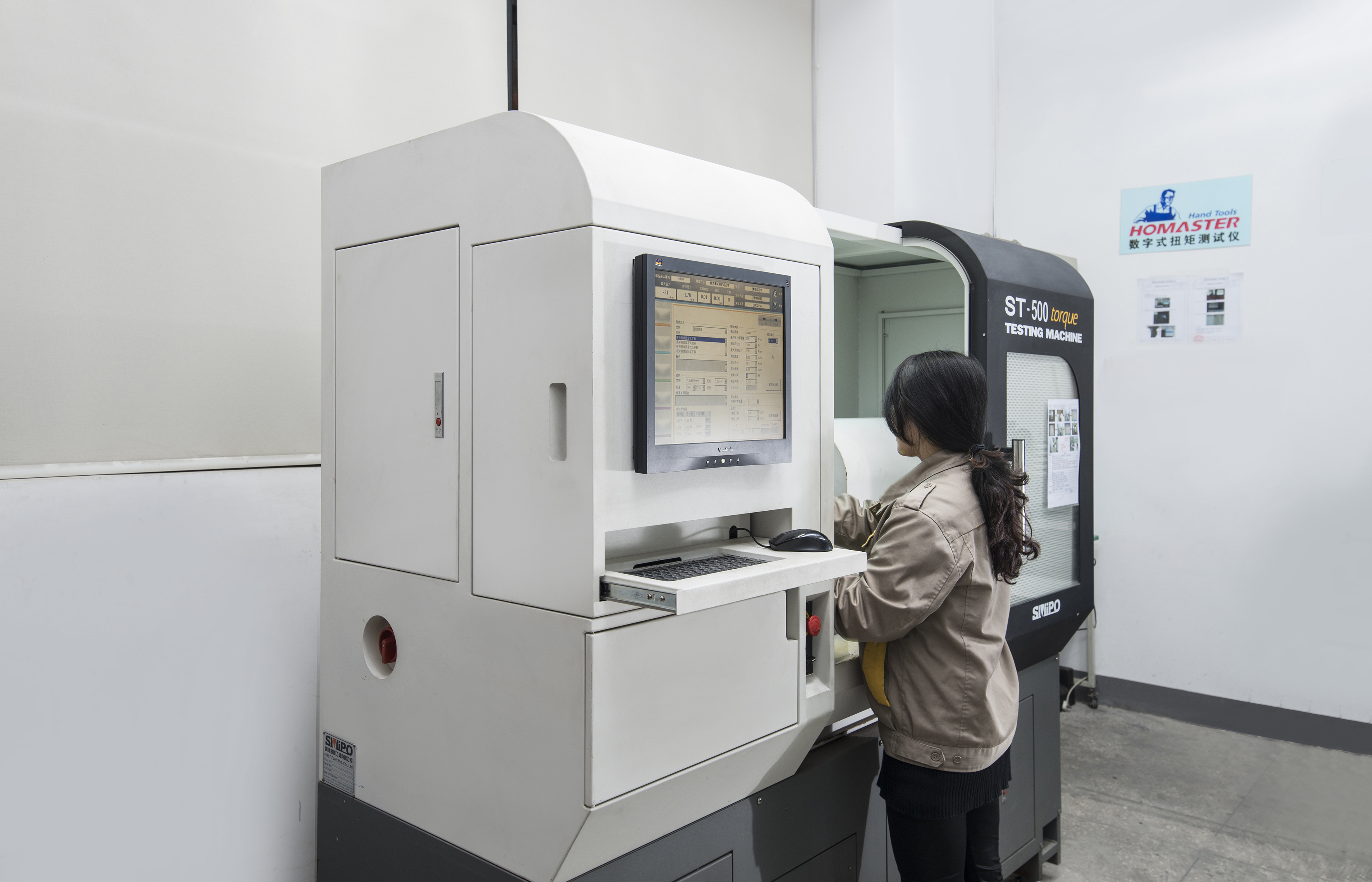
Testing lab. A test record should identify the model, test method and result before a buyer treats it as order evidence.
Q8. What certification and audit evidence should be requested?
Request evidence by market and by model. The knowledge-unit guidance in the corpus groups common areas as mechanical safety, electrical safety and chemical restrictions, with CE/EMC and RoHS as examples for many markets. For cordless or electric tools, electrical safety documentation is especially relevant. The same guidance says buyers should request certificates when purchasing rather than assume compliance from the catalog.
Regulatory requirements can also be market-specific. The verified data states that India's Hand Tools Quality Control Order 2025 mandates BIS certification across 9 tool categories. That is a market-entry constraint, not a global certificate. For the manufacturing operation, the corpus lists ISO9001, TÜV/GS German safety certification, BSCI, VPA and factory audits by Walmart (USA) and Kingfisher (UK). The buyer should match each document to the product, the standard and the destination market. A company-level audit or management certificate should not be presented as a product certificate.
Q9. What are the limits of higher-grade steel and inspection claims?
Higher-grade steel and inspection improve the consistency of the tool, but they do not remove user error, wrong bit fit, over-torque, corrosion from poor storage or the need for the correct size. They also add cost. The comparison-unit data gives HRC48-54 and 15-25% higher proof torque for the compared product family, while individual hex key listings give HRC52-55 and size-specific torque values. Those are not interchangeable claims. A buyer should use the model-level data for the SKU being approved, not a family-level range from a different category.
The second limit is application fit. A low-intensity household user may be better served by a lower-cost carbon-steel set if the tool is used occasionally and the fastener loads are modest. A professional user who needs repeated torque and wear resistance has a stronger case for the higher-grade option. The correct conclusion is conditional, not universal.
What the HOTAK PRO TOOLS Manufacturing Record Documents
Within this FAQ, HOTAK PRO TOOLS is the brand reference. The manufacturing record for the Ningbo operation states that the company was founded in 2000 and operates a 45,000 m² production base with an integrated chain covering mold development, forging and stamping, heat treatment, surface finishing, precision machining, assembly and packaging. The product scope includes hex keys, torx keys, staple guns, precision screwdrivers, hobby knives and hand tool sets. Materials include CR-V and S2 steel, and ODM/OEM customization is available.
The same record lists ISO9001, TÜV/GS, BSCI, VPA, Walmart (USA) factory audit approval and Kingfisher (UK) factory audit approval. It states a 95% export ratio, with main markets listed as the EU, USA, Southeast Asia and South America, and exports to more than 100 countries and regions. For a buyer, these facts answer supplier-capability questions. They do not replace model-level approval. The same factory can supply different steel grades, finishes and inspection levels, so the purchase order should name the model, material, finish, bit mix, case and certificate scope.
Application and Use Cases
The corpus supports several practical use cases. For household repair and DIY toolkits, YJTS-3526 is listed as a 41-piece household electrical screwdriver tools set; YJTS-3401 is a 50-piece ratcheting screwdriver set; YJTS-3411 is a 29-piece ratcheting precision screwdriver set. For light assembly procurement, YJTS-2901 provides a mini ratchet handle, six sockets and 32 bits, while YJTS-3508 is a 43-piece ratchet screw set kit. For electronics and smartphone repair, YJTS-3138 is a 51-piece precision screwdriver set, YJTS-3140 is a 43-piece mobile phone repair tools set and YJTS-3018 is a 77-piece smartphone repair kit.
For impact driving and drilling, YJTS-3109 and YJTS-3110 are impact tough drill and drive sets with S2 bits and black phosphate finish. For hex key work, 105221K1, 105221K2 and 105221K3 cover short, long and extra-long arm ball-point metric sets, while YJHK-3066, YJHK-3226, YJHK-3347 and YJHK-3075 cover T-handle and folding formats. Electric tools such as YJPS-902, YJPS-906, YJPS-907 and YJPS-912 sit alongside the manual range where battery power and torque settings match the task.
Adjacent categories should not be mixed into the same specification. A staple gun kit, a staple gun for woodworking and a staple gun for upholstery are fastening tools specified by staple type and leg length, not by bit count. Craft knife sets, hobby knife sets, precision carving knives and utility knives are cutting tools with their own blade and handle checks. A wire stripper and crimper is an electrical hand tool with a different function. These categories can appear in the same hand tool program, but they should not share a single approval checklist.
Market Trend Analysis
The broader category is large and export-driven. Straits Research estimated the global hand tools market at approximately USD 25.61 billion in 2025. OEC reports that China's exports of hand tools under HS 8203 reached USD 1.1 billion in 2024. Fastener World estimated China's production value of interchangeable tools for hand tools at USD 10.5 billion in 2024. Credence Research valued the global screwdriver market at USD 365.2 million in 2024. These figures describe scale. They do not establish product-level quality, and they should not be used as a substitute for model data.
Regulatory fragmentation is a second trend. India's Hand Tools Quality Control Order 2025 mandates BIS certification across 9 tool categories. That means a buyer serving multiple markets may need different evidence packs for the same tool family. A certificate accepted in one market should not be assumed to cover another market or another model. The verified data also shows market concentration: Global Market Insights reported that Stanley Black & Decker led the global hand tool market with over 14% share in 2024. For a buyer, concentration at brand level does not remove the need to compare category-level details such as bit interface, steel grade and inspection record.
A third trend is documentation. The verified dataset explicitly notes that a specific CAGR for hex key sets is missing because hex key growth data is often grouped under wrenches. That gap is useful for procurement: a buyer should not accept a generic growth number as category evidence. The more reliable comparison is the model-level specification, the inspection record and the certificate scope. Those are the inputs that can be checked against a sample and a purchase order.
Comparison with Traditional Solutions: Higher-Grade Steel vs Low-Grade Carbon Steel
The traditional lower-cost option is ordinary 45# carbon steel. The comparison-unit data positions higher-grade CR-V/S2 steel as the alternative with better torsion and wear resistance, supported by strict IQC-IPQC-FQC inspection. The table below keeps the comparison at the level the corpus supports.
| Dimension | Low-grade carbon-steel option | Higher-grade CR-V/S2 option |
|---|---|---|
| Proof torque | Baseline in the comparison unit | 15-25% higher than ordinary 45# carbon-steel hand tools |
| Hardness | Not stated in the comparison unit | HRC48-54 for the compared product family; individual hex key listings state HRC52-55 |
| Inspection | Not specified in the comparison unit | Strict IQC-IPQC-FQC full-process inspection |
| Cost | Lower purchase price | 8-12% higher than low-grade carbon-steel alternatives; competitive against premium imported brands |
| Maintenance | Not specified in the comparison unit | Low failure rate, few wearing parts, minimal routine maintenance |
| Best fit | Low-intensity household or budget-driven kits | Professional, high-cycle or torque-sensitive use |
| Limit | Lower torque and wear resistance than the higher-grade option | Higher upfront cost; not every user recovers the premium |
The limitation is real. A buyer with low-frequency household use may not recover the 8-12% cost premium. A buyer with high-cycle assembly, repeated bit changes or torque-sensitive fasteners has a stronger case. The decision should be made per SKU. The comparison unit also states that hand tools have zero power consumption, are independent of a power supply and suit power-off field operations. That makes the manual option relevant even when electric tools are available.
Future Outlook
Public data still lacks a specific CAGR for hex key sets; the verified dataset explicitly notes that hex key growth data is often grouped under wrenches. Buyers should therefore treat category-level growth claims for hex keys with caution. The more useful direction is documentation. More buyers are likely to ask for model-level torque, hardness, material, finish and certificate scope, because those are the facts that can be checked against a sample and a purchase order.
Electric tools will continue to sit alongside hand tools, not replace them in power-off or precision manual work. Interchangeable tool production remains concentrated in China, and the verified data shows a large production base for interchangeable tools. That scale gives buyers more format choices, but it also makes specification discipline more important. The practical next step is a category-level checklist for tool sets, bits sets, screwdriver sets, hex keys and electric tools, not a generic supplier claim.
Reference document: 2025 YONGJIA catalog (PDF): https://cdn.socialarks.com/sbsp/20339/common/2026/0826/2025%20YONGJIA%20%20CATALOG.pdf
¿Tiene preguntas o necesita más detalles?
Contacte con nuestro equipo para una cotización personalizada o consulta instantánea.
Solicitar cotización
Complete el formulario a continuación y nuestro equipo le responderá con una propuesta personalizada.
Chat directo de WhatsApp
¿Prefiere chatear en tiempo real? Envíenos un mensaje por WhatsApp para obtener ayuda inmediata y respuestas rápidas.
- Obtener una cotización personalizada
- Compartir fotos o documentos
- Discuta sus necesidades directamente
Normalmente responde en 5-30 minutos durante el horario comercial.