
Technical Procurement FAQ: Dimming Track, Downlight, and Step Light Packages
Technical Procurement FAQ: Dimming Track, Downlight, and Step Light Packages
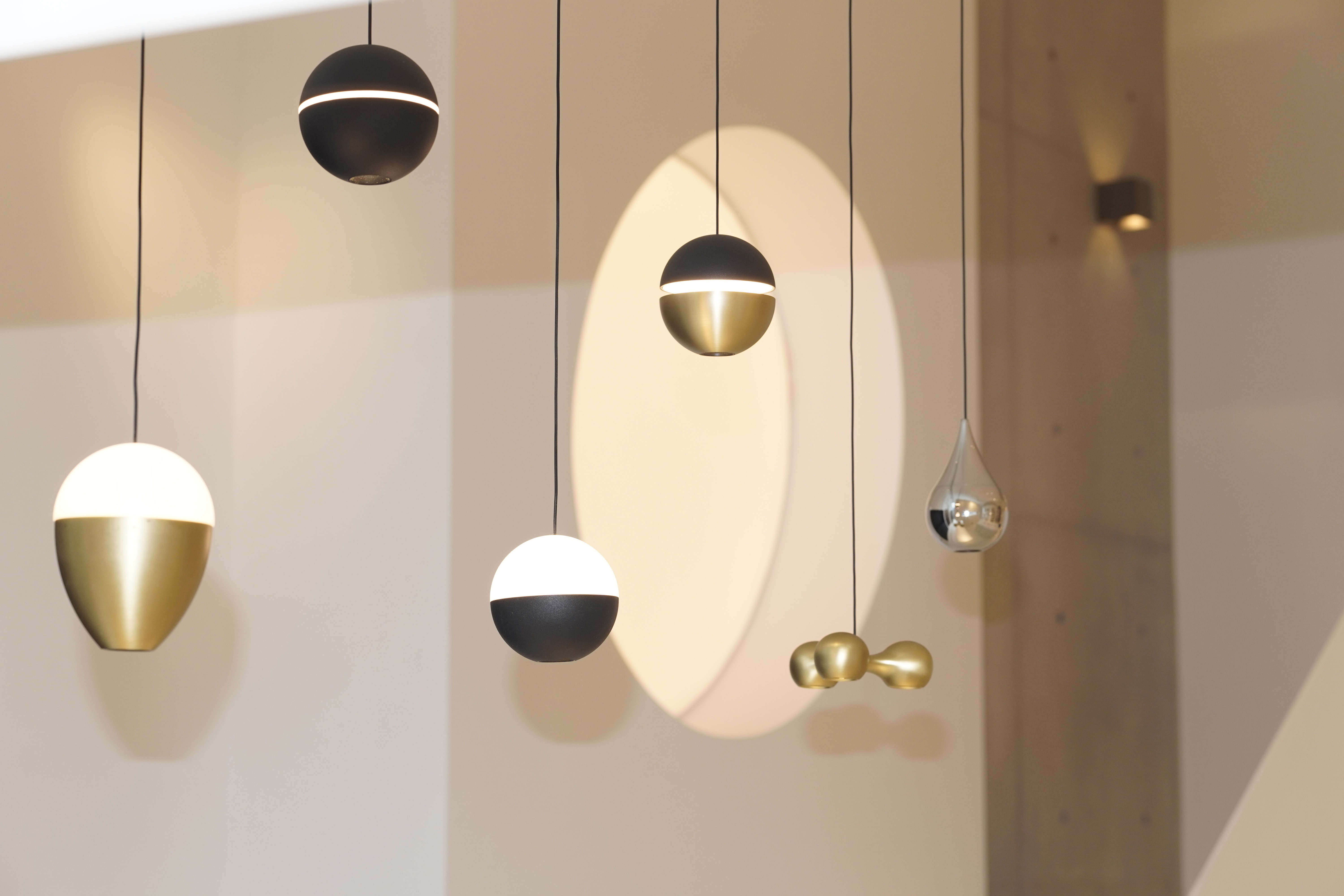
ALPHALUCE architectural lighting reference — coordinated ceiling, track, and step luminaires in one specification package.
Architectural lighting packages rarely fail because one luminaire is badly made. They fail at the seams — where a dimmable track circuit meets a downlight circuit, where a low-voltage step light is added to a package that was priced as a set of independent fixtures, or where an interior ceiling plane hands over to an exterior threshold. The questions below address what specifiers, procurement managers, and lighting contractors most often need confirmed before a mixed dimmable package is released for order.
This reference is written for buyers at the Decision-to-Execution stage — the point at which fixture families have been shortlisted and the remaining risk sits in control compatibility, load grouping, driver access, documentation, and the indoor-to-outdoor transition rather than in the visual brief.
What makes a mixed dimmable package harder to procure than a single fixture line
A package that combines dimmable track lighting, suspended track lighting, magnetic track light, and dimmable spotlights with dimmable downlights and low voltage step lights spans several different electrical behaviours at once. Mains-voltage dimmable AC circuits, low-voltage DC circuits fed by remote transformers, and track systems that may or may not carry control signals on the same bus do not behave identically at the dimmer, and they are not installed by the same trade at the same time.
The procurement consequence is straightforward: specification risk in a mixed package is concentrated in interfaces, not in individual products. Three interface types recur in almost every project — control (which protocol each family accepts), power (which fixtures can share a circuit or a driver), and geometry (cutout sizes, ceiling voids, and transition points).
The opportunity is equally clear. When one supplier is accountable for the optical, electrical, and mechanical interfaces between families, the number of parties who can disclaim responsibility for a compatibility failure drops sharply. That is the commercial argument for consolidating a mixed dimmable package with a vertically integrated manufacturer rather than assembling it line item by line item from independent vendors.
Where ALPHALUCE sits in this package
ALPHALUCE is an Italian architectural lighting brand founded in Florence and operating through ALPHALUCE ARCHITECTURAL LIGHTING CO., a manufacturer established in 2010 with production in Dongguan, Guangdong, China. The company describes itself as a vertically integrated "four-in-one" business covering design, research and development, manufacturing, and sales, with its own foundry, surface treatment facilities, and assembly plants — a structure that places metal processing, finishing, and final assembly inside the same organisation.
The operating scale relevant to package procurement is documented: a 40,000 m² factory, 150 employees, a 20-engineer R&D team, annual output of 504,000 units, and a monthly production capacity of 42,000 units with a typical lead time of 20–30 days. Roughly 80% of output is exported, with Europe, the Middle East, North America, and Australia as the stated export markets, and the company reports long-term partnerships with more than 300 clients across more than 100 countries and regions.
For a mixed dimmable package, three capabilities matter more than the headline numbers:
- Product development scope. ALPHALUCE develops luminaires that combine LED technology with low-glare optics (UGR<19), intelligent controls including DALI and Bluetooth, and high colour fidelity (CRI ≥92/97). Control capability is therefore a development input for the brand rather than an accessory introduced at quotation stage.
- Customisation. The manufacturer provides OEM and ODM production services, which matters when a project requires a non-standard track length, a specific cutout, or a defined trim profile.
- Quality control. Quality control includes 100% inspection and aging tests. The company also describes a three-tier regimen — incoming material inspection, semi-finished product sampling, and 100% finished-product inspection — plus pre-shipment aging durability tests, photometric performance evaluations, and IP waterproof/dustproof testing in an accredited optical laboratory, with traceability records retained.
Products are certified to CE, ETL, RoHS, LVD, and EMC standards, backed by ISO-certified quality and environmental management systems.
The five technical questions that decide whether a package can be ordered
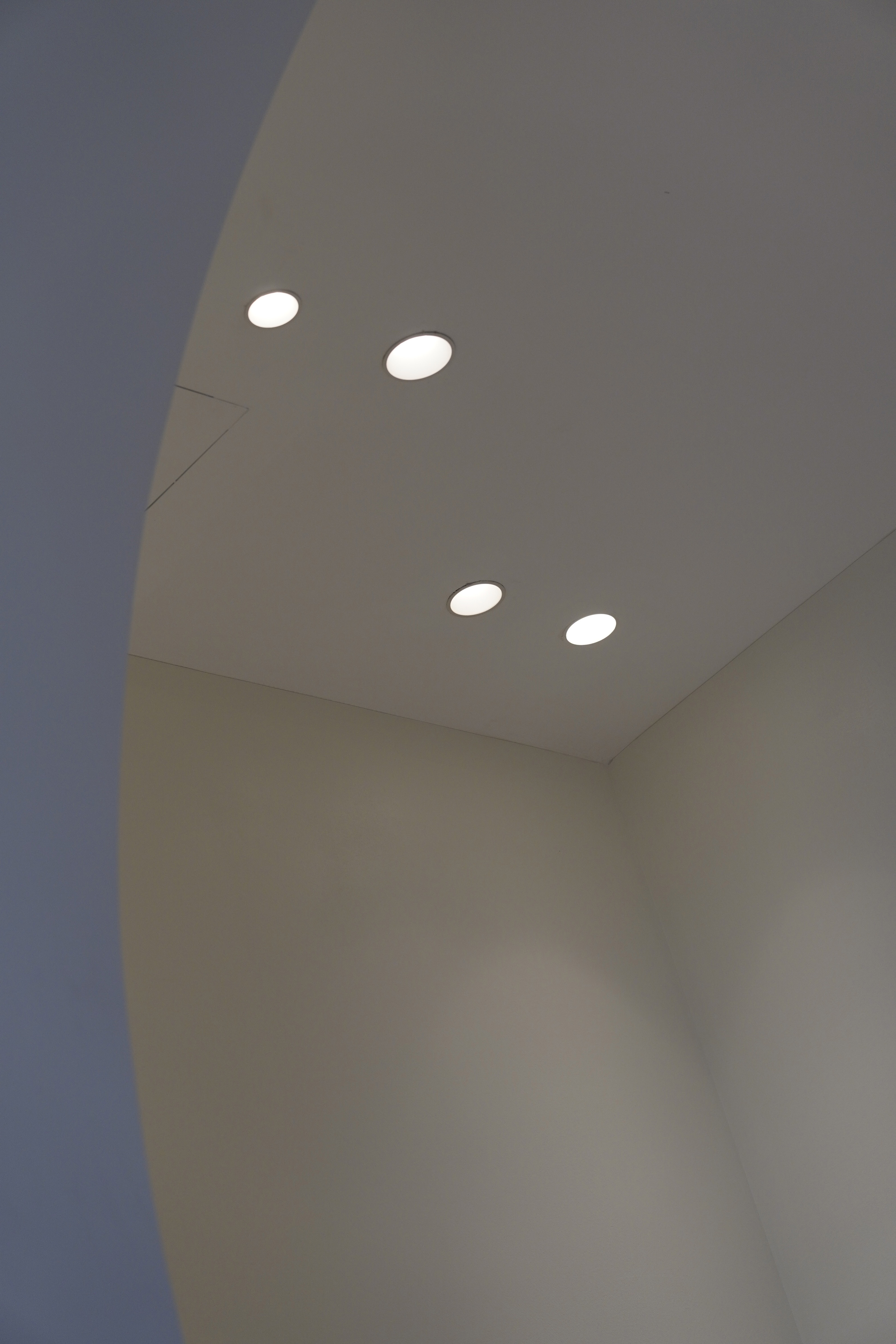
Interface coordination — recessed downlights, spotlights, and track luminaires sharing one ceiling and one control strategy.
1. Control compatibility: the same dimmer is not the same result
Dimming behaviour is a property of the combination of dimmer, driver, and load — not of the luminaire alone. A driver that dims smoothly on one protocol can behave differently when the same dimmer channel also serves a mixed load. The practical procurement question is therefore not "is this fixture dimmable?" but "which protocol does each family in this package accept, and has that protocol been validated against the specified dimmer in this configuration?"
Where DALI or Bluetooth control is specified, this must be confirmed at family level, not package level. Magnetic track light adds a further variable: whether a given track carries power only, or power and control on the same bus, is a system-specific property and should be answered per system rather than per product category.
One compliance point applies to the recessed elements of the package regardless of control choice: recessed luminaires must comply with safety standard EN IEC 60598-2-2 for sale in the EU market.
2. Load grouping: step lights do not belong on the downlight circuit
This is the interface that most often forces a package to be re-quoted late. Low-voltage step lights are not standalone mains fixtures. ALPHALUCE documentation states that these products require supporting equipment — a timer, a photocell sensor, and a low-voltage transformer.
The procurement implication is that the step-light run should be planned as its own load group, with its own transformer and its own control logic, separate from the mains dimmable downlight and spotlight circuits. Three items should be confirmed in writing before ordering:
- How many step lights a single transformer is intended to serve, and whether that transformer is sized for the specified run length.
- Whether the step-light group is required to dim at all, or whether it is controlled by the timer and photocell sensor instead. Placing a sensor-controlled circuit on a dimmer channel is a specification error that is far cheaper to catch at quotation stage than on site.
- Where the transformer and any sensor hardware will physically sit, and whether that location remains accessible after finishes are applied.
3. Driver and transformer access: design the maintenance route before the ceiling closes
Recessed downlights and spotlights are installed from below through a ceiling cutout. Across the ALPHALUCE range relevant to a mixed package, those cutouts vary considerably — from 35 mm on the ALDL1590 ceiling recessed spotlight to 90 mm on the ALDL1712 ceiling recessed trim spotlight. A driver or transformer stored in the ceiling void may or may not be reachable through that opening.
The buyer-side checklist is short but consequential. Confirm whether the driver is serviceable from below the ceiling or requires an access panel; confirm that the available ceiling void depth and thermal clearances are adequate for the driver; and confirm the same for the step-light low-voltage transformer and sensor hardware. A fixture that is correct in isolation can still become a maintenance liability if its driver cannot be reached without cutting plasterboard.
4. Trim, trimless, and the ceiling interface
Trim choice drives both the installation sequence and the allocation of site risk. Where a visible trim is acceptable, the ALDL1712 is a ceiling recessed trim spotlight with a 90 mm cutout, selectable colour temperatures of 2700K, 3000K, and 4000K, beam angles of 15°, 24°, 36°, and 50°, 355° rotation, and 0–45° tilt, rated IP20 and intended for residential, hospitality, commercial, and retail display interiors. For a tighter aperture appearance, the ALDL1608 is a ceiling recessed dimmable spotlight with a narrow trim design, 0–25° tilt, 350° rotation, a 70 mm cutout, and IP20 protection.
Trimless specification shifts the tolerance burden onto the ceiling contractor: the opening must be cut accurately, the plaster interface finished, and the fixture installed in a sequence coordinated with other trades. The trade-off is real and worth stating plainly — a trimless ceiling produces an uninterrupted plane, but it is less forgiving of site tolerance and harder to correct after the ceiling is finished than a trimmed fixture with a covering flange.
Whatever the choice, confirm two commercial details before order: that the specific trim or trimless component is included in the quoted fixture package rather than treated as an accessory, and that cutout diameters are locked across the whole package before ceiling openings are cut. Because cutouts in this range run from 35 mm to 90 mm, mixing models within one ceiling without checking apertures is a common and avoidable source of rework.
5. Indoor-to-outdoor transitions and IP boundaries
IP rating is a boundary condition, not a feature. It defines where a fixture may be used, and mixing ratings inside one package is a procurement error unless the boundary is deliberate.
In the ALPHALUCE range, the ALDL1587 recessed adjustable downlight, the ALDL1851 recessed downlight, the ALDL1590 spotlight, the ALDL1608 dimmable spotlight, and the ALDL1712 trim spotlight are all rated IP20 and intended for dry indoor locations. The ALDL1191 ceiling recessed bathroom spotlight is rated IP54, with 580 lm and 717 lm output options, 7W or 10W rated power, CRI ≥92, and an Ø83 mm cutout, specified for bathroom and wet areas.
Where a project touches regulated wet zones, the rating requirement is set by wiring regulations rather than by preference. UK BS 7671 requires IP44 for Zone 2 and IP65 for Zone 1 above a bath or shower. On the exterior side of the transition, step lights are documented for stairs, corridors, outdoor pathways, and step lighting environments across residential, hospitality, commercial, and landscape applications — the appropriate IP rating for each specific exterior location should be confirmed against the project drawings rather than assumed from the category.
Pre-order confirmation checklist
| Interface | What to confirm in writing |
|---|---|
| Control | Dimming protocol per fixture family; validation of the specified dimmer with the specified driver; for magnetic track, whether control travels on the track bus |
| Load grouping | Step-light run planned as a separate group with its own low-voltage transformer; transformer sizing against run length; whether the group dims or is sensor-controlled |
| Driver access | Serviceability from below the ceiling through the cutout, or an access panel; ceiling void depth and thermal clearance |
| Ceiling geometry | Cutout diameter per model locked across the package (35 mm to 90 mm in this range); trim or trimless component included in the quoted package |
| IP boundary | IP rating per model mapped to the reflected ceiling plan and to each outdoor transition point |
| Documentation | Pre-shipment inspection record and photometric test report defined as acceptance criteria |
Application scenarios where these questions appear
Hospitality corridors and stair cores. Step lights designed for stairs and corridors are typically combined with recessed downlights and, where wall-washing or accent is required, with track. This is the scenario where load grouping matters most, because the step-light run usually follows a different control logic from the corridor lighting above it.
Retail display and museum environments. The ALDL1590 ceiling recessed spotlight is specified for residential, hospitality, commercial, retail display, and museum industries, with 7W rated power, 585 lm, CRI ≥92, beam angles of 15°, 24°, 36°, and 60°, 0–90° tilt, 355° rotation, and a 35 mm cutout. High tilt and rotation ranges are what allow a small number of fixed positions to cover a changing display layout — but the accent positions should be planned against the same control group as the track spotlights beside them.
Bathroom and wet-area interiors in hospitality projects. The ALDL1191 IP54 bathroom spotlight is the compliant element within an otherwise IP20 ceiling, which is precisely why the IP boundary should be drawn on the reflected ceiling plan rather than applied as a general note.
Resort and landscape exteriors. In Austria, 200–500 lighting units of product 6245 were installed for ambient and accent lighting at a resort, delivering architectural and landscape lighting that complements the surrounding mountain setting, with alpine environment adaptability and four-season performance cited as project highlights. Projects of this type are where the exterior portion of a package is separated from the interior specification entirely and procured against different environmental criteria.
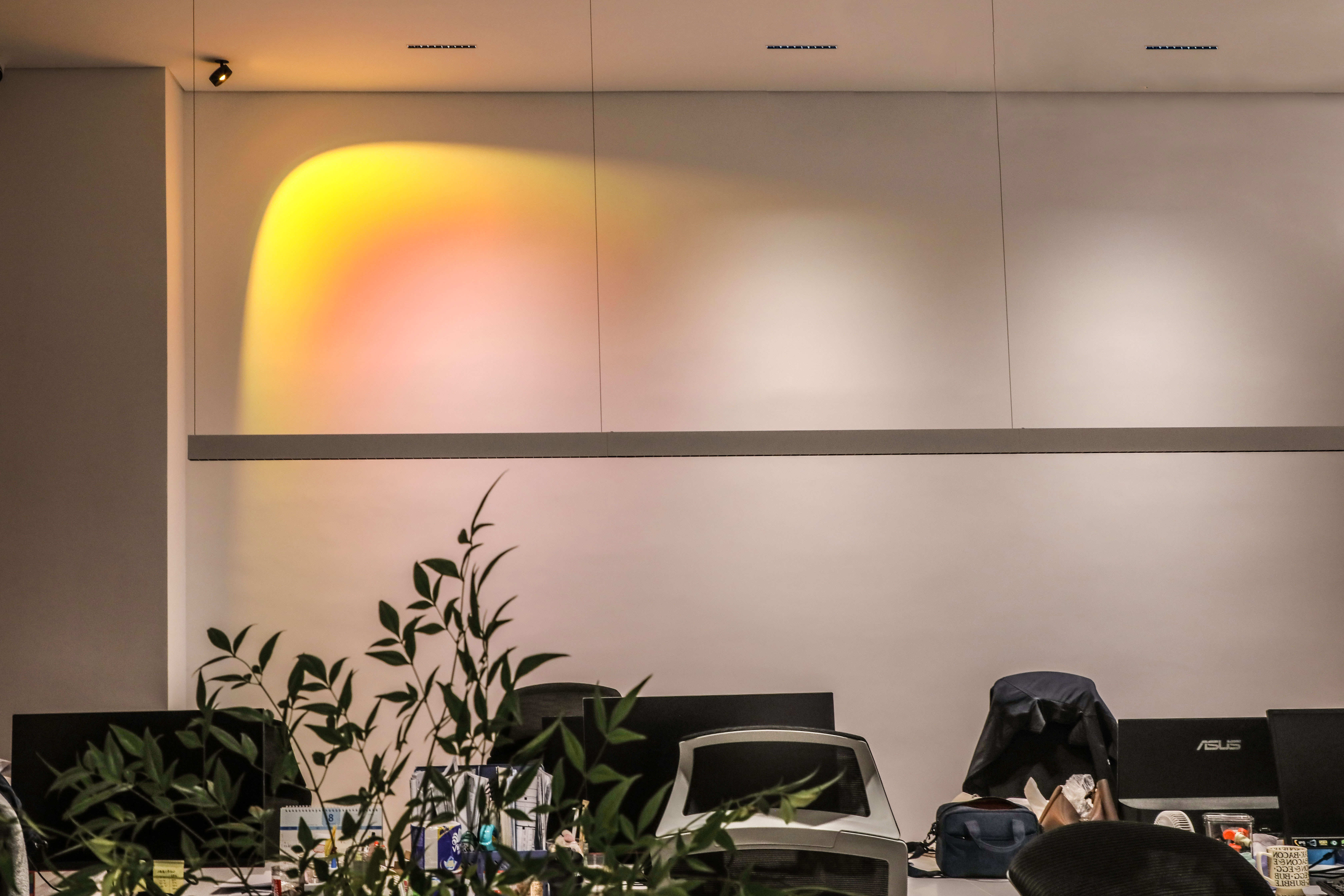
Application reference — where a single package crosses from interior ceilings to exterior thresholds.
Market context: why control and IP documentation now carries procurement weight
The architectural lighting market is large and growing. Grand View Research valued the global architectural lighting market at USD 11.1 billion in 2025 and projects USD 17.5 billion by 2033, with Asia Pacific accounting for a 43.2% revenue share in 2025 and China as the largest single country market. The commercial segment represented 50.9% of market share in 2025.
A parallel signal explains why control compatibility is becoming a procurement topic rather than a design-only topic. Fortune Business Insights sized the human-centric lighting market at USD 3.53 billion in 2024, reflecting a shift toward wellness-oriented architectural design — a shift that is expressed on site as dimming, scenes, and tunable output rather than as fixed illumination.
Market size estimates differ by scope and baseline year. Fortune Business Insights valued the architectural lighting market at USD 8.52 billion in 2024 and Strategic Market Research at USD 8.3 billion in 2024. Published market values should be treated as directional trend indicators rather than as procurement-grade figures.
The practical reading for buyers is that the commercial weight of a package is moving from fixture count toward the control layer and the certification layer. A supplier that can document protocol support per family, IP rating per model, cutout per model, and test evidence per shipment is easier to defend internally than one that can only document lumens.
Comparison with traditional solutions — and the limits of that comparison
The traditional alternative to an integrated package is a design-led brand that outsources production, or a project assembled from multiple specialist vendors. Both approaches work, and both carry genuine advantages — particularly where a signature designer product is required, or where local stock and local service responsiveness outweigh manufacturing control.
The comparison data set supplied for ALPHALUCE positions the integrated model against design-led specialists on measurable dimensions:
| Comparison dimension | ALPHALUCE (integrated manufacturing) | Design-led specialist (comparison set entries) |
|---|---|---|
| Colour rendering | CRI 97 | CRI 92 (ERCO, iGuzzini, Targetti entries) |
| Colour consistency | SDCM 3 | SDCM 4 |
| Rated life (L70) | 50,000 hours | 30,000 hours |
| Ingress protection (outdoor comparison entries) | IP67 | IP54 |
| Indicative cost positioning | 25–55% lower, depending on the comparison entry | Reference baseline |
Two limits should be stated as clearly as the figures. First, these are comparative positioning figures drawn from a supplier comparison data set; they are indicative rather than contractual, and they vary with specification, quantity, configuration, and finish. They are not a substitute for a project-level quotation against a fixed bill of quantities. Second, the comparison addresses optical, ingress-protection, and cost dimensions only. It does not measure design authorship, local availability, or the value a specifier may place on a particular brand's signature product — factors that legitimately decide projects and that no comparison table captures.
There is a further limit specific to this package type. Vertical integration supports customisation and lead-time control, and ALPHALUCE states a typical lead time of 20–30 days against a monthly capacity of 42,000 units. It does not remove the project-side constraints described above: an IP20 luminaire is still an IP20 luminaire, a low-voltage step light still requires its transformer and sensor equipment, and a 35 mm cutout cannot be made to accept a 90 mm fixture.
Future outlook
Three developments are likely to shape how mixed dimmable packages are procured over the next few cycles.
Control becomes a documentation requirement. As DALI and Bluetooth control move from premium specification toward standard expectation, the differentiator shifts from whether a fixture can dim to whether the supplier can evidence which protocol each family supports and how the load was validated. Buyers should request that as a document rather than accept it as a verbal assurance.
Supply continuity enters package evaluation. Concentrated manufacturing capacity in Asia Pacific — 43.2% of global architectural lighting revenue share in 2025 — makes dual-sourcing a practical question rather than a theoretical one. ALPHALUCE's stated approach is to qualify and maintain two to three certified backup suppliers for critical components including LED chips, constant current drivers, and PCB boards, to hold long-term master supply agreements with primary suppliers, and to maintain safety stock for essential components. For any package that depends on a specific driver, that is the continuity question worth raising with every supplier under consideration.
Testing evidence is requested earlier. Photometric reports and IP test documentation are increasingly asked for at tender rather than at delivery. The acceptance criteria applied to ALPHALUCE orders — pre-shipment inspection plus a photometric test report — reflect that expectation, and buyers evaluating alternative suppliers should compare them on the same basis.
Frequently asked questions
1. What should be confirmed about control compatibility before ordering a mixed dimmable package?
Confirm the dimming protocol each fixture family accepts, and confirm that the specified dimmer has been validated with the driver in that configuration — because dimming behaviour is a property of the dimmer, driver, and load combination rather than of the luminaire alone. ALPHALUCE develops luminaires that combine LED technology with low-glare optics (UGR<19), intelligent controls including DALI and Bluetooth, and high colour fidelity (CRI ≥92/97). For magnetic track systems, confirm separately whether the track carries power only or power and control on the same bus, since this is a system-specific property. Recessed luminaires in the package must comply with EN IEC 60598-2-2 for EU market sale.
2. How should dimmable fixtures be grouped into loads when track, downlights, and step lights share one project?
Low-voltage step lights are not standalone mains fixtures. ALPHALUCE documentation states that these products require supporting equipment: a timer, a photocell sensor, and a low-voltage transformer. The step-light run should therefore be planned as its own load group, separate from the mains dimmable downlight and spotlight circuits, with transformer sizing confirmed against the specified run length and with a clear decision on whether the group dims at all or is instead controlled by the timer and photocell sensor.
3. What should be verified about driver and transformer access before ceilings and walls are closed?
Confirm whether each driver is serviceable from below the ceiling through the luminaire cutout or requires an access panel, and confirm that the available ceiling void depth accommodates the driver with adequate thermal clearance. Cutout diameters in the ALPHALUCE range run from 35 mm on the ALDL1590 to 90 mm on the ALDL1712, so accessibility differs by model. The same verification applies to the step-light low-voltage transformer and to any timer or photocell hardware, which must remain reachable after finishes are applied.
4. How do trim and trimless downlight choices affect procurement and installation sequence?
Trim choice moves tolerance risk between the lighting supplier and the ceiling contractor. A trimmed fixture such as the ALDL1712 ceiling recessed trim spotlight, with a 90 mm cutout, provides a covering flange that is relatively forgiving of site tolerance. A narrow trim design such as the ALDL1608, with a 70 mm cutout, tightens the aperture. Trimless specification removes the covering flange entirely and places the tolerance burden on the ceiling opening cut and plaster finish, coordinated with other trades. In all cases, confirm that the trim or trimless component is included in the quoted package and that cutout diameters are locked across the package before openings are cut.
5. What must be confirmed at indoor-to-outdoor transitions, and which IP ratings apply?
Each transition should be treated as a defined boundary rather than a general note. In the ALPHALUCE range, the ALDL1587, ALDL1851, ALDL1590, ALDL1608, and ALDL1712 recessed fixtures are IP20 and intended for dry indoor locations; the ALDL1191 bathroom spotlight is IP54 and specified for bathroom and wet areas. UK BS 7671 requires IP44 for Zone 2 and IP65 for Zone 1 above a bath or shower. Step lights are documented for stairs, corridors, outdoor pathways, and step lighting environments across residential, hospitality, commercial, and landscape applications, and the required IP rating for each exterior location should be confirmed against the project drawings.
6. What are the purchasing terms and acceptance criteria for these products?
The stated terms are a minimum order quantity of 100 units per model, with sample orders accepted; delivery terms of FOB, CIF, or EXW; acceptance criteria of pre-shipment inspection plus a photometric test report; and payment terms of 30% deposit with 70% payable before shipment. Quality control includes 100% inspection and aging tests, supported by a three-tier regimen covering incoming material inspection, semi-finished product sampling, and 100% finished-product inspection, with IP waterproof and dustproof testing performed in an accredited optical laboratory.
A product and specification brochure covering ALPHALUCE recessed downlights, spotlights, track systems, and step lights is available for download: ALPHALUCE architectural lighting brochure. Company contact: info@alphaluce.com / +86 135 5671 7282.