
Technical Procurement FAQ: 0.50–0.70mm PVDF A2 Cladding and 40–80μm PET Lamination

A PET film laminated color coated steel coil — the protective polymer layer that sits between the paint system and the site environment.
Color coated steel coil and sheet has split into two very different procurement conversations. One is volume-led: the global coated steel market was valued at USD 309.5 billion in 2025 and is projected to reach USD 565.8 billion by 2033, while the color-coated steel segment alone was valued at USD 26.93 billion in 2024. The other is specification-led: fire-rated cladding for refinery pipe insulation, where the choice between a 0.50 mm and a 0.70 mm PVDF-REF-A2-ZAM coil, or between a 40–80 μm PET laminate and a heavier film, is settled by documentation, handling behaviour and installed cost rather than by tonnage.
This reference answers the technical questions buyers raise most often on that second conversation. It covers the A2-rated PVDF cladding coil supplied by Chongqing Youngson Metal Products Co., Ltd. (YOUNGSON METAL), a manufacturer and supplier of coated steel coil, sheet and strip, and the PET lamination band used across the company's organic coated product families.
The Procurement Problem: Two Variables That Move Both Cost and Risk
Refinery pipe cladding procurement usually begins with a performance requirement — a fire classification, a chemical exposure, a corrosion expectation — and ends with two variables the buyer can actually write into an RFQ: substrate thickness and surface protection. They change cost for different reasons. Gauge changes the mass of steel per square metre. Film or coating thickness changes polymer input and process time. Neither can be judged in isolation from the fire classification, the substrate coating designation, or the coil geometry the site can physically handle.
The practical difficulty is that these variables are frequently compared on the wrong basis. A 0.70 mm coil is not simply "better" than a 0.50 mm coil, and an 80 μm laminate is not automatically more protective than a 40 μm one in every environment. What matters is whether the specified combination satisfies the tested fire assembly and survives the journey from coil to installed cladding without surface damage.
A useful procurement rule for this category: separate the layer that carries the certification from the layer that carries the surface through handling. One is a documentation problem; the other is a logistics problem. They are specified independently.
Q1. What Exactly Is 0.50–0.70mm PVDF-REF-A2-ZAM Cladding?
PVDF-REF-A2-ZAM-0.5-0.7 is a coated steel coil product from Chongqing Youngson Metal Products Co., Ltd. (YOUNGSON METAL), a China-based manufacturer of coated steel coil, sheet and strip. The model designation describes a PVDF-coated galvanized or Zn-Al-Mg (ZAM) steel coil supplied at 0.50 mm and 0.70 mm thickness in 1000 mm width, engineered for oil refinery thermal insulation and petrochemical pipe cladding.
The specification as documented covers five points that a buyer should treat as the core of the RFQ:
- Base metal: galvanized steel (Z180 designation) or Zn-Al-Mg (ZAM) alloy-coated steel.
- Coating system: PVDF at 20–35 μm topcoat with a 5–15 μm backer, described as providing weather and chemical resistance.
- Fire classification: certified to EN 13501-1 (A2-s1,d0,t1) and ASTM E84 Class A.
- Dimensions: 0.50 mm and 0.70 mm thickness; 1000 mm width.
- Coil geometry: a small-diameter coil option with an inner diameter of 200 mm, engineered for site efficiency in refinery pipe insulation work.
What the two gauges share matters more than what separates them. Both thicknesses are supplied within the same model designation, with the same PVDF coating weight and the same stated fire classification. The difference is steel mass and the mechanical consequences that follow from it.
| Variable | 0.50 mm | 0.70 mm |
|---|---|---|
| Steel mass per square metre | Lower | Higher |
| Coating system (stated) | PVDF 20–35 μm top / 5–15 μm backer | PVDF 20–35 μm top / 5–15 μm backer |
| Stated fire classification | EN 13501-1 A2-s1,d0,t1; ASTM E84 Class A | EN 13501-1 A2-s1,d0,t1; ASTM E84 Class A |
| Coil width | 1000 mm | 1000 mm |
| Stiffness and resistance to site handling damage | Lower | Higher |
| Weight to move, lift and freight per square metre | Lower | Higher |
| Small-diameter coil option | Inner diameter 200 mm | Inner diameter 200 mm |
The selection logic is therefore mechanical and logistical. Longer unsupported cladding spans, rougher site handling, or repeated access for maintenance generally push the specification toward 0.70 mm. Projects where installed weight, forming behaviour and material input dominate generally push toward 0.50 mm. Neither decision changes the coating weight, because the coating system is defined by the product, not by the gauge.
Q2. Why Does the A2 Fire Classification Matter More Than the Gauge?
In a refinery, LNG or offshore environment, the cladding is part of a documented fire strategy rather than a cosmetic jacket. That makes the fire classification the constraint that cannot be traded away, while gauge remains a preference within the certified envelope.
The stated classification for this product family is EN 13501-1 A2-s1,d0,t1 together with ASTM E84 Class A. A buyer can reasonably change gauge, width or coil inner diameter inside that envelope. What a buyer generally cannot do without re-qualification is change the coating chemistry or the substrate family, because the classification was established on a particular substrate-and-coating combination.
Limitation to note: a fire classification applies to the assembly as tested, not to a product name. The available documentation for this category establishes the classification claim at product level; the underlying test report, its edition and the exact assembly tested should be requested and matched against the project specification before order release. Buyers working to a specific edition of EN 13501-1 or ASTM E84 should confirm that edition, not just the class letter.
Q3. What Does 40–80μm PET Lamination Do That Thinner Finishes Do Not?
PET film lamination is a bonded polymer layer that changes the surface the coil presents to the world — during slitting, transit, storage and site cutting. It protects the coating and the substrate surface; it does not carry the corrosion or fire performance of the product.
The documented film range at YOUNGSON METAL is 12 to 200 μm for PET or PVC film options on engineered organic coated steel coils. Within that range, a 40–80 μm band is used where the surface must survive handling and light abrasion without the weight and processing consequences of a much heavier laminate.
The general engineering reasoning is straightforward and does not require a proprietary claim: a thicker film places more polymer between the contact point and the coating, so it absorbs more contact energy before damage reaches the paint system. Below a certain film thickness relative to the roughness and pressure of the handling equipment, that protection becomes marginal. The 40–80 μm band is a working compromise between surface survival and processability — it protects without materially changing coil stiffness or adding disproportionate weight per square metre.
Thickness figures in this category are not interchangeable
Film and coating thickness numbers are frequently compared across product families that are not equivalent. The table below separates the values that appear in the documented specifications, because each one belongs to a different function and a different reference point.
| Layer type | Stated thickness | Function | Reference basis |
|---|---|---|---|
| PET film (PET/PVC laminated family, 40–80 μm band) | 40–80 μm within a 12–200 μm PET/PVC range | Surface protection during handling, slitting and installation | Supplier product documentation |
| PVC film, fire-retardant white VCM (ZAM-VCM-FR-Series) | 40–100 μm | Decorative and fire-retardant interior laminate on ZAM substrate | Product specification |
| PVC film laminated steel coil — standard product family | 150–180 μm | Standardised PVC laminate product family | GB/T 18847-2002 |
| PVDF topcoat (PVDF-REF-A2-ZAM-0.5-0.7) | 20–35 μm top / 5–15 μm backer | Weatherable and chemical-resistant paint system | Product specification |
| Epoxy/polyester powder coating (DC-INS-PRO cable tray material) | 40–80 μm | Electrical insulation and anti-whisker powder coating | Product specification |
Note the deliberate distinction: 40–80 μm appears twice in this category for two unrelated reasons — as a PET film band and as a powder coating thickness on an insulated cable tray material. A PET laminate is not a substitute for a PVDF weatherable paint system, and a powder coating is not a film. Comparing them on thickness alone is a common and expensive misreading of datasheets.
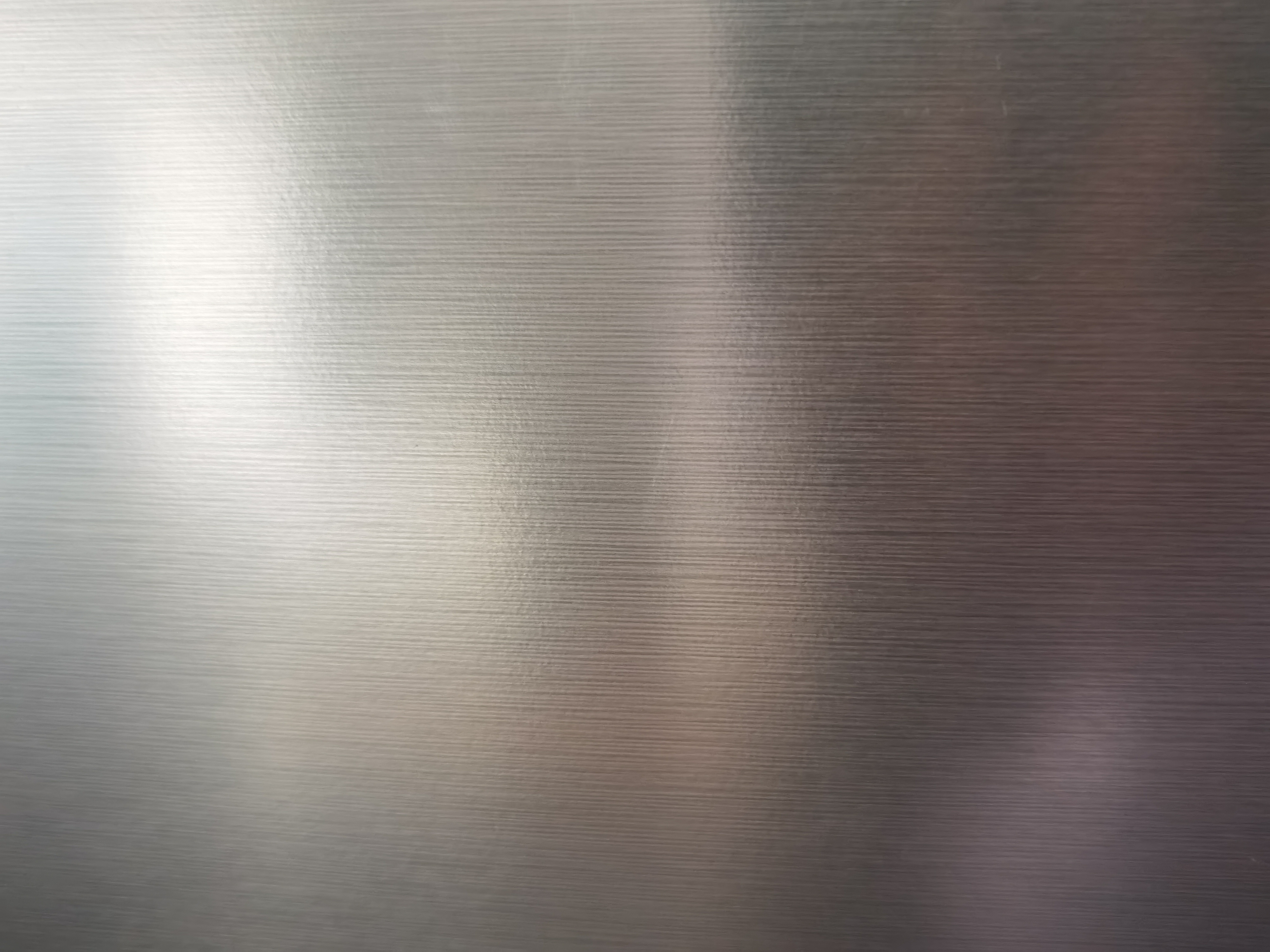
Laminated steel sheet: the film layer is bonded to an already-coated substrate, so film thickness and coating thickness are two separate specification lines.
Q4. Why Do Thicker Coatings or Specific Materials Change Total Cost?
Cost in this category is driven by six inputs, and thickness is only one of them. Understanding which lever a supplier is pricing helps a buyer read a quotation correctly.
- Substrate family. Z180 galvanized steel and Zn-Al-Mg (ZAM) coated steel are different alloy systems with different cost structures, even at the same gauge.
- Coating chemistry. A PVDF system at 20–35 μm topcoat plus 5–15 μm backer uses fluoropolymer resin chemistry. YOUNGSON METAL separately lists HDP, SMP and PVDF coating systems, which are not cost-equivalent to one another.
- Gauge. At the same width, 0.70 mm consumes more steel per square metre than 0.50 mm, so material cost scales with mass.
- Film lamination. A film layer adds both polymer material and a lamination process step; a heavier film adds more of each.
- Processing. Slitting, cut-to-length and small-diameter coiling all carry cost. YOUNGSON METAL reports a precision slitting capability spanning 0.05–3.5 mm thickness and 1.5–1800 mm width, with a stated width tolerance and burr range of 0.03–0.10 mm.
- Order size, lead time and documentation. The coating line reports an MOQ of 2–3 tons as per sizes with a 5–30 day lead time as per sizes; the precision slitting line reports an MOQ of 1 ton as per specifications with a 15–30 day lead time as per specifications. Documentation scope — mill test certificates to EN 10204 3.1, third-party inspection by SGS, BV or TÜV, and EPD and CFP data to ISO 14067 — also forms part of the commercial offer.
A cost caution that matters more than any estimate. Publicly verifiable price benchmarks for A2-rated PVDF cladding coil or for 40–80 μm PET laminated coil are not available in the sources compiled for this category. That means a genuine total-cost comparison cannot be assembled from published indices. It has to be built from quotations that itemise substrate, coating system, gauge, film, coil geometry, order quantity, documentation and freight separately — otherwise the comparison is not like for like.
Q5. How Should a Buyer Verify PVDF and PET Claims Before Purchase?
Verification in this category follows a document chain, and the chain has a known gap that buyers should plan around.
Documents that exist and can be requested
- Chemical compliance certificate. An SGS RoHS 2.0 and REACH heavy-metal-free compliance certificate for color coated steel, certificate number CZXHL25000452102, issued 27 March 2025 and valid to 2099-01-01. Its scope covers color coated steel strip, sheet and coil from 0.14 mm to 2.0 mm thickness, across the EU, USA, Asia, Middle East, Africa, South America and China. Test basis: IEC 62321, 2011/65/EU, (EU) 2015/863, and IEC 62321-8:2017 by ICP-OES/AAS, UV-Vis and GC-MS.
- Mill test documentation. MTC to EN 10204 3.1 with batch traceability, with third-party inspection by SGS, BV or TÜV supported.
- In-house quality control. 100% in-house inspection covering thickness, coating mass, tensile strength, T-bend, salt spray and surface roughness.
- Adhesion and forming evidence. Erichsen cupping and cross-cut adhesion tests, plus 0T/1T T-bend flexibility verification, are the stated methods.
- Company-level qualifications. YOUNGSON METAL is described as a BV ISO 9001:2015 certified manufacturer founded in 2016, operating a 3,000 m² facility with an annual processed capacity exceeding 10,000 tons, a 5-engineer and senior process technician R&D team, and an export ratio of approximately 70%.
Adhesion retention is the variable that most often fails in field service rather than in the lab, which is why retained-bond testing regimes matter. In a related deep-drawing program for heat-transfer components, the same supplier reports zero coating delamination or cracking after more than 5,000 hours of continuous high-temperature thermal cycling on a matte black coated electrogalvanized substrate held to ±0.02 mm thickness tolerance — a useful illustration of how bonding performance is verified, though it belongs to a different product family and different application.
The gaps buyers should close themselves
- Product-specific standard mapping. The company references EN, ASTM, JIS, GB and ISO standards at portfolio level; the exact standard number, edition, grade and product-to-standard mapping should be obtained per item.
- Fire test reports for the exact substrate, coating and gauge combination.
- Warranty conditions. A 10–15 year warranty is stated for certain prepainted steel products without documented exposure conditions, exclusions or claim procedures.
- Measurement basis for coating mass designations such as Z180 and Z275, and for the stated slitting tolerance and burr figures.
Q6. What Are the Limits and Trade-offs?
A specification note that omits limits is not a specification note. The following boundaries apply to this product family and should be stated in the RFQ rather than discovered at installation.
- The fire classification is assembly-specific. A2-s1,d0,t1 and ASTM E84 Class A apply to the tested combination of substrate, coating and thickness. Substituting a different substrate family or coating chemistry invalidates the assumption, even at the same gauge.
- A PET film is not a performance coating. It protects the surface through handling; it does not provide weathering, fire or corrosion performance, and it is not a replacement for the PVDF paint system underneath.
- PET and PVC are not interchangeable. They are different polymers with different process routes, and the reference standard for PVC film laminated steel coils (GB/T 18847-2002) specifies a 150–180 μm film thickness — well outside a 40–80 μm band. Treating the two as equivalent requires functional equivalence evidence that is not established by thickness alone.
- Heavier film has physical consequences. More polymer per square metre adds coil weight, which affects lifting, freight and site handling even when surface protection improves.
- Several key values are company-reported. The 12–200 μm film range, the Z180 and Z275 designations, the 0.20–2.0 mm prepainted thickness range, the slitting tolerance and burr figures, and the 10–15 year warranty claim are supplier-reported specifications. They are usable as a starting point for qualification, not as independently certified results.
- No public price benchmark exists. Any statement that one thickness or coating is cheaper in absolute terms for this category cannot currently be supported by published data.
Q7. Where These Specifications Fit: Application Scenarios
The PVDF-REF-A2-ZAM-0.5-0.7 coil is specified for oil and gas refineries, petrochemical plants, offshore platforms, LNG facilities and industrial thermal insulation engineering. The 200 mm inner diameter option exists for site efficiency in refinery pipe insulation work, where smaller, lighter coils are easier to manoeuvre around pipe runs and scaffolding.
A second, distinct family covers the interior fire-rated environment. The ZAM-VCM-FR-Series uses a white VCM film at 40–100 μm on a ZAM substrate across a 0.50–0.70 mm thickness range and a 1000–1250 mm width, with a UL 94 V-0 flame retardancy rating for the PVC film, EN 13501-1 Class B-s1,d0 and ASTM E84 Class A ratings, BS 476 Part 6/7 Class 0, and 1000h+ salt spray verification. Its stated application list covers data centres and mission-critical infrastructure, medical facilities and pharmaceutical cleanrooms, marine and offshore vessel interiors, server enclosures and telecom cabinets, precision metal cassettes and high-end fire door OEM, and industrial controlled environments.
A third family addresses cable management: the DC-INS-PRO insulated pre-coated cable tray material uses a 1.0–1.2 mm galvanized Z200 or ZAM substrate at 4–1250 mm width with a 40–80 μm high-density epoxy or polyester powder coating, positioned for hyperscale data centres, AI supercomputing facilities, precision server room infrastructure and cleanroom cable management.
Market Trend Analysis
The direction of this category is visible in the market figures compiled for it. The total coated steel market was valued at USD 309.5 billion in 2025 and is projected to reach USD 565.8 billion by 2033, while the color-coated steel segment was valued at USD 26.93 billion in 2024. Read together, these figures describe a large and expanding substrate category in which the color-coated segment is a distinct, specification-driven slice rather than a proxy for the whole.
Two structural signals accompany that growth. The first is regulatory documentation — RoHS and REACH heavy-metal compliance, EPD and CFP carbon footprint data to ISO 14067, and CBAM-related emission reporting are increasingly part of the commercial offer rather than an afterthought. The second is the persistence of product-family standards such as GB/T 18847-2002 for PVC film laminated steel coils, which continue to anchor how film thickness is specified in that product family.
Source note: these market values come from commercial market research compiled for this category and are used here for directional context. They are not official government statistics, and they should not be used as a substitute for project-level demand or pricing analysis.
Future Outlook
Three shifts are reasonable to expect in how this category is bought.
First, procurement will increasingly be decided on document sets rather than on material claims. A supplier that can produce a batch-linked compliance certificate, a mill test certificate to EN 10204 3.1, adhesion test results and carbon footprint data in one package will be easier to qualify than one that produces a datasheet.
Second, thin, function-specific laminates and heavy standardised laminates are likely to continue coexisting rather than converging. The 40–80 μm PET band and the 150–180 μm PVC film band defined by GB/T 18847-2002 answer different questions, and buyers are beginning to specify them by function rather than by thickness ranking.
Third, verification capacity may become as much of a differentiator as coating chemistry. Cross-cut adhesion testing, Erichsen cupping, T-bend verification and retained-adhesion testing after thermal cycling are all measurable, reproducible checks — and they are the checks that separate a documented specification from a claimed one.
FAQ
Is 0.50 mm or 0.70 mm PVDF cladding better for refinery pipe insulation?
Neither is universally better. Both thicknesses are supplied within the same PVDF-REF-A2-ZAM-0.5-0.7 designation at 1000 mm width, with the same PVDF coating system (20–35 μm topcoat, 5–15 μm backer) and the same stated fire classification (EN 13501-1 A2-s1,d0,t1; ASTM E84 Class A). The 0.70 mm option carries more steel mass per square metre, which suits longer unsupported spans and rougher site handling; the 0.50 mm option reduces mass, handling weight and material input. The decision should follow the project's cladding specification and the tested fire assembly rather than a general preference.
Does a 40–80 μm PET lamination replace the PVDF coating?
No. The PVDF layer is the weatherable and chemical-resistant paint system, documented at 20–35 μm topcoat with a 5–15 μm backer. The PET film is a bonded polymer layer used for surface protection during slitting, transit and installation, and it sits within a documented PET or PVC film range of 12–200 μm. The two layers serve different functions and are specified as separate lines in a quotation.
Do thicker coatings always increase total cost?
Thicker layers increase material input, but total cost also depends on substrate family, gauge, coil geometry, order quantity, documentation scope and lead time. For reference, the coating line reports an MOQ of 2–3 tons as per sizes with a 5–30 day lead time as per sizes, and the precision slitting line reports an MOQ of 1 ton as per specifications with a 15–30 day lead time as per specifications. Because publicly verifiable price benchmarks for A2 PVDF cladding or 40–80 μm PET laminated coil are not available, total cost has to be assessed from itemised quotations rather than from published indices.
Can PET and PVC laminated steel coil be used interchangeably?
They should not be treated as interchangeable without functional equivalence evidence. PET and PVC are different polymers, and the reference standard for PVC film laminated steel coils, GB/T 18847-2002, specifies a film thickness of 150–180 μm — outside a 40–80 μm band. Where fire performance is in scope, the ZAM-VCM-FR-Series uses a fire-retardant white VCM (PVC) film at 40–100 μm with a UL 94 V-0 flame retardancy rating and EN 13501-1 Class B-s1,d0, a different performance envelope from a PET-laminated finish.
What documents should accompany an A2 PVDF cladding order?
At minimum: a mill test certificate to EN 10204 3.1 with batch traceability; the SGS RoHS 2.0 and REACH heavy-metal compliance certificate covering the exact product and thickness (the current certificate CZXHL25000452102 covers color coated steel strip, sheet and coil from 0.14 mm to 2.0 mm); the fire test report for the specified standard and edition; coating mass and adhesion results, with cross-cut and Erichsen cupping as the stated in-house methods; and, for carbon-regulated markets, EPD and CFP documentation to ISO 14067. Third-party inspection by SGS, BV or TÜV is supported.
Does an A2 fire rating apply to the whole cladding system?
A fire classification applies to the assembly as tested, which includes the substrate, the coating system and the thickness combination. Buyers should confirm that the report covers the exact gauge and substrate being ordered — Z180 galvanized or ZAM — and the specific edition of EN 13501-1 or ASTM E84 required by the project. A product-family statement of class is a starting point, not a substitute for the report itself.
How is coating adhesion actually verified in production?
The stated in-house protocol includes Erichsen cupping and cross-cut adhesion testing plus 0T/1T T-bend flexibility verification, alongside 100% in-house inspection of thickness, coating mass, tensile strength, salt spray and surface roughness. In a related deep-drawing program for heat-transfer components, the supplier reports zero coating delamination or cracking after more than 5,000 hours of continuous high-temperature thermal cycling on a matte black coated electrogalvanized substrate held to ±0.02 mm thickness tolerance. That program belongs to a different product family; buyers should request batch-level adhesion results for their own specification.
Reference Document
A public product catalogue covering the coated steel coil, sheet and strip range discussed above is available for download: Chongqing Youngson Metal Products Co., Ltd. product catalogue (PDF).
¿Tiene preguntas o necesita más detalles?
Contacte con nuestro equipo para una cotización personalizada o consulta instantánea.
Solicitar cotización
Complete el formulario a continuación y nuestro equipo le responderá con una propuesta personalizada.
Chat directo de WhatsApp
¿Prefiere chatear en tiempo real? Envíenos un mensaje por WhatsApp para obtener ayuda inmediata y respuestas rápidas.
- Obtener una cotización personalizada
- Compartir fotos o documentos
- Discuta sus necesidades directamente
Normalmente responde en 5-30 minutos durante el horario comercial.