
Tablets, Capsules, Softgels: Blister Cartoner Scenario Fit
Solid dosage formats are routinely grouped under one label, but a compressed tablet, a two-piece capsule, a softgel and a nutraceutical tablet do not present the same geometry, feeding behaviour or tooling requirements to the same blister cartoner line. Scenario fit — whether a specific format can be formed, sealed, transferred, inserted and closed at the rate a project actually needs — is therefore a procurement decision, not a datasheet headline.
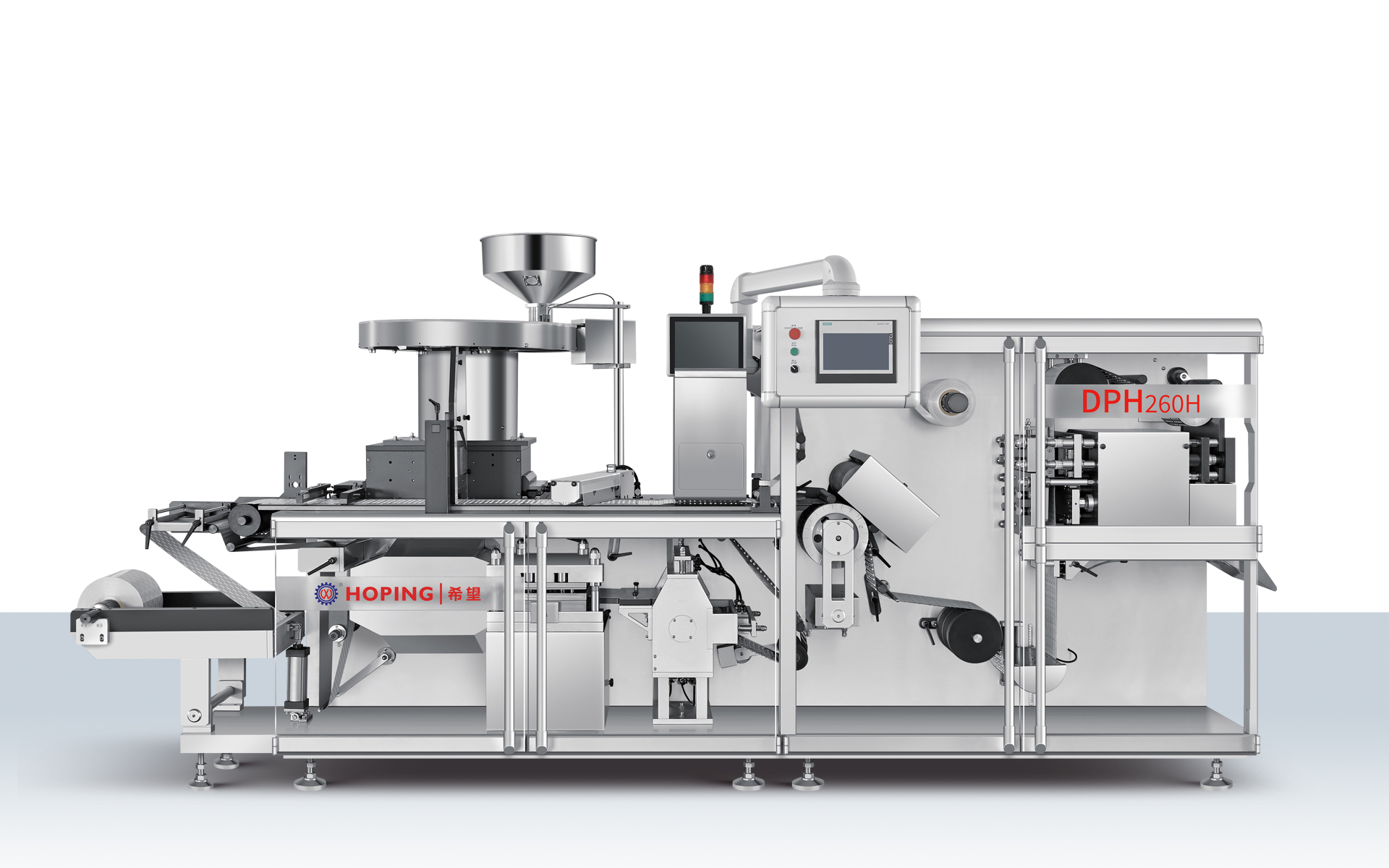
This reference maps pharmaceutical packaging machine applications to four solid dosage scenarios: tablets, capsules, softgels and nutraceuticals, together with the healthcare products that share their packaging formats. It uses the Automatic Blister-Cartoning Line / Blister Cartoner Line category as the reference architecture and the model DHL8005H as a worked example of a high-speed configuration.
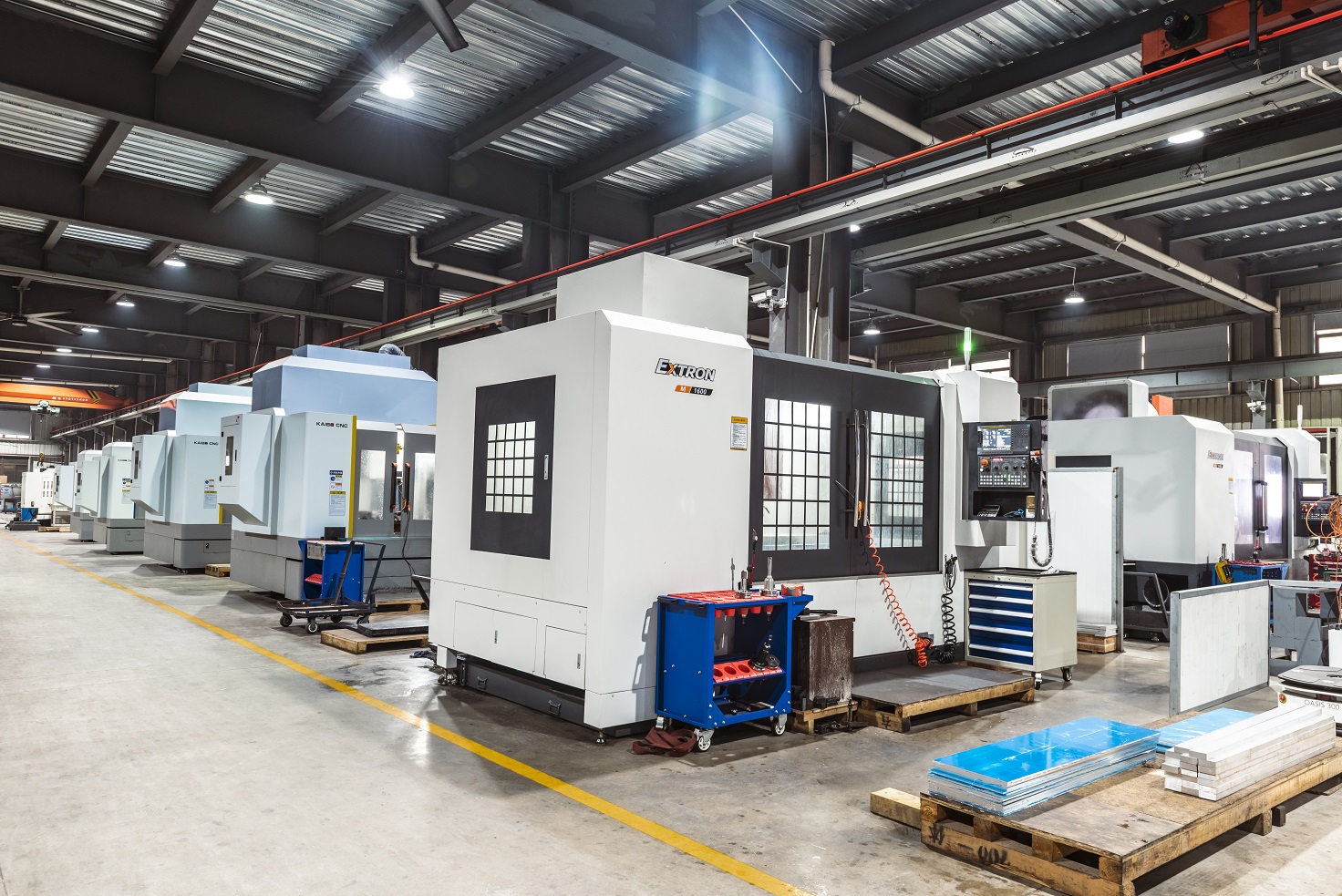
Zhejiang Hoping Machinery Co., Ltd. is a Chinese pharmaceutical packing machinery manufacturer founded in 2001, producing blister packaging machines, cartoning machines, case packing machines and end-of-line packaging machines, with a factory area of 28,800 m², approximately 300 employees and 56 R&D engineers. Its DHL8005H is an intelligent fully servo high-speed blister-cartoner integrated machine, described in the company’s product data as a solid dosage turnkey packing line with a maximum capacity of up to 800 blisters per minute and 500 cartons per minute.
Why Scenario Fit Outranks Headline Capacity
The phrase “pharmaceutical packaging machine” describes a category, not a specification. Two projects can both be described as needing a blister cartoner line and still require materially different machines, because the deciding variables sit below the category level: blister pocket geometry, product geometry, units per blister, blisters per carton, carton size, leaflet format, coding and inspection method, and the equipment the line must connect to upstream and downstream.
Operating-environment data for integrated blister-cartoning projects describes the conditions these lines are specified for: GMP-oriented cleanroom or pharmaceutical packaging workshop conditions, continuous high-speed operation, multi-batch and multi-format production, and requirements for stability, easy cleaning, safety protection and traceability-oriented operation. None of those conditions is satisfied by a single number on a specification sheet. They are satisfied — or not — by how the line is configured for a particular product mix.
The same scenario data lists five recurring project types: a new solid dosage blister packaging line; an existing packaging line upgrade; a high-capacity expansion; an intelligent packaging workshop retrofit; and a blister-cartoning-bundling or case-packing downstream integration project. A new high-capacity line and a retrofit inside an existing workshop draw on the same machine family but different engineering priorities, which is why fit is best treated as the first filter in supplier evaluation rather than the last.
The Four Stages Where Scenario Fit Is Won or Lost
An integrated blister-cartoning line is easiest to evaluate as four linked stages. Each stage has its own fit criteria, and a project is properly fitted only when all four have been confirmed against the actual package.
- Blister forming and sealing. Capability here is defined by blister material and pocket geometry. The line scope covers high-speed blister forming and sealing, and the wider machine range includes both roller and flat-plate platforms with Alu-PVC and Alu-Alu capability.
- Transfer and product feeding. Transfer is where format differences become mechanical. The DHL8005H uses a D3 intelligent top-loading parallel tracking transfer system and supports multiple feeding methods rather than a single fixed infeed.
- Leaflet and carton stage. Carton opening, blister insertion and leaflet handling determine whether a format can be cartoned at line rate. Leaflet format is one of the parameters confirmed at project stage.
- Inspection, rejection and downstream connection. Coding, inspection and rejection sit inside the line scope, followed by connection to bundling, case packing and palletizing equipment.
The parameters that decide fit are consistently the same set: capacity, blister format, carton size, leaflet format and downstream connection. Product-contact parts and tooling are then configured against those confirmed formats.
Where the DHL8005H Sits in the Integrated Line Range
Capacity tiers within an integrated blister-cartoner range are separated by transfer and control architecture as much as by speed. The comparison below uses published maximum ratings for models in this range. Every figure is a maximum at confirmed format, not an expected average output.
| Model | Blister capacity (max) | Carton capacity (max) | Transfer / replenishment / control architecture |
|---|---|---|---|
| DHL6004 | up to 600 blisters/min | up to 400 cartons/min | Servo-driven independent replenishment; Beckhoff motion controller and CP9315 industrial PC; high-speed transfer and cartoning linkage |
| DHL7004 | up to 700 blisters/min | up to 400 cartons/min | Self-developed IRB24 intelligent transfer robot; servo-driven independent replenishment; Siemens motion controller and TP900 HMI; full servo drive |
| DHL7005H | up to 700 blisters/min | up to 500 cartons/min | Self-developed IRB24 intelligent transfer robot; independent replenishment; Siemens motion controller and TP900 HMI |
| DHL8005H | up to 800 blisters/min | up to 500 cartons/min | D3 intelligent top-loading parallel tracking transfer system; multiple feeding methods; PVC/Alu foil auto splicing; three-channel servo-driven independent replenishment; Beckhoff motion controller and CP9315 industrial PC; mold-change and preset-memory functions |
| DHL1000/5H | up to 1000 blisters/min | up to 500 cartons/min | D3 intelligent top-loading parallel tracking transfer system; four-channel servo-driven independent replenishment; Beckhoff motion controller and high-bus industrial control system |
Technical Explanation: Control, Replenishment and Changeover
Three-channel servo-driven independent replenishment
Independent replenishment channels allow material feed to be managed per channel instead of through one shared feed. On the DHL8005H the system is three-channel and servo-driven; the higher-capacity DHL1000/5H uses a four-channel servo-driven independent replenishment system. Channel count is a scenario variable rather than a ranking: more channels give a line more ways to balance feed across wider or multi-lane blister formats, while fewer channels suit simpler products and simpler carton counts.
Beckhoff motion controller and CP9315 industrial PC
The DHL8005H is built on a Beckhoff motion controller with a CP9315 industrial PC. Other models in the same family use different platforms — the DHL7004 and DHL7005H use Siemens motion controllers with TP900 HMI, while the DHL1000/5H pairs a Beckhoff motion controller with a high-bus industrial control system. For buyers, this is a lifecycle question as much as a performance question: controller family affects spare-part sourcing, engineering support and the effort required to add data interfaces later in the line’s life.
Transfer, splicing and changeover
The D3 intelligent top-loading parallel tracking transfer system moves blisters into the carton path, and PVC and Alu foil auto splicing keeps material supply aligned with continuous high-speed operation. Mold-change and preset-memory functions address the other half of the scenario problem: multi-batch, multi-format production. Preset memory stores per-format settings so that a changeover returns the line to a known state instead of depending on manual re-adjustment.
GMP orientation is the remaining thread. On the DHL8005H, product-contact parts and tooling are configured according to technical agreement, and machine structures use stainless steel and aluminium alloy with transparent guarding. Elsewhere in the range, published material data specifies AISI 316L stainless steel and FDA-compliant pharmaceutical-grade materials for product-contact parts, with AISI 304 stainless steel and anodized aluminium alloy for non-product-contact parts, in machines designed and manufactured in accordance with GMP requirements and featuring corrosion-resistant, easy-to-clean surfaces. For a buyer, the practical meaning is that the material and cleanability question is answered in writing at specification stage, per project.
Scenario by Scenario: Tablets, Capsules, Softgels and Nutraceuticals
Each solid dosage family reaches the line with a different set of confirmable parameters. The table below separates what the published data supports from what has to be confirmed in a specific project.
| Scenario | What the published data supports | What must be confirmed before order |
|---|---|---|
| Tablets | DPH Series roller blister packing machines are listed for pharmaceutical tablets; DPP260K is listed for pharmaceutical tablets and healthcare products in flat Alu-PVC / Alu-Alu formats; the DHL8005H is listed for capsule/tablet packaging | Blister pocket geometry and forming depth; tablets per blister; blisters per carton; carton size; coding and inspection method |
| Capsules | DPH Series machines are listed for pharmaceutical capsules; the DHL8005H applicable industry covers capsule/tablet packaging and pharmaceutical solid dosage production | Capsule size range; feeding method (the DHL8005H supports multiple feeding methods); orientation behaviour at transfer; carton count per format |
| Softgels | DPH Series roller platforms are listed for pharmaceutical soft capsules in Alu-PVC and Alu-Alu solid dosage applications | Tooling and product-contact parts matched to softgel geometry per technical agreement; blister depth; transfer stability at line rate |
| Nutraceuticals and healthcare products | DPP260K and DPP260TI are listed for nutraceutical and healthcare blister packaging; the DHL8005H applicable industry includes healthcare products and nutraceutical blister-cartoning projects | Carton specification; leaflet format; batch/date coding; number of units per carton; downstream connection |
| Blister material | Roller and flat-plate platforms in the range are described as Alu-PVC / Alu-Alu capable, with PVC and Alu foil auto splicing on the integrated line | Which material combination the product and its stability profile require; whether auto splicing is needed for the run length |
No row in this table should be read as an unconditional compatibility claim. The line’s own scope statement is explicit that tooling and contact parts are configured to confirmed blister and carton specifications, and cartoners in the same portfolio are described as suitable for regular products “subject to confirmed format.” The practical question for a buyer is therefore not whether a line runs capsules in principle, but whether it runs a specific capsule at a specific carton count, at the rate the production plan requires, with tooling the plant can maintain over the life of the line.
Application and Project Types
Integrated blister-cartoning lines in this class are applied in industrial plant renovation projects for packaging lines as well as in greenfield builds. Their function is consistent: complete blister packaging, leaflet folding, carton opening, blister insertion, batch/date coding, inspection and rejection, and downstream connection — with the stated purpose of improving automation and reducing manual transfer.
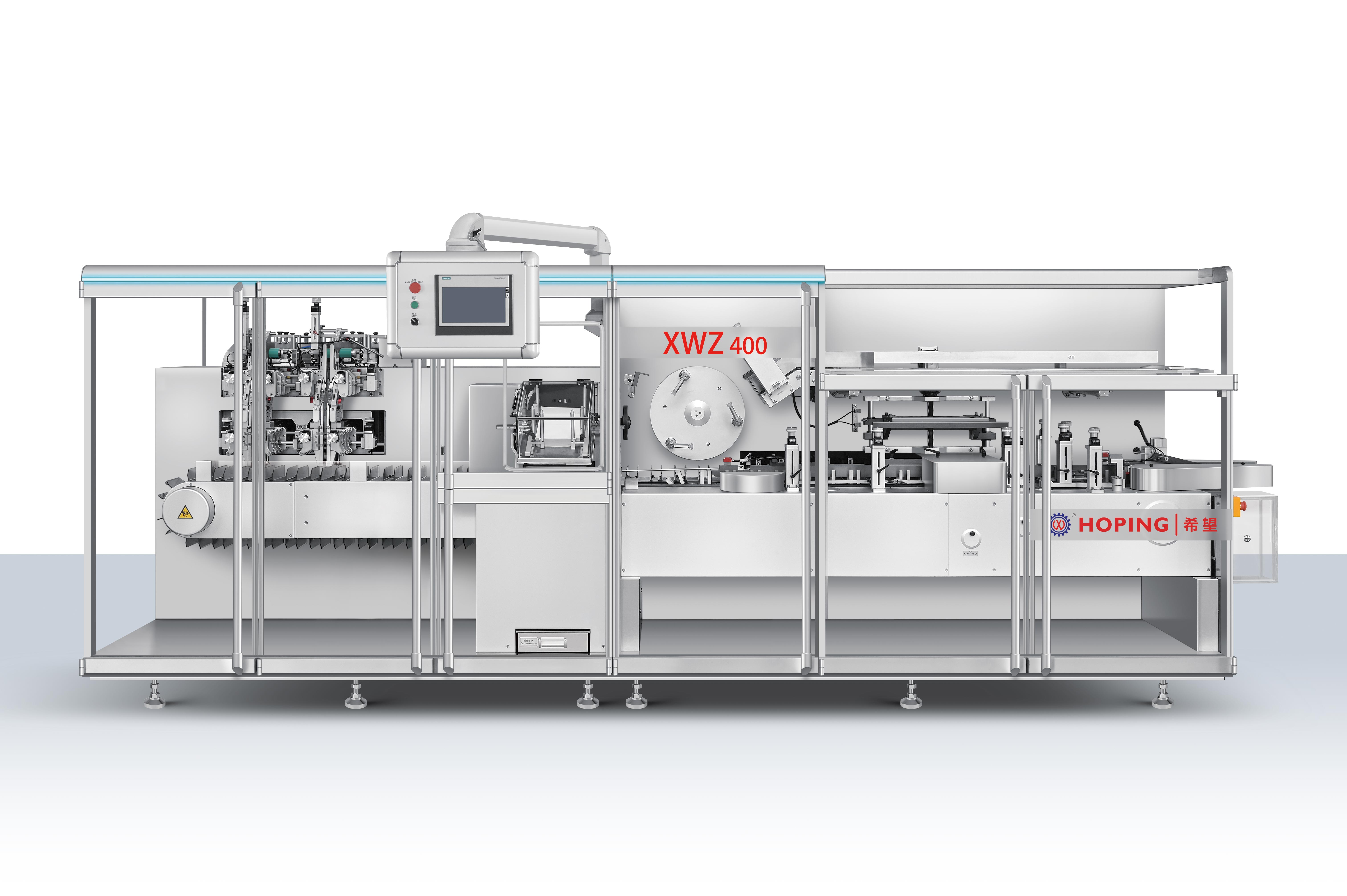
Equipment matched to a project depends on configuration. The scenario data lists blister packing machine, cartoner, D3 intelligent top-loading parallel robot, leaflet folder, coding machine, vision inspection, checkweigher, XWK4060 bundler, case packer, palletizer and ERP/MES data interface as possible matched equipment. Operation is fully servo-linked with a PLC/HMI interface and synchronized multi-station control, supporting alarm stop, fault indication, recipe storage and format changeover according to configuration.
Downstream specifications show where the capacity conversation usually ends. The XWK4060 stretch bander is rated at about 30–60 bundles per minute; the XWK Series case packing machine at a maximum output of about 5 cases per minute; the ICP12 case packing and palletizing integral machine at about 12 cases per minute of opening-box and palletizing capacity. A line rated at 800 blisters per minute and 500 cartons per minute therefore has to be planned as a chain, not as a single headline number.
Commercial framing matters as much as technical fit. Hoping Machinery operates an ODM/OEM/customizable model, with customization covering blister size and materials, quantity per carton, carton specification, leaflet format, coding and inspection method, feeding method, downstream bundling/case-packing/palletizing connection, interface language, electrical component brand and data interface. Monthly capacity is stated at 30–40 units, lead time is typically 60–120 days after technical confirmation, and minimum order quantity is 1 set or 1 complete line. Quality control follows a defined path: incoming material inspection, key component inspection, assembly inspection, electrical safety check, no-load trial run, material trial, FAT, customer witness acceptance and pre-shipment inspection.
Market Context: Why Integrated Line Demand Persists
Published market data explains part of the pressure on pharmaceutical packaging capacity. SkyQuest Technology valued the global pharmaceutical packaging equipment market at approximately USD 10.71 billion in 2024, while Fortune Business Insights valued the pharmaceutical automatic cartoning machine segment at USD 1.46 billion in the same year. Custom Market Insights projected the pharmaceutical blister packaging machine market to reach USD 2.57 billion by 2025, at a CAGR of 2.8%. Grand View Research placed Asia Pacific at 40.7% of pharmaceutical packaging equipment revenue in 2025.
Competitive structure is equally relevant to how buyers shortlist. Market intelligence reporting indicates that the top three players — Uhlmann, IMA and Marchesini — collectively hold approximately 29% of the pharmaceutical blister packaging machine market share, which leaves a substantial share distributed across a long tail of suppliers. For procurement teams, that means the practical task is not choosing between two or three names but building a comparison that separates comparable specifications from incompatible ones.
Comparison with Traditional Solutions — and the Limits of Integration
The alternative to an integrated line is the traditional arrangement: a standalone blister packing machine and a standalone cartoner, with manual or semi-automatic transfer between them, and coding or inspection added as separate steps. The comparison is not a simple upgrade argument; it is a trade-off between transfer risk and system concentration.
| Dimension | Separate blister machine + cartoner | Integrated blister-cartoning line |
|---|---|---|
| Product transfer | Manual or semi-automatic transfer between equipment | Linked transfer (D3 top-loading parallel tracking transfer on the DHL8005H) |
| Insertion and leaflet risk | Higher exposure to wrong insertion and missing leaflet at manual handover points | Insertion and leaflet handling inside one controlled sequence |
| Coding and inspection | Frequently bolted on as separate stations | In-scope, with inspection and rejection inside the line |
| Fault behaviour | Faults stay local to one machine | A stoppage at one station interrupts the whole sequence |
| Format change | Independent adjustment per machine | Tooling change plus preset-memory recall across the line |
| Best-fit batch profile | Suits fragmented, low-volume or highly variable production | Suits multi-batch, multi-format production at sustained rates |
Where the integrated approach does not fit. Several boundaries are worth stating plainly, because they change procurement conclusions.
- Rated capacity is a maximum, not a guaranteed output. Practical throughput depends on blister format, carton size, leaflet format, units per carton and the downstream connection, and lines are configured to confirmed specifications rather than to a generic format.
- Integration concentrates risk. Because blister forming, transfer, leaflet handling and cartoning sit in one sequence, line-level alarm stop, fault indication and preset recall become maintenance-critical capabilities rather than conveniences.
- Changeover is tooling-dependent. Mold-change and preset-memory functions reduce manual adjustment, but the format parts themselves must exist for each product; multi-SKU production requires tooling provisioned for the SKU range, not only for the launch product.
- High speed is not universally correct. Flat-plate DPP series machines are listed for small- and medium-batch pharmaceutical and healthcare products at roughly 20–70 cycles per minute depending on model, which is a different scenario from an 800-blister-per-minute integrated line. Matching the tier to the batch profile matters more than buying the largest capacity.
- GMP-oriented design is a machine-side property. It addresses design, materials, cleanability and guarding on the equipment; it does not by itself qualify a production facility, and the buyer’s own qualification activity remains necessary.
- Project timing is a planning constraint. Lead time is typically 60–120 days after technical confirmation and final lead time depends on model, configuration, project complexity and contract terms, so a scenario change late in a project has schedule consequences.
- Floor space must be planned early. Downstream units are substantial in isolation — the XWZ500H cartoner is about 6,700 x 1,950 x 2,100 mm and the ICP12 case packing and palletizing machine is about 8,900 x 3,000 x 2,400 mm — and layout feasibility is usually decided before commercial terms.
Future Outlook
Three directions are visible in the current specification patterns of integrated lines.
First, control architecture is becoming the differentiator within a capacity tier. A Beckhoff motion controller paired with a CP9315 industrial PC, together with recipe and preset memory, is a data-ready foundation; scenario data already lists an ERP/MES data interface as a possible matched-equipment item, which signals that line-level data integration is moving from optional to expected in retrofit and intelligent-workshop projects.
Second, format flexibility is being treated as a capacity feature rather than a secondary attribute. Multi-batch, multi-format production is written into the operating environment of these lines, which is why preset memory, mold-change design and multi-channel servo replenishment appear alongside speed ratings.
Third, downstream scope continues to expand from the cartoner outward to bundling, case packing and palletizing. As that boundary moves, the carton stage and the end-of-line stage — not the blister stage — increasingly determine whether a project reaches its nominal throughput.
Frequently Asked Questions
Which solid dosage formats can be packaged on an integrated blister-cartoning line?
Integrated blister-cartoning lines in this class are specified for pharmaceutical solid dosage production, capsule and tablet packaging, healthcare products, nutraceuticals, and food and cosmetic blister-cartoning projects where applicable. The accompanying blister platforms are listed for tablets, capsules, soft capsules, nutraceuticals and healthcare products in Alu-PVC and Alu-Alu formats. Because tooling and product-contact parts are configured to confirmed blister and carton specifications, format suitability is established per project against the actual blister format, carton size and leaflet format.
What output should a project expect from a line rated at 800 blisters per minute?
The 800 blisters per minute and 500 cartons per minute figures for the DHL8005H are maximum capacities. Achievable output depends on the confirmed blister format, carton size, leaflet format, the number of units per carton and the downstream connection. Downstream equipment is typically rated lower than the blister stage — for example, about 30–60 bundles per minute for a stretch bander, about 5 cases per minute for an XWK Series case packing machine, and about 12 cases per minute for an ICP12 case packing and palletizing machine — so capacity planning should be done across the full chain.
How is a format change between tablets, capsules and softgels handled?
Format change combines physical tooling change with control-side recall. The DHL8005H provides mold-change and preset-memory functions, so stored per-format settings can be restored through the line control rather than re-established manually. The tooling itself must be produced for each specific format according to the confirmed blister and carton specification. Multi-format production therefore requires tooling provisioned for the intended SKU range, and changeover planning is a project decision made at specification stage.
What does “GMP-oriented product-contact parts and tooling according to technical agreement” mean in practice?
It means that the materials and geometry of parts that contact the product are not a generic catalogue item but a project-specific deliverable, defined in the technical agreement between buyer and supplier. Within the same machine range, published material data specifies AISI 316L stainless steel and FDA-compliant pharmaceutical-grade materials for product-contact parts and AISI 304 stainless steel with anodized aluminium alloy for non-product-contact parts, in machines designed and manufactured in accordance with GMP requirements with corrosion-resistant, easy-to-clean surfaces. GMP-oriented design addresses the equipment; facility qualification remains the responsibility of the producer.
How does a blister cartoner line connect to bundling, case packing and palletizing?
Connection is treated as part of the line scope. The DHL8005H scope covers high-speed blister forming and sealing, transfer, leaflet handling, carton opening, insertion, coding and inspection, and connection to bundling, case-packing and palletizing equipment. The scenario data lists bundler, case packer, palletizer and ERP/MES data interface as matched equipment depending on project configuration, and operation is fully servo-linked with synchronized multi-station control. The specific downstream configuration is defined per project together with the line layout.
What are the limits of a high-speed integrated blister-cartoning line?
The main limits are structural rather than incidental. Capacity figures are maxima tied to confirmed formats; integration concentrates risk, so a stoppage at one station interrupts the whole sequence; changeover depends on tooling availability for each SKU; and a high-speed tier is not the appropriate choice for small-batch or highly variable production, where flat-plate platforms rated at roughly 20–70 cycles per minute depending on model are the listed fit. Project scheduling is also constrained, with lead time typically 60–120 days after technical confirmation and dependent on configuration and complexity. Certification standards relevant to pharmaceutical packaging equipment, such as ISO 15378 for primary packaging materials and the EN 415 series under the EU Machinery Directive 2006/42/EC, address the equipment and its compliance framework rather than the buyer’s production qualification.